Good Riddance (Time Of Your Life) 1997 – Green Day

Today we arrive at one of the most recognisable acoustic songs of the modern era. It is easily Green Day’s most emblematic track and is typically played as their final song in concert. I always thought of it as a tender ballad, which is why it surprised me to learn that Time of Your Life is preceded by Good Riddance.

I strongly associate this song with its use in a late episode of Seinfeld, The Chronicle. Whenever I watch that segment, it makes me nostalgic and reflective. It also remains a favourite show of my children. I think I first came to know Green Day through their 1995 release When I Come Around, though I’m hardly cognisant of much of their wider catalogue.

Lead singer Billie Joe Armstrong wrote Good Riddance (Time of Your Life) after his girlfriend, Amanda, left for Ecuador, south of Colombia here. Green Day toured here in Bogotá as recently as August 2025. Armstrong told Guitar World that he was more than a little pissed off at the time, which is why he added Good Riddance to the title. The song’s wording and tone are therefore meant to be sarcastic – something you could easily miss, as I certainly did after all these decades.

The song was originally written during the Dookie sessions in 1993, the album that includes When I Come Around, but it was deemed too out of place for that record. Good Riddance (Time of Your Life) marked a clear departure from the band’s punk sound, and perhaps that contrast is exactly why it has endured.

When the time came to record Nimrod, Armstrong decided to record the song again, and Cavallo suggested they add strings to the track. He sent the band to play foosball in another room while he recorded the strings, which took “like fifteen, twenty minutes, maybe a half an hour at the most”. Cavallo reflected on his decision to add the strings: “I knew we had done the right thing. It was a hit the second I heard it.”

The album version of the song begins with Armstrong messing up the opening chords twice, muttering “f&ck” under his breath before starting over and getting it right, thus starting the song. The mistakes were deliberately kept to add a lighthearted introduction to a song with emotionally deep lyrics. Radio versions and the music video omitted Armstrong’s second attempt with the expletive.

The song was released in 1997 as the second single from Green Day’s 5th studio album Nimrod. The song peaked at No. 11 in the US and top 20 in a host of other countries. As of November 2022, the song had sold over five million copies making it the band’s most commercially successful single.

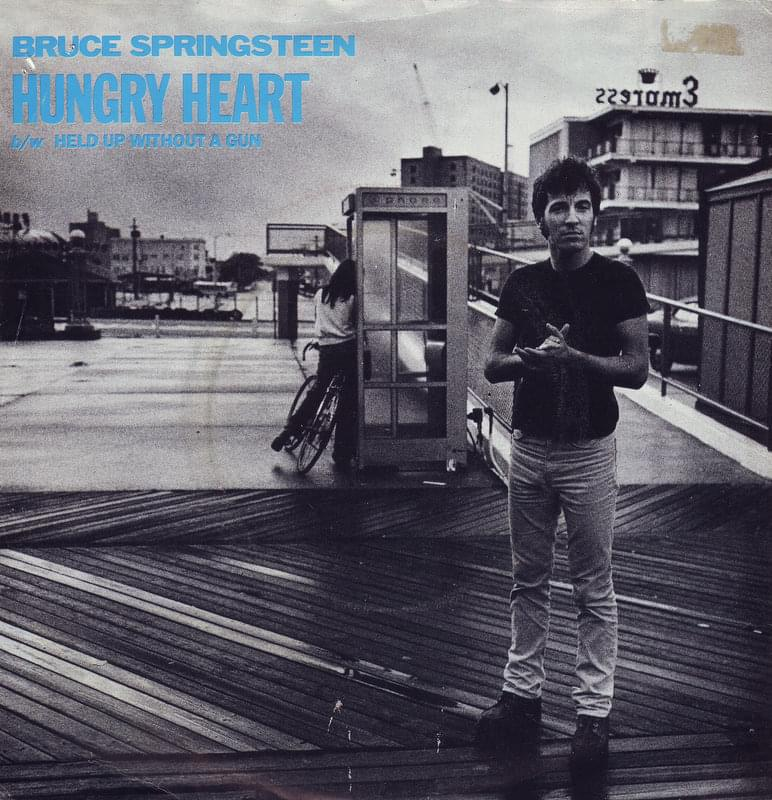
When the video (below) came out, the name of the song was inverted, hence the video’s title is “Time of Your Life (Good Riddance)“. This title was also used on the single cover (above).

[Intro]
F&ck

[Verse 1]
Another turning point, a fork stuck in the road
Time grabs you by the wrist, directs you where to go
So make the best of this test and don’t ask why
It’s not a question, but a lesson learned in time

[Chorus]
It’s something unpredictable, but in the end is right
I hope you had the time of your life

[Verse 2]
So take the photographs and still frames in your mind
Hang it on a shelf in good health and good time
Tattoos of memories and dead skin on trial
For what it’s worth, it was worth all the while

References:
1. Good Riddance (Time of Your Life) – Wikipedia

Tagged with: , ,
Posted in Music

Dreams Are More Precious (2008) – Enya

When I heard this Enya track again recently, I assumed it was already in my collection. Nope. Dreams Are More Precious seems to be one of her most frequently played songs, at least based on my casual observation. Yet it doesn’t appear in her Spotify top five, and what surprised me most is that her most-streamed song is I Don’t Wanna Know (feat. Enya and P. Diddy) – a song I’d never heard of.

Dreams Are More Precious is not in my very top tier of Enya, but it’s still lovely and leaves me in a tranquil mind space. Her sound (new age and world music) is so recognisable, and sometimes she gets a raw deal because of how much her “sound” saturates the commercial landscape, with each track akin to the other. But when I do hear her music – which is on the odd occasion – I feel more blessed for the experience.

We may also be a little late to the party with this one. The lyricist of the song (and Enya’s principal lyricist), Roma Ryan, has described the song as a kind of Christmas lullaby, and once you read the lyrics, it becomes even more evident that the festive season is shining through – which I suppose, technically, we are still in. Oh, and a joyous New Year’s Day (2026) to you fine folk!

“‘Dreams are more Precious’, I would describe it as a lullaby, a Christmas lullaby. The title comes from the line ‘dreams are more precious than gold.’ The dreams are not dreams a mother would have for her child of success or that you are dreaming during the night and it’s just you are churning over the events of the day. It’s more inner strength, awareness of others, the qualities that you would associate with Christmas, spirituality, these are the true dreams I think.”
– Roma Ryan

Dreams Are More Precious‘ comes from Enya’s 2008 holiday-themed album, ‘And Winter Came…‘. According to the description in the video below – The song’s comforting and peaceful nature aligns with the album’s introspective winter theme, offering a message of hope and the importance of dreams. The music was composed by Enya, with lyrics by Roma Ryan.

The album ‘And Winter Came… was recorded between 2006 and 2008 with Enya and her longtime collaborators, arranger and producer Nicky Ryan and his wife, lyricist Roma Ryan. It features ten original tracks with lyrics sung in English. As with her previous albums recording took place at Aigle Studio, the Ryans’ home studio in Killiney, County Dublin.

Enya has stated that the importance of Roma Ryan and her late husband Nicky Ryan’s contributions is such that without them, Enya would not exist.

The album reached the top 20 in a host of counties, including No. 8 on the US Billboard, No. 6 in the UK, No. 7 in Australia and No. 1 in Belgium.

[Verse 1]
Come! See! High above
Come! See! High in the heavens
A new star shining bright;
Out of the darkness comes a light

[Verse 2]
Come! Hear midnight chimes
Come! Hear bells that are ringing
And from some distant shore
Sounds of a journey echo on

[Refrain]
This is the night
They say
Everyone wants a dream
This is the night
They say
Nothing is as it seems

[Verse 3]
Come! Sleep! Close your eyes
Come! Sleep! Give me your sorrow
And I’ll keep watch for you
Until the dawn is breaking through
Until the morning wakens you

[Interlude]

[Verse 4]
Come! Dream through the night
Come! Dream, and then tomorrow
You’ll see your heart will know
Dreams are more precious than gold

References:
1. Dreams Are More Precious – Enya Fandom
2. And Winter Came…- Wikipedia

Tagged with: , ,
Posted in Music

Times of Our Lives (2022) – Christina Perri

For a long time, I was daunted to write about Time of Our Lives, mostly because I felt I couldn’t do the song any real justice. It stands, for me, as one of the most well constructed and fully realised songs of the modern era. It sits comfortably in my personal top songs of all time – not just because I have kind of a Perri crush, but because it’s just so darn good! How do you classify it. Is it a ballad? Pop? Hip-hop adjacent? The answer is probably yes to all three, and that mix seems part of its strength.

What distinguishes Time of Our Lives is not just its lyrics – direct, uncluttered, and emotionally intelligent – but the way the song unfolds. It builds slowly, layering momentum until it reaches a crescendo. There’s a sense of movement throughout, as though the song itself is mirroring the fleeting nature of the moments it describes. In that way, it captures something like the feeling of living through something meaningful before you’ve had time to recognise its significance. The song almost passes by as quickly as the listener has time to ingest its meaning, much like a moment in life itself.

I used Time of Our Lives as an informal soundtrack to a family trip along Colombia’s Caribbean coast a few years ago, particularly during our stay in Palomino. We stayed in a small, rustic, artisan-run beach spot. Below is a short video I shared from a nearby restaurant-bar.. well we were tired, hungry, a little sunburnt, waiting on pizzas.

Perri encapsulates in this song the pure, unfiltered joy and exuberance of finding yourself at one with yourself, family, and love. It sounds hip and modern, yet at the same time reminiscent, full of life-changing moments unfolding before your eyes. Moments so absorbing that you barely find time to reflect on how meaningful they are. The song embodies that very feeling: it’s so complete and immersive that it seems to pass by in the blink of an eye.

That’s how it seems to me – call me sentimental – but that’s how big it is to me. And above all that, I don’t know how she did it. Like all the greats, I honestly have no idea how she was able to make that song a reality in the midst of motherhood and while overcoming her own personal grief. That is pure art from an artesana.

[Verse 1]
I was younger, the summers were longer
I had no fear, I was stronger and freer
With fire, a fire that didn’t expire
The reason or meaning of somethin’ to believe in
I was hopeful we had it, the magic
The love that we had wasn’t tragic, so we grabbed it, we went there
Nothin’ but air, so we breathed it, ’cause we need it
To free fall for somethin’ we believed in

[Chorus]
Lookin’ back through my eyеs, everybody says goodbye
Whеre did all the time fly by, where did it go, you know?
Do you feel my heartbeat? ‘Cause, darlin’ it’s not over yet
Where did all the time fly by, where did it go, you know?
These are the times of our lives

[Verse 2]
I was fearless, I was able, I was brave
Put all of my cards on the table, didn’t waste them
All of my demons that turned into dreams
And I chased them, I faced them, replaced them for somethin’ to believe in

[Pre-Chorus]
I don’t remember the rain (I don’t remember)
I don’t remember the details (All the details)
There’s nothin’ that I wanna change
I’d do it again and again and again

[Chorus]
Lookin’ back through my eyes, everybody says goodbye
Where did all the time fly by, where did it go, you know?
Fallin’ like a sunset, but, darlin’ it’s not over yet
Where did all the time fly by, where did it go, you know?
These are the times of our lives

[Post-Chorus]
‘Cause we hope and we pray
Keep ’em close, make ’em stay
Yeah, we hold back the time, like the clock, I rewind
Hold your breath, one more time, don’t forget you’re alive
These are the times of our lives
These are the times of our lives, oh
These are the times of our lives
These are the times of our lives, ooh
These are the times of our lives

[Outro]
You’re older, the sunlight is shorter
Am I the girl in the corner?
I dream to adore her
A moment forever before us, I’m in it
And you are, someone to believe in

Tagged with: , ,
Posted in Music

Ring of Fire (1963) – Johnny Cash

Ring of Fire is one of Johnny Cash’s most recognisable songs and is widely regarded as one of the greatest country songs ever recorded. You only need to hear it once to understand the power of his sound and voice, and why it remains so familiar in contemporary Western music. Everything that draws people to Johnny Cash is present here: the rolling, train-like rhythm, the hypnotic repetition of the melody, his deep, raw Southern voice. Although, the unexpected mariachi-style horns that give the song a festive, almost celebratory edge were new to his repertoire.

The Ring of Fire feels vivid and immediate. It leaps from the speakers and burns, burns, burns. The song captures the intensity and frenzy of falling in love – being bound by desire you can’t control. It was written by June Carter, who would soon become Cash’s second wife, along with songwriter Merle Kilgore.

The origen of this song (below) is one of the most fascinating – yet controversial – I can remember reading. A brief warning: it contains sexual innuendo that some readers may find offensive.


Most of the following was abridged from the Wikipedia article below:

In her 2007 autobiography, Cash’s first wife, Vivian, wrote: “One day in early 1963, while gardening in the yard, Johnny told me about a song he had just written with Merle Kilgore and Curly [Lewis] while out fishing on Lake Casitas. ‘I’m gonna give June half credit on a song I just wrote,’ Johnny said. ‘It’s called “Ring of Fire.“‘ ‘Why?’ I asked, wiping dirt from my hands. The mere mention of her name annoyed me. I was sick of hearing about her. ‘She needs the money,’ he said, avoiding my stare. ‘And I feel sorry for her.'” Vivian also noted: “To this day, it confounds me to hear the elaborate details June told of writing that song for Johnny. She didn’t write that song any more than I did. The truth is, Johnny wrote that song, while pilled up and drunk, about a certain private female body part. All those years of her claiming she wrote it herself, and she probably never knew what the song was really about.”

It was first recorded  as “(Love’s) Ring of Fire” by June’s sister Anita Carter on her 1962 album Folk Songs Old and New. It was popularised by Johnny Cash after it appeared on his 1963 compilation album Ring of Fire: The Best of Johnny Cash. Cash’s version became one of his biggest hits, staying at No. 1 on the country chart for seven weeks. It was certified gold by the RIAA on January 21, 2010, and by September of that year had amassed over 1.2 million paid downloads.

It was named the fourth-greatest country song by Country Music Television, while Rolling Stone called it the greatest country song and the 87th-greatest song of all time. In 1999, Cash’s version was inducted into the Grammy Hall of Fame.

Some sources claim that June Carter had seen the words “Love is like a burning ring of fire” underlined in an Elizabethan poetry book owned by her uncle A. P. Carter. She worked with Merle Kilgore on writing a song inspired by this imagery, as she had seen her uncle do in the past. In her words: “There is no way to be in that kind of hell, no way to extinguish a flame that burns, burns, burns“.

After hearing Anita’s version, Johnny Cash claimed he had a dream where he heard the song accompanied by “Mexican horns”. The mariachi horn sound had recently been popularized on American radio with 1962 hit song The Lonely Bull by Herb Alpert. Cash said, “[…] I’ll give you about five or six more months, and if you don’t hit with it, I’m gonna record it the way I feel it.” Cash noted that adding trumpets was a change to his basic sound.

[Verse 1]
Love is a burning thing
And it makes a fiery ring
Bound by wild desire
I fell into a ring of fire

[Chorus]
I fell into a burning ring of fire
I went down, down, down and the flames went higher
And it burns, burns, burns, the ring of fire, the ring of fire

[Verse 2]
The taste of love is sweet
When hearts like ours meet
I fell for you like a child
Oh, but the fire went wild

[Chorus]
I fell into a burning ring of fire
I went down, down, down and the flames went higher
And it burns, burns, burns, the ring of fire, the ring of fire
I fell into a burning ring of fire
I went down, down, down and the flames went higher
And it burns, burns, burns, the ring of fire, the ring of fire

[Outro]
And it burns, burns, burns, the ring of fire, the ring of fire
The ring of fire, the ring of fire, the ring of fire

References:
1. Ring of Fire (song) – Wikipedia

Tagged with: , , , ,
Posted in Music

Time After Time (1996) – Eva Cassidy

Eva Cassidy was taken from us far too young. She died in 1996 at the age of just 33. At the time, she was largely unknown outside her native Washington, D.C. area, even though she was already a remarkable singer. She died from melanoma, and it was only years later that her music was released widely and found an international audience.

I became more immersed in her material, and truly in awe of her angelic voice, by watching on YT the performances that took place at the Blues Alley jazz supper club in Georgetown, DC, on 3 January 1996 – the same year of her passing. The purity of her voice mesmerized me and continues to do so. The phrase “what might have been” is often overused, but in Eva Cassidy’s case it feels entirely justified. It is hard not to wonder how large her place in contemporary music history might have been had she lived longer.

I hope Cyndi Lauper fans don’t get their bee too much in a bonnet here, but Eva Cassidy’s version of Time After Time is my favourite version. Many of her best-known songs are covers, of course, and her live recordings of Over the Rainbow, Songbird (Fleetwood Mac), and Kathy’s Song (Paul Simon) are my preferred versions of those songs as well. The only original recording I can think of that I tend to favour over Eva’s interpretation is Sting’s Fields of Gold. Time After Time was also the title of her studio album released in 2000, four years after her death. For music – movie trivia buffs out there Eva’s version of Time After Time was used in the popular series Smallville.


Most of the following was abridged from the Wikipedia article below:
Time After Time is a song by American pop singer Cyndi Lauper from her debut studio album, She’s So Unusual (1983). It was written by Lauper and Rob Hyman, who also provided backing vocals. Another fabulous song from that record which launched Lauper to absolute stardom was of course – Girls Just Want to Have Fun, which funny enough Cyndi didn’t write, well she did change some of the lyrics from the single written in 1979 by Robert Hazard, but he retained full songwriting credits.

Time After Time was written in the album’s final stages, after Girls Just Want to Have Fun, She Bop and All Through the Night had been written or recorded. Time became her first No. 1 hit single in the United States while Girls…earlier had reached No. 2. It has since been named as one of the greatest pop songs of all time by many media outlets, including Rolling StoneNerve, and MTV.

The inspiration for the song came from the fact that both songwriters were going through similar challenges in their respective romantic relationships; Hyman was coming out of a relationship, and Lauper was having difficulties with her boyfriend and manager, David Wolff. One of the early lines Rob Hyman wrote was “suitcase of memories”, which according to Lauper, “struck her”, claiming it was a “wonderful line”, and other lines came from Lauper’s life experiences. The song’s title was borrowed from a TV Guide listing for the science fiction film Time After Time (1979).

[Verse 1]
Lying in my bed
I hear the clock tick, and think of you
Turning in circles
Confusion is nothing new
Flashback to warm nights
Almost left behind
Suitcase of memories
Time after—

[Verse 2]
Sometimes, you picture me
I’m walking too far ahead
You’re calling to me
I can’t hear what you have said
And you say, “Go slow”
I fall behind
The second hand unwinds

[Chorus]
If you’re lost, you can look and you will find me
Time after time
If you fall, I will catch you, I’ll be waiting
Time after time
If you fall, I will catch you, I will be waiting
Time after time
Time after time

[Verse 3]
After your picture fades
And darkness has turned to gray
Watching through windows
I’m wondering if you’re okay
And you say, “Go slow”
I fall behind
The drum beats out of time

References:
1. Time After Time (Eva Cassidy album) – Wikipedia
2. Time After Time (Cyndi Lauper song) – Wikipedia

Tagged with: , ,
Posted in Music

England (2010) – The National

As Matt Berninger told the Guardian, “A lot of [our songs] are sad and about death.” However, as he rightfully adds, they go about it in such a bracing way that the songs almost seem to triumph over it, “In really fun ways.”

England is another atmospheric track from the American band The National. It seems directed towards a woman the singer was once in a relationship with, rather than the place. England works as a metaphor, especially through its climate, reflecting the narrator’s melancholic emotional state. The song carries you through the weather of his feelings.

The opening line – “Someone send a runner through the weather that I’m under” – sets the mood immediately. As listeners, we become that runner, moving through his emotional landscape. It feels like an invitation, or perhaps a quiet reassurance, that we are meant to experience and witness his struggles rather than simply observe them from a distance.

As already alluded to, the song suggests that someone else has caused this emotional dislocation: “You must be somewhere in London / You must be loving your life in the rain.” Meanwhile, the narrator is grounded elsewhere – “I’m in a Los Angeles cathedral” — physically and emotionally removed. As with much of The National’s work, meaning is left deliberately open, encouraging personal interpretation and putting more emphasis on the ethereal instrumentation.

(On the song England) While the songs somewhat cryptic lyrics could be about writer’s block and Berninger’s inability to come up with a song to appease the band’s London-based label 4AD, or about star-crossed lovers separated by an ocean and a river, the theme remains the same of a singer being separated from something, acquiescing to the reality of that separation and at the same time sort of overcoming it by the time of the triumphant finale.

– Far Out Magazine

As a small piece of pop-culture irony, England (the song) was used by BBC Sport in 2018 during a montage celebrating England’s penalty shootout victory over Colombia at the 2018 FIFA World Cup in Russia – a surprisingly triumphant context for such a restrained and inward-looking song.


England comes from The National’s fifth studio album High Violet (image inset). The sculpture on the album cover was created by artist Mark Fox, and is called The Binding Force.  High Violet was released to widespread critical acclaim receiving a score of 85 out of 100 based on 36 reviews. It appeared on several publications’ year-end lists of the best albums of 2010. Time named it the fourth best album of the year, and it also placed at number 15 on Rolling Stone‘s list of the 30 best albums of 2010. The opening track from the album Terrible Love was performed 2 months prior to the release of the album and featured here in August this year.

[Verse 1]
Someone send a runner through the weather that I’m under
For the feeling that I lost today
Someone send a runner for the feeling that I lost today
Someone send a runner through the weather that I’m under
For the feeling that I lost today
Someone send a runner for the feeling that I lost today

[Pre-Chorus]
You must be somewhere in London
You must be loving your life in the rain
You must be somewhere in London
Walking Abbey Lane
I don’t even think to make, I don’t even think to make
I don’t even think to make corrections

[Chorus]
Famous angels never come through England
England gets the ones you never need
I’m in a Los Angeles cathedral
Minor singin’ airheads sing for me

[Verse 2]
Put an ocean and a river between everybody else
Between everything, yourself and home
You put an ocean and a river between everything, yourself and home

[Outro]
Afraid of the house, stay the night with the sinners
Afraid of the house, ’cause they’re desperate to entertain

(Repeat)

References:
1. High Violet – The National
2. Watch The National’s monumental performance of ‘England’ at the Sydney Opera House – Far Out Magazine

Tagged with: , ,
Posted in Music

Caravan (1976) – Van Morrison (The Last Waltz)

Caravan is such a fantastic romp of a song, which I first saw in the legendary The Last Waltz concert by The Band. It’s a great exhibition of the depth and range of Van Morrison’s musical talent as a vocalist and performer. Even Eric Clapton commented that “For me, Muddy [Waters] and Van [Morrison] steal the show. Van doing [“Caravan”] with the leg kicks. Some of the greatest live music you’ll ever see.”

This is a soul song, of course, and Van’s voice is all about soul, so everything is in concordance here. The song is about a caravan of gypsy performers, and the narrator expresses his pure elation and gratitude at being amongst his friends (“And the caravan has all my friends / It will stay with me until the end”). It’s a celebration of that occasion and of the music itself (“Turn up your radio and let me hear the song”). You could also see the song as being dedicated to the whole entourage of The Last Waltz.


The following was mostly abridged from the Wikipedia article below:
This song written by Northern Irish singer-songwriter came to the concert 6 years after it’s release in 1970 on his Moondance album. Caravan was a concert highlight for several years and was included on Morrison’s 1974 acclaimed live album, It’s Too Late to Stop Now and the aforementioned Martin Scorsese’s 1978 film – The Last Waltz. The Last Waltz commemorated The Band’s last concert appearance together before they stopped touring, on Thanksgiving Day 1976.

Van Morrison based the song on real memories while living in a rural house in Woodstock, New York, where the nearest house was far down the road.

He described why he included the reference to radio in the song:

I could hear the radio like it was in the same room. I don’t know how to explain it. There was some story about an underground passage under the house I was living in, rumours from kids and stuff and I was beginning to think it was true. How can you hear someone’s radio from a mile away, as if it was playing in your own house? So I had to put that into the song, It was a must.

And the caravan is on it’s way
I can hear the merry gypsies play
Mama mama look at Emma Rose
She’s a-playin’ with the radio
La, la, la, la…

And the caravan has all my friends
It will stay with me until the end
Gypsy Robin, sweet Emma Rose
Tell me everything I need to know
La, la, la…

Turn up your radio and let me hear the song
Switch on your electric light
Then we can get down to what is really wrong
I long to hold you tight so I can feel you
Sweet lady of the night I shall reveal you

Turn it up, turn it up, little bit higher radio
Turn it up, turn it up, so you know, radio
La, la, la, la…

And the caravan is painted red and white
That means everybody’s staying overnight
Barefoot gypsy player round the campfire sing and play
And a woman tells us of her ways
La, la, la, la…

Turn up your radio and let me hear the song
Switch on your electric light
Then we can get down to what is really wrong
I long to hold you tight so I can feel you
Sweet lady of the night I shall reveal you
Turn it up, turn it up, little bit higher, radio
Turn it up, that’s enough, so you know it’s got soul
Radio, radio turn it up, hum
La, la, la, la…

References:
1. Caravan (Van Morrison song) – Wikipedia

Tagged with: , ,
Posted in Music

Electrolite (1996) – R.E.M.

Electrolite, as the name suggests, sounds refreshing, replenishing, and effervescent on the ears. It’s very melodic, and I love the piano – it really is a piano-based ballad. This is a song that has grown on me over time. Michael Stipe also has such a cool voice here. Stipe initially objected to including the song on the album, but was convinced by his bandmates Peter Buck and Mike Mills.

The lyrics are pretty trippy too, but I like them — they feel spacey and liberating:
Stand on a cliff, and look down there / Don’t be scared / You are alive,” and
“Your sun electric, outta sight / Your light eclipsed the moon tonight / Electrolite / You’re outta sight.”

There are many interpretations of the song’s meaning, including alien abductions, the rise of the digital information age, fame, and even a straight-up love song. Have at it. For me, the song brings to mind David Lynch (Mulholland Drive), as if it’s some kind of comment on L.A. and fame – a feeling of loss for old-time movies and actors. Some people also see it as a goodbye-to-the-20th-century song. In fact, in the liner notes, Peter Buck describes it as a farewell to the Millennium.

The following was abridged from the Wikipedia article below:

Los Angeles at night, as viewed from Mulholland Drive

Below is an excerpts from an essay written by Stipe:
Mulholland represents to me the iconic ‘from on high’ vantage point looking down at L.A. and the valley at night when the lights are all sparkling and the city looks, like it does from a plane, like a blanket of fine lights all shimmering and solid. I really wanted to write a farewell song to the 20th century…And nowhere seemed more perfect than the city that came into its own throughout the 20th century, but always looking forward and driven by ideas of a greater future, at whatever cost.”

During R.E.M.’s performance on VH1 Storytellers, Stipe introduced the song by saying:

I had a dentist in Los Angeles, who was also a dentist to Martin Sheen, and Martin Sheen was in the dentist’s chair, getting his tooth drilled, when I went up to him and said, ‘We have a record coming out in a couple of weeks and you’re mentioned in one of the songs, and I just want you to know that it’s honoring you; I don’t want you to think that we’re making fun of you.’ And he was saying ‘Thank you very much!’. He was very nice about it.

Electrolite is the last song from R.E.M.’s 10th studio album New Adventures in Hi-Fi which is a neat way a to end the album, on a high note.

[Verse 1]
Your eyes are burning holes through me
I’m gasoline
I’m burning clean
Twentieth century, go to sleep
You’re Pleistocene
That is obscene
That is obscene

[Chorus]
You are the star tonight
Your sun electric outta sight
Your light eclipsed the moon tonight
Electrolite
You’re out of sight

[Verse 2]
If I ever want to fly
Mulholland Drive
I am alive
Hollywood is under me
I’m Martin Sheen
I’m Steve McQueen
I’m Jimmy Dean

[Verse 3]
If you ever want to fly
Mulholland Drive
Up in the sky
Stand on a cliff, and look down there
Don’t be scared
You are alive
You are alive

[Verse 4]
Twentieth century, go to sleep
Really deep
We won’t blink
Your eyes are burning holes through me
I’m not scared
I’m out of here
I’m not scared
I’m out of here

References:
1. Electrolite – Wikipedia

Tagged with: , ,
Posted in Music

The Remains of the Day (Soundtrack) 1993 – Richard Robbins

Sir Anthony Hopkins, as a guest on Inside the Actors Studio (1994), said that he got tips on how to play a butler from real-life butler Cyril Dickman, who served for fifty years at Buckingham Palace. The butler said there was nothing to being a butler, really, when you’re in the room, it should be even more empty.

In a recent post on Bedřich Smetana’s – Má vlast (Fatherland) No. 2, Vltava I mentioned how much the commencement of the piece reminded me of the soundtrack during the end credits in the movie The Remains of the Day. So today we turn to two pieces from the movie, specifically for the opening and closing credits. Whenever I hear this stirring music, I’m instantly transported back to scenes from this hauntingly beautiful film about unrequited love. The original score was composed by Richard Robbins (image inset). It was nominated for the Academy Award for Best Original Score, but lost to Schindler’s List.

IMDB Storyline: Rule bound head butler Stevens’ (Sir Anthony Hopkins’) world of manners and decorum in the household he maintains is tested by the arrival of housekeeper Miss Kenton (Dame Emma Thompson), who falls in love with him in pre-World War II Britain. The possibility of romance and his master’s cultivation of ties with the Nazi cause challenge his carefully maintained veneer of servitude.

The Remains of the Day is an unforgettable tragedy of a man who pays the terrible price of denying his own feelings. It’s a masterpiece of understated emotion and the music captures the solemness and quaint beauty of love lingering so near yet so far. As someone described the music in the comments:
Sensitive, melancholic, lovely, magical, emotional and touching movie score , heartfeltly composed with longing and conflict. Another person added: Immersive, motoric, melancholy: brilliantly pulls the audience in and keeps them there, conveying the relentless rhythms of a well-run household resonating in the memory.

Tagged with: , ,
Posted in Music

The Return (Russia) 2003 – Andrey Zvyagintsev (Friday’s Finest)

The other night, while browsing my movie folder looking for something to watch, I thought about revisiting Paul Thomas Anderson’s The Master, which featured at Friday’s Finest back in 2019. In my search for it, I noticed today’s film from Russia, The Return (Возвращение), which I hadn’t seen before. For some reason I had assumed it didn’t work, but I tried it anyway – and thankfully it played just fine. From the opening scene to the final moments, I was completely glued to the screen.

IMDB Storyline:
The events of the film unfold over six days and tell about the mysterious journey of a strange man and his two teenage sons who had never seen him before. Vanya and Andrey, for how long they remember, lived with their mother, who once told them that their father was a pilot. But one ordinary Monday, dad appears in their house and takes the brothers on a hike to a small island in the middle of a forest lake.

Coincidentally, only after watching The Return did I realise I had already featured another film here in 2019 by the same director, Andrey Zvyagintsev (image inset), called Loveless. I could use the same description I used for that one to capture my thoughts on both:

It’s the kind of film you’re unlikely to forget. It stays with you long after it ends. There’s something unsettling yet compelling about it. If a film is made well, even a bleak one can leave you feeling strangely uplifted – and this is one of those films.

The Return is a coming-of-age film, but unlike any other I’ve seen. You see it from the innocence of the two children – nothing else – it’s immense. It makes the child acting in Stand By Me look amateurish by comparison – and I love that film. The Return deals with masculinity, and really it feels like a definitive take on the subject. It focuses on the relationship between two young boys and their father, but the director handles this with great care and restraint. Everything feels honest and real. You simply don’t see films like this in Western cinema. To centre children so strongly, and for it to feel this convincing, is an achievement in itself. I haven’t seen better child performances since Alfonso Cuarón’s Roma (2018).

In terms of cinematography, The Return captures the bleak, desolate Russian landscape beautifully. The idea of a remote place – a kind of “zone” meant to restore and reset people away from the real world – reminded me strongly of Andrei Tarkovsky’s Stalker. The film was shot around Lake Ladoga and the Gulf of Finland. If you haven’t seen The Return and plan to watch it, stay as far away from spoilers as possible, as they will completely ruin the experience. Once you’ve seen it, though, there’s no shortage of things to unpack – such as in this excellent review at Pigeon Verite.

One detail I learned from that review, which completely reframed the film for me, is that Vladimir Garin – the eldest son, (image inset) – tragically drowned shortly after filming, just two months before the movie’s release. He was only 16 years old. It’s devastating, especially given how water and the fear of drowning hang over the film from start to finish. It’s unsettling how real life and art can sometimes collide so closely. In the film, his character is also the more open and forgiving of the two sons toward their father, which makes his performance feel even more tender in hindsight.

The following was abridged from Wikipedia:
The budget of the film remains a secret, though in an interview the director and the producer hinted that it was well below $500,000. The director also mentioned that the producers made their money back even before it was screened at the Venice Film Festival. It grossed $4,429,093 worldwide. The film was also selected as the Russian entry for the Best International Feature Film at the 76th Academy Awards, but it didn’t make the final shortlist. It has since been regarded as one of the greatest films of the 21st century.

References:
1. The Return (2003 film) – Wikipedia
2. The Return (2003) – IMDB

Tagged with: , , , , , ,
Posted in Music

Follow Blog via Email

Enter your email address to follow this blog and receive notifications of new posts by email.

Join 774 other subscribers

Go back

Your message has been sent

Warning
Warning
Warning
Warning.