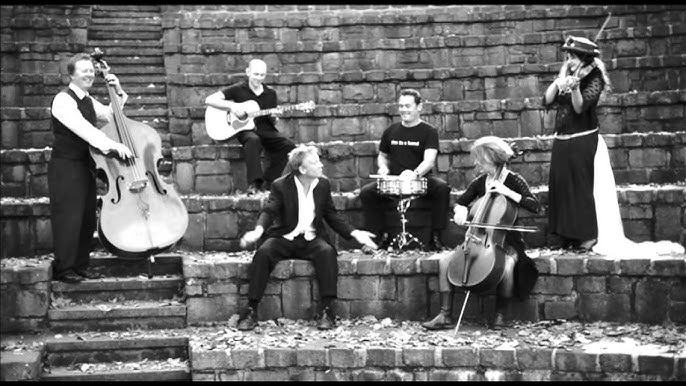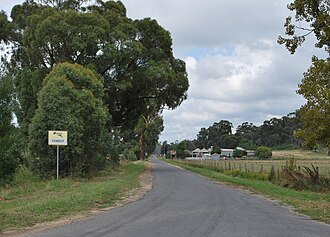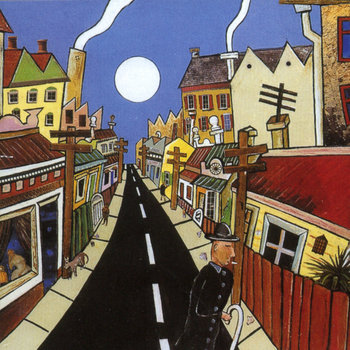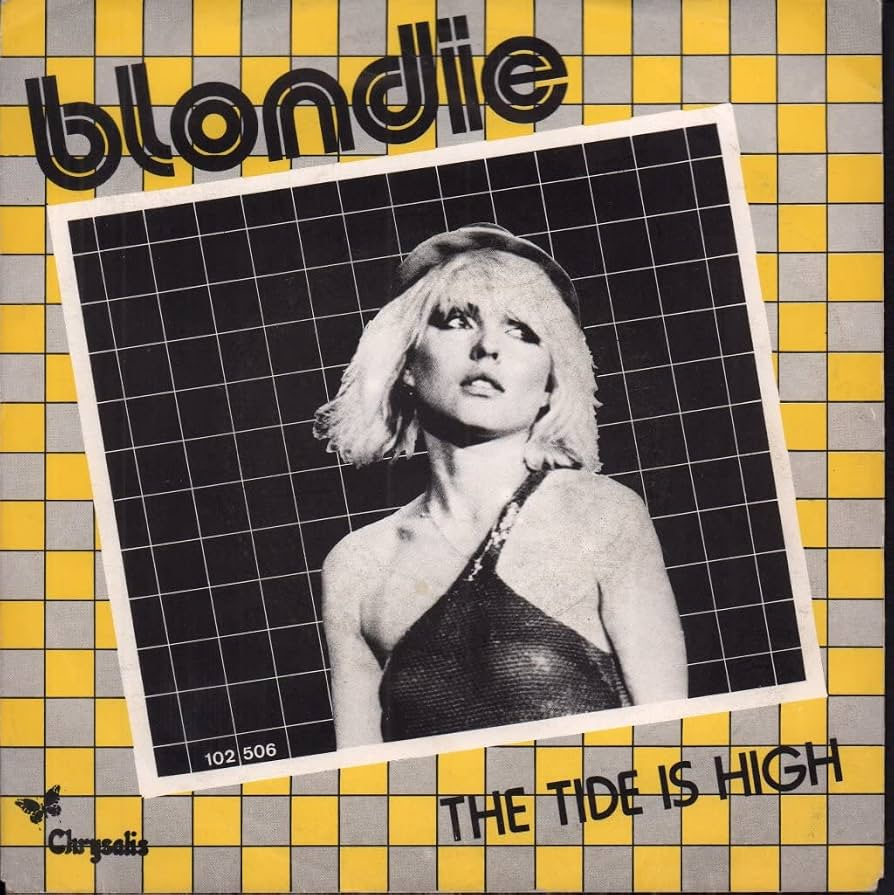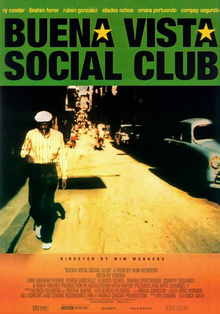
I recently heard Opening Night on someone’s random Spotify playlist, and as I cosily took it in, I quickly added it to my own project. And just now as I perused Ocie’s upcoming concerts, they will be performing in Australian small scene venues which I used to frequent watching ‘the Cake‘ and other modest local Melbourne acts. You see, Ocie Eliot isn’t a ‘she’. They are a Canadian indie folk duo of Jon Middleton and Sierra Lundy from Victoria, B.C., Canada.
Opening Night is such a soothing and calming song and it contains slow melodic moments which I found so stirring and impacting. Also some of the content reminded me of a poem I wrote decades ago called Mornington in reference to a coastal town on the South-east of Melbourne. I wrote: Forget the seedy districts –I mean the beatnik cafeteria, remember? As it happens, the duo met in a chance encounter in a café which led to their collaboration, and their ultimate partnership.
Sierra and Jon have cultivated a fast-growing following by releasing a captivating series of live acoustic videos on Facebook recorded in the cozy confines of the couple’s Honda CR-V (which, Sierra explains, offers “organically well-rounded and self-contained” acoustics that lend an intimacy to their intricate harmonies). – Ocie Elliot – The Ark
As referred to above, there is probably no a better example of that synchronicity and harmony than their singing in their car here. As the Ark article adds: The novel approach has paid off, with a million streams of their most popular tracks on Spotify and Apple Music, as well as sold-out shows.
It’s really lovely and I can see how they made great inroads, even having their song Run To You featured on an episode of Grey’s Anatomy.
Ocie Elliot cited Gillian Welch, John Prine, Bob Dylan, and Simon & Garfunkel as their biggest influences.
Bye in the morning Bye at night Bye in the evening, bye′s on my mind
Flying in airplanes Drinking in bars Sleeping in bedrooms that are never ours
Let the strings go, fall through the sky Come down quick like blinds in the night
You’re feeling angry You want to fight You want to restore love to its former height
Dream of the future Think of the past Wondering how it′s all going to last
Then some opening bars start to sound Forget our bodies and move all around
When we come back down from the highs Say our hellos, stall our goodbyes
You know any song that starts with “A-weh-uh-heh-uh-ell” (a drawn-out “well”) has to be pretty darn good. There are few more jumpy and exciting starts in the rock annals than Buddy’s lead utterance into Rave On! He really put his vocal hiccups and stutters to amazing use here, as he did on so many of his other songs. Holly is instantly recognisable as the artist.
It’s been a long time since Buddy’s music has graced these pages, but he’s back – and with a real rocker. Few people wouldn’t have heard this legendary track. It has become one of Buddy’s most enduring songs decades after its release. I think some of his best singing is on this record, delivered with such giddy enthusiasm and youthful energy, which we’ll touch on a bit more later.
Whenever I hear Buddy, there’s a tinge of sadness. He was taken from us in the prime of his early adulthood and musical success, along with other burgeoning talents Ritchie Valens and The Big Bopper (J.P. Richardson), in that 1959 plane crash – “the day the music died,” as it was most famously referred to in Don McLean’s song American Pie. Such was Buddy’s immense natural talent and songwriting prowess at such a tender age that, had he continued, it’s really hard to put a limit on how big he might have become. He was also, by all accounts, an affable young man who oozed charm.
From the moment I first heard him, I felt akin. I felt related, like he was an older brother. I even thought I resembled him. Buddy played the music that I loved – the music I grew up on: country western, rock ‘n’ roll, and rhythm and blues…He was the archetype. Everything I wasn’t and wanted to be. I saw him only but once, and that was a few days before he was gone. – excerpt from Bob Dylan’s2016 Nobel Prize in Literature speech
As I alluded to earlier, Holly had these idiosyncratic vocals and spontaneous sounds which showed his playful and inventive approach to music, contributing to his lasting influence on rock and roll. He uses vocal embellishments and elongated syllables (“you-ah-hoo,” “goodni-hi-ight,” “I love you-hoo”), so you could never confuse his delivery with anyone else. It was also simply great fun to listen to, because you could sense that he was having fun too.
Most of the following was abridged from the Wikipedia article below:
Rave On! is a song written by Sonny West, Bill Tilghman and Norman Petty in 1958. It was first recorded by West for Atlantic Records…Buddy Holly recorded the song later the same year, and his version became a hit, one of six of his recordings that charted in 1958.
The song charted at No. 37 in the US and No. 2 in the UK. So Rave On didn’t break into the U.S. top tier like “That’ll Be the Day” (No. 1) or “Peggy Sue” (No. 3). Holly’s rendition of “Rave On” is ranked number 154 on Rolling Stone magazine’s 2004 list of “The 500 Greatest Songs of All Time.”
[Verse 1] A-weh-uh-heh-uh-ell The little things you say and do Make me want to be with you-ah-hoo
[Chorus 1] A-Rave on, it’s a crazy feeling and-a I know it’s got me reeling When you say, I love you-hoo, rave on
[Verse 2] The way you dance a-and hold me tight The way you kiss and say goodni-hi-ight
[Chorus 1] A-Rave on, it’s a crazy feeling and-a I know it’s got me reeling When you say, I love you-hoo, rave on (du-ba-de-du-ba-de-dum)
[Chorus 2] A-well rave on, a-it’s a crazy feeling and I know, it’s got me reeling I’m so glad, that you’re revealing Your love for me Rave on, rave on and tell me Tell me, not to be lonely Tell me, you love me only Rave on to me
[Chorus 2] A-well rave on, a-it’s a crazy feeling and I know, it’s got me reeling I’m so glad, that you’re revealing Your love for me Rave on, rave on and tell me Tell me, not to be lonely Tell me, you love me only Rave on to me
There is no other artist I relate to more personally in her writing and music than Christina Perri. My favourite female troubadour and balladeer is back with yet another beautiful composition. Much of her music reveals itself slowly, growing stronger with each listen, and Tiny Victories is very much one of those songs. When I first heard it, I wasn’t even sure I liked it. But, as is often the case with her work, the more I listened, the deeper it went and the more it stayed with me.
What is striking about Perri’s music is that, although it often deals with grief and depression – as Tiny Victories clearly does – it somehow ends up feeling uplifting and even therapeutic. What could easily sound heavy or bleak instead offers comfort and reassurance to the listener.
Allow me to digress briefly with a personal example of how this song affected me. I was walking down a busy street near where I live, headphones on as usual. I wasn’t feeling great that morning – flat, unsettled, and just “blah.” When Tiny Victories came on, my first thought was that this was probably not what I needed in that mood. But as I kept listening, the words cut through the noise around me and slowly settled in my mind.
By the end of the song, I felt calmer and more grounded, as if something had gently reset my thinking. Lines like, “But every day that I don’t hide myself away / To me, is a tiny victory,” rang painfully true to my own life. Sometimes just showing up really is enough.
At times, Christina Perri’s music feels like a kind of car wash for the mind. It cleans things out. It feels as helpful for the listener as it must be for her to write it. That, I think, is her great gift. Even when the subject matter is dark, the message is quietly hopeful. Tiny Victories reminds us that small steps matter, and that we don’t need to demand too much of ourselves. As the Spanish saying goes, poco a poco – little by little.
As my yogi guru Nirvair Singh Khalsa once said, “It’s not the life you lead, but the courage you bring to it.” The fact that a single song can trigger this kind of reflection shows how deeply Perri’s music can reach, at least for me. Her writing is precise, honest, and emotionally sharp – at times approaching a Leonard Cohen level of craft. I just feel grateful to be let in and hear it.
[Verse 1] Some days, I Iook in the mirror and I think The meanest things, all the meanest things Some days, I’m holding my self-worth up By a string, a string But every day that I don’t hide myself away To me, is a tiny victory
[Verse 2] Some days, it feels like a wrecking ball swinging Through my ribcage, my ribcage Some nights I’m just a million broken pieces singin’ On a stage I’m a little more broken open, but a little more free And that’s a tiny victory
[Chorus] And if battles can win a war I can keep picking my sword up off the floor And learn to treasure these Tiny victories, tiny victories
[Verse 3] Some days, givin’ up on myself looks so So easy to do, it’s so easy to do The struggle is slow, I’m barely movin’ the needle And the cracks may be few, but there’s light coming through
[Chorus] And if battles can win a war I can keep picking my sword up off the floor And learn to treasure these Tiny victories, tiny victories Tiny victories, tiny victories
[Outro] Every day that I don’t hide myself away Every day that I don’t hide myself away To me, is a tiny victory
How this song wasn’t in my collection from the very beginning is anyone’s guess. What surprised me most when I revisited it after a long break was just how unfiltered and country the original studio recording sounds on its own. For a moment, I even wondered if I was listening to an early or rough version rather than the original release I knew from the video.
I think that confusion comes from the video itself, which leans heavily into a pop aesthetic and is often linked to the period when the Canadian singer Shania Twain crossed further into mainstream territory. That commercial gloss which comes through the video, enabled the song to reach audiences beyond traditional country fans – and clearly, it worked. Yet when you strip all the veneer away and simply listen to the song, it remains rooted in the upbeat, classic country style that first defined Shania’s career. It could have also been the dance version which I got confused by.
That Don’t Impress Me Much is arguably Shania’s most recognisable song, or at least one of them. Early on, I probably didn’t give it the respect it deserved, partly because of its flashy presentation and how relentlessly it dominated the airwaves for a time. But listening to it again years later, it’s clear that time has been kind to it. The lyrics are sharp, humorous, and direct, and the music is authentic, lively country that is effortlessly catchy. I really like the moments of amusement throughout the song, which are one of the signature qualities of Twain’s music (ie Man! I Feel Like a Women, Don’t Be Stupid & Any Man of Mine). It’s genuinely cute and charming, yet bold at the same time.
The following was abridged from the Wikipedia article below:
That Don’t Impress Me Much was released as the 7th single from Shania’s 3rd studio album Come On Over. The song was written by Robert John “Mutt” Lange and Twain. It became her third biggest single on the Billboard peaking at No. 7 and remains one of Twain’s biggest hits worldwide reaching No. 3 in the UK and No. 2 in Australia and top 10 in a whole host of other countries.
In 2017, during a listening party for her fifth studio album Now, Twain revealed the reason behind using Brad Pitt’s name instead of other suitable male celebrities saying that after she heard about the scandal between Pitt and Gwyneth Paltrow and the subsequent leaking of Pitt’s naked photo in Playgirl magazine, she was left unimpressed by all the fuss as she found it was normal to see naked people.
[Intro] Ow Uh-huh, yeah, yeah
[Verse 1] I’ve known a few guys who thought they were pretty smart But you’ve got being right down to an art You think you’re a genius, you drive me up the wall You’re a regular original, a know-it-all
[Pre-Chorus] Oh-oh, you think you’re special Oh-oh, you think you’re something else Okay, so you’re a rocket scientist
[Chorus] That don’t impress me much So you got the brains, but have you got the touch? Now, don’t get me wrong—yeah, I think you’re alright But that won’t keep me warm in the middle of the night That don’t impress me much Uh-huh, yeah, yeah
[Verse 2] I never knew a guy who carried a mirror in his pocket And a comb up his sleeve—just in case And all that extra hold gel in your hair oughta lock it ’Cause heaven forbid it should fall outta place
[Pre-Chorus] Oh-oh, you think you’re special Oh-oh, you think you’re something else Okay, so you’re Brad Pitt
[Chorus] That don’t impress me much (Oh, oh, ooh) So you got the looks, but have you got the touch? Now, don’t get me wrong—yeah, I think you’re alright But that won’t keep me warm in the middle of the night That don’t impress me much Yeah
[Verse 3] You’re one of those guys who likes to shine his machine You make me take off my shoes before you let me get in I can’t believe you kiss your car good night Now, come on, baby, tell me, you must be joking, right?
[Pre-Chorus] Oh-oh, you think you’re something special Oh-oh, you think you’re something else Okay, so you’ve got a car
[Chorus] That don’t impress me much (Oh, oh, ooh) So you got the moves, but have you got the touch? Now, don’t get me wrong—yeah, I think you’re alright But that won’t keep me warm in the middle of the night That don’t impress me much (That don’t impress me) Oh, oh no, you think you’re cool, but have you got the touch? Now, now, don’t get me wrong—yeah, I think you’re alright But that won’t keep me warm on the long, cold, lonely night That don’t impress me much Uh-huh, yeah, yeah
[Outro] Okay, so what do you think, you’re Elvis or something? Whatever That don’t impress me
I’m dusting off my rarely used sporting segment to highlight Carlos Alcaraz’s magnificent seventh Grand Slam victory, achieved at the 2026 Australian Open yesterday. The win makes the 22-year-old Spaniard the youngest player in history to complete the career Grand Slam, having now won all 4 mayors – the French Open, Wimbledon, the US Open, and the Australian Open.
I’ve taken a keen interest in tennis ever since I was a kid, largely because our family played so often. My mother was a tennis coach, and we would regularly play at a local tennis centre near our home in Kurrajong Heights in Western Sydney, where Mum also coached. I also remember watching Wimbledon documentaries on VHS tapes. With my trusty Emrik wooden tennis racquet and trying to look like a hot-shot, I used to copy John McEnroe’s awkward, side-on serving style, complete with a sharp twisting motion. Unlike today’s players, whose technique is clean and direct, mine was anything but. I was also a bit high-strung on court like Johnny Mac, but shhhh – we’ll keep that to ourselves.
My mother, Rosemary, also has some interesting tennis history that fans of the sport might enjoy. As a youngster, she was coached by Vic Edwards, who was the long-time coach of Australian legend Evonne Goolagong Cawley. On another occasion, while Mum was hitting balls against a brick wall near the flats where she lived, Ken Rosewall appeared and handed her a tennis ball. Mum described her reaction to me: “I ran home and told Nanny – she was beside herself. He was such a lovely man.”
Back to Alcaraz and his most recent remarkable accomplishment at just 22 years of age. Not only is he the most entertaining tennis player I have ever watched, but his movement, speed, shot selection, and tactical awareness are on another level. As someone who has followed the game fairly closely for most of my life, I can say without hesitation that I have never enjoyed watching a tennis player more than Carlos Alcaraz.
As a kid, I got a kick out of watching John McEnroe for his natural talent, creativity, and fiery temperament. Carlos Alcaraz, meanwhile, plays with explosive athleticism, fine touch and a high level of sportsmanship and affability. He has been my favourite player for some time now, and even if he were to stop tomorrow, I would still consider him the greatest tennis player I’ve ever watched, and one of the very greatest sportspeople of my lifetime.
Alcaraz’s opponent in yesterday’s final was Novak Djokovic, who needs no introduction. At 38 years of age, Djokovic won his first ATP title in 2006, when Alcaraz was just two years old. He remains the most successful men’s player in Grand Slam history, with 24 major titles. Djokovic’s ability to reach another Australian Open final at his age – and to challenge Alcaraz strongly in the early stages – is a clear testament to his durability, discipline, and competitive spirit.
One of the great memories I’ll have of the final wasn’t even from the game itself; rather, it was Djokovic’s post-game speech as he accepted the runner-up trophy – the first time he’d ever held that plate at the Australian Open, too. It was one of the funniest, most respectful, and humble speeches I’ve ever seen post-game, and in case you didn’t see it, I’ll forward it at the end of this post. How he’s able to joke around so much and be so gracious and warm in defeat is really something else, and he truly deserves all the cheers and respect from tennis fans worldwide.
Today’s featured instrumental, The Lonely Bull, was the first song to popularise mariachi-style horns on mainstream western pop radio. In 1962, it peaked at No. 6 in the US and No. 1 in Australia. Soon after, Johnny Cash added Mexican-style trumpets to his monumental 1963 country hit The Ring of Fire. Cash recalled that after hearing Anita Carter’s original version of the song, he dreamed it was accompanied by “Mexican horns,” noting that the addition of trumpets marked a departure from his basic sound.
I first encountered this now-iconic Mexican-song in the film Jerry Maguire, whose magnificent soundtrack has already been discussed here in relation to Dylan’s Shelter From the Storm and Springsteen’s Secret Garden.
The Lonely Bull alludes to the solitary bull in the bullfighting arenas once common across Spain and much of Latin America. Whenever I think of bullfighting, my mind inevitably turns to Ernest Hemingway’s vivid accounts of the tradition in The Sun Also Rises and Death in the Afternoon. I once visited Bogotá’s Plaza de Toros La Santamaría, not for a corrida (bullfight), but to watch a Davis Cup tennis tie between Colombia and the United States (image inset).
Background (Wikipedia)
While experimenting with the sound of an overdubbed trumpet, Herb Alpert recorded this song in his garage. The single and album recordings of the song were recorded at Conway Recording Studios in Hollywood by members of The Wrecking Crew, and featured the sounds of a crowd cheering “Olé” inside a bullfight arena in Mexico, as well as the sounds of the trumpets announcing the matador before he enters the bullring. A video for the song was filmed in 1967 inside the Toreo de Tijuana bullring.
I Was Only 19 is a testimony about the plight of an Australian soldier in the Vietnam War, and it sits as a kind of sister song to Khe Sanh by Cold Chisel. Khe Sanh is the more upbeat, melodic and vibrant of the two, where you can feel the camaraderie and patriotism in its delivery. I recalled in that respective post how, from the military academy, at almost every pub we hit while on leave, we’d chant Khe Sanh at the top of our lungs, parading in a circle with our arms around each other’s shoulders.
I Was Only 19, on the other hand, is a lot more stark and solemn. Here, in this narrative, the soldier is alone – alone, alone. As a listener, you feel his hopelessness and solitude, and as the song progresses you hear how his innocence is stripped away through his harrowing ordeal. It stunned me the first time I heard it – such a powerful piece of songwriting craftsmanship.
I Was Only 19 feels almost more like spoken testimony than a traditional song. The first-person narrative is highly specific, naming places, training routines, and weapons. It also uses very colloquial Australian language. As a born-and-bred Australian, and someone from a military background, I found many of the references familiar and affecting. This includes the SLR rifle mentioned in the song, which we kept in our quarters during the early part of our training years, before it was later replaced in the Australian Army by the Steyr AUG. He also mentions VB (Victoria Bitter), one of Australia’s most well-known beers, which, as it happens, I too drank well beyond what would be deemed healthy.
At its core, I Was Only 19 is a bare-bones, “warts and all” account of war. It even extends to life after service, with the narrator describing post-war health issues to a doctor, including a rash that comes and goes, alongside deeper psychological scars. It is an unfiltered and chilling historical account, one that arguably belongs as much in a national war museum as it does on a record. In fact royalties for the song go to the Vietnam Veterans Association of Australia.
The song strips away the myths of war – the showmanship, bravado, and macho posturing – and leaves us with the portrait of a single man, permanently changed, carrying lasting physical and mental trauma.
The following was abridged from the Wikipedia article below:
I Was Only 19 was released in March 1983 as a single, which hit number one on the Australian charts for two weeks. It became the most widely recognised song by the band.
The context is the return of Vietnam vets to a sometimes hostile reception in Australia, what John Schumann (lead vocalist – guitarist) perceived as soldiers returning to Australia from a “war that nobody wanted to honour [their] service in”. Schumann wrote the song from a sense of injustice at this.
He wrote the song based on experiences he heard from veterans, particularly Mick Storen (his brother in-law) and Frankie Hunt. The mine experiences in the story pertain to an incident during Operation Mundingburra on 21 July 1969 of which Storen experienced. Schumann has said that “the power derives from the detail, provided by my mate and brother-in-law, Mick Storen, who was brave and trusting enough to share his story with me.”
[Verse 1] Mum and Dad and Denny saw the passing out parade at Puckapunyal It was a long march from cadets The Sixth Battalion was the next to tour, and it was me who drew the card We did Canungra and Shoalwater before we left
[Chorus] And Townsville lined the footpaths as we marched down to the quay This clipping from the paper shows us young and strong and clean And there’s me, in me slouch hat, with me SLR and greens God help me I was only nineteen
[Verse 2] From Vung Tau riding Chinooks to the dust at Nui Dat I’d been in and out of choppers now for months And we made our tents a home: VB, and pinups on the lockers And an Agent Orange sunset through the scrub
[Chorus] And can you tell me, doctor, why I still can’t get to sleep? And night time’s just a jungle dark and a barking M16? And what’s this rash that comes and goes? Can you tell me what it means? God help me I was only nineteen
[Verse 3] A four-week operation when each step could mean your last one on two legs It was a war within yourself But you wouldn’t let your mates down ’til they had you dusted off So you closed your eyes and thought about somethin’ else
[Verse 4] And then someone yelled out “Contact!” and the bloke behind me swore We hooked in there for hours, then a God-almighty roar And Frankie kicked a mine the day that mankind kicked the moon God help me He was going home in June
[Verse 5] And I can still see Frankie drinkin’ tinnies in the Grand Hotel On a thirty-six hour rec leave in Vung Tau And I can still hear Frankie lying screaming in the jungle ‘Til the morphine came and killed the bloody row
[Verse 6] And the ANZAC legends didn’t mention mud and blood and tears And the stories that my father told me never seemed quite real I caught some pieces in my back that I didn’t even feel God help me I was only nineteen
[Chorus] And can you tell me, doctor, why I still can’t get to sleep? And why the Channel Seven chopper chills me to my feet? And what’s this rash that comes and goes? Can you tell me what it means? God help me I was only nineteen
I’m beginning to sound like a broken record, but here’s yet another great B-side from The Smiths. On this occasion, Please, Please, Please Let Me Get What I Want appears as the B-side to their magnificent single William, It’s Really Nothing. Morrissey even said about Please, Please – “Hiding it away on a B-side was sinful” and “I feel sad about it now“.
Please, Please is a new addition to what is becoming a fairly extensive collection of The Smiths’ music in my Music Library Project. One of my favourite quotes about the band is: “The Smiths are the band from the ’80s – most anti-’80s.” They remain an enigmatic band to me for two main reasons:
Firstly, The Smiths feel like the gift that keeps on giving. Just when I think I’ve heard everything of value in their catalogue, another song seems to surface and it hits home. Today’s featured song is a good recent example of that.
Secondly, their music often feels like an acquired taste. It asks something of the listener – time, focus, and immersion – before its meaning really opens up. Many of their songs reward repeated listens, and each time, the appreciation and enjoyment seem to grow.
Please, Please, Please Let Me Get What I Want, in keeping with The Smiths’ usual approach, pairs Morrissey’s melancholic and slightly melodramatic vocals with Johnny Marr’s familiar, cutting guitar sound. Despite the downcast delivery, the subject matter is unusually hopeful for Morrissey, as he sings about having “good times for a change.” There is still an undercurrent of self-pity, reflecting on past misfortune, but this time he is pleading for a moment of happiness to last. The song is short, running at just 1:57, yet it gives it just enough time to make a subtle, yet affecting impression.
The following was abridged from the Wikipedia article below:
Johnny Marr wrote the music to “Please Please Please Let Me Get What I Want” shortly after its eventual A-side, “William, It Was Really Nothing“. Marr commented, “Because that was such a fast, short, upbeat song, I wanted the B-side to be different, so I wrote ‘Please Please Please Let Me Get What I Want’ on Saturday in a different time signature – in a waltz time as a contrast“. Marr has also noted that the music was an attempt to “capture the … spookiness and sense of yearning” in Del Shannon’s “The Answer to Everything“, a song his parents played for him as a child.
The band’s label, Rough Trade, initially was concerned about the song’s short length. Morrissey recalled, “When we first played it to Rough Trade, they kept asking, ‘Where’s the rest of the song?'” Morrissey, who characterized the song “a very brief punch in the face,” argued, “Lengthening the song would, to my mind, have simply been explaining the blindingly obvious“.
The song featured on the compilation albums Hatful of Hollow and Louder Than Bombs. The song was also included on the soundtrack album of the 1986 film Pretty in Pink and featured in the 1999 film Never Been Kissed. An instrumental cut of the cover from the Dream Academy was featured in the 1986 film Ferris Bueller’s Day Off.
[Verse 1] Good times for a change See, the luck I’ve had Can make a good man turn bad
[Chorus] So please, please, please Let me, let me, let me Let me, get what I want this time
[Verse 2] Haven’t had a dream in a long time See, the life I’ve had Can make a good man bad
[Chorus] So, for once in my life Let me get what I want Lord knows it would be the first time Lord knows it would be the first time
There are two things I find so alluring about this meditative and sombre song. Firstly, Mavis Staples’ vocals carry profound emotional depth and feel timeworn and soulful, shaped by decades of lived experience. Critic C.J. Fox once described it as “a voice as warm and welcoming as a mama’s hug.” Secondly, the sparse instrumentation – particularly the interlacing slide guitar – evokes a deep sense of nostalgic Americana – visions of breezy air and open terrain, adding rich texture to the song’s melancholy mood.
Together, the music and Staples’ voice embody the song’s oxymoronic title – sad and beautiful at the very same time. She finds beauty even amid the grief over everything that’s been lost.
Sad and BeautifulWorld was original written by Mark Linkous a.k.a. Sparklehorse. It is the title track from Mavis Staples 14th studio album released in November 2025.
Martin Anderson from WNCW 88.7 said this about the album: The album spans seven decades of the American songbook – a range nearly as vast as Mavis’ career – and includes reinventions of timeless songs as well as original music. It also includes cameos by artists who have become part of Mavis’ world, many of whom are legends in their own right: Buddy Guy, Bonnie Raitt, Jeff Tweedy, Derek Trucks, Katie Crutchfield, MJ Lenderman, Justin Vernon, and others shine a light on her while Mavis does what only she can do. Embracing vulnerability, she sings close and deep here, drawing the listener into a circle filled with her unforgettable presence.
Mavis Staples is an American singer born on July 10, 1939, in Chicago, Illinois. She began her career singing gospel music with her family group, The Staple Singers, formed by her father Roebuck “Pops” Staples. The group gained national attention in the 1950s and later moved into soul and folk music during the 1960s and 1970s, recording songs that reflected social and political themes of the civil rights era. Mavis Staples launched a solo career in 1969 and has continued recording and performing into the 21st century. She has worked with a wide range of artists and producers across gospel, soul, R&B and folk music.
[Verse 1] Sometimes I get so sad Sometimes you just make me mad
[Chorus] It’s a sad and beautiful world It’s a sad and beautiful world
[Verse 2] Sometimes I just won’t go Sometimes I just won’t say no
[Chorus] It’s a sad and beautiful world It’s a sad and beautiful world
[Verse 3] Sometimes days go speeding past Sometimes this one seems like the last
[Chorus] It’s a sad and beautiful world It’s a sad and beautiful world
With family ancestry that partly originates from Scotland, I’ve always had a soft spot for anything Scottish, and that definitely includes Amy Macdonald’s music. Her whole folk-indie rock sound is right up my alley, which probably comes as no surprise to anyone here. When I saw her sing the Scottish anthem Flower of Scotland in near-freezing temperatures in a football stadium – my god, did she have the vocal chops. It still sends shivers down my spine whenever I see it.
Now onto today’s song, Mr Rock & Roll. I’ve heard my fair share of catchy songs that grab you from the get-go, but to these ears, Mr Rock & Roll operates on a whole other level of infectiousness. The immediacy of its appeal lies in that buoyant, jangly guitar rhythm – it’s really the backbone of the song.
Then you’ve got Macdonald’s super-cool Scottish accent. She sings so clearly, confidently, and with some rawness. There’s a real narrator aspect to her voice and what she’s saying is top-notch storytelling. From the lyrics, you realise in life you meet people that are great in your life, then they become strangers, then same thing repeats again and again.
The arrangement perfectly complements her lyrical tales of quirky characters and emotional longing. Overall, Mr Rock & Roll is upbeat, punchy, and effortlessly melodic. Along with This Is The Life – another song recently featured here – it marked Amy Macdonald’s breakthrough moment.
The following was abridged from the Wikipedia article below:
Mr. Rock & Roll is the first track on Macdonald’s debut album, This Is the Life (see image inset) and was released in the UK on 16 July 2007. The song is to date her most successful in the UK, charting at No. 12 in the UK and No. 1 in Scotland.
Curious trivia for you – This song was featured on the BBC Olympics 2008 programming, where it was played as the show looked over the day’s events.
[Verse 1] So-called Mr. Rock and Roll he’s dancing on his own again Talking on his phone again To someone who tells him that his balance is low He’s got nowhere to go, he’s on his own again
Rock chick of the century is acting like she used to be Dancing like there’s no one there Before she ever seemed to care, now she wouldn’t dare It’s so rock and roll to be alone
[Chorus] And they’ll meet one day far away, and say “I wish I was something more” And they’ll meet one day far away and say “I wish I knew you, I wish I knew you before”
[Verse 2] Mrs. Black and White, she’s never seen a shade of grey Always something on her mind, every single day But now she’s lost her way And where does she go from here?
Mr. Multicultural sees all that one could see He’s living proof of someone very different to me But now he wants to be free Free so he can see
[Chorus]
[Bridge] He’ll say, “I wish I knew you I wish I met you when time was still on my side” She’ll say, “I wish I knew you I wish I loved you before I was his bride”
[Verse 3] And so they must depart, too many more broken hearts But I’ve seen that all before In TV, books, and film and more And there’s a happy ending, every single day