
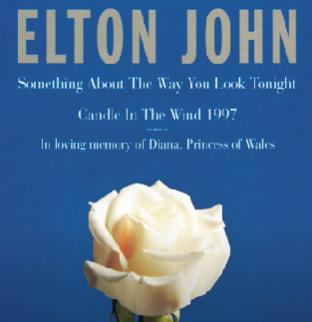
Candle in the Wind is one of those songs that feels to me like it’s been around forever. Elton John and Bernie Taupin wrote it in 1973 as a tribute to Marilyn Monroe, though it always reached beyond her story. Taupin later said it was really about the way fame can swallow someone whole and how the public chooses to remember its icons. Elton’s early-70s voice, still warm and elastic, gives the song a kind of open-hearted sincerity that’s almost unmatched in contemporary music.
Everyone remembers where they were in 1997 when the song returned in its rewritten form: Goodbye England’s Rose, Elton’s tribute to Princess Diana. He performed it at her funeral in Westminster Abbey, and that single moment became one of the most-watched broadcasts in history. The new lyrics were built for a nation in grief. It went on to become the best-selling physical single of all time.
Musically, Candle in the Wind is simple – piano, soft percussion, and a melody that lifts just enough in the chorus to draw you in. But its legacy lives in how people connect to it. Many of us have a memory tied to this song: for me, it was hearing it on my parents’ vinyl, and later being enamoured by the Diana version, where Elton nudges his voice up a register in the final moments (around 3:45). It’s a small shift, but an undeniably moving one.
If Elton has many showman masterpieces, Candle in the Wind is his quiet one – the song where he steps back and lets the tribute speak for itself. And maybe that’s why it endures.
References:
1. Candle in the Wind – Wikipedia

“The more I live, the more I learn. The more I learn, the more I realize, the less I know.”- Michel Legrand


 Observation Blogger
I always favored the 1973 version.
I would never even compare them, but I like how Elton ends on a higher register in the Diana adaption. He did it a few times on Your Song as well. It always blows me away.