The Messiah is the second composition from George Frideric Handel to feature here. The previous was the exquisite opening aria from his 1738 opera Serse also known as Ombra mai fu and Largo from Xerxes or Handel’s Largo. The Messiah premiered 3 years later in Dublin on 13 April 1742. I have presented below two of the most famous pieces from it, namely Hallelujah and The Pastoral Symphony. Most of the information contained in this article was sourced from the Wikipedia article below.
Messiah is an English-language oratorio. An oratorio is a large musical composition for orchestra, choir, and soloists. Like most operas, an oratorio includes the use of a choir, soloists, an instrumental ensemble, various distinguishable characters, and arias. However, opera is musical theatre, while oratorio is strictly a concert piece.
Handel’s reputation in England, where he had lived since 1712, had been established through his compositions of Italian opera. He turned to English oratorio in the 1730s in response to changes in public taste; Messiah was his sixth work in this genre. The text was compiled from the King James Bible and the Coverdale Psalter by Charles Jennens. Jennens’s text is an extended reflection on Jesus as the Messiah called Christ. The text begins in Part I with prophecies by Isaiah and others, and moves to the annunciation to the shepherds, the only “scene” taken from the Gospels. In Part II, Handel concentrates on the Passion of Jesus and ends with the Hallelujah chorus. In Part III he covers Paul’s teachings on the resurrection of the dead and Christ’s glorification in heaven.
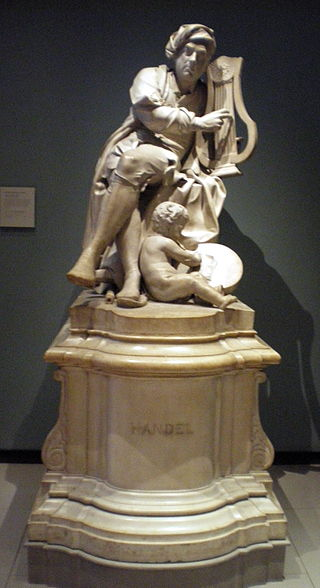
The composer George Frideric Handel, born in Halle, Germany in 1685, took up permanent residence in London in 1712, and became a naturalised British subject in 1727. By 1741 his pre-eminence in British music was evident from the honours he had accumulated, including a pension from the court of King George II, the office of Composer of Musick for the Chapel Royal, and—most unusually for a living person—a statue erected in his honour in Vauxhall Gardens.
In July 1741 librettist Charles Jennens sent Handel a new libretto for an oratorio; in a letter dated 10 July to his friend Edward Holdsworth, Jennens wrote: “I hope [Handel] will lay out his whole Genius & Skill upon it, that the Composition may excel all his former Compositions, as the Subject excells every other subject. The Subject is Messiah“.
During the 1750s Messiah was performed increasingly at festivals and cathedrals throughout the country. Individual choruses and arias were occasionally extracted for use as anthems or motets in church services, or as concert pieces, a practice that grew in the 19th century and has continued ever since. After Handel’s death, performances were given in Florence (1768), New York (excerpts, 1770), Hamburg (1772), and Mannheim (1777), where Mozart first heard it.
References:
1. Messiah (Handel) – Wikipedia

“The more I live, the more I learn. The more I learn, the more I realize, the less I know.”- Michel Legrand


 Observation Blogger
Leave a comment