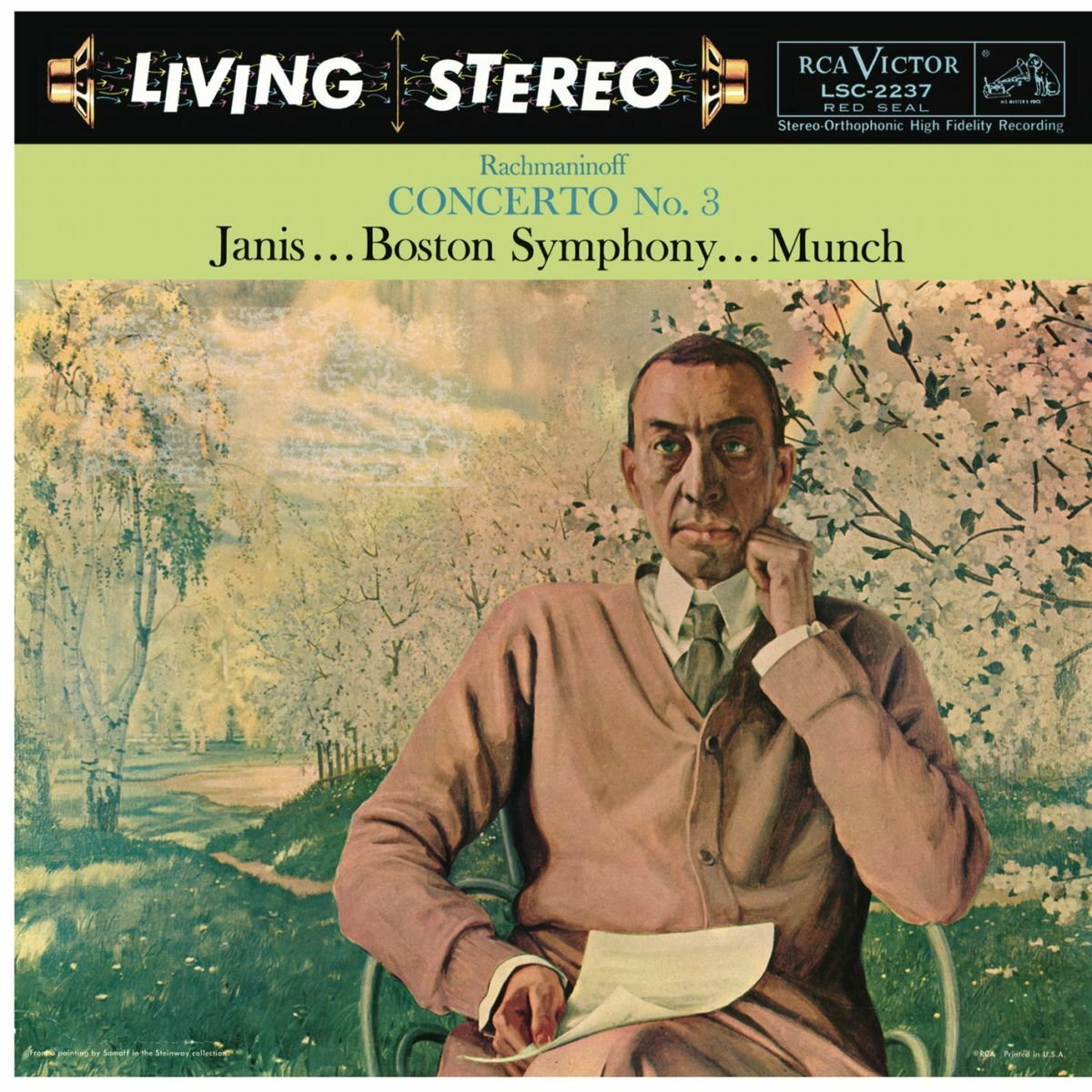
Below is a quote from the Australian movie Shine (1996) (which featured here at Friday’s Finest in 2021), referring to how today’s featured movement from Rachmaninoff – Piano Concerto No. 3 (Rach 3) is a notoriously challenging piece:
- Cecil Parkes: No one’s ever been mad enough to attempt the Rach Three.
- David Helfgott: Am I mad enough, professor? Am I?
The Russian classical music composer Sergei Rachmaninoff is no stranger to this blog having featured here 5 times already. I was a relative latecomer to appreciating Rachmaninoff, but now I listen to him frequently. I first heard his music when academy award winner Geoffrey Rush wowed audiences playing David Helfgott in the Australian movie – Shine.
Most of the following was extracted and paraphrased in part from the Wikipedia reference below:
Piano Concerto No. 3 was composed during the summer of 1909 and made its debut on November 28 of the same year in New York City, with Rachmaninoff himself as the soloist. He was joined by the New York Symphony Society, conducted by Walter Damrosch. This concerto is widely regarded as one of the most demanding works in the classical piano repertoire, pushing even seasoned pianists to their technical limits. Josef Hofmann, the pianist to whom the work is dedicated, never publicly performed it, saying that it “wasn’t for” him.
Rachmaninoff, being a masterful pianist, tailored his compositions for the piano to match both his personal preferences and his unique abilities. Standing tall with long, nimble fingers, he possessed an impressive hand span. His pieces are notoriously demanding, especially for pianists with smaller hands, and even those with average reach may find his works particularly challenging to play.
Due to time constraints, Rachmaninoff could not practice the piece while in Russia. Instead, he practiced Piano Concerto No. 3 on a silent keyboard that he brought with him while en route to the United States.
Public opinion regarding the Third Concerto was mixed in the beginning, but by 1919 it turned more positive. The concerto soon became more popular in the United States than the Second Concerto, partially due to the fact that Rachmaninoff wrote the Third specifically for his American tour.
According to Rebecca Mitchell’s “In Search of Russia: Sergei Rakhmaninov and the Politics of Musical Memory after 1917”, Rachmaninoff became a symbol of an old, nationalistic identity of Russia; many believed he was among the last. The Third Concerto served the same purpose as the Second he “spoke directly to the Russian soul.”
To set the scene for the video below from Shine which features Piano Concerto No. 3:
David Helfgott (Noah Taylor) who is now a star student at the Royal College of Music in London, and one of the candidates for the Concerto Medal. He proposes performing Rachmaninoff’s 3rd Concerto for Piano for his competition piece. His teacher, Professor Cecil Parkes (John Gielgud) begins the task of preparing him for a piece that he describes as ‘a monster’. Parkes warns him that it’s dangerous. Below is the result.
References:
1. Piano Concerto No. 3 (Rachmaninoff) – Wikipedia

“The more I live, the more I learn. The more I learn, the more I realize, the less I know.”- Michel Legrand


 Observation Blogger
Leave a comment