
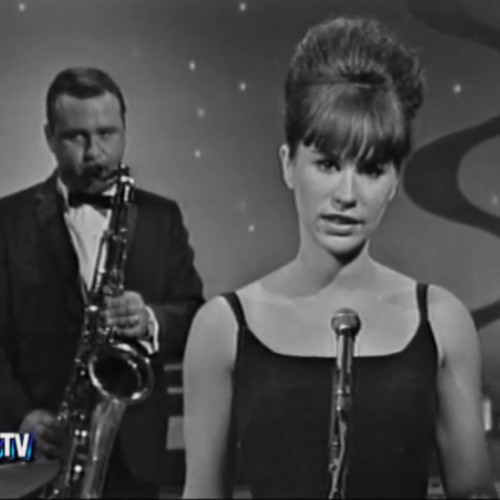
The Girl from Ipanema is so kitsch and cool. It embodies the 1960’s breezy elegance perhaps more than any other song. With its languid rhythm and innocent vocals by Astrud Gilberto, it captures the aura of city café society; the same stylish world inhabited by Petula Clark’s Downtown, Breakfast at Tiffany’s Sally’s Tomato or The Seekers’ Georgy Girl. But this track brought a Brazilian twist to the cocktail: a samba swaying through jazz’s smoky lounges. The Girl from Ipanema bridged continents, introduced Brazilian Bossa Nova music to the global mainstream, and became a symbol of cosmopolitan sophistication.
The following was extracted, rearranged and condensed from Scott Frampton’s excellent article linked at the bottom of this page:
How you hear The Girl from Ipanema says a lot about where you’re from. American versions, ones that made the song an elevator music cliché of easy-listening, are in the key of F. Brazilian musicians all know the song should be in D♭. The song became an international sensation thanks to Astrud Gilberto (pictured above). She wasn’t meant to sing on the sessions her husband João and Antônio Carlos “Tom” Jobim were cutting in New York with jazz saxophonist Stan Getz, but new English lyrics had been commissioned for the song, and her command of the language was the strongest of the Brazilians in the studio.
The shortened version of the song on the Getz/Gilberto album, in the key of D♭, would be a top-5 US pop hit in 1964, introducing Bossa Nova to Stateside audiences. The Portuguese lyrics to The Girl from Ipanema were written by Vinicius de Moraes, a poet and playwright best known for the film Black Orpheus. It’s a scene drawn from his own life, where he observed a 17 year-old girl passing by the Veloso bar-café on daily walks through the neighborhood, sometimes stopping in to buy cigarettes for her mother. The song was such a sensation in Brazil that the inspiration for the song, the titular “Girl,” a 17 year-old named Helô Pinheiro, would become famous in her own right.
Astrud Gilberto was an untrained singer, but her naïve vocals is said to have restored some of the melancholy from Moraes’s original lyrics. Moraes’s lyrics are laden with what he called the “gift of life in its beautiful and melancholic constant ebb and flow.” Astrud’s matter-of-fact vocals brush away the leering and exoticism from the tanned and lovely on Brazil’s beaches; it’s just a neighborhood scene. Her dispassionate near-whisper, in all its languorousness, also makes plain the truth that the U.S. version may have otherwise elided: The young beauty who passes you by is doing exactly that.
João Gilberto is known as the Father of Bossa Nova, which translates from Portuguese as “new trend” or “new wave.” Bossa Nova incorporated jazz and Tin Pan Alley songwriting into Samba, the Afro-Brazilian music that remains a national symbol of Brazil. This was not always a welcome development since it was initially seen as a whitewashing of this essential element of Brazilian culture.
In 2000, the 1964 release of the song by Stan Getz & Astrud Gilberto on Verve Records was inducted into the Grammy Hall of Fame.
Tall and tan and young and lovely
The girl from Ipanema goes walking
And when she passes, each one she passes goes “ah!”
When she walks she’s like a samba that
Swings so cool and sways so gently
That when she passes, each one she passes goes “ah!”
Oh, but he watches her sadly
How can he tell her he loves her?
Yes, he would give his heart gladly
But each day when she walks to the sea
She looks straight ahead not at he
Tall and tan and young and lovely
The girl from Ipanema goes walking
And when she passes he smiles
But she doesn’t see
References:
1. “The Girl from Ipanema” by Stan Getz, Astrud Gilberto, Joao Gilberto, and Antonio Carlos Jobim – Scott Frampton
2. The Girl from Ipanema – Wikipedia

“The more I live, the more I learn. The more I learn, the more I realize, the less I know.”- Michel Legrand


 Observation Blogger
I have always loved this song. (I was 4 years old in 1964).
I was in a wedding band in my teens & of course, this was one of the tunes we always played. I know ALL the old standards LOL
It’s so great! Your recollection about playing it in your wedding band is priceless.
There is a cool video of a performance of it, which I’ll send below. Her accent really does it for me:
I grew up on this one.
I’ve never heard this before…I like the jazz feel of it. I do like the live version above this comment.
The avant-garde of music in the 60’s cafe and design culture. Yet it originated from a guy sitting in Brazil watching a 17 year-old girl passing on her way to buy her mother cigarettes. Haha
That is why the 60s is probably my favorite era…not just for the Beatles. A whole lot of experimenting and different music hit the charts…like this! Love the origin of it.
What’s even more staggering, is they are sitting in the New York studio and just had the song commissioned for English subtitles. And the only person who knew a bit of English was Astrud Gilberto, the wife of João Gilberto in studio. They thought – what the heck.
Yes…take a chance! That is really cool.
I love “The Girl from Ipanema” – so smooth and groovy. I think Astrud Gilberto’s vocals are a perfect fit!
And she just happened to be there and able to vocalise in English. Boom!