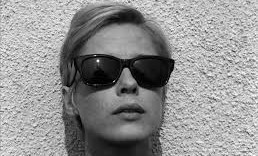
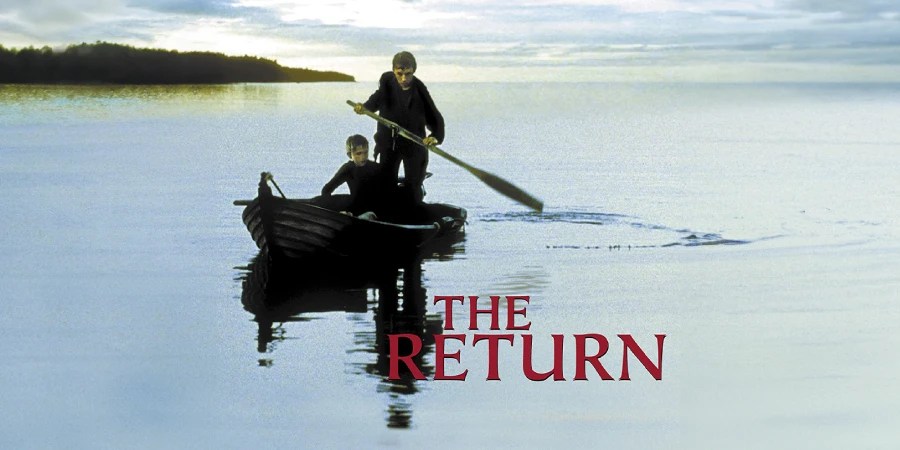
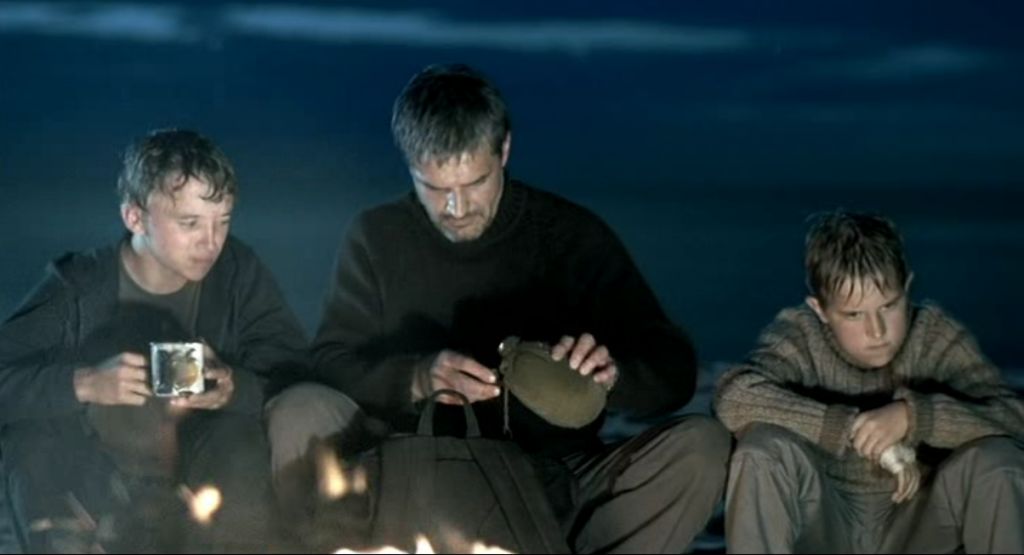
The other night, while browsing my movie folder looking for something to watch, I thought about revisiting Paul Thomas Anderson’s The Master, which featured at Friday’s Finest back in 2019. In my search for it, I noticed today’s film from Russia, The Return (Возвращение), which I hadn’t seen before. For some reason I had assumed it didn’t work, but I tried it anyway – and thankfully it played just fine. From the opening scene to the final moments, I was completely glued to the screen.
IMDB Storyline:
The events of the film unfold over six days and tell about the mysterious journey of a strange man and his two teenage sons who had never seen him before. Vanya and Andrey, for how long they remember, lived with their mother, who once told them that their father was a pilot. But one ordinary Monday, dad appears in their house and takes the brothers on a hike to a small island in the middle of a forest lake.
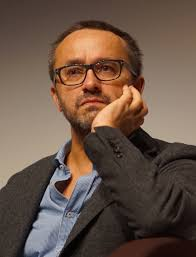
Coincidentally, only after watching The Return did I realise I had already featured another film here in 2019 by the same director, Andrey Zvyagintsev (image inset), called Loveless. I could use the same description I used for that one to capture my thoughts on both:
It’s the kind of film you’re unlikely to forget. It stays with you long after it ends. There’s something unsettling yet compelling about it. If a film is made well, even a bleak one can leave you feeling strangely uplifted – and this is one of those films.
The Return is a coming-of-age film, but unlike any other I’ve seen. You see it from the innocence of the two children – nothing else – it’s immense. It makes the child acting in Stand By Me look amateurish by comparison – and I love that film. The Return deals with masculinity, and really it feels like a definitive take on the subject. It focuses on the relationship between two young boys and their father, but the director handles this with great care and restraint. Everything feels honest and real. You simply don’t see films like this in Western cinema. To centre children so strongly, and for it to feel this convincing, is an achievement in itself. I haven’t seen better child performances since Alfonso Cuarón’s Roma (2018).
In terms of cinematography, The Return captures the bleak, desolate Russian landscape beautifully. The idea of a remote place – a kind of “zone” meant to restore and reset people away from the real world – reminded me strongly of Andrei Tarkovsky’s Stalker. The film was shot around Lake Ladoga and the Gulf of Finland. If you haven’t seen The Return and plan to watch it, stay as far away from spoilers as possible, as they will completely ruin the experience. Once you’ve seen it, though, there’s no shortage of things to unpack – such as in this excellent review at Pigeon Verite.
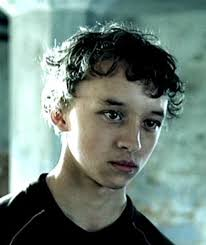
One detail I learned from that review, which completely reframed the film for me, is that Vladimir Garin – the eldest son, (image inset) – tragically drowned shortly after filming, just two months before the movie’s release. He was only 16 years old. It’s devastating, especially given how water and the fear of drowning hang over the film from start to finish. It’s unsettling how real life and art can sometimes collide so closely. In the film, his character is also the more open and forgiving of the two sons toward their father, which makes his performance feel even more tender in hindsight.
The following was abridged from Wikipedia:
The budget of the film remains a secret, though in an interview the director and the producer hinted that it was well below $500,000. The director also mentioned that the producers made their money back even before it was screened at the Venice Film Festival. It grossed $4,429,093 worldwide. The film was also selected as the Russian entry for the Best International Feature Film at the 76th Academy Awards, but it didn’t make the final shortlist. It has since been regarded as one of the greatest films of the 21st century.
References:
1. The Return (2003 film) – Wikipedia
2. The Return (2003) – IMDB

“The more I live, the more I learn. The more I learn, the more I realize, the less I know.”- Michel Legrand


 Observation Blogger
Leave a comment