
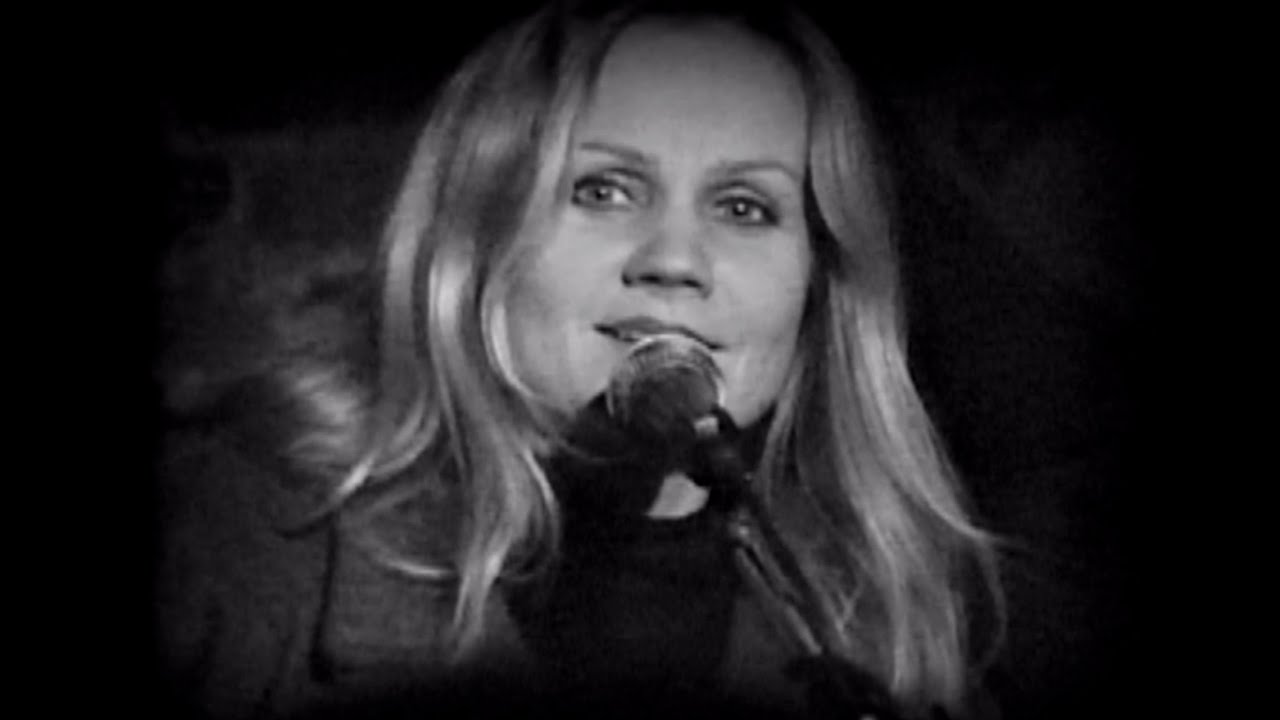
Eva Cassidy was taken from us far too young. She died in 1996 at the age of just 33. At the time, she was largely unknown outside her native Washington, D.C. area, even though she was already a remarkable singer. She died from melanoma, and it was only years later that her music was released widely and found an international audience.
I became more immersed in her material, and truly in awe of her angelic voice, by watching on YT the performances that took place at the Blues Alley jazz supper club in Georgetown, DC, on 3 January 1996 – the same year of her passing. The purity of her voice mesmerized me and continues to do so. The phrase “what might have been” is often overused, but in Eva Cassidy’s case it feels entirely justified. It is hard not to wonder how large her place in contemporary music history might have been had she lived longer.
I hope Cyndi Lauper fans don’t get their bee too much in a bonnet here, but Eva Cassidy’s version of Time After Time is my favourite version. Many of her best-known songs are covers, of course, and her live recordings of Over the Rainbow, Songbird (Fleetwood Mac), and Kathy’s Song (Paul Simon) are my preferred versions of those songs as well. The only original recording I can think of that I tend to favour over Eva’s interpretation is Sting’s Fields of Gold. Time After Time was also the title of her studio album released in 2000, four years after her death. For music – movie trivia buffs out there Eva’s version of Time After Time was used in the popular series Smallville.
Most of the following was abridged from the Wikipedia article below:
Time After Time is a song by American pop singer Cyndi Lauper from her debut studio album, She’s So Unusual (1983). It was written by Lauper and Rob Hyman, who also provided backing vocals. Another fabulous song from that record which launched Lauper to absolute stardom was of course – Girls Just Want to Have Fun, which funny enough Cyndi didn’t write, well she did change some of the lyrics from the single written in 1979 by Robert Hazard, but he retained full songwriting credits.
Time After Time was written in the album’s final stages, after Girls Just Want to Have Fun, She Bop and All Through the Night had been written or recorded. Time became her first No. 1 hit single in the United States while Girls…earlier had reached No. 2. It has since been named as one of the greatest pop songs of all time by many media outlets, including Rolling Stone, Nerve, and MTV.
The inspiration for the song came from the fact that both songwriters were going through similar challenges in their respective romantic relationships; Hyman was coming out of a relationship, and Lauper was having difficulties with her boyfriend and manager, David Wolff. One of the early lines Rob Hyman wrote was “suitcase of memories”, which according to Lauper, “struck her”, claiming it was a “wonderful line”, and other lines came from Lauper’s life experiences. The song’s title was borrowed from a TV Guide listing for the science fiction film Time After Time (1979).
[Verse 1]
Lying in my bed
I hear the clock tick, and think of you
Turning in circles
Confusion is nothing new
Flashback to warm nights
Almost left behind
Suitcase of memories
Time after—
[Verse 2]
Sometimes, you picture me
I’m walking too far ahead
You’re calling to me
I can’t hear what you have said
And you say, “Go slow”
I fall behind
The second hand unwinds
[Chorus]
If you’re lost, you can look and you will find me
Time after time
If you fall, I will catch you, I’ll be waiting
Time after time
If you fall, I will catch you, I will be waiting
Time after time
Time after time
[Verse 3]
After your picture fades
And darkness has turned to gray
Watching through windows
I’m wondering if you’re okay
And you say, “Go slow”
I fall behind
The drum beats out of time
References:
1. Time After Time (Eva Cassidy album) – Wikipedia
2. Time After Time (Cyndi Lauper song) – Wikipedia

“The more I live, the more I learn. The more I learn, the more I realize, the less I know.”- Michel Legrand


 Observation Blogger
I love ‘Time After Time’ and her version takes the cake for sure.
I didn’t mention in my article how Eva does a ‘True Colours’ as well – another Cyndi song. I’m chuffed you liked Eva’s version of ‘Time After Time’ as well.
Oooh I LOVE True Colors as well. I love artists who do a great service with their covers of songs.
It’s a goodie too! Her version of ‘Over the Rainbow’ still sends chills up my spine. Don’t even get me onto ‘Songbird’! Few artists have that innate talent and artistic transparency to make them seem like another song. And that voice is heavenly, like seriously.
She had the voice of an angel! Taken away far too soon!!!
Totally Sharon. I hope this message finds you in good spirits come New Years.
Thank you, Matt!
Wishing you a wonderful New Year!
With kindest regards!
Sharon
[…] learned about Australia, Colombia, Bob Dylan, new artists to me, and classical music from Matt. Matt is another person who has become a friend, and I thank you for […]