
Welcome to Monday’s News on the March – The week that was in my digital world.
Stalingrad: The Deadliest Battle in History
– Audio Presentation at War Historian Sleepy
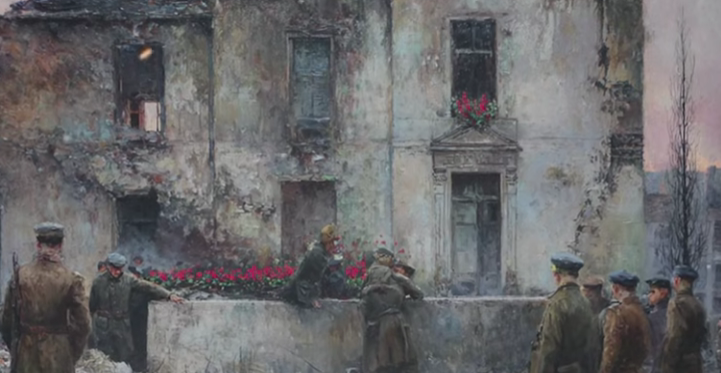
In yesterday’s article I mentioned that I had been listening to audio presentations about one of World War II’s deadliest and most decisive battles – the Battle of Stalingrad. This particular presentation which is AI-rendered, titled The Deadliest Battle in History, could hardly have portrayed the event more vividly. The events are broken down with such precision and nerve-wracking detail that you almost feel worn out by the end.
The irony is that the AI narrator’s voice is designed to induce sleep. It is calm, slow, and soothing. Yet despite this, I found myself completely immersed in the telling of this extraordinary battle and had to turn it off to get to sleep – and then hold out to revisit it the next day.
Before turning to the battle of Stalingrad itself, it is worth outlining Operation Barbarossa – Hitler’s invasion of the Soviet Union in June 1941. I have always been perplexed, like so many others, by Hitler’s decision to invade Russia at all. Why launch such a massive campaign while already fighting across much of Europe? Why knowingly commit to a two-front war, leaving German forces stretched, exposed, and vulnerable? And why not wait until western Europe was fully secured, or focus more decisively on Britain?
Even Joseph Stalin, the Soviet leader, was caught off guard by the invasion. Germany and the USSR had signed the Molotov–Ribbentrop Pact, a non-aggression treaty, and Hitler’s attack shattered that uneasy agreement. Stalin was reportedly so shocked that he delayed mounting an effective response. In the early stages of Barbarossa, Soviet defences were disorganised, and German forces advanced with alarming speed – in some areas reaching the outskirts of Moscow itself.
One of the most astonishing aspects of the campaign is how close the Wehrmacht came to Moscow. German troops were within viewing distance of the Kremlin’s towers. What many historians consider Hitler’s most costly mistake was his decision not to concentrate his forces on capturing Moscow. Instead, he diverted major resources southward, aiming to seize oil fields in the Caucasus and the industrial city of Stalingrad. This decision left German forces overextended, poorly supplied, and increasingly vulnerable – especially as winter set in.
By late 1942, Stalingrad had become the focal point of the German advance. The initial German air and artillery bombardment was devastating. On the first day alone, an estimated 40,000 civilians were killed. Large parts of the city were reduced to rubble. Those who survived – soldiers and civilians alike – sheltered in basements, ruins, and sewers, defending what remained of their city under unimaginable conditions.
What makes the defence of Stalingrad so remarkable is how long these starving, exhausted, and badly supplied Soviet forces held out against a technologically superior enemy. The Germans possessed overwhelming air power, heavy armour, and experienced troops – yet they struggled to break Soviet resistance.
Faced with near-impossible odds, Soviet defenders relied on urban and guerrilla warfare. Snipers became a serious threat, forcing German troops to move cautiously. However, once sniper positions were suspected, entire sections of buildings were often destroyed by artillery or air strikes to eliminate them.
The fighting descended into chaos. Combat took place street by street, room by room, basement by basement, and sewer by sewer. The Soviets relied on patience, stealth, and intimate knowledge of their surroundings. In some cases, soldiers lay hidden in rubble, waiting for German units to pass before striking. A single Soviet soldier could disable or destroy a group of enemies using explosives at close range, often at the cost of his own life. They had the advantage of stealth through urban chaos and local knowledge and terrain.
Stalingrad ultimately became the turning point of the war on the Eastern Front – a battle defined by unimaginable loss, endurance, and sacrifice.
I’ll leave the remainder of this truly bloody, horrifying, and history-shaping battle to the audio presentation itself. It is a compelling account, and I recommend it highly.
That is all. Thank you for reading.


“The more I live, the more I learn. The more I learn, the more I realize, the less I know.”- Michel Legrand


 Observation Blogger
at the cost of thier own life…kinda like a Japanese pilot…excellent Matt…
Thanks Tom.