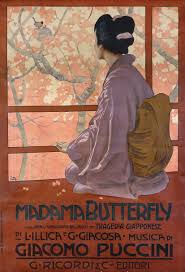
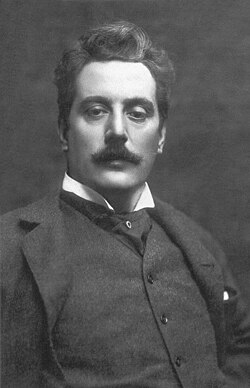
It’s a delight to bring to you today one of Italian composer Giacomo Puccini’s most beautiful soprano arias – Un bel dì, vedremo (Eng: “One fine day we’ll see”). Listening to this certainly elicits deep emotion and sends shivers down the spine – in the most beautiful way. The opera music of Puccini and I go way back, as I imagine it does for many of you as well.
Today marks a special Puccini day here too, as this aria caps off the final opera piece to be presented from each of his “big five” operas – La Boheme, Tosca, Gianni Schicchi, Turandot and now Madama Butterfly. It also marks the first piece beginning with “U” in the music library project – so we are well and truly rounding the bend toward the home straight.
Un bel dì, vedremo is the most famous aria in Madama Butterfly, which itself remains one of the most frequently performed operas in history. There’s an irrepressible romanticism that courses through much of his music, and it’s especially present in this stunning aria, celebrated for its lyrical beauty and emotional sweep.
Wikipedia: It is sung by Cio-Cio San (Butterfly) on stage with Suzuki, as she imagines the return of her absent love, Pinkerton. It is the most famous aria in Madama Butterfly. It occurs early in act 2, three years after her marriage to U.S. naval officer B. F. Pinkerton, Cio-Cio San (“Butterfly”) awaits the return of her long-absent husband to Japan. Her maid, Suzuki, does not believe that Pinkerton will come back, but Butterfly is optimistic. Trying to convince Suzuki of Pinkerton’s loyalty, Butterfly sings of an imaginary scene in which a thread of smoke on the far horizon signals the arrival of a white ship into Nagasaki harbour, bringing her long-lost love back to her. The imagined scene culminates in a romantic reunion.
One fine day we’ll notice
a thread of smoke arising
on the sea, in the far horizon,
and then the ship appearing;
then the trim white vessel
glides into the harbour, thunders forth her cannon.
(Read the entire libretto below by Luigi Illica and Giuseppe Giacosa)
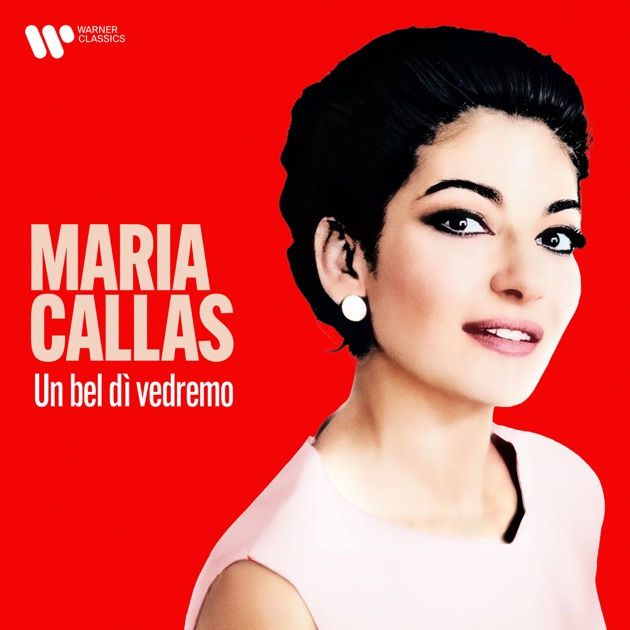
Today’s performance is delivered by none other than the US-born Greek soprano Maria Callas. I recently caught a sensational documentary on one of my favourite channels, Film and Arts, titled Magical Moments in Music: Maria Callas & Tosca. Her voice is rich with raw passion and natural instinct. Listening to it is like hearing a rainbow of sound, expressing the full spectrum of emotion. She was truly a phenomenon, and it’s tragic that she passed away so young, at just 53. You can see why she was such a compelling interpreter of the role of Cio-Cio San (Butterfly).
| Un bel dì, vedremo levarsi un fil di fumo sull’estremo confin del mare. E poi la nave appare. Poi la nave bianca entra nel porto, romba il suo saluto. Vedi? È venuto! Io non gli scendo incontro. Io no. Mi metto là sul ciglio del colle e aspetto, e aspetto gran tempo e non mi pesa la lunga attesa. E … uscito dalla folla cittadina un uomo, un picciol punto s’avvia per la collina. Chi sarà? Chi sarà? E come sarà giunto che dirà? Che dirà? Chiamerà “Butterfly” dalla lontana. Io senza dar risposta me ne starò nascosta un po’ per celia … e un po’ per non morire al primo incontro, ed egli alquanto in pena chiamerà, chiamerà: “Piccina mogliettina, olezzo di verbena,” i nomi che mi dava al suo venire. (a Suzuki) Tutto questo avverrà, te lo prometto. Tienti la tua paura – io con sicura fede l’aspetto. | One fine day we’ll notice a thread of smoke arising on the sea, in the far horizon, and then the ship appearing; then the trim white vessel glides into the harbour, thunders forth her cannon. See you? Now he is coming! I do not go to meet him. Not I. I stay upon the brow of the hillock, and wait there, and wait for a long time, but never weary of the long waiting. From out the crowded city there is coming a man, a little speck in the distance, climbing the hillock. Can you guess who it is? And when he’s reached the summit, can you guess what he’ll say? He will call: “Butterfly” from the distance. I, without answ’ring, hold myself quietly conceal’d. A bit to tease him and a bit so as to not die at our first meeting; and then, a little troubled, he will call, he will call: “Dear baby wife of mine, dear little orange blossom!” The names he used to call me when he came here. (to Suzuki) This will all come to pass, as I tell you. Banish your idle fears, for he will return, I know it. |
References:
1. Un bel dì, vedremo – Wikipedia

“The more I live, the more I learn. The more I learn, the more I realize, the less I know.”- Michel Legrand


Rainbow of sound; I love that. This is a magnificent piece of music that reminds me of my dear departed parents. I don’t believe they ever went to an opera, but they listened to recordings a lot, and a few like this come to mind when I think of them. This aria is one of the few operatic pieces I’ve shared. It’s truly tragic with, as you say “lyrical beauty and emotional sweep.” Full marks for featuring Callas’s rendition. Goosebumps.
Maria Callas’ voice is so densely textured and layered in expression and emotion. Also, I find it’s quite instinctual sounding for an Opera singer. I was thinking of a ‘spectrum of sound’ equivalent to ‘spectrum of colours’. Well ‘Rainbow’ should do the trick. Hehe. I love how she rolls the ‘R’s’ too – common of course in Italian and Spanish and it sounds so romantic in keeping with the romantic languages. You can see why Callas is so revered in Opera. Thanks for all your kind words Steve and your lovely recollection of your parents listening to Opera recordings.
My pleasure, Matt, and yes, her voice was perfect for opera, and deservedly revered.
I love Puccini operas. So very lyrical.
“Madame Butterfly” was always a popular opera, from it’s very first performance. It was so popular that it inspired a song, “Poor Butterfly”, written in 1916. I only know this because my grandmother had a giant box of old sheet music & one summer I played every piece of music in the box & this was one of them. It was one of my grandfather’s favorite songs ~ I played it for him many times. He was 13 when the song was introduced & it became a standard. You know how you always love the songs that were hits when you were a teenager. This is true of every generation.
Another song he loved was “Bye Bye Blackbird” & I must have played that one for him a couple of hundred times, too. Both songs make me think of him. I really loved him. We were very close.
Just reading the libretto as a standalone piece for this legendary aria astonished me. It’s so stupendously romantic and beautifully written!
That’s so interesting about the opera’s ripple effects in inspiring “Poor Butterfly,” and how you came to know it through your grandmother’s collection. You played it on piano? There seem to be so many versions of it — do you have a favourite? I see what you mean about it impressing your grandfather when he was a teenager. A lovely insight into the impact music can have during adolescence. And which version of “Bye Bye Blackbird” would you recommend?
As usual, your reflections on your family’s connection to music are something to behold. Thanks, Polly!
I like Miles Davis’ version. But I love Miles.