
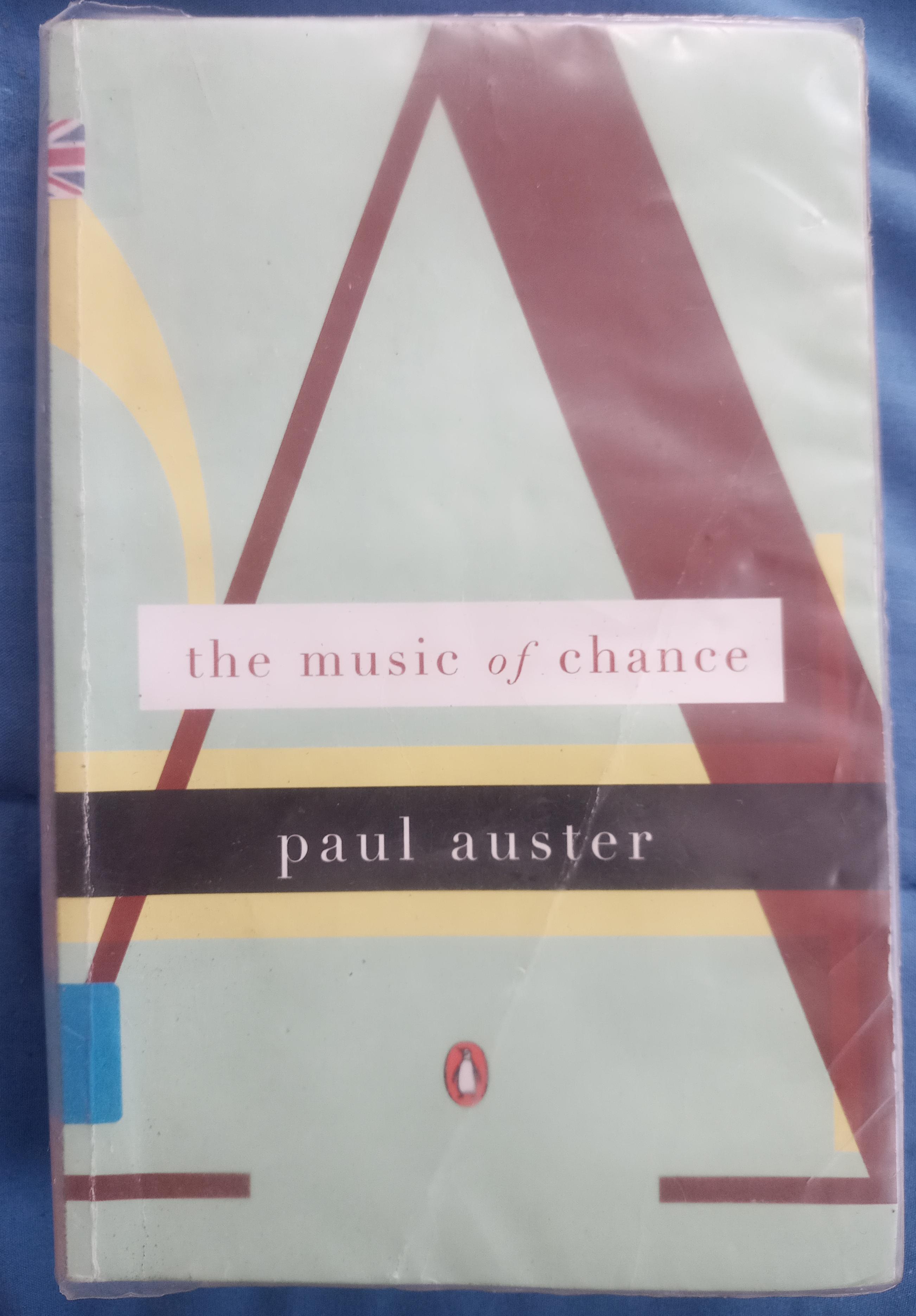

Welcome back to my Wednesday literature segment. Today I feature the opening ten-page excerpt from The Music of Chance by Paul Auster, a novel I finished last night in just three sittings, albeit spread across a week or so. As always, if you enjoy dabbling in books, feel free to join me [here] on Goodreads.
I recently remarked to a friend that I have read few novels with a more engaging opening than The Music of Chance. With that in mind, I present both my review of the novel and an addendum containing its opening pages, which I found immersive, relatable, and left me highly anticipatory of what was to follow.
Overall, this reading project working through authors alphabetically according to the arrangement of my local library shelves – has been surprisingly rewarding. It has provided a welcome change from my decades-long habit of reading mostly classics and historical fiction, rewarding genres in their own right, but ones that can sometimes keep me within familiar territory.
The best comparison I can think of comes from cinema, a medium that regular readers will know I am particularly fond of with my Friday’s Finest segment. So, it feels a little like spending years devoted to arthouse and independent films before suddenly opening yourself up to contemporary stories with broader appeal. The change of pace has been refreshing. Rather than carefully curating every selection, I am simply following where the shelves lead and trusting the reading gods to place something interesting in my path.
It is easy to see why Music of Chance was adapted into a film so soon after its publication. While reading it, I often felt as though I were watching a movie unfold. The story moves with cinematic pace, beginning as a tale of freedom and open roads before gradually tightening into a tense and unsettling crime thriller. Auster fills the novel with vivid, everyday details and believable characters, making the strange twists of fate feel both real and unsettling.
Beneath the surface, the novel asks important questions about luck, choice, and how much control people really have over their lives. Although it was published in 1990, its story of ordinary people caught up in forces beyond their control feels just as relevant today. As is often the case with both literature and cinema, the less you know going in, the better the experience can be. For that reason, I have deliberately omitted major plot details from my brief synopsis below, unlike the one on Goodreads.
Synopsis of The Music of Chance:
The Music of Chance follows Jim Nashe, a former firefighter who sets out on a journey across America after receiving an unexpected inheritance. Living on the road and free from responsibilities, he drifts from place to place until a chance meeting with a young gambler changes the course of his life. Through a series of unexpected events, Paul Auster examines how easily ordinary lives can be altered by chance.
Such was my immersion in, and enjoyment of, the reading experience that by the latter part of the novel I had already decided I would give the book either a 4- or 5-star review. Much would depend on the ending: whether it lived up to the rest of the novel, how satisfying it was, and whether it addressed the questions hanging over certain twists, the fate of the protagonists, and the motivations and backstories of other characters intrinsic to the story.
Unfortunately, I didn’t think the sudden and seemingly haphazard ending was in any way edifying because it left so many questions unanswered, with mysterious plot points and the motivations and backstories of secondary characters left hanging without any real resolution or even minimal exploration to round things off. Basically, to me the 217-page book felt about 100 pages too short and, because of that, I felt perturbed and prematurely left out there myself – much like the story.
Only after the ending did I learn about the absurdist and existential nature of the book, a bit like The Stranger by Camus or what have you, but that masterpiece worked because, as you read it, you knew that was what it was about. We are not “supposed” to identify either with or against Meursault. He simply demonstrates, through every thought and action, the absurdity of the world.
On the other hand, in The Music of Chance, right up until the end you don’t read it – or at least I didn’t – as an absurdist novel because the protagonist is identifiable and wholly relatable. Then, with the ending, he suddenly becomes more like a Camus character and you are just supposed to eat it up and say, “Oh well, that’s that. It’s absurdism.” Well, not on my watch, dear reader.
Despite all that, I would still highly recommend The Music of Chance because of everything else I mentioned prior to my discussion of the ending, which stood in stark contrast to what I felt was an unsatisfying conclusion after such a stellar introduction and compelling story thereafter.
So, as is customary for me to write here, if you have ten minutes to spare, grab yourself a cuppa and strap yourself in. Please excuse the poor image quality and crude formatting. But you know?…you can only be good at so many things.
Without further ado, I present to you The Music of Chance. I hope you enjoy it as much as I did. Oh, and as always, thanks for reading.
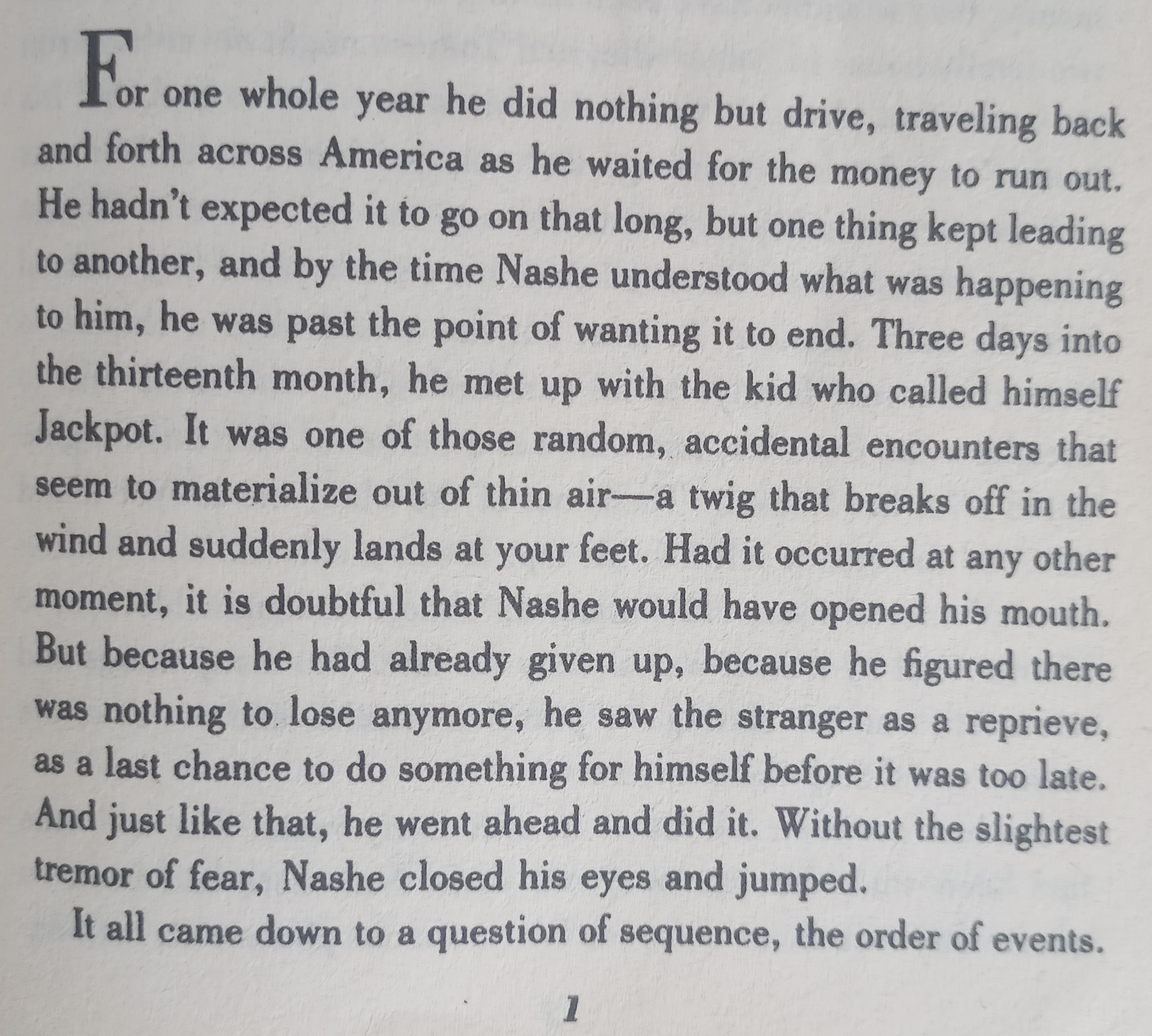
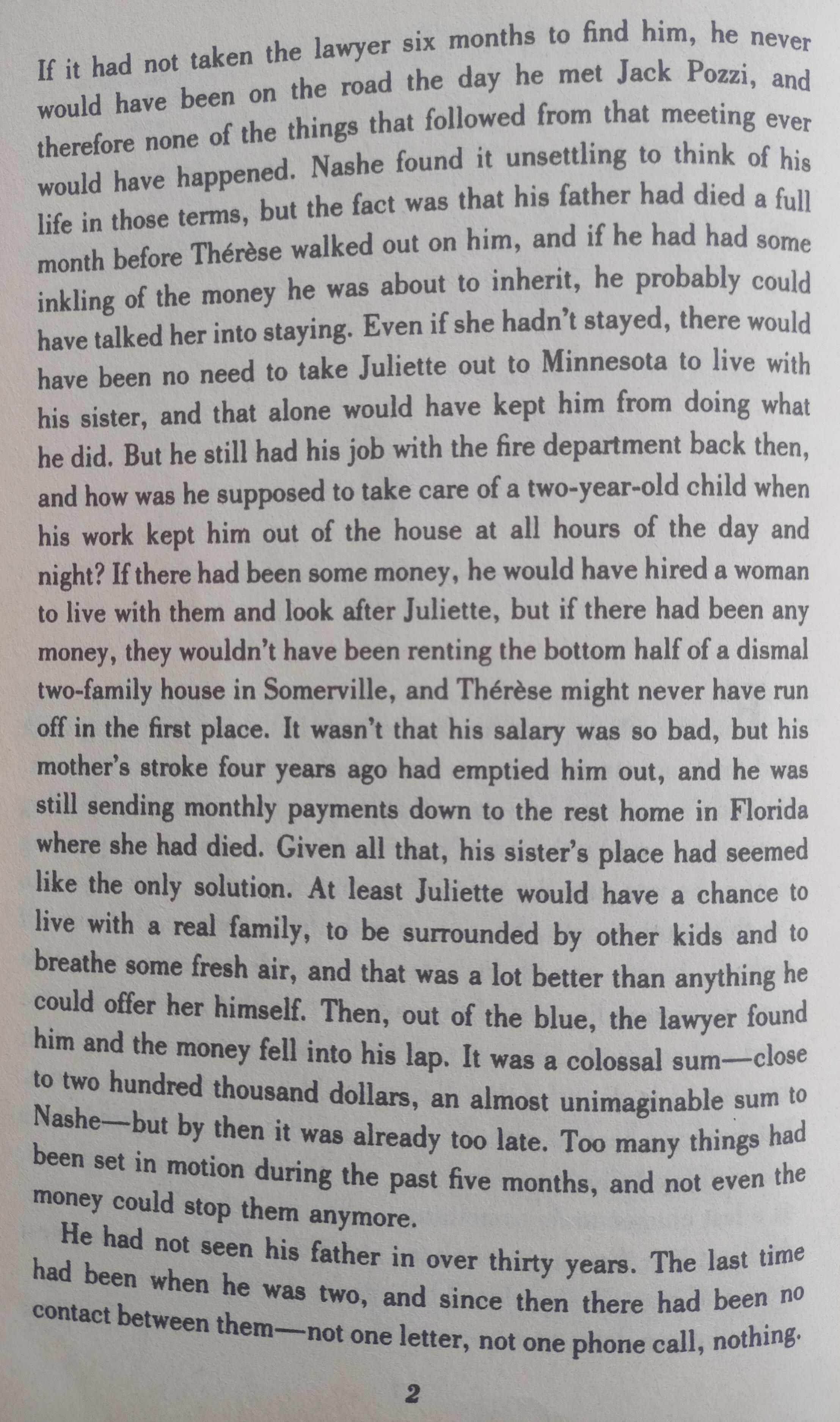
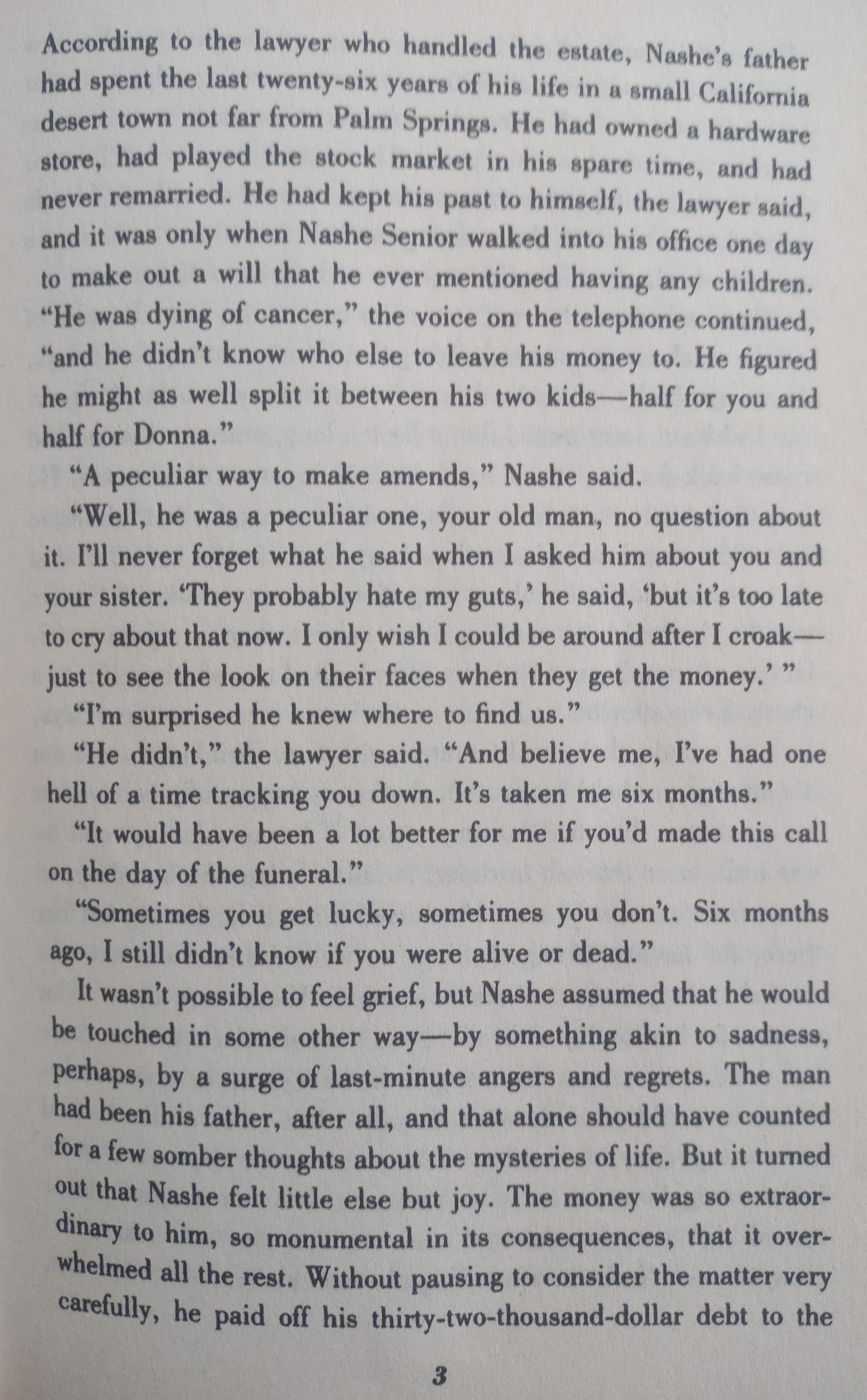
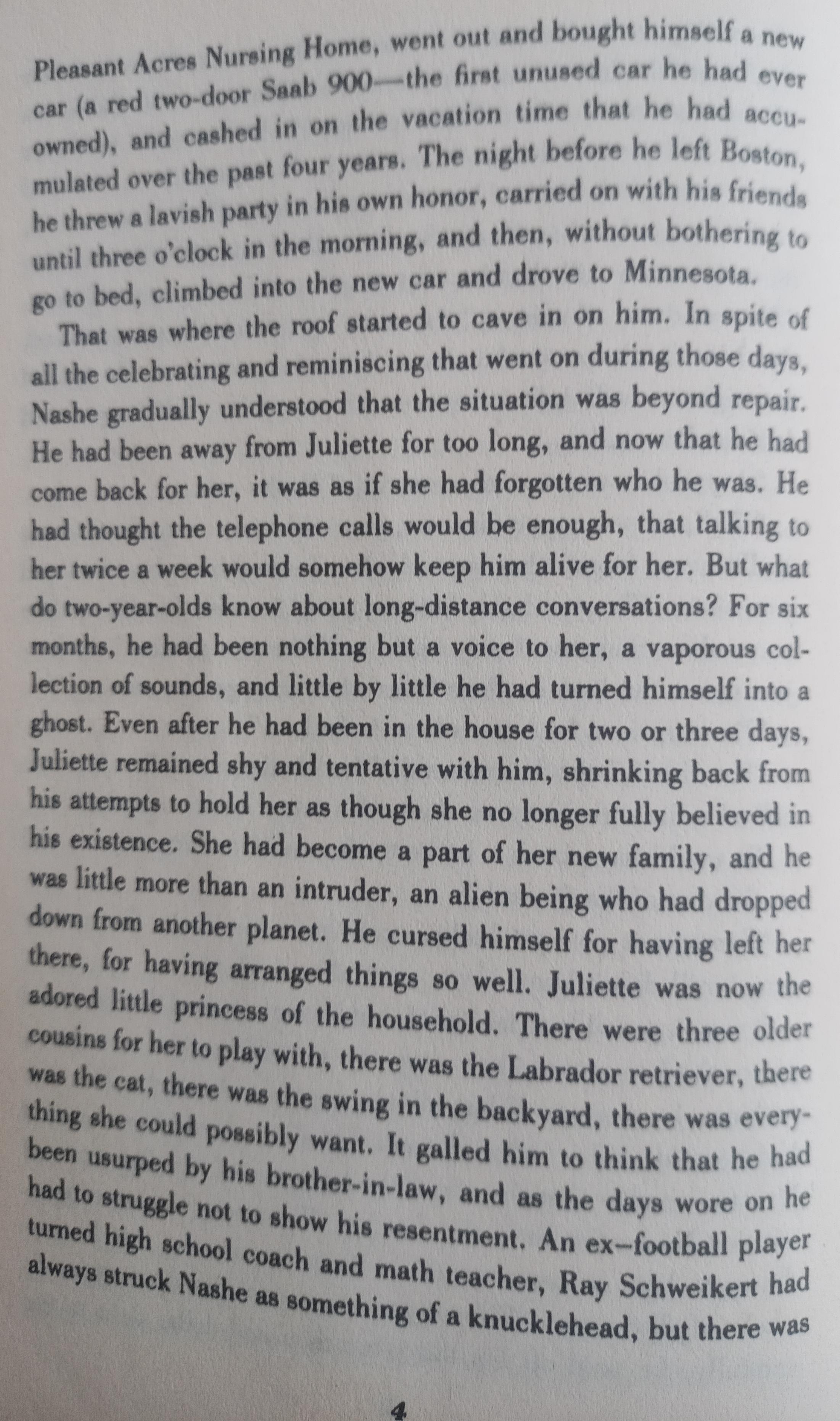
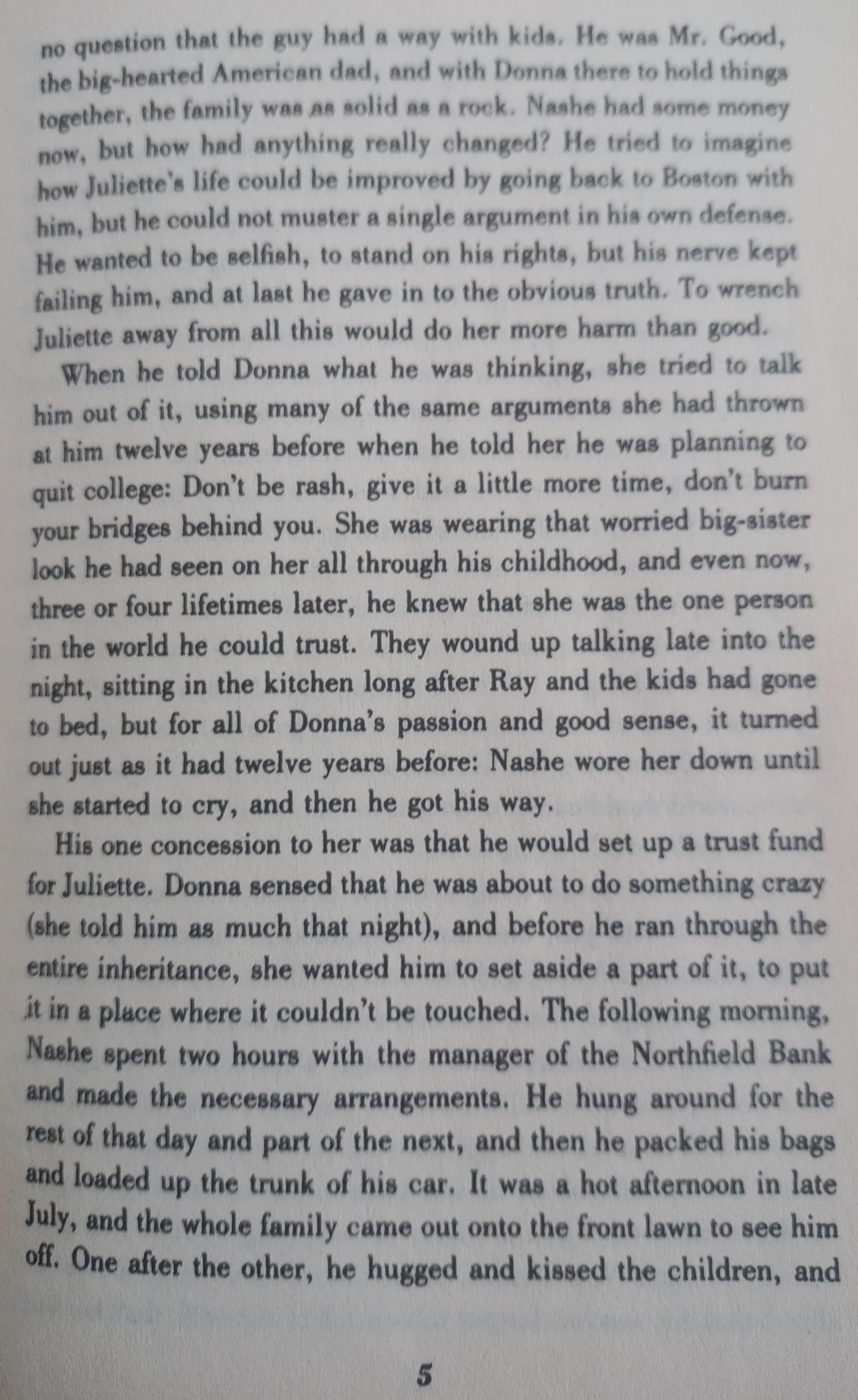
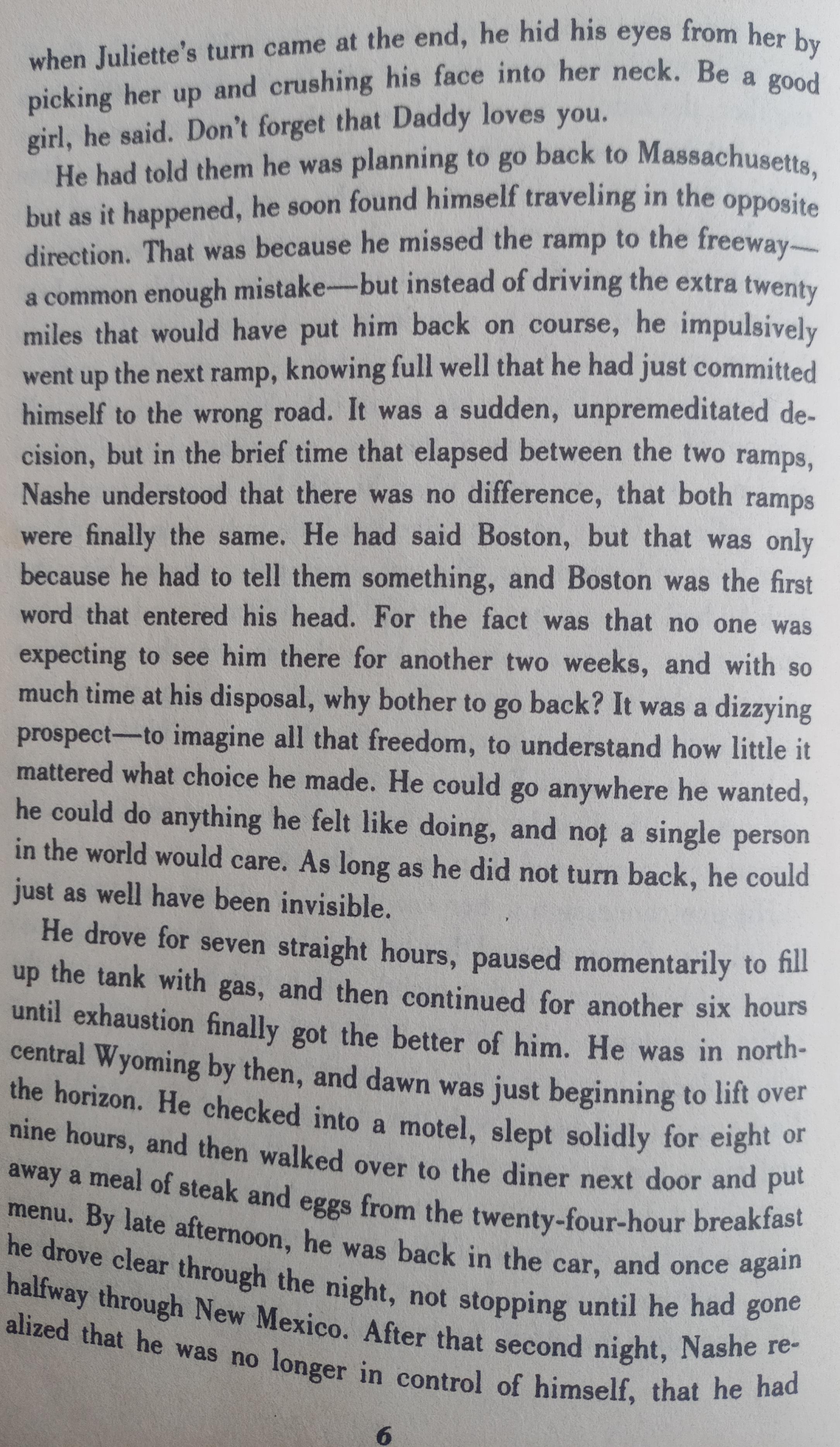
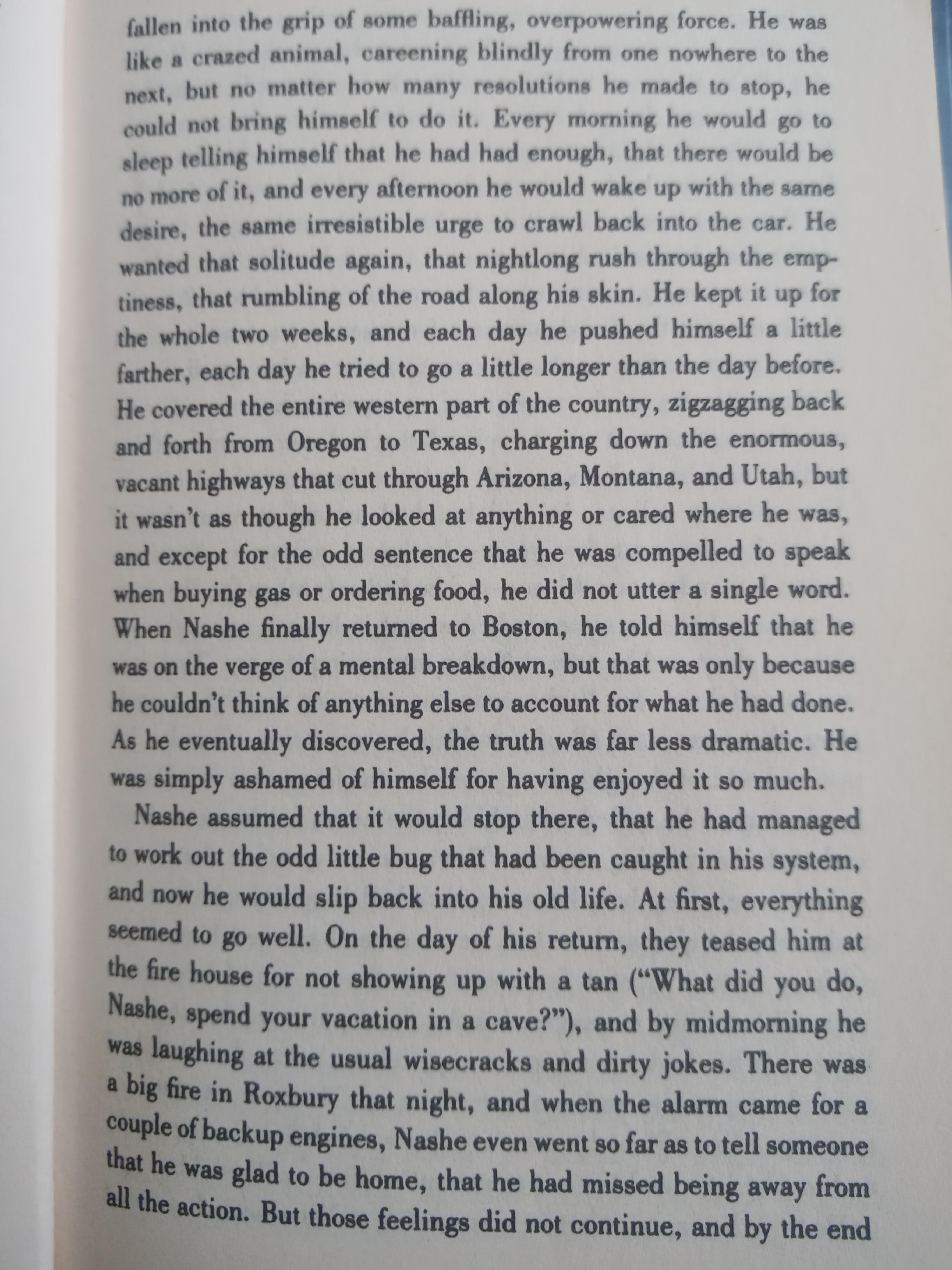
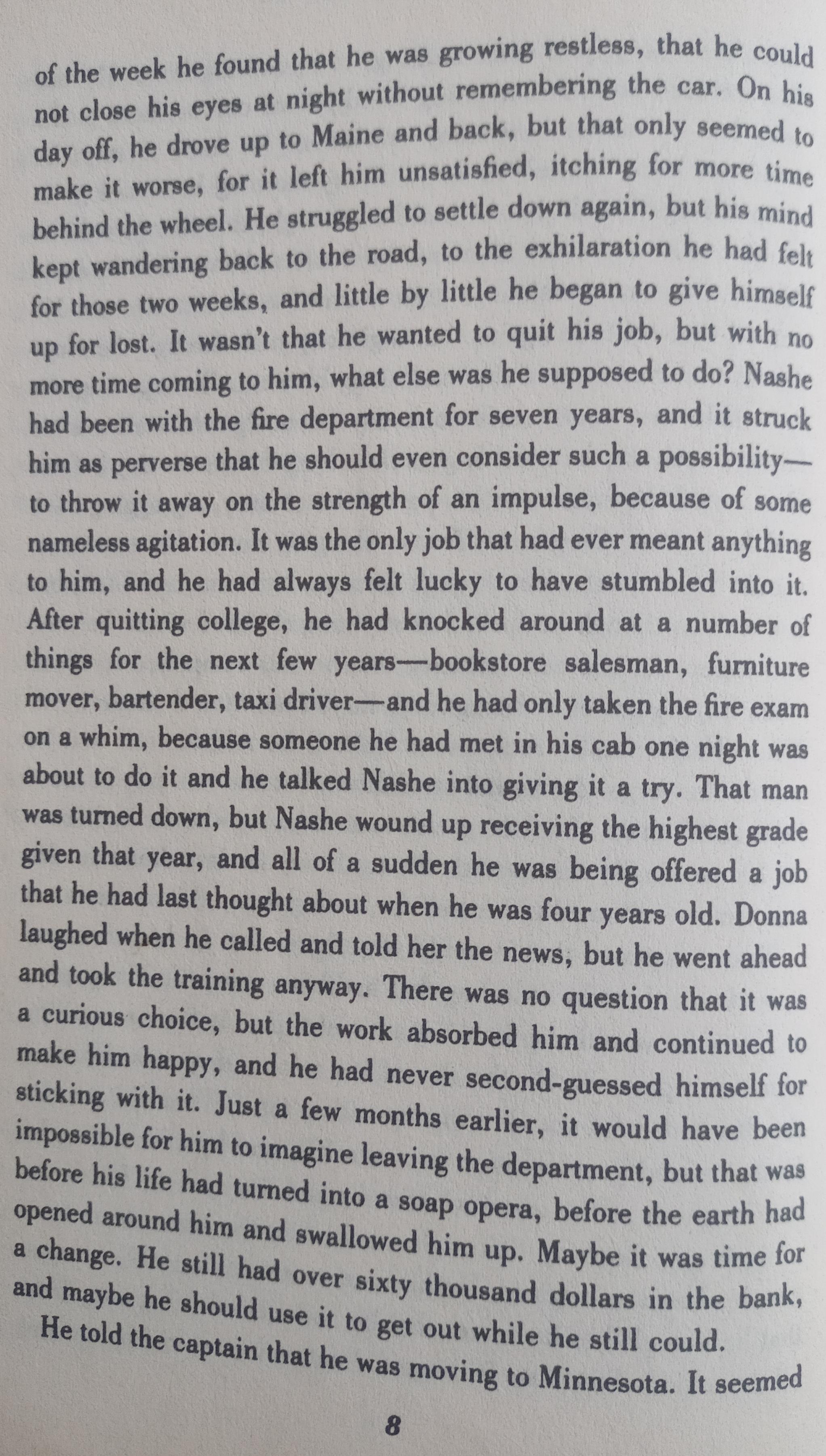
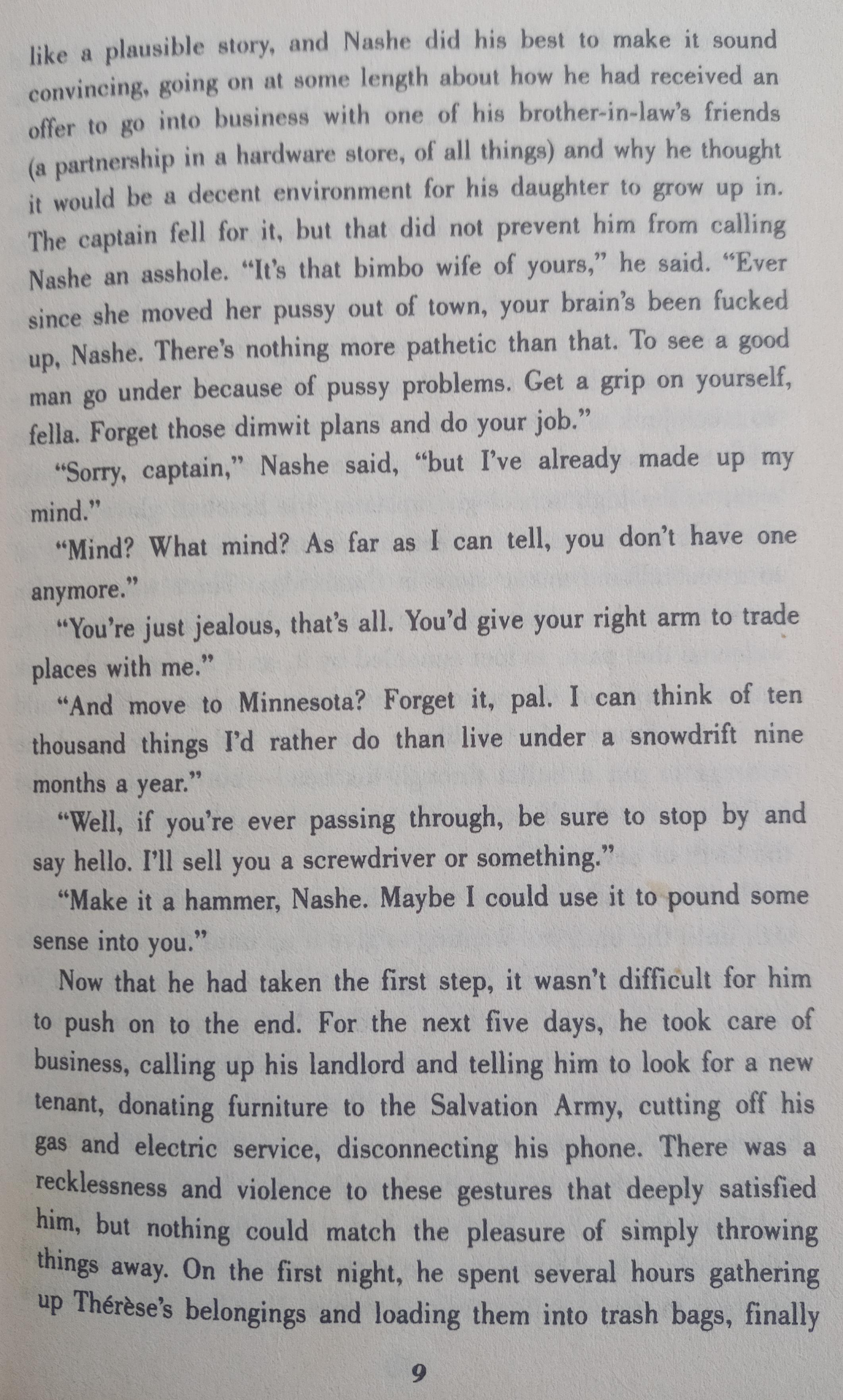
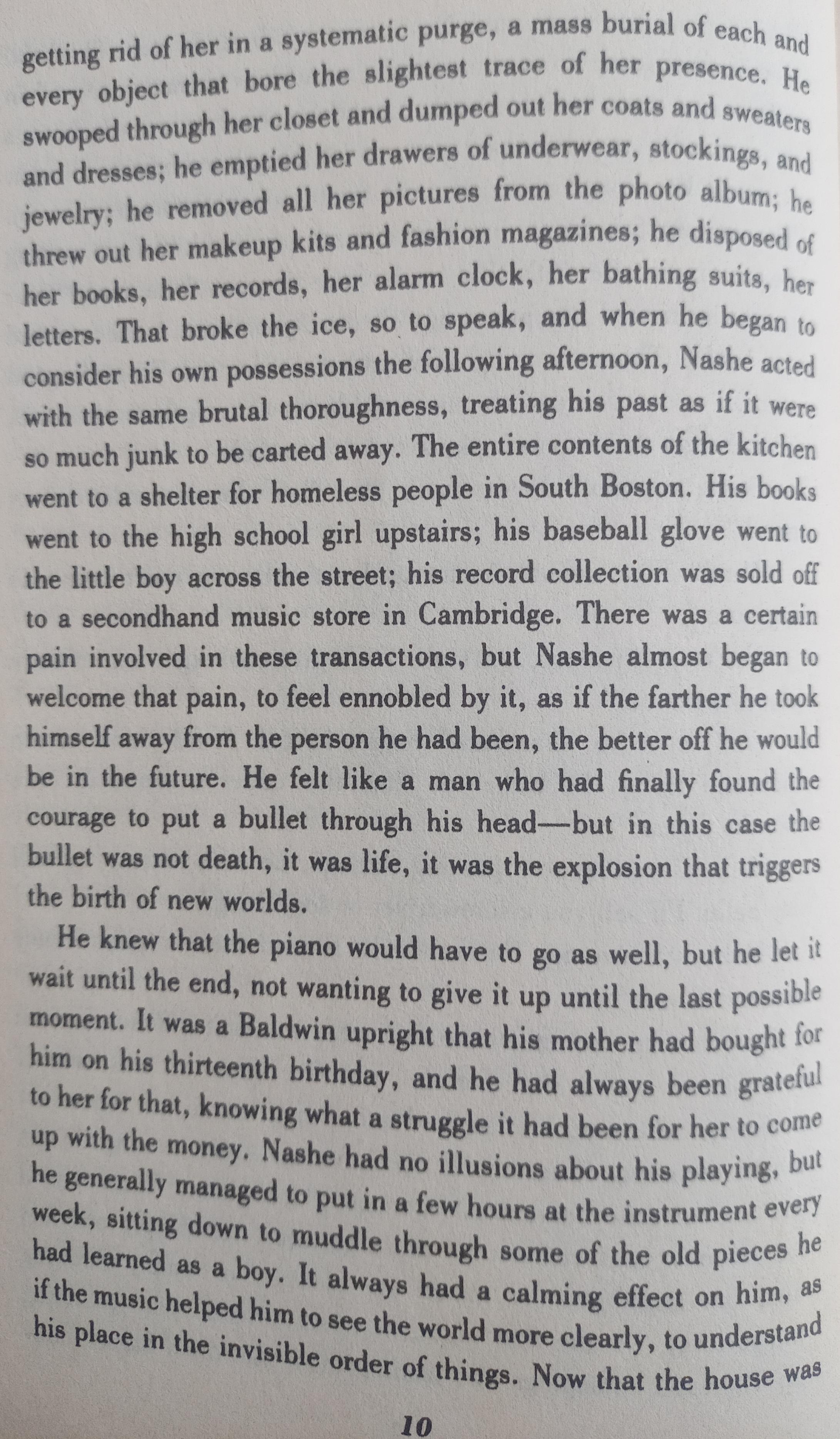
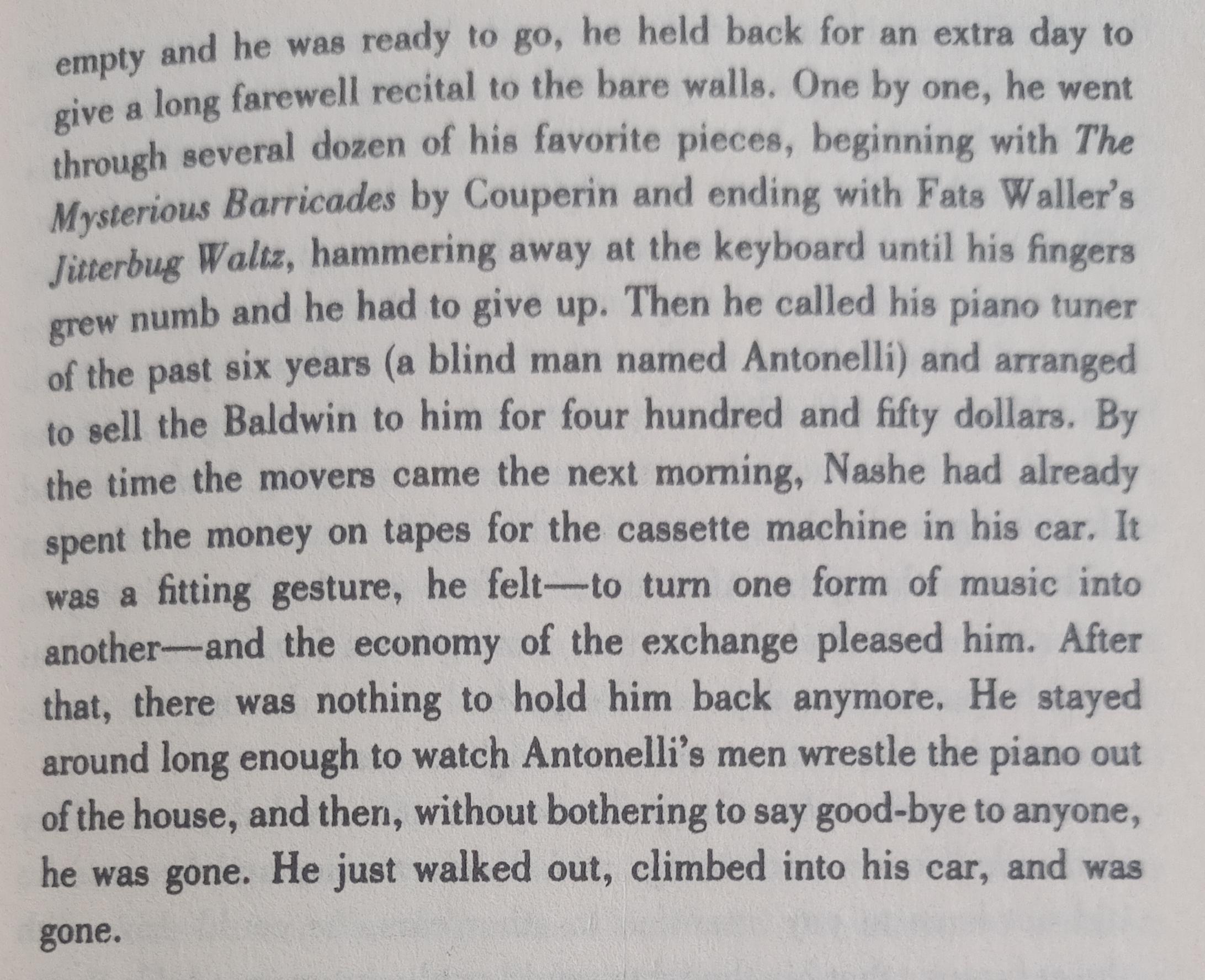

“The more I live, the more I learn. The more I learn, the more I realize, the less I know.”- Michel Legrand


Leave a comment