Welcome to Monday’s News on the March – The week that was in my digital world.
My last News on the March post was way back in March, so it’s nice to return to it again. I hope it becomes a more regular feature this year since I enjoy writing them, even though they can be a little time-consuming to put together – not unlike the Wednesday literature extract features. At least I’ve been more consistent with those lately.
Bob Dylan: How I found the man who shouted ‘Judas’
Article at the Independent
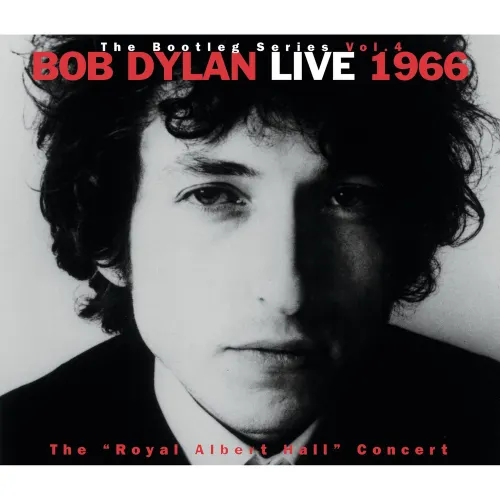
I recently came across this article on the Bob Dylan Expecting Rain website, which posts a daily stream of Dylan-related news and content. In fact, I’m humbled to say that articles from my own music blog have appeared there on occasion. Sometimes when I look at my statistics and find that a Dylan article has approached 1000 views in a single day, I’m almost certain that Expecting Rain played its part.
Many followers of rock ’n’ roll history will know of the famous ‘Judas!’ shout during Bob Dylan and the Band’s 1966 Manchester Free Trade Hall concert. It became far more than a heckle from the crowd. Symbolically, it captured one of those signpost moments in modern music history that represented not only Dylan’s transition from folk singer to rock star, but also the emergence of a new genre itself: folk-rock.
On that world tour Dylan famously went fully electric with the Band in the second half of the show, much to the disdain of many folk purists in the audience. Then someone shouted ‘Judas!’ towards the end of the concert in clear protest at the music on offer. Dylan retaliated by shouting back, “I don’t believe you… you’re a liar!” before turning to the Hawks and commanding them in no uncertain terms: “Play it f&cking loud!” They then launched into Like A Rolling Stone. You can listen to the interchange here.
Decades of speculation followed over who had actually yelled it. In 2005, broadcaster Andy Kershaw claimed in an article that the culprit was John Cordwell, after an earlier claim by a Canadian fan had largely been dismissed.
To give John Cordwell his due, he later defended his ‘Judas!’ outburst by saying:
“I think most of all I was angry that Dylan… not that he’d played electric, but that he’d played electric with a really poor sound system. It was not like it is on the record [the official album]. It was a wall of mush. That, and it seemed like a cavalier performance, a throwaway performance compared with the intensity of the acoustic set earlier on. There were rumblings all around me and the people I was with were making noises and looking at each other. It was a build-up.“
It is difficult to know exactly what is true even after all these years. At the 1965 Newport Folk Festival, where Dylan first went electric in such a public way, there was a similarly feverish backlash. Some insist the anger was largely due to the poor sound quality rather than the electric music itself. Pete Seeger, according to legend at least, was so frustrated that he supposedly threatened to cut the cables with an axe.
So was the hostility really about the sound, or was it more deeply tied to Dylan’s dramatic break away from the folk purist movement that had embraced him? Perhaps it was both. Whatever the case, that cry of ‘Judas!’ still echoes through rock history as the sound of an audience witnessing one of music’s great transformations in real time.
Harper Lee’s mysterious and reclusive story | Full Documentary | American Masters | PBS
Documentary at American Masters
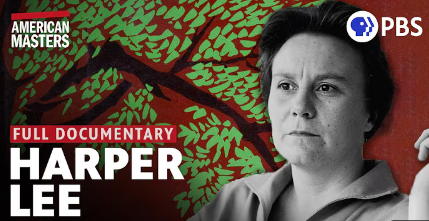
Harper Lee’s To Kill a Mockingbird was mandatory reading for us in secondary school. Along with the poetry of Robert Frost, the book made the biggest impression on me of all the literature we studied in English classes.
I suspect I wasn’t the only teen who held it in such high esteem, since the book was, I imagine, integrated into many school programs not only in Australia, but internationally. It is, of course, one of the great American novels.
The movie of the same title adapted from the book, starring Gregory Peck, was also shown to us. It sits at No. 4 on my list of 100 favourite movies. Not to take anything away from the legendary book, there exist few movie adaptations which rival their respective books, but for me this movie was one of them.
Decades later I saw the biographical movie Capote about Truman Capote’s research for In Cold Blood. In Cold Blood is renowned as one of, if not the greatest, works of literary journalism ever realized. The movie shows Lee accompanying Capote to Kansas in 1959 to help research the Clutter family murders that became the basis for In Cold Blood. Many scholars believe her interviewing skills and observations were crucial to the project.
I had also read elsewhere that Capote may have assisted Lee in the writing of her masterpiece. You see, they were both childhood friends in Alabama, and it appears almost certain that Capote read drafts of To Kill a Mockingbird and offered feedback and editorial suggestions. So the assistance flowed both ways.
What I found so interesting about the Harper Lee documentary is how it explores the context and history of the novel’s Deep South setting, along with the social changes inspired by both the book and the feature film after their release. The documentary also explores Go Set a Watchman, Lee’s controversial later-published novel. I hope you enjoy it.
Why Bruce Springsteen (and All Liberals) Are Total Frauds
Video presentation by Ben Shapiro
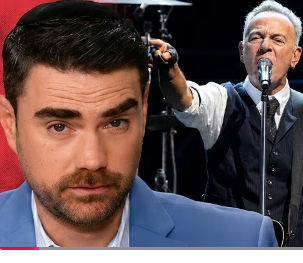
When this video appeared in my YT feed showing Ben Shapiro and Bruce Springsteen in the same image, I clicked on it faster than you could say, “Facts don’t care about your feelings.”
Ben Shapiro lets rip into Bruce Springsteen after Bruce’s recent blast at the Trump Administration during his Boston show. I know people who have been turned off Bruce’s music altogether because of his forceful political rhetoric as a staunch lifelong Democrat and his consistent endorsement of Democratic presidential candidates since 2004.
There are also Democrat-leaning supporters here too, so I’m going to be careful what I write because people can get pretty touchy when it comes to politics. What do they say for civil purposes in social settings? Avoid the subjects of “sex, politics and religion” – all the juicy stuff.
What I’m instead going to do is have a lend of both Shapiro and Springsteen in my assessment of their recent vitriol. First and foremost, almost nothing Bruce says politically will dim my adoration of his music and its impact on me since I was a kid. It’s a free country and he can say what he likes.
While I personally don’t share Bruce’s political views, I still love the guy’s music. Do I wish he kept his political views to himself? I sure do! He’s a singer-songwriter, and an amazing one at that, but I don’t believe he should step into this stuff during one of his shows – with a teleprompter no less. Give me a break, man.
I think if Bruce wants to demonstrate politically and unleash his opinions, he could instead do so outside the realm of his musical artistry – like on a blog or Instagram. Go for it Bruce, “whatever”, as Mark Knopfler sang here Friday.
Now over to Shapiro. He is a political and news commentator, and in my opinion he is very good at what he does, much like Bruce is with music. So he can rebuke all he wants Bruce’s sledge at Trump, and what have you with his usual astute counter punches of the content of the message. That’s all well and good.
But sometimes Shapiro is too smart for his own good, where he overextends himself by doing exactly what Bruce did at the Boston show. He starts ripping into Springsteen as a has-been and one of the most overrated contemporary music artists. Hey Ben, I thought you were better than this? Talk about the pot calling the kettle black. This is insane!
That’s all for now – until next time. Thanks, as always, for reading.

“The more I live, the more I learn. The more I learn, the more I realize, the less I know.”- Michel Legrand


Leave a Reply