Stumble Away is the closing track on David Bridie’s 2003 album – Hotel Radio (see inset). It’s almost certain you haven’t heard of this 2003 record unless you had read my previous song articles. There isn’t even a wiki page about Hotel Radio, but it remains one of my favourite Australian records by one of my favourite Australian singer – songwriters. Suffice to say, David Bridie as both a solo act; and founder, composer and front man of the group My Friend the Chocolate Cake is one of the most prolific artists on my blog.
Bridie lived in the inner North suburbs of Melbourne where I also lived from 2005 – 2009. I saw him live on numerous occasions. In 2021 he moved to an off-grid property close to the Otway National Park on Victoria’s Shipwreck Coast. Bridie balanced his career as a live musician with the composition of soundtrack music, with credits for over 16 feature films. He is also a seven time ARIA award winning composer and has enjoyed a distinguished career as one of Australia’s most innovative musicians.
Bridie’s music is undeniably atmospheric, and Stumble Away is no exception. He delves into the art form of sonic texture. It’s a deeply introspective and melancholic piece that resonates with my musical sensibilities in a way few other tracks can. Moreover, I’ve always considered David Bridie as musically Australia’s best kept secret and it looks like it is going to stay that way with today’s featured track having amassed 11 views in the video below.
Would you like to run faster But you know there’s no way There’s only enthusiasts anywhere today And should the hope ’round the corner Prove quite a surprise There’s a man with a card saying “Don’t be sick, don’t be old, don’t be ordinary, otherwise” I don’t feel so good today, Well I fall down It pays to keep your eyes open Read beneath what they say This is all one great big lie Just like Australia day And the crowd are out watching The fireworks in the rain They all do nothing, say nothing Silence is lying I don’t feel so good today, then I fall down Then I stumble away, stumble away I wish that I may, and I wish you don’t mind Keep my head and my nerve if the fight is a good fight Should the hope round the corner prove quite a surprise And there’s a man with a card saying “don’t be sick, don’t be old, don’t be ordinary Otherwise…” I don’t feel so good today, then I fall down slowly Then stumble away, stumble away, stumble away
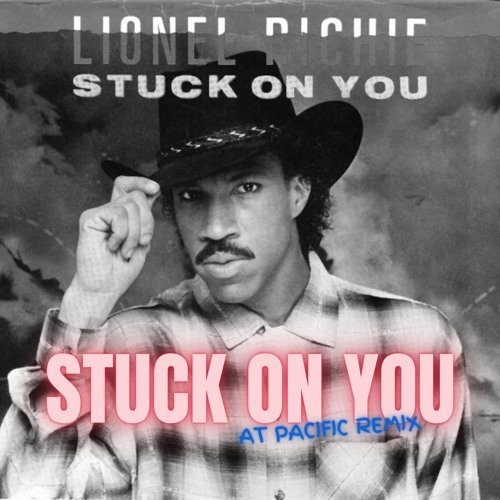
Stuck on You is just a beautifully conceived and executed love ballad. It sounds on the surface simple and conventional, but it is deceptively well crafted and contains fantastic songwriting with a country flavour distinct from his previous R&B. My appreciation of it has only grown over the years despite having heard it ten’s of times. Quality music like this never gets old. It’s also a time capsule possessing the best of the balladry and soft-rock music from that era with a gentle dose of country – ‘Guess I’m on My Way / Mighty glad you stayed‘ for good measure. In 1980, he wrote and produced the US No 1 single Lady for Kenny Rogers. Kenny even said Lionel Richie is a country artist with a soul backdrop. Stuck on You is the third song to feature here after his previous entries Hello and Endless Love (Ft. Diana Ross). The latter remains in the top 20 bestselling singles of all time, and the biggest career hit for both artists.
The following contain extracts from the two Wikipedia references below: Stuck on You was the fourth single released from Lionel Richie second studio album, Can’t Slow Down, released in June 1984, by Motown. In the US and the UK, it peaked at number three and number 12, respectively. It was also his country debut peaking at number 24 on the country chart.
Born Lionel Brockman Richie Jr. in 1949, Richie rose to fame in the 1970s as a songwriter and the co-lead singer of the Motown group Commodores; writing and recording the hit singles Easy, Sail On, Three Times a Lady and Still with the group before his departure. After spawning the number one singles All Night Long (All Night) and Hello, he co-wrote the 1985 charity single We Are the World with Michael Jackson, which sold over 20 million copies. His third album, Dancing on the Ceiling (1986), spawned the number one single Say You, Say Me.
[Verse 1] Stuck on you I’ve got this feeling down deep in my soul that I just can’t lose Guess I’m on my way Needed a friend And the way I feel now, I guess I’ll be with you ’til the end Guess I’m on my way Mighty glad you stayed
[Verse 2] I’m stuck on you Been a fool too long, I guess it’s time for me to come on home Guess I’m on my way So hard to see That a woman like you could wait around for a man like me Guess I’m on my way Mighty glad you stayed
[Bridge] Oh, I’m leaving on that midnight train tomorrow And I know just where I’m going I’ve packed up my troubles and I’ve thrown them all away ‘Cause this time, little darling I’m coming home to stay
[Verse 3] I’m stuck on you I’ve got this feeling down deep in my soul that I just can’t lose Guess I’m on my way I needed a friend And the way I feel now, I guess I’ll be with you ’til the end Guess I’m on my way I’m mighty glad you stayed
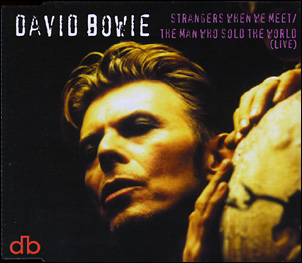
Strangers When We Meet is recognised as one of Bowie’s very best late period songs, some even arguing it is of equal stature to his 70s classics. Since it wasn’t a mainstream hit, it certainly seems one of his most underrated songs. The song is so passive aggressive but I like it a lot, and the singing and instrumentation is anything but conventional. Derrr. Bowie. Strangers When We Meet grows more captivating with repeated listens—it’s an acquired taste, much like many of Bowie’s works have been for me. Despite already featuring his music here six times, I still feel like I’m just scratching the surface of his vast and eclectic discography.
Strangers When We Meet is the nineteenth and final track from David Bowie’s twentieth album, Outside. It was originally recorded for his 1993 album The Buddha of Suburbia, but he re-recorded it in 1995 for Outside. Wikipedia states that both biographers Nicholas Pegg and Chris O’Leary agree that the song seemed out-of-place on Outsiders: ‘Strangers When We Meet’ seems even more incongruous, resolving all the album’s angst and black comedy in a soothing slice of conventional pop“. The 1995 rerecording of the song appeared on the Best of Bowie DVD (2002).
Regarding the various interpretations surrounding Strangers When We Meet, John Rafferty at Quora did a sterling job laying it all out. I have presented below an abridged version of the three prevailing interpretations associated with the song. I would definitely recommend viewing his response in full if the following sparks your interest:
1. The most obvious interpretation is that it’s about his ex wife Angie Bowie. There is reference to ‘cold tired fingers tapping out your memories’ which is perhaps an allusion to Angie Bowie’s kiss and tell memoir ‘Backstage Passes’ which she published in 1993, the same year that Bowie wrote the song….
2. The song could be about any illicit love affair which has run its course. There is an old movie called Strangers When we Meet about an architect having an affair with a married woman which the song title probably comes from. The protagonist in the song is at first ‘bewildered’ and ‘resentful’ that they are strangers when they meet. Illicit lovers often have to pretend they have never met in social situations when in reality they are secretly intimate and this can frustrate people in that situation.
3. Given all of that, it’s not beyond the realms of possibility that Bowie is singing about himself and he has become a completely different person from the one he was in the early 70s. The David Bowie of Angie’s memoirs is an unrecognisably different character from the stable and happy person he has become, as a newly married man (to his second wife Iman) freed from the paranoia and melancholy of his earlier life.
[Verse 1] All our friends Now seem so thin and frail Slinky secrets Hotter than the sun No peachy prayers No trendy réchauffé I’m with you So I can’t go on
[Chorus] All my violence raining tears upon the sheets I’m bewildered, for we’re strangers when we meet
[Verse 2] Blank screen TV Preening ourselves in the snow Forget my name But I’m over you Blended sunrise And it’s a dying world Humming Rheingold We scavenge up our clothes
[Verse 3] Cold tired fingers Tapping out your memories Halfway sadness Dazzled by the new Your embrace It was all that I feared That whirling room We trade by vendu
Steely resolve is falling from me My poor soul, poor bruised passivity All your regrets ran rough-shod over me I’m so glad that we’re strangers when we meet I’m so thankful, that we’re strangers when we meet I’m in clover, for we’re strangers when we meet Heel head over, but we’re strangers when we meet
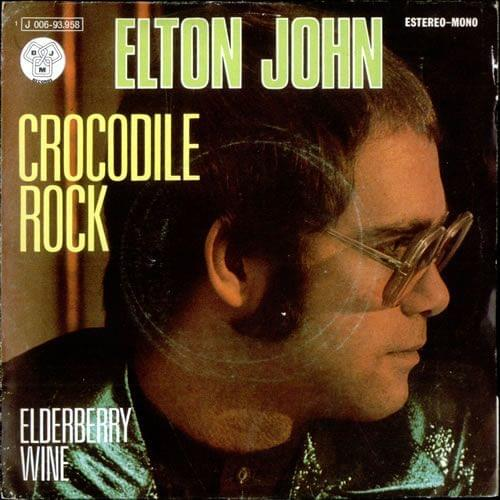
Crocodile Rock was one of the first songs I remember grooving to and letting loose on the living room floor during my youth. So many here will have such fond memories of this song as well, such was its immense popularity. I was fascinated by it and just like how it is depicted in the Rocketmanscene I felt I was levitating when he launched into Laa, la-la-la-la-laa. I don’t know how many times I put the needle down on the Elton John’s Greatest Hits record, but it was a lot. We had one of those old wooden turntables which looks like a dresser, and I remember sitting at the front of the fireplace and listening to it. My awe for Crocodile Rock is not the same now as it once was, but how can one not be struck by what it achieved and its impact on contemporary pop/rock music.
On a more sombre note, this post is in part a tribute and show of support to Elton John after it was revealed yesterday that he is unable to watch own musical’ after eyesight loss. It is said in the BBC article he had been struggling with his eyesight since getting an infection in his right eye in July.
Crocodile Rock was Elton John’s first US No 1 single and stayed there for 3 weeks. Pre-released for his forthcoming 1973 album Don’t Shoot Me I’m Only the Piano Player it eventually was certified Platinum. It was inspired by the Australian band Daddy Cool’s Eagle Rock which was the most successful Australian single of the early 1970s. Crocodile Rock comments on rock’s evolution over time. It includes a lyrical reference to the 1950s hit record Rock Around the Clock by Bill Haley and his Comets (“While the other kids were rocking around the clock…“).
Taupin stated in an Esquire magazine interview that Crocodile Rock was a funny song in that he did not mind creating it, but it would not be something he would listen to. Also John said, “I wanted it to be a record about all the things I grew up with. Of course it’s a rip-off, it’s derivative in every sense of the word.” In 2021, John revealed that Crocodile Rock was “written as a kind of joke” and that he does not enjoy playing the song any more.
[Verse 1] I remember when rock was young Me and Susie had so much fun Holding hands and skimming stones Had an old gold Chevy and a place of my own But the biggest kick I ever got Was doing a thing called the Crocodile Rock While the other kids were rocking ’round the clock We were hopping and bopping to the Crocodile Rock
[Chorus] Well, Crocodile Rocking is something shocking When your feet just can’t keep still I never knew me a better time, and I guess I never will Oh, lawdy mama, those Friday nights When Susie wore her dresses tight And the Crocodile Rocking was out of sight
[Verse 2] But the years went by and the rock just died Susie went and left us for some foreign guy Long nights crying by the record machine Dreaming of my Chevy and my old blue jeans But they’ll never kill the thrills we’ve got Burning up to the Crocodile Rock Learning fast as the weeks went past We really thought the Crocodile Rock would last
The quintessential Australian indie pop sound is back. Streets Of Your Town is the eleventh song to be presented here from The Go-Betweens and it might well be the one that most nearly caught them stardom. Despite the lukewarm reception upon release, its recognition in Australian culture over time has been nothing short of profound. It was written in Sydney shortly before the recording of the Go-Betweens’ sixth album, 16 Lovers Lane, in 1988. Grant McLennan (centre of top photo) was in a relationship with multi-instrumentalist Amanda Brown (to the right) when he wrote it. It was unusual that the band’s co-founder, Robert Forster (back and left), had not heard the song before it was brought to the group.
Amanda recalled how when she living with Grant in Bondi Junction, Sydney that the song was written very quickly in their sunny top-floor flat. She further mentioned: ‘It was written in, I would say, 10 minutes. I was singing along and I sung that ‘shine’ line, which is like the call and response answer in the verses, and that’s pretty much it – that’s how it came about. And I don’t collect any songwriting royalties for that song, because that was a condition of my joining the band‘.
Robert Forster (singer-songwriter, guitarist, band co-founder): “The fact that I hadn’t heard the song, it did miff me … Every other song from every other album that we’d done before that, and every album that we did after, I knew all the songs that Grant had. This was the one song that I didn’t. But a week later it was fine. That was the thing with Grant and I, we didn’t yell and scream at each other. There’s things that I did to him that he must have just had to swallow, too.”
Despite the song being written in Sydney it has been identified with Brisbane, and was named in the article below as the Brisbane poll winner for top song and consider the band formed in Brisbane in 1977. Also The Go Between Bridge, spanning the Brisbane river, is named after the group.
Lindy Morrison (Drums): “I always thought it (Streets of Your Town) was about Brisbane, because of the buildings being torn down; the nostalgia expressed for a town that once was. The most important thing I want to say is that Brisbane took it on as their own, so the Brisbane community grabbed it and ran with it…”
The single reached No 68 in Australia and peaked at No 30 In New Zealand.
McLennan said of writing the song, “I was listening to ‘Under the Milky Way’ and I was just working it out–cause I’m a big fan of The Church. And that afternoon I came up with a chord progression and a chorus.” Forster later said, “This was obviously the most commercial thing we’d ever done, and it came out around October ’88, which caught the summer here. It was re-released in summer and it sat fantastically on Australian summer radio and then it sat well on English summer radio. We were walking around Soho and we’d hear it on the radio, every jean shop and café.
For further information, I point you to this neat documentary about the making of the album 16 Lovers Lane. Another great song from that record Quiet Heart featured here this year.
[Chorus] Round and round, up and down Through the streets of your town Everyday I make my way Through the streets of your town
[Verse 1] And don’t the sun look good today? (Shine) But the rain is on its way (Shine) Watch the butcher shine his knives (Shine) And this town is full of battered wives
[Verse 2] And I ride your river under the bridge (Shine) And I take your boat out to the ridge (Shine) ‘Cos I love that engine roar (Shine) But I still don’t know what I’m here for
[Bridge] They shut it down They closed it down They shut it down They pulled it down
Streets of Philadelphia by Bruce Springsteen and sister song Philadelphia by Neil Young are from the Jonathan Demme movie of the same name. Bruce Springsteen won best original song at the 1994 Academy Awards while Neil Young was nominated. Both are exemplary ‘atmospheric’ compositions and showcase the unique musical talents of each. Streets of Philadelphia was a huge hit of course and my first encounter with the music from the film.
Today’s featured track Streets of Philadelphia was recorded during August 1993, at Springsteen’s home studio in Beverly Hills, California, after a personal request by Director Jonathan Demme. It was written and performed for the 1993 film Philadelphia, starring Tom Hanks, an early mainstream film dealing with HIV/AIDS. The video was shot in December, with Springsteen singing a live vocal, as he walked the streets of Philadelphia.
Streets of Philadelphia won the 66th Oscar Award in 1994 for Best Original Song as well as four Grammys: Song of the Year, Best Rock Song, Best Solo Rock Vocal Performance, and Best Song Written for Motion Picture or Television. In the United States, the single peaked at No. 9 on the Billboard, becoming Springsteen’s 12th and latest top-10 hit. It topped the singles charts in Austria, Canada, France, Germany, Iceland, Ireland, Italy, and Norway.
[Verse 1] I was bruised and battered, I couldn’t tell what I felt I was unrecognizable to myself Saw my reflection in a window and didn’t know my own face Oh, brother, are you gonna leave me wastin’ away
[Chorus] On the streets of Philadelphia?
[Verse 2] I walked the avenue ’til my legs felt like stone I heard the voices of friends vanished and gone At night I could hear the blood in my veins Just as black and whispering as the rain
[Chorus] On the streets of Philadelphia
[Post-Chorus] Ain’t no angel gonna greet me It’s just you and I, my friend And my clothes don’t fit me no more I walked a thousand miles just to slip this skin
[Verse 3] The night has fallen, I’m lyin’ awake I can feel myself fading away So receive me, brother, with your faithless kiss Or will we leave each other alone like this [Chorus] On the streets of Philadelphia?
The following information includes mainly extracts from the Wikipedia reference at the end of this post:
In early 1993, Philadelphia director Jonathan Demme asked Springsteen to write a song for his film, adding “I want it to play in the malls.” Springsteen replied, “Well, I’m interested, so I’d like to come up with a song for you. If you give me some time, I’ll see, but I can’t promise.” Springsteen recalled adding, “I’m not very good at scores.”
It’s interesting to note here that Bruce Springsteen wrote the title song for the movie – The Wrestler (2008) which I reviewed back in 2022. Springsteen gave them the song for no fee. The song was widely expected to receive a nomination for the Academy Award for Best Original Song where Springsteen would perform it on the awards show, but in what Rolling Stone termed “shocking news”, it was denied a nomination when the Academy nominated only three songs in the category rather than the usual five.
The accompanying music video for Streets of Philadelphia was directed by Jonathan Demme and his nephew Ted Demme in December 1993, and begins by showing Springsteen walking along desolate city streets, followed by a bustling park and schoolyard, interspersed with footage from the film.
The vocal track for the video was recorded live with a hidden microphone, to a pre-recorded instrumental track. This technique, appropriate for emotionally intense songs for which conventional video lip-syncing would seem especially false. Springsteen initially did this in his 1987 Brilliant Disguise video, singing the song directly into the camera as he sits on the edge of his chair on a Sandy Hook, New Jersey sound stage.
My friend Ron told me about this Canadian singer-songwriter Ron Sexsmith from St. Catharines, Ontario. I listened to this song and it’s a beautifully written song. His name seemed familiar and there is a good reason for that. My friend Randy from MostlyMusicCovers covered him this past June. I’m not sure why I didn’t look at him more then.
‘This song was released on his Other Songs album released in 1997. The album won a Juno Award for Roots & Traditional Album of the Year in 1998‘.
– Max at PowerPop (Ron Sexsmith – Strawberry Blonde)
Last year my friend Max at PowerPop published an article about this beautiful song from Ron Sexsmith. Another song by Ron called Right Down the Line by Gerry Rafferty featured here in June this year. From the scant that I have heard, I have enjoyed Ron Sexsmith’s music especially his covers of Bob Dylan’s tunes. There was a comment in Max’s article from Obbverse which aligns with my sentiments about today’s featured track Strawberry Blonde:
This kind of song is what a songwriter strives for- good melody, good lyrics, good voice and they all gell together to make something beautiful. And in context, what a perfect title.
Now here’s more from Max’s article:
This song came about when he (Ron Sexsmith) was at a playground with his young son and he observed a little girl being looked after by her grandmother because her mom was in rehab. The mix of innocence of the little girl and the problem of drug addiction of her mom played into this song.
She was not the girl next door But the girl from ’round the corner It was at the tail end of grade four When she came to school one morning
And all eyes were upon her as she took her seat Her name was Amanda with pretty eyes of green And hair of blonde, strawberry blonde
Springtime and dandelions And summer ’round the corner Was at the tail end of age nine With a million dreams before her
She lived with her mother in an old decrepit house If there was trouble she kept it to herself All summer long, the strawberry blonde
And by her face there was no way to tell It seemed like all was well in her world But the neighbors said
Her mother had lost her will To gin and sleeping pills It was no life for a little girl
Still I see her face framed in blue sky At the top of a slide coming down And when the sirens wailed (Her mother had failed to rise)
All the neighbors stood outside As Amanda just stared at the ground
Time flies and years are piled I’d forgotten all about her When I saw her down the aisle Of a streetcar with her daughter
Then I heard Amanda say as she got up “C’mon, Samantha, girl, this is our stop” And they were gone, two strawberry blondes
I just finished watching on cable this very intriguing and enjoyable Argentine movie called The Heist of the Century (ESP. El Robo del Siglo). Typical police thrillers aren’t usually my cup of tea, but I have to make an exception for this one. Its unique blend of quirkiness, sharp humor, and the undeniable chemistry between these iconic actors of Argentine cinema make it a standout. It’s based on real events of a bank heist which occurred in Buenos Aires in 2006 and appears a faithful and consistent retelling of the actual incident. Three of the principal protagonists in The Heist of the Century also featured in one of my favourite Latin American movies – The Secret in Their Eyes (2009) which I reviewed in 2019.
Storyline:
The film is based on a true story, the robbery of the Banco Río branch in the Buenos Aires town of Acassuso on Friday, January 13, 2006, which was robbed by a gang of six robbers armed with replicas of real weapons. They took 23 hostages and took approximately 19 million dollars from 147 safe deposit boxes.
This is undoubtedly one of those movies that’s best experienced with minimal prior knowledge of its coordination, events, and outcomes – just as I had the privilege of doing. It’s simply a funny way of representing what is considered one of the most ingenious robberies in the history of Argentina. I was certainly impressed by their ‘smarts’, attention to detail and laborious creativity to achieve near as possible the perfect large scale robbery.
The characters felt authentic, cunning but also likeable despite their despicable objective. Really imagine if your mad but smart left-field uncle decided to concoct a crazy plan with his mates to rob a bank and that is pretty much what this is, except ‘real’. I’m sure those who have been effected by a bank robbery don’t see the funny side at all. But there is one scene during their heist where a sequestered mobile phone from one of the hostages keeps ringing and the elderly owner declares its her mobile phone and the attention is due to it being her birthday. The priceless reaction of the robbers to this news and how the leader scolds one of the hostages for not singing ‘Happy Birthday’ with more gusto is one for the movie annals. I relayed it at the end of the post, but unfortunately I couldn’t find a translated version, but gather you’ll get the gist and find it worth your while.
This film is a throwback to films I can remember stemming from the 70s & 80s, of a bank heist including Pacino’s Dog Day Afternoon. The Heist of the Century does comedy and crime so well together. It’s a very fine movie, and I loved the actors as much as the comedy and it’s one you’ll enjoy although may leave an unsavoury taste in the mouth. If you can get past that, then you might enjoy it as much as I did.
I’ve since learnt that it takes skill and often a little bit of courage to keep things bare, leaving things so exposed and raw. There’s an honesty to that that I love. – Luke Sital-Singh
I believe I found today’s featured song Strange Weather when I presented a song cowritten by Luke Sital-Singh and Christina Perri in May this year called Rather Be. When I heard the lyrics, I thought Strange Weather was a reflection on the Pandemic and sure enough Sital-Singh stated ‘…everything was strange after the Pandemic. ‘Strange Weather’ was a summary of the EP and how I felt in general.
This gentle song is a restrained and sombre number. It was the lead single and title track from L.A. based singer-songwriter, producer Luke Sital-Singh’s 2023 EP. The arrangement effectively enhances the song’s mood and energy with a soothing percussive quality and growing intensity, guitar rhythms, subtle drumming, and layers of sound building that pairs well with Luke’s gentle, melodic vocals.
[Verse 1] The moon is letting go Of everything I know tonight The hours turn to days The sky is out of phase Are we alright?
[Pre-Chorus] Overcrowded ghost town Sun behind a dark cloud All my favourite spots have closed down Nowhere to go now
[Chorus] Strange weather Strange weather
[Verse 2] It seems like yesterday I could simply drift away from all this Now I’m not so sure About anything anymore If I’m honest
[Pre-Chorus] Am I out of my mind? Is it a matter of time?
[Chorus] Strange weather Strange weather Oh, strange weather Is it gonna go on and on forever?
Bob Dylan visiting Rubin Carter in prison in December 1975
Hurricane was the tag given to the middleweight boxer Rubin Carter (image left) and is the subject of one of Dylan’s most recognisable post 60’s songs. It is also his fourth most successful single of the 70’s, reaching No. 33 on the Billboard. To this day Dylan’s protest song Hurricane remains one of, if not his most controversial. The song compiles acts of racism and profiling against Carter, which Dylan describes as leading to a false trial and conviction. All charges were eventually dropped against Carter.
Author Clinton Heylin said that “Dylan had written topical ballads such as The Lonesome Death of Hattie Carroll. But really, the beginning of the song is like stage directions, like what you would read in a script: ‘Pistol shots ring out in a barroom night…. Here comes the story of the Hurricane.’ Boom! Titles“.
Fun fact: There is a noticeable mistake in the 8-minute recording at 4:02 where the backing singer (Blakley) gets her line wrong. She sings: “Remember you saw (said) you saw the getaway car.”) The final version of the song, which runs over eight minutes, was spliced together from two separate takes completed on October 24, 1975.
Dylan & Carter 2013
Circumstances surrounding that fateful night which led to Rubin Carter’s conviction, his legal plight and maintenance of innocence was also made the subject of a movie called TheHurricanestarring Denzel Washington playing Rubin Carter.
I do not play Dylan’s Hurricane now like I used to, but I sure as heck admire the teasing and biting instrumentation in this, particularly Scarlet Rivera’s marvellous violin playing. Also I like to sometimes hear Dylan’s ‘pissed-off-ness’ in a song. I can see why some ardent 60’s Dylan fans were relieved they had got their old Dylan back again.
Pistol shots ring out in the barroom night Enter Patty Valentine from the upper hall She sees the bartender in a pool of blood Cries out, “My God, they killed them all!”
Here comes the story of the Hurricane The man the authorities came to blame For something that he never done Put in a prison cell, but one time he could-a been The champion of the world
Three bodies lyin’ there, does Patty see And another man named Bello, moving around mysteriously “I didn’t do it,” he says, and he throws up his hands “I was only robbin’ the register, I hope you understand
I saw them leaving,” he says, and he stops “One of us had better call up the cops” And so Patty calls the cops, and they arrive on the scene With their red lights flashin’ in the hot New Jersey night
Meanwhile, far away in another part of town Rubin Carter and a couple of friends are drivin’ around Number one contender for the middleweight crown Had no idea what kinda shit was about to go down
When a cop pulled him over to the side of the road Just like the time before and the time before that In Paterson that’s just the way things go If you’re black, you might as well not show up on the street Unless you want to draw the heat
Alfred Bello had a partner and he had a rap for the cops Him and Arthur Dexter Bradley were just out prowling around He said, “I saw two men running out, they looked like middleweights They jumped into a white car with out-of-state plates”
And Miss Patty Valentine just nodded her head Cop said, “Wait a minute, boys, this one’s not dead” So they took him to the infirmary And though this man could hardly see They told him he could identify the guilty men
Four in the morning and they haul Rubin in They take him to the hospital and they brought him upstairs The wounded man looks up through his one dying eye Say, “Why did you bring him in here for? He ain’t the guy!”
Four months later, the ghettos are in flame Rubin’s in South America, fighting for his name While Arthur Dexter Bradley’s still in the robbery game And the cops are putting the screws to him Lookin’ for somebody to blame
“Remember that murder that happened in a bar?” “Remember you said you saw the getaway car?” “You think you’d like to play ball with the law?” “Think it might-a been that fighter that you saw Running that night?” “Don’t forget that you are white”
Arthur Dexter Bradley said, “I’m really not sure” The cops said, “A poor boy like you could use a break We got you for the motel job, and we’re talking to your friend Bello Now you don’t want to have to go back to jail, be a nice fellow
You’ll be doing society a favor That son of a bitch is brave and gettin’ braver We want to put his ass in stir We want to pin this triple murder On him He ain’t no Gentleman Jim”
Rubin could take a man out with just one punch But he never did like to talk about it all that much “It’s my work”, he’d say, “and I do it for pay” “And when it’s over I’d just as soon go on my way”
Up to some paradise Where the trout streams flow and the air is nice And ride a horse along a trail But then they took him to the jailhouse Where they try to turn a man into a mouse
All of Rubin’s cards were marked in advance The trial was a pig-circus, he never had a chance The judge made Rubin’s witnesses drunkards from the slums To the white folks who watched he was a revolutionary bum
And to the black folks he was just a crazy ni%$a No one doubted that he pulled the trigger And though they could not produce the gun The D.A. said he was the one who did the deed And the all-white jury agreed
Rubin Carter was falsely tried The crime was murder “one”, guess who testified? Bello and Bradley and they both baldly lied And the newspapers, they all went along for the ride
How can the life of such a man Be in the palm of some fool’s hand? To see him obviously framed Couldn’t help but make me feel ashamed To live in a land where justice is a game
Now all the criminals in their coats and their ties Are free to drink Martinis, and watch the sun rise While Rubin sits like Buddha in a ten-foot cell An innocent man in a living hell
Yes that’s the story of the Hurricane But it won’t be over till they clear his name And give him back the time he’s done Put in a prison cell, but one time he could-a been The champion of the world




 Observation Blogger