From Paradise (1993) – Archie Roach

Archie Roach and Ruby Hunter

Australian singer songwriter Archie Roach is a national treasure. He is now at peace with his wife ‘Aunty Ruby’ Hunter who was also his musical partner. “Uncle Archie”, as he was affectionately known to many, was regarded as giving a voice to the stories of many Aboriginal people (Indigenous Australians) and offering comfort and healing in his words and music. Archie’s music has featured here prominently since his music had an enormous impact on my early adulthood and continues to resonate strongly. I was fortunate to have seen him in concert in Melbourne with one of my other favourite Australian singer songwriters David Bridie who produced Archie’s second album in which today’s featured track From Paradise was released.

I have always been moved by Archie’s powerful voice and emotional storytelling. Born in Victoria, Australia, Roach faced numerous challenges in his early life, including being forcibly removed from his family as part of the government’s Stolen Generations policy. Despite these hardships, Roach found solace in music and began honing his craft as a singer and songwriter. His music including today’s song From Paradise is deeply rooted in his Indigenous heritage, with themes of resilience, survival, and the ongoing struggle for justice and recognition for Indigenous Australians. The official music video below of From Paradise is one of the most beautifully shot and poignant Australian song-music videos I have seen.

She was born
In the river land
Born of her mother, into her mother’s hands
She was free, as the river was wild
She was so innocent
Such a beautiful child

Then they took her away
From Paradise
Where everything was beautiful
And very nice

They took her away
Her mother’s tongue
Slapped her around a little bit
To teach her another one

In and out of institutions
What could they do with this child
Where was the neat solution
There was nothing they could do
So they gave her to the street
And she joined all the rest of the hungry and the tired feet

And they took her away
From Paradise
Where everything was beautiful
And very nice

They took her away
Her mother’s tongue
Slapped her around a little bit
To teach her another one

And the XXXXXXX don’t swim here anymore
And the XXXXXXX swim here anymore

She met a boy
Who kind of knew
Some of the things that she was going through

But he was confused
So he ran away
She found him again
And here she is today

And they took her away
From Paradise
Where everything is beautiful
And very nice

They took her away
Her mother’s tongue
Slapped her around a little bit
To teach her another one

Took her away from paradise
Away from paradise
Away….Away….Away from Paradise…

Jamu Dreaming is Archie Roach’s second studio album. The album was released in May 1993 and peaked at number 55 on the ARIA (Australia) Charts. The album was recorded with musical assistance from David Bridie, Tiddas, Paul KellyVika and Linda Bull, Ruby Hunter, Dave Arden and Joe Geia. ‘Jamu’ is the Pitjanjatjara word for grandfather or old one (p. 242, Roach’s autobiography, 2019).

He gave us – and all of Australia – an image of an Aboriginal man, tender and humble. An image long denied us … Through his life, his dedication to Aunty Ruby, his devotion to his sons, his work with disengaged youth and his profound love for his people, Uncle Archie gave the nation an image of an Aboriginal man seldom found in the national psyche …
–  Euahlayi scholar Bhiamie Williamson

References:
1. Archie Roach – Wikipedia
2. Jamu Dreaming – Wikipedia

Tagged with: , , ,
Posted in Music

Serenade No. 10 For Winds; K. 361; 3rd Movement (1781) – Wolfgang Amadeus Mozart

Mozart, c. 1781, detail from portrait by Johann Nepomuk della Croce

“On the page it looked nothing. The beginning simple, almost comic. Just a pulse. Like a rusty squeeze box. And then suddenly, high above it. An oboe. A single note, hanging there, unwavering, until a clarinet took it over, sweetened it to a phrase of such delight.”
Antonio Salieri (Monologue from the movie Amadeus)

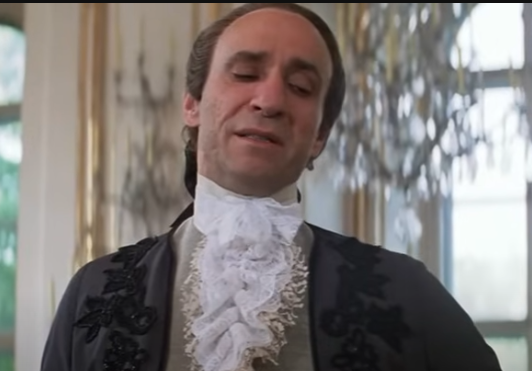
Anyone well acquainted with the movie Amadeus is likely to remember the scene in which today’s music piece Serenade No. 10 For Winds features. In the 1984 film Antonio Salieri’s first encounter with Mozart is at a performance of this work. Salieri has not been impressed with Mozart’s boorish behavior before the performance, but as he looks at the music on the page, he describes the beauty and delight of the solo oboe’s entry soon thereafter followed by the clarinet’s line (in the third movement), leading him to say, “This was no composition by a performing monkey. This was a music I’d never heard. Filled with such longing, such unfulfillable longing. It seemed to me that I was hearing the voice of God.” It is at this point that Salieri first questions how God could choose a vulgar man like Mozart as his voice; this question becomes a primary theme of the film.

The Serenade No. 10 For Winds consists of 7 movements, but we will only look at the third movement Adagio. Andante. In case people like me were wondering what these Italian words Adagio and Andante mean in Classical music: they provide guidance on the pace and character of the music. Two commonly used tempo indications are Adagio and Andante. Adagio refers to a slow tempo, often characterized by a sense of calmness, serenity, and contemplation. Andante, which translates to “walking pace,” indicates a slightly faster tempo than Adagio‘. So ‘Adagio. Andante‘ combined as seen in Mozart’s 3rd movement would suggest a slow and contemplative pace with a slight increase in movement.

Most of the following information was lifted from the Wikipedia reference below:
The serenade was scored for thirteen instruments: The work is scored for 2 oboes, 2 clarinets, 2 basset horns, 2 bassoons, 4 horns and double bass. The piece was probably composed in 1781 or 1782 and is often known by the subtitle Gran Partita (Great Game). The autograph of this work contains 24 leaves of paper-type 57. Four other compositions that used this paper can be securely dated to 1781.

Described by music critic Noël Goodwin who specialised in classical music as “virtually an ‘operatic’ ensemble of passionate feeling and sensuous warmth“, the third movement, marked Adagio, is in E flat major. A syncopated pulse occurs almost throughout the movement while solo lines alternate between the solo oboe, clarinet, and basset horn.

Reference:
1. Serenade No. 10 (Mozart) – Wikipedia

Tagged with: , , ,
Posted in Music

Señor (Tales Of Yankee Power) 1978 – Bob Dylan

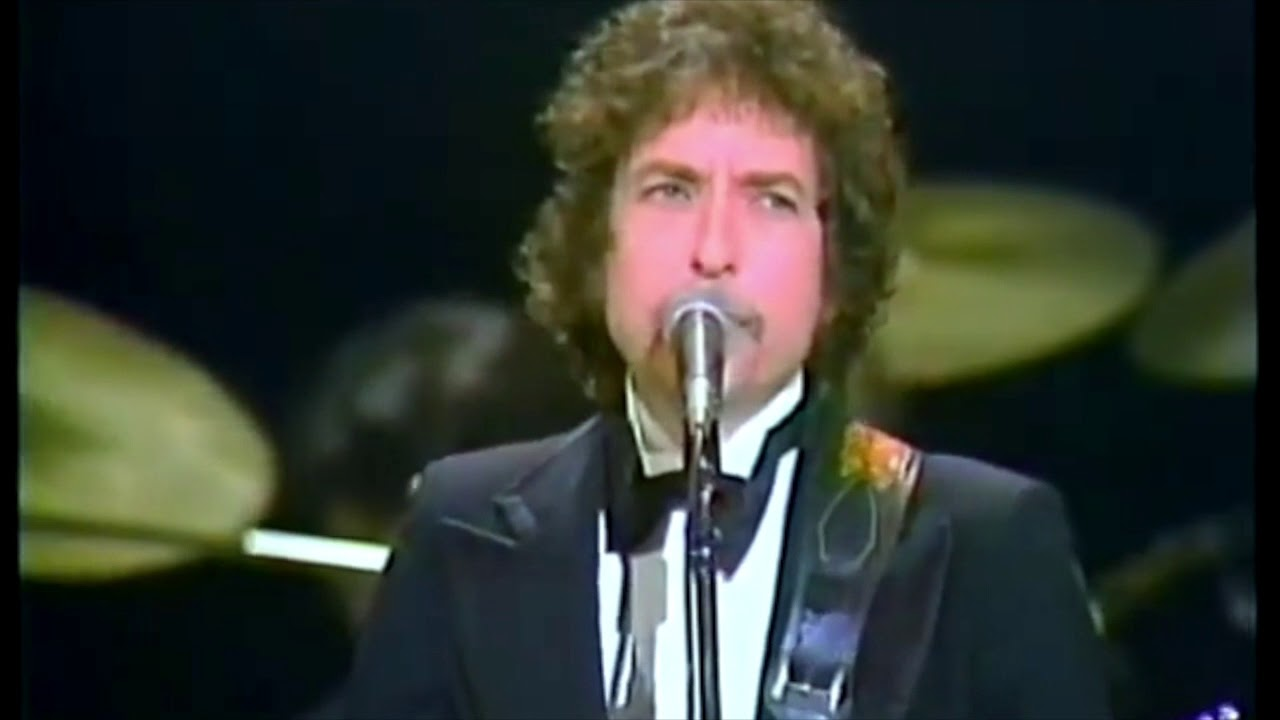
Señor is the 5th song to be presented here from my favourite Bob Dylan album Street-Legal. When I first heard this song many moons ago I wasn’t crazy about it and I could say the same with other songs from the record, but over the years and subsequent listens my musical appreciation has only amplified. He paints such vivid imagery with mythic language and the music acts like a wagon taking it’s load to an unspecified definition and the ‘Señor‘ might be the conductor or guard (or his conscience). Also the song juxtaposes the “Old West” and the Bible.
One could compare Señor to Dylan’s earlier south-of-the-border adventure songs Just Like Tom Thumb’s Blues from 1965 and Romance in Durango from 1976. Also the atmosphere of the song is Spanish or Mexican, without lapsing into caricature.

Señor is the song from Street-Legal that Dylan has played the most in live performance (265 times in concert between 1978 and 2011), and the one that has been covered the most by other artists including Jerry Garcia and Willie Nelson.
According to the Wikipédia article below Dylan has told various contradictory stories of the origen of the song. One he told in a live performance in 1978 was how “he was on a train going from Mexico to San Diego and how a strange old man got on the train, and Dylan felt the urge to talk to him. Apparently, the story told in the concerts started off fairly simply and gradually expanded adding the notion that when Dylan finally did want to talk to the man, he had gone“. Rolling Stone quoted Dylan as describing the man on the train as “150 years old… Both his eyes were burning, and there was smoke coming out of his nostrils“.
There is another obscure account in the reference below inspired by actor Harry Dean Stanton with whom he had starred in Sam Peckinpah’s 1973 film Pat Garrett and Billy the Kid.

Señor, señor, can you tell me where we’re headin’
Lincoln County Road or Armageddon
Seems like I been down this way before
Is there any truth in that, señor

Señor, señor, do you know where she’s hidin’?
How long are we gonna be riding?
How long must I keep my eyes glued to the door?
Will there be any comfort there, señor?

There’s a wicked wind still blowing on that upper deck
And there’s an iron cross still hanging from around her neck
There’s a marching band still playing in that vacant lot
Where she held me in her arms one time and said
“Forget me not”

Señor, señor, I can see that painted wagon
Smell the tail of the dragon
I can’t stand the suspense here anymore
Can you tell me who to contact here, señor?

Well, the last thing I remember before I stripped and kneeled
Was that trainload of fools bogged down in a magnetic field
And a gypsy with a broken flag and flashing ring
Said “Son, this ain’t a dream no more, it’s the real thing”

[Verse 5]
Señor, señor, you know their hearts are hard as leather
Give me a minute, let me get it together
I just gotta pick myself up off the floor
I’m ready when you are, señor

[Verse 6]
Señor, señor, let’s overturn these tables
And disconnect these cables
This place don’t make sense to me no more
Can you tell me what we’re waiting for, señor

References:
1. Señor (Tales of Yankee Power) – Wikipedia

Tagged with: , ,
Posted in Music

Promises (1978) – Eric Clapton

I was reminded of this wonderful country song by my friend Max at his PowerPop blog.

I had this single when I was a kid that was passed down to me from someone. This was before I knew about Cream, Yardbirds, or anything else. It was probably my first impression of Eric Clapton. When I did hear Cream it was a bit of a shock.

I believe my first listen of Clapton was his live version of Tears in Heaven shown on Rage – an all-night Australian music video program that has aired since 1987. Watching that show’s top 40 countdown became an early morning weekend ritual before my brother and I went out to play our respective sports. I first heard today’s featured track Promises in my late teens at the Academy. Promises was written by Richard Feldman and Roger Linn and recorded by British singer and guitarist Eric Clapton in 1978 and released on his studio album Backless.

I have always enjoyed this laid-back, country-flavored tune by Eric. The melody is catchy yet simple, with a chorus that is instantly memorable. This “swaying, melodic rocker” sometimes sounds like Clapton’s earlier hit Lay Down Sally. The production is clean and polished, typical of late 1970s recordings.
He embodied a smooth, relaxed style during this period, blending elements of rock, country, and pop into a sound that is both mellow and melodic. He did develop a good friendship with the American country artist Don Williams who had strong influence over a variety of performers of different genres including Clapton.

Promises deals with themes of love, commitment, and the bittersweet realisation of a relationship that is unlikely to be restored. The lyrics are reflective and somewhat melancholic, but Clapton maintains a sense of resignation rather than despair.

[Verse 1]
I don’t care if you never come home
I don’t mind if you just keep on
Rowing away on a distant sea
Because I don’t love you and you don’t love me

[Verse 2]
You cause a commotion when you come to town
You give them a smile and they melt
Having lovers and friends is all good and fine
But I don’t like yours and you don’t like mine

[Verse 3]
I don’t care what you do at night
Oh, and I don’t care how you get your delights
I will leave you alone, I will just let it be
I don’t love you and you don’t love me

[Chorus]
I got a problem. Can you relate?
I got a woman calling love hate
We made a vow we’d always be friends
How could we know that promises end?

[Verse 4]
I tried to love you for years upon years
You refuse to take me for real
It’s time you saw what I want you to see
And I would still love you, if you’d just love me

[Chorus]

The release was successful in the United States reaching No. 9 on the Billboard chart. In Australia, the song peaked at No. 26, although in the United Kingdom it only made No. 37.  

References:
1. Promises (Eric Clapton song) – Wikipedia

Tagged with: ,
Posted in Music

Night Heights (2023) – Jain

Full Moon. The card of all passions and desires. An extreme temptation to which one surrenders to. A state of passion stronger than ourselves
– Jain

Night Heights is a luscious and tempting dance number from the multicultural pop artist Jain. Born as Jeanne Louise Galice in Toulouse, France, with roots in Madagascar, Jain relocated to Dubai at the age of 9 and then onto the Congo. Post graduation she returned to Paris to study the arts. The French pop singer is known for her eclectic blend of world music influences.

Night Heights is not just about the enigmatic nature of the night and the allure of the full moon, but it is a tribute of sorts to the the glamour and enticement of the night-life in Paris. Jain becomes hypnotically swept up by the atmosphere and music and during the occasion finds herself desirous towards a certain someone in the crowd. I usually post the audio track of songs in lieu of the official video release, but the advanced filming techniques and creativity prowess in her music video below enhanced my appreciation of the song. I find Night Heights a sumptuous musical piece whether I’m listening to it in the quiet of the night or over the speakers at the gym.

Night Heights was released on Jain’s third studio album The Fool. After the success of her first two albums, Jain took a break in 2019 and decided to change her influences by going more towards the music she listens to, marked by albums from the 1970s. For the writing of the album, Jain isolated herself in a fisherman’s hut in Marseille with a guitar. Each song is associated with a card from the tarot from Marseille. It is said the songs are more intimate and personal than in previous albums.
On her trippy and innovative web site she describes the Fool as ‘this tightrope walker who walks towards his future. With each of his steps there is a risk and a balance. It is the first and last card of the game the one that links by just a thread, the whole story‘.

Paris, it’s raining, On a Saturday night,
But it cannot keep me away From the sound

Holding my breath,
’Cause my heart beats too loud
Flashing lights
Go dancing on your skin
Facing my desire, Caught me by surprise Night dew falling on you,
As the moon is on the rise
Maybe I’m dreaming, Maybe I’m crazy,
But I think I’m seeing
What you and I can be

Baby all night… I’m so high
Baby all night… I’m lost in your eyes
Baby all night… I’m so high Baby all night…
I’m lost in your eyes


Can you feel the love, inside of me?


I feel your lips,
Tasting all my tears,
Strumming with your lover’s hands.
Time is insomniac
And my demons are back,
Every time I meet your gaze


Facing my desire,
I see it in your eyes,
Night dew falling on you,
As the moon is on the rise

References:
1. Jain (singer) – Wikipedia
2. The Fool (album de Jain) – Wikipedia

Tagged with: , ,
Posted in Music

Liverpool 8 (2008) – Ringo Star

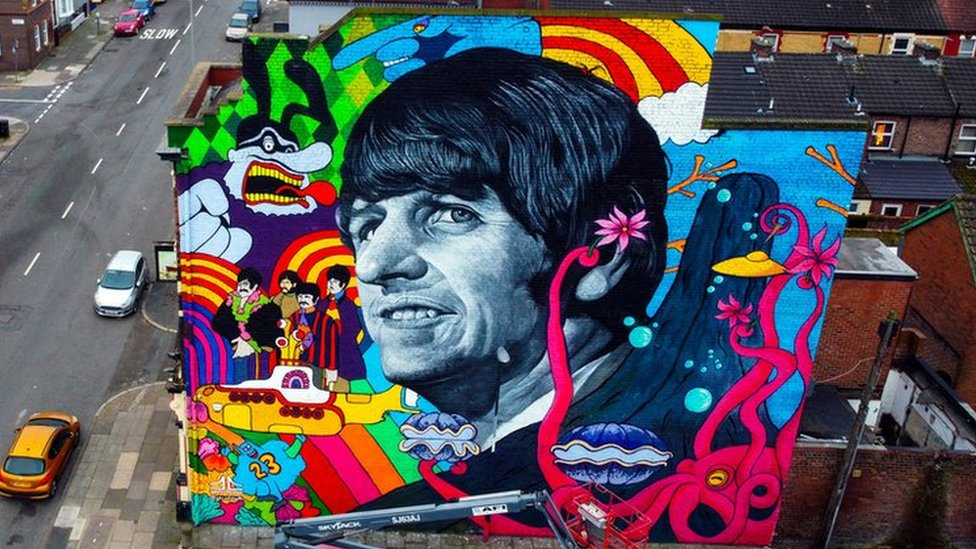
A mural of Ringo Starr at Empress pub in Toxteth, streets away from where the Beatles drummer grew up in Liverpool – BBC

Liverpool 8 is the second song from Ringo Starr (post Beatles) to be presented here after his previous entry Photograph. Rest assured it won’t be his last. I have made it no secret that my musical appreciation leans more towards the Beatles output in their solo careers than when they were together. How many people are aware that Ringo Starr has released 20 studio albums?
Today’s featured track is the title song from Ringo’s 15th release in 2008. Lyrically Liverpool 8 seems a cursory nod to Ringo’s hometown Liverpool with emphasis on his time with the Beatles but as the chorus manifests and the violins and emphatic guitar kick-in with the homey charm in Starr’s voice, this nostalgic song transforms into a rousing and emblematic homage. I can picture patrons shouting Liverpool 8 out at the top of their lungs down at a local tavern somewhere in Liverpool. I like to think John and George would be proud.

The title refers to the postal district of the Toxteth area of Liverpool in which Starr was born (see image above). The single was initially produced by Starr and Mark Hudson, a long-time collaborator of Starr. When Hudson was fired by the former Beatle, Dave Stewart (Eurythmics) was hired to help finish both the single and the studio album. The title track was released on CD and digital download as the first single from the album on 7 January 2008. Liverpool 8 entered the UK Album Chart at number 91, and reached a peak of number 94 in the US. Liverpool 8 has a 59 per cent “mixed or average” rating from Metacritic. Billboard gave the album a positive review, calling it “full of nostalgia for the good ol’ days“.

[Verse 1]
I was a sailor first, I sailed the sea
Then I got a job in a factory
Played Butlin’s Camp with my friend Rory
It was good for him, it was great for me

[Chorus]
Liverpool I left you, said goodbye to Madryn Street
I always followed my heart and I never missed a beat
Destiny was calling, I just couldn’t stick around
Liverpool I left you, but I never let you down

[Verse 2]
Went to Hamburg, the red lights were on
With George and Paul, and my friend John
We rocked all night, we all looked tough
We didn’t have much, but we had enough

[Chorus]

[Verse 3]
In the U.S.A. when we played Shea
We were number one and it was fun
When I look back, it sure was cool
For those four boys from Liverpool

[Chorus]

[Outro]

References:
1. Liverpool 8 (song) – Wikipedia
2. Liverpool 8 – Wikipedia

Tagged with: ,
Posted in Music

Back to Black (2007) – Amy Winehouse

Amy Winehouse was, first and foremost, a jazz singer. This is a point that can often get lost within the scope of her enormous pop stardom, frequent clashes with the paparazzi, and ramshackle public performances. However, Winehouse was happiest in the smokey club atmosphere that birthed legends like Billie Holliday and Ella Fitzgerald. 
Tyler Golsen (Farout Magazine)

When I was foraging through my DVD collection yesterday looking for something to watch, I came across a title Amy. I wondered if this was the compelling documentary of Amy Winehouse I saw soon after its release in 2015. Sure enough it was. And as the credits rolled I found my eyes welling up with tears. I cannot recommend this documentary more highly for music aficionados since it is the definitive portrait of the life and career of the British singer/songwriter. Avoid the recent biopic Back to Black and spin-off documentaries.

The only off putting aspect of today’s featured track is that it was inspired by the ‘then’ creep Blake Fielder-Civil who left Amy for an ex-girlfriend. His influence on Winehouse’s downward spiral was nothing short of ‘immense’. Allegedly he has been clean for years and has taken responsibility for his influence on Winehouse’s trajectory, but the extent of damage he unleashed on Amy is wicked and borders on infernal as evident in the doco. Although it’s a topic of conjecture his eventual arrest and incarceration by the authorities came too late it seems to save Amy.

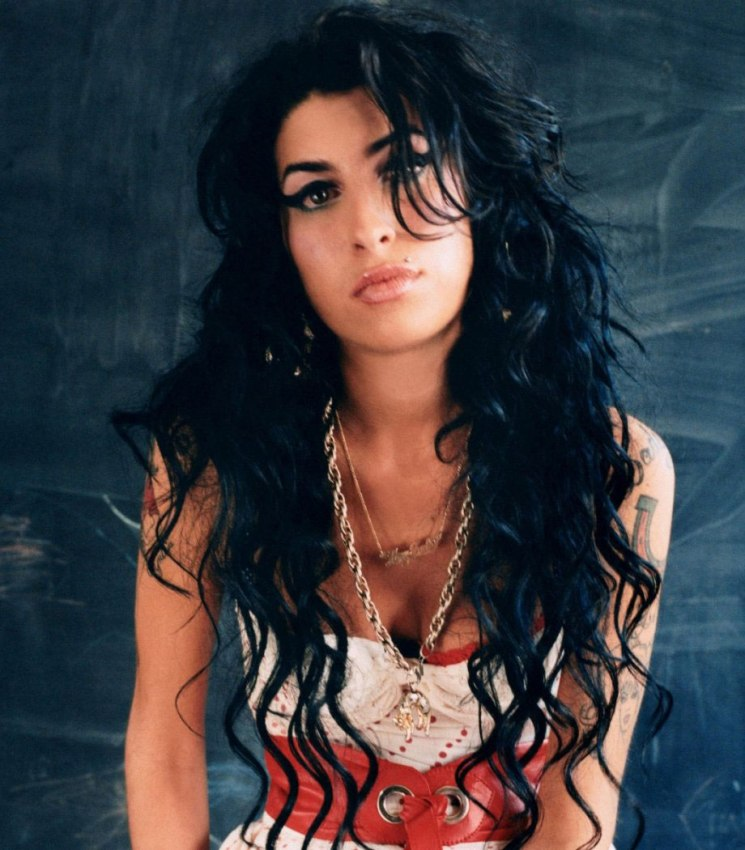
Back to Black is the title track from Amy’s second and final studio album which is recognised as her magnum opus. The song was the third single released from the record and received widespread acclaim from music critics. It was included on several compiled year and decade-end lists of the best in music and was further considered to be one of Winehouse’s signature songs. The single peaked at number eight on the UK Singles Chart in the United Kingdom and is Winehouse’s third best-selling single in that country. The aforementioned documentary features a videoed tape of Winehouse recording the song with Mark Ronson. 

Ronson expanded on the creation of the song:

The song – it took me about one night to lay the foundation of that track and then Amy wrote the lyrics and the melody especially fast, so it was like half a day, and then we probably recorded the rhythm track in three hours.

He left no time to regret
Kept his dick wet with his same old safe bet
Me and my head high
And my tears dry, get on without my guy
You went back to what you knew
So far removed from all that we went through
And I tread a troubled track
My odds are stacked, I’ll go back to black

[Chorus]
We only said goodbye with words
I died a hundred times
You go back to her and I go back to
I go back to us

[Verse 2]
I love you much
It’s not enough, you love blow and I love puff
And life is like a pipe
And I’m a tiny penny rollin’ up the walls inside

[Chorus]

[Bridge]
Black, black
Black, black
Black, black
Black
I go back to
I go back to

[Chorus]

References:
1. Back to Black (song) – Wikipedia

Tagged with: ,
Posted in Music

Selling the Drama (1994) – Live

Four geeky looking boys from Amish country in Pennsylvania and they created one of the finest alternative rock albums ever recorded.
-Anon

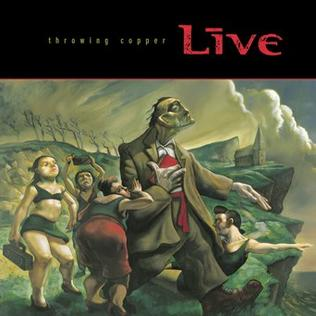
Selling the Drama is the fourth song to appear here from alternative rock band’s Live 1994 album Throwing Copper (see image inset) after their previous entry Hold Me Up. I remember when Live‘s outstanding third studio record came out. It was the bee’s knees and played everywhere. I didn’t hear any other music by them except from this album. Throwing Copper sold over 8 million copies and certified 8× platinum by the Recording Industry Association of America. It achieved number one position on the Billboard after its 52nd week on the chart being the third longest gap between an album first charting and reaching number one.

This music transports me to where I lived at the time Mornington, Southeast Melbourne and relive my young adulthood and enjoy the golden age ‘alt-rock’ scene. It seems to me ‘The Nineties‘ was a good decade in many respects and the music particularly from the early 90’s reflected it. Selling the Drama was the first single from the album and reached number one on the US Billboard Modern Rock Tracks chart, becoming their first of three singles to reach the top of this chart. Live’s performance of Selling the Drama at Woodstock ’94 was their featured song on the Woodstock 94 double album.

[Verse 1]
And to love, the God
And to fear, the flame
And to burn, the crowd that has a name

[Verse 2]
And to right or wrong
And to meek or strong
It is known, just scream it from the wall

[Pre-Chorus]
I’ve willed, I’ve walked
I’ve read, I’ve talked
I know, I know
I’ve been here before

[Chorus]
Hey, now we won’t be raped
Hey, now we won’t be scarred like that
Hey, now we won’t be raped
Hey, now we won’t be scarred like that

[Verse 3]
It’s the sun that burns
It’s the wheel that turns
It’s the way we sing that makes ’em dream

[Verse 4]
And to Christ, a cross
And to me, a chair
I will sit and earn the ransom from up here

[Pre-Chorus]

[Chorus]

[Repeat Verse 1]
And to love, a God
And to fear, a flame
And to burn, a love that has a name

References:
1. Selling Drama – Wikipedia

Tagged with: , ,
Posted in Music

Gotta Serve Somebody (1979) – Bob Dylan

Bob Dylan singing Gotta Serve Somebody February 27, 1980 at the Shrine Auditorium, Los Angeles

Only yesterday Christian and I were discussing where the weight of emphasis of ‘voice’, ‘melody’ and ‘lyric’ lies in a song. Sometimes it’s melody that draws us in, then the voice is considered and often times lyrics remain the last aspect. Christian went on to add: ‘…the order also depends on the type of song, especially since I’ve become fluent in English. If it’s a political song, lyrics become front and center‘. I would consider today’s Grammy award winning track Gotta Serve Somebody one such song where the lyrics are preeminent being both a political and religious song although one could argue the religious dimension is the most evident.
The lyrics emphasize the idea that regardless of one’s status in life, the refrain, “But you’re gonna have to serve somebody,” highlights the inevitability of choosing a side in the spiritual battle between good and evil.

Gotta Serve Somebody can also be viewed as political in a broader sense. The song critiques the social structures and hierarchies of society, pointing out that even those in positions of power—be they rulers, wealthy business people, or influential cultural figures—are not truly autonomous. In this way, the song touches on political themes by questioning the nature of power and authority, suggesting that no one is exempt from accountability or moral duty. See ‘The Rule of Law‘.

Gotta Serve Somebody was released as the opening track on his 1979 studio album Slow Train Coming and is the third song to be presented from that record after his previous entry Precious Angel. It won the Grammy Award for Best Rock Vocal Performance by a Male in 1980. Despite being from Dylan’s maligned ‘Christian’ phase including last week’s Saving Grace, Gotta Serve Somebody is in my estimation an upper-tier Dylan release. But not everyone thought that way: John Lennon famously criticized the song and wrote a parody titled “Serve Yourself” in response.
The effort is still Dylan’s latest top 40 hit on the Hot 100, peaking at No. 24 and remaining on the chart for 12 weeks. Dylan has performed the song over 500 times in concert between 1979 and 2024. The live versions he has performed in more recent years feature almost entirely new lyrics.

[Verse 1]
You may be an ambassador to England or France
You may like to gamble, you might like to dance
You may be the heavyweight champion of the world
You may be a socialite with a long string of pearls

[Chorus]
But you’re going to have to serve somebody, yes indeed
You’re going to have to serve somebody
Well, it may be the devil or it may be the Lord
But you’re going to have to serve somebody

[Verse 2]
You might be a rock ’n’ roll addict prancing on the stage
You might have drugs at your command, women in a cage
You may be a business man or some high-degree thief
They may call you Doctor or they may call you Chief

[Chorus]

[Verse 3]
You may be a state trooper, you might be a young Turk
You may be the head of some big TV network
You may be rich or poor, you may be blind or lame
You may be living in another country under another name

[Chorus]

[Verse 4]
You may be a construction worker working on a home
You may be living in a mansion or you might live in a dome
You might own guns and you might even own tanks
You might be somebody’s landlord, you might even own banks

[Chorus]

[Verse 5]
You may be a preacher with your spiritual pride
You may be a city councilman taking bribes on the side
You may be working in a barbershop
You may know how to cut hair
You may be somebody’s mistress, may be somebody’s heir

[Chorus]

[Verse 6]
Might like to wear cotton, might like to wear silk
Might like to drink whiskey, might like to drink milk
You might like to eat caviar, you might like to eat bread
You may be sleeping on the floor, sleeping in a king-sized bed

[Chorus]

[Verse 7]
You may call me Terry, you may call me Timmy
You may call me Bobby, you may call me Zimmy
You may call me R.J., you may call me Ray
You may call me anything but no matter what you say

[Chorus]

References:
1. Gotta Serve Somebody – Wikipedia

Tagged with: , , ,
Posted in Music

Secret Garden (1995) – Bruce Springsteen

I think Secret Garden is one of Bruce’s finest love ballads. As time has passed, I associate it more with Cameron Crowe’s sport drama Jerry Maguire (currently sitting at No 38 on my Favourite Movies List). This popular mainstream movie gave the song immediate traction and launched it to a wider audience than otherwise; extending Bruce’s appeal and legacy. For that reason, I have sent the viral fan video below (of the movie spliced with the song) which far exceeds the views of Bruce’s official video. I hope Bruce purists are not left too much in a pickle.
Apart from the fabulous usage of the song in the movie, what really floors me upon each listen is the song’s ‘bridge’. As I wrote in another song by Bruce called Countin’ on a Miracle and I could say the same of Secret Garden:

Countin’ on a Miracle contains about the best ‘bridge’ in any song I have heard. Normally I loathe these fillers as they seem to labour the song, but in Countin’ the bridge is the part of the song I like the most. 

There are so many similarities in the themes, significance and role of the ‘woman’ as presented in Secret Garden and Bob Dylan’s masterpiece Shelter From the Storm. In both songs the woman is a symbol of safety and comfort. In Secret Garden: The woman’s garden represents a space of emotional safety, where the protagonist can find solace. In Shelter from the Storm: The woman is a literal shelter, providing the narrator with protection from the chaos outside. It’s no coincidence then that director Cameron Crowe chose the latter song to close out the movie when we had earlier been serenaded today’s featured track – Secret Garden. The two songs are a couplet as it were, as presented in the Jerry Maguire movie.

[Verse 1]
She’ll let you in her house
If you come knockin’ late at night
She’ll let you in her mouth
If the words you say are right
If you pay the price
She’ll let you deep inside
But there’s a secret garden she hides

[Verse 2]
She’ll let you in her car
To go driving ’round
She’ll let you into the parts of herself
That’ll bring you down
She’ll let you in her heart
If you got a hammer and a vise
But into her secret garden, don’t think twice

[Bridge]
You’ve gone a million miles
How far’d you get
To that place where you can’t remember
And you can’t forget?

[Verse 3]
She’ll lead you down the path
There’ll be tenderness in the air
She’ll let you come just far enough
So you know she’s really there
Then she’ll look at you and smile
And her eyes’ll say
She’s got a secret garden
Where everything you want
Where everything you need
Will always stay
A million miles away

The following are extracts from the Wikipedia reference below:

Secret Garden was originally released as a single from his Greatest Hits album and peaked at a meagre No 63 in the US, but No 9 in Australia, 7 in Canada and 17 in the UK.

The song has been performed only a handful of times live. It was performed three times in 1995 in New York, and one time on the Reunion Tour in 2000. The song returned to the setlist once in 2013 when Springsteen performed it in the United Kingdom. After a three-year hiatus, Springsteen performed it twice in 2016 in New Jersey and Washington, D.C., and once in 2017 in Brisbane, Australia.

Steve Baltin from Cash Box praised the song, noting that it is a ballad that follows in the footsteps of the softer material from his Human Touch and Lucky Town albums.” He added that featuring the reunited E Street Band, “it is one of the prettier melodics Springsteen has ever come up with”.

Reference:
1. Secret Garden (Bruce Springsteen song) – Wikipedia

Tagged with: , , , ,
Posted in Music

Follow Blog via Email

Enter your email address to follow this blog and receive notifications of new posts by email.

Join 780 other subscribers

← Back

Thank you for your response. ✨