Thank You is the kind of song you can wake up to on a dreary, cloudy day and find yourself in better spirits after hearing it. It’s a hopeful song when it comes down to it, and very relatable. Dido is the everyday girl – she drank too much, has bills to pay, missed the bus, and arrives at work wondering if she’ll be fired by day’s end. But despite whatever comes, “it’s not so bad,” because she is loved, and nothing – including all of the above – is going to worry her or bring her down. This song is Dido’s thank-you letter to her lover, who – just by being there – can give her the best day of her life.
It’s such a cool, breezy song, with a melody that seems unassuming at first but stays with you. Even Eminem was so impressed he incorporated it into his song Stan, which many listeners may be more familiar with than Dido’s original. But it’s funny – Thank You is about being in love with someone, while Stan is about becoming dangerously obsessed with someone. Dido wrote the song about her boyfriend at the time, Bob Page, whom she met in 1995.
Thank You has one of the longest release journeys I can think of. It first appeared in the 1998 film Sliding Doors, was later included on Dido’s 1999 debut album No Angel, and was released as a single on 18 September 2000. That same year, American rapper Eminem sampled the track for his hit single Stan, which helped propel Thank You and No Angel into the mainstream. The song entered the US Billboard chart at number 80 on 13 January 2001 and peaked at No. 3 in April 2001 – becoming Dido’s first and only top-10 single in the United States – while also topping four other Billboard charts.
If you want to know the extreme case about sending feelers out and getting your song heard, then consider the aforementioned: Thank You was first released publicly via Sliding Doors on 26 January 1998 and reached its chart peak in April 2001 – a ridiculous span of 3 years and 2 months. Then get this – by 2001 Dido was being credited as “the world’s best-selling female music star.”
[Verse 1] My tea’s gone cold, I’m wondering why I Got out of bed at all The morning rain clouds up my window And I can’t see at all And even if I could, it’d all be grey But your picture on my wall It reminds me that it’s not so bad It’s not so bad
[Verse 2] I drank too much last night, got bills to pay My head just feels in pain I missed the bus and there’ll be hell today I’m late for work again And even if I’m there, they’ll all imply That I might not last the day And then you call me and it’s not so bad It’s not so bad
[Chorus] And I want to thank you For giving me the best day of my life And oh, just to be with you Is having the best day of my life
[Verse 3] Push the door, I’m home at last And I’m soaking through and through And then you handed me a towel And all I see is you And even if my house falls down now I wouldn’t have a clue Because you’re near me
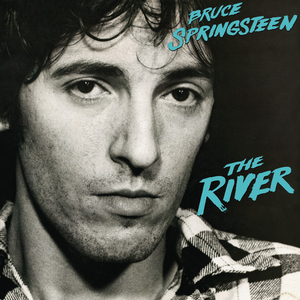
I can’t think of another song from my youth that left such a lasting mark on me, or that captured so clearly what music and storytelling could be, as Bruce Springsteen’s Thunder Road. And is there a more vivid, grounding opening in modern music than “The screen door slams, Mary’s dress sways”? From that first line, you’re there. Add Springsteen’s nod to Roy Orbison and Only The Lonely, and you’re already in the presence of something special. Even upon first listen, you feel like you’ve known the song for years.
Mary’s innocence comes into focus alongside Roy Bittan’s gentle, tiptoe piano – delicate, almost shy, and perfectly matched to the image forming in your mind. The music and the words move together, effortlessly, from start to finish. Nothing feels forced or out of place. It’s an epic rock ’n’ roll ballad. As close to perfect as they come.
Born to Run was the final installment of Springsteen’s first record deal with Columbia. The preceding albums, Greetings from Asbury Park and The Wild, the Innocent, and the E Street Shuffle, had not been commercial successes. The third album would be critical in determining the viability of his future in music. Facing that do-or-die pressure to compose a life-defining last-ditch effort, he leads off with a song about life-defining last-ditch efforts.
As I’ve written in other pieces about Bruce, his use of bridges is among the best in contemporary music. In many songs, bridges feel like functional filler – something added to serve the structure rather than deepen the song. With Springsteen, it’s the opposite. His bridges don’t just hold things together; they lift the song to another level. Thunder Road is no exception. In fact, the song doesn’t really have a traditional chorus at all – and if it does, it’s folded right into the bridge with “Oh-oh, Thunder Road, oh Thunder Road,” nestled between the later verses. The song is driven by narrative, and nothing is allowed to interrupt that forward motion as Springsteen moves from verse to verse, building one vivid moment after another.
In his 2005 VH1 Storytellers interview, Springsteen shares that Thunder Road is more than an invitation to the album, it’s an invitation to a bigger life. In his own words, “The music sounds like an invitation. Something is opening up to you… What I hoped it would be when I wrote this song is what I got out of rock and roll music – which is a sense of a larger life, greater experience, hopefully more and better sex, a sense of fun – more fun, a sense of personal exploration, your possibilities… the idea that it is all lying somewhere inside of you… just on the edge of town.”
What follows is a highly abridged version of the excellent Rolling Stone article “How Bruce Springsteen Created ‘Thunder Road’.” I’ve left out far too much good material to fit the scope of my own piece – trimming it down feels almost sacrilegious:
Springsteen had a new band, but wasn’t quite sure what to do with it…Another new figure in Springsteen’s orbit was Jon Landau, a prominent rock critic who had a past as a record producer. He invited Landau to the empty warehouse in Neptune, New Jersey where the E Street Band was rehearsing. It would be one of the most important rehearsals of Springsteen’s career. “Jon immediately started making tremendously spot-on musical suggestions,” says Weinberg, “particularly rhythmically. It was amazing. Within a couple of hours, he had turned the rhythmic thrust of the band away from that kind of charming but scattershot approach that was on the first two records. Very charming, but very busy drumming, certainly not what Jon wanted to hear.”
“Thunder Road,” in particular, “was fantastic, but it was a little unwieldy, a little unfocused, a little more like a jam piece,” Landau told me in 2005. “I remember talking with Bruce about a few ideas about how to just reshuffle the deck a little bit, and keep the song building from the very beginning right through the end.” As Springsteen adopted Landau’s suggested shifts and edits, the song started to take shape, and with it, a new, streamlined, harder-rocking sound for the E Street Band.
“Thunder Road” was the world’s introduction to Bittan’s architectural piano style, enhanced by glockenspiel parts an octave up. “Roy had the ability to take the basic parts that Bruce created when he would write the song,” Landau told me, “and expand on them just the right amount and give them a little more structure, and really wound up anchoring the arrangements on most of that record.”
Engineer Jimmy Iovine relied heavily on Bittan when he was mixing the album, “I always had Roy’s piano in my hand,” he says, “And whenever I would get in trouble I’d push Roy out. It’s the truth – he was always doing something interesting.” “That song was interesting for me,” says Bittan, “because I created a piano part that moves – It was like staircases to me. I would move up to a section, then down. When the chords change, I would sort of step up to it musically and then I would come down from it and move around all different ways.”
Springsteen was only 24 when he recorded “Thunder Road,” which makes the line “maybe we ain’t that young anymore” all the more striking. “The songs were written immediately after the Vietnam War,” Springsteen told me in 2005. “And you forget, everybody felt like that then. It didn’t matter how old you were, everybody experienced a radical change in the image they had of their country and of themselves. The reason was, ‘you were changed.’ You were going to be a radically different type of American than the generation that immediately preceded you, so that line was just recognizing that fact”.
[Verse 1] The screen door slams, Mary’s dress sways Like a vision, she dances across the porch as the radio plays Roy Orbison singing for the lonely Hey, that’s me, and I want you only Don’t turn me home again I just can’t face myself alone again
[Verse 2] Don’t run back inside Darling, you know just what I’m here for So you’re scared, and you’re thinking That maybe we ain’t that young anymore Show a little faith, there’s magic in the night You ain’t a beauty, but hey, you’re alright Oh, and that’s alright with me
[Verse 3] You can hide ‘neath your covers and study your pain Make crosses from your lovers, throw roses in the rain Waste your summer praying in vain For a saviour to rise from these streets Well now, I’m no hero, that’s understood All the redemption I can offer, girl, is beneath this dirty hood With a chance to make it good somehow Hey, what else can we do now?
[Verse 4] Except roll down the window And let the wind blow back your hair Well, the night’s busting open These two lanes will take us anywhere We got one last chance to make it real To trade in these wings on some wheels Climb in back, heaven’s waiting down on the tracks
[Bridge] Oh-oh, come take my hand We’re riding out tonight to case the promised land Oh-oh, Thunder Road, oh Thunder Road, oh Thunder Road Lying out there like a killer in the sun Hey, I know it’s late, we can make it if we run Oh, Thunder Road, sit tight, take hold Thunder Road
[Verse 5] Well, I got this guitar, and I learned how to make it talk And my car’s out back if you’re ready to take that long walk From your front porch to my front seat The door’s open, but the ride it ain’t free And I know you’re lonely for words that I ain’t spoken But tonight we’ll be free, all the promises’ll be broken
[Verse 6] There were ghosts in the eyes of all the boys you sent away They haunt this dusty beach road In the skeleton frames of burned out Chevrolets They scream your name at night in the street Your graduation gown lies in rags at their feet And in the lonely cool before dawn You hear their engines roaring on But when you get to the porch, they’re gone on the wind So Mary, climb in It’s a town full of losers, and I’m pulling out of here to win
Morrissey sings here about how music mattered intensely to so many of us when we were young:
A sad fact widely known The most impassionate song to a lonely soul Is so easily outgrown But don’t forget the songs that made you smile And the songs that made you cry When you lay in awe on the bedroom floor And said, “Oh, oh, smother me mother”
The title is both a nod to a vinyl record (as it is round and made of rubber) and to the flotation ring used to pull someone from deep water. In that sense, Smiths songs often serve the same purpose for young listeners: something to cling to when things feel overwhelming. Morrissey’s message is a reminder not to dismiss or forget the music that once carried you through difficult moments, even if adulthood has dulled its urgency or changed the way you relate to it.
Rubber Ring is well respected by Smiths fans and critics alike, deeply entrenched – and widely admired – within the band’s expansive, eclectic back catalogue. It’s yet another great Smiths B side song this time tucked away on the single The Boy With The Thorn In His Side (image inset) which reached No. 23 on the UK Singles Chart.
In fact, the single has two B-sides – Rubber Ring and Asleep – and they fit together so naturally that where Rubber Ring ends, Asleep seems to begin, like inseparable halves of the same thought.
Rubber Ring stands apart as one of the Smiths’ more off-kilter tracks, beginning with a stripped-down, lightly grooving interplay between Johnny Marr and Andy Rourke, as Mike Joyce keeps things anchored and Marr colours the sound with an odd, bowed-string effect. Over this, Morrissey reflects on the intensity music once held in youth, before the rhythm tightens and lifts, sending Marr into tangled, fast-moving guitar figures that echo the way Morrissey lets his voice dart and overlap.
In the long outro, Morrissey’s “la da da dey” returns over a grounded rhythm section, until the voice of John Gielgud appears – “everybody’s clever nowadays,” just before the creepy lady says “you are sleeping, you do not want to believe” as the wind and first note of the piano from Asleep creep in binding the two tracks together.
[Verse 1] A sad fact widely known The most impassionate song to a lonely soul Is so easily outgrown But don’t forget the songs that made you smile And the songs that made you cry When you lay in awe on the bedroom floor And said, “Oh, oh, smother me mother” Oh, la da dey, la da dey, la da dey, la da dey Oh na na na, la da dey, la da dey, la da dey Oh la day, la da da dey di la da da dey di
[Verse 2] The passing of time and all of its crimes Is making me sad again The passing of time and all of its sickening crimes Is making me sad again But don’t forget the songs that made you cry And the songs that saved your life Yes, you’re older now and you’re a clever swine But they were the only ones who ever stood by you
[Verse 3] The passing of time leaves empty lives waiting to be filled The passing of time leaves empty lives waiting to be filled I’m here with the cause, I’m holding the torch In the corner of your room (Can you hear me?) And when you’re dancing and laughing and finally living Hear my voice in your head and think of me kindly Oh, la da dey, la da dey, la da dey, la da dey Oh na na na, la da dey, la da dey, la da dey Oh la day, la da da dey di, la da da dey di
[Outro] Do you love me like you used to? Oh, la da dey, la da dey, la da dey, la da dey Oh na na na, la da dey, la da dey, la da dey Oh la day, la da da dey di, la da da dey di (You’re clever) (Everybody’s clever nowadays) (You’re clever) (Everybody’s clever nowadays)
[Segue] (You are sleeping, you do not want to believe) (You are sleeping, you do not want to believe) (You are sleeping, you do not want to believe) (You are sleeping—)
The Finnish composer and violinist – Jean Sibelius returns here with a buoyant, almost regal fanfare. The Intermezzo (Eng: Interlude) is a jaunty Allegro march-like theme, the orchestra portraying the atmosphere of marching contingents. May it set your day off in a bright, steady stride, just as it did for me when I heard it this morning.
It is just one of a subset of pieces from the longer Karelia Music (named after the region of Karelia) written by Jean Sibelius in 1893. The Intermezzo is the only original movement of the suite. Sibelius borrowed the brass theme from the middle of Tableau 3 and shaped it into its own movement. If you listen to this spectacular short piece (at the very bottom of this post), it’s easy to hear exactly where he drew his inspiration.
Jean Sibelius featured here previously with the magnificent Finlandia which was composed for the Press Celebrations of 1899, a covert protest against increasing censorship from the Russian Empire. He’s often credited with helping Finland shape a national identity during its struggle for independence from Russia. More broadly, he’s recognised as the country’s greatest composer.
Karelia Music was written in the beginning of Sibelius’s compositional career. The rough-hewn character of the Music was deliberate – the aesthetic intention was not to dazzle with technique but to capture the quality of naive, folk-based authenticity. Historical comments have noted the nationalistic character of the music.
I can’t help but think of AC/DC and the Rolling Stones when this comes on. That punchy, wide-open guitar riff feels like something straight out of their playbook – only this song actually predates AC/DC by a few years. What really hooks me is the clipped, almost percussive strumming that gives the riff its circular, jangly grit.. Listen from 0.03 to 0:08 to catch the bit I mean – it repeats through the whole track and just sounds fantastic. Lyrically, there’s no grand philosophy here: it depict a man who encounters an attractive woman on the street and initiates a sexual encounter.
Learning that this song dates back to 1970 gave me a jolt. I assumed it came after the bands it now reminds me of, but the influence kinda runs the other way. All Right Now arrived as a bridge between late-60s blues-rock and the heavier, harder-edged sound that would define the 70s – proto hard rock, even an early hint of what glam and arena rock would become. It was innovative for its moment and helped shape where countless bands later took their music. A full-throttle rocker that somehow never wears out, no matter how often you play it.
The remaining of this article was mostly comprised from the Wikipedia references below: All Right Now is a song by English rock band Free, released on their third studio album, Fire and Water (1970). It peaked at No. 2 in the UK and No. 4 on the US causing quite a splash on both sides of the big pond. In 2006, the BMI London awards included a Million Air award for 3,000,000 air plays of the song in the USA. The song remains as a staple track of classic rock radio.
Composition
According to drummer Simon Kirke, “All Right Now” was written by Free bassist Andy Fraser and singer Paul Rodgers in the Durham Students’ Union building, Dunelm House. He said: “‘All Right Now‘ was created after a bad gig in Durham. We finished our show and walked off the stage to the sound of our own footsteps. The applause had died before I had even left the drum riser. It was obvious that we needed a rocker to close our shows. All of a sudden the inspiration struck Fraser and he started bopping around singing ‘All Right Now’. He sat down and wrote it right there in the dressing room. It couldn’t have taken more than ten minutes.” Fraser has agreed largely with this history.
Legacy
Although renowned for their live performances and non-stop touring, their music did not sell well until their third studio album, Fire and Water (1970), which featured the hit “All Right Now”. The song helped secure them a performance at the 1970 Isle of Wight Festival, where they played to an audience of 600,000 people. In the early 1970s they became one of the best-selling British blues rock. By the time they disbanded, they had sold more than 20 million records worldwide and had played in more than 700 arenas and festival concerts.
[Verse 1] There she stood in the street Smiling from her head to her feet I said, “Hey, what is this, now, baby?” maybe Maybe she’s in need of a kiss I said, “Hey, what’s your name, baby? Maybe we can see things the same Now don’t you wait or hesitate Let’s move before they raise the parking rate” Ow!
[Chorus] All right now, baby, it’s all right now All right now, baby, it’s all right now
[Interlude] Let me tell you now
[Verse 2] I took her home to my place Watchin’ every move on her face She said, “Look, what’s your game, baby? Are you tryin’ to put me in shame?” I said, “Slow, don’t go so fast Don’t you think that love can last?” She said, “Love, Lord above Now you’re tryin’ to trick me in love”
I became more familiar with this expansive, but vulnerable ballad during its 1991 resurgence, when it was recorded live as a duet between Elton John and George Michael and reached number one in both the UK and the US. It always gave me goosebumps when Michael introduced Elton John and their voices harmonised so naturally. Michael knew exactly how to handle the song in a way few singers ever manage with Elton John’s material. It’s uncanny how this song seems to capture everything I’m feeling in my life right now – and it’s not pretty, let me tell you.
The pair had originally performed the song together for the first time at Live Aid at Wembley Stadium in July 1985. During his headlining appearance at the Glastonbury Festival on 25 June 2023, John dedicated the song to Michael, who died in 2016
The song by British musician Elton John and lyricist Bernie Taupin was originally recorded by John for his eighth studio album, Caribou (1974), and was released as a single that peaked at number two on the US Billboard, and No. 16 on the UK Singles Chart. The song was actually cowritten by John and Taupin during a10 day a ten-day period in January 1974 along with the other songs for John’s Caribou album. The chorus of the song features backing vocals by Brian Wilson, Carl Wilson and Bruce Johnston of the Beach Boys.
Below I’ve included the live duet version by Elton and George, followed by the original studio release.
[Verse 1] I can’t light no more of your darkness All my pictures seem to fade to black and white I’m growin’ tired, and time stands still before me Frozen here on the ladder of my life
[Verse 2] Too late to save myself from falling I took a chance and changed your way of life But you misread my meanin’ when I met you Closed the door and left me blinded by the light
[Chorus] Don’t let the sun go down on me (Don’t let the sun) Although I search myself, it’s always someone else I see I’d just allow a fragment of your life (Don’t let the sun) to wander free But losin’ everything is like the sun goin’ down on me
[Verse 3] I can’t find, oh, the right romantic line But see me once and see the way I feel Don’t discard me just because you think I mean you harm But these cuts I have, oh, they need love to help them heal
Someone once described today’s featured song as “one of those tracks Hispanic mothers play while cleaning the house on a Sunday.” Which gave me my first proper belly chuckle of the day – and, to be fair, there’s probably a lot of truth in it.
A friend showed me the live version of Si No Te Hubieras Ido (“If You Hadn’t Left”) by Mexican singer-songwriter Marco Antonio Solís a few weeks ago. I didn’t connect with it right away. The slightly dated, late-80s sounding intro doesn’t do the song many favours. But once Solís settles into that warm, aching power-ballad voice of his, and the strings start lifting the melody, the whole thing clicks into place. After a few listens, I found myself just as absorbed as any Solís fan. It’s clear why this became one of his signature songs.
Si No Te Hubieras Ido also reminds me a little of Leonard Cohen’s 1980s ballad Ain’t No Cure For Love. Both circle around longing and unresolved heartbreak, slowly building toward an emotional peak. They also share a similar ballad-style production typical of that era, which adds to the connection. Cohen’s writing, as usual, is in its own league, but Solís’ song stands strong on the power of its melody and its straightforward, lovesick lyrics.
This isn’t the first time Solís has shown up here, either. Back in January 2023, I wrote about “La Venia Bendita” (“The Reverential Blessing”), a track that captivated me from the first listen, and even after countless repeats, that fascination hasn’t faded.
The song was initially written by Solís in 1983, but was first recorded by another artist – Marisela. Her version was released as a single and became very successful in Mexico and she later included it on her live album. Marco Antonio Solís re-recorded the track to include it on his album Trozos de Mi Alma and it became another top-ten smash for Solís, peaking at No. 4 in the Billboard Hot Latin Tracks chart. This version was featured in the movie Y Tu Mamá También.
[Verso] Te extraño más que nunca y no sé qué hacer / I miss you more than ever and I don’t know what to do Despierto y te recuerdo al amanecer / I woke up and I remember you at dawn Espera otro día por vivir sin ti / Wait another day to live without you El espejo no miente, me veo tan diferente / The mirror doesn’t lie, I look so different Me haces falta tú / I need you
[Pre-Coro] La gente pasa y pasa siempre tan igual / People come and go, always the same El ritmo de la vida me parece mal / The rhythm of life seems wrong to me Era tan diferente cuando estabas tú / It was so different when you were here Sí que era diferente cuando estabas tú / Yes, it was different when you were here
[Coro] No hay nada más difícil que vivir sin ti / There’s nothing harder than living without you Sufriendo en la espera de verte llegar / Suffering while waiting for you to arrive El frío de mi cuerpo pregunta por ti / The coldness in my body asks for you Y no sé dónde estás / And I don’t know where you are Si no te hubieras ido sería tan feliz / If you hadn’t left, I would be so happy No hay nada más difícil que vivir sin ti / There’s nothing harder than living without you Sufriendo en la espera de verte llegar / Suffering while waiting for you to arrive El frío de mi cuerpo pregunta por ti / The coldness in my body asks for you Y no sé dónde estás / And I don’t know where you are Si no te hubieras ido sería tan feliz / If you hadn’t left, I would be so happy
‘Hi-fi shops played it as an example of state-of-the-art music. I didn’t tell them I made it with Sellotape in my kitchen’ – Jean Michel Jarre
You know you’re onto something when a director like Peter Weir picks your music for one of his films – which he did with today’s featured piece, Oxygène, Pt. 2, in the classic Australian war film Gallipoli. This includes fragments of the scene where I first heard this immense track as a youngster, and it’s stayed lodged in my music memory ever since. If I want to get a bit trippy, I imagine this piece as a small, bending triangulum prism, with its centre holding that airy atmosphere of oxygen and space. One point connects it to a war film, another to a young French musician tinkering in his kitchen, and the third to the 1968 student uprisings that helped shape it.
Jean-Michel Jarre in his recording studio
It was in those uprisings where Jarre recalled the years of him drifting between rock bands, odd tape experiments, and trying to rebel in whatever way felt honest. Many laughed at the strange sounds he was pulling from his gear, but he kept trying to mix the experimental with something people could actually enjoy.
He says he built his kitchen studio from small savings, using only a few pedals, a Revox tape machine, and an EMS VCS3 synth. He realised that delaying the signal from one speaker made the room feel huge. His Mellotron barely worked, but it was enough to sketch out the melody for Oxygène, Pt. 2. Even his humble Korg Mini Pops drum machine only became interesting after he taped together two presets to make a new rhythm.
Jarre has said he wanted electronic music without vocals, tied somehow to nature and the environment. When he first saw Michel Granger’s painting of Earth peeling open to reveal a skull, he knew instantly: that’s the cover (image inset).
Record labels didn’t see the vision. They rejected the album for having no singer, no drummer, long tracks, and “being too French.” But Francis Dreyfus took the risk and pressed an initial 50,000 copies. Some buyers returned it, thinking the white noise was a defect. Then radio – especially in France and the UK – began playing full sides of the album, and things changed fast.
Oxygène went on to sell roughly 15 million copies worldwide. Jarre has made plenty of music since – big outdoor concerts, sequels to Oxygène, and new electronic experiments – but this album remains the one most closely tied to him.
Sometimes when we’re head-over-heels, our minds start inventing problems that aren’t there. Today’s featured song is Shania’s blunt retort, Don’t Be Stupid (You Know I Love You) – basically her smiling, eyebrow-raised reply to that kind of romantic paranoia.
I really enjoy hearing that fiddle riff- a line-dancing pearl that would have shaken up any country dance hall. It also tapped into the late-90s wave of Celtic and Irish-flavoured pop (the Riverdance moment was very real), giving the track its bright little lift.
The song gets that extra push from Shania’s usual playful, slightly mischievous delivery. It’s not top-tier Shania for me, but it’s a guilty-pleasure track I’m always happy to hear once in a while. So no, Shania – we’re not being stupid. You made a tune that’s just plain likable.
The following was abridged from the Wikipedia article below:
This song also marks the moment she was moving from Country music and broaching into Pop Music especially evident with her official music video version of this song. It having a pop-oriented production that toned down the country instrumentation. The track received mixed reviews from music critics, who questioned why Twain released an “oddly disposable single.” Additionally, the track’s dance-pop’s remix, which was the version released for European and Australian audiences, was compared to Swedish group Rednex’s single “Cotton Eye Joe“.
Commercially, the track performed well, hitting number six on the US Billboard Hot Country Songs and topping the Canadian RPM Country Tracks chart for one week. Internationally, it reached number five on the UK Singles Chart.
Don’t Be Stupid was released as the second single from her third studio album Come On Over. Twain entirely collaborated with producer and then-husband Robert John “Mutt” Lange. With both having busy schedules, they often wrote apart and later intertwined their ideas. Twain wanted to improve her songwriting skills and write a conversational album reflecting her personality and beliefs. The resulting songs explore themes of romance and female empowerment, addressed with humour.
Then Twain embarked on the Come On Over Tour, which ran from May 1998 to December 1999. The album spawned 12 singles, including three U.S. Billboard top-ten hits: You’re Still The One, From This Moment On and That Don’t Impress Me Much. The album received mixed reviews mainly because of country-pop experimentation, while others criticized the lyrics and questioned its country music categorization.
Cool Yeah Uh-uh, yeah
You’re so complicated You hang over my shoulder when I read my mail I don’t appreciate it When I talk to other guys you think they’re on my tail
I get so aggravated When I get off the phone and I get the third degree I’m really feelin’ frustrated Why don’t you take a pill and put a little trust in me And you’ll see
Don’t freak out until you know the facts Relax
Don’t be stupid, you know I love you Don’t be ridiculous, you know I need you Don’t be absurd, you know I want you Don’t be impossible
Oh, oh yeah
I’m mad about you (I’m mad about you) I can’t live without you (I can’t live without you) I’m crazy ’bout you (I’m crazy ’bout you) So don’t be stupid, you know I love you
Stop overreacting You even get suspicious when I paint my nails It’s definitely distracting The way you dramatize every little small detail
Don’t freak out until you know the facts Relax, Max
Don’t be stupid, you know I love you Don’t be ridiculous, you know I need you Don’t be absurd, you know I want you Don’t be impossible
I heard this gnarly piece again the other day and realised I’d somehow never added it to my music library project. What surprised me was learning that Dick Dale’s explosive surf-rock take on Miserlou (often spelled Misirlou) traces back to a folk tune from the Eastern Mediterranean in the 1920s. No single author is known, but Arabic, Greek and Jewish musicians were already playing it by then, and the earliest confirmed recording comes from a 1927 Greek rebetiko/tsifteteli composition.
There are more versions than you could poke a stick at, and it’s interesting how each version works of Misirlou because the melody itself is stubborn and memorable. Yet the first time I recall hearing it was in Quentin Tarantino’s Pulp Fiction (1994), where it just slices straight through the film’s opening. He treated it as if it were jolt to wake up a ’90s audience.
Dale’s 1962 recording was huge because he pushed it with such physical intensity by wanting to see how fast he could play it on a single string – a challenge rooted in his Lebanese heritage and childhood memories of oud and mizmar melodies. That ferocity, paired with Fender’s custom-built Showman amps, birthed what many now think of as the sound of surf guitar. It’s wild, how there’s also a clear line connecting the piece back to older Middle Eastern scales and phrasing.