
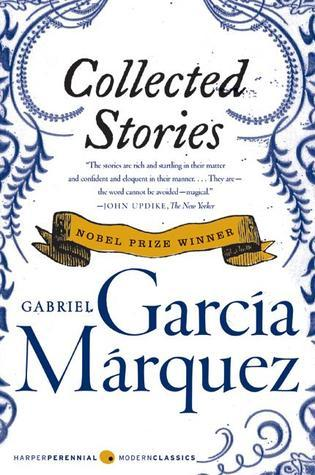
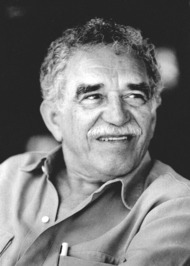
Once upon a time on Wednesdays I had a segment dedicated to literature. I am hereby reinstating it, by presenting a short extract from the above ‘collected stories’ by Colombian author Gabriel García Marquez (image inset). The 1982 Nobel Prize winner is no stranger to this blog appearing here twice in 2022 with his ultimate novel – Of Love and Other Demons (1995). ‘Gabo’ as Colombians affectionately refer to him is considered one of the most significant authors of the 20th Century, especially in the Spanish Language. García Márquez started as a journalist and wrote many acclaimed non-fiction works and short stories, but is best known for his novels, such as One Hundred Years of Solitude (1967), Chronicle of a Death Foretold (1981), and Love in the Time of Cholera (1985).
Two days ago, I finished reading Collected Stories – a rich tapestry of stories from the master storyteller of Magic Realism. Born in the northern Colombian coastal town of Aracataca in 1928, Gabo spent the first 8 years with his maternal grandparents home, listening to their nonstop stories, superstitions, and folk beliefs, unable to distinguish between the real and the fabulous not least because of their way of storytelling, especially that of the grandmother.
I can attest my Colombo-Australiano children had on their Colombian side a grandmother and great-grandmother who were also obsessive storytellers. They would impart to my children tales incorporating magical elements often blurring the lines between speculation and reality. They recounted the most fantastical happenings with the same facial and vocal expressions with which they recounted fact.
Gabo’s father also took him to circuses and other entertainments and introduced him to the miracle of ice (an episode that introduces One Hundred Years of Solitude). The author would later remark, ‘I feel that all my writing has been about the experiences of the time I spent with my grandparents.‘
The Incredible and Sad Tale of Innocent Eréndira and Her Heartless Grandmother (1972)
The above named story concludes the ‘Collected Stories’ book, but it is really closer to a novel than a short story. It originally appeared in Esquire magazine where you can still read it in its entirety.
As the title says, it is an ‘incredible and sad story‘ of a twelve-year-old who accidentally sets fire to the house where she lives with her grandmother. The grandmother decides that Eréndira must pay her back for the loss, and sells her into prostitution in order to make money. The story takes on the characteristics of a bizarre fairy tale, with the evil grandmother forcing her Cinderella-like granddaughter to sell her body. Márquez wrote that the inspiration for Eréndira came from an experience he had at the age of 16, when he saw an 11-year-old girl being prostituted by a female relative that he believed may have been her grandmother. This memory left an impression on him, and he also used it for One Hundred Years of Solitude.
As I began reading this story, I had no idea of the plot, but my literary consciousness was immediately entranced by the images and detail. They seemed pulled out of dreams, an ancient past and the Latin American culture. So I present to you this short extract from the opening of – The Incredible and Sad Tale of Innocent Eréndira and Her Heartless Grandmother (translated from the Spanish by Gregory Rabassa and J.S. Bernstein):
Erendira was bathing her grandmother when the wind of her misfortune began to blow. The enormous mansion of moon like concrete lost in the solitude of the desert trembled down to its foundations with the first attack. But Erendira and her grandmother were used to the risks of the wild nature there, and in the bathroom decorated with a series of peacocks and childish mosaics of Roman baths they scarcely paid any attention to the wind.
The grandmother, naked and huge in the marble tub, looked like a handsome white whale. The granddaughter had just turned fourteen and was languid, soft-boned, and too meek for her age. With a parsimony that had something like sacred rigor about it, she was bathing her grandmother with water in which purifying herbs and aromatic leaves had been boiled, the latter clinging to the succulent back, the flowing metal-colored hair, and the powerful shoulders which were so mercilessly tattooed as to put sailors to shame.
“Last night I dreamt I was expecting a letter,” the grandmother said.
Erendira, who never spoke except when it was unavoidable, asked:
“What day was it in the dream?”
“Thursday.”
“Then it was a letter with bad news,” Erendira said, “but it will never arrive.”
When she had finished bathing her grandmother, she took her to her bedroom. The grandmother was so fat that she could only walk by leaning on her granddaughter’s shoulder or on a staff that looked like a bishop’s crosier, but even during her most difficult efforts the power of an antiquated grandeur was evident. In the bedroom, which had been furnished with an excessive and somewhat demented taste, like the whole house, Erendira needed two more hours to get her grandmother ready. She untangled her hair strand by strand, perfumed and combed it, put an equatorially flowered dress on her, put talcum powder on her face, bright red lipstick on her mouth, rouge on her cheeks, musk on her eyelids, and mother-of-pearl polish on her nails, and when she had her decked out like a larger than life-size doll, she led her to an artificial garden with suffocating flowers that were like the ones on the dress, seated her in a large chair that had the foundation and the pedigree of a throne, and left her listening to elusive records on a phonograph that had a speaker like a megaphone.
While the grandmother floated through the swamps of the past, Erendira busied herself sweeping the house, which was dark and motley, with bizarre furniture and statues of invented Caesars, chandeliers of teardrops and alabaster angels, a gilded piano, and numerous clocks of unthinkable sizes and shapes. There was a cistern in the courtyard for the storage of water carried over many years from distant springs on the backs of Indians, and hitched to a ring on the cistern wall was a broken-down ostrich, the only feathered creature who could survive the torment of that accursed climate. The house was far away from everything, in the heart of the desert, next to a settlement with miserable and burning streets where the goats committed suicide from desolation when the wind of misfortune blew.
That incomprehensible refuge had been built by the grandmother’s husband, a legendary smuggler whose name was Amadis, by whom she had a son whose name was also Amadis and who was Erendira’s father. No one knew either the origins or the motivations of that family. The best known version in the language of the Indians was that Amadis the father had rescued his beautiful wife from a house of prostitution in the Antilles, where he had killed a man in a knife fight, and that he had transplanted her forever in the impunity of the desert. When the Amadises died, one of melancholy fevers and the other riddled with bullets in a fight over a woman, the grandmother buried their bodies in the courtyard, sent away the fourteen barefoot servant girls, and continued ruminating on her dreams of grandeur in the shadows of the furtive house, thanks to the sacrifices of the bastard granddaughter whom she had reared since birth. (read the entire story at Esquire)
P.S – You can join me at Good Reads here. Below is the book I’m about to commence in case you want to join me on my renewed reading journey. Thanks for reading and cheerio!

References:
1. The Incredible and Sad Tale of Innocent Eréndira and Her Heartless Grandmother – Wikipedia
2. The Incredible and Sad Tale of Innocent Erendira and Her Heartless Grandmother – Good Reads
3. Collected Stories – Good Reads

“The more I live, the more I learn. The more I learn, the more I realize, the less I know.”- Michel Legrand


 Observation Blogger
Great story teller
Yes, you mentioned in a previous post how he was one of my favourite authors. I tried reading ‘One Hundred Years of Solitude’ many years ago in Spanish, but due to my limited Spanish I was unable to grasp many concepts. I want to get this in English and read it very soon. What were your thoughts on his Magnum Opus?
I’m a big believer in fate and I thought the book illustrated this beautifully.
I will endeavour to keep this in mind when I read it. Thanks.
Let me know how you get on.
Sure will Sheree! I’m currently reading ‘The Penguin Book of English Short Stories’. After that I’ll purchase ‘A Hundred Years…’ and get going. I’ll no doubt write about parts of it here. Cheers.