Welcome to Monday’s News on the March – The week that was in my digital world.
Mavis Staples Triumphs with Double Win at the 68th Annual Grammy Awards
– Music article by Timothy Yap at Jubilee Street

To be honest, the Grammys haven’t been on my radar for a while, apart from Nathy Peluso raking it in 2024. This short Rick Beato video, Proof Music is Getting Worse, pretty much sums up why I’m so nonchalant about the whole affair. But sometimes – just sometimes – they manage to get it right.
On January 29, I presented Mavis Staples’ gorgeous title track from her 2025 album Sad and Beautiful World. Good timing because just two days later, Staples won two Grammys at the 68th Annual Grammy Awards for two other songs from the same record: Godspeed and Beautiful Strangers.
Below is Timothy’s article where I learnt about Mavis’s big night at the Grammys:
Gospel and Americana legend Mavis Staples proved once again that age is only a number, taking home two GRAMMY Awards at the 68th Annual Grammy Awards, held on February 1, 2026.
Staples won Best Americana Performance for her stirring rendition of “Godspeed” and Best American Roots Performance for “Beautiful Strangers,” underscoring her enduring influence and continued excellence across roots, gospel, and Americana music.
These latest honors add to an already remarkable legacy, bringing Staples’ career total to five GRAMMY Awards, including three previous wins. The victories further cement her status as one of the most respected and beloved voices in American music.
Best known for timeless classics such as “I’ll Take You There” and “Respect Yourself” with The Staple Singers, Staples has also enjoyed a celebrated solo career with acclaimed releases like You Are Not Alone and If All I Was Was Black. Her music-rooted in faith, justice, and hope-continues to resonate across generations.
Now in her eighth decade, Staples remains a powerful reminder that passion, purpose, and authenticity do not fade with time. Her 2026 GRAMMY wins stand as a testament to a life devoted to song, service, and soul.
Congratulations, Mavis Staples, on a truly inspiring achievement.
Dostoyevski Documentary to Fall Asleep To
– Audio documentary at Mind Palace
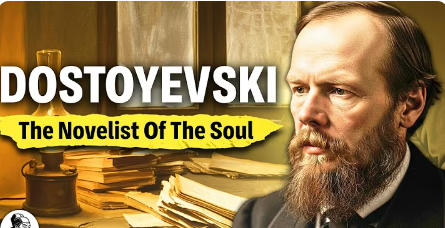
The Russian author Fyodor Dostoevsky is one of my favourite literary figures. This is not the first time I’ve featured a documentary about his life in my News on the March segment.
Back in 2021, I shared the documentary Biography: Dostoyevsky (1975), which offers a fairly taut and abbreviated account of his life. While the video and sound quality is somewhat dated, it remains a distinctive viewing experience and can be enjoyed on a TV or PC.
Today’s documentary, however, offers a rich listening experience – ideal if you just want to lie down and relax, or listen while out on a long walk. It also provides a more thorough examination of Dostoevsky’s life, placing key moments in his personal timeline within the broader historical and socio-political context of Russia. I have a political science major (focusing on the Bolshevik Revolution), so this was right down my alley.
There are few figures in literature whose lives were as intriguing and confronting as the novels they wrote. Apart from Dostoevsky, Ernest Hemingway is another giant whose biography is deeply intertwined with his literary output.
Hemingway’s life included a hedonistic youth in Paris, heavy drinking, big-game safaris, bullfighting, war reporting, and multiple serious accidents, including plane crashes. The list seems endless.
Dostoevsky’s life was equally eventful, but far darker and more punishing in nature. In his early adulthood he endured years of hardship as a struggling writer and political idealist. He was arrested, condemned to death, and made to wait before a firing squad, only to be spared at the last moment. He then spent years as a political prisoner in Siberia, often close to death from illness, hunger, and brutal conditions.
These ordeals profoundly shaped his worldview and philosophy, and directly influenced the depth, suffering, and moral intensity of his greatest works.
The Last Analog Mind: A Psychological Autopsy of Generation X
– Short video documentary at Soft Thesis (AI / synthetically generated)

The following comments in response to this video resonate strongly with me as a member of Generation X – those born between 1965 and 1980:
‘You were told to go out and play, and don’t come back till sunset’.
‘The torture of listening to the staid tick of the grandfather clock and only 2 boring tv channels was enough to drive you into the early daylight, seeking mischief, discovery and new friendships. It’s hard to believe now that we were left unsupervised for so many hours; playing under bridges and making our way into derelict buildings to investigate.‘.
Baby Boomers (and those before), Generation X (inc. yours truly), and the early Millennials are the first humans in history to have faced the sudden intrusion of digital technology and social media into daily life. Meanwhile, younger Millennials and Gen Z (and now Gen Alpha) have never known life without these technologies.
I can’t speak on behalf of my fellow Xers, but when I reflect on how well I managed that transformational change in my own life, it leaves me with a sense of unease and disillusionment. I’ll always be thankful for growing up before everything went digital – when music, movies, and even waiting brought us together, and life felt more shared and less chaotic. I can only feel disheartened and concerned for those who never knew life before it, which of course was absolutely no fault of their own, nor anyone except big Corp.
Video description:
Why does Generation X see the world differently? It isn’t just nostalgia – it’s psychology. In this documentary-style deep dive, we explore the “feral” childhoods of the 1970s and 80s to understand how a lack of safety regulations, benign neglect, and a “zero moderation” environment forged the last truly analog minds in history.
From the unsupervised freedom of latchkey kids to the raw physics of playground culture, we analyze how the pre-digital era created a unique form of resilience and “internal locus of control” that is becoming extinct in the modern world. This is not just a look back; it is a psychological autopsy of the bridge generation.


“The more I live, the more I learn. The more I learn, the more I realize, the less I know.”- Michel Legrand


 Observation Blogger
excellent