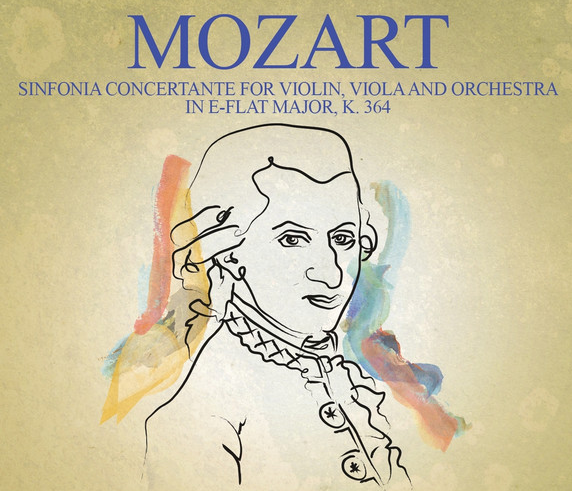
Returning again to the Maestro, this time at 23 years of age, with this light and airy concertante symphony written for both violin and viola. Many will recognise the passage at (4:08), even if they haven’t heard the whole movement. Despite its clarity and grace, there are many moments of regal delight and quiet fanfare. It comprises so many emotions, so many unexpected turns and surprises.
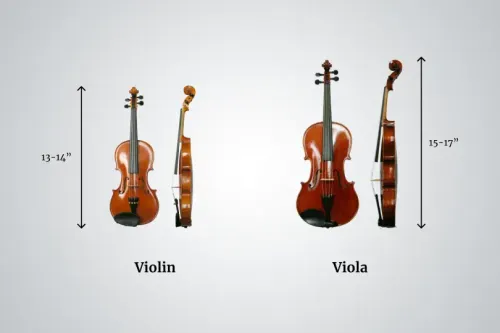
As you can see in the image, there are only small physical differences between the viola and violin, with the viola just a few inches longer. There are also differences in tuning, sound, and musical role within an ensemble. The viola is heavier, uses thicker strings, and requires a slightly heavier bow, which all contribute to its darker, warmer tone.
It is said that when this piece premiered, Wolfgang Amadeus Mozart specifically wanted to play his favourite string instrument – the viola – while Leopold Mozart performed the violin part. You can see how fond he is of the viola giving it an equal voice rather than a supporting one. You can watch a live version here by the Kristiansand Symphony Orchestra to see how the violin and viola interact in performance.
Listening to this again this morning lifted my spirits. I felt more relaxed, lighter somehow. It feels like a privilege to hear something made so long ago that still sounds so fresh, almost as if it’s in a constant state of renewal.
By the time of its composition in 1779, Mozart had returned to Salzburg after his travels through Mannheim and Paris. He had recently experienced the loss of his mother, and although this movement is generally bright, there are moments – such as around (8:35) – that carry a sense of sadness and melancholy, as if something deeper lies just beneath the surface.
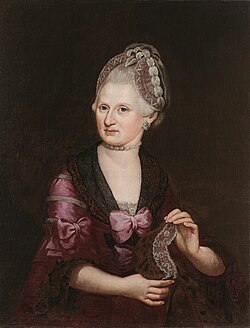
Her death occurred in June 1778 while she was accompanying her son Wolfgang on a job-hunting tour, and she was buried the following day in the cemetery of the Church of Saint-Eustache. Wolfgang was deeply shocked by his mother’s death. Several letters that Wolfgang wrote to his father from Paris, which are still extant, deal with this tragic event.
Comparing the portrait of Anna Maria Walburga Mozart with the portraits of Mozart I’ve seen, the resemblance is uncanny.
References:
1. Sinfonia Concertante for Violin, Viola and Orchestra (Mozart) – Wikipedia
2. The best recording of Mozart’s Sinfonia concertante for violin and viola – Gramofone

“The more I live, the more I learn. The more I learn, the more I realize, the less I know.”- Michel Legrand


This is a truly delightful piece of music and as you say, it’s a privilege to listen to. Incredible that a 23-year-old could conceive something like this. Light and airy, yes, and at the same time so complex. And good ol’ Neville on the baton, keeping things moving along, eh? A wise choice he was for the soundtrack.
I must have listened to the Amadeus soundtrack for over four decades now, and I’ve never grown tired of it. It boggles the mind to think that, had Miloš Forman and Neville Marriner not brought this masterpiece to life, many might have been none the wiser about just how prolific Mozart truly was.
This particular Sinfonia was, of course, familiar to me — but not to the extent of other pieces from the soundtrack. Yet, in giving it the attention it deserved while writing the article, I found myself in awe of it.
Wolfgang Amadeus Mozart continues to astonish me — which, it seems, is true for you as well. His music doesn’t merely endure — it feels strikingly current, almost reborn with each listen, as though it were a living, breathing force of art in its own right.
You’re absolutely spot on there, Matt. It’s incredible to think of the popular exposure to Mozart’s genius (and tragically short life) that the film and soundtrack opened up.
I do find it interesting when researching and listening to a piece of music, how it unlocks so much more appreciation of it for me. Kinda magical. So, yes to your awe comment.
And your final point here about his music is beautifully stated.
[…] I’ve been thinking a fair bit about Mozart, in part inspired by an article I read at Observation Blogger, where proprietor Matt shared the opening movement from another divine piece by Mozart, his […]