Warning: The following post contains discussion of death and, in particular, suicide. It should therefore be approached with caution, or avoided altogether by readers who may be sensitive to such material.
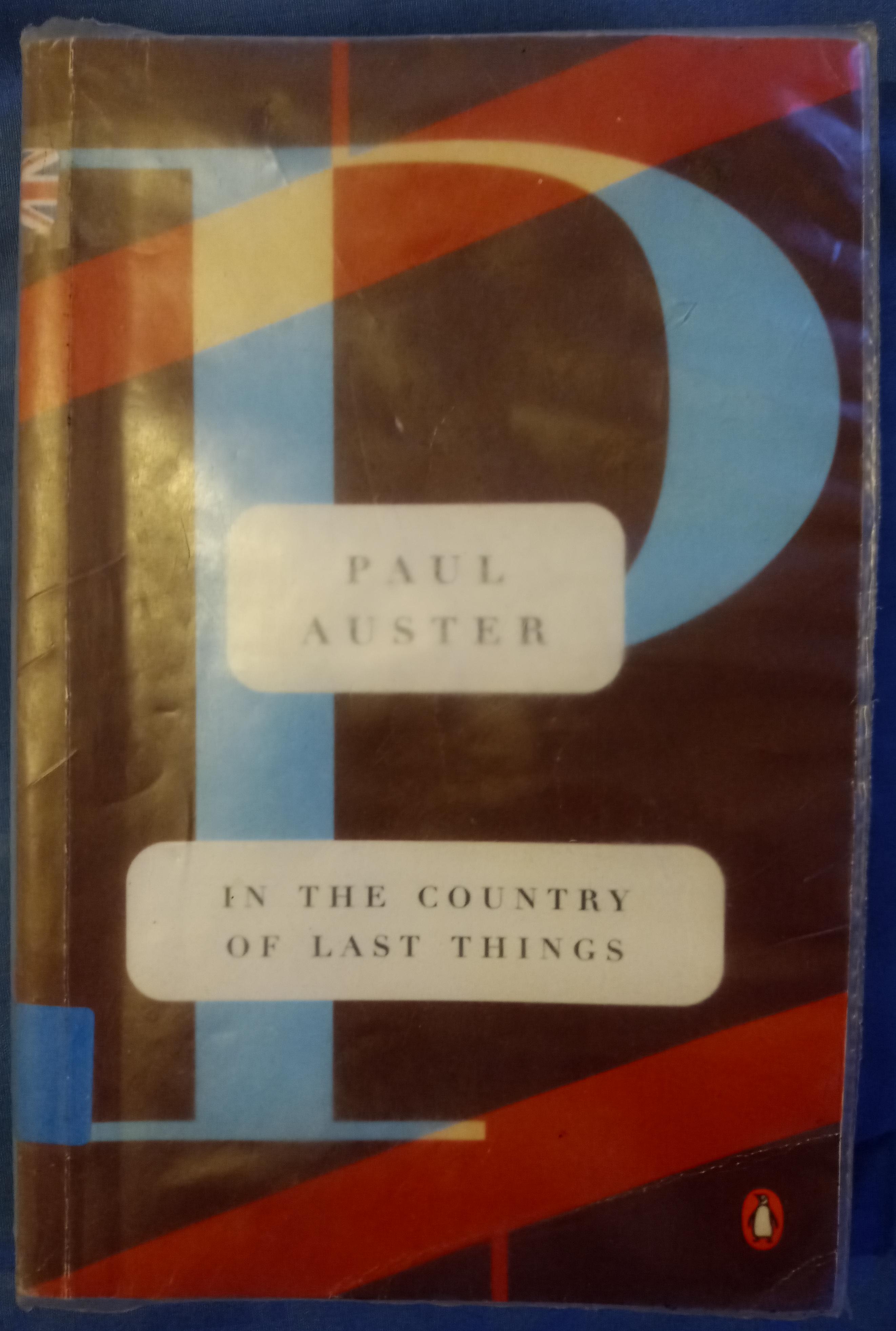
Welcome back to my Wednesday literature segment. Today I feature another ten-page excerpt from yet another book by US novelist Paul Auster called In the Country of Last Things. Despite the book being only 188 pages long, I read it as quickly as I can remember reading any novel. I was completely fascinated by it. As usual, if you enjoy dabbling in books, feel free to join me [here] on Goodreads.
Although this book was published before Paul Auster’s previous novel which I reviewed – The Music of Chance – I decided to read In the Country of Last Things later because of its dark and ominous subject matter. I suspected I might not respond well to it since I had been going through a rough patch myself and thought it might only darken my own outlook. But strangely enough, the book had the opposite effect. I found myself emboldened and inspired by it.
In the dystopian world of In the Country of Last Things, set in a roughly contemporary time, society is collapsing into ruin as food, objects, language, and even human purpose slowly disappear, leaving people to scavenge merely to survive another day. The city feels like a waking nightmare where hope is fragile, memory is fading, and every street carries the sense that civilisation itself is quietly vanishing.
The narrator of the novel is Anna Blume, a young Jewish woman who enters the collapsing unnamed city in search of her missing brother, William. The book is written as a long letter – or epistle – from Anna to an unnamed friend or confidant outside the city, which gives the story an intensely personal and reflective tone. She does not even know whether the letter will ever be read, but she continues writing, refusing to disappear and become yet another “last thing.”
As Anna tries to survive in a world where nothing is produced and everything is running out, she gradually realises the hopelessness of her quest. Yet despite living in some of the bleakest circumstances imaginable, she refuses to give up and continues her search. Therein lies the faint but important silver lining the novel leaves us with.
We are with Anna constantly. We enter her mindset and begin to see and feel the world through her eyes until her struggle almost becomes our own.
Contrary to Paul Auster’s The Music of Chance, which had a gripping and fast-paced opening, the only part of In the Country of Last Things I found somewhat difficult was its long introduction, where Anna describes the world around her in exhausting detail. At first it almost feels less like a story and more like an encyclopedic account of a dying civilisation.
But as Anna begins recounting her daily existence, you realise that this information overload is necessary. Without it, the reader could never fully understand the grim routine and constant danger of her life. Before long, I found myself completely absorbed in Anna’s ordeal. At times it almost felt as though I were living in two worlds – Anna’s shattered reality and my own comparatively ordinary existence in between reading sessions.
It goes without saying that the book became a real page-turner for me. When I was not reading it, I almost felt untethered from Anna’s world and strangely guilty for leaving her behind. That may sound a little extreme, but such is the intensity of this novel.
The other aspect which drew me to Anna’s story was the substance of her character. She is by no means faultless, like any of us, and at times gives in to temptation, including sexual temptation. She is human after all. But it is her humble fortitude and quiet humanity amid such spiritual and physical decay that makes her so compelling.
Such is the depravity and hopelessness of the city that many people decide to take fate into their own hands and end their lives. In this world, suicide almost becomes another form of self-expression or personal control. Since authorities view human bodies as valuable energy resources, death itself becomes strangely commercialised and, at times, quietly encouraged.
One example is the “Leapers,” people who climb to high places and throw themselves to their deaths before gathered crowds. So common has self-destruction become that there are many different avenues available for those wishing to die:
- Euthanasia clinics – places where people voluntarily go to die in an orderly, institutionalised manner.
- Assassination clubs – organisations where individuals pay to be murdered as a way of escaping despair.
- Running clubs – people literally run themselves to death through exhaustion and collapse.
- Voluntary starvation or neglect – many simply stop fighting for survival altogether.
For the purpose of the extracts below, we will focus on one of these avenues in particular: the “Running Clubs.” The strange and senseless idea of running until death from exhaustion somehow feels disturbingly believable.
If we consider that even in today’s comfortable modern world people willingly push themselves through extreme endurance events and punishing physical suffering, then it is not difficult to imagine that in a dystopian world – where purpose has almost disappeared and survival itself feels meaningless – some people would be drawn toward the idea of simply running until they drop dead.
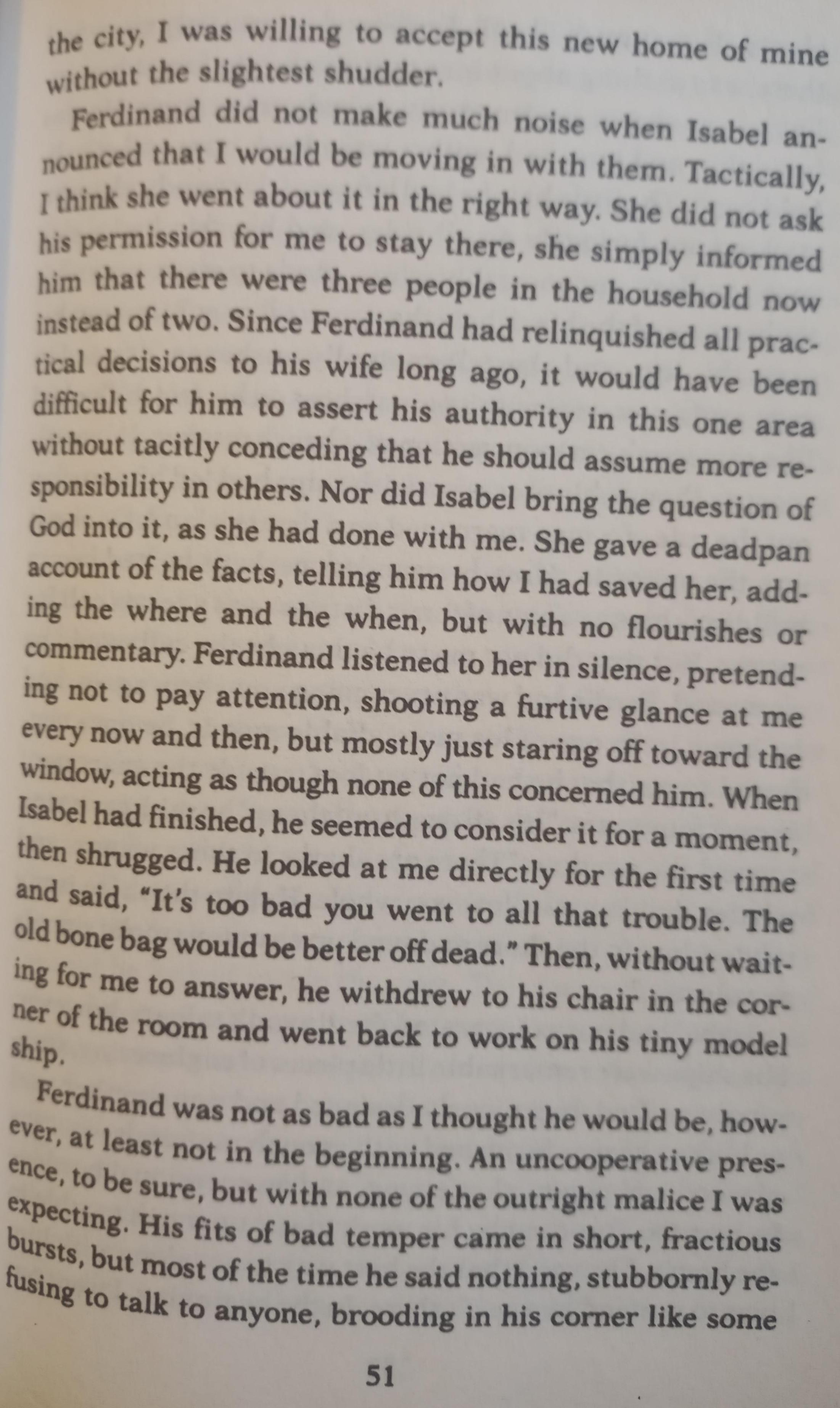
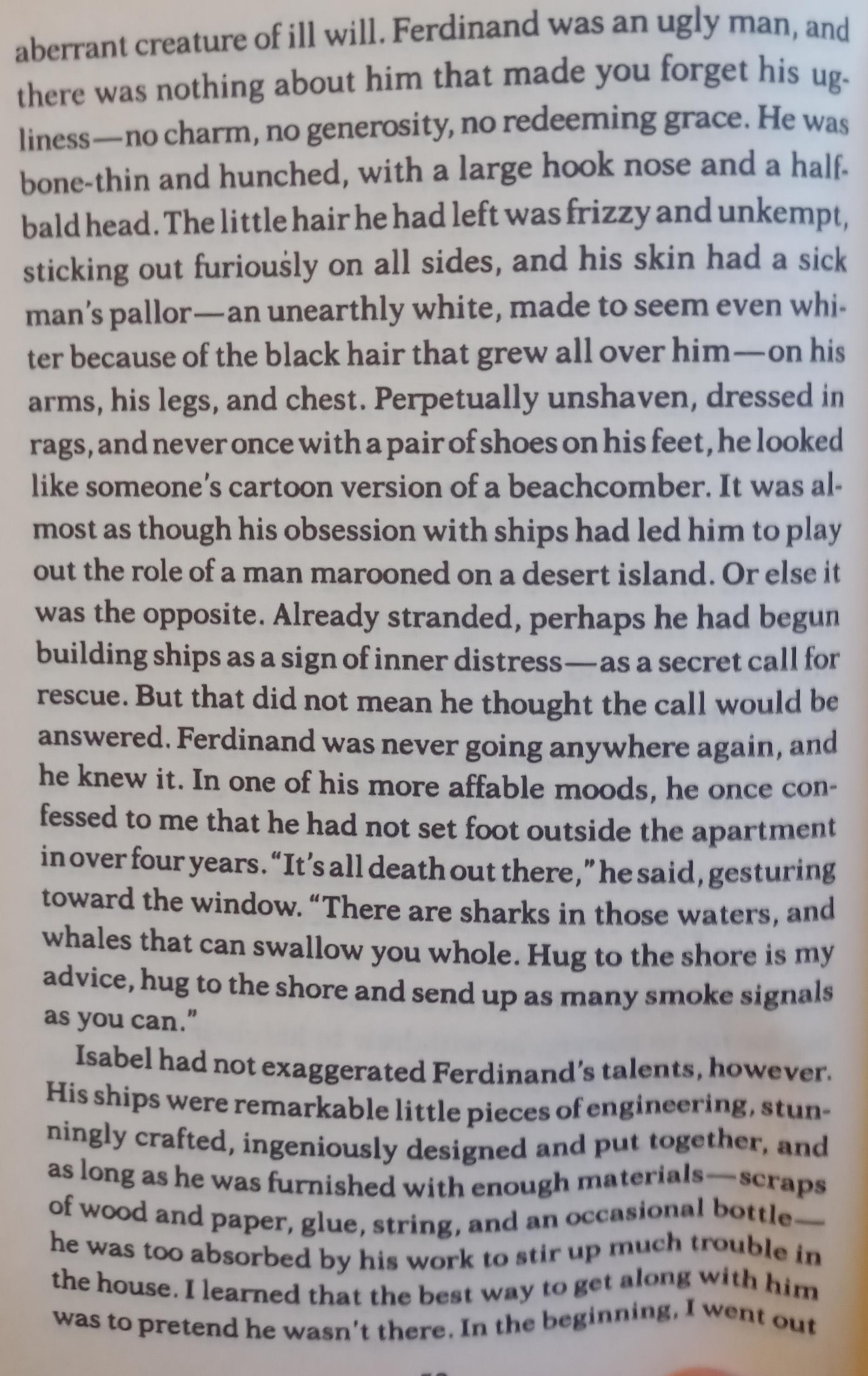
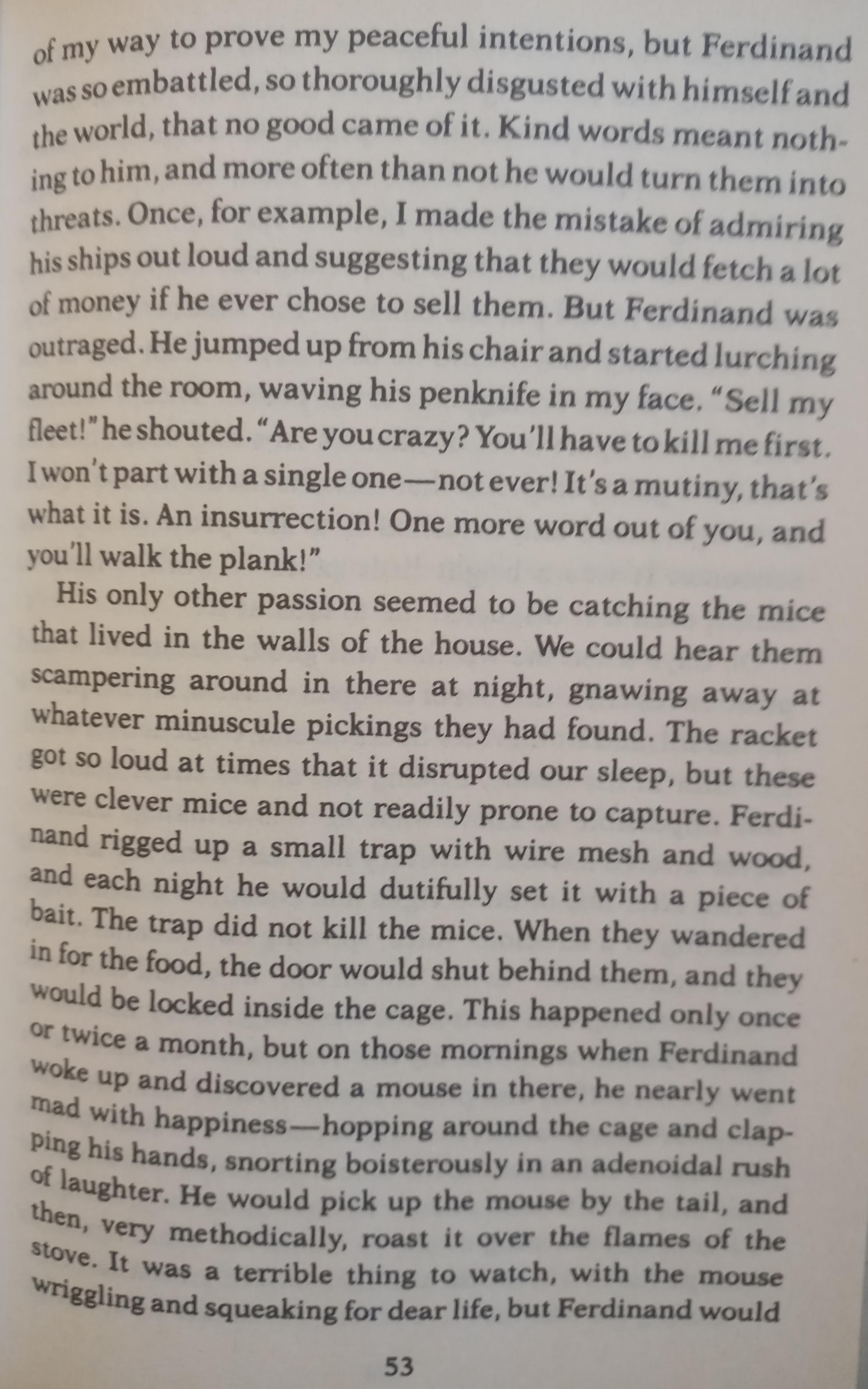
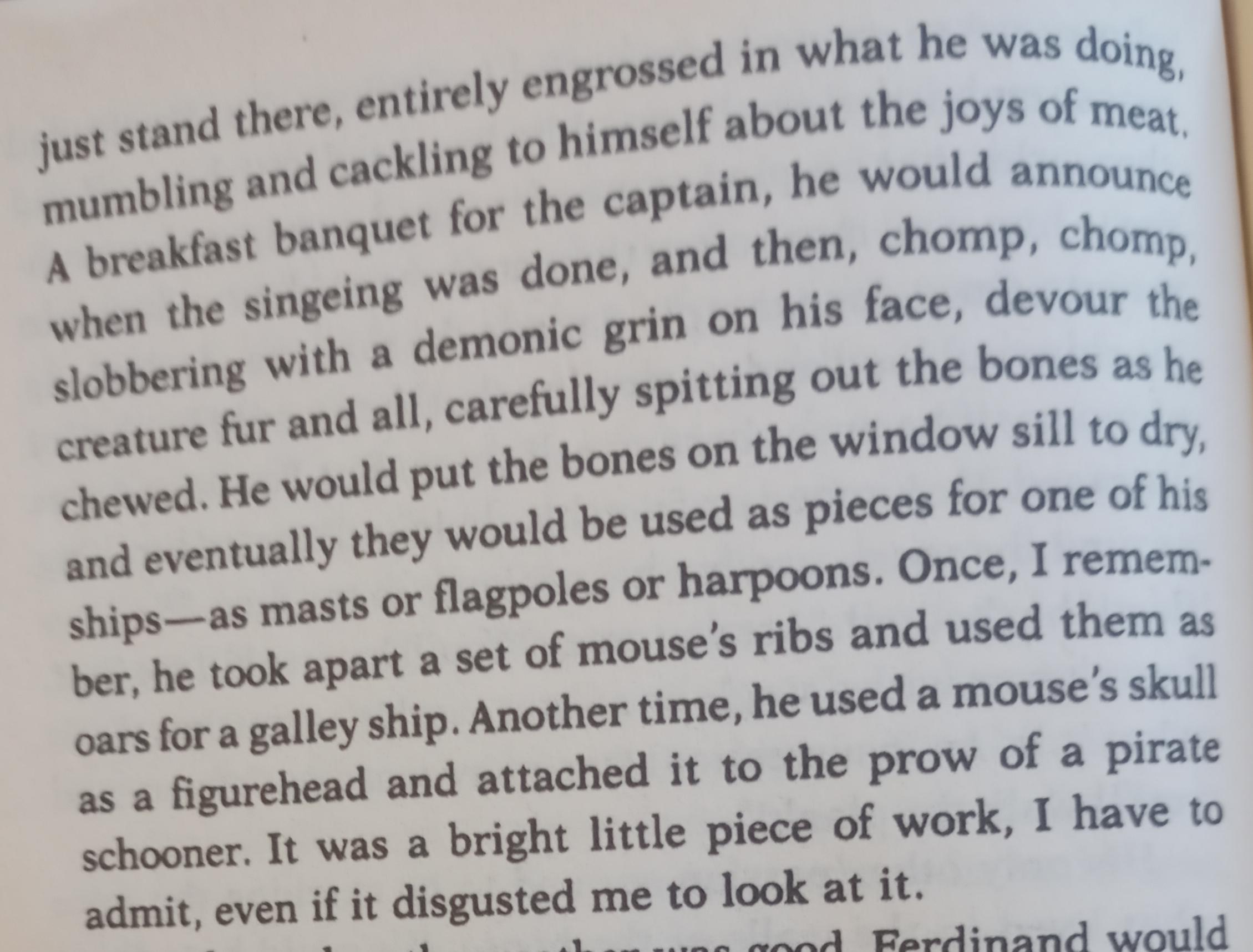
Below, Anna Blume describes the sect of the “Runners,” how they train obsessively, and how they eventually depart together on their final run toward death. This also sets the scene for the longer excerpt which follows.
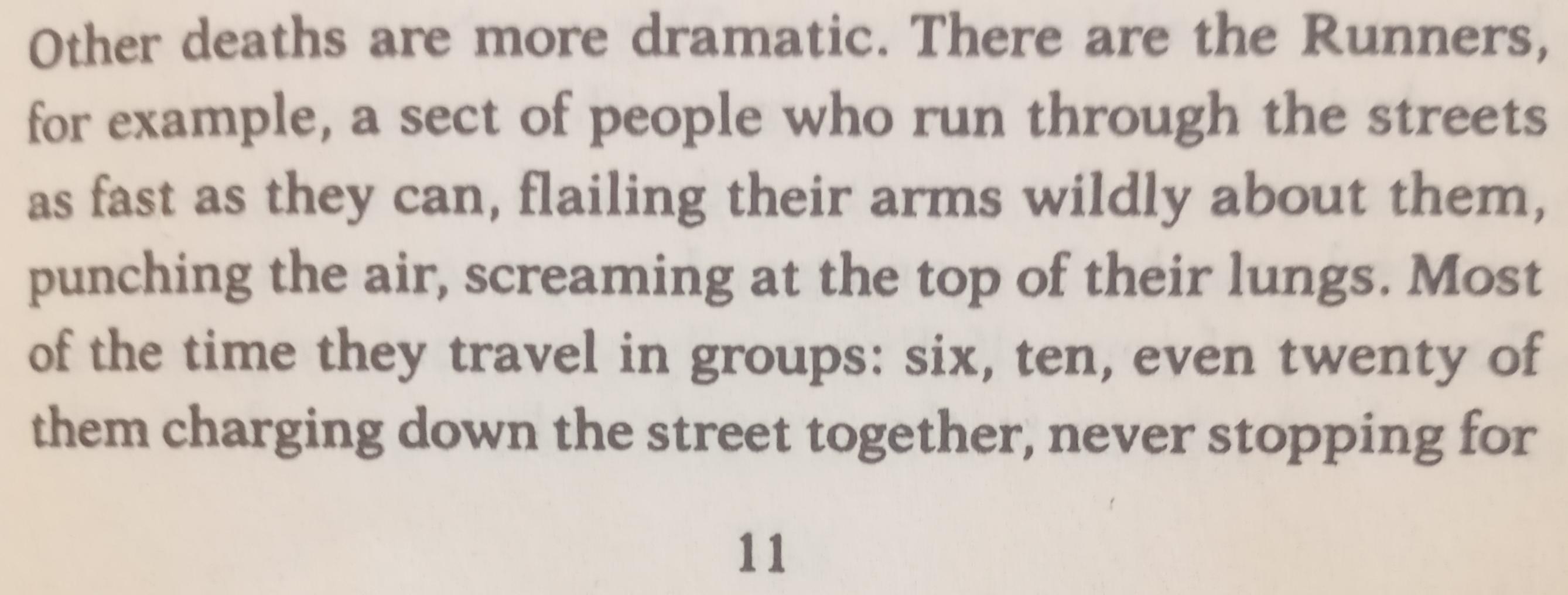
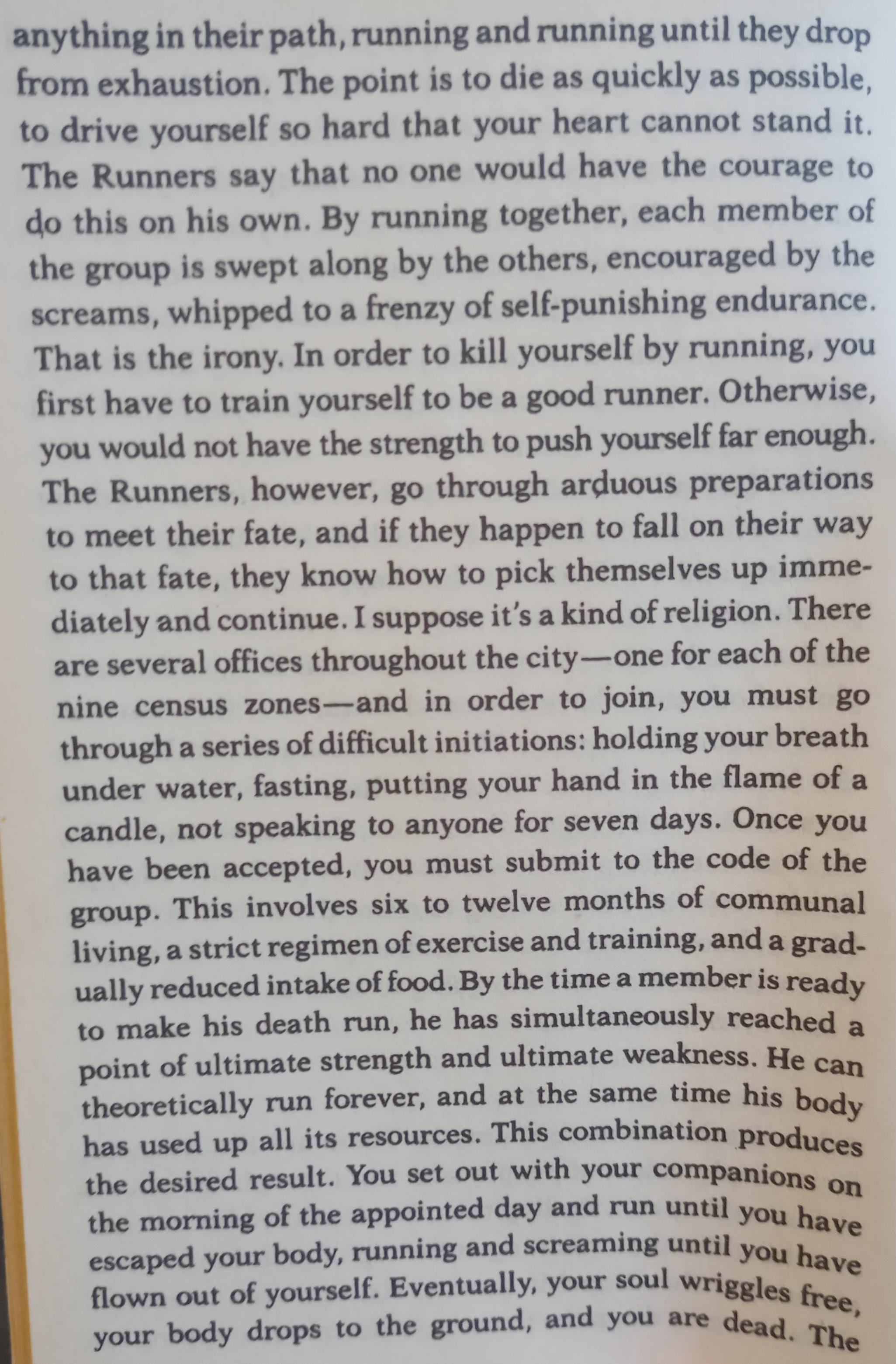
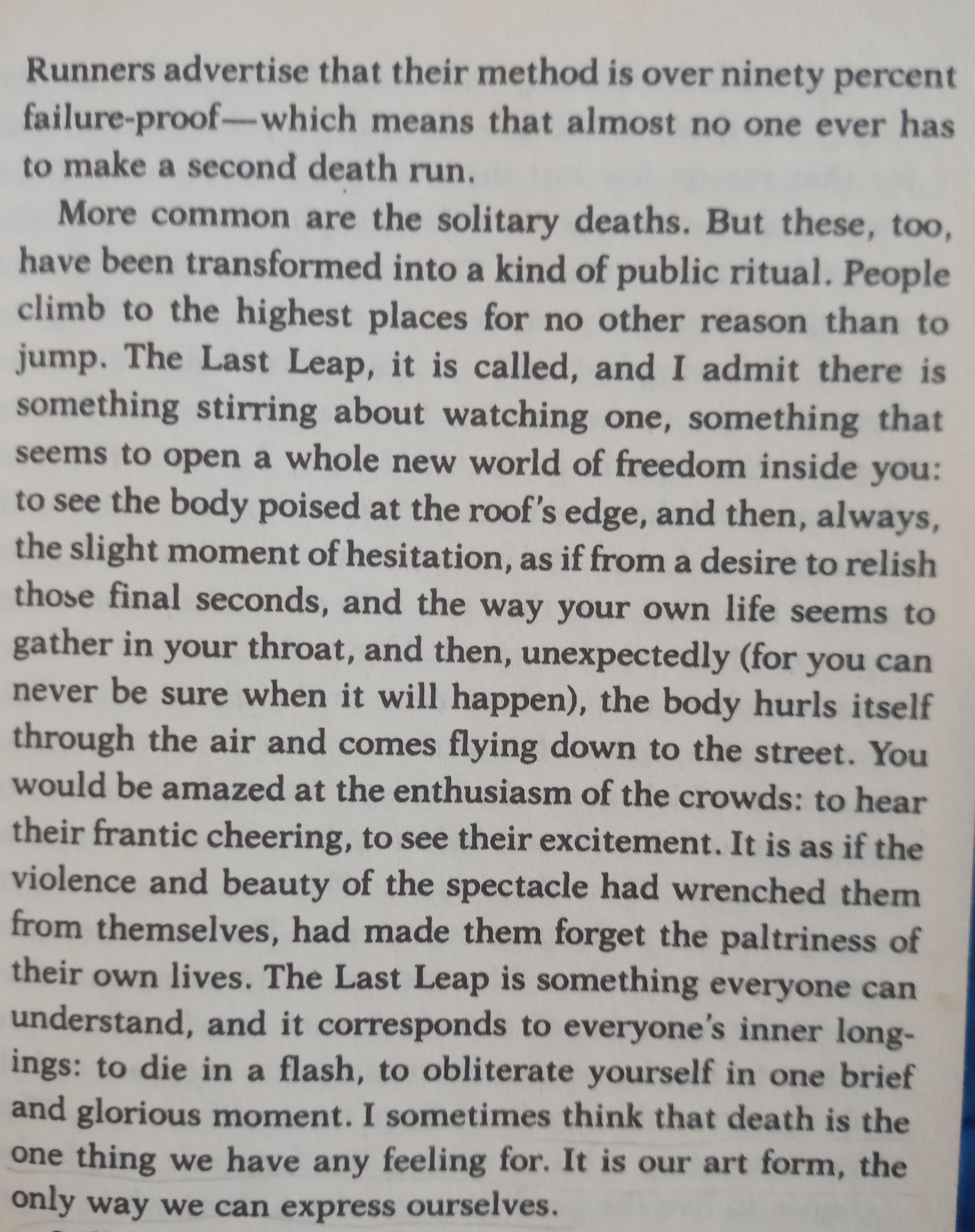
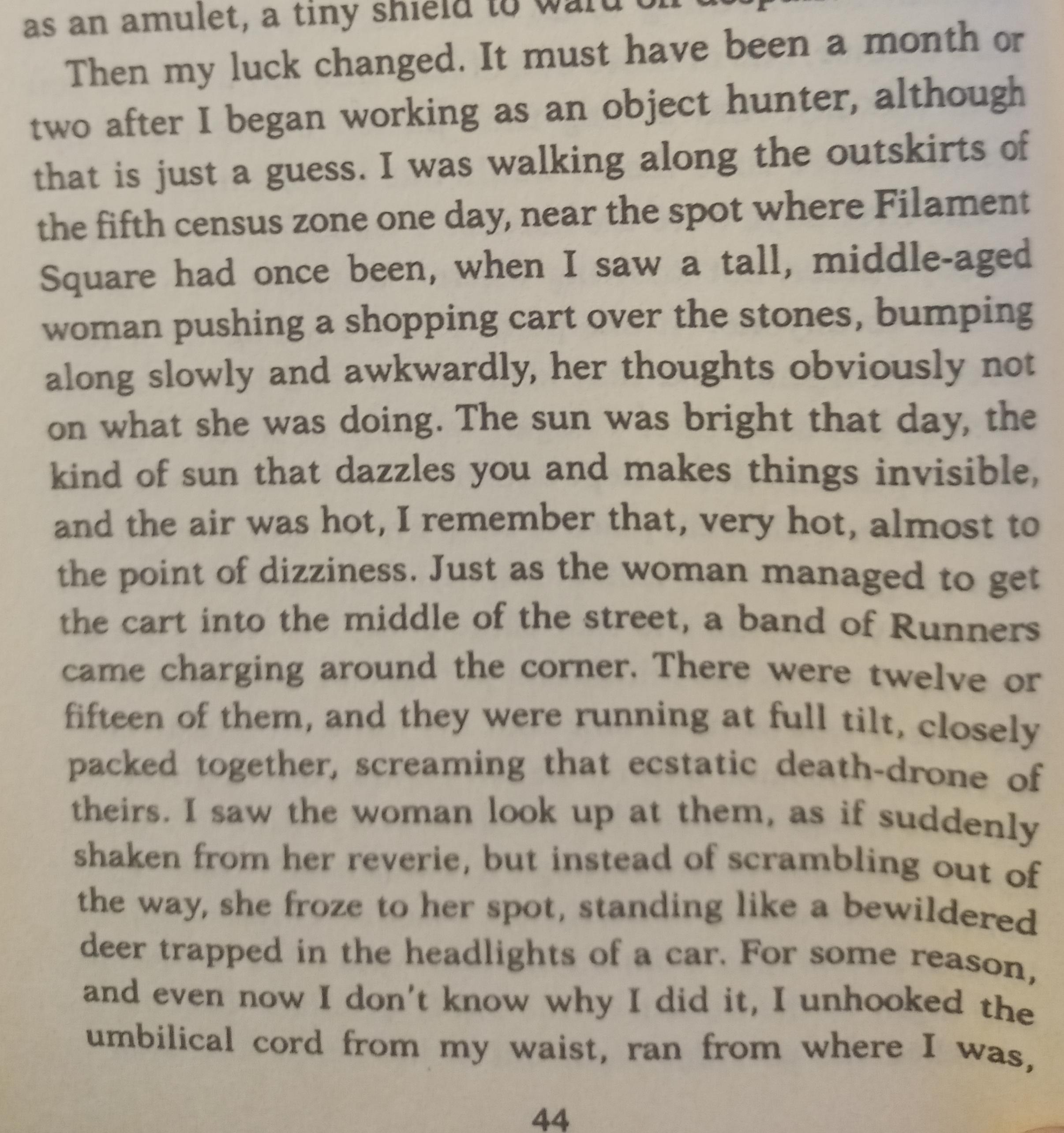
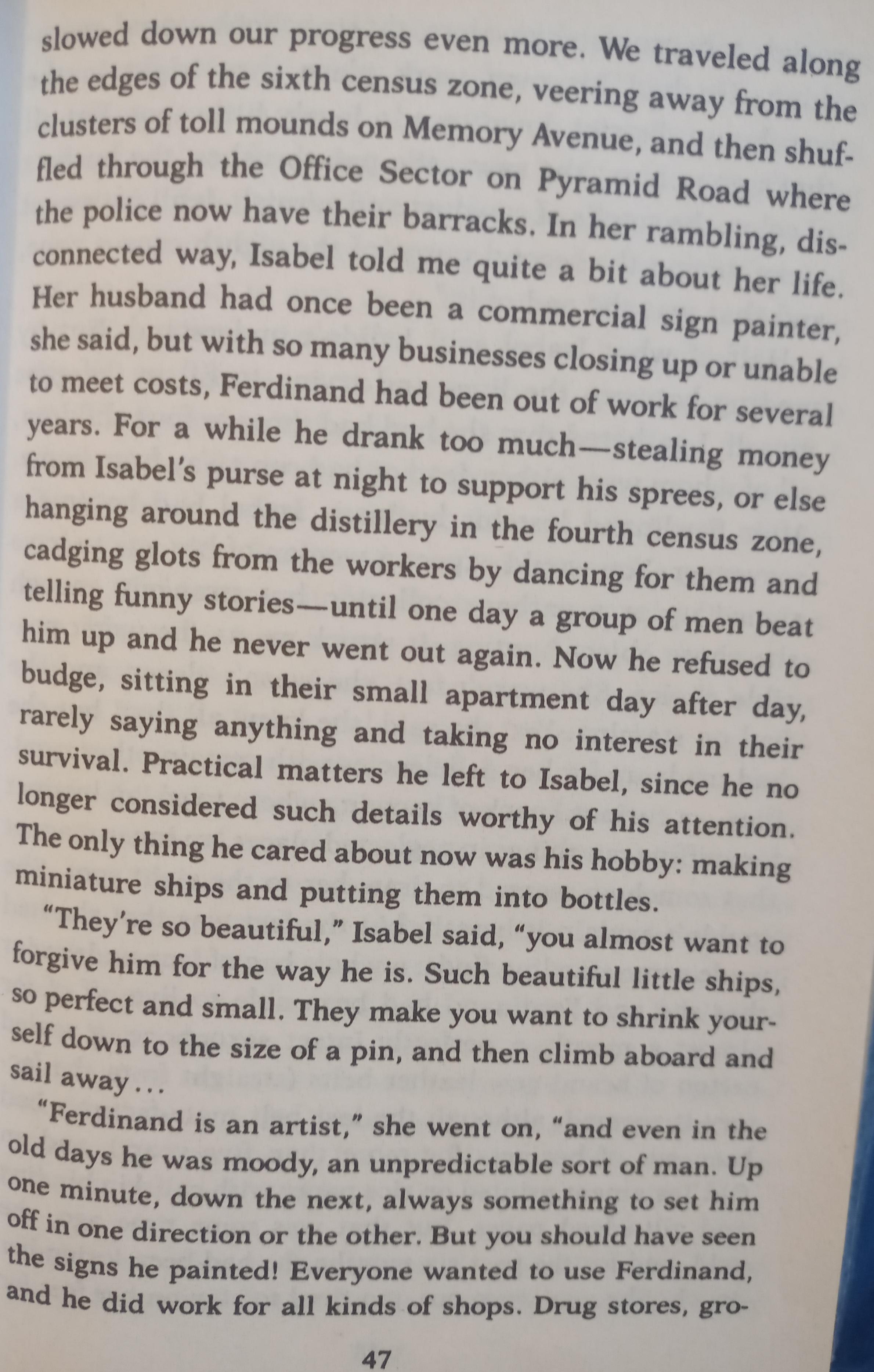
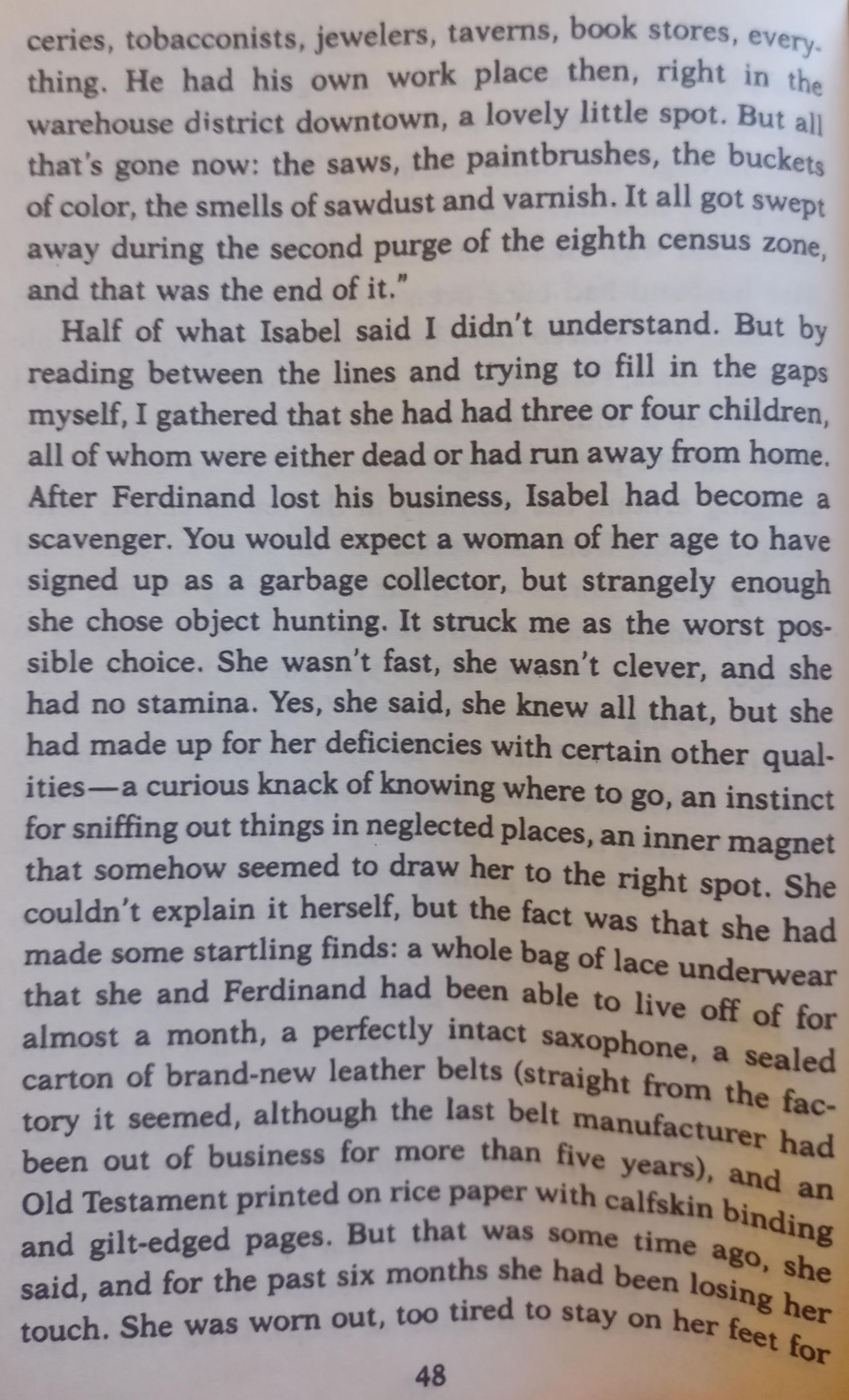
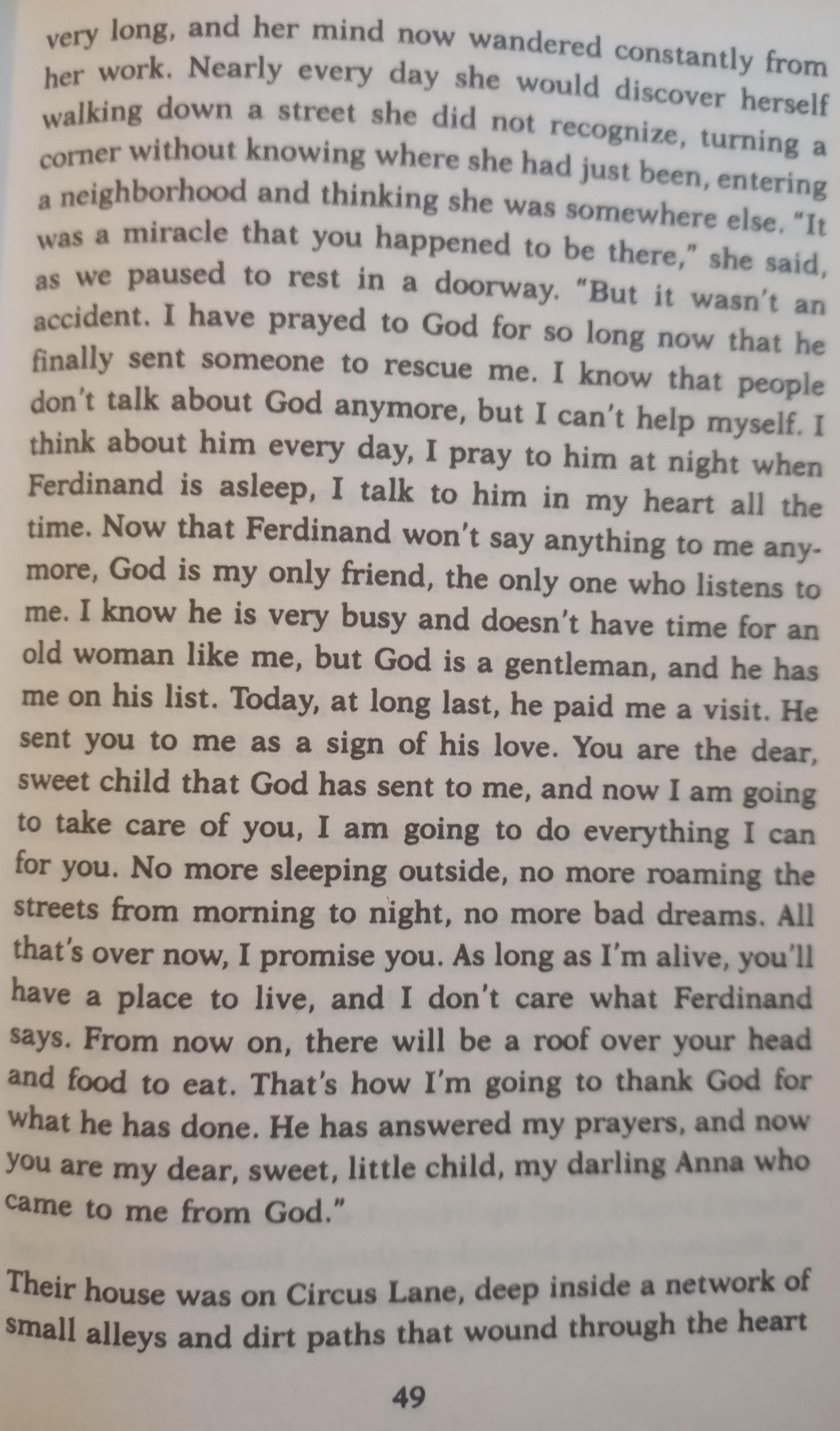
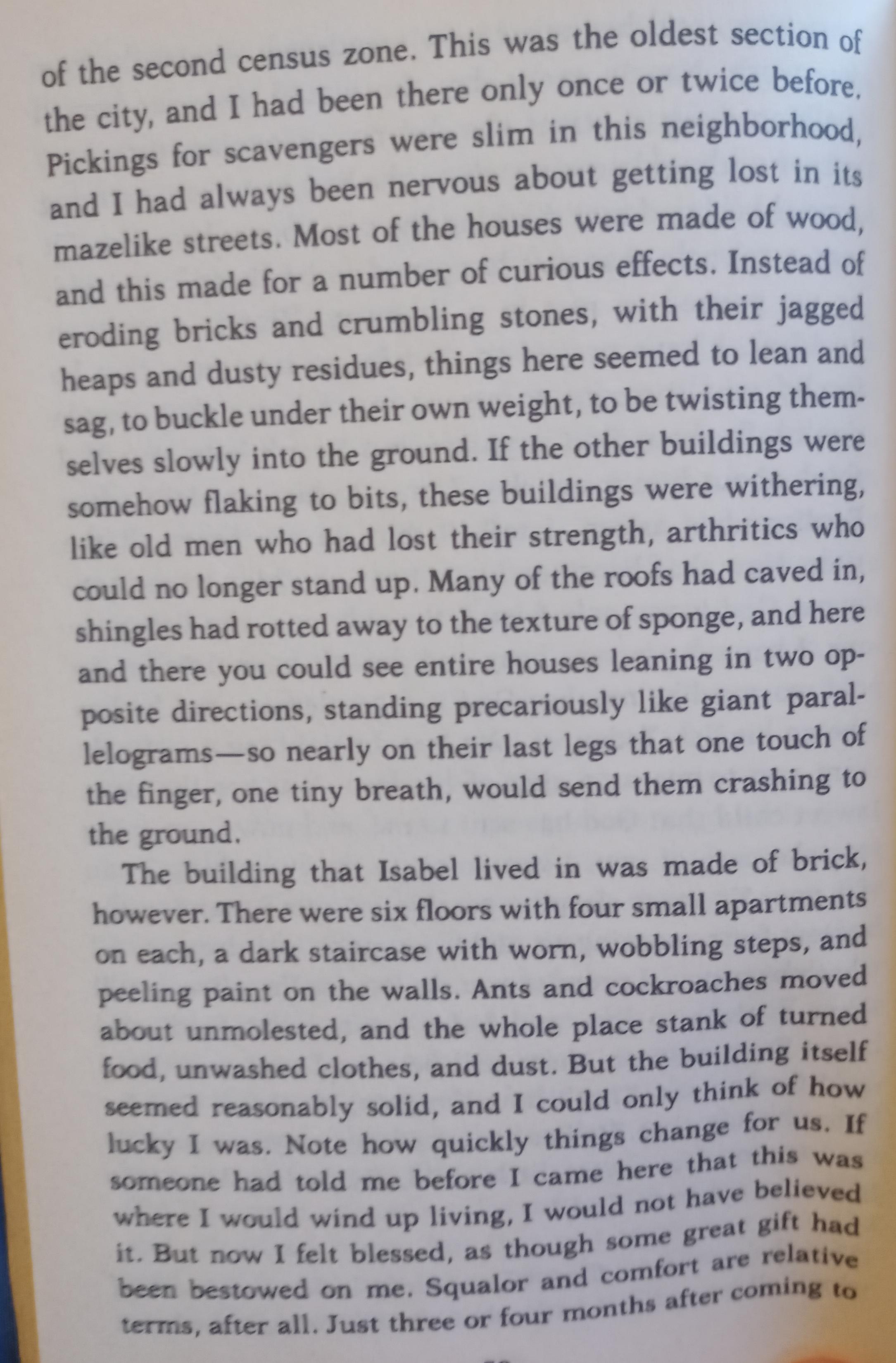
So that is that for the “Runners” and “Leapers,” but it leads us to the later scene below in which Anna is undertaking her daily ritual of scavenging as an object hunter. During one of her rounds she notices a tall, middle-aged, decrepit woman struggling to push her shopping cart over loose stones. At that very moment Anna realises the woman is directly in the path of the approaching runners and is frozen in terror like a deer in headlights.
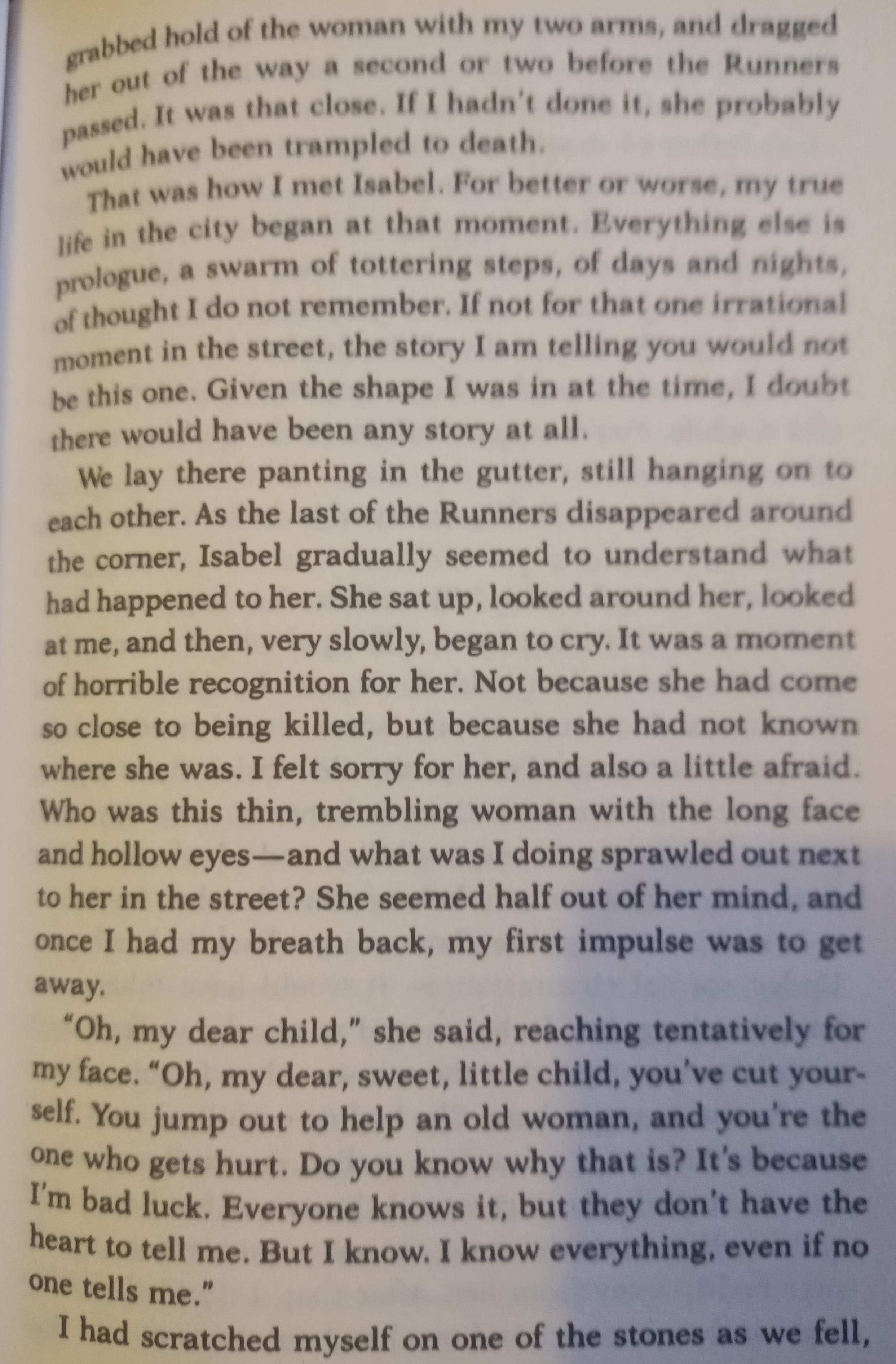
Anna immediately detaches herself from what is known as an “umbilical cord” – a rope tied between herself and her shopping cart to stop it being stolen – and rushes toward the woman to pull her away from almost certain death beneath the runners.
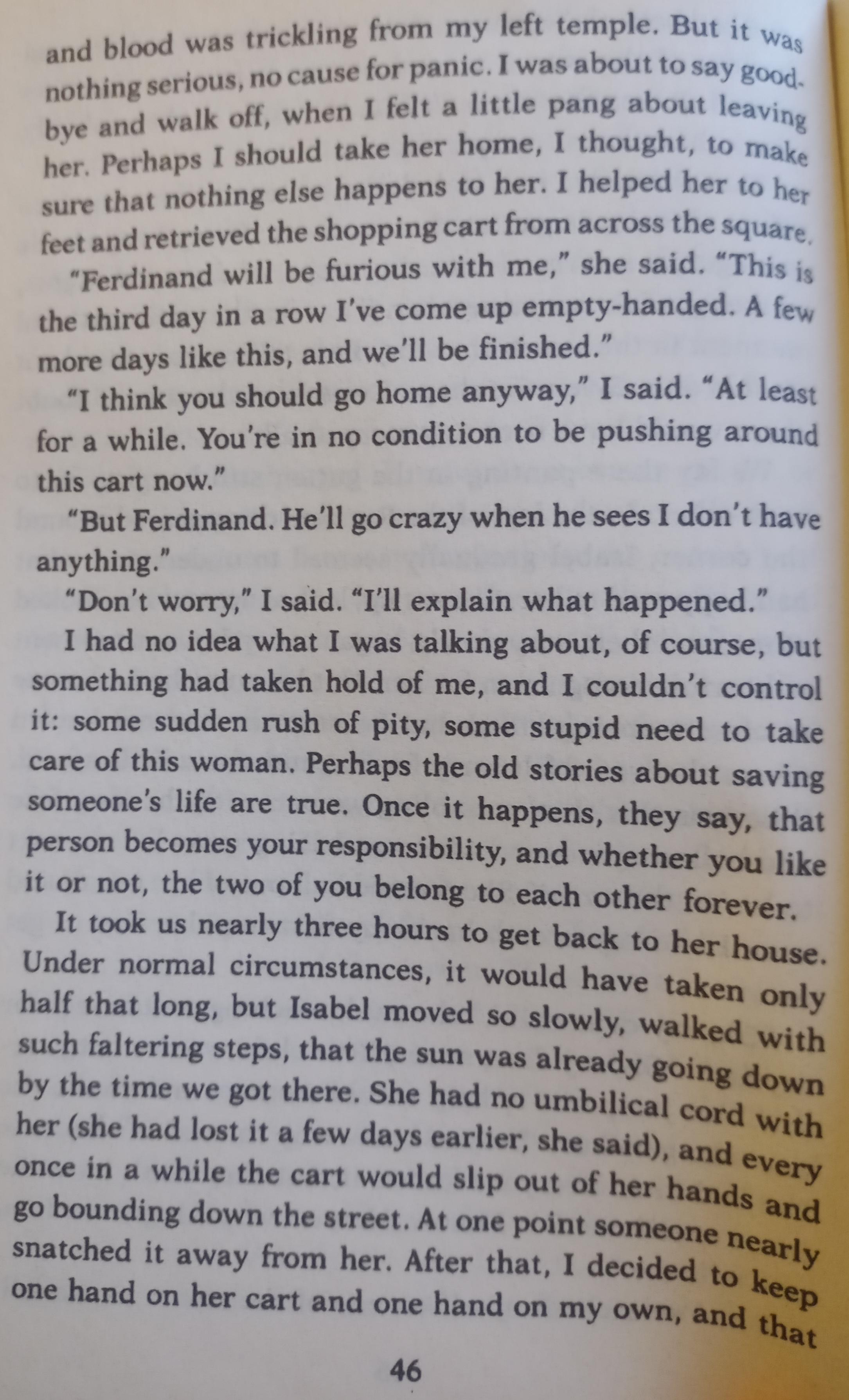
After this brush with death, Anna and the woman – whom we later learn is called Isabel – strike up an unlikely but spirited friendship. In many ways, Isabel ends up rescuing Anna from her own foreseeable ruin just as much as Anna’s earlier actions saved Isabel.
So, as is customary for me to write here, if you have ten minutes to spare, grab yourself a cuppa and strap yourself in. Please excuse the poor image quality and crude formatting. Without further ado, I present to you In the Country of Last Things.
I hope you enjoy it as much as I did. And as always, thanks for reading.

“The more I live, the more I learn. The more I learn, the more I realize, the less I know.”- Michel Legrand


 Observation Blogger
Leave a comment