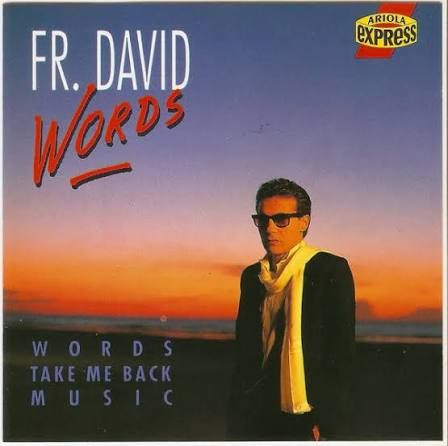
Words used to not come easily to me. I heard this bottom-of-the-tier ’80s greatest-ballads, synth-produced track from the early ’80s, and it seemed to encapsulate my prepubescent loving. I hung on every word as if it had come straight out of my unformulated brain.
Then boom, like a bomb had hit… I lost my South African sweetheart Cheryl, which I wrote about in my post 20 Seconds of Insane Courage.
“Sometimes all you need is 20 seconds of insane courage, just literally 20 seconds of embarrassing bravery, and I promise you something great will come of it.”
Well, this frigidity I was consumed by couldn’t have been summed up better in a song than here. It’s all to blame for my losing Cheryl and, hey man, F.R. David, you have some explaining to do. And I’m now a-talkin’. You have to talk to the girl, for God’s sake – be a man!
I was channel zapping the other night and saw one of the opening scenes of ‘The Notebook‘ where Ryan Gosling goes full hammer for his girl on the Ferris Wheel. That’s the man and gets to what Muddy Waters was going all ballistic about it in the Last Waltz concert.
I don’t think I’ve downplayed a song I was to present as much as this one. But you get where I was going.
It’s nice, well, kinda, to be jolted back to the music you used to listen to and still feel some nostalgic attachment to it, even if, in part, it was your unmaking.
Words was released as a single in 1982 from F.R. David’s same-named debut album. The song was a huge European hit, even peaking at number two on the UK Singles Chart. In Australia, where I was unlucky enough to hear it, the single peaked at number 12 and spent 41 weeks in the Top 100 across two chart runs throughout 1983 and early 1984.
The rest, they say, is history – and sadly, mine.
[Chorus] Words don’t come easy to me How can I find a way to make you see I love you? Words don’t come easy Words don’t come easy to me This is the only way for me to say I love you Words don’t come easy
[Verse 1] Well, I’m just a music man, melodies are so far my best friend But my words are coming out wrong, girl, I reveal my heart to you And hope that you believe it’s true ’cause
[Chorus] Words don’t come easy to me How can I find a way to make you see I love you? Words don’t come easy
[Verse 2] This is just a simple song that I’ve made for you on my own There’s no hidden meaning you know when I, when I say I love you, honey Please believe, I really do ’cause
[Chorus] Words don’t come easy to me How can I find a way to make you see I love you? Words don’t come easy
[Bridge] It isn’t easy, words don’t come easy
[Chorus] Words don’t come easy to me How can I find a way to make you see I love you? Words don’t come easy Don’t come easy to me This is the only way for me to say I love you Words don’t come easy Don’t come easy
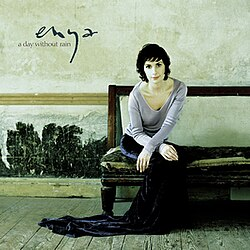
Wild Child is yet another song by the Irish singer and musician Enya which I heard during Pilates or whatever at the gym, and I was delighted since it had fallen off my music radar. I had heard it years ago on her record A Day Without Rain (2000) when it came out, but somehow lost track of it (slaps head).
A lot of her music has a transcendental, solemn Celtic sound, but Wild Child is more of an uplifting, inspirational song which, when I heard it again this morning, put me into a positive headspace. Despite the repetitive nature of its clincher chorus line – “What a day, what a day to take to” – I frankly never grow tired of it. Keep it comin’ as she smartly does in the outro.
Enya does something to the soul. She writes simple, yet profoundly beautiful music. Hey, it doesn’t have to be complicated. Although Enya sometimes gets a bad rap in music circles simply because of the sheer saturation of her sound in popular culture and how instantly recognisable it is, I would not like to ponder a world without her music in it.
She has extraordinarily filled a gap in modern popular music almost singlehandedly, particularly in the Celtic variety, and in doing so has become one of the world’s best-selling music artists and Ireland’s best-selling solo artist. A Day Without Rain alone has sold more than 15 million copies worldwide.
Also, Enya, I find, is not too shabby on the eye. Her image is all class too, and that’s not a bad thing considering how sorely lacking that is in modern music. In addition to maintaining a private life which has largely been kept away from the horrid British tabloids, anyone who finds reassurance in prayer, prefers to visit “churches when they’re empty” and believes in guardian angels has got my respect.
The unfortunate takeaway is that she has been stalked to the extent that, during one incident in 2005, an intruder tied up one of her housekeepers before stealing several personal items. Enya spent about two hours hiding in a panic room before activating the alarm and alerting the Gardaí.
According to Wikipedia – The album A Day Without Rain was a commercial success peaking at No. 6 in the UK and initially, No. 17 on the US Billboard.
In the aftermath of the 11 September attacks, sales of the album and its lead single, Only Time, surged after the song was widely used during radio and television coverage of the events, leading to its description as “a post-September 11 anthem”.
[Verse 1] Ever close your eyes Ever stop and listen Ever feel alive And you’ve nothing missing You don’t need a reason Let the day go on and on
[Verse 2] Let the rain fall down Everywhere around you Give into it now Let the day surround you You don’t need a reason Let the rain go on and on
[Chorus] What a day, what a day to take to What a way, what a way to make it through What a day, what a day to take to A wild child
[Verse 3] Only take the time From the helter skelter Every day you find Everything’s in kilter You don’t need a reason Let the day go on and on
[Verse 4] Every summer sun Every winter evening Every spring to come Every autumn leaving You don’t need a reason Let it all go on and on
[Chorus] What a day, what a day to take to What a way, what a way to make it through What a day, what a day to take to A wild child
[Chorus] What a day, what a day to take to What a way, what a way to make it through What a day, what a day to take to A wild child
[Outro] What a day, what a day to take to What a way, what a way to make it through What a day, what a day to take to Da-da-da, da-da-da da da-da What a way, what a way to make it through Da-da-da, da-da-da da da-da Da-da-da, da-da-da da da-da What a way, what a way to make it through What a day, what a day to take to A wild child What a day, what a day to take to A wild child
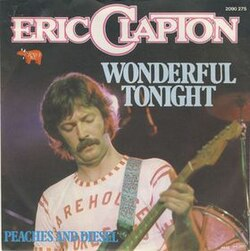
Wonderful Tonight is quite simply one of the most beautiful guitar-driven love ballads I’ve ever heard. It’s stunning how the lyrics and music, particularly that ghostly guitar riff, so perfectly capture the romance and intimacy of the evening, the anticipation of the big occasion and the profound feelings between the couple.
You feel privy to it all, to the point that the song carries the aroma of perfume and cologne in the air as you hear it. It’s insider access, total, and it’s quite the musical accomplishment.
Also, the ‘bridge’ is to die for. When he sings, you just don’t realize / how much I love you, it always makes the hairs on my arms stand up on end.
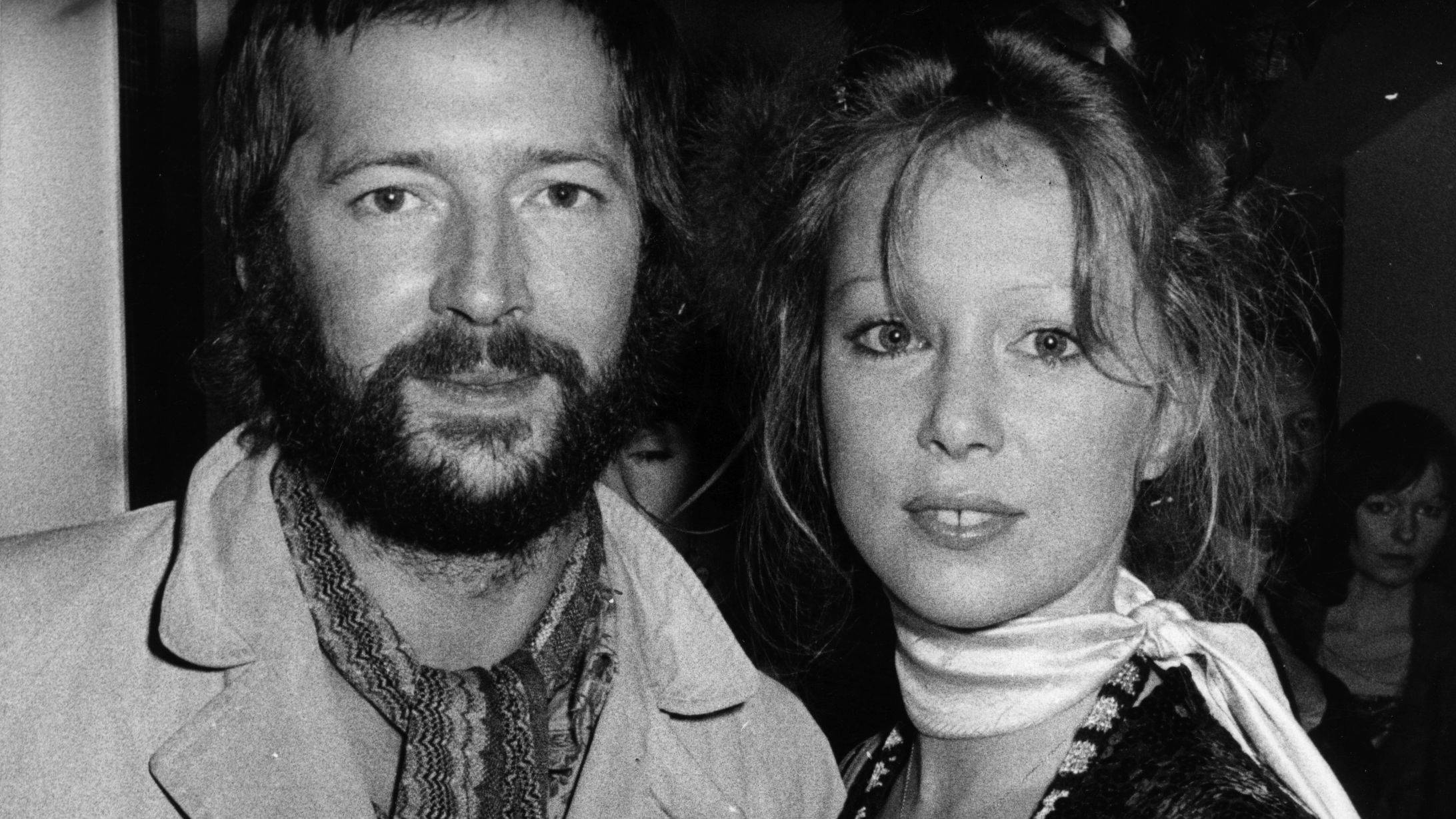
Wonderful Tonight was written in 1976 for Pattie Boyd while Clapton was waiting for her to get ready to attend Paul and Linda McCartney’s annual Buddy Holly Week event. Boyd had married George Harrison in 1966, but they divorced in 1977. She then married their mutual friend Eric Clapton in 1979, but they ended up divorcing in 1989.
All good things come to an end, which seems to be a common theme here of late. The song is mentioned in Boyd’s 2007 autobiographical book Wonderful Today.
The song peaked at number 16 on the US Billboard on 15 July 1978, spending seven weeks in the Top 40. I think I have heard this song more than any other Clapton song in my life.
I first heard it at the Academy when I was 18 years old. My section under officer, ‘Hilly’, was a huge Springsteen fan and we often shared music, and I believe this is one I got from him. So he deserves a high-five and, on the flip side, to put it mildly…
[Verse 1] It’s late in the evening, she’s wondering what clothes to wear She puts on her makeup and brushes her long blonde hair And then she asks me, “Do I look all right?” And I say, “Yes, you look wonderful tonight”
[Verse 2] We go to a party and everyone turns to see This beautiful lady that’s walking around with me And then she asks me, “Do you feel all right?” And I say, “Yes, I feel wonderful tonight”
[Bridge] I feel wonderful because I see the love light in your eyes And the wonder of it all is that you just don’t realize How much I love you
[Verse 3] It’s time to go home now and I’ve got an aching head So I give her the car keys and she helps me to bed And then I tell her, as I turn out the light I say, “My darling, you were wonderful tonight Oh, my darling, you were wonderful tonight”
Dylan started the Never Ending Tour on June 7, 1988
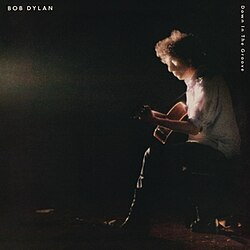
When Did You Leave Heaven? is a very quaint and tender song from Bob. It comes from one of his most scorned records, the 1988 Down In The Groove. It was Dylan’s second consecutive album, after Knocked Out Loaded, to receive almost unanimously negative reviews. In 2007, even Rolling Stone labelled Down In The Groove as Bob Dylan’s worst album.
The word going around didn’t deter me from buying the cassette as a fourteen-year-old. It has got some good stuff on it, including today’s featured track, When Did You Leave Heaven? I have enjoyed listening to these tracks so much over the years, which tells me it was money very well spent. Also, because the album was so widely dished, many, including Dylan ‘fans’, have not given anything from it the time of day, which is a shame.
From the very outset, with the solemn and reflective keyboard sound, I like the mood and texture of this song and the mind space it puts me in. To me, it feels like something I might hear in church – a hymn-like feel. Despite its restraint, it has a mellow spiritual undertone, with its sparse drums, wandering guitar and Dylan’s fragile but affectionate voice.
When Did You Leave Heaven? is not a Dylan original; it is a cover of a classic big band-era standard written by Walter Bullock and Richard A. Whiting for the 1936 film Sing, Baby, Sing. The song was recorded by a number of artists in the 1930s, while Big Bill Broonzy later gave it a blues treatment. You can watch his stirring version here.
The following was abridged from Wikipedia below:
Clinton Heylin stated about the style and layout of the album’s tracks on Down In The Groove: “As it is, Dylan’s intent all along may have been to show the rich vein of music he listened to when growing up in Hibbing.”
The album was recorded over a period of five years, spanning the sessions for Infidels (1983) to recordings made specifically for the album in 1987. The record features multiple guest musicians including Ronnie Wood, hip-hop group Full Force, and members of the Grateful Dead.
After the album’s release, Dylan went live incorporating an endless variety of traditional cover songs during his acoustic set; a marked departure from previous shows. It would be a prelude of where he ventured in the early 1990’s on the Good as I Been to You and World Gone Wrong albums.
The tour schedule was also surprising for a man of Dylan’s age, as Dylan was spending most of his time on the road. Just as one leg of the tour would end, Dylan would schedule another leg soon after, and this would continue for many years to come. As a result, Dylan’s shows are now often referred to as the “Never Ending Tour“. Though the supporting personnel would undergo a number of changes for years to come, the basic format begun in the summer of 1988 would continue to this day.
[Verse 1] When did you leave heaven? How could they let you go? How’s every thing in heaven? I’d like to know
[Verse 2] Why did you trade heaven? For all these earthly things? Where on earth you hide your halo? Where did you lose your wings?
[Verse 3] Have they missed you? Can you get back in? If I kiss you would it be a sin? I am only human but you are so divine When did you leave heaven angel mine?
When I do a Friday’s Finest movie segment, I put the name of the director alongside the title, but in the case of Judy (2019), Renée Zellweger certainly deserves her name shone in bright lights, because by golly does she knock this out of the ballpark. I liked watching her ever since her spectacularly tender performance in Jerry Maguire, where she even gives a rivetingly expressive Tom Cruise a run for his money. I still lament that Cruise didn’t get the gong for that, but I won’t get sidetracked.
Zellweger’s chameleon-like delivery of Judy Garland in the biographical film Judy is nothing short of stunning and hyper-real in her portrayal of the 20th-century Hollywood screen legend. It’s so brilliant, in fact, that it subjugates everything that is not her in the film as ordinary by comparison.
In fact, that is what’s ironically seen as a ‘negative’ of the film: that Zellweger’s too good and everything else is not in her league. But, hey… this is a bit crazy, isn’t it, since this is exactly what made Garland the larger-than-life figure on and off screen? The film was solidly received, with a strong rating of over 80% from both critics and audiences on Rotten Tomatoes, although IMDb have criticised its slow pacing, writing and underdeveloped story. It currently sits at a modest 6.8 on IMDb.
Wikipedia loose storyline: The film follows Garland’s career during the last year of her life, when she relocated her stage career to England, coupled with flashbacks of her childhood, most prominently the shooting of her part as Dorothy Gale in The Wizard of Oz (1939), her most famous film role.
As I was immersing myself in the film on the occasions it appeared here on cable in Colombia, at the same time the wonderful documentary Sid and Judy was also making appearances. And I found each time channel-hopping to find them, I’d immediately find myself watching the whole dang thing. It was great, since I got to appreciate over and over again a period of Hollywood history and music which I was, in large part, unfamiliar with, but was engrossed by.
I’d say to myself, this is music I’ve largely steered away from most of my life – cabaret, big band, 1950s American Songbook stuff – but Garland’s immense and magnetic performances completely won me over. My litmus test for great art has always been when I see an artist do something and I’m left gobsmacked, wondering how the hell they did it.
The Wizard of Oz was re-released here a year or so ago, and being the first film to famously make the transition from sepia to colour, I mean, who can forget the moment Dorothy opens the door of her tornado-swept home after it arrives in Munchkinland and the world of Oz suddenly bursts into Technicolor? Anyways, my daughter and I went to the first viewing near here at 10:30am on a Saturday.
I imagined other cinéfilo fathers / mothers (the whole troop) whisking their kids off to see it, since it was such a culturally significant event in cinema history. Yet, lo and behold, it was just Katherine and I and two adolescents behind us who embarked on the Oz trip-fest, with the rest of the cinema dormant. I know it’s the early bird screening and all, but hey this is the Wizard of Oz we’re talking about here.
If it were not for the ghosts of cinema past sitting there with us, it might have felt like we had the place to ourselves.
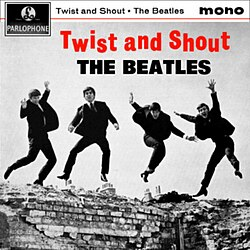
I assumed this stupendously well-known early Beatles rocker was penned by them, but it was in fact written by Phil Medley and Bert Berns two years before the Beatles’ 1963 release. It was already a hit in the record charts in a version by the Isley Brothers, from their own album Twist & Shout in 1962. Other groups after the Beatles even had chart success with their versions of it, like Salt-N-Pepa, and Chaka Demus & Pliers.
My favourite aspect of the song is John Lennon’s untamed and ardent singing, but interestingly Lennon initially didn’t like his voice on it. He said, ‘because I could sing better than that, but now it doesn’t bother me. You can hear that I’m just a frantic guy doing his best‘.
Well, he might not have liked it, but I think it’s the ants’ pants. A second take was attempted, but Lennon had nothing left because of his hoarse voice, and it was abandoned. It’s funny how, from his sheer zeal in the first take, he seems destined to go hoarse. So it’s foretelling, really. He’s clearly shattered by the end, but it’s still magic.
Twist and Shout and their other rocker Dizzy Miss Lizzy are two of my favourite rockers from their early period – interestingly both are covers. That deceptively simple guitar intro has a beautiful timbre and gets the engine churning. It’s so anticipatory and then, boom, Lennon’s voice comes in so unhinged, husky and impassioned, like there’s no tomorrow – at times screeching, screaming and just plain old – belting it out.
Twist and Shout is so bursting with unbridled youthful energy and excitement. It draws some parallels to the pioneers of rock ‘n’ roll like Little Richard, Chuck Berry and Jerry Lee Lewis.
It reached No. 2 on the US Billboard singles chart, during the week when the top five places on the chart were all Beatles singles. The song failed to hit No. 1 in the US because the group’s own follow-up single, Can’t Buy Me Love, held the spot.
In the UK, Twist and Shout was released as an EP, where it reached No. 1 on the EP chart.
[Verse 1] Well, shake it up, baby, now (Shake it up, baby) Twist and shout (Twist and shout) C’mon, c’mon, c’mon, c’mon, baby, now (Come on, baby) Come on and work it on out (Work it on out, ooh) Well, work it on out, honey (Work it on out) You know you look so good (Look so good) You know you got me goin’ now (Got me goin’) Just like you knew you would (Like I knew you would, ooh)
[Verse 2] Well, shake it up, baby, now (Shake it up, baby) Twist and shout (Twist and shout) C’mon, c’mon, c’mon, c’mon, baby, now (Come on, baby) Come on and work it on out (Work it on out, ooh) You know you twist, you little girl (Twist, little girl) You know you twist so fine (Twist so fine) Come on and twist a little closer, now (Twist a little closer) And let me know that you’re mine (Let me know you’re mine, ooh)
[Bridge] Ah (Ah, ah, ah) (Ah) Woah (Yeah), yeah
[Verse 3] Baby, now (Shake it up, baby) Twist and shout (Twist and shout) C’mon, c’mon, c’mon, c’mon, baby, now (Come on, baby) Come on and work it on out (Work it on out, ooh) You know you twist, you little girl (Twist, little girl) You know you twist so fine (Twist so fine) Come on and twist a little closer, now (Twist a little closer) And let me know that you’re mine (Let me know you’re mine, ooh)
[Outro] Well, shake it, shake it, shake it, baby, now (Shake it up, baby) Well, shake it, shake it, shake it, baby, now (Shake it up, baby) Well, shake it, shake it, shake it, baby, now (Shake it up, baby) Ah (Ah, ah, ah) Ayy
The subject matter of ‘Stayin’ Alive’ is actually quite a serious one; It’s about survival in the streets of New York, and the lyrics actually say that: – Robin Gibb
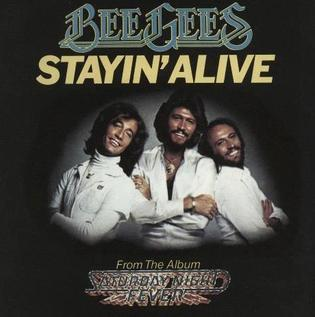
This scintillating electric track from the Bee Gees is arguably their most recognisable. It also seems to be the signature disco tune of the 1970s. The music video below, with the brothers walking with that macho swagger of the young male disco type and adorned with the quintessential 1970s garb, including the tight jeans of course, has become so ingrained in pop culture too. Someone in the video comments below described it as follows:
0% drugs 0% naked girls 30% hair 70% helium
Such is Stayin’ Alive’s impact on popular culture that it is ranked No. 9 on AFI’s survey of top tunes in American cinema. Over the years, the brothers had mixed feelings about the song, admitting it brought them tremendous fame but conversely branded them as a disco act.
Despite the song’s saturation of radio and TV, I still think it’s way cool and hasn’t lost any of its lustre and appeal, at least to these ears. It remains one of the all-time dance-pop classics. You’ve got that intense rhythm, the unforgettable vocal, the tension in the lyrics and that extraordinary sense of forward motion.
Their fame from the Saturday Night Fever record was nothing short of mindblowing as they became global sensations and the record became one of the best-selling of all time. Such was their breakthrough into the disco world, their music became synonymous with the whole scene.
Barry’s unmistakable falsetto voice became as much a part of their sound and allure as anything else. Listening to it, you almost understand why men wore such tight jeans back then. Barry didn’t even realise he had that register until producer Arif Mardin asked him to try some high-pitched ad-libs in the studio while recording Nights on Broadway. Barry gave it a go and discovered a voice he didn’t know he had. But once the others heard it, the Bee Gees knew they were onto something. From then on, they milked it for all it was worth and pretty much built their disco sound around showcasing that voice.
All good things come to an end and they sure did for the Bee Gees not too long after they had summited the ‘Everest’ of global pop stardom. Lamentably, second-rate imitators flooded the market, and critics turned sharply against the genre. By the early ’80s, their notoriety was fast becoming a backlash. Radio stations and record companies wouldn’t go near them with a barge pole. They became a scapegoat of sorts for the rest of the crap out there.
They even faced bomb threats at one point and were forced to regroup and rebuild their image. For a time, they shifted focus to songwriting for other artists, and with great success. Their songs included:
Eventually, their own music saw a revival from the mid-’90s onward, bringing in new generations of listeners. It’s also hard not to feel the weight of their story – Barry Gibb now the last surviving brother after the loss of his siblings, with whom he shared decades of music and success.
The following was abridged from the Wikipedia article below:
Stayin’ Alive was released in December 1977 as the second single from the Saturday Night Fever soundtrack. It climbed the charts to hit the number one spot on the US Billboard February 1978, remaining there for four consecutive weeks.
It would become the second of the Bee Gees’ six consecutive number-one singles, tying the record with the Beatles for most consecutive number-ones in the United States at the time. (a record broken by Whitney Houston who achieved seven consecutive number-ones).
It was was placed at No. 99 by Rolling Stone on their list of the 500 Greatest Songs of All Time.
Stayin’ Alive is used to train people to provide the correct rate of chest compressions per minute while performing cardiopulmonary resuscitation (CPR). The song has around 103 beats per minute, and 100–120 chest compressions per minute are recommended for CPR.
[Verse 1] Well, you can tell by the way I use my walk I’m a woman’s man, no time to talk The music loud and the women warm I’ve been kicked around since I was born
[Pre-Chorus] And now it’s alright, it’s okay And you may look the other way But we can try to understand The New York Times’ effect on man
[Chorus] Whether you’re a brother or whether you’re a mother You’re stayin’ alive, stayin’ alive Feel the city breakin’ and everybody shakin’ And we’re stayin’ alive, stayin’ alive Ah, ah, ah, ah Stayin’ alive, stayin’ alive Ah, ah, ah, ah Stayin’ alive Oh, when you walk
[Verse 2] Well now, I get low and I get high And if I can’t get either, I really try Got the wings of Heaven on my shoes I’m a dancin’ man and I just can’t lose
[Pre-Chorus] You know it’s alright, it’s okay I’ll live to see another day But we can try to understand The New York Times’ effect on man
[Chorus] Whether you’re a brother or whether you’re a mother You’re stayin’ alive, stayin’ alive Feel the city breakin’ and everybody shakin’ And we’re stayin’ alive, stayin’ alive Ah, ah, ah, ah Stayin’ alive, stayin’ alive Ah, ah, ah, ah Stayin’ alive (Hey, yeah)
[Bridge] Life goin’ nowhere Somebody help me Somebody help me, yeah Life goin’ nowhere Somebody help me, yeah I’m stayin’ alive
[Verse 3] Well, you can tell by the way I use my walk I’m a woman’s man, no time to talk The music loud and the women warm I’ve been kicked around since I was born
[Pre-Chorus] And now it’s alright, it’s okay And you may look the other way But we can try to understand The New York Times’ effect on man
[Chorus] Whether you’re a brother or whether you’re a mother You’re stayin’ alive, stayin’ alive Feel the city breakin’ and everybody shakin’ And we’re stayin’ alive, stayin’ alive Ah, ah, ah, ah Stayin’ alive, stayin’ alive Ah, ah, ah, ah Stayin’ alive (Hey, yeah)
[Outro] Life goin’ nowhere Somebody help me Somebody help me, yeah Life goin’ nowhere Somebody help me, yeah I’m stayin’ alive
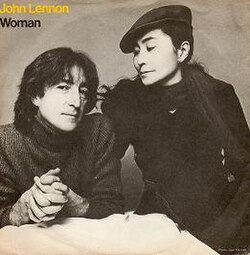
This is yet another one of those John Lennon classics which I listened to so much as a kid, but it inexplicably went into the music hinterland. It was only recently, when I was researching John’s other songs, that I was reunited with it. Phew, because this is an out-and-out gem. I think I even appreciate it more than I did back then.
Woman originally appeared on his 1980 album Double Fantasy, and was later included on his posthumous compilation The John Lennon Collection, which our family owned. I don’t know how many times I put the needle down on this record, but it was an obscene amount. We had one of those old wooden turntables which looked like a dresser, and I remember sitting nestled in front of the fireplace listening to it. It was the only post-Beatle record we had.
If I could go back in time, knowing what I know now, I would have pleaded with my parents to buy George’s 1970 masterpiece, All Things Must Pass, until I was blue in the face. But oh well.
John’s voice in Woman is so warm and intimate and contrasts sharply with the aggressive, rebellious tones of some of his earlier work. There is a real vulnerability in his delivery, with his soft, sincere tone and careful phrasing adding to the intimacy of the song. Lennon described the song just three days prior to his death as a “grown-up version” of the Beatles’ “Girl.”
My favourite part of the song is when he sings ‘Ooh-ooh, well, well‘ and then, in the outro, it morphs into the utterly romantic send-off when he declares ‘I love you, yeah, yeah‘. It really is stunning songwriting. Woman really stands on its own, like it’s its own template for a ‘love song’.
You have other love songs, spectacular in their own right – like Chicago’s If You leave Me Now and the Bee Gees’ How Deep Is Your Love, both released a few years before Lennon’s Woman (1980), but there is a commonality in their sound, tone and feeling. Woman, on the other hand, feels utterly distinct – a stand-alone, if you will, in its musical structure, sound and delivery. Its unusual phrasing, the pauses and the way the arrangement leaves space around Lennon’s voice. It’s genius.
The following was abridged from the Wikipedia reference below:
Woman was the second single released from Lennon’s 1980 album Double Fantasy. It was the first Lennon single issued after his murder on 8 December 1980.
Lennon wrote it as an ode to Ono and to all women. The track begins with Lennon whispering, “For the other half of the sky“, a paraphrase of a Chinese proverb, once used by Mao Zedong.
John Lennon said that the song “came about because, one sunny afternoon in Bermuda, it suddenly hit me what women do for us. Not just what my Yoko does for me, although I was thinking in those personal terms … but any truth is universal. What dawned on me was everything I was taking for granted. Women really are the other half of the sky, as I whisper at the beginning of the song. It’s a ‘we’ or it ain’t anything.”
The single debuted at number three in Lennon’s native UK, then moving to number two and finally reaching number one, where it spent two weeks, knocking off the top spot his own re-released “Imagine“. In the US the single peaked at number two on the Billboard.
[Intro] (For the other half of the sky)
[Verse 1] Woman, I can hardly express My mixed emotions at my thoughtlessness After all, I’m forever in your debt And woman, I will try to express My inner feelings and thankfulness For showing me the meaning of success
[Chorus] Ooh-ooh, well, well Doo, doo, doo, doo, doo Ooh-ooh, well, well Doo, doo, doo, doo, doo
[Verse 2] Woman, I know you understand The little child inside the man Please remember my life is in your hands And woman, hold me close to your heart However distant, don’t keep us apart After all, it is written in the stars
[Chorus] Ooh-ooh, well, well Doo, doo, doo, doo, doo Ooh-ooh, well, well Doo, doo, doo, doo, doo, well
[Verse 3] Woman, please let me explain I never meant to cause you sorrow or pain So let me tell you again and again and again
[Outro] I love you, yeah, yeah Now and forever I love you, yeah, yeah Now and forever I love you, yeah, yeah Now and forever I love you, yeah, yeah Now and forever
What impacted me most when I heard Natural Disaster was Cory Wells’ translucent and alluring voice. It’s a delicate sound, like he’s wearing his heart on his sleeve, but not in a diminishing or openly sorrowful way. Rather, it has a masculine sensibility, and it feels like what he’s saying is transparent and full of meaning.
You have to hear how the cracks grow much wider towards the end, like the tectonic plates have just offloaded (natural disaster, remember) and he goes all ‘death metal’ by shrieking and screaming. To me, it doesn’t feel over-rendered, just raw and penetrative.
Interestingly enough, the California singer-songwriter’s musical background was in metal and hardcore. He also toured as a member of the post-hardcore band Movements before moving towards a quieter sound and releasing his debut EP, How to Tear Apart the Ones You Love, in 2018.
I just heard another release from the same record, Hopeless, to see if Natural Disaster was a fluke. I can confirm it wasn’t, since that’s a vocal humdinger as well. He has some serious natural talent, this guy.
The lyrics are also striking, and I found them so relatable because if anyone’s a Natural Disaster, it’s me, and he gets it right, yes siree – you know… about personal trauma, guilt, and taking responsibility for the breakdown of a relationship. All the fun stuff.
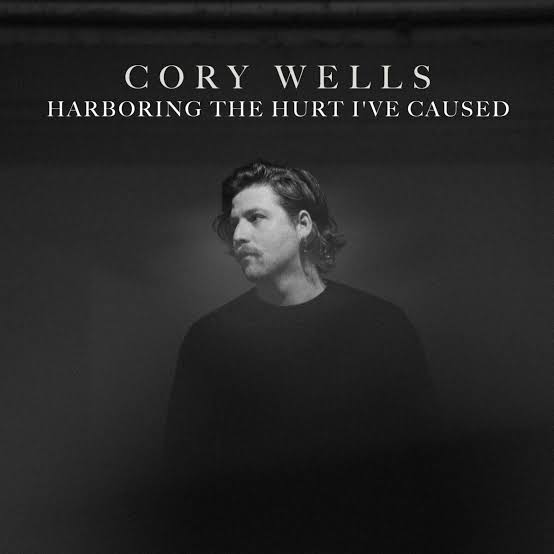
Hopeless and today’s featured song are from his second album, appropriately titled Harboring the Hurt I’ve Caused (2024).
[Verse 1] I know it’s not working The rain just keep falling down Now nothing feels certain The pieces aren’t fitting I’m scared we’re on hollow ground Don’t close the curtain There’s cracks in the hardwood Our footsteps won’t make a sound When the morning comes When it all starts to cave in You’re the one I’m saving
[Chorus] Caught in a natural disaster And I am the cause But we can build it back up again My hands, they can’t stop from shaking So I’ll take the fall What can I say, that I’m sorry I’m a natural disaster
[Verse 2] I’m so tired of all the fighting The shelter in the sillouette of who we were before I hope you see me trying I’d die to feel your love again You give it all a purpose But I started an earthquake Our home won’t standing here When morning comes When it all starts to cave in You’re the one I’m saving
[Chorus] Caught in a natural disaster And I am the cause But we can build it back up again My hands, they can’t stop from shaking So I’ll take the fall What can I say that I’m sorry I’m a natural disaster I’m a natural disaster
[Refrain] So when it all starts to cave in You’re the one I’m saving Caught in a natural disaster Built from all my flaws Gonna burn it all down again You’re the only fix but I’m breaking Thought we were stronger Can’t you see that I’m sorry I’m a natural disaster
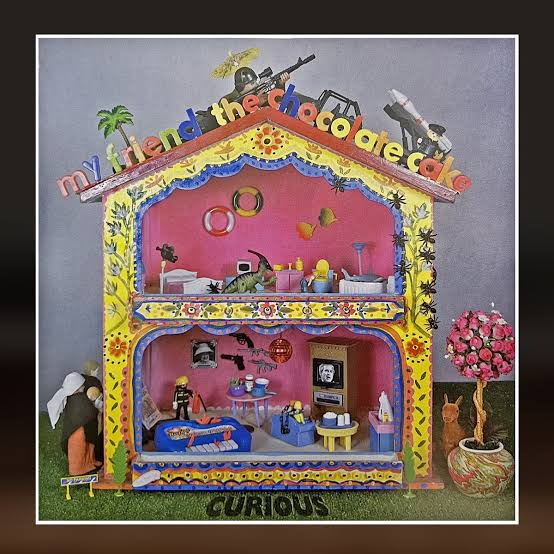
When I was living in Melbourne in the early 2000s, my life consisted of seeking out my two main cultural outlets, which gave me so much joy and sustenance. One was going to see my beloved Richmond Tigers play Australian football, and the second was seeing the Australian music ensemble My Friend the Chocolate Cake.
I can’t think of much music that resonates as strongly with me as the Cake’s and founder/singer-songwriter David Bridie’s. I’m not exaggerating when I say that, when I hear them, I feel this is ‘me’ in music, such is its effect on me. It feels like the fabric of my being and cloaks me like an old, cosy hand-me-down that never gets old or worn. Call me crazy, but that’s the truth.
Today’s featured song, Swirl, is yet another song from one of my all-time favourite Australian records – Curious. What’s curious about Curious is that I received the CD in the mail as a gift after seeing David Bridie perform with Archie Roach. I can’t think of another gift that has brought me as much tranquillity and pleasure as Curious.
To me, Swirl is like hearing the ocean in song. The way the piano begins riding the troughs and peaks, and then a little more wave turbulence comes in until the violin goes screech! Now that’s some introduction. It’s a sound that, in keeping with nature, feels barren and untamed.
Its a land without luxury, cold hearted and ruthless on small talk
The musicianship in the Cake has always been on another level, but it’s on full display in Swirl. The piano has this jumpy, almost anticipatory quality, as if it’s waiting to see where the violin will take everything. Then the harmonica comes in with its ferocity and takes all before it, as if it were a massive ‘swirl’ or whirlpool – the black hole of a murky ravine.
This is what I have always loved about The Cake: how their music, especially their more instrumentally driven tracks, emits an atmosphere – a mesh of sounds which feels wholly ‘Australian’ in both its natural environment and culture.
The only other band that feels as uniquely ‘Aussie’ to my ears and that I have featured here a bunch is The Go-Betweens, but their music is more suburbia-oriented compared to The Cake’s far-reaching, desolate mangrove sound. Whenever I feel homesick and hear one of these bands’ songs on my player, I feel nestled by the heartland of my island home. In literature, for the same effect, it would be reading a Tim Winton novel, like Breath.
Anyways, as always, thanks for reading.
One hundred wildflowers grow out in the desert They’re sharp and bright coloured tough, rugged and dry I thought that I’d never find these hideaway places A glow in the darkness a place you can dream
The sun’s like a razor it lives without mercy It sucks all the water right out of your bones Its a land without luxury, cold hearted and ruthless on small talk
Just listen it’s still it’s something quite still. Your heads spinning just swirl you just swirl
The man with a yearning lives over the mountain He’s harbouring convicts inside of his heart When the night is dead quiet he’s awake and he’s listening he shouts to the hidden monsters out there in the sky
Your head is spinning you just swirl you just swirl away away away
Down there in his soul Listen its all around Wrapped around your heart Like rusted barbed wire





 Observation Blogger