20/10/25 – 26/10/25 – Aging and the Machine

news on the march

Welcome to Monday’s News on the March – The week that was in my digital world.

Rhonda Patrick, Ph.D. — Protocols for Fasting, Lowering Dementia Risk, Reversing Heart Aging, & More
Video interview at Tim Ferriss

From someone who has NOT taken particularly good care of themselves for much of their adult life, I’ve been trying to turn back the clock – to undo, if possible, some of the harm I’ve inflicted on myself. Part of that process of mending both mind and body, so that I can live as actively and comfortably as possible in the second half of my life, has involved learning from experts in nutrition, exercise, longevity, and wellbeing.

Today’s all-encompassing video on aging well, featuring biomedical scientist Rhonda Patrick, was, for me at least, something of a “tick-the-boxes” exercise – just to make sure that what I’m currently doing aligns with best practices for healthspan and aging well.

What I’ve found most evidently beneficial in my own life – the “biggest bang for buck” strategies that overlap neatly with the findings of Dr. Patrick and others – are:

  • Intermittent fasting (16/8), with low carbs and minimal sugar
  • Resistance training (weights)
  • HIIT (High-Intensity Interval Training) – VO₂ Max work
  • Zone 2 cardiovascular training
  • Vitamin and supplement regimen — Creatine, Vitamins B, C, and D3, Omega-3, Collagen, Glycine, Magnesium Glycinate
  • Sauna and spa use

It would also be great to hear what nutritional habits and physical activities you’ve incorporated into your own life that have made a positive difference. Of course, it goes without saying that anyone considering lifestyle or dietary changes should first seek professional medical advice.

Rhonda Patrick, Ph.D. is a biomedical scientist and the founder of FoundMyFitness, a platform dedicated to delivering rigorous, evidence-based insights on improving healthspan and mitigating age-related diseases.

Paul Kingsnorth: How to fight the machine
Video interview at Unherd

Now, bear with me – I’m taking the meandering route to get to the relevance of UnHerd’s recent interview with Paul Kingsnorth.

Baby Boomers (and those before), Generation X (inc. yours truly), and the early Millennials are the first humans in history to have faced the sudden intrusion of digital technology and social media into daily life. To quote Seinfeld: “That’s a pretty big matzo ball hanging out there.”

Meanwhile, younger Millennials and Gen Z (and now Gen Alpha) have never known life without these technologies – a fact that may be an even bigger matzo ball when it comes to their mental health and the “coddling” of the mind.

I’ve always leaned on Daniel Schmachtenberger’s line, from his discussion with Bret Weinstein, to capture the dehumanising effects of our digital age:

Porn and online dating are to intimate relationships what Facebook and Twitter are to tribal bonding.”

What’s become increasingly clear to me is how corporate stakeholdership has sunk its claws deep into these technological and consumerist systems – controlling our lives through our dependence on convenience and materialism. This consolidation of corporate power – what might be described as a form of Western Maoism – was most visibly embodied in Klaus Schwab’s “Great Reset” initiative at the World Economic Forum (UN), launched in lockstep with the draconian restrictions imposed following the onset of the pandemic.

“We… the majority of humans, have never been consulted about what we might visualize for an appealing, positive future for mankind. Rather we are being DRIVEN to it by creatures who don’t want our input at all… we are not WE… it’s THEM and what THEY will decide to do with or to US. That’s why humans, rightly so, are concerned and anxious, because we know in our bones… that something evil this way comes.”
— Random YouTube comment

This fusion of corporate stakeholdership and digital platforms has created what some call a Mass Formation – a culture of dependence and subservience to corporate structures in place of family, religion, community, and local governance.

If you want to see this dynamic play out – humorously yet all too realistically – on an everyday level, check out the satirical video Attempts to order a Coffee in 2025. It perfectly captures our absurd surrender to faceless systems and algorithms.

This erosion of individual power, the decline of local and face-to-face interaction, and the rise of the disembodied “information order” that now dominates the world are what Paul Kingsnorth calls The Machine. And as Kingsnorth insists – we have to fight it.

Buy local. Meet face-to-face with the person who grew it or made it, wherever possible. Avoid multinational corporations. If you have a choice, live in a rural community.”
— Another random YouTube comment

Video description:

Kingsnorth has spent decades charting the alienation and upheaval brought about by modernity. In this wide-ranging interview he sets out why he sees today’s technological order as inhuman, why AI may be the ‘Antichrist’, and why he believes the West must be allowed to die. What does it mean to live as a dissident inside the Machine? And what lines must we draw if we are to remain human?

That is all. Thank you for reading.

Tagged with: , , , , , , , , ,
Posted in Health, News, politics, Science

Hey Mickey (1981) – Toni Basil

This article contains descriptions of sex which may offend. Reader discretion is advised.

The compilation album Raiders of the Pop Charts (left) was where I first heard, as an eight-year-old, the infamous one-hit wonder Hey Mickey by Toni Basil. Man, did I get a kick out of it as a youngster – and I still enjoy hearing it on the odd occasion. We had one of those old built-in wooden turntables that looked more like a dresser, sitting near the fireplace. I don’t know how many times I dropped the needle on that record as a kid, but it was a lot.

Hey Mickey has this retro, glam-rock-inspired sound that I’ve always loved for its lucidity, craziness, and sheer escapist energy. It’s new wave – brash and a little obnoxious – which I always saw as part of its charm. Toni performs it like a firecracker too, with a self-styled cheerleader chant that’s sexy, flirtatious, rebellious, and just the right amount of obscene. Check out these risqué lyrics – which, thankfully, I didn’t quite ‘pick-up on’ as an eight-year-old:

So come on and give it to me / Any way you can / Any way you want to do it / I’ll take it like a man.

Rock critic Robert Christgau once wrote that Basil “was the only woman ever to offer to take it up the ass on Top 40 radio.” Basil, however, has vehemently denied that the song refers to anal sex, responding bluntly: “No! That’s ridiculous.”

Hey Mickey was originally titled as “Kitty” and was released on American singer’s debut studio album, Word of Mouth. The song Kitty was originally performed by British pop group Racey in 1979 which did not include the “Oh Mickey, you’re so fine” chant, which Basil added.

The music video was directed, produced and choreographed by Basil herself. The cheerleaders featured in the video were members of a championship squad from Carson High School in Carson, California. The cheerleading uniform Basil wore in the music video was the one she actually wore in high school. According to Basil, “They didn’t put anything in the budget, I did everything myself. And this is the actual cheer sweater from Las Vegas High.”

The single reached number one on the US Billboard for one week and number two on the UK Singles Chart. It is Basil’s only top 40 success.

[Refrain]
Oh, Mickey, you’re so fine
You’re so fine, you blow my mind
Hey, Mickey, hey, Mickey
Oh, Mickey, you’re so fine
You’re so fine, you blow my mind
Hey, Mickey, hey, Mickey
Oh, Mickey, you’re so fine
You’re so fine, you blow my mind
Hey, Mickey, hey, Mickey
Oh, Mickey, you’re so fine
You’re so fine, you blow my mind
Hey, Mickey

[Verse 1]
Hey, Mickey
You’ve been around all night and that’s a little long
You think you’ve got the right, but I think you’ve got it wrong
Why can’t you say goodnight? So you can take me home, Mickey
‘Cause when you say you will, it always means you won’t
You’re giving me the chills, baby, please, baby, don’t
Every night, you still leave me all alone, Mickey

[Chorus]
Oh, Mickey, what a pity, you don’t understand
You take me by the heart when you take me by the hand
Oh, Mickey, you’re so pretty, can’t you understand?
It’s guys like you, Mickey
Oh, what you do, Mickey, do Mickey
Don’t break my heart, Mickey

[Verse 2]
Hey, Mickey
Now, when you take me by the, who’s ever gonna know
Every time you move, I let a little more show
There’s something you can use, so don’t say no, Mickey
So come on and give it to me anyway you can
Anyway you wanna do it, I’ll take it like a man
Oh, please, baby, please don’t leave me in this jam, Mickey

References:
1. Mickey (Toni Basil song) – Wikipedia

Tagged with: , ,
Posted in Music

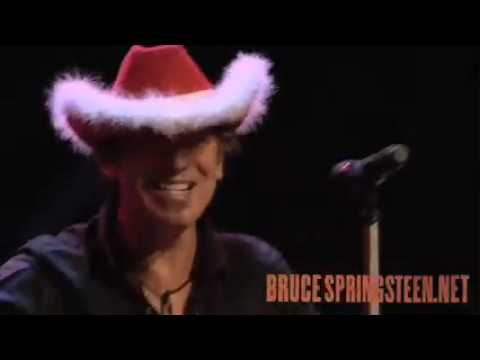
Tenth Avenue Freeze-Out (1975) – Bruce Springsteen

Yesterday afternoon I was strolling on my way to check out a newly opened cultural centre and cinema called Lumina. I went to see The Mastermind, which was just released here two days ago. I’m already eyeing the new Springsteen biopic, set to launch there next Thursday – though, if the early critics are to be believed, it’s not exactly setting the world on fire.

Anyway, as I was approaching Lumina, today’s featured song came on my music player and quite literally put a spring in my step. Tenth Avenue Freeze-Out sounds unlike anything else on Born to Run, an album that still sits proudly in my top ten ‘all-time’ list. Where most of that record contains cinematic street epics and operatic rock, Tenth Avenue sounds like it belongs in a soul club on a Saturday night – which is apt given the day of this article’s release. It’s a song which tells a semi-mythic version of the formation of the E Street Band.

To my ears, the song’s sound is a cross between James Brown’s funk-voice and soul rhythm, and Motown’s driven pop – all filtered through Springsteen’s gritty Jersey poetry. My favourite moments are when Bruce hollers “I’m on my own” (kind of a prelude to how he commences – Racing in the Street on the next record) and then declares, “The Big Man joined the band!” – at which point Clarence Clemons takes over with a short saxophone solo that always makes the hair on my arms stand on end.

Springsteen met him in 1971 when Clemons came into a club called the Student Prince in Asbury Park, New Jersey, where Bruce was playing. It was a stormy night, and the door flew off the hinges when Clemons opened it. Springsteen would talk about how he “Literally blew the door off the place.”
Songfacts

Now, onto a personal story I never tire of telling – and please forgive me if you’ve heard it before. I was so spellbound by Born to Run in my youth that I handwrote an entire lyrics booklet for the album, complete with a little string to bind the pages together. Lyrics weren’t so easily accessible back then, so I transcribed what I thought Bruce was singing, like a devoted scribe of a great musical sermon. Alongside Mike Batt’s Tarot Suite (1979), Born to Run remains one of the most cherished albums of my youth.

Most of the following was abridged from the Wikipedia article below:
Springsteen stated in the Wings for Wheels documentary about the Born to Run record “I still have no idea what it means (Tenth Avenue). But it’s important.” The song’s protagonist, “Bad Scooter“, is a pseudonym for Springsteen himself (as indicated by the initials they share). The idea for the composition of the horn intro was Steven Van Zandt’s. The single was a chart dud, getting no higher than No. 83 on the Billboard in early 1976. But the song it’s said is one of his most popular live songs and has always had a strong following on album-oriented rock radio and amongst Springsteen’s fan base.

After Clemons’ death, Springsteen used the song as a memorial/tribute to both him and the late Danny Federici on the Wrecking Ball Tour, the first E Street Band tour without Clemons. During the song’s third verse of “Big Man joined the band“, Springsteen paused the song where Clemons’ sax solo would traditionally be performed while a video of Clemons and Federici played on the stage screens.

[Verse 1]
Tear drops on the city
Bad Scooter searching for his groove
Seem like the whole world walking pretty
And you can’t find the room to move
Well everybody better move over, that’s all
‘Cause I’m running on the bad side
And I got my back to the wall

[Chorus 1]
Tenth Avenue freeze-out

[Verse 2]
Well, I was stranded in the jungle
Tryin’ to take in all the heat they was giving
Till the night is dark but the sidewalks bright
And lined with the light of the living
From a tenement window a transistor blasts
Turn around the corner, things got real quiet real fast

[Chorus 2]
I walked into a Tenth Avenue freeze-out
Tenth Avenue freeze-out

[Bridge]
And I’m all alone, I’m all alone
And kid you better get the picture
And I’m on my own, I’m on my own
And I can’t go home

[Verse 3]
When the change was made uptown
And the Big Man joined the band
From the coastline to the city
All the little pretties raise their hands
I’m gonna sit back right easy and laugh
When Scooter and the Big Man bust this city in half

References:
1. Tenth Avenue Freeze-Out – Wikipedia

Tagged with: , ,
Posted in Music

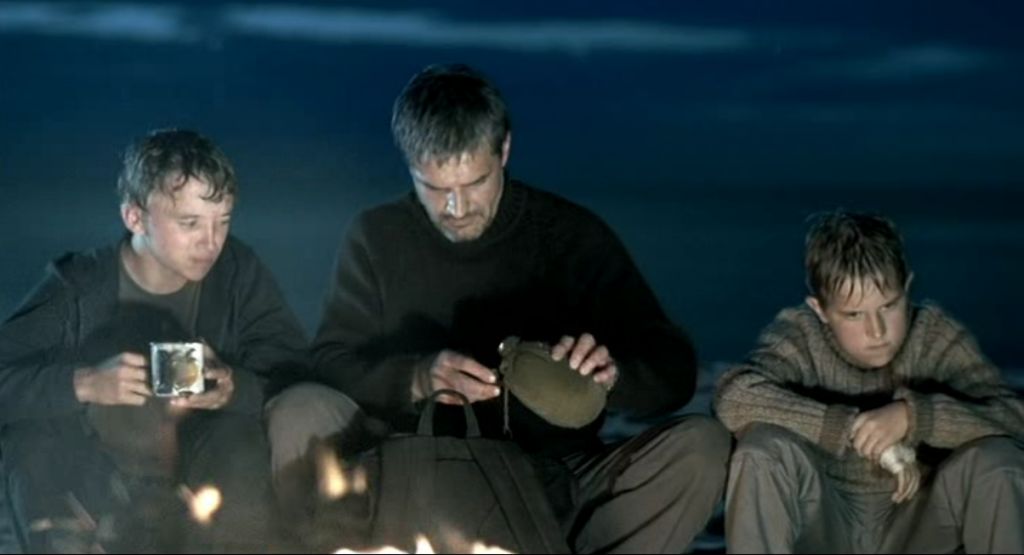
A Serious Man (2009) – Joel and Ethan Coen (Friday’s Finest)

The brothers Joel and Ethan Coen have long stood among my favourite filmmakers, and their work has often featured here at Friday’s Finest. A Serious Man (2009) seems one of their lesser-known and most underrated films, yet I think it deserves greater recognition within film circles. I rewatched it recently after a long hiatus, and with a few more years under my middle-aged belt, I found it even more engaging – funny, tragic, and mystifying all at once.

Larry Gopnik, a Midwestern physics teacher, watches his life unravel over multiple sudden incidents. Despite seeking meaning and answers amidst his turmoils, he seems to keep sinking.

The film’s modus operandi follows a similar pattern to the Coens’ later Inside Llewyn Davis (2013): both feature a protagonist who bears a heavy cross, bewildered by the world’s indifference. As Ethan Coen once remarked, “It’s more interesting for me as an audience member to see a movie about a loser.” Allow me to digress – the antecedent link to my review of Llewyn Davis contains one of my first-ever posts on my blog, which, for anyone interested, details my hypothesis about the significance of the cats in the film, as well as the “record analogy” relating to its sequencing and storytelling.

Unlike Llewyn, which is a stark and humourless trudge through ankle-deep snow – and viewers of the film will appreciate that analogy – A Serious Man is a black comedy, one where I found myself chuckling at the most unexpected scenes (often, mind you), which I suppose is the aim of such a genre. However, the directors craftily balance the film like a tightrope walker on a high wire, between this futility-tinged comedy and its equally contemplative drama about Jewish life in the soulless Minnesotan suburbs of 1960s North America.

IMDB Storyline (includes Spoilers):

Bloomington, Minnesota, 1967: Jewish physics lecturer Larry Gopnik is a serious and a very put-upon man. His daughter is stealing from him to save up for a nose job; his pot-head son, who gets stoned at his own bar-mitzvah, only wants him round to fix the TV aerial and his useless brother Arthur is an unwelcome houseguest. But both Arthur and Larry get turfed out to a motel when Larry’s wife Judy, who wants a divorce, moves her lover Sy into the house and even after Sy’s death in a car crash they are still there. With lawyers’ bills mounting for his divorce, Arthur’s criminal court appearances, and a land feud with a neighbor, Larry is tempted to take the bribe offered by a student to give him an illegal exam pass mark. And the rabbis he visits for advice only dole out platitudes. Still God moves in mysterious–and not always pleasant–ways, as Larry and his family will find out.

The Coens themselves stated that the “germ” of the story was a rabbi from their adolescence: a “mysterious figure” who had a private conversation with each student at the conclusion of their religious education.Ethan Coen said that it seemed appropriate to open the film with a Yiddish folk tale, but as the brothers did not know any suitable ones, they wrote their own.


I’ve always been fascinated by the Jewish perception of life and its reflection in art and culture – whether in the music of Dylan and Cohen, the comedy of Seinfeld and Larry David, or the cinema of Woody Allen and the Coens. There’s something profoundly prophetic, even therapeutic, about the way Jewish thinkers turn suffering and doubt into art. I consider myself an agnostic Judeo-Christian of sorts – drawn to the metaphorical power of biblical archetypes, the divinity and sanctity of the individual through the “Logos,” and the idea of living as if God exists.

So if I wander off on tangents while writing this, it’s only fitting. After all, A Serious Man itself is about wandering through uncertainty – about our endless search for meaning in the inexplicable patterns of existence. Religion, in the Coens’ telling, offers little consolation. The rabbis’ platitudes sound hollow, their authority fragile. Yet this cynicism isn’t nihilistic; it’s human. Like the Book of Job, it asks: why do bad things happen to good people? And like Job, Larry receives no answer- only more mystery.

From the small towns of the old world to the quiet streets of suburbia, the hidden powers that shape our existence remain unfathomable. We like to think we grasp certain principles and attempt to live in harmony with them, yet often we’re simply deluding ourselves. Sooner or later – as the “serious man” learns the hard way — life strikes back, and without mercy. A demon might knock on your door, an accident could cut your story short, a sudden illness might appear, or a storm could rip everything away. There are rules governing such events, but they lie far beyond our reach – and the troubles we obsess over in the meantime are, in truth, trivial.

So therein lies the positive light I could muster from the film: that life and its significance can, to a large degree, be discerned through our individual senses – by how we govern our perception of what happens to us. The Coens suggest that even amid absurdity, grace is possible – not as divine intervention, but as a shift in consciousness. While we cannot control the universe, we can control our stance toward it.

References:
1. A Serious Man – Wikipedia
2. A Serious Man – IMDB

Tagged with: , ,
Posted in Movies and TV

This Charming Man (1983) – The Smiths

Where has all the wildness and daring got to? Some of it has found its way onto the Smiths’ record, ‘This Charming Man’. It jangles and crashes and Morrissey jumps in the middle with his mutant choir-boy voice, sounding jolly and angst-ridden at the same time. It should be given out on street corners to unsuspecting passers-by of all ages.”
–  The Face

Back to the apex of The Smiths with this classic early track – This Charming Man, their very second single after Hand in Glove. Woohoo! It’s one of the first songs I remember hearing by them and remains among my top ten favourites. It’s also arguably one of their most accessible and irresistibly catchy tunes – the kind I’d readily share with someone as an introduction to their music. Speaking of newcomers, I actually came to The Smiths – and Morrissey’s solo work – quite late in my musical journey. Oh, I’d heard them before, of course, but it wasn’t until a dear local friend, Tatiana – who’s all hip to UK punk and alternative music – finally got me revelling in their sound.

One of my favourite quotes about The Smiths’ is: “The Smiths are the band from the ’80s – most anti-’80s.” Much of their work (especially production wise) still sounds as modern, alternative, and progressive as anything being released today – and best of all, this rebel music still sounds f%#king awesome. If anything, time has been kinder to their music and legacy than to almost any other ’80s group – which says a lot about their musical acumen and creative genius. Between Morrissey’s unfamiliar yet yearning voice and transparent lyrical outpourings, and Johnny Marr’s jangly, metallic guitar textures, they crafted a wholly unique soundscape one that remains as provocative and vital as ever. Music like theirs helps fill the gaping void left by the increasingly hollow, “nothing” pop culture we find ourselves surrounded by today.

The following was mostly abridged from the Wikipedia article below:
This Charming Man was released on 31 October 1983 by the independent record label Rough Trade. It is defined by Marr’s jangly guitar riff and Morrissey’s characteristically morose lyrics, which revolve around the recurrent Smiths themes of sexual ambiguity and lust.

Feeling detached from the early 1980s mainstream gay culture, Morrissey wrote “This Charming Man” to evoke an older, more coded and self-aware underground scene. The singer said of the song’s lyrics: “I really like the idea of the male voice being quite vulnerable, of it being taken and slightly manipulated, rather than there being always this heavy machismo thing that just bores everybody.

Although only moderately successful on first release – the single peaked at number 25 on the UK Singles Chart- “This Charming Man” has been widely praised in both the music and mainstream press. Re-issued in 1992, it reached number 8 on the UK Singles Chart. Mojo magazine journalists placed the track at number 1 on their 2008 “50 Greatest UK Indie Records of All Time” feature.

[Verse 1]
Punctured bicycle on a hillside desolate
Will nature make a man of me yet?
When in this charming car
This charming man
Why pamper life’s complexity
When the leather runs smooth on the passenger seat?
I would go out tonight
But I haven’t got a stitch to wear
This man said, “It’s gruesome
That someone so handsome should care”

[Chorus]
Ah, a jumped-up pantry boy
Who never knew his place
He said, “Return the ring”
He knows so much about these things

[Verse 2]
I would go out tonight
But I haven’t got a stitch to wear
This man said, “It’s gruesome
That someone so handsome should care”
Na, na-na, na-na, na-na
This charming man
Na, na-na, na-na, na-na
This charming man

[Chorus]

References:
1. This Charming Man – Wikipedia

Tagged with: ,
Posted in Music

Brooklyn Soundtrack (2015) – Score by Michael Brook

Last night, I watched a moving romantic period drama called Brooklyn, starring the wonderful Saoirse Ronan – whom you might remember from other standout performances in Lady Bird, Little Women, and The Grand Budapest Hotel. One of the aspects of the film I found especially touching was its soundtrack, which is the focus of today’s article. The original score, released on October 30, 2015, is a 39-minute orchestral work crafted to mirror the protagonist’s inner emotional journey. But first, the music needs a bit of context – so below is the film’s storyline.

IMDB Storyline:
Ireland, early 1950s. Eilis Lacey (Saoirse Ronan) is a young woman working in a grocery shop. She has greater ambitions and moves to Brooklyn, New York, leaving her mother and sister, Rose (Fiona Glascott), behind. She is terribly homesick but eventually settles down, finding a job, studying to be a bookkeeper and meeting a nice young Italian man, Tony Fiorello (Emory Cohen). Things are going well, but then she learns that Rose has died, and decides to return to Ireland, temporarily. She and Tony hastily get married, and then she sets off back to Ireland, alone. Life is about to get complicated.  

The film’s music, both score and soundtrack, plays a central role in storytelling, reflecting the protagonist’s internal conflict between her past in Ireland and her new life in Brooklyn. Composer Michael Brook aimed to create a score that was “emotional” yet “slightly unpredictable,” avoiding sentimentality while subtly underscoring the film’s emotional beats. He recorded the score at Abbey Road Studios with a large string section, using a manual piano instead of a sampled one for a more authentic feel. The score incorporates subtle instrumentation to evoke the contrast between Ireland and America, using mandolin in Irish scenes and clarinet and upright bass in American segments.

The score received critical acclaim for its emotional depth and subtlety, with critics praising its ability to evoke tears without manipulation. It was nominated for several awards, including the Canadian Screen Award for Best Original Score, which it won. 

In my articles discussing movie soundtracks, I usually highlight my favourite pieces from the film – as I’ve done below. Each piece is presented in my order of preference (not in the order they appear in the movie or on the soundtrack) and are as follows:

  • Proposal,
  • Rose Dies, and
  • Goodbye Ellis

References:
1. Music of Brooklyn (film) – Wikipedia

Tagged with: , , ,
Posted in Movies and TV, Music

All Night Long (All Night) 1983 – Lionel Richie

This is another one of those songs I heard endlessly growing up – and if you’d asked me back then whether I liked it, I’d have told you to take a flying jump. Maybe it was because it saturated the airwaves, or because the chorus “All Night Long” started to feel like it was taking all night long to get through, thanks to its relentless repetition towards the end. This kind of ultra-commercial ’80s pop was worlds away from my sacred Dylan and Springsteen immersion, so I completely tuned it out.

Fast forward 40 years, and there I am pedalling away in my spinning class when this song comes blasting through the speakers – and suddenly, I’m in second heaven. “Where have you been all my middle adult life?” I practically shouted at it and bopped on my stationary bike like a man possessed. Well, the song’s back now, making its long-overdue resurgence. Giddyup!

All Night Long is the ultimate party anthem from a bygone era – an international dance jam bursting with the percussive flair and festive spirit of world music. The song incorporates phrases from various languages to evoke a global party atmosphere. “Fiesta” is Spanish for “party,” “Karamu” is Swahili for “party” or “banquet,” and “Liming” is a Caribbean term for socializing.
The song’s composition was a process of trial and error, with Richie struggling to find the central hook for weeks. The breakthrough came when he was leaving a dinner at a friend’s house in Jamaica, saying he had to “go back and work all night long,” which provided the now-iconic chorus.

I love how the song goes off on tangents in different parts – it’s got not one but two pre-choruses besides the verses and post choruses, and the bridge is to die for, complete with glorious African gibberish. Richie admitted in interviews that he lacked the time to hire a translator for authentic African phrases, so he invented words like “Tam bo li de say de moi ya” and “Jambo jumbo,“. The music features layered backing vocals, including contributions from Richard Marx and other session singers, who were initially misled into believing they were singing in Swahili.

The song, released as the lead single from his 1983 album Can’t Slow Down, marked a shift from his earlier ballad style towards a more dance-oriented, pop-funk sound with strong Caribbean influences, blending his Commodores roots with calypso and reggae elements. It featured a large ensemble of session musicians, including several who had worked on Michael Jackson’s Thriller, contributing to its polished, percolating groove.

[Verse 1]
Well, my friends, the time has come
To raise the roof and have some fun
Throw away the work to be done
Let the music play on
Everybody sing, everybody dance
Lose yourself in wild romance

[Pre-Chorus 1]
We’re going to party, Karamu, fiesta, forever
Come on and sing along
We’re going to party, Karamu, fiesta, forever
Come on and sing along

[Chorus]
All night long (All night, all night, all night)
All night long (All night)
Oh, yeah (All night)

[Verse 2]
People dancing all in the street
See the rhythm all in their feet
Life is good, wild and sweet
Let the music play on
Feel it in your heart and feel it in your soul
Let the music take control

[Pre-Chorus 2]
We’re going to party, Liming, fiesta, forever
Come on and sing along
We’re going to party, Liming, fiesta, forever
Come on and sing my song

[Chorus]
All night long, oh (All night, all night)
All night long, yeah (All night, all night)
All night long, ah (All night, all night)

[Verse 3]
Yeah, once you get started, you can’t sit down
Come join the fun, it’s a merry-go-round
Everyone’s dancing their troubles away
Come join our party, see how we play

[Bridge]
Tam bo li de say de moi ya
Yeah, Jambo, Jambo
Way to parti, o we goin’
Oh, jambali
Tam bo li de say de moi ya
Yeah, Jambo, Jambo
Oh, yes
We’re gonna have a party, yeah, uh

[Chorus]
All night long (All night, all night, all night)
All night long, yeah (All night, all night)
All night long (All night, all night, all night)
All night long, oh (All night, all night)

References:
1. All Night Long (All Night) – Wikipedia

Tagged with: , ,
Posted in Music

Live is Life (1984) – Opus (Ft. Maradona)

Today, we watch the most iconic warm-up in football history – Diego Maradona’s dance to Live is Life by the Austrian group Opus. I remember when I was 16, my father and I were up in the wee hours in Australia, about to watch the 1990 World Cup opener: Argentina versus Cameroon. I’ll never forget seeing, for the first time, the late Argentine football magician Maradona strutting his stuff in the warm up to that game.

(Just to clarify — the warm-up featured in today’s article is from another match playing vs Bayern Munich in the UEFA Cup, which I’ll get to shortly.)

My father and I just sat there, staring in stunned disbelief. To this day, Maradona is the only footballer I can recall who seemed to have the ball magnetically drawn to him – like a lost limb joyfully reuniting with its owner.

Now I live in football heartland – Colombia – where the sport is the country’s great passion, endlessly swooned over and debated until the commentators turn blue in the face. You might remember the horrific incident involving Colombian defender and captain Andrés Escobar, who scored an own goal at the 1994 World Cup and was murdered in his hometown of Medellín just five days after Colombia’s elimination from the tournament. There was a brilliant documentary made ESPN about the intersection of Colombian football with criminal activity called The Two Escobars. The other Escobar, of course, refers to the drug lord Pablo Escobar, who unleashed a wave of terror on Colombia the likes of which the country could never have imagined. The documentary showed how Andrés Escobar – a young man – lost his life over an honest mistake, and how football became stained by illegal money amid the nation’s tumultuous war on drugs.

Fast-forward to today, and the next World Cup in 2026 is fast approaching. Both my homeland, Australia, and my adopted home, Colombia, have qualified. My kids hold dual citizenship – Colombo-Australians, if you like. It frightens me to think what would happen if Australia and Colombia ended up in the same group – or faced each other later in the tournament. Who would my children barrack for? Basically, it feels like a small domestic crisis waiting to happen.

Now, back to today’s featured song – Live Is Life. I first heard it while watching the video below of Maradona strutting to it, performing football drills and skills that would make any fan (including yours truly) drool in admiration. It’s an iconic video from Maradona’s playing days (in terms of his legacy) – certainly comparable with his legendary 1986 World Cup goal of the century versus England where he took the ball from his own half and dribbled past 5 England players and went on to beat goalkeeper Peter Shilton with a feint before slotting the ball into the net. On the topic of football documentaries – for you football nuts out there – there’s another fantastic one when former England player Gary Lineker visited Maradona in Argentina.

Opus, the band behind Live is Life, was formed in Graz, Austria in 1973. They began as a rock group playing local clubs before breaking through internationally in the mid-1980s. Live is Life was recorded during a live concert in 1984 and captured the spirit of that moment perfectly – the audience clapping in time, the energy of the crowd feeding the song’s infectious rhythm. The song became an unexpected global hit, topping charts across Europe and reaching the top 40 in the United States. And for me, it will always bring back the image of Diego Maradona smiling, swaying and performing magic on that pitch.

References:
1. Live Is Life – Wikipedia

Tagged with: , , , , , ,
Posted in Music

Thinking About You (2007) – Norah Jones

It’s Norah Jones, not ‘Snorer’ Jones – right! So lets just leave the shenanigans behind shall we? But I will say, today’s featured track is a nice one to curl up to on a lazy Sunday morning with a warm cup of chocolate. Her breezy, catchy sound and relaxed demeanour bring to mind the Mexican singer-songwriter Julieta Venegas, whom I also featured not too long ago. Norah’s music has often been pigeon-holed as lounge jazz – a style I wasn’t too keen on back when Don’t Know Why was everywhere. But I’ve warmed to it a bit more as I’ve mellowed with age – much like one does when new hairs grow increasingly fond of appearing in places least expected, and less so in the ones I’d prefer.

Thinking About You drifts along with those chilled-out jazz sounds – a bit of laid-back soul, and jazzy horn countermelodies thrown in for good measure. Norah takes the departure of her lover as lucidly and sweetly as she can, cradled by feelings of longing and a lingering connection with her special someone. The composition unfolds slowly and deliberately, creating a tender, intimate atmosphere for the listener. It’s a wonderfully relaxed sound – quietly affecting.

Despite the song’s easy, laid-back feel, it was actually a long time in the making. Norah wrote it way back in 1999 with Ilhan Ersahin, her then-bandmate in Wax Poetic. She said the song had “always been in the back of my mind“, but she thought it was too much of a pop song for her and preferred if someone else were to record it. According to the producer, she “found a way to make it work” during the recording of Not Too Late.

Thinking About You was released as the lead single from for her third studio album Not Too Late (2007). In the US it reached number 82 on the Billboard, but wait for it – (drumroll please) it peaked atop the Adult Alternative Songs, becoming her Jones’ third consecutive number-one. Giddy-up.

Yesterday I saw the sun shining
And the leaves were fallin’ down softly
My cold hands needed a warm, warm touch
And I was thinkin’ about you

But here I am lookin’ for signs to lead me
You hold my hand, but do you really need me?
I guess it’s time for me to let you go
But I’ll be thinkin’ about you
I’ll be thinkin’ about you

So when you sail across the ocean waters
And you reach the other side safely
Could you smile a little smile for me?
‘Cause I’ll be thinkin’ about you
I’ll be thinkin’ about you

References:
1. Thinking About You (Norah Jones song) – Wikipedia
Tagged with: , ,
Posted in Music

More Than a Feeling (1976) – Boston

“The power an old song can have in your life”

– What Boston’s website says about the song

Back then, the radio played this kind of great music all day long. Well, so they tell me – since I was only two years old at the time. More Than a Feeling is one of those songs I hadn’t heard in aeons until it popped up in my YouTube feed under one of those “Listening to for the first time” videos that are all the rage these days (and which, more often than not, want to make me barf). I’m glad I clicked on this one though, because it reunited me with this ‘70s rock classic. And the “listener” in question – DeaDevi – happens to be a pretty good singer herself (check out a snippet of her cover of Until I Found You by Stephen Sanchez).

Few songs capture the euphoria of hearing music that completely sweeps you away quite like More Than a Feeling. That’s the irony and the genius of it – it’s a song about the transcendent feeling of losing yourself in music, yet it creates that same feeling in real time. Watching DeaDevi tear up while listening almost feels like the song gazing at its own reflection – she’s reacting to the very emotion the song was written to evoke. A bit trippy, right? It’s like that hall of mirrors scene in Bruce Lee’s Enter the Dragon – music reflecting emotion reflecting music until you can’t tell which is which.

To my ears, the first verse and chorus are the song’s crowning moment – that soaring crescendo of guitar and harmony that hits like a burst of sunlight. From there, it has nowhere higher to climb. I’m not saying the rest is filler – far from it – but the song kind of peaks early. After that, it coasts along never quite reaching those dizzying heights again except in brief patches. Plenty of great rock songs take the slow-burn approach – building tension, layering emotion, and saving the knockout punch for the finale. Think of Dire Straits’ Tunnel of Love, which finishes with arguably the greatest guitar solo in the history of rock. But More Than a Feeling isn’t about restraint, rather it’s about that sudden rush – the moment the music hits and lifts us somewhere beyond words.

It took Tom Scholz, the principal guitarist and founder and only remaining member of the band Boston, more five years to write More Than a Feeling. He worked on it in his basement from 1968 to 1975, before Boston got its record contract. He wrote the lyrics based on the idea of losing someone close, and on the way in which music can connect a person to memories of the past. Scholz credits Walk Away Renee by The Left Banke as the song’s main inspiration.

More Than a Feeling was released as the lead single from American band Boston’s debut album. It peaked at no. 5 on the Billboard. The track is now ofcourse a staple of classic rock radio, and in 2008, it was named the 39th-best hard rock song of all time by VH1. It was included in the Rock and Roll Hall of Fame list of the “500 Songs That Shaped Rock and Roll“.

[Verse 1: Brad Delp]
I looked out this morning and the sun was gone
Turned on some music to start my day
I lost myself in a familiar song
I closed my eyes and I slipped away

[Chorus: All]
It’s more than a feeling (More than a feeling)
When I hear that old song they used to play (More than a feeling)
And I begin dreaming (More than a feeling)
‘Til I see Marianne walk away


[Post-Chorus: Brad Delp]
I see my Marianne walkin’ away

[Verse 2: Brad Delp]
So many people have come and gone
Their faces fade as the years go by
Yet I still recall as I wander on
As clear as the sun in the summer sky

[Chorus: All]

[Verse 3: Brad Delp]
When I’m tired and thinking cold
I hide in my music, forget the day
And dream of a girl I used to know
I closed my eyes and she slipped away
She slipped away

References:
1. More Than a Feeling – Wikipedia

Tagged with: , ,
Posted in Music

Follow Blog via Email

Enter your email address to follow this blog and receive notifications of new posts by email.

Join 774 other subscribers

← Back

Thank you for your response. ✨