Goodbye Again (1989) – Mary Chapin Carpenter

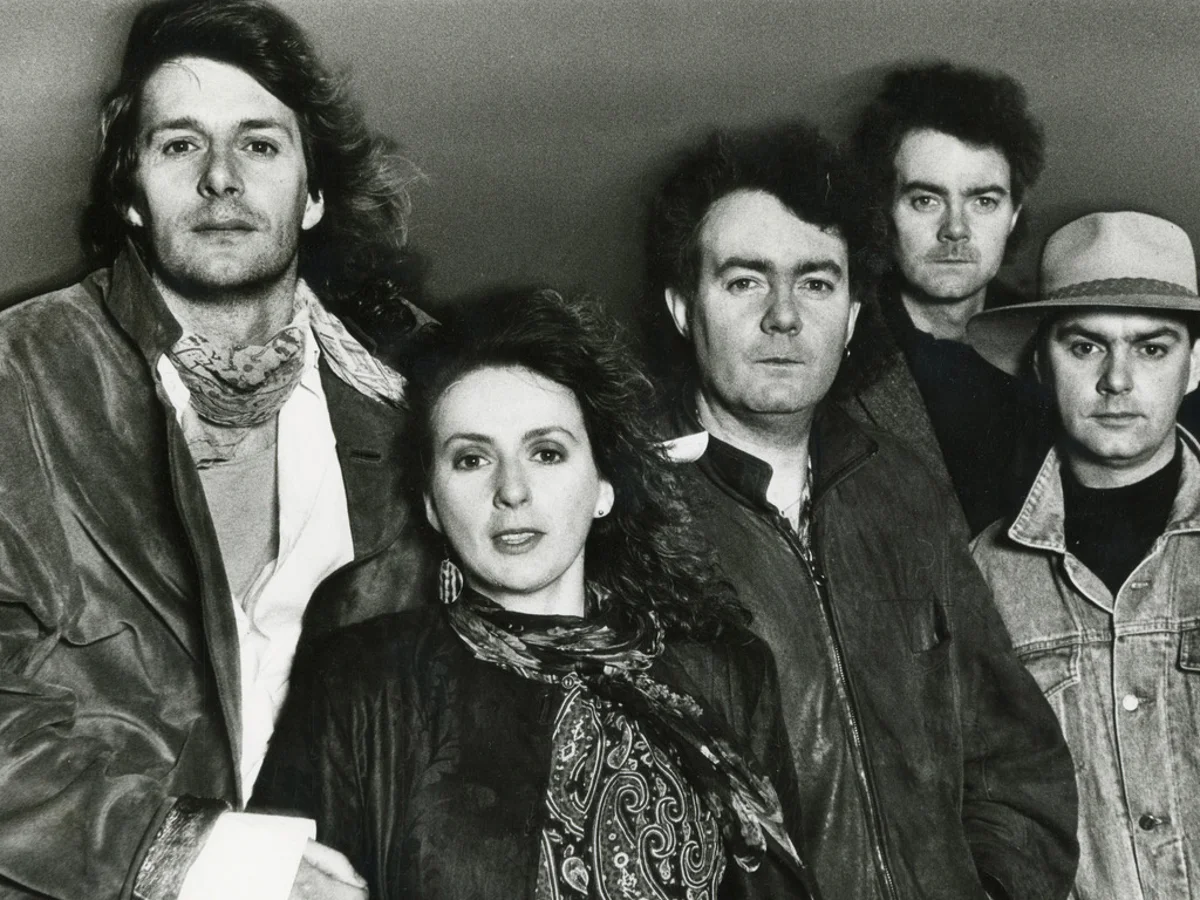
I had heard of Mary Chapin Carpenter’s name before, but I didn’t recall her music until my friend Christian in New York mentioned today’s featured song – Goodbye Again in his blog. I found it such a haunting and heartfelt piece, distilling the ache of loneliness and the bittersweet pull of memory. It’s like a woman looking back, measuring her twilight years against the shadow of a love that still lingers. I hope to seek out more of her work in the future. So over to Christian:

Mary Chapin Carpenter, who was born in Princeton, N.J., is a country and folk singer-songwriter. If you don’t know Carpenter but are a frequent Sunday Six traveler, her name may still sound familiar since we first visited her during another time travel excursion in February this year. Inspired by her mother Mary Bowie Robertson, who was a folk singer and guitarist, and her guitar-playing seventh-grade science teacher (gotta love that!), Carpenter picked up the ukulele and classical guitar and began writing songs during her childhood. As a 16-year-old, she started performing at folk venues in Washington, D.C., after her family had relocated there. In 1987, Carpenter got a deal with Columbia Records and released her debut album Hometown Girl later that year. Goodbye Again, penned by Carpenter, is from her June 1989 sophomore release State of the Heart. Just last week, her latest album Personal History dropped, which brought Carpenter back on my radar. I’m glad it did!

The Sunday 6 – Christian’s Music Musings 15/6/2025

[Verse 1]
Every night she sleeps alone
And by her bed she puts the phone
And every morning after that
She takes the phone and puts it back
He’s got a wife back home
And three kids up and grown
But these are things that go unsaid
He might call her from the road just in time
To say ‘Hello’ and ‘Goodbye’ again

[Verse 2]
She keeps his picture tucked away
She think she might have it framed one day
And maybe he’ll come see it there
Hanging by her rocking chair
In a corner of her room, on a Sunday afternoon
When all the world is dull and gray
She might close her eyes and sit, rocking gently for a bit
‘Til all the bad thoughts go away

[Verse 3]
Back when children played their games
London Bridge and Jesse James
She captured flags, she bounced the ball
And every time she beat them all
And now she comes home to a cat
In a three room walk up flat
And plays a game of solitaire
Well she made a fist last night
And she broke the hallway light
And the pieces scattered everywhere

[Verse 4]
You see he’s got a wife back home
And three kids up and grown
But these are things that go unsaid
He might call her from the road just in time
To say ‘Hello’ and ‘Goodbye’ again

References:
1. Mary Chapin Carpenter – Wikipedia

Tagged with: , ,
Posted in Music

Aquero (2019) – Bernadette de Lourdes Musical (Ft. Eyma)

I first came across Aquero from the French musical Bernadette de Lourdes when I saw its trailer at my local cinema a few weeks ago. The moment I heard Eyma (pictured above), who plays Bernadette Soubirous, sing the chorus, it sent chills up my spine. I instantly knew I had to track it down – despite the fact it was in French and the song’s title wasn’t revealed in the trailer. After some extensive searching – and very much worth the effort – I can now share with you today: Aquero.

Aquero is the opening song from the French musical “Bernadette de Lourdes,” which recounts the story of Bernadette Soubirous and her reported visions of the Virgin Mary at the grotto of Massabielle in Lourdes. Aquero is not a standard French word rather it’s a specific term – notably related to the apparitions of the Virgin Mary to Bernadette Soubirous in Lourdes, France. In this context, “aquero” (often spelled “Aquerò” in Italian or “Aquero” in Spanish) is the term Bernadette used to refer to the apparition she saw. It translates to that thing or that in English. 

The musical premiered on July 1, 2019, at the Espace Robert Hossein in Lourdes, near the actual site of the apparitions. As aforementioned Aquero opens the show which depicts the moment when the young Bernadette is questioned by the commissaire Jacomet about her vision, which she describes as Aquero. The production was created by Éléonore de Galard and her husband, composer Grégoire de Galard, with the aim of presenting a historically grounded and non-proselytizing portrayal of Bernadette’s story. The song was first released on the album “Bernadette de Lourdes (Deluxe)” in 2020 and was written by Lionel Florence and Patrice Guirao.

Below is the English translation of Aquero:

When the sky is revealed
And the earth comes alive
Like a shower of stars
A glimmer illuminates

When beautiful ignorance
Is no longer the night of men
But what is innocence
The one that forgets no one

Aquero
A-quero
A-que-ro
A-que-ro

When we know that love
Does not have a name…
Because it is all around
And knows every first name…

When the gentle breath comes…
So that hearts can breathe
And that the desire for a smile slips into us…

Aquero…
A-quero
A-que-ro
Aquero

While the drums beat…
So that men awaken
on Earth
So that they finally say that forever
She will be the one who enlighten…

Aquero..
A-quero
A-quero
Aquero

Tagged with: , ,
Posted in Music

I’m On Fire (1984) – Bruce Springsteen

Next to Dancing in the Dark, I’m on Fire is perhaps Springsteen’s most popular song. It rivalled – or even eclipsed – classics such as Born in the USA or Born to Run in terms of mainstream appeal. As a single, it reached No. 6 on the U.S. Billboard during the height of Born in the U.S.A. mania, while the title track itself only climbed to No. 9. On Spotify, I’m on Fire remains Bruce’s second most played song, which is remarkable given his massive catalogue.

Yet despite that success, it was curiously underrepresented in his own career retrospectives – only showing up on the 2009 Greatest Hits (the E Street Band edition). Among hardcore fans, it doesn’t usually rank as a top-tier Springsteen track either. Spotify numbers can be misleading anyway, since they often skew younger and don’t necessarily reflect where the “average” Springsteen diehard is coming from. I wouldn’t personally put it in my Bruce top tier either, but I still resoundingly dig it.

Most people still picture his goofy, awkward dancing in the Dancing in the Dark video (and fair enough—it’s a bit of a shocker), but I’m on Fire is its polar opposite. It’s dark, minimalist, and hypnotic, with a moody country twang which fits into “alternative 80s” playlists and gives it unexpected indie credibility. At the same time, it’s so clean and versatile it can show up anywhere: an oldies station, a soft-rock mix, even playing over the PA at a grocery store. Unlike some of the big, booming stadium rockers, it doesn’t feel as rooted in its era, and it still retains a pop edge that something like Nebraska – for all its brilliance – just doesn’t.

I’m on Fire was released in February 1985 as the fourth single from Born in the U.S.A., and was one of seven Top 10 hits from the album, cementing Springsteen’s status as a huge global star. But what set it apart (as alluded to above) was its atmosphere: a simple drum-machine beat, hushed synths, and a muted guitar line – a more vulnerable Bruce, if you will. Also the video, cast him as a small-town mechanic yearning for the unattainable, amplifying a restrained sensuality. Basically it showed that Bruce could whisper as effectively as he could roar.

[Verse 1]
Hey, little girl, is your daddy home?
Did he go away and leave you all alone?
I got a bad desire
Oh, oh, oh, I’m on fire

[Verse 2]
Tell me now, baby, is he good to you?
And can he do to you the things that I do?
Oh no, I can take you higher
Oh, oh, oh, I’m on fire

[Bridge]
Sometimes it’s like someone took a knife, baby, edgy and dull
And cut a six-inch valley through the middle of my skull

[Verse 3]
At night, I wake up with the sheets soakin’ wet
And a freight train runnin’ through the middle of my head
Only you can cool my desire
Oh, oh, oh, I’m on fire

Reference:
1. I’m on Fire – Wikipedia

Tagged with: , ,
Posted in Movies and TV

Love Hurts (1961) – Roy Orbison

Love Hurts was written and composed by the American songwriter Boudleaux Bryant. It was first recorded by the Everly Brothers in July 1960, but was never released as a single due to a falling out with the manager. Love Hurts was first released as a single by Roy Orbison in 1961 as the B-Side to the No.1 smash hit Running Scared. While Running Scared was an international hit, the B-side Love Hurts only picked up significant airplay in Australia and went to No. 5.

What’s real is that Roy would go on to experience enough tragedy and hurt to fill several lifetimes by the sudden loss of his children and wife. (You can read more information about that in the Guardian article below or in my previous song articles about Roy). If any voice can impress upon the listener the ineffable pain and sorrow ‘Love’ can bring, then it would be Roy’s as demonstrated here in this timeless classic. Even Elvis said that Roy Orbison’s voice as “the most perfect voice” and publicly called Orbison “the greatest singer in the world” during one of his Las Vegas concerts.

Performed as a power ballad, the most popular version of Love Hurts was by the Scottish power rock band Nazareth whose version reached No. 8 on the US Billboard and peaking at No. 1 in many countries.

Love hurts, love scars
Love wounds and mars
Any heart not tough
Nor strong enough
To take a lot of pain, take a lot of pain
Love is like a cloud, holds a lot of rain
Love hurts
Love hurts

I’m young, I know
But even so
I know a thing or two
I learned from you
I really learned a lot, really learned a lot
Love is like a stove, burns you when it’s hot
Love hurts
Love hurts

Some fools rave of happiness
Blissfulness, togetherness
Some fools fool themselves, I guess
But they’re not foolin’ me

I know it isn’t true, know it isn’t true
Love is just a lie made to make you blue
Love hurts
Love hurts
Love hurts

References:
1. Roy Orbison: Love Hurts review – enough tragedy to fill several lifetimes – The Guardian
2. Love Hurts – Wikipedia

Tagged with: ,
Posted in Music

The Valley of Swords (1979) – Mike Batt & Friends

The Valley of Swords by Mike Batt (image left) comes from the No. 1 album in our household growing up, Tarot Suite. This 40-minute record, inspired by tarot card imagery, blends orchestral flourishes with progressive rock and folk influences. My father was enthralled by it and would often set the needle down whenever we had guests. I, too, felt compelled to share it—going so far as to introduce songs from Tarot Suite to my school friends on a camping trip.

The Valley of Swords (The Chariot, Justice) is an engaging, yet unusual orchestral piece (from the London Symphony orchestra) in which the Shawm (image left) brings in a distinct sense of regal fanfare from a bygone era. The Shawm is an ancestor of the modern oboe and used as a court instrument from the middle ages through to the renaissance.

Mike Batt’s liner notes portray The Chariot as symbolizing ““Represent[ing] conquest, either mental or physical. Motion, achievement. The young Charioteer rides confidently and triumphantly.” Musically, the piece moves fluidly through different sections of the orchestra and even pauses to spotlight Ricky Hitchcock on lead guitar. The structure is recognizable: a gentle, restrained introduction of the melody that later swells as the full orchestra joins in. There’s a strong sense of forward momentum, the kind of music one might imagine accompanying a celebratory journey or victorious passage.

Mike Batt is a British composer, songwriter, and producer known for his eclectic musical style, blending classical orchestration with pop, rock, and folk influences. Tarot Suite was the traditionally difficult follow-up second album which he had the following to say:

The success of my first solo album, Schizophonia had spurred me on, and I wanted to make a truly cohesive album that had a dramatic concept on which to hang the ideas. I had always been fascinated by the artwork and the tradition of Tarot Cards. I wasn’t really that interested in the occult, – I suppose I was curious like anyone else, but I got to know the various Tarot packs and read a lot about them. I decided to write an album (“Tarot Suite”) which would once again combine my more experimental combination of rock and symphonic instruments and ideas with songs, some of which could be quite simple. Looking back, I think it was the most cohesive of my solo albums.

References:
1. Day Eighteen: Mike Batt and Friends – Tarot Suite – Verging on Vinyl

Tagged with: , ,
Posted in Music

Terrible Love (2010) – The National

Terrible Love is another track by the American indie rock band The National defined by its atmospheric soundscapes and dense instrumentation. It’s a slow-burning, melodic piece that builds gradually – much like Runaway, which I featured here last year. Both songs come from the same album, High Violet (2010), and share a theme of relationships that seem destined to unravel. From the very first line, as Matt Berninger sings “It’s a terrible love and I’m walkin’ with spiders,” we’re reminded that love can hurt – that it can feel like being quietly entangled in a web that tightens until it suffocates. This kind of restrained, brooding music isn’t for everyone, but it resonates deeply with me.

High Violet is the fifth studio album by The National which they produced themselves (see image inset). They performed opening track Terrible Love on Late Night with Jimmy Fallon, two months before the album’s release. High Violet was released to widespread critical acclaim receiving a score of 85 out of 100 based on 36 reviews. It appeared on several publications’ year-end lists of the best albums of 2010. Time named it the fourth best album of the year, and it also placed at number 15 on Rolling Stone‘s list of the 30 best albums of 2010.

More songs will be presented here from this record so stay tuned folks…

[Chorus 1]
It’s a terrible love and I’m walkin’ with spiders
It’s a terrible love and I’m walkin’ in
It’s a terrible love and I’m walkin’ with spiders
It’s a terrible love and I’m walkin’ in

[Post-Chorus]
This quiet company
This quiet company

[Chorus 1]

[Post-Chorus]

[Verse 1]
And I can’t fall asleep
Without a little help
It takes a while to settle down my shivered bones
Until the panic’s out

[Chorus 2]
It takes an ocean not to break

[Post-Chorus]

[Verse 2]
But I won’t follow you
Into the rabbit hole
I said I would but then I saw your shivered bones
They didn’t want me to

[Chorus 1]

[Chorus 2]

References:
1. High Violet – Wikipedia

Tagged with: , ,
Posted in Music

The Unguarded Moment (1981) – The Church

If there was one song that encapsulated the frenetic, anticipatory glee of my late-teen party days, it would have to be today’s featured track – The Unguarded Moment. I can still picture it blasting through the corridor of our Academy block in 1992 on a Friday evening, as we dressed to the nines in fever-pitch mode, waiting for the clock to finally grant us leave-time in Canberra to paint the town red. It’s such a free-spirited and uplifting track which has a jangling, psychedelic tinged sound and that I have never grown tired of.

Apart from this song, I know next to nothing about the Australian alternative rock band The Church, so join me as we take a little meander through their background. The Unguarded Moment comes from The Church’s debut album Of Skins and Heart released in 1981. The song reached No. 22 on the Australian singles chart, and was the band’s first radio hit. The song is said to tip its hat to the Beatles, particularly Ticket to Ride, in terms of its riff.

The Unguarded Moment was co- written by Steve Kilbey, the group’s frontman, singer and bass guitarist who later said “The song just doesn’t appeal to me. It doesn’t give me any pleasure at all. Maybe it was exciting for people who thought the country was going to be bogged down with the Human League and Buggles for the decade.”

The Church who formed in Sydney in 1980 is best known for their dreamy, atmospheric sound that blends jangly guitars with moody, psychedelic textures. They later found international recognition with their 1988 hit Under the Milky Way which resembles the band sound and vocals of Grant McLennan from The Go-Betweens who were also prominent at that time.

Despite lineup changes over the years, The Church have remained a consistent creative force, releasing more than 25 albums that explore post-punk, alternative rock, and psychedelic influences. Today, they’re regarded as one of Australia’s most enduring and influential bands.

[Verse 1]
So hard finding inspiration
I knew you’d find me crying
Tell those girls with rifles for minds
That their jokes don’t make me laugh
They only make me feel like dying
In an unguarded moment

[Verse 2]
So long, long between mirages
I knew you’d find me drinking
Tell those men with horses for hearts
That their jibes don’t make me bleed
They only make me feel like shrinking
In an unguarded moment

[Verse 3]
So deep, deep without a meaning
I knew you’d find me leaving
Tell those friends with cameras for eyes
That their hands don’t make me hang
They only make me feel like breathing
In an unguarded moment

[Outro]
In an unguarded moment

References:
1. The Unguarded Moment (song) – Wikipedia

Tagged with: , ,
Posted in Music

The Traitor (2005) – Martha Wainwright (written by Leonard Cohen)

It was called the Traitor. It was about the feeling we have of betraying some mission that we were mandated to fulfil and being unable to fulfil it and then coming to understand that the real mandate was not to fulfil it. The deeper courage was to stand guiltless in the predicament in which you found yourself.

– Leonard Cohen

A concert film that had a big impact on my appreciation of Leonard Cohen’s music was I’m Your Man (2005), which explores his life and career. It’s based on a January 2005 tribute show at the Sydney Opera House titled Came So Far for Beauty. For me – a new convert to Cohen’s work – it was enough to spark a deeper dive into his music. Today’s featured song,The Traitor by Martha Wainwright is taken from that show. Other Cohen songs from the concert have also appeared here, including Everybody Knows by Rufus Wainwright, Suzanne by Nick Cave and If It Be Your Will by Anthony.

The Traitor is both a haunting story of betrayal and a meditation on the nature of failure. In his own reflections prefacing this article, Cohen described the song as fundamentally positive, about the unavoidable predicament of failing in situations beyond one’s full control, and the importance of standing guiltless – accepting your circumstances without self-blame. For him, it was about not dwelling on the past, which cannot be changed, but meeting life’s inevitable defeats with dignity.

Heard without that guiding perspective, however, the song unfolds as a darker tale. It opens with serene, romantic imagery – a swan on an English river, a rose of high romance – only to have this beauty undercut by the protagonist’s actions and the harsh judgement of others. The foreshadowed “shabby ending,” along with “scarlet fever” and “sense of shame,” carries the weight of illness, guilt, and condemnation. His proud yet sorrowful claim of being “her finest lover,” followed by the blame for her decline, shows how love can destroy. His “idle duty” of touching and praising her beauty becomes less an act of affection than a quiet penance, revealing a man caught between acceptance and regret.

The Traitor is from Cohen’s sixth studio album called Recent Songs released in 1979. The album marked a return to Cohen’s acoustic folk music after the Phil Spector-driven experimentation of Death of a Ladies’ Man. The singer decided to produce the album himself with assistance from Henry Lewy, who had previously worked regularly with Joni Mitchell. The album had a Eastern-tinged flavor and was augmented by the singing of Jennifer Warnes and newcomer Sharon Robinson, who would go on to become one of Cohen’s favorite musical collaborators.

Martha Wainwright is a Canadian-American singer-songwriter who has has released seven studio albums. She is the younger sister of the aforementioned singer–composer Rufus Wainwright. The Wainwright family have more than just a close connection to Leonard Cohen. Not only did they perform five songs in his tribute concert, but in 2011 Rufus Wainwright, a gay man, announced the birth of his first child, Katherine Wainwright Cohen, conceived via sperm donation from his childhood friend Lorca Cohen, Leonard’s daughter.

Now the Swan it floated on the English river
Ah, the Rose of High Romance, it opened wide
A sun tanned woman yawned me through the summer
And the judges watched us from the other side

I told my mother, “Mother, I must leave you
Preserve my room but do not shed a tear
Should rumour of a shabby ending reach you
It was half my fault and half the atmosphere”

But the Rose I sickened with a scarlet fever
And the Swan I tempted with a sense of shame
She said at last I was her finest lover
And if she withered I would be to blame

The judges said you missed it by a fraction
Rise up and brace your troops for the attack
Ah, the dreamers ride against the men of action
Oh, see the men of action falling back

But I lingered on her thighs a fatal moment
I kissed her lips as though I thirsted still
My falsity had stung me like a hornet
The poison sank and it paralysed my will

I could not move to warn all the younger soldiers
That they had been deserted from above
So on battlefields from here to Barcelona
I’m listed with the enemies of love

And long ago she said, “I must be leaving
Ah, but keep my body here to lie upon
You can move it up and down and when I’m sleeping
Run some wire through that Rose and wind the Swan”

So daily I renew my idle duty
I touch her here and there — I know my place
I kiss her open mouth and I praise her beauty
And people call me traitor to my face

References:
1. Leonard Cohen: I’m Your Man – Wikipedia
2. Recent Songs – Wikipedia

Tagged with: , , , , ,
Posted in Music

Boots Of Spanish Leather (Bob Dylan 30th Anniversary – Live 1992) – Nanci Griffith & Carolyn Hester

There are very few Bob Dylan covers I prefer over the originals, but the Bob Dylan 30th Anniversary Concert (Live at Madison Square Garden, New York, October 1992) featured two exceptions: Lou Reed’s Foot of Pride and today’s song, Boots of Spanish Leather, performed by Nanci Griffith and Carolyn Hester. I would like to give a shout-out to Neil Young’s version of Just like Tom Thumb’s Blues which rocks, but Dylan’s version of Just Like Tom Thumb’s Blues from his legendary 1966 Live Bootleg album pips it for mine. For more information on Bob’s covers you can read Rolling Stone’s list of The 80 Greatest Dylan Covers of All Time.

Dylan liked Griffith and Hester’s version at the concert enough that he added his own harmonica to Griffith’s magnificent studio version, released the next year, in 1993 on her signature covers record Other Voices, Other Rooms. Griffith plays ‘Boots of Spanish Leather’ completely straight, laying bare the song’s heartbreak and agony by letting the song speak for itself, praises the Rolling Stone magazine. There are a whole host of covers of Boots of Spanish Leather (including Richie Havens and Joan Baez) which you can read in more detail at the Untold Dylan blog site.

You may have noticed that Girl From the North Country and Boots of Spanish Leather are very similar because they link strongly to the traditional song “Scarborough Fair“. Dylan drew upon it for aspects of the melody and lyrics especially Girl from the North Country, including the refrain, “Remember me to one who lives there, she once was a true love of mine”. Ewan MacColl who featured here only recently with The Shoals Of Herring, first made the Scarborough Fair better known to contemporary audiences in 1947. Bob credited both Martin Carthy and Bob Davenport with helping him discover and understand the implications of these English folk songs.

Most of the following was abridged from the Wikipedia reference below:

Bob wrote Boots off Spanish Leather in 1963 and released it in 1964 on The Times They Are a-Changin’ whose title track appeared here just 4 days ago. It takes the form of a dialogue between two lovers, one of whom is going away on a long journey with the first six stanzas alternating between the two and the last three stanzas are given by the lover who has been left behind. She writes, asking whether her lover would like any gift and he refuses, stating that he only wants her back. Towards the end it becomes clear that she is not returning, and she finally writes saying she may never come back. Her lover comes to realize what has happened and finally gives her a material request: “Spanish boots of Spanish leather“. It has been described as a “restless, forlorn ballad for the ages and sages—a classic Dylan tale of two lovers, a crossroads, and the open sea

[Verse 1]
Oh, I’m sailin’ away, my own true love
I’m a-sailin’ away in the mornin’
Is there somethin’ I can send you from across the sea
From the place that I’ll be landin’?

[Verse 2]
No, there’s nothin’ you can send me, my own true love
There’s nothin’ I’m a-wishing to be ownin’
Just a-carry yourself back to me unspoiled
From across that lonesome ocean

[Verse 3]
Ah, but I just thought you might want somethin’ fine
Made of silver or of golden
Either from the mountains of Madrid
Or from the coast of Barcelona

[Verse 4]
But if I had the stars of the darkest night
And the diamonds from the deepest ocean
I’d forsake them all for your sweet kiss
For that’s all I’m wishin’ to be ownin’

[Verse 5]
Well, I might be gone a long old time
And it’s only that I’m asking
Is there somethin’ I can send you to remember me by
To make your time more easy passin’?

[Verse 6]
Oh, how can, how can you ask me again?
It only brings me sorrow
The same thing I would want today
I would want again tomorrow

[Verse 7]
Oh, I got a letter on a lonesome day
It was from her ship a-sailin’
Sayin’, “I don’t know when I’ll be comin’ back again
It depends on how I’m a-feelin'”

[Verse 8]
If a-you, my love, must think that-a-way
I’m sure your mind is a-roamin’
I’m sure your thoughts are not with me
But with the country to where you’re goin’

[Verse 9]
So, take heed, take heed of the western winds
Take heed of the stormy weather
And, yes, there’s somethin’ you can send back to me
Spanish boots of Spanish leather

References:
1. Covers in Depth: Boots of Spanish Leather (part 1) – Untold Dylan
2. The 80 Greatest Dylan Covers of All Time – Rolling Stone (Australia)
3. Girl from the north country / Boots of Spanish Leather, the music and the lyrics – Untold Dylan
4. Boots of Spanish Leather – Wikipedia

Tagged with: , , , , , , ,
Posted in Music

Carolina in my Mind (2006) – Alison Krauss & Jerry Douglas (James Taylor song)

When God gets tired of listening to the angels and their harps, I am convinced he puts on Alison Krauss

– Anonymous

There are certain female voices that, the moment I hear them, make my eyes go a little glassy – Christina Perri, Marcela Gandara, and now, Alison Krauss. I first heard Alison thanks to Christian’s Music Musings, where she was accompanying Jerry Douglas on I Don’t Believe You’ve Met My Baby. It was love at first listen. She has that wholesome, girl-next-door beauty, can play a mean fiddle, and when she sings it feels like home – the whole package. That adoration hasn’t faded – in fact I can now declare she has hands down my favourite female country voice. Oh, and she also has 27 Grammys.

I first came across James Taylor’s Carolina in My Mind many moons ago – it’s one of his signature songs. It was around the same time I first heard his criminally underrated Never Die Young, which still sits firmly as my “Desert Island” track from him. Fast forward to my recent deep dive into Alison Krauss’ music, and YouTube blessed me with her and Jerry Douglas’ gorgeous tribute version of Carolina in My Mind. Yippee. They performed it at the 2006 A Musicares Person of the Year Tribute honoring James Taylor. Once again, I was floored by Krauss’ soft, pillowy voice, and Douglas’ lap steel guitar brought a timeless, atmospheric glow to the song. Krauss and Douglas go way back – both steeped in the traditions of bluegrass and Americana. Together, they’re just a class act.

As for the original Carolina in My Mind, James Taylor wrote it in 1968 while homesick in London, recording it with members of The Beatles’ inner circle – Paul McCartney and George Harrison even contributed bass and backing vocals. It’s been a touchstone of his career ever since. Released as a single in 1969, the song earned critical praise but not commercial success. Carolina in My Mind is one of the most covered contemporary folk songs of all time, including covers by American singer-songwriter John Denver and American rock music duo the Everly Brothers.

[Chorus]
In my mind, I’m gone to Carolina
Can’t you see the sunshine?
Now can’t you just feel the moonshine?
And ain’t it just like a friend of mine to hit me from behind?
Yes, I’m gone to Carolina in my mind

[Verse 1]
Karin, she’s a silver sun
You best walk her way and watch it shine
Watch her watch the morning come
A silver tear appearing now I’m crying, ain’t I?
I’m gone to Carolina in my mind

[Verse 2]
There ain’t no doubt in no one’s mind
That love’s the finest thing around
Whisper something soft and kind
And hey, babe, the sky’s on fire, I’m dying, ain’t I?
I’m gone to Carolina in my mind

[Chorus]

[Verse 3]
Dark and silent late last night
I think I might have heard the highway call
Geese in flight and dogs that bite
And signs that might be omens say I’m going, going
Gone to Carolina in my mind

[Bridge]
Now with a holy host of others standing ’round me, no no
Still I’m on the dark side of the moon
And it looks like it goes on like this forever
You must forgive me
If I’m up and

[Chorus]

References:
1. Carolina in My Mind – Wikipedia

Tagged with: , , ,
Posted in Music

Follow Blog via Email

Enter your email address to follow this blog and receive notifications of new posts by email.

Join 777 other subscribers

← Back

Thank you for your response. ✨