Head Over Feet (1995) – Alanis Morissette

If you are quick enough folks you might be able to catch Alanis at the O2 arena in London this Sunday, the 27th of July. Anyway, onto today’s featured song.

Head Over Feet, from the ’90s queen of confessional alt-rock and folk-pop, Alanis Morissette, is an unusual and understated love song and deliberately so. Alanis wasn’t quite ready to be swept off her feet: “You’ve already won me over / In spite of me.” The song is so well written and performed mirroring her reluctance and vulnerability about falling in love. It’s carried by that rawness of the 90s – an era when music was performed with grit and transparency. Also, how did this 21-year-old summon such insight and emotional clarity?

As the song unfolds, it gently evolves into a celebration of unexpected affection. The standout harmonica solo, performed by Morissette herself, arrives like a release – a sense of liberation and emotional acceptance. Also there’s a certain joy in her voice as she acknowledges this love that crept up on her and note how she rolls the line whimsically – I’m not used to liking that. The lyrics imply a romance born from friendship and mutual respect, from a previously casual connection—“You’re my best friend / Best friend with benefits.” Then the shift – from guardedness to gratitude giving the song an emotional arc and enduring charm.

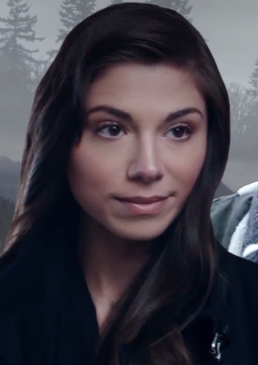
Head Over Feet comes from Alanis Morissette’s massive breakout album Jagged Little Pill – at the time, the highest-selling debut by a female artist, with over 30 million copies sold worldwide. Billboard later named it the best-selling pop album of the 1990s. Given the album’s impact and Morissette’s sudden rise to global fame, the music video for Head Over Feet – a single, unbroken close-up of her face – was far from being considered “cheap.” In fact, her face alone carried more presence and magnetism than any high-budget, special effects-laden video could hope to achieve. It only added to her cool, unflinching authenticity.

[Verse 1]
I had no choice but to hear you
You stated your case, time and again
I thought about it
You treat me like I’m a princess
I’m not used to liking that
You ask how my day was

[Chorus]
You’ve already won me over
In spite of me
And don’t be alarmed if I fall
Head over feet
And don’t be surprised if I love you
For all that you are
I couldn’t help it
It’s all your fault

[Verse 2]
Your love is thick
And it swallowed me whole
You’re so much braver
Than I gave you credit for
That’s not lip service

[Chorus]

[Verse 3]
You are the bearer
Of unconditional things
You held your breath
And the door for me
Thanks for your patience

[Verse 4]
You’re the best listener
That I’ve ever met
You’re my best friend
Best friend with benefits
What took me so long?
I’ve never felt this healthy before
I’ve never wanted something rational
I am aware now, oh
I am aware now

[Chorus]

[Outro]
I couldn’t help it
It’s all your fault

References:
1. Head Over Feet – Wikipedia

Tagged with: , ,
Posted in Music

Pretty Little Baby (1962) – Connie Francis

“I had to listen to it to remember. To think that a song I recorded 63 years ago is touching the hearts of millions of people is truly awesome. It is an amazing feeling.”

I was shocked to learn, while researching this article, that Connie Francis passed away on Wednesday, July 16th. How I missed this very sad news in my usual news feeds is anyone’s guess. Connie had been receiving treatment for pelvic pain due to a fracture, and during her hospital stay she was diagnosed with pneumonia and passed away on Wednesday night. The BBC article I found about her passing also mentions how today’s song became a viral hit online in May – that’s actually how my daughter discovered it and then shared it with me. So, to pay tribute to the shining light and enigma that was Connie Francis, here is Pretty Little Baby.

If any song captures the sweet charm of young love and the youthful sparkle of Connie Francis herself, Pretty Little Baby surely does. After my daughter sent me this song, I sent her back another Connie tune I wrote about here not long ago – My Happiness. That article dives more into her early career and rise to fame. But this piece focuses more on her struggles later in life – stories that are not easy to read, especially when you think about how she managed to keep going right up to the grand old age of 87.

Roll back a couple of decades and I could never have imagined myself enjoying these kinds of old-school, easy-listening pop songs. But getting older has a way of softening us, making us nostalgic for simpler times. Take now for example, I don’t like when people abuse language and create pseudo realities, I prefer when Connie sings: Don’t you know it’s much more fun to love / While the heart is young and gay? Pretty Little Baby is almost like a lullaby. I love the way Connie’s voice wraps around you – so warm and comforting, like something you want to just curl up with.

Just last month Francis said she had been surprised by the sudden success of a track that had originally been a b-side. “To tell you the truth, I didn’t even remember the song!” she told People magazine. She also said, “What’s viral? What’s that?Pretty Little Baby was one of the 40 songs the 24 year-old Connie Francis had recorded during several recording sessions at MGM Records over four days in August 1961. The song was included in her 1962 album Connie Francis Sings Second Hand Love & Other Hits.

Connie’s fame faded a bit during the mid-1960s as acts like The Beatles and Bob Dylan took over the charts. She also lost her voice temporarily following nasal surgery. In 1974, she made a comeback performance in New York – but that same night, she was beaten and raped at knife point in her motel room. Deeply traumatised, she withdrew from the spotlight and spent time in psychiatric care – some of it, she later claimed, was forced upon her by her father. At her lowest, she even attempted to take her own life. Yet somehow, she returned to music in 1989, resumed recording, and continued singing to sold-out audiences well into her seventies.

[Intro]
Pretty little baby (Yah, yah)

[Verse]
Pretty little baby, you say that maybe
You’ll be thinkin’ of me, and try to love me
Pretty little baby, I’m hoping that you do
You can ask the flowers, I sit for hours
Tellin’ all the bluebirds, the bill and coo birds
Pretty little baby, I’m so in love with you

[Pre-Chorus]
Now is just the time, while both of us are young
Puppy love must have its day
Don’t you know it’s much more fun to love
While the heart is young and gay?

[Chorus]
Meet me at the car hop, or at the pop shop
Meet me in the moonlight, or in the daylight
Pretty little baby, I’m so in love with you

References:
1. Connie Francis: Pretty Little Baby singer dies at 87 – BBC News
2. Pretty Little Baby (Connie Francis song) – Wikipedia

Tagged with: , ,
Posted in Music

It’s All Over Now, Baby Blue (1965) – Bob Dylan

Is there a cooler album cover? I seriously doubt it. Sally Grossman – wife of Dylan’s manager Albert Grossman – reclines in the background with effortless poise, her striking red dress and enigmatic gaze oozing both kitsch and timeless class. Photographer Daniel Kramer took 10 shots in total and the final one was chosen since it was the only one where the cat was looking at the lens.

Today is not the first time It’s All Over Now, Baby Blue has appeared here. I first mentioned it when Dylan and Donovan confronted each other for a famous folk duel in the D. A. Pennebaker documentary Don’t Look Back of Dylan’s 1965 concert tour of England. Both left the ‘ol’ corral’ as victors to my mind as Donovan sang To Sing For You and Dylan – Baby Blue. Another time I cited Dylan’s Baby Blue was in the article on Badfinger’s Baby Blue where there do seem some lyrical and melodic overlaps.

You know, I might not always reach for Dylan’s It’s All Over Now, Baby Blue ahead of some other gems from that legendary period – but when I do take a moment to sit down, be present, and really listen, there are few songs I relish more. The way Dylan weaves his wordplay and the lyrical imagery envelopes my senses completely.

The song was released on the 1965 Bringing It All Back Home, the first of the trilogy of albums (Highway 61 Revisited and Blonde on Blonde) that would change the landscape of contemporary music forever.

Most of the following was abridged from the Wikipedia article below:
The lyrics were heavily influenced by Symbolist poetry (seeking to represent absolute truths symbolically through language and metaphorical images) and bid farewell to the titular “Baby Blue“. Lines such as “take what you have gathered from coincidence” reflect the I Ching philosophy that coincidence represents more than mere chance.
There has been much speculation about the real life identity of “Baby Blue“, with possibilities including Joan Baez, David Blue, Paul Clayton, Dylan’s folk music audience, and even Dylan himself. Although Dylan himself has remained mute on the subject, Dylan scholars believe that it is probably an amalgam of personalities within Dylan’s social orbit.

The master take of the song was recorded on January 15, 1965 (9 years to the day prior to my birthday. Hurrah!). The track which concludes the album, was recorded on the same day Dylan recorded the other three songs on side 2 of the album: Mr. Tambourine Man, Gates of Eden and It’s Alright, Ma (I’m Only Bleeding).

Notable Covers

[Verse 1]
You must leave now, take what you need, you think will last
But whatever you wish to keep, you better grab it fast
Yonder stands your orphan with his gun
Crying like a fire in the sun
Look out, the saints are coming through
And it’s all over now, Baby Blue

[Verse 2]
The highway is for gamblers, better use your sense
Take what you have gathered from coincidence
The empty-handed painter from your streets
Is drawing crazy patterns on your sheets
The sky, too, is folding under you
And it’s all over now, Baby Blue

[Verse 3]
All your seasick sailors, they are rowing home
Your empty-handed armies are going home
Your lover, who just walked out the door
Has taken all his blankets from the floor
The carpet, too, is moving under you
And it’s all over now, Baby Blue

[Verse 4]
Leave your stepping stones behind, there’s something that calls for you
Forget the dead you’ve left, they will not follow you
The vagabond who’s rapping at your door
Is standing in the clothes that you once wore
Strike another match, go start anew
And it’s all over now, Baby Blue

References:
1. It’s All Over Now, Baby Blue – Wikipedia

Tagged with: , ,
Posted in Music

In Between Days (1985) – The Cure

Perky song to get your Saturday off and running, folks.

My favourite aspect of In Between Days by The Cure – as well as their two other tracks – Pictures of You and Friday I’m in Love – is the distinctive instrumental work, particularly the reverb-laden and rollicking guitar sound that Robert Smith conjures. It’s as though there is an urgency in his playing and he achieves a tone so singular and textured, it feels like he could’ve trademarked it. It’s instantly recognisable here – quirky, melancholic, and melodic all at once. Anyhows, In Between Days caps off the trilogy of songs from the Cure in my music project.

The following was abridged from the Wikipedia article below:
In Between Days is the first single from The Cure’s sixth album The Head on the Door. In the UK it was their 4th consecutive top 20 hit and was their first to reach the top 100 in the US Billboard peaking at 99. In Australia and New Zealand it also reached the top 20. Moreover, In Between Days is widely regarded as one of the Cure’s best songs. Billboard ranked it No. 3 on their list of the 40 greatest Cure songs.

The creator of the music video below Tim Pope said “I think Robert is a true English eccentric, you see. He’s an absolute nutcase; he’s absolutely mad. Therefore, the films are very easy because I just do a close-up of his face and let him go a bit mad.” Smith has stated that it was one of his favourite Cure videos, feeling “it captures the song“, saying “We wanted to make a video that portrayed us as we are, without looking glamorous or anything, because I got very fed up with seeing people strutting and preening in videos. I think it’s the most tedious thing in the world, seeing the same people with different faces“.

[Verse 1]
Yesterday, I got so old
I felt like I could die
Yesterday, I got so old
It made me want to cry

[Pre-Chorus 1]
Go on, go on, just walk away
Go on, go on, your choice is made
Go on, go on and disappear
Go on, go on, away from here

[Chorus]
And I know I was wrong
When I said it was true
That it couldn’t be me and be her
In between without you, without you

[Verse 2]
Yesterday, I got so scared
I shivered like a child
Yesterday, away from you
It froze me deep inside

[Pre-Chorus 2]
Come back, come back, don’t walk away
Come back, come back, come back today
Come back, come back, why can’t you see?
Come back, come back, come back to me

[Chorus]

References:
1. In Between Days – Wikipedia

Tagged with: , ,
Posted in Music

The Shape I’m In – The Band (The Last Waltz)

The Shape I’m In is a funky-pulsating rock ’n’ roll number – a standout (amongst standouts) from The Band’s legendary farewell concert, The Last Waltz. They certainly don’t make them like this anymore. Each member had a distinct yet perfect vocal for the material performed and in this case it was Richard Manuel. Robbie Robertson who wrote the song made no secret that the songs’ sense of dread and dissolution was about Richard. And Manuel’s vocal here sounds appropriately “frantic.”

The Shape I’m In became a regular feature of their concert repertoire. Robbie Robertson’s guitar playing and Garth Hudson’s organ here also deserve high praise. More over, it truly feels there was magic going on when this band played. Maybe it was appropriate that they were just called The Band. No other tag would have been right.

The Shape I’m In was first released on their 1970 album Stage Fright. The title track was presented here back in November, 2024 which also featured in The Last Waltz concert. The Shape was in fact the B-side of their song Time to Kill, but it proved more popular than the hit side. Although I’ve only just heard the A-side for the first time, I found it a humdinger as well and just added it to my music library project.

Richard George Manuel (April 3, 1943 – March 4, 1986) was a Canadian musician, best known as a pianist and one of three lead singers in the Band, for which he was posthumously inducted into the Rock and Roll Hall of Fame in 1994.
For aficionados of The Band and music biographies in general the first official biography of Richard Manuel, Richard Manuel: His Life and Music, from the Hawks and Bob Dylan to The Band has just arrived to audiences which you can seek out now.

[Verse 1]
Go out yonder, peace in the valley
Come downtown, have to rumble in the alley
Oh, you don’t know the shape I’m in

[Verse 2]
Has anybody seen my lady?
This livin’ alone would drive me crazy
Oh, you don’t know the shape I’m in

[Bridge]
I’m gonna go down by the water
But I ain’t gonna jump in, no, no
I’ll just be lookin’ for my maker
And I hear that that’s where she’s been

[Verse 3]
Oh, out of nine lives, I spent seven
Now how in the world do you get to Heaven?
Oh, you don’t know the shape I’m in

[Bridge]
I’ve just spent sixty days in the jail house
For the crime of having no dough, no, no
Now here I am back out on the street
For the crime of having nowhere to go

[Verse 4]
Save your neck or save your brother
Looks like it’s one or the other
Oh, you don’t know the shape I’m in

[Verse 5]
Now two young kids might start a ruckus
You know, they feel you’re tryin’ to shuck us
Oh, you don’t know the shape I’m in

References:
1. The Shape I’m In (The Band song) – Wikipedia
2. Richard Manuel – Wikipedia

Tagged with: , , ,
Posted in Music

Kintsugi (2023) – Lana Del Rey

I dig how Lana caresses this song with her voice, letting it drift like a breeze through open windows. Kintsugi is a deeply heartfelt lament on death and the aching path of grief. As Lana put it ‘the idea of falling apart and rebuilding one’s life back‘. In Kintsugi, Lana sings about family members of hers who’ve passed away and how their deaths affected her and how she was able to work through her grief.

It speaks to the acceptance that, at times, you must delve deep into your broken heart and discover that the very cracks may be the conduit through which light enters. And the chorus here ‘That’s how the light shines in’ seems to be a homage to Leonard Cohen’s – Anthem where he sings – There is a crack in everything / That’s how the light gets in.

Kintsugi is about finding peace in the acceptance that life outside the cocoon of death and inner turmoil carries on as usual – even as you navigate the grief and the haunting memories of witnessing someone in their final hours. Yet, despite the pain of losing a loved one, you must carry on, holding onto the quiet knowledge that there is always a light to guide you out of the quagmire of sorrow.

Lana refers to this light as Kintsugi:

Brought by the sunlight of the spirit to pour into me
There’s a name for it in Japanese, it’s “Kintsugi”

Kintsugi is literally the Japanese art of repairing broking pottery without trying to disguise that the fact that the pottery was broken. It dates all the way back to the 15th century and it treats cracks and breakages in pottery by filling them with liquid gold, silver or platinum. 

Speaking to Rolling Stone UK, Lana said: “‘Kintsugi’ I started writing naturally when my sister and my dad and I were at my great uncle Dick’s hospice in Manhattan Beach with all 50 of the Grant members.” She then added: “Almost don’t need to explain that metaphor to the idea of falling apart and rebuilding one’s life back even more beautifully.

Then you have her reference to the old English-language folk song “Froggie Came A-Courtin'” which made its first appearance in Scotland in 1549. You can find Dylan’s version here. This folk song must have been revived in the 40’s as Lana sings – They sang folk songs from the ’40s which her relatives must have sang in her youth and she still sings. And Lana ponders – I don’t know anyone left who knows songs that I sing.

Kintsugi is from Lana Del Rey’s 9th studio album – Did You Know That There’s a Tunnel Under Ocean Blvd. Commercially, the album topped the record charts in eight countries and reached the top-five in over 20 countries, including the United States, where it peaked at number three on the US Billboard. It is described as an Americana and alt-pop album. More songs will be presented here from this album. Thanks for reading.  

[Verse 1]
There’s a certain point the body can’t come back from
In one year, we’ve learned the turn of the mouth
The depth that the chest cavity takes
Chucky was there for three out of three
I was there for the third ’cause I couldn’t be
There for the one who was closest to me
But I can’t say I run when things get hard
It’s just that I don’t trust myself with my heart
But I’ve had to let it break a little more
‘Cause they say that’s what it’s for

[Chorus]
That’s how the light shines in
That’s how the light gets in (Mm-mm)

[Verse 2]
So everyone was there, they were standin’, laughin’
And I’m on the side with my tears streamin’ down
There’s somethin’ about the clutch of the wrist
He thought mine was his to cough into his mouth
We’ve only got hours
And I just can’t stop cryin’ ’cause all of the ways
When you see someone dyin’
The sea of your days flash in front of you
And you think about who would be with you
And then there’s Donoghue

[Bridge 1]
Daddy, I miss them
I’m in the mountains
I’m probably runnin’ away from the feelings I get
When I think all the things about them
Daddy, I miss them
I’m at the Roadrunner Café
I’m probably runnin’ away from the thoughts in the day
That have things to do with them, but they say

[Chorus]

[Verse 3]
Think by the third of March, I was cracked open
Finally, the ground was cold, they wouldn’t open
Brought by the sunlight of the spirit to pour into me
There’s a name for it in Japanese, it’s “Kintsugi”
They sang folk songs from the ’40s
Even the fourteen-year-old knew “Froggie Came A-Courtin'”
How do my blood relatives know all of these songs?
I don’t know anyone left who knows songs that I sing

[Chorus]

[Bridge 2]
But, Daddy, I miss them
I’m at the Roadrunner Café
Probably runnin’ away from the feelings today
In the snow-capped mountains of the desert
Daddy, I miss them
I’m in the mountains
Probably runnin’ away, I’ve been meaning to say
That there’s nothing to do except know that this is

[Outro]
How the light gets in
By cracking, the light gets in
It’s how the light gets in
That’s how the light gets in
Then you’re golden, ah-ah-ah
Ah-ah-ah, ah-ah
Just another folk song, but anyway
I try so hard, but that’s okay
It’s how the light gets in

References:
1. Lana Del Rey explains the emotional meaning behind her Kintsugi lyrics – Capital FM
2. Did You Know That There’s a Tunnel Under Ocean Blvd – Wikipedia

Tagged with: , ,
Posted in Music

The Safety Dance (1982) – Men Without Hats

I’ve been looking forward to writing about today’s featured track from the Canadian group Men Without Hats for a long time – it’s easily one of my favourite synth-pop songs, although I’m not a huge fan of the genre. But this song has always intrigued me. It leaps out at you from the very first note with those pounding synths – there’s no escape! I also adore the quirky, sassy vibe of the English Folk revival imagery in the video; it never fails to raise a smile. Honestly, there are few songs I find as irresistibly catchy and flat-out fun as The Safety Dance. I must’ve heard it over a hundred times by now, and it still gives me just as much of a kick as the first listen. Like another synth-pop gem I treasure – Only You by Alison Moyet – my love for The Safety Dance has never faded.

Most of the following information is condensed from the Wikipedia reference below:

The Safety Dance was released as the second single from the Men Without Hats second album. The song was written by the American-born Canadian musician lead singer Ivan Doroschuk after he had been ejected from a club for pogo dancing. In case you were wondering like I was, pogo dancing is where dancers jump up and down, while either remaining on the spot or moving around resembling a pogo stick. It is most associated with punk rock and is a precursor to moshing. Apart from today’s track, Ivan Doroschuk is also known for Pop Goes the World.

Ivan Doroschuk explained that The Safety Dance is a protest against bouncers prohibiting dancers from pogoing to 1980s new wave music in clubs when disco was declining and new wave was beginning its popularity. Clubgoers doing the newer pogo dance were perceived as posing a danger to disco dancers on the dance floor, and so club bouncers would tell pogoers to stop or be kicked out of the club. Thus, the song is a protest and a call for freedom of expression.

The Safety Dance became a bigger hit for the Canadian group in the US than at home reaching No. 3 on the US Billboard and peaking at No. 11 in Canada. The Safety Dance found similar success in other parts of the world, reaching No. 6 in the UK and No. 5 in Australia. The song has been inducted into the Canadian Songwriters Hall of Fame.

The music video for the song is notable for its British folk revival imagery, featuring Morris dancers, Mummers, Punch and Judy and a maypole. It was filmed in the village of West Kington in Wiltshire, England. Ivan Doroschuk is the only member of the band actually to perform in the video. Doroschuk, and others in the video, can be seen repeatedly forming an “S” sign by jerking both arms into a stiff pose, one arm in an upward curve and the other in a downward curve, apparently referring to the first letter in “safety”. The Morris dancers seen in the video were the Chippenham Town Morris Men. The little person actor is Mike Edmonds whose T-shirt in the video shows the Rhythm of Youth album cover. The identity of the blonde-haired woman by the name of Jenny seen dancing in the video remained unknown until 2013 when she was identified as Louise Court a journalist who was editor-in-chief at Cosmopolitan and became a director at Hearst Magazines UK in 2015.

[Verse 1]
We can dance if we want to
We can leave your friends behind
‘Cause your friends don’t dance
And if they don’t dance
Well they’re no friends of mine
I say, we can go where we want to
A place where they’ll never find
And we can act like we come from out of this world
Leave the real one far behind
We can dance (Danser)

[Verse 2]
We can go where we want to
The night is young and so am I
And we can dress real neat
From our hats to our feet
And surprise ’em with a victory cry
I say, we can act if we want to
If we don’t, nobody will
And you can act real rude
And totally removed
And I can act like an imbecile

[Chorus]
I say, we can dance, we can dance
Everything is out of control
We can dance, we can dance
We’re doing it from pole to pole
We can dance, we can dance
Everybody look at your hands
We can dance, we can dance
Everybody’s taking the chance

[Post-Chorus]
Safe to dance, well, it’s safe to dance
Yes, it’s safe to dance

[Verse 3]
We can dance if we want to
We’ve got all your life and mine
As long as we abuse it, never gonna lose it
Everything will work out right
I say, We can dance if we want to
We can leave your friends behind
‘Cause your friends don’t dance
And if they don’t dance
Well they’re no friends of mine

[Chorus]

References:
1. The Safety Dance – Wikipedia

Tagged with: , ,
Posted in Music

The Rose (1979) – Bette Midler

Most of the following information is condensed from the two Wikipedia references listed below:

The Rose by Bette Midler is one of the first heartfelt ballads I remember hearing. I didn’t mind it receiving so much air play, since it made such a striking impression each time. The Rose is also the title track to a movie (see image above) which stars Midler in her film debut and earned her an Oscar nomination. Her character The Rose is loosely based on blues singer Janis Joplin.

The song plays during the closing credits, although it wasn’t written for the movie. The writer Amanda McBroom recalled, ‘I wrote it in 1977 [or] 1978, and I sang it occasionally in clubs‘. Her manager suggested that she write “some Bob Seger-type tunes” to expedite a record deal. McBroom obliged, penning The Rose in just 45 minutes – a remarkable feat given the song’s lyrical beauty.

The song is one verse musically repeated three times. McBroom comments: “When I finished it, I realized it doesn’t have a bridge or a hook, but I couldn’t think of anything to put in there.” McBroom believes the song struck a universal nerve because “It’s a message of hope that’s very easily understandable“.

McBroom’s composition was one of seven songs selected by Midler from thirty song possibilities proffered by Paul A. Rothchild, the producer of The Rose soundtrack album. Reportedly Rothchild had listened to over 3,000 songs in order to assemble those thirty possibilities. Amanda McBroom did provide harmony vocals on the released version.

Released as the second single from the soundtrack, The Rose hit number 3 on the Billboard, becoming Midler’s second top 10. Midler won the Grammy Award for Best Female Pop Vocal Performance for The Rose, beating out formidable competition from Barbra Streisand and Donna Summer among others. The song did not receive a nomination for the Academy Award for Best Original Song because the song had not been written for the film, but it did win the Golden Globe. The first single from the soundtrack was Midler’s rendition of Percy Sledge’s When a Man Loves a Woman which became a moderate chart hit reaching No. 35 on the Billboard.

Midler began her professional career in several off-off-Broadway plays, prior to working on Broadway in Fiddler on the Roof and Salvation in the late 1960s. Since 1970, Midler has released 14 studio albums as a solo artist, selling over 30 million records worldwide. Many of her songs which became chart hits, include her renditions of The Rose, Wind Beneath My Wings, Do You Want to Dance, Boogie Woogie Bugle Boy, and From a Distance. She also went on to star in numerous films, including Ruthless People (1986), Outrageous Fortune (1987), Beaches (1988), Hocus Pocus (1993) and The First Wives Club (1996).

P.S – Another version of The Rose I’ve always been fond of is from the English musical singer and actress – Elaine Paige. Her rendition always wow’d me and her expressions and manner of delivery are simply first class.

[Verse 1]
Some say love, it is a river
That drowns the tender reed
Some say love, it is a razor
That leaves your soul to bleed
Some say love, it is a hunger
An endless aching need
I say love, it is a flower
And you, its only seed

[Verse 2]
It’s the heart, afraid of breaking
That never learns to dance
It’s the dream, afraid of waking
That never takes the chance
It’s the one who won’t be taken
Who cannot seem to give
And the soul, afraid of dying
That never learns to live

[Verse 3]
When the night has been too lonely
And the road has been too long
And you think that love is only
For the lucky and the strong
Just remember in the winter
Far beneath the bitter snows
Lies the seed that with the sun’s love
In the spring becomes the rose

References:
1. The Rose (song) – Wikipedia
2. Bette Midler – Wikipedia

Tagged with: , , ,
Posted in Music

7/7/25 – 13/7/25 – David Gilmour, Christina Perri & Moneyball

news on the march

Welcome to Monday’s News on the March – The week that was in my digital world.

David Gilmour – Desert Island Discs
Audio interview at BBC Sounds

This fascinating interview with David Gilmour is a must-listen for fans of Pink Floyd – or heck, for anyone into contemporary music. It’s a rare treat too, as his reflections on both his career and personal life are woven together with tracks from his Desert Island music list, featuring legends like Bob Dylan, Leonard Cohen, Tom Waits, Neil Young, and Joni Mitchell. It was an added bonus for me personally – I got reacquainted with a couple of gems that had slipped off my radar, like Young’s A Man Needs a Maid and Mitchell’s For Free. Plus, I heard Waits’ hauntingly beautiful I’m Still Here for the first time, and I’m genuinely grateful for that.

Christina Perri – Blue
Live music presentation at The Song TV

This was originally going to be about an interview that Perri gave recently about her life and hardships. However, that interview no longer seems to be available, so I opted instead for this recent live performance of one of my favourite Christina Perri songs, Blue, which genuinely floored me. I wrote about the original studio Blue back in February, 2023. In it she sings:

‘Cause the blue of my mother has always been my color
The love that I offer is deep and out of tune

Blue is, without exaggeration, one of the most beautifully written and performed songs I’ve encountered. It carries a depth and emotional nuance that Perri’s chart-topping A Thousand Years lacks. Her rendition here eclipses the original studio version IMHO. As long-time readers of this blog will know, Christina Perri remains my favourite female singer-songwriter. I continue to await a new album with great anticipation – her last release, Lighter Shade of Blue, stands as the most moving and cohesive collection of love ballads I’ve ever had the privilege to hear.

What the ACTUAL 2002 A’s thought of Moneyball?
Video interviews at Brodie Brazil

One of my favourite sporting movies is Moneyball and remains at No 47 on my 100 favourite movies list. It’s about the adaption of innovative saber-metrics at Oakland Athletics (A’s) during the 2002 season which changed how the game of baseball is managed by baseball heads, scouts and insiders.

Today’s featured video presents what some actual 2002 A’s thought about the movie adaption including its accuracy, character portrayals or what it ignored.

I still consider Moneyball a great movie, even if it is loose and fast with the facts. All movies need drama, villains, character development and a story-arc. Despite all this, the movie is still recognised as having some of the best attention to detail (depiction of the era and setting), acting and writing (Michael Lewis) of any sports movie.

That is all. Thank you for reading.

Tagged with: , , , , , , ,
Posted in Movies and TV, Music, News, Sport and Adventure

The River (1979) – Bruce Springsteen

The River is certainly one of Bruce Springsteen’s best known and most impactful songs, and one that many fans still hold especially dear among his vast catalogue. It is a haunting American coming-of-age tale that follows a young couple struggling to find their footing as the weight of adulthood bears down. Faced with an unplanned pregnancy and economic hardship, their youthful dreams begin to fade beneath the grind of blue-collar life. The river itself is a place of romance, and escape but becomes just memory, where the present feels hollow.

The song is so relatable. Its story and characters reflect experiences that many listeners have lived through themselves – or have witnessed in the lives of people close to them. In his 2016 autobiography Springsteen confirmed that he wrote the song as a tribute to his sister and his brother-in-law. More about that below:

The following was condensed from the Wikipedia reference below:
The River is the title track of Springsteen’s 5th studio album. The single wasn’t released in the US, but it did see release in several Western European countries. The single’s B side was either Independence Day or Ramrod, depending on the country of release. The song itself was recorded at The Power Station in New York City.

In the first live performance of the song in 1979, Springsteen cited the inspiration as “my brother-in-law and my sister“. The 2012 biography Bruce by Peter Ames Carlin includes an interview with Springsteen’s sister Ginny, in which she plainly states that the song is a precise description of her early life with her husband Mickey, to whom she is still married.

The River makes use of a haunting harmonica part, and in some ways is a foreshadowing of the style of his next album, Nebraska. The imagery of the chorus and the end of the song were inspired by lines from Hank Williams’ 1950 hit Long Gone Lonesome Blues. In the U.S., it gained considerable airplay and became one of Springsteen’s best-known songs. It became a centrepiece of shows on some Springsteen tours, including the 1984–85 Born in the U.S.A. Tour, where it was often preceded by a long, intense story from Springsteen about his battles with his father growing up.
The song has been performed almost 700 times as of 2023.

In 2018, Rolling Stone ranked the song number 5 on their list of the 100 greatest Bruce Springsteen songs.

[Verse 1]
I come from down in the valley
Where, mister, when you’re young
They bring you up to do
Like your daddy done
Me and Mary, we met in high school
When she was just seventeen
We’d drive out of this valley
Down to where the fields were green


[Chorus]
We’d go down to the river
And into the river we’d dive
Oh, down to the river we’d ride


[Verse 2]
Then I got Mary pregnant
And, man, that was all she wrote
And for my nineteenth birthday
I got a union card and a wedding coat
We went down to the courthouse
And the judge put it all to rest
No wedding day smiles, no walk down the aisle
No flowers, no wedding dress


[Chorus]

[Verse 3]
I got a job working construction
For the Johnstown Company
But lately, there ain’t been much work
On account of the economy
Now all them things that seemed so important
Well, mister, they vanished right into the air
Now I just act like I don’t remember
And Mary acts like she don’t care


[Verse 4]
But I remember us riding in my brother’s car
Her body tanned and wet down at the reservoir
At night on them banks, I’d lie awake
And pull her close just to feel each breath she’d take
Now those memories come back to haunt me
They haunt me like a curse
Is a dream a lie if it don’t come true?
Or is it something worse?


[Chorus]

References:
1. The River (Bruce Springsteen song) – Wikipedia

Tagged with: ,
Posted in Music

Follow Blog via Email

Enter your email address to follow this blog and receive notifications of new posts by email.

Join 777 other subscribers

← Back

Thank you for your response. ✨