Indiana Road (1987) – Fred Eaglesmith

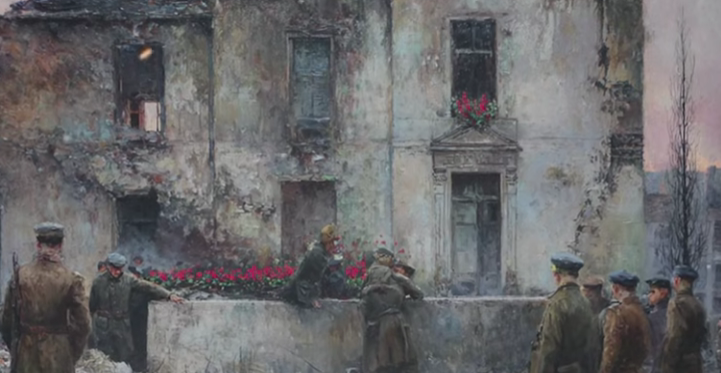
I first heard Indiana Road through Christian’s post The Sunday Six in February 2025. It stopped me in my tracks. This is pure country-rock storytelling – long, slow-burning, and unapologetically rough around the edges.

The song tells the story of a Canadian farmer and his partner living through hard times. A government official turns up and tells them they must leave their land so it can be turned into a holiday park. The narrator pushes back, threatening to meet the man with a gun in his hand out on Indiana Road. But the confrontation never happens. The official backs away, saying he won’t sink that low. What’s left is the fallout: the farmer’s partner heads back to Calgary to be with her family, and in time she disappears from his life altogether. The narrator ends up alone, drifting into a kind of self-imposed exile.

Indiana Road reminds me of the long-form songs Neil Young would later return to – Ramada Inn and Clementine come to mind – especially in the vocal delivery, the story-telling and melody. What’s striking is that Eaglesmith did this years earlier. The music in Indiana Road is raw and biting and the instruments grind and scrape along with the story, matching the anger and frustration in the lyrics.

Eaglesmith is described as an alternative country songwriter, and that label fits here. Indiana Road, the title track of his third album, touches on many themes he returns to again and again: rural life, old vehicles, people on the fringe, love that slips away, and lives shaped by bad luck and hard choices. Eaglesmith, one of nine children, was raised by a farming family near Guelph in rural Southern Ontario. He began playing the guitar at age 12.

Well me and the girl we had a little farm south of the river road
A little single shack and some cattle in the barn and we grew our own food
Didn’t have any money, but it never crossed our minds
We grew to share and we were happy there just watching the years go by
Until one day I come home there was a big black car parked out by my backdoor
And a government man with a fat cigar said we couldn’t live there anymore
Said they’d pay us for the land but never for the work we did
And they were gonna turn it in to a holiday park and a drag-strip for the kids

I told him, I would meet him on the Indiana road with a gun in my hand but he never showed
Said he couldn’t bring himself to sink himself that low
I told him, I would meet him on the Indiana road with a gun in my hand but he never showed
He went back to Ottawa or Toronto or wherever it is they go

Well we wired ahead and the girl’s family said to come back to Calgary
We decided that she would go on back there without me
And I’ll never forget those tears in her eyes as I held her face in my hand
I turned around and I headed for town and I never looked back again

I told him, I would meet him on the Indiana road with a gun in my hand but he never showed
Said he couldn’t bring himself to sink himself that low
I told him, I would meet him on the Indiana road with a gun in my hand but he never showed
He went back to Ottawa or Toronto or wherever it is they go

Now I live in an old Ford van at the end of a dead end road
And the girl she stopped sending letters must be seven years or more
Me, I, spend a lot of time down on the Indiana ya know
And I draw a bead but there ain’t no need I don’t shoot anymore

I told him, I would meet him on the Indiana road with a gun in my hand but he never showed
Said he couldn’t bring himself to sink himself that low
I told him, I would meet him on the Indiana road with a gun in my hand but he never showed
He went back to Ottawa or Toronto or wherever it is they go

References:
1. Fred Eaglesmith – Wikipedia

Tagged with: ,
Posted in Music

Only a Pawn in Their Game (1963) – Bob Dylan

Live at the Newport Folk Festival – 1963

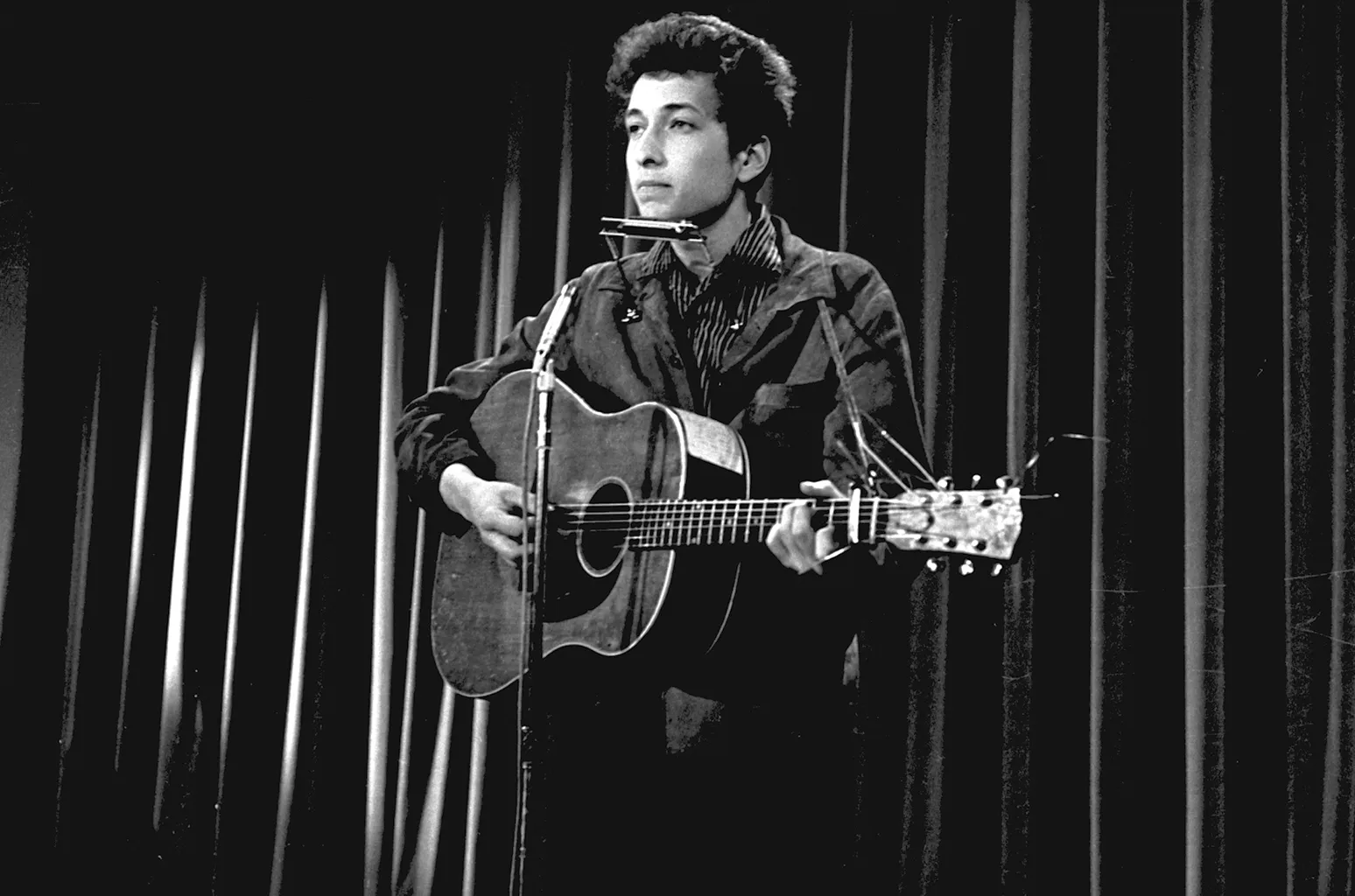
We return to one of Bob Dylan’s most impactful political songs, Only a Pawn in Their Game. You could be forgiven for thinking you’re listening to the gravelly voice of a world-weary old man, but Dylan was just 22 years old when he wrote it, calmly dissecting racism, class, and political blame.

The song was written in the summer of 1963, following the assassination of civil rights leader Medgar Evers on June 12, 1963. Its first major performance came at the Newport Folk Festival, July 26, 1963. Two other notable live performances are worth mentioning: its first public performance on July 6, 1963, when Dylan appeared at a voter registration rally in Greenwood, Mississippi, and later at the March on Washington on August 28, 1963.

Dylan included the song on The Times They Are A-Changin’, released in February 1964. There it sits alongside its thematic companion on Side Two, The Lonesome Death of Hattie Carroll, which Dylan wrote a few months later in October 1963. Together, the songs form the album’s moral backbone.

As a teenager, I was deeply immersed in Dylan’s music, and I could sense it shaping my outlook and values beyond the family bubble. These two songs stood out because they felt as real as music could get: they dealt with real people and real news, exposing injustice without softening the blow. This was Dylan openly aligning himself with African Americans during the Civil Rights Movement.

When he sang these songs, he sounded angry and affected. He wasn’t just performing lyrics; he was bearing witness. At times it felt closer to a eulogy or a sermon than a folk song. The music became secondary, almost spare by design, allowing the words to sit front and centre while everything else quietly fell into the background.

Lyrics (Wikipedia)

The lyrics attribute blame for the killing and other racial violence to the rich white politicians and authorities who manipulated poor whites into directing their anger and hatred at black people. The song suggests that Evers’s killer does not deserve to be remembered by name in the annals of history, unlike the man he murdered (“They lowered him down as a king”), because he was “only a pawn in their game.”.

The lyrics actually reiterate the claim that the murderer “can’t be blamed. He’s only a pawn in their game.” In fact, the state twice prosecuted the murderer in 1964, but each time the all white jury failed to reach a verdict. Dylan no longer played the song after October 1964. In 1969 the murderer had the original indictment dismissed. However, when these first trials were shown to be held unfairly and with new evidence available the murderer was eventually found guilty on February 5, 1994.

[Verse 1]
A bullet from the back of a bush took Medgar Evers’ blood
A finger fired the trigger to his name
A handle hid out in the dark
A hand set the spark
Two eyes took the aim
Behind a man’s brain
But he can’t be blamed
He’s only a pawn in their game

[Verse 2]
A south politician preaches to the poor white man
“You got more than the blacks, don’t complain
You’re better than them, you been born with white skin,” they explain
And the Negro’s name
Is used, it is plain
For the politician’s gain
As he rises to fame
And the poor white remains
On the caboose of the train
But it ain’t him to blame
He’s only a pawn in their game

[Verse 3]
The deputy sheriffs, the soldiers, the governors get paid
And the marshals and cops get the same
But the poor white man’s used in the hands of them all like a tool
He’s taught in his school
From the start by the rule
That the laws are with him
To protect his white skin
To keep up his hate
So he never thinks straight
‘Bout the shape that he’s in
But it ain’t him to blame
He’s only a pawn in their game

[Verse 4]
From the poverty shacks, he looks from the cracks to the tracks
And the hoof beats pound in his brain
And he’s taught how to walk in a pack
Shoot in the back, with his fist in a clinch
To hang and to lynch
To hide ‘neath the hood
To kill with no pain
Like a dog on a chain
He ain’t a-got no name
But it ain’t him to blame
He’s only a pawn in their game

[Verse 5]
Today, Medgar Evers was buried from the bullet he caught
They lowered him down as a king
But when the shadowy sun sets on the one that fired the gun
He’ll see by his grave
On the stone that remains
Carved next to his name
His epitaph plain
Only a pawn in their game

References:
1. Only a Pawn in Their Game – Wikipedia

Tagged with: , , ,
Posted in Music

Tienes Que Darle Cuerda (2018) – Sergio de la Puente

Two years ago, almost to the day, I wrote about the soundtrack to the Spanish film Sin Fin (Not the End), composed by Sergio de la Puente (pictured inset). As part of my ongoing Music Library Project, my favourite track from that score – Tienes Que Darle Cuerda (“You Have to Wind It Up”) – comes up in the alphabetical order listing – so here we are today.

IMDb storyline:
Javier travels back in time to rewrite his last date with María, the love of his life. By revisiting the moment they first met, he hopes to restore the happiness she once had – and in doing so, to fall in love with her all over again.

The trailer (linked here) works nicely as an appetiser – there are no subtitles, but you quickly get a feel for the mood, characters, and emotional stakes before turning to the music itself. Tienes Que Darle Cuerda is a quietly stunning romantic piece. It builds patiently, like a great dam holding back emotion, before finally gushing open near the end, only to return to where it began. It’s a piece I can play on repeat – no problem. My only criticism is it is about 3 minutes too short. All the more baffling, then, that at the time of writing it has attracted just 1,500 views on YouTube.
If you like Tienes Que Darle Cuerda, you can also listen to another lovely piece below which draws on the same melody but more guitar format and unfolds at a slower tempo, titled Dame un Día (Give Me a Day).


Sergio de la Puente is a Spanish composer best known for his work in film and television. He began his musical career as a guitarist and producer before moving into composition, where he developed a strong interest in atmospheric and emotional storytelling through music. His scores often blend orchestral textures with subtle electronic elements, focusing more on mood and feeling than overt spectacle. De la Puente has composed music for a wide range of Spanish films, series, and documentaries, with Sin Fin standing out as one of his most emotionally restrained and intimate works.

References:
1. Sergio de la Puente – Wikipedia

Tagged with: , , ,
Posted in Music

1973 (2007) – James Blunt

1973 is an unusual but easygoing pop song built around nostalgia. The English recording artist James Blunt looks back on his club-going days, remembering Saturday nights spent with his muse, Simona, as youth, music and time all ran together. I was hesitant to include it at first – it felt a little like James Blunt on autopilot – but the song has grown on me over the last year or so. Hearing it again this morning, I caught myself singing along and it has a warmth that sneaks up on you. Fittingly, given the title, there’s a slightly retro feel to the groove, capturing the late night boogying, and staying out until the early hours.

1973 is also not a typical Blunt song. There’s no big, high-pitched power ballad here, and none of the bathroom sobbing of Goodbye My Lover. Instead, 1973 moves along at an upbeat but relaxed pace, with a reflective tone rather than a sad one. The song looks back on the years that have passed and quietly acknowledges how time changes us. The Saturday-night girl no longer seems to be part of his life, as Blunt admits: “Simona, I guess it’s over / My memory plays our tune / The same old song.” It feels less like heartbreak and more like accepting that those days are now in the past.

The following was abridged from the Wikipedia article below:

1973 was released as the lead single (see inset) from his second studio album, All the Lost Souls (2007). The single peaked at number four on the UK Singles Chart. It was written by James Blunt and Mark Batson. “He was trying to write an English singer-songwriter song, and I was trying the Dr. Dre end of the scale“, says Blunt. The song was inspired by the club scene in Ibiza (a Spanish island in the Mediterranean Sea), where Blunt maintains a residence and enjoys the social scene.

The video below (directed by Paul R Brown), in which a modern-day Blunt strolls among ’70s street scenes, reflects the song’s nostalgic tone. “The ’70s sound like they were a time of excess and great flamboyance“, he says, “but a sense of fun as well.” The video was shot in the Universal Studios Lot in Los Angeles.

[Verse 1]
Simona
You’re getting older
Your journey’s been
Etched on your skin
Simona
Wish I had known that
What seemed so strong
Has been and gone

[Chrous]
I would call you up every Saturday night
And we’d both stay out ’til the morning light
And we sang “Here we go again.”
And though time goes by
I will always be in a club with you in 1973
Singing “Here we go again.”

[Verse 2]
Simona
Wish I was sober
So I could see clearly now
The rain has gone
Simona
I guess it’s over
My memory plays our tune
The same old song

[Chorus]
I would call you up every Saturday night
And we’d both stay out ’til the morning light
And we sang “Here we go again.”
And though time goes by
I will always be in a club with you in 1973
Singing “Here we go again.”
I would call you up every Saturday night
And we’d both stay out ’til the morning light
And we sang “Here we go again.”
And though time goes by
I will always be in a club with you in 1973
Singing “Here we go again.”
I would call you up every Saturday night
And we’d both stay out ’til the morning light
And we sang “Here we go again.”
And though time goes by
I will always be in a club with you in 1973
Singing “Here we go again.”

[Outro]
And though time goes by
I will always be in a club with you in 1973

References:
1. 1973 (Song) – James Blunt

Tagged with: , ,
Posted in Music

Annie’s Song (1974) – John Denver

I remember learning Annie’s Song on keyboard in my youth. I was completely swept up in it, and the melody never grew old to me. My favourite chords arrive in the second line – even now, when I sing it back, they still send chills down my spine, leaving me hanging in a state of wonder.

Annie’s Song is such a beautiful love song. It is sensorial and delicate, and its allusions to nature feel akin to a Robert Frost poem. Yet it is also fleeting – like a brush of wind – here one moment and gone the next, as if Annie herself has just passed us by: a silhouette in a white nightgown, moonlight glowing behind her. Denver paints her as an almost mystical figure of the forest, capturing the feminine spirit of nature as it envelops his own.

The following was abridged from the Wiipedia article below:
Denver wrote it as an ode to his first wife – Annie Martell Denver in January 1973. It was written in about ten-and-a-half minutes one day on a ski lift to the top of Aspen Mountain in Aspen, Colorado, as the physical exhilaration of having “just skied down a very difficult run” and the feeling of total immersion in the beauty of the colours and sounds that filled all senses inspired him to think about his wife.

Annie Denver recalls the beginnings: “It was written after John and I had gone through a pretty intense time together and things were pretty good for us. He left to go skiing and he got on the Ajax chair on Aspen mountain and the song just came to him. He skied down and came home and wrote it down… Initially it was a love song and it was given to me through him and yet for him it became a bit like a prayer.

Annie’s Song was released as the lead single from his eighth studio album Back Home Again and was his second number-one song in the United States, occupying that spot for two weeks in July 1974. The song also went to number one in the United Kingdom, where it was Denver’s only major hit single. 

[Chorus]
You fill up my senses, like a night in a forest
Like the mountains in springtime, like a walk in the rain
Like a storm in the desert, like a sleepy blue ocean
You fill up my senses, come fill me again

[Verse]
Come let me love you, let me give my life to you
Let me drown in your laughter, let me die in your arms
Let me lay down beside you, let me always be with you
Come let me love you, come love me again

(Let me give my life to you
Come let me love you, come love me again)

[Chorus]
You fill up my senses, like a night in a forest
Like the mountains in springtime, like a walk in the rain
Like a storm in the desert, like a sleepy blue ocean
You fill up my senses, come fill me again

References:
1. Annie’s Song – Wikipedia

Tagged with: , , ,
Posted in Music

Thunderstruck (1990) – AC/DC

Thunderstruck opens with one of the most recognisable riffs in hard rock history. It’s impossible to confuse with anything else. Add the chant – that tribal “ah-ah, ah-ah-ah” – and the song feels less like a track and more like a ritual. The video leans into that idea too, looking like a gathering at a heavy-metal temple. When it landed in 1990, it hit hard – winning over metal fans and casual listeners alike (yours truly included). Thunderstruck also brings my AC/DC trilogy in the music library project to a close, alongside Highway to Hell and It’s a Long Way to the Top.

Released as the lead single from The Razors Edge, Thunderstruck quickly became one of AC/DC’s signature songs. It remains the only song the band recorded in the 1990s that stayed permanently in their live setlists. On the charts, Thunderstruck reached the Top 30 in multiple countries and peaked at No. 5 in Australia. It is one of the best-selling singles of all time with over 15 million units sold. In Triple M’s Ozzest 100, celebrating the “most Australian” songs of all time, Thunderstruck was ranked at No. 8.

The song’s origin is tied to a real jolt of fear. During the 1988 Blow Up Your Video tour, Angus Young flew from Holland to Germany to rejoin the band for a Berlin show. Mid-flight, the small plane was struck by lightning. Young later said he thought he was going to die – and when he didn’t, the idea for “Thunderstruck” stuck with him.

Musically, it began with a guitar idea Angus had been working on. When he played it to Malcolm Young, Malcolm locked in a rhythm part that grounded the song. From there, the “thunder” theme took shape. As Angus later put it, the concept was simple: AC/DC equals power. In the studio, several takes were recorded, but the final version features Angus playing the famous lead part in one complete take – start to finish – according to longtime mixer Mike Fraser.

The music video, directed by David Mallet, was filmed live at London’s Brixton Academy on 17 August 1990. Fans were given free T-shirts reading “AC/DC – I Was Thunderstruck” on the front, with the date printed on the back. Every person in the crowd wore one, turning the performance into a unified wall of noise, sweat, and voltage exactly what the song promised.

[Verse 1]
I was caught in the middle of a railroad track (Thunder)
I looked ’round and I knew there was no turnin’ back (Thunder)
My mind raced and I thought, “What could I do?” (Thunder)
And I knew there was no help, no help from you (Thunder)
Sound of the drums beatin’ in my heart
The thunder of guns, yeah, tore me apart

[Refrain]
You’ve been
Thunderstruck

[Verse 2]
Went down the highway, broke the limit, we hit the town
Went through to Texas, yeah, Texas, and we had some fun
We met some girls, some dancers who gave a good time
Broke all the rules, played all the fools
Yeah, yeah, they, they, they blew our minds

[Pre-Chorus]
And I was shakin’ at the knees
Could I come again, please?
Yeah, the ladies were too kind

[Chorus]
You’ve been
Thunderstruck
Thunderstruck
Yeah, yeah, yeah, thunderstruck
Ooh, thunderstruck
Yeah

[Post-Chorus]
I was shakin’ at the knees
Could I come again, please? Yow

[Guitar Solo]

[Pre-Chorus]
Ooh, ah-ah, ah-ah-ah
Ah-ah, ah-ah-ah
Ah-ah, ah-ah-ah
Ah-ah, ah-ah-ah, yeah

[Chorus]
Ooh, thunderstruck
Thunderstruck
Yeah, yeah, yeah, thunderstruck
Thunderstruck
Yeah, yeah, yeah

[Bridge]
Said, yeah, it’s all right
We’re doin’ fine
Yeah, it’s all right
We’re doin’ fine, so fine

References:
1. Thunderstruck (song) – Wikipedia

Tagged with: , ,
Posted in Music

Move it on Over (1947) – Hank Williams

This cheeky little song from Hank is meant to get a chuckle. The writing is just so relatable, easy to just gel with, and if you pair it with the gospel number I Saw the Light, recorded at the same 1947 session, you get the full spread of Hank’s “good and bad” sides. You can also hear where Johnny Cash found a lot of his early inspiration. Hank’s voice is raw, direct country with a clear hillbilly edge.

The song follows a man who is forced to sleep in the doghouse after coming home late at night and not being allowed into his house by his wife. In many respects, the song typified Williams’ uncanny ability to express in a humorous way the aspects of everyday life that listeners could relate to – and rarely heard on the radio

Hank Williams and fellow country artist – Woody Guthrie (aiming more towards social-injustice) were huge influences on what came after, and it’s hard to overstate how much they shaped American music. On one side you had Johnny and Hank, and on the other Bob Dylan and Woody. By the mid-’60s Cash and Dylan had become so close and even worked together, each drawn to the other’s music and background.

But the groundwork had already been laid by those early giants – Hank Williams and Woody Guthrie. Their impact helped create not only the artists that followed but also the rise of musica Americana and the later folk-rock sound that groups like The Band (with Bob of course) carried forward.

The following is abridged from the Wikipedia article below:

Move It On Over was recorded on April 21, 1947 at Castle Studio in Nashville, Williams’ first session for MGM and the same session that produced “I Saw the Light,” “(Last Night) I Heard You Crying in Your Sleep,” and “Six More Miles to the Graveyard.” Nashville had no session men during this period, so producer Fred Rose hired Red Foley’s backing band, one of the sharpest around, to back Williams.

The song is considered one of the earliest examples of rock and roll music. Though many claim the song “Rock Around the Clock,” released in 1954 by Bill Haley & His Comets, was the first rock and roll single, it resembles “Move it On Over“, as both feature the same twelve-bar blues arrangement with a melody starting with three repetitions of an ascending arpeggio of the tonic chord, which Williams had partially derived from an old Mardi Gras riff, “Second Line.”

Move It on Over was Williams’ first major hit, reaching No. 4 on the Billboard Most Played Juke Box Folk Records chart and got him a write up in The Alabama Journal. The revenue generated by the song was the first serious money the singer had ever seen in his life.

[Verse 1]
Came in last night at a half past ten
That baby of mine wouldn’t let me in
So move it on over (Move it on over)
Move it on over (Move it on over)
Move over, little dog, ’cause the big dog’s movin in

[Verse 2]
She’s changed the lock on our front door
My door key don’t fit no more
So get it on over (Move it on over)
Scoot it on over (Move it on over)
Move over, skinny dog, ’cause the fat dog’s moving in

[Verse 3]
This doghouse here is mighty small
But it’s better than no house at all
So ease it on over (Move it on over)
Drag it on over (Move it on over)
Move over, old dog ’cause a new dog’s moving in

[Verse 4]
She told me not to play around
But I done let the deal go down
So pack it on over (Move it on over)
Tote it on over (Move it on over)
Move over, nice dog, ’cause a mad dog’s moving in

[Verse 5]
She warned me once, she warned me twice
But I don’t take no one’s advice
So scratch it on over (Move it on over)
Shake it on over (Move it on over)
Move over, short dog, ’cause a tall dog’s moving in

[Verse 6]
She’ll crawl back to me on her knees
I’ll be busy scratching fleas
So slide it on over (Move it on over)
Sneak it on over (Move it on over)
Move over, good dog, ’cause a mad dog’s moving in

[Verse 7]
Remember pup, before you whine
That side’s yours and this side’s mine
So shove it on over (Move it on over)
Sweep it on over (Move it on over)
Move over, cold dog ’cause a hot dog’s moving in

References:
1. Move It On Over (song) – Wikipedia

Tagged with: , , , , ,
Posted in Music

Má vlast (Fatherland) No. 2, Vltava (The Moldau) 1874 – Bedřich Smetana

Not long ago, we explored Jean Sibelius’s Finlandia. Now we turn to another work strongly tied to national identity – Má vlast (My Fatherland) by Czech composer Bedřich Smetana. He wrote the six symphonic poems that form this cycle between 1874 and 1879, during the years he was gradually losing his hearing. The six pieces each show something different about the Czech lands.

Today’s piece is No. 2, Vltava (The Moldau), the best-known of the bunch. When I first played it, the opening minute gave me a real jolt of recognition – I could have sworn I was hearing the end credits of The Remains of the Day (1993), which happens to sit at No. 2 on my 100 Favourite Movies list. The similarity is striking; try listening to both and see if you hear it too.

The following was abridged from the Wikipedia reference below:

The six pieces, conceived as individual works, are often presented and recorded as a single work in six movements. They premiered separately between 1875 and 1880. The complete set premiered on 5 November 1882 in Žofín Palace, Prague, under Adolf Čech.

The works have opened the Prague Spring International Music Festival, on the 12 May anniversary of the death of their composer, since 1952.


Vltava, also known by its English title The Moldau, and the German Die Moldau, was composed between 20 November and 8 December 1874 and was premiered on 4 April 1875 under Adolf Čech. It is about 13 minutes long, and is in the key of E minor. It is the best known of the poems, often performed separately from the full work.

In this piece, Smetana uses tone painting to evoke the sounds of one of Bohemia’s great rivers. In his own words:

Vltava

The composition describes the course of the Vltava, starting from the two small springs, the Studená and Teplá Vltava, to the unification of both streams into a single current, the course of the Vltava through woods and meadows, through landscapes where a farmer’s wedding is celebrated, the round dance of the mermaids in the night’s moonshine: on the nearby rocks loom proud castles, palaces and ruins aloft. The Vltava swirls into the St John’s Rapids; then it widens and flows toward Prague, past the Vyšehrad, and then majestically vanishes into the distance, ending at the Elbe.

References:
1. Má vlast – Wikipedia

Tagged with: , , , , ,
Posted in Music

Salchichas Con Huevos (1969) – Jimmy Sabater (Joe Cuba Sextet)

Salchichas y Huevos (Eng: Sausages and Eggs) by Jimmy Sabater doesn’t exactly hide what it’s cooking. It’s risqué, audacious, and can easily be read as chauvinistic – or worse. Much of that comes down to the wordplay and the stack of double meanings the lyric leans on, and it’s understandable that some listeners might find it offensive. The innuendo is everywhere. Salsa has always been the most sensual of the tropical genres, and if there’s one track that pushes right up to the line of what’s considered suitable for public airwaves, it’s Salchichas y Huevos.

From the title onward, the song leans unapologetically into sexual suggestion, using food as an almost laughably transparent substitute. The story on the face of it seems simple enough (though if you read the saucy lyrics below, the wink-wink, nudge-nudge version is anything but straightforward): he meets a woman, she looks him up and down (with interest), he takes her dancing at the Pozo Club, and later they head back to his place. At dawn she asks for “sausages and eggs,” and by that point the metaphor has all but slapped you across the face. The longer it goes on, the hotter the frying pan gets – if you catch the drift.

I hesitated longer than I care to admit before including it here, but eventually the music won the argument. The percussion and rhythm are simply too good to ignore because of a polemical sexual suggestion. And truth be told, the song is a curious specimen – a time-capsule snapshot of early salsa clásica, back when the genre was still raw, streetwise, and proudly irreverent, before it splintered into countless subgenres and softened into what critics later called salsa rosa – polished, romantic, and decidedly less fiery than salsa brava or the original New York–Puerto Rican school from which Sabater emerged.

Musically, Salchichas y Huevos shows what Sabater and the New York salsa scene did best. The percussion is front and centre, with congas, bongos, and timbales driving a steady, irresistible rhythm. The horns cut in with sharp, lively lines, and the piano keeps everything moving with a clean, catchy montuno. There’s even a light touch of jazz in the way the horns and rhythm play off each other. Overall, it has that unmistakable late-night club feel – sweaty, playful, and made for dancers who know exactly what’s going on in the lyrics.

Jimmy Sabater, born in Puerto Rico, was a singer, percussionist, and entertainer who played a key role in New York’s Latin music scene in the 1960s and 70s. He worked with groups like the Alegre All-Stars and moved within the wider Fania-era world, even if he never became one of its biggest stars. Sabater was known for mixing humor, bravado, and rhythm, and Salchichas y Huevos captures that blend well – playful, sexual, and driven by pure salsa groove.

Ay vuela paloma, paloma de Pozo / Fly, dove, dove of Pozo

No hace mucho que lluegue a conocer / Not long ago I met
Una muñeca que estaba en algo / A doll who was up to something
Me miro de arriba abajo / She looked me up and down
La sangre se me alteraba / My blood started racing
Lo que tenia ella por bembes / What she had for lips
Eran petalos de rosa / Were rose petals
Era una mami una mami bien hermosa / She was a hottie, a really beautiful hottie
La cual se enamora cualquiera / The kind anyone could fall in love with
La invite a bailar al Club de Pozo / I invited her to dance at the Pozo Club
Que queda en la 102 / Which is on 102nd Street
Y ella me lo acepto / And she accepted
Quede muerto de la risa / I was cracking up
Despues del baile nos fuimos a casa / After the dance we went home
Y esto fue lo que ella me pidio / And this is what she asked me for

Coro:
Salchicha con huevo / Sausage with egg
Me pidio al amanecer / She asked me for at dawn

Como soy caballero / Since I’m a gentleman
Le dije mami / I told her
Ven a mi casa, va a mi casa / Honey, come to my house, come to my house
A mi casa papear / To my house to eat

Coro:
Salchicha con huevo / Sausage with egg
Me pidio al amanecer / She asked me for at dawn

El que se duerme / He who falls asleep
Se lo lleva la corriente / Gets carried away by the current
Eso fue lo que me quiso / That’s what she was trying
Dar entender el pollo
/ To make me understand, that girl

Coro

Me dejo con hambre / She left me hungry
Se le quemo el sarten / She burned the frying pan
Y ella me dijo papito / And she told me, daddy
Hay fuego en el 23 / There’s fire in the 23rd

Quema! / Burn
Quema, quema, quema, quema, quemariqüini / Burn it, burn it, burn it, burn it, quemariqüini
Eso es un trombon! / That’s a trombone!

Coro

Si te encuentras con un pollo / If you run into a chick
Que su encanto es papear / Whose charm is in eating
Dale salchicha con huevo / Give her sausage with eggs
Para ponerla a gozar pa’ seguirla / To make her enjoy it and keep her going

References:
1. Jimmy Sabater – Wikipedia

Tagged with: , ,
Posted in Music

She Belongs to Me (1965) – Bob Dylan

She Belongs to Me is a gentle song, sung with Dylan’s relaxed phrasing and a lightly swaying accompaniment that feels easy. On the surface, it sounds warm and affectionate, almost carefree. The woman he sings about is an “artist” too, though the praise feels deliberately over the top and slightly possessive. She can paint, she can “take the dark out of the nighttime,” and she can do no wrong – at least in his version of the story. Whether this admiration is sincere, ironic, or gently poking fun at ideas of love and ownership is never made clear. Coming from Bringing It All Back Home (1965), the song perhaps gives hints of his mid-60s move toward irony and a more playful edge.

The closest song to She Belongs To Me around this time for Dylan is arguably Love Minus Zero / No Limit (1965) – a kind of emotional sibling which also appears on side 1 of Bringing It All Back Home. It has the same calm delivery, similar melodic flow and ease, and a woman portrayed as enigmatic rather than romanticized. In fact both songs had been recorded on January 13, 1965, in acoustic versions. The original title of She Belongs To Me was initially listed as “Worse Than Money” at the January 13, 1965 sessions, and then was listed as “My Girl” briefly at the January 14 sessions.

The following was abridged from the Wikipedia article below:

It’s not clear who the song is about. The lyrics may refer to Suze Rotolo, Dylan’s girlfriend from July 1961 to early 1964. Or they could refer to Dylan’s former lover, folk singer Joan Baez, particularly the line about the woman wearing an “Egyptian ring”, since Dylan had given Baez such a ring. Also the line describing her as “an artist” and a reference to being a “walking antique“, which may be a reference to Baez’ desire to keep Dylan writing protest songs but could easily be a compliment.

The woman as described in the song perhaps belongs to no one, as suggested by the lyric “She’s nobody’s child, the law can’t touch her at all.”

The line “She takes the dark out of the nighttime / And paints the daytime black,” resembles a verse of the Old Testament book of Job, verse 5:14 stating: “They meet with darkness in the daytime, / and grope in the noonday as in the night.”

John Cale of the Velvet Underground has stated that he believes the song to be about Nico, with whom Dylan spent some time around the time of the song’s composition.

A live performance from Dylan’s 1969 Isle of Wight Festival performance (Live with the band) was released on Self Portrait in 1970, in which Dylan sings in his country-crooner voice similar to the Nashville Skyline album, and the backing band plays in a country style.

She’s got everything she needs
She’s an artist, she don’t look back
She’s got everything she needs
She’s an artist, she don’t look back
She can take the dark out of the nighttime
And paint the daytime black

[Verse 2]
You will start out standing
Proud to steal her anything she sees
You will start out standing
Proud to steal her anything she sees
But you will wind up peeking through her keyhole
Down upon your knees

[Verse 3]
She never stumbles
She’s got no place to fall
She never stumbles
She’s got no place to fall
She’s nobody’s child
The law can’t touch her at all

[Verse 4]
She wears an Egyptian ring
It sparkles before she speaks
She wears an Egyptian ring
It sparkles before she speaks
She’s a hypnotist collector
You are a walking antique

[Verse 5]
Bow down to her on Sunday
Salute her when her birthday comes
Bow down to her on Sunday
Salute her when her birthday comes
For Halloween, buy her a trumpet
And for Christmas, get her a drum

References:
1. She Belongs to Me – Wikipedia

Tagged with: , , ,
Posted in Music

Follow Blog via Email

Enter your email address to follow this blog and receive notifications of new posts by email.

Join 777 other subscribers

← Back

Thank you for your response. ✨