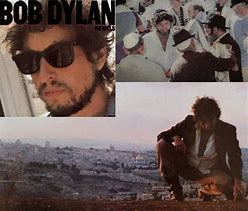
Neighborhood Bully (1983) – Bob Dylan

I was remarking of Dylan’s nasty curve ball with the track – Lenny Bruce on the Christian record – Shot of Love; it’s just like what he did with today’s track Neighborhood Bully on the 1983 Infidels secular record. As I wrote back then, today’s track is my preferred of the two.

Neighborhood Bully can be interpreted from the point of view of someone using sarcasm to defend Israel’s right to exist; the title bemoans Israel’s and the Jewish people’s historic treatment in the popular press. Neighborhood Bully to this day is regarded one of Dylan’s most polemic tracks amongst fans. But I remain unapologetic of my enjoyment of this song.
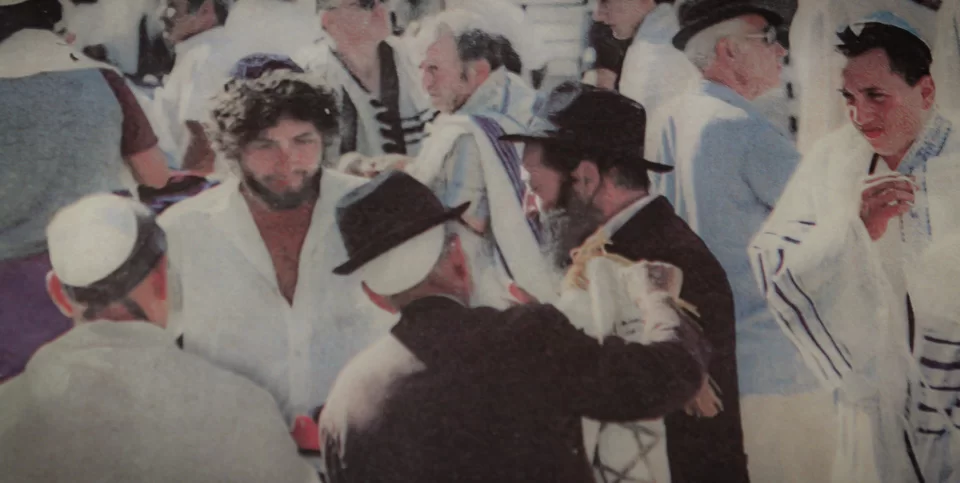
So, during an elongated period the converted Dylan did 3 devout Christian records and then the next minute he is captured by the Press as a Minnesotan that went to Israel. Anyhow’s, we now have the Infidels record.

Dylan said in an interview for Newsweek in 1997:
Here’s the thing with me and the religious thing. This is the flat-out truth: I find the religiosity and philosophy in the music. I don’t find it anywhere else … I don’t adhere to rabbis, preachers, evangelists, all of that. I’ve learned more from the songs than I’ve learned from any of this kind of entity.

[Verse 1]
Well, the neighborhood bully, he’s just one man
His enemies say he’s on their land
They got him outnumbered about a million to one
He got no place to escape to, no place to run
He’s the neighborhood bully

[Verse 2]
The neighborhood bully just lives to survive
He’s criticized and condemned for being alive
He’s not supposed to fight back, he’s supposed to have thick skin
He’s supposed to lay down and die when his door is kicked in
He’s the neighborhood bully

[Verse 3]
The neighborhood bully been driven out of every land
He’s wandered the earth an exiled man
Seen his family scattered, his people hounded and torn
He’s always on trial for just being born
He’s the neighborhood bully

Dylan is often jocular and non – acute in his own interpretations when pressed by the ‘Press’. I do think he was harnessing some ancestral connection with his Jewish hereditary, but he would never admit that. It’s only in the words you can derive his ‘meaning’; the same way Leonard Cohen did in one of his last great songs – You Want it Darker. After a long time in Buddhism, Cohen also went back to his Jewish roots and that’s made abundantly clear in his final album where his voice is recorded on ‘his death bed’.

“Hineni, hineni, I’m ready my Lord,” 

The critical reaction of Infidels was the strongest for Dylan in years, almost universally hailed for its songwriting and performances. Dylan initially wanted to produce the album himself, but feeling that technology had passed him by, he approached a number of contemporary artists before Dylan hired Mark Knopfler.

References:
1. Infidels (Bob Dylan album) – Wikipedia

Tagged with: , , , ,
Posted in Music

Nation (Of the Heartless Kind) (2003) – David Bridie

Nation (Of the Heartless Kind) is an Australian protest song by David Bridie released on his 2003 Hotel Radio album. This is the fourth song to appear from Bridie’s obscenely underrated Hotel Radio record. No information seemingly exists about this song and it’s almost certain you haven’t heard of this 2003 record unless you have read my previous song articles. There isn’t even a wiki page about Hotel Radio, but most of the songs from this record will feature in this music library project.

We dare not move
We sit close by, we’re drinking the spoils, ignoring the cries
The one in every three dead
Haunting back on our shores
Is this all we’ve got the energy for?
Where has our heart gone?
Selective memory, isolationists
Falling back on ourselves pretend that we’re strong
We’re not that strong…
I believe that we had the chance to show
The strength in our heart, true test of our metal
And when the first hurdle came with the yards to be done
We fell, we crashed, we cried and fell down
Is this our whole nation of the heartless kind
This is a sorrowful song
Remember back when the Great Wars ended
They took us to those places, very special places
And we told them all, we’d never forget
We’d stand arm in arm
Judge us by the way we act now
Is my whole nation of the heartless kind
This is a sorrowful song

According to Bridie’s own web site – the album (Hotel Radio) radiates a sensual summer’s warmth with an expansive sense of mystery that delved even further into the artform of sonic texture.
Nation (Of the Heartless Kind) – the fifth song on the record is a brazen deviation from the breezy atmospheric sound proceeding it. It appears Nation is Bridie’s attempt of expressing: ‘I’m fed up with our government’s policies’. The following lines seem to relate to the boat refugee crisis which occurred in Australia not so long ago:

The one in every three dead
Haunting back on our shores

Reference:
1. David Bridie – Wikipedia

Tagged with: , ,
Posted in Music

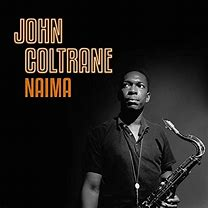
Naima (1959) – John Coltrane

Naima is composed by John Coltrane in 1959 that he named after his then-wife, Juanita Naima Grubbs. Coltrane first recorded it for his 1959 album Giant Steps, and it became one of his first well-known works. Naima featured in a scene in the 2013 Polish movie Ida, in which the title character is intrigued by the jazz and its player. Ida featured here in Friday’s Finest. I wrote:

I am not a big fan of jazz but the choice of Coltrane’s jazz music for parts of this film really let you feel what jazz is all about; it was beautiful.

I don’t know why, but when listening to Naima (and I don’t intend to disparage the name of Coltrane’s former wife), this music reminds me of so many scenes in movies of seedy districts and bar-cruising US style circa 70’s and early 80’s. So, Naima was way ahead of its time at least according to my senses.
Taxi Driver is one such movie which throws me back to this song. I wish I had listened to more Jazz, but you go where your music-heart takes you. This track remains to me a quintessential ‘soundtrack‘ theme. On the whole; that’s jazz to me. It’s like baseball in the sports realm. It’s nice to have on, but better in the background as an atmospheric filler unless you see it live. I saw the Australian Jazz trumpeter James Morrison play in a basement lounge in Circular Quay, Sydney. Now, that was something.

John William Coltrane was an American jazz saxophonist, bandleader and composer. He is among the most influential and acclaimed figures in the history of jazz and 20th-century music. Coltrane helped pioneer the use of modes and was one of the players at the forefront of free jazz. He led at least fifty recording sessions and appeared on many albums by other musicians, including trumpeter Miles Davis.

References:
1. Naima – Wikipedia

Tagged with: , ,
Posted in Music

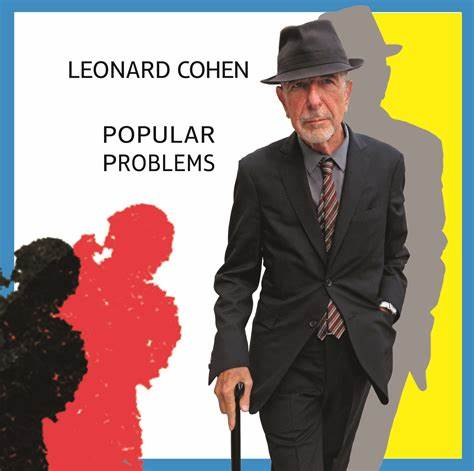
My Oh My (2014) – Leonard Cohen

This blues track My Oh My is the second song presented here from Leonard Cohen’s thirteenth studio album album Popular Problems (2014). The previous entry was Did I Ever Love You. Popular Problems flies by, with only nine songs in 36 minutes. Yet the music creates a space for reflection that expands with each listen. A full band appears in most tracks, but others are just Cohen and Leonard enjoying a dialogue in the studio, augmented by the ubiquitous backing singers who have long represented Cohen’s anima and muse. The Canadian was 80 years old when he released Popular Problems – he didn’t become a recording artist until he was a published poet, a good few years older than his contemporaries (Bob Dylan, Neil Young).

[Intro]

Wasn’t hard to love you
Didn’t have to try
Wasn’t hard to love you
Didn’t have to try

Held you for a little while
My, oh, my, oh my
Held you for a little while
My, oh, my, oh my

[Hook]

Drove you to the station
Never asked you why
Drove you to the station
Never asked you why

Held you for a little while
My, oh, my, oh my
Held you for a little while
My, oh, my, oh my

Popular Problems peaked at number one on the Canadian Albums Chart, selling 20,000 copies in its first week. In the United States, the album debuted at No. 15 on Billboard 200. Interestingly, the last song on the album You Got Me Singing closes out the 2023 Netflix Documentary Hallelujah. I dedicated You Got Me Singing to my daughter Katherine when she was born and Cohen’s Hallelujah to my son Jesus when he was baptised. Cohen’s music, you could say runs deep in our family.

Today’s featured track My Oh My is a loose tune cheered by brass. Cohen enjoys the memory of a short love. “Held you for a little while/My oh my” – the “my, oh my” speaking volumes. The stuff of Popular Problems is the stuff we all struggle with: the problems of the people. The final laugh comes at the end – ‘You Got Me Singing

References:
1. First Listen: Leonard Cohen, ‘Popular Problems’ – NPR
2. Leonard Cohen: Popular Problems review – brief, satisfying, full of surprises – The Guardian
3. Popular Problems: Wikipedia

Tagged with: , ,
Posted in Music

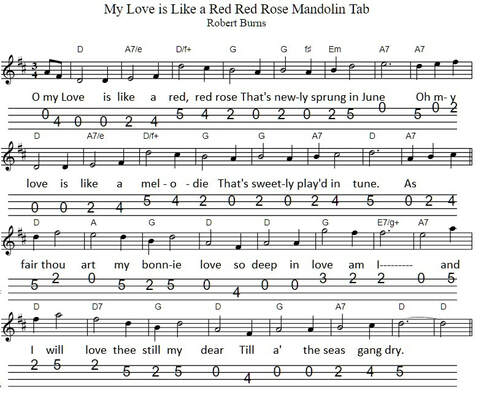
My Love is Like a Red Red Rose (1982) – The Fureys & Davey Arthur

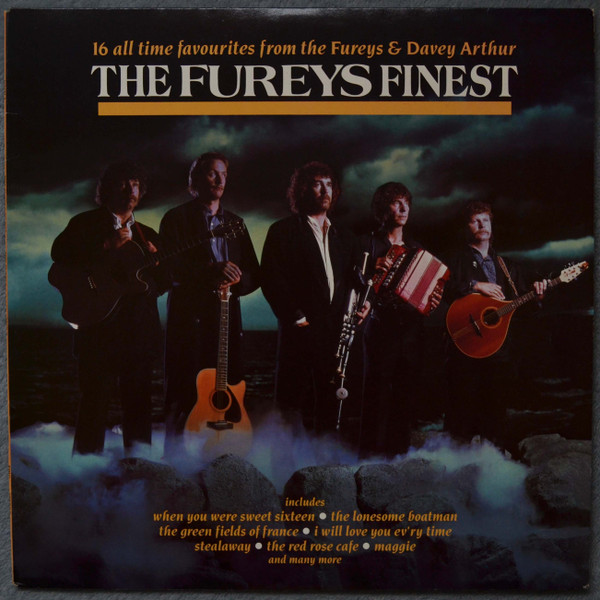
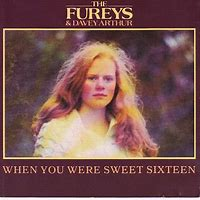
This is the third song to appear from the Furey’s 1981 album ‘When You Were Sweet Sixteen‘ (see inset) and appears on the above compilation. As I wrote ‘I bought this album as a preadolescent on a whim based on the cover and was charmed by these traditional Irish folk songs. It was a good investment of the little money I had going‘. Today’s featured song My Love is Like a Red Red Rose made a great impression on me as most of the other tracks did. The title track of the album When You were Sweet Sixteen became a worldwide hit.

A Red, Red Rose is a 1794 song in Scots by Robert Burns based on traditional sources. The song is also referred to by the title “(Oh) My Love is Like a Red, Red Rose” and is often published as a poem. In the final years of his short life, Burns worked extensively on traditional Scottish songs, ensuring the preservation of over 300 songs, including Auld Lang Syne. Which reminds me of the post: Could Watching the Phantom Thread Become a *new* New Year’s Tradition? The Fureys are an Irish folk band originally formed in 1974. The group consisted initially of four brothers who grew up in Ballyfermot, Dublin.

Tagged with: , ,
Posted in Music

Nietzsche’s Critique of Christianity: The Genealogy of Morals – Dr Michael Sugrue

‘If people do like to create pain onto others, but with the degree of pain in the world and the evil we see…What happens when you frustrate this desire? What happens when you can’t enslave other people, you can’t kill other people and take their possessions? You can’t oppress other people because we will stop you. What Nietzsche says…is that when people are frustrated in their desire to cause pain to others, the consequence of that is they decide to start imposing pain on themselves. And this pain they impose on themselves is called ‘conscience’. Nietzsche says that people that can’t bite other people, they bite themselves. When they begin to torture themselves; they find the last possible outlet to impose pain on the world……People are predatory animals and when they can’t bite other people, they will bite themselves. When they torture themselves, they find the last possible outlet for this desire to impose pain on the world. They can’t do it to other people, they’ll do it to themselves.’….

31: 30 min – ‘(Nietzsche) describes his procedure as philosophising with a hammer…it very easily shades over to intellectual vandalism. It may be that everything that can be broken, ought not to be broken. And it is not entirely clear that the anti-Christ offers us more as a moral alternative than the Christian ethics. His willingness to ask questions about it is what makes Nietzsche enduring significance to our culture. For all the madness, for the all the evil that’s built into it, it’s probably the most significant moral development, since oh, I don’t know ‘The Enlightenment’. In terms of its artistic qualities, I think that Nietzsche is probably in the same league as Plato. As a a great poet – philosopher Nietzsche and Plato are the two greatest figures who combined art and philosophy’.

Tagged with: , ,
Posted in Reflections

Fighter (2022) – Christina Perri

Christina Perri with her daughter

Rarely a day goes by when I’m feeling a bit in a rut and not think, ‘Have I heard a Christina Perri song today‘? Her songs and lyrics touch so deep like it’s the first time listening to her. Her songs have featured here more than what I can recall. A Perri song based on my experience is my ‘get out of jail free card‘. I find her music so healing; commensurate with Rachmaninoff’s ‘Piano Concerto No.1 in F sharp minor‘ yesterday. ‘Transparency‘. Everything Perri wrote below I can attest to feeling or at least feel attuned.

[Verse 1]
Always the fighter but I think I’m fighting alone
I can’t keep crying, my fate isn’t lying, it’s just colder
And I fear the loneliest parts of my heart are afraid
Being the worst and the best in my head, I just can’t think straight

[Chorus]
I am a fighter
Throwing these daggers straight out of my mouth
I swear I can fight her
Even if she looks like me, I won’t back down
Born from a fighter
I know I fight when I need to feel loved
Strong like a fighter
What if my love is just not strong enough?

[Verse 2]
The closer you get to my heart, I keep watchin’ it break
And all of the love I have trusted havе just been mistakes
I’m fire and I’m ice, I’m wrong and I’m right, got my fist in thе air
And it just shows you I care
Is that okay if you can’t save me?

Listening to Perri’s music raises my hope just like what the Colombia women did in Australia yesterday. Their last 3 goals are the best goals in succession in the history of world football. There is no comparison. Each goal is a work of craftsmanship. The finesse and precision are unprecedented in both football masculine and feminine. And I’ve watched a lot of football.
That is all.

Reference:
1. Burning Gold (song) – Wikipedia

Tagged with: , ,
Posted in Music

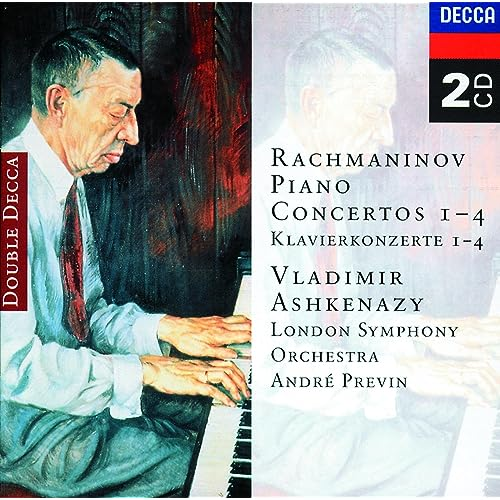
Piano Concerto No.1 in F sharp minor, op.1 – II. Andante (1891) – Sergei Vasilyevich Rachmaninoff

‘I am a Russian composer and the land of my birth has influenced my temperament and outlook.’

Hearing this exquisite piece from Russian composer Rachmaninoff this morning was the perfect antidote to the post effects of a horrendous dream I had. I was once told if you have a nightmare, you should recall it to someone to ward it off being replicated into reality. When I first heard that notion I scoffed, thinking it was just superstitious phony-baloney, but I have put it into practice.
I did recount it to the principal person in my subconscious. So, any-hows I wasn’t in the mood to hear anything jolly or too melancholy this morning. Just something sitting in the middle, introspective, but rippling lightly on the emotions. Fortunately, I had Piano Concerto No.1 in F sharp minor, op.1 – II. Andante to write about. Andante means: ‘A moderately slow musical tempo‘.

Sergei Rachmaninoff composed his Piano Concerto No. 1 in F♯ minor, Op. 1 at age 17-18. Just let that sink in. When I was 18, I was well, umm my ambitions and skillset lied elsewhere. I honestly can’t fathom someone at that age composing this masterful Piano Concerto. When an 18-year-old Sergei Rachmaninoff can provide the musical remedy to counteract the effects of a 49-year-old’s nightmare, then there is only one thing I can do, which is refer to the quote that concludes every single one of my 1,056 posts:

“The more I live, the more I learn. The more I learn, the more I realize, the less I know.”

– Michel Legrand

In case you were wondering who Michel Legrand like I was: He was a French musical composer, arranger, conductor, and jazz pianist. Legrand was a prolific composer, having written over 200 film and television scores, in addition to many songs.

The following is sourced from the Wikipedia page below:

Sergei Rachmaninoff wrote to Natalya Skalon on 26 March 1891, “I am now composing a piano concerto. Two movements are already written; the last movement is not written but is composed; I shall probably finish the whole concerto by the summer, and then in the summer orchestrate it“. He finished composing and scoring the piece on July 6 and was satisfied with what he had written. The first movement was premiered on 17 March 1892 at the Moscow Conservatoire.

References:
1. Piano Concerto No. 1 (Rachmaninoff) – Wikipedia
2. Sergei Rachmaninov: Piano Concerto No. 1 in F sharp minor – Classic FM

Tagged with: , ,
Posted in Music

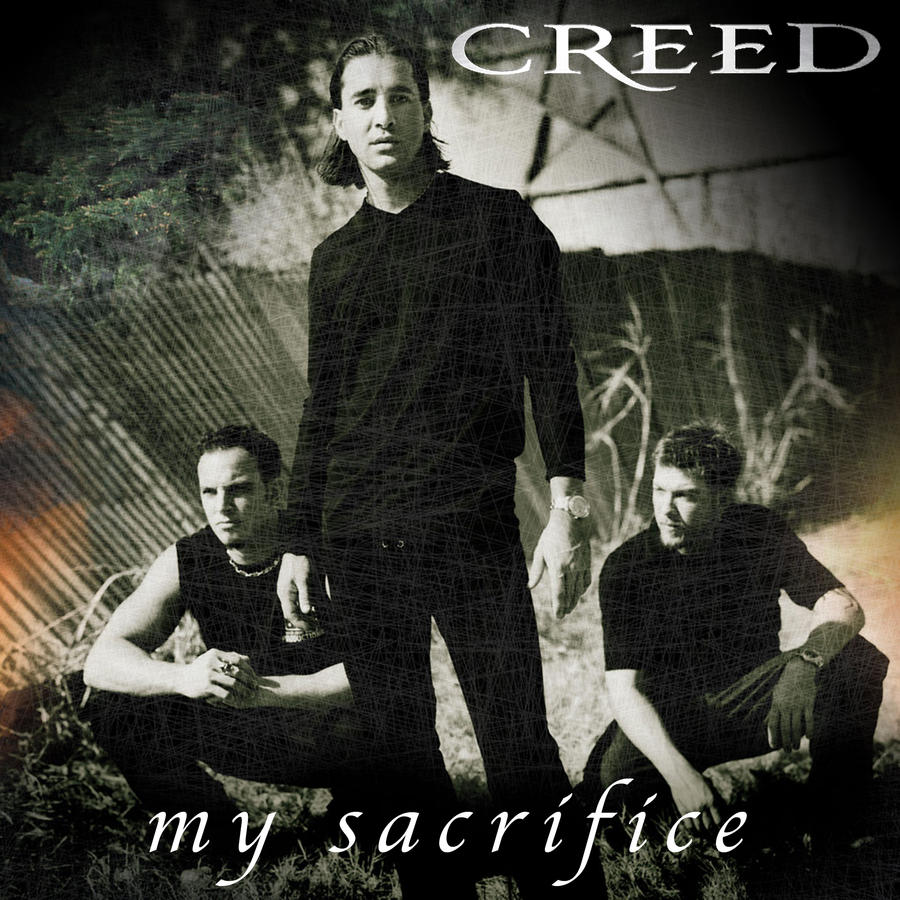
My Sacrifice (2001) – Creed

I have no idea how I encountered this song – My Sacrifice, nor any knowledge of the band – Creed. I was tossing up whether to include it in the project. Basically, I needed three targets ‘green’. I had two green, one red. Then I read the lyrics again and decided – ‘Execute‘. My Sacrifice reminds me of some of the raw – Alternative Seattle songs I heard in my young adulthood, and I really like the spirited and gritty sound of vocalist Scott Stapp. Not unlike Eddie Vedder’s formidable voice on Alive.

(Edited: I have heard this song more since I wrote this draft article. I wanted to highlight another alluring aspect of the song which is the shredding guitar work and how it raises the key ala ‘Live and Let Die‘ or something you might here from Metallica. It’s very cool and I like the song the more I hear it).

Creed was prominent in the post-grunge movement of the late 1990s and early 2000s. They hail from from Tallahassee, Florida formed in 1994. Creed has sold over 28 million records in the United States, and has sold over 53 million albums worldwide, and was the ninth best-selling artist of the 2000s. The songs of their’s have arguably Christian origins. Scott Stapp’s has a spiritual background as the stepson of a Pentecostal minister.

Hello my friend, we meet again
It’s been awhile, where should we begin?
Feels like forever
Within my heart are memories
Of perfect love that you gave to me
Oh, I remember

When you are with me, I’m free
I’m careless, I believe
Above all the others we’ll fly
This brings tears to my eyes
My sacrifice

We’ve seen our share of ups and downs
Oh how quickly life can turn around
In an instant
It feels so good to reunite
Within yourself and within your mind
Let’s find peace there

When Jay Stanley of ‘J. Stanley Productions Inc’ recalls his initial impression of hearing My Sacrifice while working with the band stating that he knew the song was going to be huge the first time he heard it.

Stapp also explains:

That the song is about coming out of a dark place or period in your life and reconnecting with yourself. He notes several of the songs lyrical themes are represented through elements in the music video. These include a shot of himself in a rowboat where he is seen pulling a drowning version of himself out of the water onto the boat, which represents periods of his life where he would claim sobriety, coming out from the darkness and finding temporary clarity, only to fall back into his old habits. He also mentions that the shots of other people in the video are representative of the feelings you have when you are with someone you love.

On July 19, 2023, the band announced that they had reunited and would be headlining the Summer of ’99 cruise in April 2024.

Reference:
1. My Sacrifice – Wikipedia

Tagged with: , ,
Posted in Music

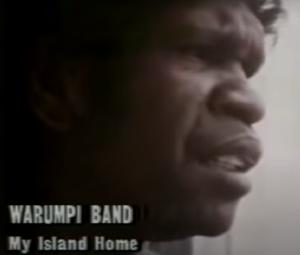
My Island Home (1987) – Warumpi Band (& Christine Anu version)

My Island Home is not just a great narrative about Australian identity but captures the yearning essence of my home country. I went and saw Christine Anu in Melbourne when this song came out. Apart from her voice and the melody, I love listening to the guitar reverberation, synthesiser and that drumbeat. I don’t know who the producer was, but they deserve a ‘high five…and on the flip side‘.

I assumed Christina wrote this song, but My Island Home was written by Neil Murray for George Burarrwanga (see image inset). It was originally performed by the Warumpi Band, and you can see their wonderful version at the end of this article. Anyone that responds to this article, will be immediately asked which of the two versions do you favour. You have been forewarned. Hehe.

The song references lead singer’s (George Burarrwanga) home up at Elcho Island off the coast of Arnhem Land in the Northern Territory, Australia. It was recorded in 1986 and released as a single from their second album, Go Bush! in January 1987. The description of their video also echos the Aussie lexicon and the spirit of unity and ‘mateship’:

Hmm…Blackfella, whitefella, any fella, it doesn’t matter – it’s our sacred land to acknowledge, to share & protect, treasure & to pass on as ‘intact’ as we can..

[Verse 1]
Six years I’ve been in the city
And every night I dream of the sea
They say home is where you find it
Will this place ever satisfy me?
For I come from the salt water people
We always lived by the sea
Now I’m down here living in the city
With my man and a family

[Chorus]
My island home
My island home
My island home is waiting for me

[Verse 2]
In the evening the dry wind blows
From the hills and across the plains
I close my eyes and I’m standing
In a boat on the sea again
And I’m holding that long turtle spear
And I feel I’m close now to where it must be
My island home is waiting for me

Christine Anu had been a backing vocalist in Neil Murray and The Rainmakers during 1992–1993. Her version of My Island Home won Song of the Year at the 1995 Australasian Performing Right Association (APRA) Awards. The song was also listed in APRA Top 30 Australian songs of all time in 2001. Christine also performed My Island Home at the closing ceremony of the Sydney Olympics. Anu, a Torres Strait Islander, changed some lyrics to reflect her circumstances. e.g: Rather than moving to the desert, she compares island life to the city life, and from the point of view of a woman.

Neil Murray, vocalist and guitarist for Warumpi Band, recalls writing the song:

My Island Home came to me on a bus one night in June 1985…I had been living in the deserts of Central Australia for some six years. I had spent a week with our singer, George, at his home at Galiwinku in Arnhem Land. We camped on a remote part of the island with his family and had been living like kings on bush tucker and seafood caught by ourselves. I had to leave and make trips to Melbourne and Sydney in mid-winter to promote the band. I suffered an exceptional longing to be back in a boat on a tropical sea. The words came to me.I had no notebook with me. I held on to the tune till I got to Sydney and pulled my guitar out of the luggage to find the chords.

References:
1. My Island Home – Wikipedia

Tagged with: ,
Posted in Music

Follow Blog via Email

Enter your email address to follow this blog and receive notifications of new posts by email.

Join 780 other subscribers

← Back

Thank you for your response. ✨