Mrs. Potters Lullaby (1999) – Counting Crows

Mrs. Potters Lullaby has a distinct Bob Seger sound and that can only be a good thing. It is steeped in music ‘Americana’ and to me is commensurate with the experience of watching a road trip movie in the cinema – breezy air and terrain – The memories will be so thick they’ll have to brush them away from their faces (Field of Dreams).
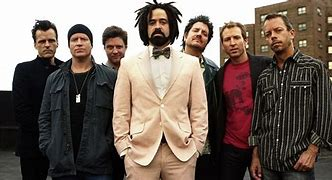
Counting Crows is an American rock band from San Francisco, California. Formed in 1991, Counting Crows gained popularity following the release of its first album, August and Everything After (1993) and the breakthrough hit single Mr. Jones (1993).

In my last article – Prelude, Op. 28, No. 15 Raindrop (1838) – Frédéric Chopin, I quoted in the comments section Dylan’s lyric: ‘Fortune or fame, you must pick one or the other, though neither of them are to be what they claim.’ What do we have here in this song? See in the lyrics below: ‘Walking a tightrope of fortune and fame‘. That’s uncanny.

Well, I woke up in mid-afternoon ’cause that’s when it all hurts the most
I dream I never know anyone at the party and I’m always the host
If dreams are like movies
Then memories are films about ghosts
You can never escape
You can only move south down the coast

Well, I am an idiot
Walking a tightrope of fortune and fame
I am an acrobat swinging trapezes through circles of flame
If you’ve never stared off into the distance
Then your life is a shame
And though I’ll never forget your face
Sometimes I can’t remember my name

Hey, Mrs. Potter, don’t cry
Hey, Mrs. Potter, I know why
But, hey, Mrs. Potter, won’t you talk to me?

Most of the following was sourced from the Wikipedia articles below:

Mrs. Potter’s Lullaby is the second track on their third album, This Desert Life. The song reached number three on the US Billboard Adult Alternative Songs chart. In April 2022, American Songwriter ranked the song at number three on their list of “The Top 10 Counting Crows Songs“. The band’s frontman, Adam Duritz stated that the song was written about actress Monica Potter.

Duritz, who has based other songs on real people, explained that this song was influenced by an imaginary version of the actress, based on seeing her onscreen in Con Air (1997) and Patch Adams (1998). They ended up meeting for the first time at dinner with entertainment industry friends on the day the band was recording the song, and Potter returned to the studio with Duritz to watch them work. At the end of the session, a production assistant gave Potter a recording of one of the takes. Afterwards, Duritz told Potter the song was being dropped because over production after the recording session had ruined it. She gave him her copy, which was the fourth of eight takes that had been recorded while she was in the studio. This version was subsequently added to the album.

References:
1. Mrs. Potter’s Lullaby – Wikipedia
2. Counting Crows – Wikipedia

Tagged with: , ,
Posted in Music

Physics Teacher Dr Brian Keating explains Oppenheimer – Special Edition Post

Save yourself a movie ticket and watch this.
I’m kidding of course since Dr Brian Keating even described Nolen’s movie ‘Oppenheimer‘ as spectacular. This video and the movie probably go hand in hand. I would also point readers to Reely Bernie’s movie review: Oppenheimer (2023).

Dr Brian Keating just responded to my comment on his fantastic video:

Lol. You owe me…’

Tagged with: , ,
Posted in Movies and TV, Science

Mr. Tambourine Man (1965) – Bob Dylan

Watch the video below Mr Tambourine Man when you consider Allen Ginsberg’s comments:

Dylan had become a column of air, so to speak, at certain moments, where his total physical and mental focus was this single breath coming out of his body. He had found a way in public to be almost like a shaman, with all of his intelligence and consciousness focused on his breath.

Mr Tambourine Man would be my first song selection to introduce someone unfamiliar with the music of Bob Dylan. What would yours be? I was daunted to write this article since Mr Tambourine Man is renowned as one of the greatest songs in contemporary music and arguably the greatest ever folk song. You only have to see Pete Seeger sitting there after having introduced Bob that he knew he was witnessing something transformational occurring in music. The song’s popularity led to Dylan recording it live many times, and it has been included in multiple compilation albums. It has been translated into other languages and has been used or referenced in television shows, films, and books.

[Verse 4]
And take me disappearing through the smoke rings of my mind
Down the foggy ruins of time, far past the frozen leaves
The haunted, frightened trees, out to the windy beach
Far from the twisted reach of crazy sorrow
Yes, to dance beneath the diamond sky with one hand waving free
Silhouetted by the sea, circled by the circus sands
With all memory and fate driven deep beneath the waves
Let me forget about today until tomorrow

[Chorus]
Hey, Mr. Tambourine Man, play a song for me
I’m not sleepy, and there is no place I’m going to
Hey, Mr. Tambourine Man, play a song for me
In the jingle jangle mornin’ I’ll come followin’ you

The song has been performed and recorded by many artists, including the Byrds, Judy Collins, Melanie, Odetta, and Stevie Wonder among others. My favourite cover is by the Byrds who popularised the song – comparable to what Peter, Paul and Mary did with Dylan’s Blowing in the Wind. The single by the Byrds was the “first folk-rock smash hit“. The single reached number 1 on the Billboard Hot 100, and number 1 on the UK Singles Chart, making it the first recording of a Dylan song to reach number 1 on any pop music chart.

Sophie Loves Sunsets wrote in the YT comments section of The Byrds cover:

The Byrds covering Mr Tambourine Man not only firmly put Dylan on the map as one the most prolific songwriters of the 20th century, but it also signified the birth of folk rock.

A lot of the following information is sourced from the Wikipedia reference below:

Dylan’s and the Byrds’ versions have appeared on various lists ranking the greatest songs of all time. Mr Tambourine Man was released as the first track of the acoustic side of his March 1965 album Bringing It All Back Home. It became famous for its surrealistic imagery, influenced by artists as diverse as French poet Arthur Rimbaud and Italian filmmaker Federico Fellini. Mr. Tambourine Man was written and composed in early 1964, at the same approximate time as Chimes of Freedom, which Dylan recorded later that spring for his album Another Side of Bob Dylan.

Dylan began writing and composing Mr. Tambourine Man in February 1964, after attending Mardi Gras in New Orleans during a cross-country road trip with several friends, and completed it sometime between the middle of March and late April of that year after he had returned to New York. Nigel Williamson has suggested in The Rough Guide to Bob Dylan that the influence of Mardi Gras can be heard in the swirling and fanciful imagery of the song’s lyrics. Unusually, rather than beginning with the first verse, the song begins with an iteration of the chorus.

References:
1. Mr. Tambourine Man – Wikipedia

Tagged with: , ,
Posted in Music

Prelude, Op. 28, No. 15 Raindrop (1838) – Frédéric Chopin

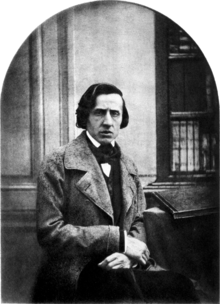
Prelude, Op. 28, No. 15 Raindrop is the second entry from Chopin here after Etud Op 10 No. 3. When hearing this you realize how small you are in the world and wonder in confoundment at the pure beauty of music. To sum it up ladies and gents, music at its most rudimentary doesn’t get much better than this. Chopin wrote this at his stay at a monastery in Mallorca in 1838.

Most of the following was sourced from the Wikipedia article below:

Prelude, Op. 28, No. 15 is one of the 24 Chopin preludes and also one of his famous works. What you would give to see Chopin composing this piece; well we have the next best thing. George Sand who also stayed at the Monastery with Chopin remarked that one evening she and her son Maurice, returning from Palma in a terrible rainstorm, found a distraught Chopin who exclaimed, “Ah! I knew well that you were dead.” While playing his piano he had a dream:

He saw himself drowned in a lake. Heavy drops of icy water fell in a regular rhythm on his breast, and when I made him listen to the sound of the drops of water indeed falling in rhythm on the roof, he denied having heard it. He was even angry that I should interpret this in terms of imitative sounds. He protested with all his might – and he was right to – against the childishness of such aural imitations. His genius was filled with the mysterious sounds of nature, but transformed into sublime equivalents in musical thought, and not through slavish imitation of the actual external sounds.

Sand did not say which prelude Chopin played for her on that occasion, but most music critics assume it to be no. 15, because of the repeating A♭, with its suggestion of the “gentle patter” of rain.

References:
1. Prelude, Op. 28, No. 15 – Wikipedia

Tagged with: , ,
Posted in Music

Writer/Actor Strikes: Why They Matter – Chris Stuckmann

I think the biggest reason I wanted to make this video which is extremely alarming is about what Hollywood was proposing to SAG (Screen Actors Guild) and SAG said no f%&king way to. Was this idea of owning a background actor’s likeness digitally…According to SAG what studios were saying is they would like to hire a background actor for one day, meaning a day rate. Whatever it might be..scan their likeness and then excuse them from work and not need them ever again…. But this is the scary part…They would own that actor’s ‘likeness’ forever and they could keep using that digital likeness of somebody in background scenes of all of their movies whenever they want it.

I think it’s really easy to look at these strikes at a surface level and think well SAG is just mega famous people, like Angelina Jolie or whoever, and no it’s not. It’s everyday working people who love their art and craft and just can’t get ahead in this industry. It’s the same with writers. Not everyone is Aaron Sorkin. There are tonnes of people struggling to get anything made and who can barely afford to make a living. This is why the cast of Oppenheimer left the premier in solidarity with SAG because all of them were starting actors once too. They all know what it feels like to be a struggling actor.”

Chris Stuckmann discusses the ongoing WGA and SAG strikes, and why they’re important for the future of all creators in the film industry.

Tagged with: , ,
Posted in Movies and TV, News

Moving to the Left (2014) – Woods

I find the first half of Moving To The Left some of the best modern Americana music I’ve heard; up there with War on Drugs. But it’s hard to maintain that quality for 5 minutes without ruining it. After 2:30 min, a petulant Hindustani guitar sound discomposes the vibe of the proceeding music. ‘Hey just end it at 2:30 fellas if you haven’t got anything better to add‘. Others here might beg to differ and that’s cool.

Woods is an American folk-rock band from Brooklyn, formed in 2005. They have released 11 albums and Moving to the Left is the fourth song from their eighth studio album With Light and Love released in 2014. With Light and with Love received largely positive reviews from contemporary music critics with an average score of 79, based on 19 reviews.

All of my life, is this happenin’ again
Are we floating by and by
Are we moving to the left?
All of my days we’re spending in the sun
We’re moving on and on
Are we moving with the rest!
It feels strange
It feels the same

We’re speaking tongues
To hold the shame
You can cover up,
You can hide –
You feel again
What passes by won’t stay with them

References:
1. Woods (band) – Wikipedia
2. With Light and with Love – Wikipedia

Tagged with: , ,
Posted in Music

The Flood Myth – John Hamer (Toronto Centre Place)

The flood is seen symbolically as a baptism of the earth; where the same things symbolically happen in baptism; the old person dies and comes out of the water reborn anew, in the same way the old carnal world is cleansed and begins a new life..Baptisms happen, but you’re not really dying so it would be symbolic in the same sense“.

I have been going on a John Hamer – Centre Place binge for at least a month. I cannot recommend his presentations more highly to anyone fascinated with the history of the Bible and ancient history. Hamer gives regular lectures at Centre Place (the Toronto congregation of Community of Christ) on the topics of history, theology, and philosophy. Over 100 of his lectures are available on the Centre Place YouTube channel. Today’s presentation is one such topic on the Flood Myth.

Noah’s Ark is one of the best known stories of the Bible and many other cultures have flood stories that predate Genesis by centuries and millennia. While some people still read the story literally and imagine it is history, others look for a kernel of historic truth around which these legends grew. John Hamer of Toronto Centre Place will examine some of these theories and the likelihood that the idea of a universal Flood is entirely mythic.

Lecture topics include:
Deluge End of the World
Divine Punishment
Comparative Mythology
Book of Genesis: The flood myth in Ancient Israel
Epic of Gilgamesh: The flood myth in Ancient Mesopotamia
Popol Vuh: The flood myth in Pre-Columbian Mesoamerica

Tagged with: , ,
Posted in Uncategorized

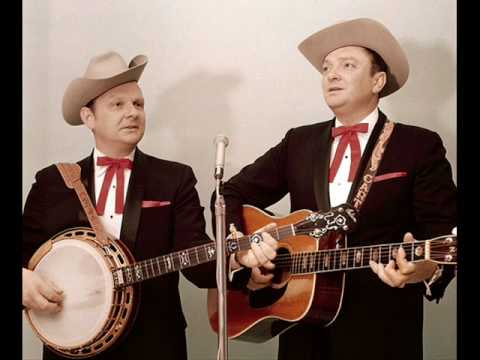
Mountain Dew – The Stanley Brothers

Hillbilly Music isn’t my go – to genre, but I have to make an exception in this case. I can’t help but enjoy Mountain Dew; a bit like what the Coen Bros did with O Brother, Where Art Thou? Mountain Dew is technically ‘Bluegrass‘ music but according to this Wikipedia article: ‘Bluegrass was initially included in the category of folk music and later changed to hillbilly’.

Down the road here from me there’s an old holler tree
Where you lay down a dollar or two
Go on round the bend come back again
There’s a jug full of that good ole mountain dew

[Chorus:]
Oh they call it that good ole mountain dew and them that refuse it are few
I’ll hush up my mug if you’ll fill up my jug with that good ole mountain dew

Now Mr. Roosevelt told ’em just how he felt
When he heard that the dry law ‘d gone through
If your liquors too red it’ll swell up your head
You better stick to that good ole mountain dew

[Chorus:]
The preacher rode by with his head hasted high
Said his wife had been down with the flu
He thought that I o’rt to sell him a quart of my good ole mountain dew

I got this song from Max’s blog PowerPop, so I’ll turn it over to him:

I got really curious and looked the song up. It’s great…I’ve always liked these old folk songs and bluegrass music because I respect it so much. I’ve played bluegrass with a professional before and it is some of the hardest music I’ve tried to play. The time signatures are all over the place and if you haven’t played the music a lot… it can be tricky. It made me a better musician.

I like the music because it’s so rootsy and earthy. I don’t listen to it a lot but sometimes I will enjoy an hour or so of it. It reminds me of when my dad would go to work in the morning and sometimes he would have this music on.

References:
1. Good Old Mountain Dew – Wikipedia
2. The Stanley Brothers – Wikipedia

Tagged with: , , , ,
Posted in Music

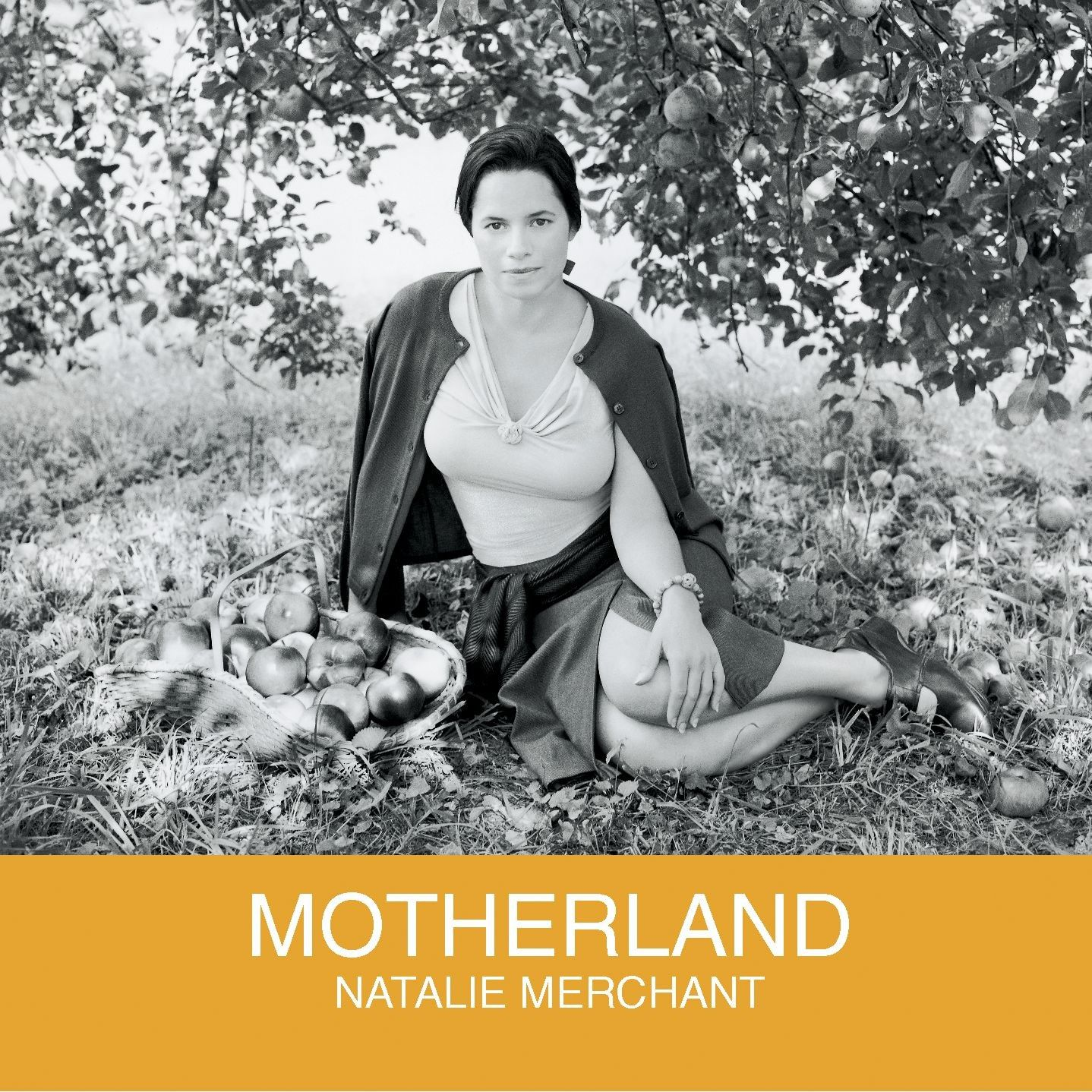
Motherland (2001) – Natalie Merchant

I’ve seen some photos in my life, but wowee. As my father used to say to me, ‘she’s better looking than you son‘. Any-hows, I better talk about Natalie Merchant’s Motherland. I mentioned this song in the article about Lily Kershaw’s song As It Seems. Motherland is the third song featuring Natalie Merchant here and is the title track from her third solo album released in 2001. I’ve heard a lot of performances of this song, but the one I like the most is from the NPR Music Tiny Desk Concert presented below.

[Verse 1]
Where in hell can you go
Far from the things that you know
Far from the sprawl of concrete
That keeps crawling its way
About one thousand miles a day?

[Verse 2]
Take one last look behind
Commit this to memory and mind
Don’t miss this wasteland
This terrible place, when you leave
Keep your heart off your sleeve

[Chorus]
Motherland, cradle me
Close my eyes
Lullaby me to sleep
Keep me safe
Lie with me
Stay beside me
Don’t go
Don’t you go

[Verse 2]
Oh, my five-and-dime queen
Tell me what have you seen?
The lust and the avarice
The bottomless, the cavernous greed
Is that what you see?

According to the Lantern web site, Merchant said:

The title song, MOTHERLAND has much deeper resonance since the events of September 11th and its aftermath. I was far more cynical when I wrote, ‘Motherland cradle me, close my eyes, lullaby me to sleep, keep me safe, lie with me, stay beside me, don’t go.’ Now the song is a desperate plea for innocence, to be ‘faceless, nameless, innocent, blameless and free,’ expresses a craving we all share now for the world we took for granted and lost. Suddenly there seems to be no hiding from our past as a nation or our present, or our future. For me it’s the death of nostalgia and dreams.

References:
1. Motherland (Natalie Merchant album) – Wikipedia
2. Natalie Merchant – Wikipedia

Tagged with: , ,
Posted in Music

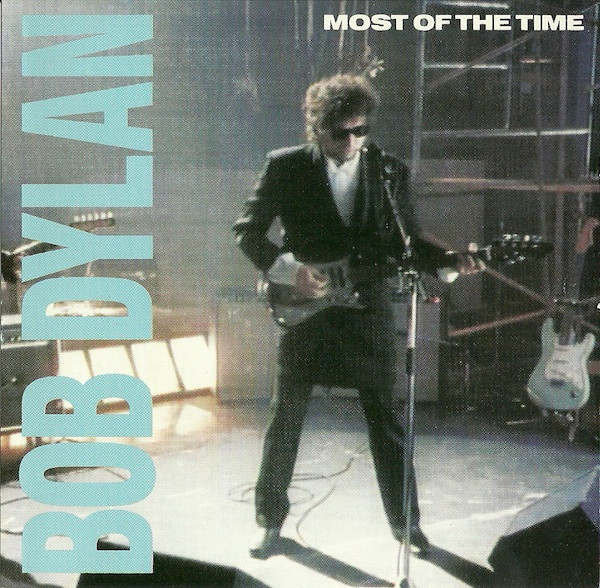
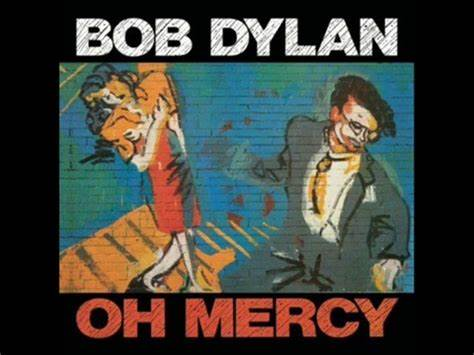
Most of the Time (1989) – Bob Dylan

It is befitting Most of the Time is the first song to be presented from Bob Dylan’s Oh Mercy record, because it is my favourite song from it. If the outtake Series of Dreams made it onto the record, then the decision would have been a lot more difficult. Series of Dreams would become the final track on The Bootleg Series Volumes 1–3 (Rare & Unreleased) 1961–1991 and was later included on 1994’s Bob Dylan’s Greatest Hits Volume 3, but never released on a studio album.

Most of the Time was released as the sixth track (or the first song on Side Two of the vinyl) of his 1989 album Oh Mercy which was produced by Daniel Lanois and seen by critics as a comeback to form for Dylan after disappointing sales with Knocked Out Loaded and Down in the Groove. Daniel Lanois would produce Dylan’s Time Out of Mind 8 years later which won three grammy awards, so they obviously did something right! Here is Daniel Lanois speaking about the making of Oh Mercy.

[Verse 1]
Most of the time
I’m clear focused all around
Most of the time
I can keep both feet on the ground
I can follow the path, I can read the signs
Stay right with it when the road unwinds
I can handle whatever I stumble upon
I don’t even notice she gone
Most of the time

[Verse 2]
Most of the time
It’s well understood
Most of the time
I wouldn’t change it if I could
I can make it all match up, I can hold my own
I can deal with the situation right down to the bone
I can survive, I can endure
And I don’t even think about her
Most of the time

Daniel Lanois on Most of the Time:

I had been to Bob’s house..and he had played me a few songs..he already had the song Most of the Time which I loved. A beautiful love song…I thought it was a very tender way of looking at love and looking at missing somebody. That was beginning of it and he had a few others.

Daniel Lanois on ‘The Making Of’ Bob Dylan’s ‘Oh Mercy’

For me, Most of the Time is one of Bob Dylan’s most restrained, but atmospheric tracks. Like so many of his songs I never grow tired of hearing it. The contemplative instrumental sounds combined with Dylan’s voice and phrasing really envelopes the listener. The synchronisation of the two is masterful and it’s what Dylan doesn’t say in this song that makes it a treasure-trove unlocking a wide range of emotions. It’s just irony, plain and simple. After his involvement with the Traveling Wilburys, Dylan had started constructing what he referred to as “stream-of consciousness songs“. Most of the Time and Series of Dreams couldn’t demonstrate his intention better.

From Wikipedia for all the Dylanholics out there:

The lyrics of “Most of the Time” were written before the music. In his memoir Chronicles: Volume One, Dylan describes not having a melody for the song when he first went into the studio to record it and trying to find one while strumming an acoustic guitar in front of Lanois: “Dan thought he heard something. Something that turned into a slow melancholy song”. Lanois’s recollection differs from Dylan’s, as he told an interviewer in 2014 that he first heard the song at Dylan’s house, with Dylan playing piano. In the same interview, Lanois said that the song “It stood out to me as a very powerful expression of love. I was determined to frame that song the best I could.” In their book Bob Dylan All the Songs: The Story Behind Every Track, authors Philippe Margotin and Jean-Michel Guesdon praise Lanois’s production for “putting magic into the essence of the song” and creating “an amazingly dreamlike and haunting atmosphere. Very deep reverb, omnipresent delays, saturated guitar sounds (with or without vibrato), a Roland TR-808 drum machine set in a loop, percussion, a sonic blanket, bass and acoustic guitar give the song one of the strongest vibes on the album. Dylan provided a superb vocal performance”. Lanois played bass on the track, and overdubbed four Les Paul parts to produce a “string quartet effect”. Dylan said that Lanois was able capture his “stage voice” during the Oh Mercy recordings, and that he appreciated Lanois’s willingness to make suggestions, stating “You need help to make a record … People expect me to bring in a Bob Dylan song, sing it, and then they record it. Other people don’t work that way. There’s more feedback”

References:
1. Most of the Time – Wikipedia
2. Oh Mercy – Wikipedia

Tagged with: , , , ,
Posted in Music

Follow Blog via Email

Enter your email address to follow this blog and receive notifications of new posts by email.

Join 780 other subscribers

← Back

Thank you for your response. ✨