

‘The title track Sonido Bestial remains one of the most remarkable (and recognizable) tunes of the salsa era‘
– Critic José A. Estévez, Jr
As I’ve mentioned in other articles on salsa music, the sub genre of salsa that initially captivated me when I arrived in Colombia in 2009 was salsa romántica – also known as Salsa Rosa – which rose to popularity in the late ’80s. This softer, more melodic style of salsa stirs feelings of romance and sensuality, with unforgettable hits from Puerto Rican icons like Eddie Santiago and Jerry Rivera.
It’s taken me many years, however, to fully appreciate the raw, electrifying sound of what’s considered classic or pure salsa – epitomised by today’s featured track, Sonido Bestial. This song, which predates the polished grooves of Salsa Rosa, pulses with a kind of untamed energy that took time for my ears to adjust to. But now, after all this time trying to get my senses in sync with it, I can finally say: I’m fully aboard that wild train called Sonido Bestial – choo choo!
El Bestial Sonido (The Bestial Sound) by Puerto Rican’s Ricardo Ray y Bobby Cruz is the title track of the salsa music duet’s thirteenth studio album released in 1971. Released at the height of their popularity, the album inaugurated a new era in salsa. The album, notable for the inclusion of new elements into salsa such as classical music, was an international success, and its title track Sonido Bestial became one of salsa’s most popular songs. The album consecrated Richie Ray as a prodigious pianist, capable of playing a fusion of several rhythms and styles.
El Bestial Sonido exhibits all the hallmarks of a sub genre of salsa called Salsa Brava; in fact many argue the salsa music duet (Ricardo Ray y Bobby Cruz) were the pioneers of this music form. The duo is also well known for helping to establish the popularity of salsa music in the 1970s and 1980s. Salsa Brava arose in New York in the 1970’s at the hand of the Latin American diaspora. Diaspora, in case you were wondering like I was, refers to a large group of people who share a cultural and regional origin but are living away from their traditional homeland.
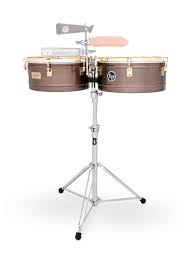
Salsa Brava in a musical context especially with regards to Salsa refers to a style which is characterised for its focus on the instrumentation, with its emphasis on wind instruments (trumpets and trombones), piano solos, percussion (especially timbales – see image left) and aggressive music arrangements. Readers can refer to the duet’s live version of Sonido Bestial below to view the musicianship on display and how each instrument is incorporated into the song.
Often Salsa Brava is considered stronger or harder in comparison with other styles of Salsa, and can include lyrics with a stronger social impact on the streets, or sometimes with influences of the gangster culture. For example, the movie Carlito’s Way (starring Al Pacino) depicted this period and music to a tee.
A loose English translation follows:
Let the beasts come out!
Uhh!
Here come Cocolí and Manuelito
You who said I was no good anymore
Hey, you who said I wasn’t going out anymore
Right now, my friend, I’m coming to greet you
Listen, listen
Hear the trumpets blow, hear the drums crackle
Ricardo is coming straight ahead with his beastly sound
Hey, here comes Richie, and he’s coming head-on
Like a beast, playing a tumba’o
(There comes Richie, and he’s coming head-on, like a beast playing a tumba’o)
Make way for him, he’s cocky
Like a beast playing a tumba’o
(There comes Richie, and he’s coming head-on, like a beast playing a tumba’o)
Look, Maelo says he’s scared
Because he’s coming playing a tumba’o
(There comes Richie, and he’s coming head-on, like a beast playing a tumba’o)
That’s it
Is that Richie? Playing Stravinsky
Hey, it’s not Stravinsky, it’s “Estrabanca’o”
Hey, play me, Richie, play me Jazz
He plays the tumba’o like a beast
(Here comes Richie, and he comes veering, like a beast playing a tumba’o)
Get out of the way, he’s crazy
Like a beast, enjoying a tumba’o
(Here comes Richie, and he comes veering, like a beast playing a tumba’o)
Hey, here comes Richie, and he comes veering
Like a beast enjoying a tumba’o
(Here comes Richie, and he comes veering, like a beast playing a tumba’o)
Hey, it’s not Stravinsky, it’s “Estrabanca’o”
But he’s enjoying the tumba’o
(Here comes Richie, and he comes veering, like a beast playing a tumba’o)
Run, Coco is running(Let’s play like beasts)
(Let’s play like beasts)
(Let’s go (Playing like beasts)
And Richie Ray is coming to play for you
(Let’s play like beasts)
Oh, to the sound of the leather, just leather
(Let’s play like beasts)
Of course, of course, of course, of course, of course, of course, of course
(Let’s play like beasts)
Hey, Pacheco says he’s coming to have fun
(Let’s play like beasts)
Hey, we’re coming to the big party to dance
(Let’s play like beasts)
Let’s play like beasts
(Let’s play like beasts)
Hey, we’re having fun like beasts
(Let’s play like beasts)
We’re going bare-chested to have fun
(Let’s play like beasts)
Cool, cool, cool, cool, cool
(Let’s play like beasts)
Oh, how cool
References:
1. El Bestial Sonido de Ricardo Ray y Bobby Cruz – Wikipedia

“The more I live, the more I learn. The more I learn, the more I realize, the less I know.”- Michel Legrand


 Observation Blogger
I love this stuff! The sound of the West Side of Buffalo 🙂
Oh really, they have a big latinoamericano contingent?
Oh yeah. Since the 1950s. The West Side used to be all Italian but once the Latinos started moving in, most of the Italians moved into North Buffalo, which was historically the Jewish side of town ~ the Jews moved out to Amherst ~ specifically, the Williamsville area.
Lots of Puerto Ricans, some Mexicans, some from other South American countries. Lots of Colombians. My friend Joe married a Colombian woman.
You hear Spanish all the time on the street & in the stores. MAGA-types have a real hard time with that, of course.
Hola Polly,
Thanks for the intriguing and extensive breakdown of migration trends and gentrification in your neck of the woods. Fascinating.
I wish you a great week ahead.
It’s hard not to like the percussion in this type of music. It makes it exciting to see all of them on the same page.
Yes, t’s quite the accomplishment. The fusion between classical and Jazz piano music with the percussion, not to mention Bobby Cruz’s unforgettable voice. Also his demeanour and stage presence just screams ‘Cool’! I’m glad you liked it Max.
While I know next to nothing about salsa and wasn’t aware of the salsa brava subgenre, I don’t think you need to be an expert to recognize “Sonido Bestial” is groovy stuff!
I heard next to nothing of Salsa in Australia. So I was in your shoes when I came to Colombia. I’m more of a ‘Melody’ guy (not so much towards rhythm) so the Salsa traditional music didn’t gel with me at all. But, man I can’t help but love this now, although it’s taken me years to appreciate it and see it for what it is.