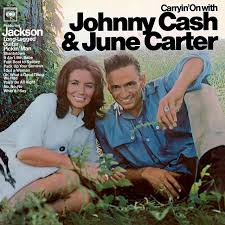
Here is Johnny going all gangster…singing a song about murder and cocaine inside a prison…to thunderous applause. “I thought I was her daddy but she had five more.” Gotta love that line…..
Also, is there a better way for a prison song to end than the emcee (in this case Hugh Cherry) announcing visitations for selected inmates? Then an inmate asks Johnny – ‘Will that be on the album‘? And Johnny responds, “I doubt that.” Yet here it is – uncut and in all its glory – on one of the most infamous, nearly-uncensored, and celebrated live shows in contemporary music history.
Fun fact – Merle Haggard was serving time in prison and saw Johnny Cash perform but that was an inmate at San Quentin State Prison in California. He recalled the event, stating that Cash performed for the inmates on New Year’s Day 1958. Haggard has consistently spoken about this experience, crediting it as a pivotal moment that inspired him to turn his life around and pursue a career in music.
My appreciation for Cash came to me gradually, through literature and film – especially his role in influencing and shaping Dylan’s career mid-to-late ’60s, through Cash: The Autobiography (1997), and later, the 2005 biopic Walk The Line. I first heard today’s featured song Cocaine Blues in the rendition here performed by Joaquin Phoenix in that movie. Cash’s music would also appear with some frequency in other colleagues’ music blogs here at WordPress.
Background (mostly from the Wikipedia article below)
Cocaine Blues is a Western swing song written by Troy Junius Arnall, a reworking of the traditional song “Little Sadie.” Roy Hogsed recorded a well known version of the Cocaine Blues in 1947 and is definitely worth a listen.
The song is the tale of a man, Willy Lee, who murders his unfaithful girlfriend while under the influence of whiskey and cocaine. He flees to Mexico and works as a musician to fund his continued drug use. Willy is apprehended by a sheriff from Jericho Hill, tried, and promptly sentenced to “ninety-nine years in the San Quentin Pen“. The song ends with Willy imploring the listener: Come all, you’ve got to listen unto me.
Come on you hypes listen unto me, lay off that whiskey, and let that cocaine be.
Johnny changes the above lyrics in his show to refer to Folsom State Prison and also ‘Come all, you’ve got to listen unto me‘. He also used the then-provocative lyric “I can’t forget the day I shot that bad bitch down.” Cash chose not to use the word “bitch” in some later versions. He can be heard coughing occasionally; later in the concert recording, he can be heard noting that singing the song nearly did his voice in.
[Verse 1] Early one morning, while making the rounds I took a shot of cocaine, and I shot my woman down I went right home, and I went to bed I stuck that loving .44 beneath my head Got up next morning, and I grabbed that gun Took a shot of cocaine, and away I run Made a good run, but I run too slow They overtook me down in Juarez, Mexico
[Verse 2] Laid in the hot joints, taking the pills In walked the Sheriff from Jericho Hill He said, “Willy Lee, your name is not Jack Brown You’re the dirty hack that shot your woman down” “Yes, oh yes, my name is Willy Lee If you’ve got a warrant, just a-read it to me Shot her down because she made me slow I thought I was her daddy, but she had five more”
[Verse 3] When I was arrested I was dressed in black They put me on a train, and they took me back Had no friend for to go my bail They slapped my dried up carcass in that county jail Early next morning, ’bout a half past nine I spied a Sheriff coming down the line Hocked and he coughed as he cleared his throat He said, “Come on you dirty hack into that district court”
[Verse 4] Into the courtroom, my trial began Where I was handled by twelve honest men Just before the jury started out I saw that little judge commence to look about In about five minutes, in walked a man Holding the verdict in his right hand The verdict read, “In the first degree…” I hollered, “Lordy, Lordy, have mercy on me” The judge, he smiled as he picked up his pen Ninety-nine years in the Folsom Pen Ninety-nine years underneath that ground I can’t forget the day I shot that bad bitch down
[Outro] Come all, you’ve got to listen unto me Lay off that whiskey, and let that cocaine be
[Spoken Word: Hugh Cherry, Inmate & Johnny Cash] “These men have receptions Matlock A50632, and Batshelter A39879 They have receptions” Is that gonna be on the album? Yeah I doubt that
Since studying political science and the Russian Revolution at University, I have had a penchant for learning about Russian history and culture.
I found this documentary at The People Profiles fascinating since I wasn’t familiar with the military legacy of General Georgy Zhukov. I learnt he was one of the few commanders in history who could almost claim never to have lost a major battle. His career went from the defeat of Japanese forces at Khalkhin Gol in 1939 — which secured the Soviet Far Eastern border — to stopping the Germans outside Moscow in the winter of 1941, when the city was close to falling, and leading the defence of Leningrad. These battles showed not only his great skill, but also his ability to work in very different kinds of wars.
Upcoming Movies
Here are three movie trailers for upcoming movies I’m most looking forward to:
Well it’s about Springsteen and that’s that. Elton John (Rocketman) and Bob Dylan (A Complete Unknown) had their recent biopics, now its Springsteen’s turn and this looks good! I like how it seems to focus mainly on one period of his life being the Nebraska record interspersed with childhood memories. The actor does seem to exude certain mannerisms and expressions of Bruce – he seems to ring true. The director Scott Cooper also did Crazy Heart which I thought was a great music – movie. Out in October! Giddyup.
This is Spinal Tap (1984) was Rob Reiner’s (Stand By Me, The Princess Bride, A Few Good Men & Misery) directorial debut. It is arguably the greatest mockumentary ever made. Now we have Spinal Tap II: The End Continues – Forty-one years after the release of the of the original, the now estranged bandmates David St. Hubbins, Nigel Tufnel, and Derek Smalls (Michael McKean, Christopher Guest, and Harry Shearer) are forced to reunite for one final concert.
It also marks the resurrection of documentarian Marty Di Bergi (Rob Reiner), who once again tries to capture his favorite metal gods as they contemplate mortalit – and the hope that their 12th drummer doesn’t join them in The Great Beyond. It is joined by music royalty Paul McCartney and Elton John, Spinal Tap wrestles with their checkered past to put on a concert that they hope will solidify their place in the pantheon of rock ’n’ roll.
In this upcoming movie due out in late September we have Paul Thomas Anderson and Leonardo DiCaprio joining forces. I know right?… a match made in movie heaven! DiCaprio did turn down the lead role of Dirk Diggler in PTA’s 1997 film Boogie Nights to star in James Cameron’s Titanic. DiCaprio expressed regret over this choice, stating he loved the film. Paul Thomas Anderson is one of my favourite three directors of the last 3 decades along with Quentin Tarantino and the Coen Brothers. He has featured here at ‘Friday’s Finest‘ – my movie segment with The Master and The Phantom Thread. And of course, Leonardo is up there on the acting front. One Battle After Another also features Oscar winners Benicio del Toro and Sean Penn.
If you can’t wait long enough until September, which I know I can’t, then there’s the recently released Weapons horror movie which people are raving about. Only yesterday my friend Bernie did a write-up on it – I Dare You to See ‘Weapons.
Just in time with the new Billy Joel documentary – And So It Goes on HBO; this is just a short snippet from an interview Joel did with Letterman (air date: 8/18/97) where he remarked on his exchange with Dylan and his daughter (who was a big fan of Joel) in the early eighties and another chat in Milan, Italy. The song Billy Joel is obviously referring to here is Dylan’s Make You Feel My Love written for his album Time Out of Mind (1997), but first released commercially by Billy Joel, under the title To Make You Feel My Love.
Dylan biographer Clinton Heylin describes how musician Tony Glover stopped by Dylan’s apartment in September 1963, picked up a page of the song Dylan was working on, and read a line from it: “Come senators, congressmen, please heed the call.” Turning to Dylan, Glover said, “What is this shit, man?” Dylan shrugged his shoulders and replied, “Well, you know, it seems to be what the people want to hear.”
The ashy, parched album cover of The Times They Are a-Changin’ signaled exactly where Dylan would take us on this record. It was his first album of entirely original compositions, filled with stark ballads about racism, poverty, and social change. More than any other Dylan record, this one shaped me as an impressionable teenager — it helped set my values and opened my eyes to what appeared the road less travelled.
This was the moment Dylan was being hailed as the spokesman of a generation and the poster boy for the folk movement. On his third studio album, and especially in the title track, he was at his most sermon-like — a cross-generational rallying cry worthy of a biblical mountaintop. He admitted in 1985 that he wrote the song deliberately to be an anthem for its time, saying, “The civil rights movement and the folk music movement were pretty close for a while and allied together at that time.”
The battle outside ragin’ Will soon shake your windows and rattle your walls
When I got into the song in the mid-to-late ’80s, the world was very different from today — and, as Dylan put it, “Ah, but I was so much older then / I’m younger than that now.” That’s why I rarely revisit The Times in the 21st century. Those songs feel like they’ve been lifted from a time capsule, reflecting the urgent causes of their day — from Jim Crow laws to Cold War paranoia. After this album came Another Side of Bob Dylan, where he began drifting from the narrow idealism and pressure of the political left, including peers like Joan Baez and Pete Seeger. Nowhere is this clearer than in My Back Pages, where he seems to reject his earlier political preaching, admitting he had “become my own enemy in the instant that I preach.”
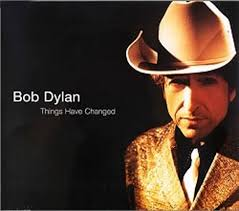
But the times are always changing. These days, other Dylan songs speak to me more — especially his Oscar-winning Things Have Changed, which I play often. Now it feels like the shoe’s on the other foot: the train of “progress” never stopped at the station, kept going full steam ahead, and in some ways has become more radical and uncompromising than the movements Dylan once championed.
People are crazy and times are strange I’m locked in tight, I’m out of range I used to care, but things have changed
Now back to The Times, most of which was abridged from the Wikipedia article below:
In 1985, he told Cameron Crowe, “This was definitely a song with a purpose. It was influenced of course by the Irish and Scottish ballads …’Come All Ye Bold Highway Men‘, ‘Come All Ye Tender Hearted Maidens‘. According to Dylan’s official website, he performed the song 633 times between 1963 and 2009, making it his 23rd most-performed song as of June 2023. The song was ranked number 59 on Rolling Stone‘s 2004 list of the “500 Greatest Songs of All Time“.
In January 1984, a young Steve Jobs recited the second verse of “The Times They Are a-Changin‘” in his opening of the 1984 Apple shareholders meeting, where he famously unveiled the Macintosh computer for the first time.
[Verse 1] Come gather ’round, people, wherever you roam And admit that the waters around you have grown And accept it that soon you’ll be drenched to the bone If your time to you is worth saving And you better start swimmin’ or you’ll sink like a stone For the times, they are a-changin’
[Verse 2] Come writers and critics who prophesize with your pen And keep your eyes wide, the chance won’t come again And don’t speak too soon, for the wheel’s still in spin And there’s no tellin’ who that it’s namin’ For the loser now will be later to win For the times, they are a-changin’
[Verse 3] Come senators, congressmen, please heed the call Don’t stand in the doorway, don’t block up the hall For he that gets hurt will be he who has stalled The battle outside ragin’ Will soon shake your windows and rattle your walls For the times, they are a-changin’
[Verse 4] Come mothers and fathers throughout the land And don’t criticize what you can’t understand Your sons and your daughters are beyond your command Your old road is rapidly agin’ Please get out of the new one if you can’t lend your hand For the times, they are a-changin’
[Verse 5] The line, it is drawn, the curse, it is cast The slow one now will later be fast As the present now will later be past The order is rapidly fadin’ And the first one now will later be last For the times, they are a-changin’
A friend and I were listening to this song on the way home from seeing F1: the movie last night at the cinema. I kept remarking how much the shredding guitar sets the song apart, particularly the three “blasts” of guitar bringing in the chorus. The guitarist Jonny Greenwood performed it because he disliked how quiet the song felt. So he hit the guitar “really hard” as if the song was slashing its wrists. Fittingly so, since Creep has “obsessive” lyrics that depict the “self-lacerating rage” of an unrequited attraction.
Creep is a stellar exemplar of the allure of 90’s alt grunge music that swept the music world by storm in the early 90’s. In my new found independence of young adulthood, my league of friends and I burrowed our way into this scene with such fervor. In the CBD of Canberra, Australia, there existed these shabby dives (if you looked hard enough) where you could watch local garage bands emulate this ‘Seattle’ – alternative rock sound forged by groups like Pearl Jam, Soundgarden, Stone Temple Pilots, Red Hot Chili Peppers, Nirvana, Alice in Chains & Live. But every now and then across the pond a UK band would add their own potion to the melting pot. So here we are today with Creep from the English rock band – Radiohead which became very popular on American alternative rock radio before it ever became an international hit.
I’d always been curious about how and why Radiohead earned their reputation as such an influential and innovative band. I knew and liked their breakout hit Creep (the subject of today’s post) and had read that their album OK Computer was hailed by some as one of the greatest of all time. I wanted to know what I’d been missing — or at least get a taste of it. So I watched their documentary Radiohead: A Job That Slowly Kills You. It was my first real dive into the group, and their turbulent history proved absorbing and compelling. The film features excerpts from many of their songs, which I now need to explore further as part of my music journey. Maybe there are Radiohead fans here who can point me toward their favourites in the band’s vast discography.
Most of the following was abridged from the Wikipedia reference below: Creep was the band’s debut single and was included on Radiohead’s debut album, Pablo Honey (1993). They had not planned to release Creep, but recorded it at the suggestion of the producers. It was initially unsuccessful, but was reissued in 1993 and became an international hit, likened to alt-rock “slacker anthems” such as “Smells Like Teen Spirit” by Nirvana and Loser by Beck. As the above documentary shows, Creep while launching the band into the stratosphere was in part to their detriment since they were still were at finding their feet and getting a handle on songs. They eventually departed from the style of “Creep” and grew weary of it, feeling it set narrow expectations of their music, and did not perform it for several years. Still it remains their most successful single.
In Creep, Radiohead took elements from the 1972 song The Air That I Breathe by Albert Hammond and Mike Hazlewood. Following legal action, Hammond and Hazlewood were credited as co-writers.
[Verse 1] When you were here before Couldn’t look you in the eye You’re just like an angel Your skin makes me cry You float like a feather In a beautiful world I wish I was special You’re so fuckin’ special
[Chorus] But I’m a creep I’m a weirdo What the hell am I doin’ here? I don’t belong here
[Verse 2] I don’t care if it hurts I wanna have control I want a perfect body I want a perfect soul I want you to notice When I’m not around You’re so fuckin’ special I wish I was special
[Chorus]
[Bridge] She’s runnin’ out the door She’s runnin’ out She run, run, run, run Run
[Verse 3] Whatever makes you happy Whatever you want You’re so fuckin’ special I wish I was special
Aprender a Amar (Learn to love) Winner – Best Rap/Hip Hop Song (2024) at the Latin Grammy Awards
Since most of my small readership are English speakers, I hope the video below of today’s rap and hip-hop track Aprender a Amar (Learn to Love) comes with English subtitles for you as it does for me (You may have to open it separately in You Tube).
Eng: ‘You have to learn to love yourself, Bitch’
Spanish–Argentine artist Nathy Peluso is one of my favourite modern singer-songwriters for her knack for creating bold, inventive, and arresting music, paired with lyrics that are as compelling as they are biting. She’s actively reshaping the Latin music scene, blending hip-hop, bolero, cuplé, salsa, trap, and neo-soul — all delivered with theatrical flair and sharp, introspective writing that makes you think. Aprender a Amar is actually the tenth time she’s appeared here in just over a year.
Yesterday, while I was out, Aprender a Amar blasted through my earphones and I was hooked by the sound production alone. The way the beat and textures hit your ear feels like an event — it made everything I listened to earlier in the day sound second-rate. I understand Spanish well, so the play of words and phrasing against that relentless rhythm hit me even harder. I’m fascinated by it, just as I am with every track of hers I’ve featured. The song comes from Nathy’s 2024 album Grasa (Fat), which earned her three 3 Latin Grammy awards — including Best Rap/Hip-Hop Song for this very track.
Aprender a Amar isn’t just a rap banger — it’s a social statement. It holds up a mirror to us, warns where her generation is heading, and tries to course correct it. It’s bigger than it sounds on first listen. Sure, some might shrug and say, “That’s just Peluso being Peluso, mouthing off and being crass.” But under the surface there’s a whole lot more going on.
In these lyrics, Peluso pokes at the absurdity of taking politics too seriously — “Even if you add sugar to politics, it tastes like cement” — and then undercuts herself with “I’m almost a classic dumbass.” She takes aim at the pretension of the rich: You think money makes you smart? Think again, sunshine. She questions the shiny distractions of materialism, especially in her generation and in mainstream rap, where young people are pushed to be politically woke without really knowing what the hell they’re talking about — and also to idolise being filthy rich, dripping in gold chains, fancy cars, and “all ya bitches.” She calls for patience — nothing good comes from rushing, and nothing is achieved without discipline. There’s too much talk, she says, too much fakery. Plenty of laughs, plenty of “blessings” — but nobody keeps their promises. So shut up a minute, think, and above all… learn to love yourself, bitch!
The video that accompanies the single below sees Peluso sing in front of a mirror and then break the fourth wall and go directly to the viewer. The camera obeys Nathy’s movements, stirring when she pushes her and then following the rhythm of the track.
Below are English subtitles of the song:
I stay out, I stay out, but if I get into politics I am not followed, I am not recognised Because I always wear a little wig I am not weak, I am not obvious I am almost a classic dumbass The people who have money Stupid people have a lot of money
When the owner comes to the kitchen, he knows I am the best kneader I haven’t been home for a while. What are you looking at asshole, what is the matter with you Everything in life costs money Costs minutes costs vaseline Nothing good ever came from hurrying up
A lot of luxury but second rate Mucha labia, pero se te inunda A lot of talk but if it floods you A lot of talk, a lot of Milanese, a lot of paco and little mayonnaise Lots of laughter, lots of blessings, but no one keeps any promises
You have to learn to love yourself You gotta learn to love yourself, bitch You have to learn to love yourself You have to learn
I wear jewelry to be in the photo I skid my bike with the motorcycle helmet Chapter 40 does not need a pilot The capital fights and an earthquake is coming
Mamarracho burn yourself in the ashtray What a pistachio, everything here is worth money But how is 9 stupid lucas going to turn out? Even if you add sugar to politics, it tastes like cement
We all want the revolution but who gives it a moment? To hate you have to love, said Pity. It’s time to go through the fever of the city
For the rhythmically challenged among us, it’s always a blessing when the lyrics double as dance instructions, like it does in The Time Warp: “It’s just a jump to the left / And then a step to the right / Put your hands on your hips / Bring your knees in tight.” I first encountered this electrifyingly raunchy number on a school camp during my prepubescent years, where it blared repeatedly and we bopped along with joyous abandon. And when we all collapsed in unison at the end, like unplugged marionettes? Pure riot. Of all songs, The Time Warp demands to be danced in company. What’s interesting is that the choreography we did as kids during the refrain “Let’s do the Time Warp again” differs from what’s shown in the movie version below. The moves we followed are actually from the Australian version, which appears at the end of this post.
The Time Warp first appeared in the 1973 rock musical The Rocky Horror Show, and later in its now cult-classic film adaptation, The Rocky Horror Picture Show (1975). It was written by Richard O’Brien who also performed the song as the character Riff Raff (see image inset) in the original 1975 film. Now that’s a talented individual! I just love his darkly amusing and slightly nasal voice as he opens the number. The dance became one of the major audience participation activities during screenings of the 1975 film and is both an example and a parody of the dance song genre.
Despite the song receiving significant commercial success in 1980-81 (No. 3 in Australia, No. 13 UK and No. 29. US Billboard) and becoming wildly popular in my next of the woods (Australia) throughout the 1980’s and into the early 90’s, its zest and allure seems to have faded in recent decades. I haven’t heard it played commercially, nor has it cropped up in contemporary music fandom circles. I’m not sure why that is, because I still consider The Time Warp iconic for its music, its choreography, and its ability to ignite audience participation.
[Verse 1: Riff Raff, Magenta, Both] It’s astounding Time is fleeting Madness takes its toll But listen closely Not for very much longer I’ve got to keep control I remember doing the Time Warp Drinking those moments when The blackness would hit me And the void would be calling
[Refrain: All] Let’s do the Time Warp again Let’s do the Time Warp again
[Chorus: All, The Criminologist] It’s just a jump to the left And then a step to the right With your hands on your hips You bring your knees in tight But it’s the pelvic thrust That really drives you insane
[Verse 2: Magenta, Riff Raff] It’s so dreamy Oh, fantasy free me So you can’t see me No, not at all In another dimension With voyeuristic intention Well secluded, I see all With a bit of a mind flip You’re into the time slip And nothing can ever be the same You’re spaced out on sensation Like you’re under sedation
[Verse 3: Columbia] Well I was walking down the street Just-a having a think When a snake of a guy gave me an evil wink He shook-a me up, he took me by surprise He had a pick up truck and the devil’s eyes He stared at me and I felt a change Time meant nothing, never would again
If you enjoy dabbling in books feel free to join me on Goodreads [here]. I’m currently reading All The Light We Cannot See (2014) by Anthony Doerr.
Picking up the Wednesday literature segment where we last left off with The Force of Circumstance (1924) – W. Somerset Maugham, today I bring to you another short story from my last read – The Penguin Book of Short Stories (image inset). This anthology features some of the most celebrated names in literature, including Dickens, Huxley, Joyce, Maugham, Wells, and Woolf. Its themes span the supernatural, colonialism, cultural and societal tensions, and madness – to name just a few.
Today’s featured story – The Gioconda Smile by Aldous Huxley is the last I will present here from the above collection of short stories. Huxley is an English writer and philosopher and best known for his dystopian classic about the dehumanising aspects of scientific progress- Brave New World (1932). I featured a two-part series here on that novel in December in 2020. Huxley’s bibliography spans nearly 50 books, including non-fiction works, as well as essays, narratives, and poems.
The Gioconda Smile is a sharp, dark little story with a twist towards the end to die-for. In just a few pages, Huxley creates a whole world full of quiet tension, dry humour, and characters who aren’t quite what they seem.
Mr. Hutton seems friendly and polished, but underneath, he’s careless. Miss Janet is smart and quiet, always noticing things. And Mrs. Hutton… you’ll find out. Every person in the story has more going on than you expect, and Huxley slowly reveals their true selves in a calm, clever way.
The tone shifts between light and unsettling. One moment I was enjoying the witty conversation, the next I felt uneasy, like something wasn’t right. And sure enough, something wasn’t. It’s about an hour long read, but it feels complete – like a whole novel squeezed into one strong shot.
If you like clever stories that are a little dark and a little twisted, The Gioconda Smile is worth your time. It’s a polite smile that hides something cold underneath – and it sticks with you. It reminded me a lot of Oscar Wilde’s book – The Picture of Dorian Gray which I featured here in a 4 part series in 2019. The hedonistic and amoral Lord Henry from The Picture of Dorian Gray shares much in common with Mr. Hutton, the flawed protagonist of The Gioconda Smile.
The extract below from The Gioconda Smile is my favourite part. It shows Mr. Hutton at his most honest and strangely likeable, even in all his weakness. After a lifetime of chasing pleasure and avoiding responsibility, something shifts – just for a moment. He hits a low point, sees how empty his life has become, and suddenly feels a kind of grace wash over him. He makes a promise to change – to live better, think deeper, and use his time wisely. And after seven days of trying, he finally gets what feels like a reward: seven and a half hours of sleep. A solid, peaceful rest — like a small redemption. But Huxley, with his sharp humour and dark honesty, doesn’t let that hope last long.
The story captures that bittersweet truth: sometimes even our best intentions dissolve in the light of day. This is a classic case of How Freud viewed the Main Conflicts of Man where we are driven more by our innate and natural aggression instincts and sexual urges. The rationalist conscious over-pinning barely just tinkers.
Extract from The Gioconda Smile
What had he? Nothing, nothing whatever. There were only Doris’s little breasts. What was the point of it all? Milton, the stars, death, and Emily in her grave, Doris and himself—always himself….
Oh, he was a futile and disgusting being. Everything convinced him of it. It was a solemn moment. He spoke aloud: “I will, I will.” The sound of his own voice in the darkness was appalling; it seemed to him that he had sworn that infernal oath which binds even the gods: “I will, I will.” There had been New Year’s days and solemn anniversaries in the past, when he had felt the same contritions and recorded similar resolutions. They had all thinned away, these resolutions, like smoke, into nothingness. But this was a greater moment and he had pronounced a more fearful oath. In the future it was to be different. Yes, he would live by reason, he would be industrious, he would curb his appetites, he would devote his life to some good purpose. It was resolved and it would be so.
In practice he saw himself spending his mornings in agricultural pursuits, riding round with the bailiff, seeing that his land was farmed in the best modern way—silos and artificial manures and continuous cropping, and all that. The remainder of the day should be devoted to serious study. There was that book he had been intending to write for so long—The Effect of Diseases on Civilisation.
Mr. Hutton went to bed humble and contrite, but with a sense that grace had entered into him. He slept for seven and a half hours, and woke to find the sun brilliantly shining. The emotions of the evening before had been transformed by a good night’s rest into his customary cheerfulness. It was not until a good many seconds after his return to conscious life that he remembered his resolution, his Stygian oath. Milton and death seemed somehow different in the sunlight. As for the stars, they were not there. But the resolutions were good; even in the daytime he could see that. He had his horse saddled after breakfast, and rode round the farm with the bailiff. After luncheon he read Thucydides on the plague at Athens. In the evening he made a few notes on malaria in Southern Italy. While he was undressing he remembered that there was a good anecdote in Skelton’s jest-book about the Sweating Sickness. He would have made a note of it if only he could have found a pencil.
On the sixth morning of his new life Mr. Hutton found among his correspondence an envelope addressed in that peculiarly vulgar handwriting which he knew to be Doris’s. He opened it, and began to read. She didn’t know what to say; words were so inadequate. His wife dying like that, and so suddenly—it was too terrible. Mr. Hutton sighed, but his interest revived somewhat as he read on:
“Death is so frightening, I never think of it when I can help it. But when something like this happens, or when I am feeling ill or depressed, then I can’t help remembering it is there so close, and I think about all the wicked things I have done and about you and me, and I wonder what will happen, and I am so frightened. I am so lonely, Teddy Bear, and so unhappy, and I don’t know what to do. I can’t get rid of the idea of dying, I am so wretched and helpless without you. I didn’t mean to write to you; I meant to wait till you were out of mourning and could come and see me again, but I was so lonely and miserable, Teddy Bear, I had to write. I couldn’t help it. Forgive me, I want you so much; I have nobody in the world but you. You are so good and gentle and understanding; there is nobody like you. I shall never forget how good and kind you have been to me, and you are so clever and know so much, I can t understand how you ever came to pay any attention to me, I am so dull and stupid, much less like me and love me, because you do love me a little, don’t you, Teddy Bear?”
Mr. Hutton was touched with shame and remorse. To be thanked like this, worshipped for having seduced the girl—it was too much. It had just been a piece of imbecile wantonness. Imbecile, idiotic: there was no other way to describe it. For, when all was said, he had derived very little pleasure from it. Taking all things together, he had probably been more bored than amused. Once upon a time he had believed himself to be a hedonist. But to be a hedonist implies a certain process of reasoning, a deliberate choice of known pleasures, a rejection of known pains. This had been done without reason, against it. For he knew beforehand—so well, so well—that there was no interest or pleasure to be derived from these wretched affairs. And yet each time the vague itch came upon him he succumbed, involving himself once more in the old stupidity. There had been Maggie, his wife’s maid, and Edith, the girl on the farm, and Mrs. Pringle, and the waitress in London, and others—there seemed to be dozens of them. It had all been so stale and boring. He knew it would be; he always knew. And yet, and yet…. Experience doesn’t teach.
Poor little Doris! He would write to her kindly, comfortingly, but he wouldn’t see her again. A servant came to tell him that his horse was saddled and waiting. He mounted and rode off. That morning the old bailiff was more irritating than usual.
Five days later Doris and Mr. Hutton ware sitting together on the pier at Southend; Doris, in white muslin with pink garnishings, radiated happiness; Mr. Hutton, legs outstretched and chair tilted, had pushed the panama back from his forehead, and was trying to feel like a tripper. That night, when Doris was asleep, breathing and warm by his side, he recaptured, in this moment of darkness and physical fatigue, the rather cosmic emotion which had possessed him that evening, not a fortnight ago, when he had made his great resolution. And so his solemn oath had already gone the way of so many other resolutions. Unreason had triumphed; at the first itch of desire he had given way. He was hopeless, hopeless.
For a long time he lay with closed eyes, ruminating his humiliation. The girl stirred in her sleep, Mr. Hutton turned over and looked in her direction. Enough faint light crept in between the half-drawn curtains to show her bare arm and shoulder, her neck, and the dark tangle of hair on the pillow. She was beautiful, desirable. Why did he lie there moaning over his sins? What did it matter? If he were hopeless, then so be it; he would make the best of his hopelessness. A glorious sense of irresponsibility suddenly filled him. He was free, magnificently free. In a kind of exaltation he drew the girl towards him. She woke, bewildered, almost frightened under his rough kisses.
The storm of his desire subsided into a kind of serene merriment. The whole atmosphere seemed to be quivering with enormous silent laughter.
“Could anyone love you as much as I do, Teddy Bear?” The question came faintly from distant worlds of love.
You can read the entire story here or listen to it below. Thanks for reading.
We are treated to another understated gem from Australian singer-songwriter David Bridie. The Tender Trap comes from one of my favourite Australian albums Hotel Radio (image inset). It is one of Bridie’s most fragile and intimate songs – its mood, as the title suggests, gently enfolds the listener, much like the couples gliding across the ballroom floor in the accompanying video.
Bridie himself remarked that on Hotel Radio he was keen to experiment sonically – trying different microphones and vocal techniques. On Tender Trap, he sings with a hushed softness, as if sharing a secret with the listener – deliberately retreating from the foreground to create space and atmosphere.
Sargossa Sea
Bridie’s voice here feels like a beacon – flickering across the Sargasso Sea, which he references in both the opening and closing lines of the song. It’s the only sea in the world without shores, adrift within the gyres of the Atlantic – a fitting symbol for the emotional dislocation and quiet yearning that permeates the track. His voice seems to call out across this borderless expanse to those lost in despair, urging them to surrender to the sacred pull of love, connection, and solace.
Bridie recalled the making of Hotel Radio in an interview with Tomatrax, an online music magazine:
“Because the recording gear is quite mobile, the computer and the pro-tools, you can pack up into a couple of station wagons. We went up to a house in rural Victoria for a little bit. We were kinda writing as we went in some cases and there were other songs that I had written at home. We went up to the country with Nick Littlemore for a couple of weeks and then would let it sit for a couple of months and then go to my studio at home. Doing it in segments was good because you could evaluate what you’ve done, let it rest for a while, have a listen and think ‘okay I need to fix this’ or ‘this is working and that’s not.’ It took over a year to get done and I quite like that timing, that pace. I quite like recording in different locations. I like getting away from the sterility of recording studios so going out and setting up in a house that has a pretty nice view out the window. It is a good way of spending time and I think having a good experience when making a record leads to a good record.”
Much of Bridie’s work is still shrouded in obscurity, usually finding its way out when the singer occasionally tours his material. Despite his profound influence on the Australian music industry and the composition of soundtrack music, with credits for over 100 feature films he is hardly a household name. David Bridie’s musical career also includes heading the bands Not Drowning, Waving and My Friend the Chocolate Cake both whose music has featured here, especially the latter. I’ve always considered him musically Australia’s best kept secret. Even Hotel Radio, with its earthy, breezy Australian sound – evoking the kind of atmosphere you’d find in a Tim Winton novel – doesn’t even have a Wikipedia page.
The Tender Trap
Dive into the tender trap by the wild sagasso sea By the wild sagasso sea The factory orange sky alight burning with possibilities all night It’s only when the darkness falls maybe you will come to me Maybe you will come for me somehow Fall into the tender trap In the early afternoon, when the light is bleached and ruined Come when the quiet night rolls in We’ll move amongst the buildings, parks and bars The buildings, parks and bars Its only when the darkness falls That maybe you will come for me Maybe you will come for me somehow Come into the tender trap I’ll wait for you in my sleep Wait patiently in my sleep For only there is quiet and warm With nothing to disturb us there no alarm It’s only when this darkness falls Maybe you will come to me, maybe you will come for me It’s only when the darkness falls In the wild sargasso sea maybe you will come for me somehow? somehow?
So here I was searching for a Melanie C song after she was in the UK English girl group Spice Girls. I stumble on a rendition from her and Emily Button of the powerhouse ballad and theatre hit from the musical Chess called I Know Him So Well. I could’ve sworn I’d already written about this classic (the original), but low and behold not to be. So here we are today.
Move over Mel C (your turn is coming), I want to rewind to a time before the Spice Girls – back when singers like Elaine Paige were still dominating the stage and airwaves. A theatrical giant, she needs no introduction, already appearing here with her version of Memory from Cats and The Rose by Bette Midler. Listening to I Know Him So Well again, I was reminded of a time when a strong voice, emotional delivery, and real performance chops were what really counted. It captures a whole era of pop-adjacent theatre that could still command mainstream attention.
The following was abridged from the Wikipedia reference below: I Know Him So Well originated from Chess, a musical written by lyricist Tim Rice with music composed by ABBA’s Benny Andersson and Björn Ulvaeus. The duet is performed by two characters – Florence and Svetlana – who find themselves entangled in a love triangle with the same man. The song is steeped in melancholy and quiet resignation, as the two women reflect on the man they both loved and the choices they made.
The chorus of the song (according to Wikipedia) is based on the chorus of I Am an A, a song performed live during Andersson and Ulvaeus’ group ABBA’s 1977 tour. Although I Am an A was never released officially, you can hear a version from their 1977 Australian show in the link above.
I Know Him So Well was released as a single by Paige and Dickson, the duet reaching number one in the UK Singles Chart for four weeks in 1985. They laid down their vocals separately and never met during the recording of the song, only for the video and subsequent performances on Top of the Pops and the European tours. This recording remains in the Guinness Book of Records as the biggest selling UK chart single ever by a female duo. Paige also appeared in the original London West End stage production of Chess. The song peaked at number 21 in Australia.
The Persephone of contemporary music is back! Christina Perri may be known more now for her big hits like A Thousand Years and Jar of Hearts, but I think over time (and it could take decades) her most recent album A Lighter Shade of Blue will only grow in stature within the public music sphere. It’s such a quiet gem, full of tender, heartfelt ballads which I’ve found to be the most moving collections of love songs I’ve heard on one album. There isn’t even a close second. I just hope that amidst the demands of motherhood, Christina will return to songwriting again soon since her natural talent is still clearly bursting at the seams.
Perri’s journey – through addiction up until around 2012 and the tragic loss of her daughter Rosie in 2020 – reminds me of the Greek myth of Persephone, who moves between the underworld and the living world. As the myth goes, her return each year brings spring, growth, and renewal to the earth. That image of rebirth – emerging from a place of deep sorrow and carrying life and softness with you – feels especially present in today’s featured song, Roses in the Rain. I adore how Perri holds that quiet, feminine energy, and how she captures the beauty of nurturing something new after loss.
Roses in the Rain is one of the most gentle songs on the album. Despite what seems like just a simple song and melody – with lines such as ‘Maybe in a little while, I’ll put some coffee on‘ – Perri captures something deeply emotional and beautiful within the mundane. Her live performance below of the song on The Kelly Clarkson Show really brings that to the surface. There’s vulnerability in the way she sings it, but also calm and strength. Not many singer-songwriters can embody a song in a way that feels so honest and lived-in, like she does here.
[Verse 1] Monday morning, see the children on their way to school Clouds are hangin’ low around my heart, the air is cool I’ve got the strangest feelin’, like I’m waiting for a train Lookin’ out the window at the roses in the rain
[Verse 2] I walked around the supermarket, talking to myself The man behind the counter asked me if I need some help I knew that he could see it, but he didn’t know what to say So I asked him if he knew about the roses in the rain
[Verse 3] Maybe in a little while, I’ll put some coffee on Can’t stop wonderin’ where the spirits go when they are gone Maybe it was tomorrow, but it felt like today You and I were walkin’, you and I were walkin’ You and I were walkin’ through the roses in the rain