16/6/25 – 22/6/25 – Field of Dreams, Woodstock & Citizen Kane

news on the march

Welcome to Monday’s News on the March – The week that was in my digital world.

Field of Dreams – Script to Screen
Video interview at University California Television
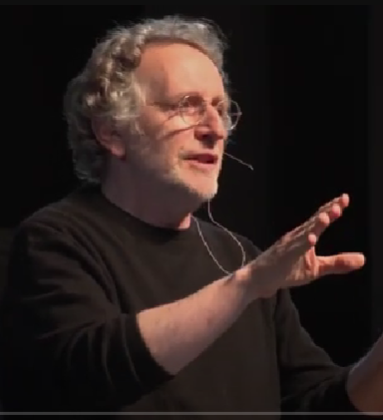
Field of Dreams is one of my favourite sporting movies and remains at No. 17 on my all-time favourite movies list. I watched it again for the umpteenth time only recently with my children. Way back in 2014 near the inception of my blog I wrote an article called Baseball Romanticism and Perfecting the Strike Zone in which I quoted Terence Mann’s unforgettable People Will Come speech from the movie.
So it was a big surprise when this video interview with Field of Dream’s writer/director Phil Alden Robinson came into my You Tube feed. I couldn’t recommend it more highly to fans of the film. Phil is very generous and humiliating and offers such fascinating insight into the production of the film.

The Woodstock 69 Line Up
Web page presentation at Woodstock.com
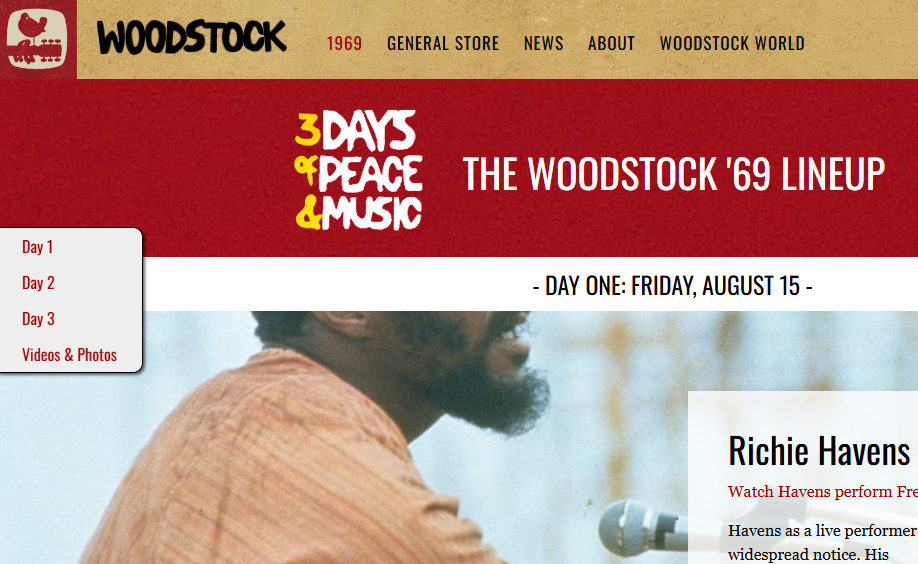
I recently discussed the Isle of Wight festival in Dylan’s Mighty Quinn article. This festival occurred two weeks after the Woodstock festival both in August 1969. Dylan of course shunned the Woodstock Festival, held near his home in upstate New York, for his comeback show on the little-known Isle of Wight on the other side of the Atlantic. During my research for the Quinn song I stumbled upon this marvellous web page called The Woodstock 69 Line Up. The web design and presentation is some of the best I have ever seen, and contains such stunning photography and comprehensive information about each performing artist and act. It’s just such a wondrous record of the legendary event whereby any music aficionado should have more than enough to chew on.

1960: How did Orson Welles make Citizen Kane?
Video interview at BBC Archive
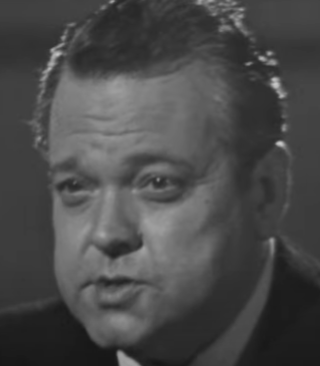
My father attempted to introduce me to Citizen Kane as a young’un, but I would always fall asleep just after Charles Forster Kane (also a young’un) was torn away from his snow sled. The movie now sits at No. 3 on my movie list. Anyway, on a recent Monday News on the March edition, I mentioned how two of my favourite movie-making documentaries were Hearts of Darkness: A Filmmaker’s Apocalypse and The Battle Over Citizen Kane. Then fortuitously just yesterday this 1960 BBC interview arrived with Orson – How did Orson Welles make Citizen Kane?

Let me just say this: I don’t think I’ve heard Orson say anything where I didn’t find myself engrossed whether it’s his narration of my favourite short story by Oscar Wilde – The Happy Prince or his infamous broadcast of H. G. Wells – The War of the Worlds that caused all sorts of panic and strife. Even beyond that, his unscripted interviews such as today’s I find myself equally entranced. His wit and elocution is masterful. To me this interview is a wonderful accompaniment of the aforementioned documentary on Kane. For the cinephiles out there I hope you enjoy it as much as I did.

An aside; the source of inspiration for my Monday’s segment title – ‘News on the March‘ came straight out of the movie Citizen Kane, hence why you see the images which bookend these posts.

That is all. Thank you for reading.

Tagged with: , , , , , , ,
Posted in Movies and TV, Music

The One I Love (2005) – David Gray

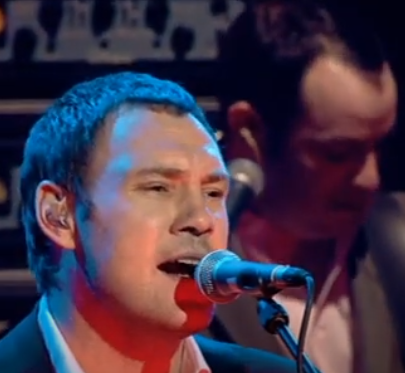
David Gray singing ‘The One I Love’ at London’s Hammersmith Apollo concert in 2005

‘Just occasionally though, a song comes suddenly and out of nowhere, fully formed.’

The music of British singer-songwriter David Gray seems to make a near-annual appearance here, with today’s featured track marking his seventh entry – following Say Hello, Wave Goodbye (1998), which I last featured in August 2024. As that title hints, time has no intention of hitting the brakes. I could’ve sworn it hadn’t been that long since I posted that gem – still my favourite song of his.

The One I Love is a close runner-up, and fittingly, it was one of the very first songs I heard by him. Then again, I hold all of his songs featured here in almost equal affection. I was first introduced to David’s music by a friend during a car trip to Hanging Rock, just outside Melbourne, around 2007.

The One I Love was released on 29 August 2005 as the first single from his seventh studio album, Life in Slow Motion (see image inset). The song is Gray’s second-highest achievement on the UK Singles Chart, peaking at number eight. Worldwide, the song reached number six in Ireland and number 31 in New Zealand. In the United States, it topped the Billboard (Adult Alternative Airplay) chart for six weeks.

There are few other alternative rock balladeers whose voice, melody and lyrics resonate with me as strongly as his does. His voice carries a weathered, rustic charm that finds a perfect counterpart in the warmth of his acoustic arrangements. He’s created overall a unique sound, entirely his own which can’t be confused. It has garnered him a significant following, particularly in the UK and Ireland.

David’s an ol’ smoothie too since he gravitates towards themes of love and emotional depth. Look no farther than The One I Love. “Writing and singing are acts of devout attention” he said in the Arts desk article below. He went on to describe the creative process as ‘A slow and measured ascent with occasional downhill sections, hopefully culminating in a view from the summit!‘ 

He said in this interview about The One I Love:
We spent so long mixing it and recording it. I couldn’t actually hear it. It took about 6 months before I could hear the song. When something becomes a single and everyone decides they like it, and this is probably true of me in life, so in the moment somebody wants to be your friend… and it’s not the way it works. ‘I wouldn’t want to be part of any club that would want me as a member’ to use that Woody Allen line. So everyone is saying it’s great and to me I can’t tell anymore‘.

I can.

Gonna close my eyes
Girl and watch you go
Running through this life, darling
Like a field of snow
As the tracer glides
In its graceful arc
Send a little prayer out to ya
‘Cross the falling dark

Tell the repo man
And the stars above
That you’re the one I love
Yeeaah

Perfect summer’s night
Not a wind that breathes
Just the bullets whispering gentle
‘Mongst the new green leaves
There’s things I might have said
Only wish I could
Now I’m leaking life faster
Than I’m leaking blood

Tell the repo man
And the stars above
That you’re the one I love
You’re the one I love
The one I love

Yuuhuu
Yuuhuu

Don’t see Elysium
Don’t see no fiery hell
Just the lights up bright baby
In the bay hotel
Next wave coming in
Like an ocean roar
Won’t you take my hand, darling
On that old dancefloor

We can twist and shout
Do the turtle dove
And you’re the one I love
You’re the one I love
The one I love

Below, I have presented the official video version and the live version at London’s Hammersmith Apollo.

References:
1. The One I Love (David Gray song) – Wikipedia
2. First Person: singer-songwriter David Gray on how the songs on his new album came to him – The arts desk

Tagged with: , ,
Posted in Music

The Nutcracker (1892) – Pyotr Ilyich Tchaikovsky

The Nutcracker is an 1892 two-act classical ballet by Russian composer Pyotr Ilyich Tchaikovsky. It is the second entry here from the composer after the 1812 Overture (1882).

The Nutcracker is set on Christmas Eve at the foot of a Christmas tree in a child’s imagination featuring a Nutcracker doll. The plot is an adaptation of Alexandre Dumas’s 1844 short story The Nutcracker, itself a retelling of E. T. A. Hoffmann’s 1816 short story The Nutcracker and the Mouse King. Since the late 1960s, The Nutcracker has been danced by many ballet companies, especially in North America. Major American ballet companies generate around 40% of their annual ticket revenues from performances of the ballet.

Synopsis

The Nutcracker tells the tale of a young girl named Clara who receives a wooden nutcracker as a Christmas gift from her mysterious godfather, Drosselmeyer. That night, the nutcracker comes to life, battles the evil Mouse King, and transforms into a prince. Together, Clara and the prince journey through a magical world, first to the Land of Snow and then to the Land of Sweets, where they are welcomed by the Sugar Plum Fairy and treated to a dazzling array of dances from around the world. The ballet blends fantasy, childhood wonder, and festive tradition, culminating in a dreamlike finale that leaves Clara back at home- uncertain if it all truly happened.


The two pieces I presented below from the Nutcracker are the Pas de deux (Step of Two) and Overture respectively. The reason I presented the Pas de deux before the Overture (which of course opens the concert) is because it is my preferred piece from the Ballet. It is simply one of the most hauntingly beautiful pieces I have heard.

Pas de deux
(Sugar Plum Fairy and Her Cavalier) grand pas de deux 14th scene in Act 2.
Pas de deux nearly always follows the Waltz of the Flowers scene – a very famous piece in its own right. In ballet, a pas de deux (French, literally “step of two”) is a dance duet in which two dancers, typically a male and a female, perform ballet steps together.

Tchaikovsky is said to have argued with a friend who wagered that the composer could not write a melody based on a one-octave scale in sequence. Tchaikovsky asked if it mattered whether the notes were in ascending or descending order and was assured it did not. This resulted in the Adagio from the Grand pas de deux. Another story is told that Tchaikovsky’s sister Alexandra had died shortly before he began composition of the ballet and that his sister’s death influenced him to compose a melancholy, descending scale melody for the adagio of the Grand Pas de Deux.

The performance below is by the Royal Ballet from the the Royal Opera House in London. The principals of The Royal Ballet are Marianela Nuñez and Vadim Muntagirov. In fact The Nutcracker will be performed at the Royal Opera House later this year from 22 November 2025 to 5 January 2026.

Overture
The performance below is by the Moscow Ballet. The Overture opens The Nutcracker and it shows where Uncle Drosselmeyer puts the finishing touches on his Christmas gifts for the party that evening. He has magic dolls of all kinds ready to dance for Masha and Fritz.

References:
1. The Nutcracker – Wikipedia

Tagged with: , , ,
Posted in Music

Masters of War (1963) – Bob Dylan

“I’ve never written anything like that before. I don’t sing songs which hope people will die, but I couldn’t help it with this one. The song is a sort of striking out… a feeling of what can you do?”

– In the album notes to The Freewheelin’ Bob Dylan

Masters of War stands as one of contemporary music’s most austere, bitter, and incisive anti-war anthems. Rarely has Dylan sounded so direct and merciless in his phrasing. Gone are the surrealism and poetic flourishes – here, the words spill out raw and unfiltered. Unlike his more prophetic works such as A Hard Rain’s a-Gonna Fall and Blowing in the Wind, where Dylan seems mature beyond his years, Masters of War contains youthful indignation and fury. That vulnerability – his age, his sarcasm, his anger – amplifies the power of the song against those who profit from conflict. It’s a cross generational outpouring which he would later revisit, but to a more nuanced degree in The Times They Are A-Changin.

Dylan wrote Masters of War over the winter of 1962–63 during the height of Cold War paranoia and the escalating arms race between the United States and the Soviet Union. He released it on the album The Freewheelin’ Bob Dylan in the spring of 1963. It was set to the traditional melody of the folk song Nottamun Town, the arrangement by veteran folksinger Jean Ritchie. Unknown to Dylan, the song had been in Ritchie’s family for generations, and she wanted a writing credit for her arrangement. In a legal settlement, Dylan’s lawyers paid Ritchie $5,000 against any further claims.

Some of Dylan’s notable performances of Masters of War include:
–  At New York City’s Town Hall on April 12, 1963
– During the 1991 Grammy Awards ceremony where he received a Lifetime Achievement Award, and
– At his Hiroshima concert in Japan in 1994.

American folk revival musician Pete Seeger covered the song on his 1965 album Strangers and Cousins. Recorded live in Japan, the cover features Seeger playing an acoustic guitar, with each lyric followed by a spoken translation of the lyric by a Japanese translator. Seeger and Dylan had a close personal and professional relationship, with Dylan citing Seeger as a source of inspiration in both musical and political spheres. Additionally, Seeger shared many of the pacifist values expressed by Dylan in Masters of War.

Another noteworthy cover was Eddie Vedder (Pearl Jam) performing Masters of War at Bob Dylan’s 30th anniversary concert in Madison Square Garden, 1992. Just to think that less than 2 years previously Vedder was working as a security guard for a petroleum company in San Diego, California.  

In 2025, Rolling Stone ranked Masters of War as the 6th greatest protest song of all time.

[Verse 1]
Come, you masters of war, you that build the big guns
You that build the death planes, you that build all the bombs
You that hide behind walls, you that hide behind desks
I just want you to know I can see through your masks

[Verse 2]
You that never done nothing but build to destroy
You play with my world like it’s your little toy
You put a gun in my hand and you hide from my eyes
And you turn and run farther when the fast bullets fly

[Verse 3]
Like Judas of old, you lie and deceive
A world war can be won you want me to believe
But I see through your eyes and I see through your brain
Like I see through the water that runs down my drain

[Verse 4]
You fasten all the triggers for the others to fire
Then you set back and watch while the death count gets higher
You hide in your mansion while the young people’s blood
Flows out of their bodies and is buried in the mud

[Verse 5]
You’ve thrown the worst fear that can ever be hurled
Fear to bring children into the world
For threatening my baby, unborn and unnamed
You ain’t worth the blood that runs in your veins

[Verse 6]
How much do I know to talk out of turn?
You might say that I’m young, you might say I’m unlearned
But there’s one thing I know, though I’m younger than you
That even Jesus would never forgive what you do

[Verse 7]
Let me ask you one question is your money that good?
Will it buy you forgiveness? Do you think that it could?
I think you will find, when your death takes its toll
All the money you made will never buy back your soul

[Verse 8]
And I hope that you die and your death will come soon
I will follow your casket by the pale afternoon
And I’ll watch while you’re lowered down to your deathbed
And I’ll stand over your grave ’til I’m sure that you’re dead

References:
1. Masters of War – Wikipedia

Tagged with: , , , ,
Posted in Music

The One (1992) – Elton John

I think apart from Elton’s contributions on the 1994 Lion King soundtrack with Can You Feel The Love Tonight and Circle of Life, today’s featured song – The One – stands as one of Elton John’s finest achievements in his mid to late career. Everything aligns effortlessly here: Bernie Taupin’s lyrics weave the raw vulnerability of love with the grandeur of nature, painting an almost mythic emotional landscape. Elton’s voice – calm, resolute, and utterly in its element – glides through the piece with a quiet intensity. His voice is an instrument much like his piano and he has mastered them both.

Also the lush instrumentation elevates the track, enveloping the listener in a dreamlike soundscape that evokes nature at its elemental pristine beauty. These piano riffs and solos are unforgettable and quite dazzling. It’s quite the feat by Elton, Bernie and the musicians.

John stated that he felt an intense connection to Bernie Taupin’s lyrics for the song, in light of his personal circumstances around the time of making the album, in particular the line “for each man in his time is Cain until he walks along the beach“. Speaking of ‘walks on the beach’ I have to refer here to an extract I presented from James Joyce’s A Portrait of the Artist which I found mesmerising.
The One reached No. 9 on the US Billboard  and No. 1 on the Billboard Adult Contemporary chart. It was nominated for Best Male Pop Vocal Performance at the 1993 Grammy Awards.

So here endeth the double feature of Elton from The One record. It’s said Gianni Versace designed the sets and costumes and of course the cover art. This was Elton’s first recording done completely sober. He has remained so ever since. Elton John remains one of my favourite music artists of the 20th century which is demonstrated by the plethora of music I have presented so far by him in the Music Library Project. He is one of the best melodists I have heard and his voice to my listening senses is almost second to none in contemporary music history. The One is a true masterpiece of songwriting. Thank you Bernie!

[Verse 1]
I saw you dancin’ out the ocean
Runnin’ fast along the sand
A spirit born of earth and water
Fire flyin’ from your hands
In the instant that you love someone
In the second that the hammer hits
Reality runs up your spine
And the pieces finally fit

[Chorus]
And all I ever needed was the one
Like freedom fields, where wild horses run
When stars collide like you and I
No shadows block the sun
You’re all I’ve ever needed
Baby, you’re the one

[Verse 2]
There are caravans we follow
Drunken nights in dark hotels
When chances breathe between the silence
Where sex and love no longer gel, oh
For each man, in his time, is Cain
Until he walks along the beach
And sees his future in the water
A long, lost heart within his reach

References:
1. The One (Elton John song) – Wikipedia

Tagged with: ,
Posted in Music

The North (1992) – Elton John

Elton John Monaco 1992

Today we have the first of an Elton John double billing – a happy quirk of the alphabetical sequence that sometimes throws up these fortuitous double features.

We’re dialing things right down with this lesser known song from Elton John’s 1992 album The One (image inset). Elton has a talent for capturing emotional chill – just as he did on tracks like Too Low for Zero and Cold As Christmas. The North carries on in that same desolate, bleak and despondent way painting a stark emotional landscape. The music kind of meanders as well like a man trudging along disoriented and numb searching for a beacon of hope.

Lyrically, the song explores themes of personal reckoning and the struggle to move beyond a haunted past. Elton sees a faint light on the horizon as he turns away from the cold, oppressive burden of “the North” – a metaphorical steel cloud trailing behind him. In shedding that emotional weight, he begins to rediscover the younger, more hopeful self within, now turning his gaze toward the symbolic warmth of the South.

It’s worth noting that The One marked Elton’s first studio album following his recovery from drug and alcohol addiction and bulimia in 1990. That context makes the song’s journey from heaviness to clarity feel all the more poignant.

The One is Elton John’s 21st studio album and the last record I procured by him. I wore it out such was my fascination with the record. Its cover artwork was designed by Gianni Versace. The One spent three consecutive weeks at No. 2 without reaching No. 1 on the UK Albums Chart, being kept off the top spot by the Lionel Richie compilation Back to Front. However, it was John’s biggest-selling album in the US since 1976. All songs composed by Elton John and Bernie Taupin, except Runaway Train, co-written by Olle Romö.

[Verse 1]
Have you seen the North
That cold grey place
Don’t want its shadow anymore
On my face
A man grows bitter

We’re a bitter race
Some of us never get to see
A better place
In the Northern Skies
There was a steel cloud
It used to follow me around
But I don’t see it now
There’s a farm in the rain
And a little farmhouse
There were a young man’s eyes
Looking south

[Chorus 1]
The North was my mother
But I no longer need her
You trade your roots and your dust
For a face in the river

[Chorus 2]
And a driven rain that washes you
To a different shore
There’s a North in us all
But my North can’t hold me anymore

References
1. The One (Elton John album) – Wikipedia

Tagged with: , ,
Posted in Music

The Night They Drove Old Dixie Down (1976) – The Band (The Last Waltz)

The Night They Drove Old Dixie Down is drawn from the final concert by The BandThe Last Waltz – held on Thanksgiving Day, 1976, at San Francisco’s Winterland Ballroom. Superlatives are scarcely suffice when describing The Band’s performance that evening. You know you’re in the presence of true artistic greatness when your only honest response is: How on God’s earth did they do that? I remain in awe of this spellbinding concert, and of how one of America’s finest directors, Martin Scorsese, managed to capture and preserve its full majesty on film.

Today’s featured song stands as one of the evening’s crowning achievements – and that’s no small feat considering the brilliance on display throughout the show. Old Dixie is already the ninth performance to appear here from The Last Waltz.

It’s hard to find a song more steeped in the roots of old Americana, and Levon Helm’s rugged, time-worn voice feels inseparable from its soul and story. It has that ring of truth and the whole aura of authenticity. In fact the performance in The Last Waltz below is last time the song was performed by Helm. He refused to play the song afterwards.

The lyrics of the song discuss the destruction of the Richmond and Danville Railroad that carried supplies for the Confederate Army at Petersburg

The Night They Drove Old Dixie Down was written in 1969 by Robbie Robertson. Through the voice of Virgil Caine, a destitute Southern farmer, the song chronicles the harrowing toll of the Civil War – marked by shattered livelihoods, hunger, and heartbreaking personal loss. It is set during the last days of the American Civil War, when George Stoneman was raiding southwest Virginia. Dixie is the historical nickname for the states making up the Confederate States of America.

Creation (from Wikipedia)

Robbie Robertson spent about eight months working on the song. He said he had the music to the song in his head and would play the chords over and over on the piano but had no idea what the song was to be about. Then the concept came to him and he researched the subject with help from the Band’s drummer Levon Helm, a native of Arkansas. In his 1993 autobiography, This Wheel’s on Fire, Helm wrote, “Robbie and I worked on ‘The Night They Drove Old Dixie Down’ up in Woodstock. I remember taking him to the library so he could research the history and geography of the era and make General Robert E. Lee come out with all due respect.”

The Night They Drove Old Dixie Down is considered one of the highlights of The Band, the group’s second album, which was released in the fall of 1969. The album has been viewed as a concept album, with the songs focusing on the peoples, places and traditions associated with an older version of Americana. The Band have frequently performed the song in concert, and it is included on the group’s live albums Rock of Ages (1972) and Before the Flood (1974) featuring Bob Dylan and was the first record I procured of him or The Band

Although it has long been believed that the reason for Helm’s refusal to play the song after The Last Waltz was a dispute with Robertson over songwriting credits, according to Garth Hudson the refusal was due to Helm’s dislike for Joan Baez’s version.
Joan’ Baez’s version peaked at No. 3 on the Hot 100 on October 2, 1971. Baez later said she initially learned the song by listening to the recording on the Band’s album, and had never seen the printed lyrics at the time she recorded it, and thus sang the lyrics as she had (mis)heard them. In more recent years in her concerts, Baez has performed the song as originally written by Robertson.

[Verse 1]:
Virgil Caine is the name and I served on the Danville train
‘Til Stoneman’s cavalry came and tore up the tracks again
In the winter of ’65, we were hungry, just barely alive
By May the tenth, Richmond had fell
It’s a time I remember, oh so well

[Chorus]:
The night they drove old Dixie down
And the bells were ringing
The night they drove old Dixie down
And the people were singing
They went, “La, la, la”

[Verse 2]:
Back with my wife in Tennessee
When one day she called to me
“Virgil, quick, come see, there goes Robert E.Lee”
Now I don’t mind choppin’ wood
And I don’t care if the money’s no good
Ya take what ya need and ya leave the rest
But they should never have taken the very best

[Verse 3]
Like my father before me, I will work the land
And like my brother above me, who took a rebel stand
He was just eighteen, proud and brave
But a Yankee laid him in his grave
I swear by the mud below my feet
You can’t raise a Caine back up when he’s in defeat

References:
1. The Night They Drove Old Dixie Down – Wikipedia

Tagged with: , , , , ,
Posted in Music

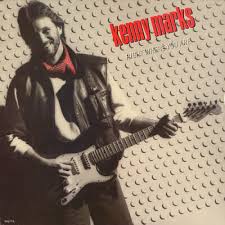
The Next Time You See Johnny (1990) – Kenny Marks

I was first introduced to the music of 1980s Christian rock artist Kenny Marks by my school friend Eric during our early high school years. At that impressionable age, I was deeply moved by it – and clearly, that impact has endured, as this marks the third song of his to feature here.

The Next Time You See Johnny stands out as an emotionally resonant portrayal of a single-parent family. What distinguishes it from the typical Christian outreach song (and I’ve encountered many over the years) is its highly relevant subject matter for today’s world and the extraordinary guitar solo that closes the track – starting at 4:20 in the video below.

When I first heard it, I was floored. Even now, I never want the song to end. I genuinely consider that solo one of the finest guitar passages I’ve ever heard to wrap up a song.

This is how developmental the story line is. Johnny is the ultimate in a series where Kenny Marks first wrote about a fictional couple Jeannie and Johnny from Franklin High School couple and appeared on his albums Attitude (1985) and Make It Right (1987). In the song, Growing Up Too Fast they are two individual kids dealing separately with emotions and impulses. In The Party’s Over they meet at a party and get together in the back seat of Johnny’s car, resulting in a pregnancy which robs them of their carefree teenage lifestyle.

Now onto the album Another Friday Night featuring today’s song, Johnny has left Jeannie with their son, who has become old enough to miss his father’s absence, yet innocent enough to hold forgiveness in his heart. The son’s prayer to Jesus becomes one his mother perseverates when She feels the presence of someone unseen and from the forgiveness which she also feels in that presence and expresses the following:

And the next time You see Johnny
Tell him it’s all right

There’s still never a dry eye in this house when this song comes to a close. To my senses it’s quite masterful songwriting and by golly that guitar throughout elevates it to a whole other level. His songs could be considered too religious, sanguine, sentimental and ‘rote by numbers’ by modern tastes, but I won’t shy away from it. Although Kenny Marx’s name may not be known to a younger generation of Christian music aficionados but at his height in the ’80s and ’90s he was a true CCM (Contemporary Christian Music) star with a string of US Christian radio hits. 

Bedtime
She sees her son on his knees
And the prayer that she hears
Through the door makes her ill at ease
“Jesus”
She hears a young boy pray
“Could You bring back my daddy?
I know that You’ll find a way”

“And the next time You see daddy
Tell him I’m all right
And there’s a fire in my heart for him
That’s always burning bright
Tell him that I pray for him
Each and every night”

Bedtime
Where she taught him to pray
“Now I lay me down to sleep”
Were the words he would say
“Jesus”
She hears him again
And she faces thе faith of a child
That’s no longer pretend

“And thе next time You see daddy
Tell him I’m all right
And there’s a fire in my heart for him
That’s always burning bright
Tell him that I pray for him
Each and every night”

Bedtime
In her room all alone
She feels the presence of someone unseen
Someone unknown
“Jesus”
She hears herself start
“Let the fire of forgiveness burn bright
In this broken-down heart”

And the next time You see Johnny
Tell him it’s all right
There’s a fire of forgiveness
That’s always burning bright
There’s Someone he can pray to
Each and every night”

Jesus

References:
1. Kenny Marks – Wikipedia
2. Kenny Marks Dies at 67 – GMA
3. Kenny Marks: Remembering the CCM star of the ’80s and ’90s – Cross Rhythms

Tagged with: , ,
Posted in Music

The Moment (1996) – Kenny G

My other post on Kenny G was in March last year. It was about his 1992 mega-hit single Forever in Love and remains by far the most visited article on my blog according to the WordPress statistics. Why that is, I have no idea although it’s one of the few articles I wrote partly in jest – mocking elevator music. That’s not to take anything away from his prestigious talent or obfuscate my listening enjoyment of these featured songs. I even owned his most successful record Breathless (1992) which contains – Forever. I was in a silly mood – that’s all.

The Moment may not have been successful as Forever, but it was Kenny G’s first hit on the Billboard in three years reaching number 63. It is the title track on his eighth studio album The Moment released in 1996 which reached No 2 on the Billboard album charts. The single was released alongside another artist and song you may be familiar – Toni Braxton – Un-Break My Heart.

Kenny G is an American Smooth jazz saxophonist and the best selling instrumentalist of all time with over 75 million record sales, and 1.5 billion streams. You can find him here talking about his journey from not making the high school band to global music superstardom. He even discusses parodies which is interesting since my friend Nancy at The Elephant’s Trunk in my last Kenny post mentioned a spoof video of him and Michael Bolton performing How Am I Supposed To Live Without You. I can’t say it didn’t have me in stitches and still makes me chuckle whenever I see it. To corroborate Nancy – you’ve been warned.

From Wikipedia:

Kenny was born Kenneth Bruce Gorelick (June 5, 1956). He started playing the saxophone at the age of ten, inspired by a performance on The Ed Sullivan Show. During high school, he took private saxophone lessons and played in the school jazz band. Kenny G’s fourth solo album, Duotones (1986), marked the start of his most commercially successful period, featuring the hit single Songbird.  His 1992 album, Breathless, became the best-selling instrumental album ever. He has worked on soundtracks for films such as The Bodyguard and collaborated with artists, including Andrea Bocelli and Frank Sinatra.

The music video (below) of the song starts with Kenny G coming in a Seaplane and playing his Soprano saxophone. Then, the scene breaks to him flying in the plane to downtown Seattle, where Kenny G hails from. Then performing again in variety of locations, song production house, a sunset scene, in front of Pike Place Market, a crowd watching him performing and finally in the waterfront of Seattle.

It appears Kenny G is still touring according the events calendar in the video below (Asia in July and then US in Sept and Brazil in Oct and back to the US after).
Here endeth the post, you can find the lyrics in your dreams. Thanks as always for reading.

References:
1. The Moment (Kenny G composition) – Wikipedia
2. Kenny G – Wikipedia

Tagged with: ,
Posted in Music

The Mighty Quinn (Quinn, the Eskimo) 1969 – Bob Dylan

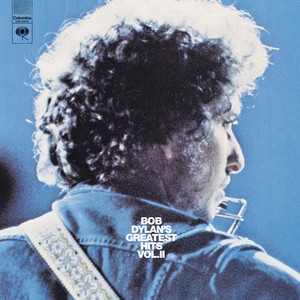
Dylan’s live rendition of The Mighty Quinn (Quinn, the Eskimo) was released on Self Portrait and later Bob Dylan’s Greatest Hits Vol. II which was where I first heard it. I always dug it’s upbeat tempo and playful lyrics. It’s so fresh and spirited. It showcases Dylan’s ability to reinterpret his own work in a way that feels both authentic and engaging. The Mighty Quinn (Quinn, the Eskimo) is yet another Dylan penned song where the cover artist – in this case the British band Manfred Mann made into a huge hit. It was originally written during the Basement Tapes sessions in 1967, but the song’s first release was in January 1968 by Manfred Mann becoming a chart-topping hit in the UK.

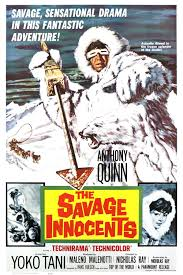
One fascinating detail about this song is its connection to actor Anthony Quinn, who played an Eskimo in the 1960 film The Savage Innocents (image inset). Dylan reportedly drew inspiration from this character when crafting the song.

The version you hear below was recorded live at the Isle of Wight Festival in 1969. The Band was backing Dylan during his performance and I think its Rick Danko who can be heard contributing wonderful back-up vocals which add so much punch to the song. Four performances from this concert including today’s featured song were included on Dylan’s album Self Portrait (1970). The others were Like a Rolling Stone, Minstrel Boy and She Belongs to Me. Thanks to rumours that one or all of the Beatles would be joining him on stage, Dylan’s comeback show had become, in the words of music journalist John Harris, “inflated into the gig of the decade“. On 31 August, Dylan arrived on stage in a cream suit recalling Hank Williams.

Isle of Wight Festival (From Wikipedia article)

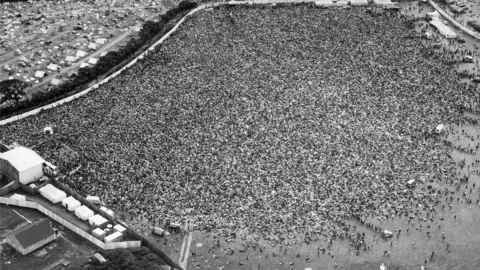
The 1969 Isle of Wight Festival was held on 29–31 August 1969 at Wootton Creek, on the Isle of Wight, England. The festival attracted an audience of approximately 150,000 to see acts including Bob Dylan, the Band, the Who, Free, Joe Cocker, the Bonzo Dog Band and the Moody Blues.

The 1969 festival was considerably larger and more popular than the previous year’s. Dylan had been little heard of since his allegedly near-fatal motorcycle accident in July 1966. Shunning the Woodstock Festival, held near his home in upstate New York, Dylan was initially reluctant to perform his comeback show on the little-known Isle of Wight. After weeks of negotiations, the Foulk brothers showed him a short film of the island’s cultural and literary heritage; this appealed to Dylan’s artistic sensibilities, as he was enthusiastic about combining a family holiday with a live performance in Tennyson country. The family was scheduled to travel to Britain on the Queen Elizabeth 2 and nearly missed the gig because Dylan’s son Jesse had been hit by a ship cabin door and needed to be hospitalised. Dylan travelled to the site by plane at the last minute.

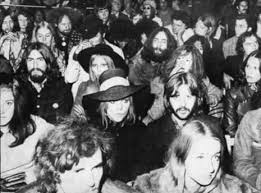
Before the festival, Dylan and his fellow Woodstock residents, the Band, rehearsed at Forelands Farm in Bembridge, and were joined there by George Harrison, the only “outsider” to have visited him in his enclave in the Catskill Mountains. On Saturday, 30 August, the day before Dylan was to take the stage, Harrison’s fellow Beatles John Lennon and Ringo Starr arrived on the island, along with Keith Richards of the Rolling Stones, Eric Clapton and Elton John. Also seated in the sealed-off VIP area in front of the stage would be Beatle wives Pattie Harrison, Yoko Ono and Maureen Starkey.

[Verse 1]
Everybody’s building the big ships and the boats
Some are building monuments
Others, jotting down notes
Ev’rybody’s in despair
Every girl and boy
But when Quinn the Eskimo gets here
Ev’rybody’s gonna jump for joy
Come all without, come all within
You’ll not see nothing like the mighty Quinn

[Verse 2]
I like to do just like the rest, I like my sugar sweet
But guarding fumes and making haste
It ain’t my cup of meat
Everybody’s neath the trees
Feeding pigeons on a limb
But when Quinn the Eskimo gets here
All the pigeons gonna run to him
Come all without, come all within
You’ll not see nothing like the mighty Quinn

[Verse 3]
A cat’s meow and a cow’s moo, I can recite them all
Just tell me where it hurts yuh, honey
And I’ll tell you who to call
Nobody can get no sleep
There’s someone on ev’ryone’s toes
But when Quinn the Eskimo gets here
Ev’rybody’s gonna wanna doze
Come all without, come all within
You’ll not see nothing like the mighty Quinn

References:
1. Quinn the Eskimo (Mighty Quinn) – Wikipedia
2. Isle of Wight Festival 1969 – Wikipedia

Tagged with: , , ,
Posted in Music

Follow Blog via Email

Enter your email address to follow this blog and receive notifications of new posts by email.

Join 780 other subscribers

← Back

Thank you for your response. ✨