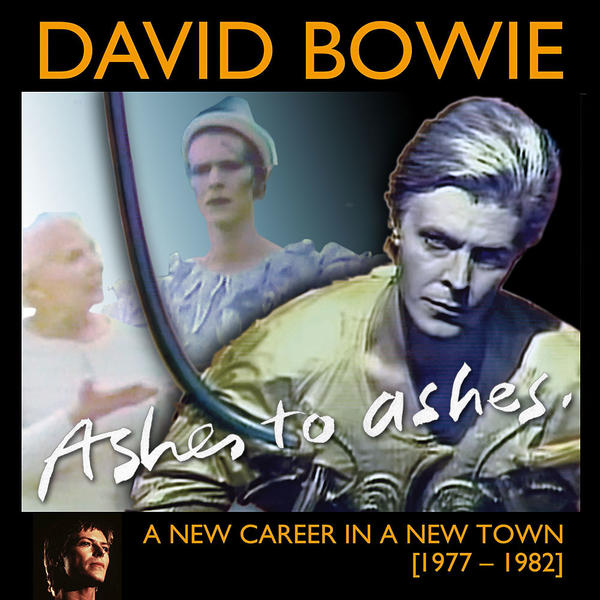
Ashes to Ashes (1980) – David Bowie

Ashes to Ashes is a follow-up to Space Oddity and it reinterprets its iconic stranded spaceman Major Tom as a drug addict lost in the throes of substance abuse. Bowie partially based the lyrics on his own experiences with drug addiction throughout the 1970s. Ashes to Ashes is art-pop and new wave; recorded at the dawn of the 1980s. Like much of his music, today’s featured track took me decades to unpack and appreciate, but I now regard Ashes to Ashes as one of his most innovative and intriguing accomplishments. Its experimental sound continues to challenge my ears, yet it never fails to provide a deeply satisfying experience – the unique musical structure a true technical achievement. ‘A mind bender’ basically.

Ashes to Ashes was released as the lead single from Bowie’s 14th studio album, Scary Monsters (and Super Creeps). It became Bowie’s second No. 1 single in the UK and his fastest-selling single. It was recorded from February to April 1980 in New York and London and features guitar synthesiser played by Chuck Hammer. Hammer, who dubbed his work “guitarchitecture” created an unique choral effect using four guitar synthesizers playing inverted chords. It recorded in the studio’s back stairwell to add extra reverb and creating an immersive, futuristic atmosphere that perfectly complements the song’s lyrics.

The music video below was just as innovative. Directed by Bowie and David Mallet, this short film became one of the most expensive and ambitious of its time. The images, loaded with symbolism and pop culture references, transport us to a dreamlike and decadent universe. Bowie, dressed as Pierrot, shares the scene with members of London’s Blitz scene, creating a unique visual aesthetic that reflects the spirit of the era. The most iconic moment of the video is, without a doubt, the scene in which Bowie and the Blitz boys walk toward the camera in front of a bulldozer. This image, charged with latent violence, has become, it’s said… one of the most iconic in the history of music videos.

The combination of lyrical introspection, musical innovation, and avant-garde visual aesthetics make Ashes to Ashes a masterpiece that has transcended fashion and remains relevant today.

[Verse 1]
Do you remember a guy that’s been
In such an early song?
I’ve heard a rumour from Ground Control
Oh, no, don’t say it’s true
They got a message from the Action Man
“I’m happy, hope you’re happy too
I’ve loved all I’ve needed, love
Sordid details following”

[Pre-Chorus]
The shrieking of nothing is killing
Just pictures of Jap girls in synthesis
And I ain’t got no money and I ain’t got no hair
I ain’t got no money and I ain’t got no hair
But I’m hoping to kick, but the planet is glowing

[Chorus]
Ashes to ash and funk to funky
We know Major Tom’s a junkie
Strung out in heaven’s high
Hitting an all-time low

[Verse 2]
Time and again, I tell myself
I’ll stay clean tonight
But the little green wheels are following me
Oh, no, not again
I’m stuck with a valuable friend
“I’m happy, hope you’re happy too”
One flash of light, but no smoking pistol

[Pre-Chorus]
I’ve never done good things
I’ve never done bad things
I never did anything out of the blue, whoa whoa
Want an axe to break the ice
I want an axe to break the ice
Wanna come down right now
I want to come down right now

References:
1. Ashes to Ashes (David Bowie song) – Wikipedia
2. “Ashes to Ashes” de David Bowie: el regreso de Major Tom y un hito en la música pop – Concierto
Tagged with: , ,
Posted in Music

Bright Blue Rose (1989) – Jimmy MacCarthy

Bright Blue Rose is a song written by Jimmy MacCarthy who is known principally as a ‘songwriter’ because his songs have been recorded by many Irish artists. Bright Blue Rose was first released by Christy Moore in 1989. Since then, the song has been covered by many other artists, including Mary Black, Donna Taggart and Jimmy MacCarthy himself in 1991. I do not recall how this song came to my attention, but it follows the rich imagery and celtic folklore in Irish music that has featured here prominently, most notably music by: Mairéad Ní Mhaonaigh, Eleanor McEvoy, Enya, & The Fureys.

Bright Blue Rose is interpreted as a deeply spiritual song, filled with symbolism that hints at Christian themes:

One bright blue rose outlives all those
Two thousand years and still it goes
To ponder his death and his life eternally

There also seems to be parallels between it and the traditional Irish lament An Mhaighdean Mhara (The Mermaid) that I presented here back in 2019. In Rose there is reference to a mermaid or at least the mythological aspects:

And she like a ghost beside me goes down with the ease of a dolphin
And emerges unlearned, unshamed , unharmed
For she is the perfect creature, natural in every feature

Despite the difference in eras – one being a modern composition and the other an ancient Gaelic lament – they share a haunting, ethereal quality and rely on traditional Celtic tonalities creating a melancholic atmosphere that feels timeless.

The following is extracted from the Wikipedia reference below. It is highly abridged and is not reflective of Rafferty’s extensive musical career, so I would encourage to read from the source for more information:

MacCarthy was born in Macroom, County Cork, Ireland. He became a musician from an early age, receiving his first guitar at the age of 7. He was unhappy at school and left at 15 and made a living out of singing at pubs. Later he was busking in the streets of London and doing occasional concerts. In the 1980’s, MacCarthy secured a number of support slots for other artists, most notably Chris de Burgh and Maura O’Connell. But it was MacCarthy’s experience as a songwriter that stood out to him where groups and artists were having more success than he did as a solo artist. Even prior to the release of his last album to date in 2010, MacCarthy had written over 100 new songs for it. Once he was making a stable income from his songwriting royalties, he found houses to buy and renovate.

As of 2017, there have been two tribute albums released celebrating the work of Jimmy MacCarthy. The first was a collection by popular artists that have recorded his songs and the second was by his long-time friend Mary Black.

While MacCarthy is often assumed to have come from the folk tradition, he has on several occasions referred to himself as a “child of the radio”. Growing up, MacCarthy loved Elvis Presley, Smokey Robinson and especially Dusty Springfield, and he made his first pay covering their songs in pubs. He has named Paul Simon, Randy Newman and Tom Waits as being among his favourite lyricists of all time. MacCarthy named James Taylor as the performer most like him, due to the fact he plays guitar and piano on stage.

I skimmed across black water, without once submerging
Onto the banks of an urban morning
That hungers the first light, much much more
Than mountains ever do

And she like a ghost beside me goes down with the ease of a dolphin
And emerges unlearned, unshamed , unharmed
For she is the perfect creature, natural in every feature
And I am the geek with the alchemists stone

For all of you who must discover, for all who seek to
Understand
For having left the path of others, you find a very special hand

And it is a holy thing, and it is a precious time
And it is the only way
Forget-me-nots among the snow, it’s always been and so it goes
To ponder his death and his life eternally

For all of you who must discover
For all who seek to understand
For having left the path of others, you find a very special hand

And it is a holy thing, and it is a precious time
And it is the only way
Forget-me-nots among the snow, it’s always been and so it goes
To ponder his death and his life eternally

One bright blue rose outlives all those
Two thousand years and still it goes
To ponder his death and his life eternally

References:
1. Jimmy MacCarthy – Wikipedia

Tagged with: , ,
Posted in Music

Centerfold (1982) – The J. Geils Band

OK, it’s about as crass as it gets and so 80’s, but geewiz Centerfold is well written and catchy. The lyrics alone deserve a read. Also musically as soon as the song blares out on the speakers there’s no escaping its tractor beam. Upon hearing this in my early adolescence it hit all the right buttons. My appreciation of it, like my testosterone has probably faded over the years, but when this dance rock anthem came on my music player a few days ago, I wondered why I hadn’t written about it. I just love its candidacy and even the song’s premise is more than an interesting one at that: An innocent girl you have fawned over at school (a homeroom angel who slipped notes under the desk) is now in fact – a Centerfold!

I can see why the The J. Geils Band were dissuaded by their record company from originally wanting Angel In Blue to be their album’s first single, but I fully appreciate why the band would have liked that song. Angel in Blue is really good and definitely worth a listen. Centerfold was, of course the song they recommended and ‘boom’! It reached No. 1 on the U.S. Billboard in February 1982 and held that spot for six consecutive weeks, becoming the most successful single of the group’s career. In 2018, the song was ranked at No. 66 on Billboard‘s All Time Top Songs. It was also an early staple on recently launched MTV. 

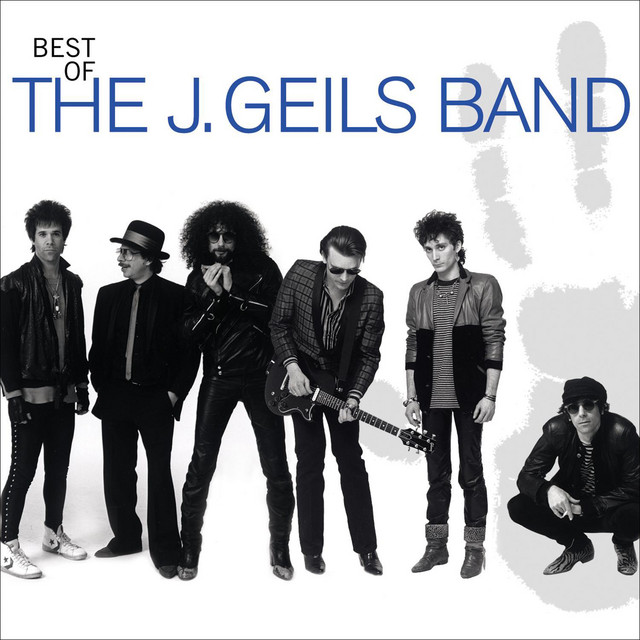
It was sad to read in the 2017 Jacksonville article below that the guitarist J. Geils, who sang Centerfold, had died. The J. Geils Band was founded in 1967 in Worcester, Massachusetts, while Geils, whose full name was John Warren Geils Jr. Bandmates included Danny Klein, Richard “Magic Dick” Salwitz, Stephen Jo Bladd, Peter Wolf and Seth Justman. The band, whose music bridged the gap between disco and new wave, released 11 studio albums before breaking up in 1985. They reunited off and on over the years. Their biggest hits other than Centerfold included Must of Got Lost and Love Stinks a rant against unrequited love, the title song on their 1980 album.

[Verse 1]
Does she walk? Does she talk? Does she come complete?
My homeroom, homeroom angel always pulled me from my seat
She was pure like snowflakes no one could ever stain
The memory of my angel could never cause me pain

[Pre-Chorus]
Years go by, I’m lookin’ through a girly magazine
And there’s my homeroom angel on the pages in-between

[Chorus]
My blood runs cold
My memory has just been sold
My angel is the centerfold
(Angel is the centerfold)
My blood runs cold (Woo)
My memory has just been sold
Angel is the centerfold

[Verse 2]
Slipped me notes under the desk
While I was thinkin’ about her dress
I was shy, I turned away
Before she caught my eye
I was shakin’ in my shoes
Whenever she flashed those baby-blues
Somethin’ had a hold on me
When angel passed close by

[Pre-Chorus]
Those soft and fuzzy sweaters, too magical to touch
To see her in that négligée is really just too much

[Chorus]

[Verse 3]
Yeah, now, listen
It’s okay, I understand
This ain’t no never-never land
I hope that when this issue’s gone
I’ll see you when your clothes are on
Take your car, yes, we will
We’ll take your car and drive it
We’ll take it to a motel room
And take ’em off in private

[Pre-Chorus]
A part of me has just been ripped
The pages from my mind are stripped
Oh, no, I can’t deny it
Oh, yeah, I guess I gotta buy it

References:
1. Centerfold (song) – Wikipedia
2. Guitarist J. Geils, who sang ‘Centerfold,’ dies at age 71 – Jacksonville

Tagged with: , ,
Posted in Music

The Boy With The Thorn In His Side (1985) – The Smiths

So I think we’ve reached a stage where we feel… if they don’t believe me now, will they ever believe me? You know, what more can a poor boy do?…I wanted [fame] for so long and now I’ve got it, isn’t that odd?” He added. “The strangest thing in the world is when you get what you really pray for.”

– Morrissey

What could be more Smithian than today’s featured song – The Boy With The Thorn In His Side? From Johnny Marr’s jangly and rustic guitar work to an infectious melody and as always Morrissey’s melancholic, but alluring vocal form. This indie-pop song – just sticks, like so much of their music. You might think by the song’s UK chart peak of No.23, that The Boy With The Thorn In His Side to be one of The Smiths’ lesser achievements, but upon reflection and considering the band’s enduring legacy, it’s clear the song has become quite the artistic realization. It was the first single by The Smiths to be accompanied by a promotional music video something the band had previously resisted. They also performed the song on an episode of Top of the Pops.

During The Smiths’ UK tour of spring 1985 they first performed it as an instrumental during soundchecks and then when Morrissey added lyrics it really started to take shape. And despite the brightness of the sound the message behind his lyrics was entirely personal. He was writing about the fame he’d so enthusiastically courted – and how it affected him now he’d attained it. “The thorn is the music industry and all the people who never believe me”.

The Smiths wanted to strip their sound back after their previous few singles, among them How Soon Is Now? was comparatively densely layered. Biographer Tony Fletcher felt they wanted to rediscover “the lightness of touch that had made previous singles such as William, It Was Really Nothing so instantly appealing”. Johnny Marr was especially pleased with the fluid guitar arrangement he devised for the song. In 2003, Morrissey named it his favourite Smiths song.

I couldn’t agree more with DJ Stuart Maconie reflections below in an interview he did for The Smiths’ official YouTube channel:

The Boy With The Thorn In His Side … has economy, it has passion, glamour and an extraordinary guitar arrangement by Johnny Marr, particularly towards the end, where it builds and builds, with those layers of coruscating, shimmering guitars. You so want it to go on forever, but you know it has to end sometime.”

[Chorus]
The boy with the thorn in his side
Behind the hatred there lies
A murderous desire
For love

[Verse 1]
How can they look into my eyes
And still they don’t believe me?
How can they hear me say those words
Still they don’t believe me?
And if they don’t believe me now
Will they ever believe me?
And if they don’t believe me now
Will they ever, they ever believe me?
Oh, ohh
Ohhm ohh

[Chorus]
The boy with the thorn in his side
Behind the hatred there lies
A plundering desire
For l-l-love

[Verse 2]
How can they see the love in our eyes
And still they don’t believe us?
And after all this time
They don’t want to believe us
And if they don’t believe us now
Will they ever believe us?
And when you want to live, how do you start?
Where do you go? Who do you need to know?

References:
1. The Boy With The Thorn In His Side: Why This Pivotal Smiths Song Sticks – Dig
2. The Boy with the Thorn in His Side – Wikipedia

Tagged with: , , ,
Posted in Music

The Boat Song (2002) – My Friend the Chocolate Cake

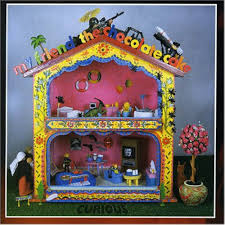
I always loved the Australian chamber pop group My Friend the Chocolate Cake. Today’s song The Boat Song comes from the 2002 album Curious (image inset). This melancholic instrumental is one of the more sombre tracks on the album although the album isn’t exactly ‘uptempo’, rather more ambient and atmospheric. The Boat Song is restrained but has this alluring depth of intimacy and transcendence. It is kind of experimental and repetitive, but I like where it takes my mind.

The album Curious peaked at No. 14 on the ARIA chart. I received this album in the mail as a gift for having seen (founder) David Bridie and Archie Roach in concert and it remains one of my most cherished albums. I became a bit of a band groupie of the Cake and David Bridie’s solo work and watched them live all over the place and got the pleasure to talk to them on occasion. 

From All Music:

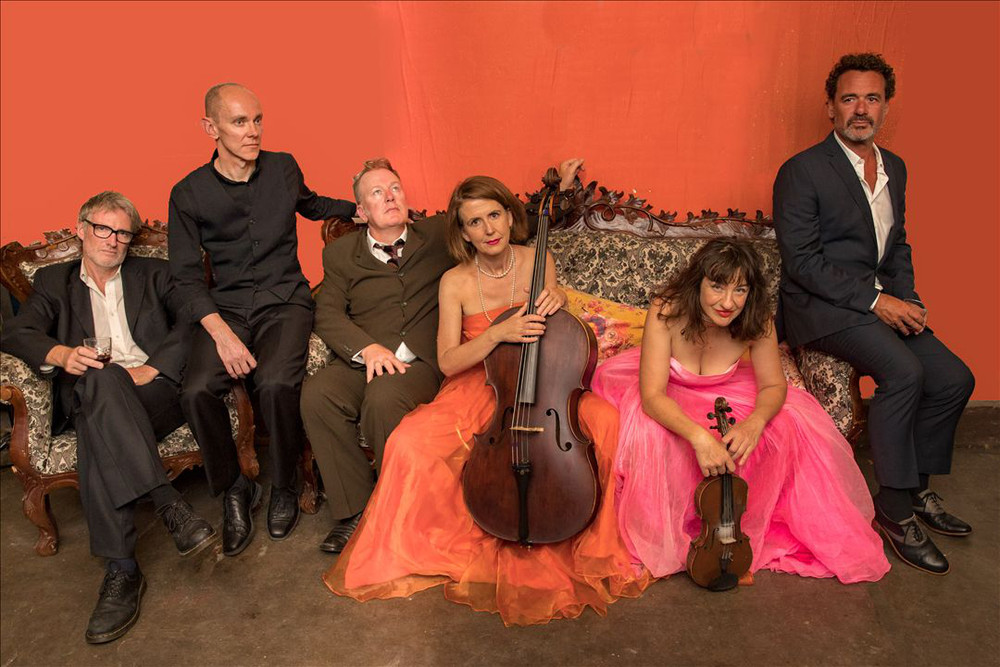
The album Curious is littered with clever string arrangements by cellist Helen Mountfort and violinist Hope Csutoros, and the lush overtones of David Bridie’s piano and Wurlitzer round out the lead section nicely. Bridie handles the majority of the songwriting (sometimes sharing the credit with Mountfort and others not in the band) and proves a talent for composing engaging changes and insightful lyrics. A far cry from the goofy name and band photo, Curious is a sophisticated affair.

References:
1. My Friend the Chocolate Cake – Wikipedia

Tagged with: , , ,
Posted in Music

The Barricades Of Heaven (1996) – Jackson Browne

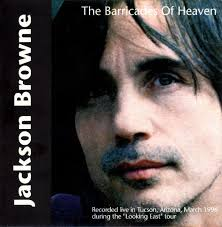
The Barricades Of Heaven by Jackson Browne is yet another song recommended to me by Christian at Christian’s Music Musings. It’s Browne’s second entry here after Late For the Sky – another Christian recommendation. I used to think since listening to his popular hit Running on Empty that Browne’s singing resonated strongly and the music ebbs and flows like a river, but just when I think he will go somewhere in a song it seems to flounder or not reach the cascades of what I envisioned. But it seems my proclivity for a killer crescendo misses the whole point. Like how the old saying goes ‘Life is a journey, not a destination‘ and that couldn’t be more fitting of Browne’s music, at least based on what I have heard.

The Barricades Of Heaven like Late For the Sky is told with a blend of warmth, intimacy, and emotional depth. There are shades of Bob Seger’s Americana epic – Against the Wind and Springsteen’s road trip songs interspersed with a ‘coming of age’ love. There is so much to like about The Barricades Of Heaven and seems to get better on repeated listens. It comes from the American singer-songwriter’s eleventh album Looking East which peaked at number 36 on the Billboard charts. Coming two years after his successful I’m Alive, Wikipedia states ‘that Browne returned to more politically and socially oriented themes on Looking East. The most notable song, Barricades of Heaven is a reference to the “barrios” (Spanish for neighbourhoods and perhaps associated with low income housing) of Los Angeles.

Critic William Ruhlman said about the album “it is a highly referential work from an artist who started where most end and has been earnestly seeking the right direction ever since. Looking East finds him in his own backyard, still searching.”

For further information about Jackson Browne and his extensive discography, I point you to Christian’s all you need to know article – My Playlist: Jackson Browne.

[Verse 1]
Running down around the towns along the shore
When I was sixteen and on my own
No, I couldn’t tell you what the hell those brakes were for
I was just trying to hear my song

[Verse 2]
Jimmie found his own sweet sound and won that free guitar
We’d all get in the van and play
Life became the Paradox, the Bear, the Rouge et Noir
And the stretch of road running to LA

[Chorus]
Pages turning
Pages we were years from learning
Straight into the night our hearts were flung
Better bring your own redemption when you come
To the barricades of Heaven where I’m from

[Verse 3]
All the world was shining from those hills
The stars above and the lights below
Among those there to test their fortunes and their wills
I lost track of the score long ago

[Chorus]

[Bridge]
Childhood comes for me at night
Voices of my friends
Your face bathing me in light
Hope that never ends

References:
1. Looking East – Wikipedia

Tagged with: , ,
Posted in Music

Mucize (The Miracle) Soundtrack (2015) – Tevfik Akbasli, Yildiray Gürgen & Mahsun Kirmizigül

This will be a short article today, acting more as a musical adendum to yesterday’s movie entry from Turkey – Mucize (The Miracle) 2015 – Mahsun Kırmızıgül (Friday’s Finest). There were so many wonderful aspects of the film I already discussed including the imposing, yet inspiring film soundtrack. Such was the music’s prominence it felt like it resonated beyond the film itself. The soundtrack is a rich tapestry of melodies that blend traditional Turkish musical elements with contemporary orchestral arrangements. Composed by Mahsun Kırmızıgül, Yıldıray Gürgen, and Tevfik Akbaşlı, the score reflects to a tee the film’s emotional depth and cultural setting.

The album features 32 tracks capturing various moods—from uplifting and hopeful to introspective and poignant. It seamlessly integrates traditional motifs with modern cinematic scoring techniques. I have presented my three favourite pieces of music from the movie, namely the title track – Mektup, Intihar and Fragman Müziği. Let me tell you, it wasn’t easy to restrict it to just three since the whole soundtrack is so beautiful. I sincerely hope you able to get to see this film which is transmitted free to view in full on You tube.

Tagged with: , , , , , ,
Posted in Music

Mucize (The Miracle) 2015 – Mahsun Kırmızıgül (Friday’s Finest)

Muhtar Davut: Some people have eyes in their hearts. They see the world through those eyes. They see everything through those eyes.

When I sat down to have lunch two days ago and zapped through the channels I saw the commencement of today’s featured movie Mucize (The Miracle) on the Film and Arts Channel. It intrigued me, but my intention wasn’t to lock-in and watch an entire movie. But the more I watched of the Kurdish culture the more I felt immersed into the story. Heck, it’s not every day a Turkish movie comes on and propels me into the customs and culture of a life, one entirely distinct from my own. Giddyup.

The last time I saw a Turkish movie was Bir Zamanlar Anadolu’da (Once Upon a Time in Anatolia) (2011) and that was over a decade ago, which reminds me I need to revisit this co-winner of the 2011 Cannes Film Festival. But I’m not just going to invest my time watching something because of my zest to be more learned and cosmopolitan; I really have to like it, and that was certainly the case with The Miracle. As each scene unfolded I knew I was in the hands of a skilful director with exceptional attention to detail. After about 10 minutes I buckled in…going for the long haul. It was really difficult for me to whisk away even for a bathroom break such as it held my attention.

IMDB Storyline:
1960s Turkey countryside. A newly assigned teacher finds out that the solitary village is missing a school. He gets fond of the village people and especially a disabled man. The teacher helps the village to build a new school and educate the children and the disabled man.

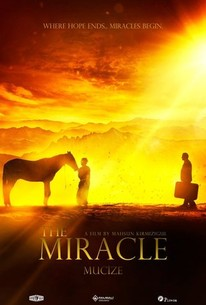
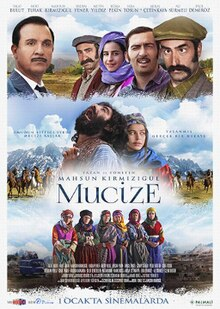
As per what the quote heading this article infers, this movie encapsulates most poignantly the power of love in humanity, with nature, and love of country and its children. It’s truly epic. The Miracle starts as a journey, but takes to a different path centred on a remote mountain village in Turkey set in the 1960’s – a kind of “the middle of nowhere“. The cinematography of Eastern Anatolia in this film is something to behold. I have seen few (if any) movies which are so beautifully photographed. It’s so colourful (as captured in the poster of the movie above) and the scenes of both the mountainside and small towns, including both the interiors and exteriors of buildings are exquisite. The other aspect of the film that floored me was the outstanding music which doesn’t appear in the movie until 30 minutes in, and will feature here tomorrow.

It takes little time until you find yourself, not as a fly on the wall, but fully invested in this community and the fascinating characters we get to know. It feels so real life, more akin in some ways to a documentary. What is undoubtedly the crowning performance of this movie is watching the disabled man of the village Aziz played by Mert Turak. It was so natural, yet plunges us to his world and forced us to know him much more than the villagers did. His bond with his horse, which the actor is said to have lived for 3 months to make this possible; is something you just about don’t see in movies. In my estimation, Mert Turak’s acting here makes Tom Hanks portrayal of Forest Gump look mediocre.

In the first half of the movie there is just so much smart comedy and then in the second half; not losing its jocular charm – transforms in an emotional roller-coaster. I wonder how this movie is not more widely known. I highly recommend this film not only to enjoy with friends and colleagues, but especially with families. By the end I was blubbering mess – so get the tissues handy. I feel so grateful for having had this wonderful movie experience and with zero expectations. I can’t wait to see it with my children.

Updated: The entire film is presented on You Tube (free to view) below with respective subtitles. Strap yourself in.

References:
1. The Miracle (2015 film) – Wikipedia
2. The Miracle – IMDB

Tagged with: , , ,
Posted in Movies and TV

The Ballad of John and Yoko (1969) – the Beatles

The Beatles last No. 1 song in the UK – The Ballad of John and Yoko isn’t typical of their music and that’s what drew me to it. It sounds less polished, more blues and American country than their usual. I also like how the uptempo vibe builds in intensity throughout and the twang of John’s guitar sounds cool. It’s a far cry from the experimental sound that had come to define the Beatles’ later work; perhaps more of a nod to the roots music that both John and Paul admired.

John and Paul were flying solo on this one too, as George was away and Ringo was on the set of a movie. John fresh from his wedding to Yoko Ono, penned the song during their honeymoon in Paris, turning their unconventional nuptial tour into a famous musical travelogue. It’s a playful yet candid reflection on their frustration with the media frenzy surrounding their marriage and activism. According to Paul, it was written, recorded, and mixed in a single day – April 14, 1969.

Lennon handled lead vocals, rhythm and lead guitar, while McCartney played bass, drums, piano, and even provided backing vocals. It was one of those rare moments of camaraderie between John and Paul in the band’s final years. The Ballad of John and Yoko sparked controversy, particularly due to the lyric, “Christ, you know it ain’t easy.” Many radio stations in the UK and the US banned it, fearing it was blasphemous. Lennon, never one to shy away from pushing boundaries, dismissed the backlash.

And no discussion of Lennon and Ono in 1969 is complete without addressing the elephant in the room: If Yoko was responsible for breaking up the Beatles. In this time tensions were already high due to financial disputes, and personal and creative ambitions pulling them in different directions. Also, one could argue that The Ballad of John and Yoko offers a snapshot of John’s increasing separation from the group – not because of Yoko, but because he was forging a new identity outside of the Beatles. So some view the song as a symbol of the rift forming within the band while others see it as a testament to Lennon and McCartney’s ability to still come together, even in the twilight. Also it feels like a precursor to John’s solo work – personal, raw, and direct.

[Verse 1: John Lennon]
Standing in the dock at Southampton
Trying to get to Holland or France
The man in the mac said, “You’ve got to go back”
You know, they didn’t even give us a chance

[Chorus: John Lennon]
Christ, you know it ain’t easy
You know how hard it can be
The way things are going
They’re gonna crucify me

[Verse 2: John Lennon]
Finally, made the plane into Paris
Honeymooning down by the Seine
Peter Brown called to say, “You can make it okay
You can get married in Gibraltar, near Spain”

[Chorus: John Lennon]
Christ, you know it ain’t easy
You know how hard it can be
The way things are going
They’re gonna crucify me

[Verse 3: John Lennon]
Drove from Paris to the Amsterdam Hilton
Talking in our beds for a week
The news people said, “Say what you doing in bed?”
I said, “We’re only trying to get us some peace”

[Chorus: John Lennon]
Christ, you know it ain’t easy
You know how hard it can be
The way things are going
They’re gonna crucify me

[Bridge: John Lennon, John Lennon & Paul McCartney]
Saving up your money for a rainy day
Giving all your clothes to charity
Last night the wife said, “Poor boy, when you’re dead
You don’t take nothing with you but your soul”
Think!

[Verse 4: John Lennon, John Lennon & Paul McCartney]
Made a lightning trip to Vienna
Eating chocolate cake in a bag
The newspaper said, “She’s gone to his head
They look just like two gurus in drag”

[Chorus: John Lennon, John Lennon & Paul McCartney]
Christ, you know it ain’t easy
You know how hard it can be

The way things are going
They’re gonna crucify me

[Verse 5: John Lennon & Paul McCartney]
Caught the early plane back to London
Fifty acorns tied in a sack
The men from the press said, “We wish you success
It’s good to have the both of you back”

[Chorus: John Lennon, John Lennon & Paul McCartney]
Christ, you know it ain’t easy
You know how hard it can be
The way things are going

They’re gonna crucify me
The way things are going
They’re gonna crucify me

References:
1. The Ballad of John and Yoko – Wikipedia

Tagged with: , , ,
Posted in Music

The Angels Cried (1993) – Alan Jackson (Ft. Alison Krauss)

Are you already missing Christmas? If so, Alan Jackson’s The Angel’s Cried might offer the perfect touch of nostalgia, especially with the breathtaking contribution of Alison Krauss. Her voice possesses an ethereal beauty that is simply unparalleled, elevating the song to something truly special. In fact, without her presence, I doubt this song would have made its way into my music project. Not long ago, Alison appeared here alongside Jerry Douglas in the exquisitely romantic I Don’t Believe You’ve Met My Baby. Sometimes when I hear her sing, I feel as though I’m in heaven. And beyond her extraordinary voice, she is undeniably captivating in every sense.

The Angels Cried is a lovely little song about the nativity scene written by Debbie Nims and Harley Allen. It emphasizes the silent reverence of the creatures and the angels who gathered around the manger. In 1993, Alan recorded his first Christmas album including the title track – Honky Tonk Christmas, and A Holly Jolly Christmas, I Only Want You For Christmas and Please Daddy (Don’t Get Drunk This Christmas). It peaked at No. 42 on the U.S. Billboard 200, and No. 7 on the Top Country Albums. In January 1998, Honky Tonk Christmas was certified Platinum by the RIAA. It has sold 1,324,800 copies in the U.S. as of November 2017.

Alan Eugene Jackson is an American country music singer-songwriter. He is known for performing a style widely regarded as “neotraditional country“, as well as writing many of his own songs. is one of the best-selling music artists of all time, having sold over 75 million records worldwide, with 44 million sold in the United States alone.

Alison Krauss who will feature here again shortly with her version of James Taylor’s Carolina in my Mind is is an American bluegrass-country singer, fiddler and music producer. As of 2019, she has won 27 Grammy Awards from 42 nominations. On November 21, 2019, she was awarded the National Medal of Arts. She was inducted into the International Bluegrass Music Hall of Fame in September 2021.

[Verse 1]
They came from near
They came from far
Following a distant star
To where he lay
Not being sure of what it meant
But knowing it was Heaven sent
They made there way
And the creatures gathered around
And didn’t make a sound
And the angels cried
The angels knew what was to come
The reason God had sent his son from up above
It filled their hearts with joy to see
And knowing of his destiny
Came tears of love

[Chorus]
And the creatures gathered around
And didn’t make a sound
And the angels cried

[Verse 2]
I’ve often thought about that night
And wondered if they realized that star so bright
Was sent to tell all of the land the Son of God
Would soon become the Son of Man

[Chorus]
And the creatures gathered around
And didn’t make a sound
And the Angels cried [x3]

References:
1. Honky Tonk Christmas – Wikipedia
2. Alan Jackson – Wikipedia
3. Alison Krauss – Wikipedia

Tagged with: , , ,
Posted in Music

Follow Blog via Email

Enter your email address to follow this blog and receive notifications of new posts by email.

Join 780 other subscribers

← Back

Thank you for your response. ✨