
Pi’s Lullaby (Life of Pi) 2012 – Mychael Danna (Ft. Bombay Jayashri) Friday’s Finest

The 2012 movie Life of Pi currently sits at No. 58 on my 100 favourite movies list. Whenever it comes on cable here, which is often, I sometimes immerse myself in it for the umpteenth time. When I very recently viewed the opening credits scene of the movie, I wondered why I hadn’t featured this wondrous music and scene on my blog, so here we are today. It’s a sad ending for that beautiful zoo. A memory that once felt real, now feels like a dream. Happens to the best of us.
Pi’s Lullaby was written for the opening of the 2012 film Life of Pi. It was nominated for an Academy Award for Best Original Song, the first song in Tamil ever to be so honoured.

Pi’s Lullaby was composed by Mychael Danna, with lyrics by Bombay Jayashri, who also performed the song. The track’s delicate Carnatic-style melody, paired with Jayashri’s ethereal vocals, creates an atmosphere of warmth and wonder, mirroring the tranquil visuals of the zoo at dawn (as seen in the opening scene at the bottom of this post). As the camera glides over lush enclosures bathed in golden light, showcasing animals in a state of peaceful coexistence, the lullaby’s gentle cadence reinforces the film’s themes of harmony, innocence, and the delicate balance of life.

IMDB Storyline:
In Canada, a writer visits the Indian storyteller Pi Patel and asks him to tell his life story. Pi tells the story of his childhood in Pondicherry, India, and the origin of his nickname. One day, his father, a zoo owner, explains that the municipality is no longer supporting the zoo and he has hence decided to move to Canada, where the animals the family owns would also be sold. They board on a Japanese cargo ship with the animals and out of the blue, there is a storm, followed by a shipwrecking. Pi survives in a lifeboat with a zebra, an orangutan, a hyena and a male Bengal tiger nicknamed Richard Parker. They are adrift in the Pacific Ocean, with aggressive hyena and Richard Parker getting hungry. Pi needs to find a way to survive.

English translation below:

Oh my love
Oh the delight of my eyes
Would you not sleep my flower?
Are you the peacock or the plumage of the peacock?
Are you the cuckoo or the cry of the cuckoo?
Are you the moon or the light of the moon?
Are you the eyelashes, or the dream?
Are you the flower or the nectar?
Are you the fruit or the sweetness?

The following was extracted from the Wikipedia reference below:

According to Jayashri’s blog, in order to convey the mood he wanted for the song, director Ang Lee told her “A child sleeps not because he is sleepy, but because he feels safe.”

Controversy

The Irayimman Thampi Memorial Trust alleged that the first eight lines of “Pi’s Lullaby” were not an original composition but a mere translation into Tamil of Irayimman Thampi’s famous lullaby in Malayalam, “Omanathinkal Kidavo”. Jayashri however maintains that she merely wrote what came to her heart and has denied the allegation against her.

Earlier, Jayashri had used Thampi’s lullaby in her Album named ‘Vatsalyam’, released in 2003

References:
1. Pi’s Lullaby – Wikipedia

Tagged with: , , ,
Posted in Music

Stick Season (2022) – Noah Kahan (Alex and Jo Music)

You tube’s best kept secret female duo ‘Alex and Jo‘ are back again to treat us with their lovely version of Noah Kahan’s big hit Stick Season. Today’s featured song marks the sixth occasion the Serbian twins have appeared here with their last entry being I’ll Be Home For Christmas (No 9 on the Christmas countdown this past season). How they haven’t already been discovered by a mega fancy music / tv producer to grace one of these big talent shows is anyone’s guess. Heck, if Christina Perri had heard their rendition of her magnificent Back in Time she of all people would be the first to sing their praises.

Through their channel, I’ve discovered mostly new music including Stick Season that I might never have come across otherwise, and for that, I’m grateful. Their soothing voices and homely presence always put me in a good head space. It’s simply a privilege to be welcomed into their musical sanctuary and witness them immerse themselves in a song.

Stick Season is the title track of the 2022 album by Noah Kahan (image inset). He wrote the album in the woods of Vermont where he grew up. With the success of Stick Season, Kahan toured around the United States and Europe with a majority of his shows sold out. Going by the lyrics alone Stick Season is indeed a very relatable song since it balances a mixture of pain, optimism, and healing. I can see how it would appeal to lovers of pop, indie, and folk music.  Also people who live in small towns like in New England can relate to the hardships on the record such as leaving your hometown, losing childhood dogs, and divorced parents.

The following was extracted from the Wikipedia reference below:

The song title refers to a term for autumn in New England, the period after Halloween before the winter snow begins, which Kahan called “a time of transition” and “super depressing” as “it just means that winter is coming soon and it creates a lot of anxiety” and “nobody really likes it“.

The song went viral on TikTok and charted internationally after American singer-songwriter Olivia Rodrigo covered it on BBC Radio 1 in the United Kingdom, causing it to reach number one in various countries including Australia, Belgium (Flanders), Ireland, the Netherlands, and the United Kingdom, as well as charting in the top 10 in Canada, New Zealand, and the United States.

[Verse 1]
As you promised me that I was more than all the miles combined
You must’ve had yourself a change of heart like halfway through the drive
Because your voice trailed off exactly as you passed my exit sign
Kept on drivin’ straight and left our future to the right
Now I am stuck between my anger and the blame that I can’t face
And memories are somethin’ even smoking weed does not replace
And I am terrified of weather ’cause I see you when it rains
Doc told me to travel, but there’s Covid on the planes

[Chorus]
And I love Vermont, but it’s the season of the sticks
And I saw your mom, she forgot that I existed
And it’s half my fault, but I just like to play the victim
I’ll drink alcohol ’til my friends come home for Christmas
And I’ll dream each night of some version of you
That I might not have, but I did not lose
Now you’re tire tracks and one pair of shoes
And I’m split in half, but that’ll have to do

[Verse 2]
So I thought that if I piled something good on all my bad
That I could cancel out the darkness I inherited from Dad
No, I am no longer funny ’cause I miss the way you laugh
You once called me “forever,” now you still can’t call me back

[Chorus]

[Bridge]
Oh, that’ll have to do
My other half was you
I hope this pain’s just passin’ through
But I doubt it

References:
1. The Story Behind The “Stick Season” Grammy Nominated Singer, Noah Kahan – Rampage
2. Stick Season (song) – Wikipedia

Tagged with: , ,
Posted in Music

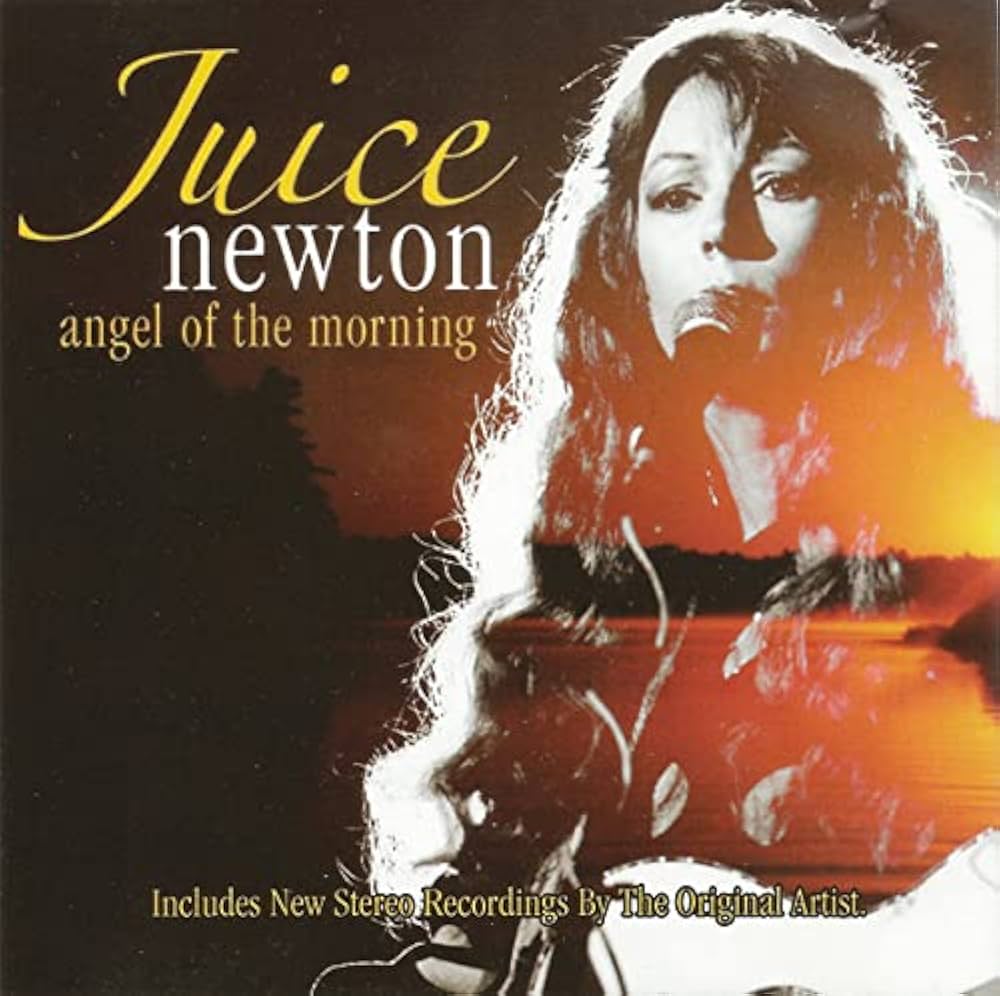
Angel of the Morning – Merrilee Rush (1968) / Juice Newton (1981)

I wrote Angel of the Morning after hearing the Rolling Stones song Ruby Tuesday on the car radio when I was driving into New York City. I wanted to capture that kind of passion.

– Chip Taylor

Angel of the Morning starts as a conventional love ballad, but the moment the chorus soars, it transforms into an unmistakable power ballad – one that never fails to send shivers down my spine. This was one of the first power ballads I remember hearing, and while the awe I felt in my impressionable youth may have softened over time, my admiration remains intact. The lyrics are both sensual and daring, as the singer surrenders to the night, embracing the intimacy and staying to witness the dawn with her lover.

I see no need to take me home
I’m old enough to face the dawn

There are more versions of this song than you can poke a stick at. Younger generations may be most familiar with rapper Shaggy’s version – Angel (2001), which upon first-listen made me want to throw a brick through a glass pane window. My two favourite versions (presented below) are by Merrilee Rush and the Turnabouts (1968) which incorporated a country sound and of course the most commercially successful version by Juice Newton.

Angel of the Morning was written by Chip Taylor in 1967 and first charted with the version by Merrilee Rush. The song was originally offered to Connie Francis, but she turned it down because she thought that the lyrical message was too lewd for her image. 

If morning’s echoes say we’ve sinned
Well, it was what I wanted now

By golly, what I would give to have heard a version by Connie!
Rush’s 1968 version version was released in February 1968, and reached No. 7 on the Billboard, also No. 1 in Canada, Australia, and New Zealand. Newton’s version from 1981 reached No. 4 on the Billboard and more than one million copies were sold in the United States. It reached the Top 5 in a number of other countries, including Canada (No 1) and Australia (No 2).  

[Verse 1]
There’ll be no strings to bind your hands
Not if my love can’t bind your heart
There’s no need to take a stand
For it was I who chose to start

[Pre-Chorus 1]
I see no need to take me home
I’m old enough to face the dawn

[Chorus]
Just call me angel of the morning, angel
Just touch my cheek before you leave me, baby
Just call me angel of the morning, angel
Then slowly turn away from me

[Verse 2]
Maybe the sun’s light will be dim
And it won’t matter anyhow
If morning’s echoes say we’ve sinned
Well, it was what I wanted now

[Pre-Chorus 2]
And if we’re victims of the night
I won’t be blinded by the light

[Chorus]

[Bridge]
Through the tears
Of the day
Of the years
Baby!

References:
1. Angel of the Morning – Wikipedia

Tagged with: , , ,
Posted in Music

Paisaje (2024) – Nathy Peluso

My favourite diva of Latin music – the Argentine-Spanish singer-songwriter Nathy Peluso, is back – this time with what might be one of the greatest Latina songs and performances I’ve had the privilege of hearing in quite some time. I’ve long considered Luis Perales’ Canción de Otoño my favorite Spanish love ballad, but now I believe Peluso’s rendition of today’s featured song – Franco Simone’s Paisaje (Scenery) – gives it a serious run for its money.

Paisaje is a beautifully heartfelt exploration of love’s resilience amidst life’s uncertainties. I only heard it for the first time recently, but my admiration was so immediate that I couldn’t wait any longer to share it here. As always, Nathy makes every song she sings her own – she doesn’t seek to emulate the artist; she becomes the artist.

As I’ve mentioned in other posts, Peluso is a musical rebel unafraid to stir things up. Despite winning three recent Grammys, mainstream acceptance still seems to keep her at arm’s length – wary and sceptical of her. She is a true chameleon, immersing herself in any genre and leaving an indelible mark. Watching her evolve, reshape her artistry, and challenge the music landscape in real time with such boldness and authenticity has been nothing short of inspiring.

It’s disheartening, though, to see how she was received at the Grammys. Watching those videos, it was clear that the recognition she deserves wasn’t fully there – at best, her reception could be described as lukewarm. Unfortunately, history shows that artists who push boundaries, those teetering on the creative edge of the abyss, often take decades to be fully embraced by the mainstream. I believe this will be the case for Peluso. Her innate talent, passion, and transparency set her apart – she’s ahead of the curve, breaking new ground with every step.

The song Paisaje has become one of the most popular songs in the Spanish language with dozens of covers. The original author Francesco Luigi “Franco” Simone (born 21 July 1949) is an Italian singer-songwriter. He released in 1978 the album Paesaggio (Scenery) which became a resounding success in Latin America and in particular in Argentina.

Below is a loose English translation of Paisaje:

[Verse 1]
We must not think that now is different
A thousand moments like this remain in my mind
We do not think about summer when the snow falls
Let a moment pass and we will love each other again
The logic of the world has never guided us
Nor has the uncertain tomorrow worried us
Once we both thought we had to separate
But we unpacked our bags before setting out on the trip

You will not be able to miss me when everything around me is missing
You, air that I breathe in that landscape where I live
You, you give me the strength that is needed to not leave
You give me love

[Verse 2]
That absurd decision to leave everything
We must consider it and start again
To abandon oneself to love without thinking about anything
For if we were lost we have found each other again

[Bridge]
I want to feel big enough to get
You give me your love

Tagged with: , ,
Posted in Music

Sag Mir Was Du Willst (2020) – Clueso

For the launch of my Music Library Project on July 25, 2019, I wanted to present a single song that could encapsulate the breadth and depth of the music I planned to feature. I ultimately chose the track Wenn Du Liebst (When You Love) by the German popsinger and rapper Clueso. A friend, Tatiana, who shares a deep appreciation for German culture and language, introduced me to the song during the early days of our friendship.

Though I have yet to reach that remarkable song in my alphabetical listing, I recently stumbled upon another Clueso track that left me raptous – Sag Mir Was Du Willst (Tell Me What You Want). Just a few days ago, a video from Clueso’s 2024 summer tour appeared in my YouTube feed, and I decided to give it a watch. Calling it impressive would be an understatement – not only were the songs and sound quality outstanding, but the setting, a breathtaking amphitheater at dusk, added to the magic. More songs from this concert will undoubtedly find their way here. I can at least point this concert to my kids and say: this is what I think encapsulates excellent new-modern music.

What captivated me most about Sag Mir Was Du Willst was its infectious guitar riff, perfectly complemented by a rich, dynamic horn section. As I delved deeper into the song’s meaning, I was struck by its lyrics being an inner dialogue with himself, the writer. It alternates between euphoria and melancholy and questioning what one truly wants in life, even after achieving success. Beyond personal relationships, the song also offers a rare glimpse into the frustrations of the creative process, highlighting the struggles artists face in transforming emotions into new art.

“The song sounded pretty happy and catchy at first, so a love song was actually recommended. However, that’s exactly why I didn’t feel like making it a love song. In terms of energy and my own mood, I’m in a very good mood right now, but I definitely wanted to keep the song thoughtful because that’s just how I always am.”

– Clueso

On October 1, 2021, Sag Mir Was Du Willst was released as part of Clueso’s ninth studio album, Album, of which it is the first single. I have presented two versions of Sag Mir Was Du Willst below. The first from their marvelous concert (from 13:40) and the second the official original version.

A loose English translation is as follows:

[Intro]
Tell me what you want, tell me what you want
Tell me what you really want
Come on, spit it out, always just get it out
Come on, say what’s up (Oh, yeah)

[Verse 1]
Everyone says: “Hey, cool, what you’ve achieved”
Taking photos, handshakes, it goes on
My mood: cloudy to cheerful
It’s easier to nod with an empty head
Look in the mirror, what has changed
Apart from more appointments in the calendar?
Looking for a deeper denominator
Today July, tomorrow December again

[Pre-chorus]
Suddenly you’re standing there in front of yourself
Standing there in front of yourself
Want to talk, but remain silent
Suddenly you’re standing there as if on cue
Standing there in front of yourself
Ask yourself for your opinion


[chorus]
Tell me what you want, tell me what you want
Tell me what you really want
Come on, spit it out, always just out
Come on, say what’s up (Yeah)
Tell me what you feel, tell me what you feel
Tell me what you honestly feel
Come on, spit it out, always just out
Fuck it, come on, let’s do it (Yeah)

[Verse 2]
I don’t do much wrong, unfortunately nothing right either
I’m sarcastic and find everything funny
Clear view, but no clarity
Free time only on the way to work
Only see the same stripes as a tiger
Only among my own kind, without a feature
No new playlist, just the old songs always on repeat (Wouh)
Over and over

[Bridge]
If I think today like I did yesterday
Then I’ll lose a day
No matter what anyone says (Wouh-uh)
Because everything runs by itself
It usually goes downhill
Even if I like it right now
And I say to myself

References:
1. Sag mir was du willst – Wikipedia

Tagged with: , ,
Posted in Music

Telephone Line (1977) – Electric Light Orchestra (ELO)

The scenario seems innocuous doesn’t it? Even perhaps a snore fest – A man listening to the ringing on his telephone waiting and hoping for a girl to answer his call and imagining what he would say if she answers. But this full of yearning highs and aching lows melodic doo-wop song sounds anything but benign – as this irresistible pop single stirs the heartache-laden blues of love like few others can. I don’t know how many times I sat around the turntable and put the needle down on this song as a kid, but it was a lot. Telephone Line is the second song to be presented so far from the English rock band Electric Light Orchestra (ELO) after their previous entry – Can’t Get It Out of My Head.

ELO keyboardist Richard Tandy noted that Jeff Lynne perfectly captured the sting of a painful phone call with someone you care about. In Telephone Line, Lynne’s narrator, surrounded by an American-style dial tone and dreamy synthesizers, initially seems to be making small talk with a former love. But his anguished voice reveals that the “lonely nights” he speaks of were likely one-sided – and she hasn’t even answered the phone. As ELO’s signature wall of harmonies swells like a Greek chorus of sorrow, the narrator, lost in despair, ultimately addresses the telephone line itself, summing up his limbo in one haunting phrase: “I’m living in twilight.

From 1976’s New World Record, Telephone Line was ELO’s breakthrough ballad, busting into the Top 10 on both sides of the pond. It topped the charts of Canada and New Zealand and entering the top 10 in Australia, the United Kingdom, and the United States.  It was ranked by Billboard as the No. 15 song of 1977. In 2022 Jeff Lynne listed it as one of his nine favourite ELO songs.  

[Verse 1]
Hello, how are you?
Have you been alright
Through all those lonely, lonely, lonely, lonely, lonely nights?
That’s what I’d say
I’d tell you everything
If you’d pick up that telephone
Yeah, yeah, yeah

[Verse 2]
Hey, how you feelin’?
Are you still the same?
Don’t you realise the things we did, we did
Were all for real, not a dream?
I just can’t believe
They’ve all faded out of view
Yeah, yeah, yeah, yeah
Ooh-ooh

[Pre-Chorus]
Doo-wop, doo-be-doo-doo-wop, doo-wah, doo-lang
Blue days, black nights, doo-wah, doo-lang
I look into the sky
(The love you need ain’t gonna see you through)
And I wonder why
(The little things you planned ain’t coming true)

[Chorus]
Oh, oh, telephone line, give me some time
I’m living in twilight
Oh, oh, telephone line, give me some time
I’m living in twilight

[Verse 3]
Okay, so no one’s answering
Well, can’t you just let it ring a little longer, longer, longer? Oh
I’ll just sit tight
Through shadows of the night
Let it ring forevermore, oh
Yeah, yeah, yeah

The following was extracted from the 3rd Wikipedia reference below:
The Electric Light Orchestra (ELO) were formed in Birmingham in 1970 by multi-instrumentalists Jeff Lynne and Roy Wood and drummer Bev Bevan. Jeff Lynne, of course has featured here multiple times with his involvement in the 80’s super group The Traveling Wilburys. After Wood’s departure in 1972, Lynne became the band’s sole leader, arranging and producing every album while writing nearly all of their original material. During their first run from 1970 to 1986, Lynne and Bevan were the group’s only consistent members.

The group’s name is a pun that references both electric light and “light orchestral music”, a popular style featured in places such as the BBC Light Programme between the 1940s and 1960s. ELO was formed out of Lynne’s and Wood’s desire to create modern rock and pop songs with classical influences. 

References:
1. Electric Light Orchestra, “Telephone Line” – American Songwriter
2. Telephone Line (song) – Wikipedia
3. Electric Light Orchestra – WIkipedia

Tagged with: , , , ,
Posted in Music

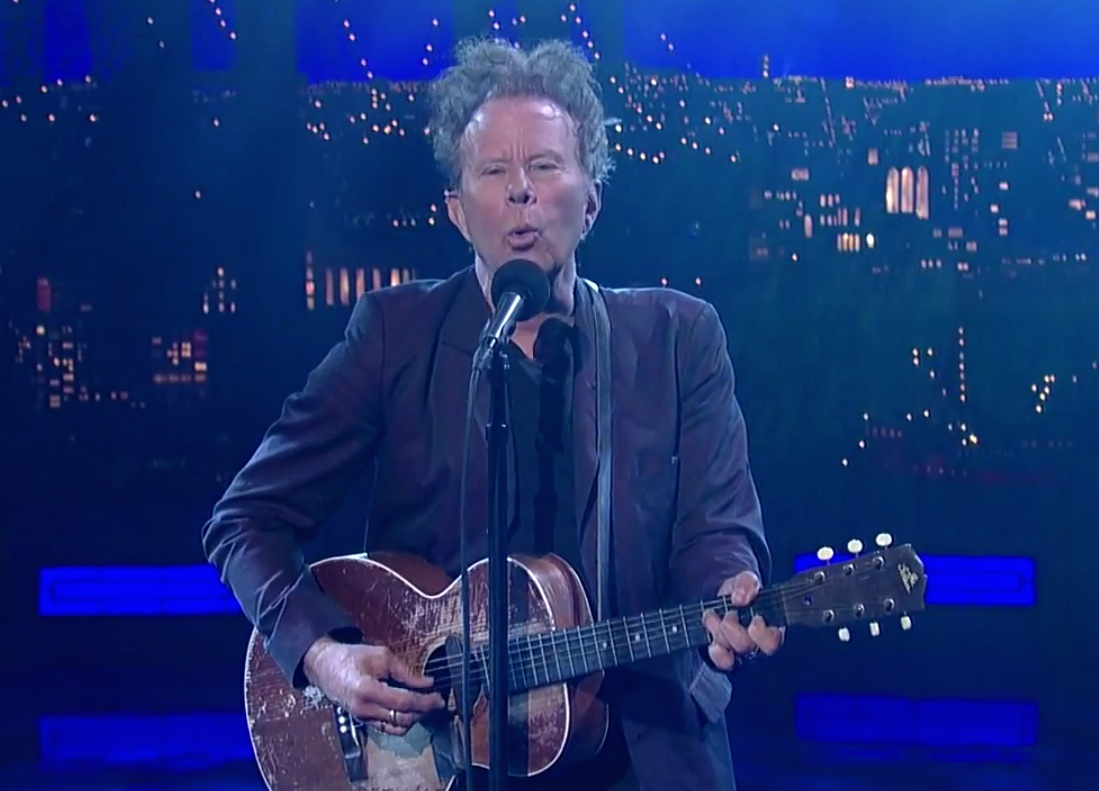
Take One Last Look (2015) – Tom Waits

It’s amazing how nice folks are to you when they know you are going away.

– Tom Waits interview on the Late Show with David Letterman

Take One Last Look is the 22nd song from Tom Waits to appear here after his previous entry – Step Right Up. Over the years, Waits made six appearances on the Late Show with David Letterman, and on May 14, 2015, sang Take One Last Look on the show’s fifth to last broadcast. It marked one of his rare television performances in later years. He was accompanied by Larry Taylor on upright bass and Gabriel Donohue on piano accordion, with the horn section of the CBS Orchestra.

The performance was particularly emotional, with both Waits and Letterman appearing moved by the sentiment of the song. The song carries an air of resignation and nostalgia, as if saying goodbye to a place. His gravelly voice gives the song a heartbreaking sincerity with the slow and melancholic melody, making it feel like a final wave to something cherished yet irretrievably lost.

Tom was also interviewed by Letterman (seen at the end of this post), discussing various topics including salad lines and antiperspirant.

Tom Waits´ work was influenced by his voracious reading of writers like Jack Kerouac and Charles Bukowski and by conversations that he overheard in diners. You can see in another post –Tom Waits reading Charles Bukowski’s – Nirvana. Tom Waits once said about the distinction between words and music: “I’m still a word guy. I’m drawn to people who use a certain vernacular and communicate with words. Words are music, really. I mean, people ask me, ‘Do you write music or do you write words?’ But you don’t really, it’s all one thing at its best“. Waits also said that “for a songwriter, Dylan is as essential as a hammer and nails and saw are to a carpenter.” He is an opera lover, and recalls hearing Puccini’s Nessun dormain the kitchen at Coppola’s with Raul Julia one night, and it changed my life, that particular Aria… It was like giving a cigar to a five-year old.

[Verse 1]
Let’s watch the sun come up in another town
Try our luck a little further down
Leave the cards on the table
Leave the bread on the plate
Put your hand on the gearshift
Put your foot off the break

[Chorus]
And take one last look
At the place that you are leaving
Take one last look
Oh, take one last look
At the place that you are leaving
Take one last look

[Verse 2]
Our bed was something that the wind couldn’t carry
The arrow points away across the waiting prairie
This car looks like it could give us a good run
Our choice to leave was a good one

[Chorus]

[Verse 3]
Let’s look forward to the lights that are new
The world is a ribbon of road for you
All towns have churches and tire shops
They put up speed limit signs and they hire cops
I love to see the wind in your hair
All we ever need we can get anywhere

References:
1. Tom Waits – Wikipedia

Tagged with: , ,
Posted in Music

Ainda Estou Aqui (I’m Still Here) 2024 – Walter Salles (Friday’s Finest)

Brazilian theatrical release poster

Not since the Mexican masterpiece Roma (2018) and Colombia’s El Olvido Que Seremos (Forgotten We’ll Be) (2020) have I seen a Latin American film so deeply imbued with naturalism and grace. Ainda Estou Aqui (I’m Still Here) is exquisitely photographed, instantly transporting me to its 1970s setting and immersing me fully in the family’s world. As in Roma and El Olvido Que Seremos, the children feel remarkably authentic, a testament to the filmmakers’ delicate yet skillful direction. Their natural performances add a layer of emotional depth, making their joys, fears, and everyday interactions feel profoundly real, as if we are witnessing memories rather than scripted moments. All the characters are so vividly drawn that, by the end, we are reluctant to part with them.

Paiva family in the 1970s

I’m Still Here is political biographical based drama set mostly in Rio de Janeiro, Brazil. It stars Fernanda Torres and Fernanda Montenegro as Eunice Paiva, a mother and activist coping with the forced disappearance of her husband, the dissident politician Rubens Paiva (Selton Mello), during the military dictatorship in Brazil. When the father of the family is sequestered by the military forces, I felt as a viewer fully invested in the family’s plight and despairing and sorrowful over this horrifying event. The way the police go about it is truly sinister, keeping the family jailed in its own house, not allowing the wife to see the husband, not disclosing any info relating to the abductee’s whereabouts, taking even one of the children for interrogation.

Fernanda Torres is more than deserving of her best actress nod for her performance here. She gives an unforgettable portrayal, showing Eunice’s strength and vulnerability in such a real and powerful way. She’s persuasive and moving without ever being melodramatic, in a masterful work making you feel every moment of the story. She battles not only to find and get her husband released, but is the rock that keeps the family together. I’m Still Here is a strong drama which Salles and his team make both palpable and universal beyond Brazil’s borders.

On 23 January 2025, I’m Still Here was nominated for Best International Feature Film, Best Actress (Torres), and Best Picture at the 97th Academy Awards. Grossing $27.3 million on a $1.5 million production budget, it became the highest-grossing Brazilian film since the COVID-19 pandemic. On the website Rotten Tomatoes, 97% of 166 critics’ reviews are positive, with an average rating of 8.3/10 and at IMDB possesses a staggeringly high score of 8.7/10.

References:
1. I’m Still Here (2024 film) – Wikipedia
2. I’m Still Here (2024) – IMDB

Tagged with: , , , ,
Posted in Movies and TV

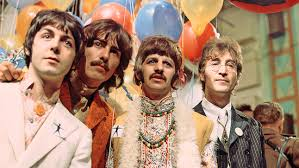
Strawberry Fields Forever (Demo Sequence Anthology 2 Version) 1966 – The Beatles

“There was something about the place that always fascinated John. He could see it from his window … He used to hear the Salvation Army band [playing at the garden party], and he would pull me along, saying, ‘Hurry up, Mimi – we’re going to be late.'”

– John Lennon’s Aunt Mimi Smith

The words “nothing to get hung about” were inspired by Aunt Mimi’s strict order not to play in the grounds of Strawberry Field, to which Lennon replied, “They can’t hang you for it.

My friend Nancy at The Elephant’s Trunk recently posted a song by the Beatles – Free As A Bird a reworked version of a home demo by John Lennon. It reminded me of today’s featured track also a demo by John Lennon of the Strawberry Fields Forever classic. I love hearing this simplistically beautiful melodic version. John Lennon alone with his guitar….Just him and a junk string instrument and it has all of the charm of the record. As my son said it sounds like Buddy Holly just fooling about. Lennon viewed Strawberry Fields Forever as his finest work with the Beatles. I would buy an album of just the Beatles demos. On another matter, the tune at the start sounds to me just like Dylan’s It’s All Over Now, Baby Blue.

Most of the following was extracted from the Wikipedia reference below:
Strawberry Fields Forever was released on 13 February 1967 as a double A-side single with Penny Lane. It represented a departure from the group’s previous singles and a novel listening experience for the contemporary pop audience. While the song initially divided and confused music critics and the group’s fans, it proved highly influential on the emerging psychedelic genre. Its accompanying promotional film (at the bottom of this post) is similarly recognised as a pioneering work in the medium of music video.

Lennon based the song on his childhood memories of playing in the garden of Strawberry Field, a Salvation Army children’s home in Liverpool. Starting in November 1966, the band spent 45 hours in the studio, spread over five weeks, creating three versions of the track. The final recording combined two of those versions, which were entirely different in tempo, mood and musical key.

Strawberry Fields Forever was intended for inclusion on their forthcoming (as yet untitled) Sgt. Pepper’s Lonely Hearts Club Band. Instead, under pressure from their record company and management for new product, the group were forced to issue it as a single and they followed their usual practice of not including previously released singles on their albums. The double A-side peaked at number 2 on the Record Retailer chart, breaking the band’s four-year run of chart-topping singles in the UK. In the United States, Strawberry Fields Forever peaked at number 8 on the Billboard Hot 100. To the band’s displeasure, the song was later included on the US Magical Mystery Tour LP.

After returning to England in early November 1966 from Almeria, Spain – where Lennon did his first demo, Lennon added another verse and first mention of Strawberry Fields. The first verse on the released version was the last to be written, close to the time of the song’s recording. The first verse Lennon wrote became the second one in the released version of the song, and the second verse he wrote became the last.

The lyrics below from the 1:42 Demo version:

No one, I think, is in my tree
I mean, it must be high or low
That is, you can’t, you know, tune in, but it’s all right
That is, I think it’s not too bad

Always, no, sometimes, think it’s me
But you know, I know when it’s a dream
I think I know, I mean—er—yes, but it’s all wrong
That is, I think I disagree

Let me take you down, ’cause I’m going to
Strawberry Fields
Nothing is real
And nothing to get hung about
Strawberry Fields forever

References:
1. Strawberry Fields Forever – Wikipedia

Tagged with: , , ,
Posted in Music

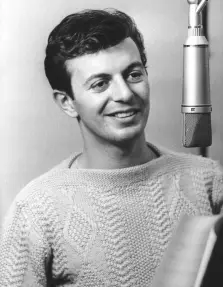
Daddy Rollin’ (In Your Arms) 1968 – Dion

We are well and truly a long way from the teenage heartthrob doo-wop song – Runaround Sue (1961). That same artist Dion Francis DiMucci – better known simply as Dion had by the late 1960s spent years battling heroin addiction, a struggle that nearly consumed him. In fact by the time of his first hit with the Belmonts he was eighteen years old and already taking heroin. His attempts to break free of his addiction could not have been helped by his being the only headline survivor of the 1959 Winter Dance Party tragedy in which the other stars, Buddy Holly, Ritchie (“La Bamba”) Valens and the Big Bopper all died.

At the age of nineteen, with no PTSD counselling available or even heard of, the burden on Dion must have been considerable, especially as he’d tossed a coin with Ritchie Valens for the final seat on the plane, won, and then, because of his qualms about spending so much money on a short flight and because Valens, used to the heat of homestate California, was really suffering from the sub-zero temperatures in their tour bus, let him have the seat anyway.

By 1968, still struggling with major heroin addiction, Laurie, his record label, was considering dropping him as his contract was due to end. They relented and renewed it, on condition he recorded “Abraham, Martin and John“. Issued as the B-side Dion released today’s featured song Daddy Rollin’ (In Your Arms) – a raw, hypnotic departure from his doo-wop roots. Dion’s showing us here he can do rock blues – a genre against which to express the torment of his heroin addiction. From the ominous guitar and subdued drum intro sounds like a subway train emerging from a tunnel…

Dion himself has described Daddy Rollin’ (In Your Arms) as “either a love song or a song about drugs. I recorded it in the back of a bowling alley with a bunch of Jamaicans. We were banging on cardboard boxes. I had my Gibson Birdland guitar, and we just let it roll.”

The result was an offbeat, almost primal track – driven by pulsing rhythms, reverb-soaked vocals, and an undercurrent of something dark and restless. The song’s ghostly atmosphere stood in stark contrast to the hopeful melancholy of its A-side. While Abraham, Martin and John mourned the loss of visionaries and peacemakers (in similar modus as Bob Dylan’s They Killed Him), Daddy Rollin’ (In Your Arms) felt like a late-night fever dream, tapping into something deeply personal and unfiltered.

Give it a listen – you might find yourself hypnotized by its strange, unpolished magic.

Can’t stand leave you, babe

[Verse 1]
I’m in the cold, flat one hundred babe
I’m awful down and bound to go
In the cold, flat one hundred babe
I’m awful down on my way
Gonna have your sweet lovin’, daddy rollin’ in your arms

[Verse 2]
Gonna jump on Mr. Barker’s ship
Skip ‘cross the ocean like a stone
Gonna jump on Mr. Barker’s ship
Skip ‘cross the ocean like a stone
Gonna have your sweet lovin’, daddy rollin’ in your arms

[Verse 3]
There’s a caravan that’s wingin’ me babe
Gonna fly me to your door
There’s a caravan gettin’ warm enough for me
And I feel baby, carry me to your door
Gonna have your sweet lovin, daddy rollin’ in your arms

[Verse 4]
Listen, well the super Jesus bird
Carryin’ daddy rollin’ back home to you
You’re the sweetest little angel baby
Can’t stand leave you alone, oh yeah mama oh
You’re gonna have your sweet lovin’, daddy rollin’ in your arms

References:
1. Dion – Daddy Rollin’ (In Your Arms) – The Listenng Post Blog
2. Dion Week No 4: Daddy Rollin’ (in your Arms) – Dion – Uncle Stylus

Tagged with: , ,
Posted in Music

Follow Blog via Email

Enter your email address to follow this blog and receive notifications of new posts by email.

Join 780 other subscribers

← Back

Thank you for your response. ✨