That Don’t Impress Me Much (1998) – Shania Twain

How this song wasn’t in my collection from the very beginning is anyone’s guess. What surprised me most when I revisited it after a long break was just how unfiltered and country the original studio recording sounds on its own. For a moment, I even wondered if I was listening to an early or rough version rather than the original release I knew from the video.

I think that confusion comes from the video itself, which leans heavily into a pop aesthetic and is often linked to the period when the Canadian singer Shania Twain crossed further into mainstream territory. That commercial gloss which comes through the video, enabled the song to reach audiences beyond traditional country fans – and clearly, it worked. Yet when you strip all the veneer away and simply listen to the song, it remains rooted in the upbeat, classic country style that first defined Shania’s career. It could have also been the dance version which I got confused by.

That Don’t Impress Me Much is arguably Shania’s most recognisable song, or at least one of them. Early on, I probably didn’t give it the respect it deserved, partly because of its flashy presentation and how relentlessly it dominated the airwaves for a time. But listening to it again years later, it’s clear that time has been kind to it. The lyrics are sharp, humorous, and direct, and the music is authentic, lively country that is effortlessly catchy. I really like the moments of amusement throughout the song, which are one of the signature qualities of Twain’s music (ie Man! I Feel Like a Women, Don’t Be Stupid & Any Man of Mine). It’s genuinely cute and charming, yet bold at the same time.


The following was abridged from the Wikipedia article below:

That Don’t Impress Me Much was released as the 7th single from Shania’s 3rd studio album Come On Over. The song was written by Robert John “Mutt” Lange and Twain. It became her third biggest single on the Billboard peaking at No. 7 and remains one of Twain’s biggest hits worldwide reaching No. 3 in the UK and No. 2 in Australia and top 10 in a whole host of other countries.

In 2017, during a listening party for her fifth studio album Now, Twain revealed the reason behind using Brad Pitt’s name instead of other suitable male celebrities saying that after she heard about the scandal between Pitt and Gwyneth Paltrow and the subsequent leaking of Pitt’s naked photo in Playgirl magazine, she was left unimpressed by all the fuss as she found it was normal to see naked people.

[Intro]
Ow
Uh-huh, yeah, yeah

[Verse 1]
I’ve known a few guys who thought they were pretty smart
But you’ve got being right down to an art
You think you’re a genius, you drive me up the wall
You’re a regular original, a know-it-all

[Pre-Chorus]
Oh-oh, you think you’re special
Oh-oh, you think you’re something else
Okay, so you’re a rocket scientist


[Chorus]
That don’t impress me much
So you got the brains, but have you got the touch?
Now, don’t get me wrong—yeah, I think you’re alright
But that won’t keep me warm in the middle of the night
That don’t impress me much
Uh-huh, yeah, yeah

[Verse 2]
I never knew a guy who carried a mirror in his pocket
And a comb up his sleeve—just in case
And all that extra hold gel in your hair oughta lock it
’Cause heaven forbid it should fall outta place

[Pre-Chorus]
Oh-oh, you think you’re special
Oh-oh, you think you’re something else
Okay, so you’re Brad Pitt

[Chorus]
That don’t impress me much (Oh, oh, ooh)
So you got the looks, but have you got the touch?
Now, don’t get me wrong—yeah, I think you’re alright
But that won’t keep me warm in the middle of the night
That don’t impress me much
Yeah

[Verse 3]
You’re one of those guys who likes to shine his machine
You make me take off my shoes before you let me get in
I can’t believe you kiss your car good night
Now, come on, baby, tell me, you must be joking, right?

[Pre-Chorus]
Oh-oh, you think you’re something special
Oh-oh, you think you’re something else
Okay, so you’ve got a car

[Chorus]
That don’t impress me much (Oh, oh, ooh)
So you got the moves, but have you got the touch?
Now, don’t get me wrong—yeah, I think you’re alright
But that won’t keep me warm in the middle of the night
That don’t impress me much (That don’t impress me)
Oh, oh no, you think you’re cool, but have you got the touch?
Now, now, don’t get me wrong—yeah, I think you’re alright
But that won’t keep me warm on the long, cold, lonely night
That don’t impress me much
Uh-huh, yeah, yeah

[Outro]
Okay, so what do you think, you’re Elvis or something?
Whatever
That don’t impress me

References:
1. That Don’t Impress Me Much – Wikipedia

Tagged with: , ,
Posted in Music

Great Sporting Moments 7: Carlos Alcaraz, 2026 Australian Open Champion

I’m dusting off my rarely used sporting segment to highlight Carlos Alcaraz’s magnificent seventh Grand Slam victory, achieved at the 2026 Australian Open yesterday. The win makes the 22-year-old Spaniard the youngest player in history to complete the career Grand Slam, having now won all 4 mayors – the French Open, Wimbledon, the US Open, and the Australian Open.

I’ve taken a keen interest in tennis ever since I was a kid, largely because our family played so often. My mother was a tennis coach, and we would regularly play at a local tennis centre near our home in Kurrajong Heights in Western Sydney, where Mum also coached. I also remember watching Wimbledon documentaries on VHS tapes. With my trusty Emrik wooden tennis racquet and trying to look like a hot-shot, I used to copy John McEnroe’s awkward, side-on serving style, complete with a sharp twisting motion. Unlike today’s players, whose technique is clean and direct, mine was anything but. I was also a bit high-strung on court like Johnny Mac, but shhhh – we’ll keep that to ourselves.

My mother, Rosemary, also has some interesting tennis history that fans of the sport might enjoy. As a youngster, she was coached by Vic Edwards, who was the long-time coach of Australian legend Evonne Goolagong Cawley. On another occasion, while Mum was hitting balls against a brick wall near the flats where she lived, Ken Rosewall appeared and handed her a tennis ball. Mum described her reaction to me: “I ran home and told Nanny – she was beside herself. He was such a lovely man.”

Back to Alcaraz and his most recent remarkable accomplishment at just 22 years of age. Not only is he the most entertaining tennis player I have ever watched, but his movement, speed, shot selection, and tactical awareness are on another level. As someone who has followed the game fairly closely for most of my life, I can say without hesitation that I have never enjoyed watching a tennis player more than Carlos Alcaraz.

As a kid, I got a kick out of watching John McEnroe for his natural talent, creativity, and fiery temperament. Carlos Alcaraz, meanwhile, plays with explosive athleticism, fine touch and a high level of sportsmanship and affability. He has been my favourite player for some time now, and even if he were to stop tomorrow, I would still consider him the greatest tennis player I’ve ever watched, and one of the very greatest sportspeople of my lifetime.

Alcaraz’s opponent in yesterday’s final was Novak Djokovic, who needs no introduction. At 38 years of age, Djokovic won his first ATP title in 2006, when Alcaraz was just two years old. He remains the most successful men’s player in Grand Slam history, with 24 major titles. Djokovic’s ability to reach another Australian Open final at his age – and to challenge Alcaraz strongly in the early stages – is a clear testament to his durability, discipline, and competitive spirit.

One of the great memories I’ll have of the final wasn’t even from the game itself; rather, it was Djokovic’s post-game speech as he accepted the runner-up trophy – the first time he’d ever held that plate at the Australian Open, too. It was one of the funniest, most respectful, and humble speeches I’ve ever seen post-game, and in case you didn’t see it, I’ll forward it at the end of this post. How he’s able to joke around so much and be so gracious and warm in defeat is really something else, and he truly deserves all the cheers and respect from tennis fans worldwide.

Thanks for reading.

Tagged with: , , , ,
Posted in Sport and Adventure

The Lonely Bull (El Solo Toro) 1962 – Herb Alpert & the Tijuana Brass

Today’s featured instrumental, The Lonely Bull, was the first song to popularise mariachi-style horns on mainstream western pop radio. In 1962, it peaked at No. 6 in the US and No. 1 in Australia. Soon after, Johnny Cash added Mexican-style trumpets to his monumental 1963 country hit The Ring of Fire. Cash recalled that after hearing Anita Carter’s original version of the song, he dreamed it was accompanied by “Mexican horns,” noting that the addition of trumpets marked a departure from his basic sound.

I first encountered this now-iconic Mexican-song in the film Jerry Maguire, whose magnificent soundtrack has already been discussed here in relation to Dylan’s Shelter From the Storm and Springsteen’s Secret Garden.

The Lonely Bull alludes to the solitary bull in the bullfighting arenas once common across Spain and much of Latin America. Whenever I think of bullfighting, my mind inevitably turns to Ernest Hemingway’s vivid accounts of the tradition in The Sun Also Rises and Death in the Afternoon. I once visited Bogotá’s Plaza de Toros La Santamaría, not for a corrida (bullfight), but to watch a Davis Cup tennis tie between Colombia and the United States (image inset).


Background (Wikipedia)

While experimenting with the sound of an overdubbed trumpet, Herb Alpert recorded this song in his garage. The single and album recordings of the song were recorded at Conway Recording Studios in Hollywood by members of The Wrecking Crew, and featured the sounds of a crowd cheering “Olé” inside a bullfight arena in Mexico, as well as the sounds of the trumpets announcing the matador before he enters the bullring. A video for the song was filmed in 1967 inside the Toreo de Tijuana bullring.

References:
1. The Lonely Bull (song) – Wikipedia

Tagged with: , , ,
Posted in Music

I Was Only 19 (1983) – Redgum

I Was Only 19 is a testimony about the plight of an Australian soldier in the Vietnam War, and it sits as a kind of sister song to Khe Sanh by Cold Chisel. Khe Sanh is the more upbeat, melodic and vibrant of the two, where you can feel the camaraderie and patriotism in its delivery. I recalled in that respective post how, from the military academy, at almost every pub we hit while on leave, we’d chant Khe Sanh at the top of our lungs, parading in a circle with our arms around each other’s shoulders.

I Was Only 19, on the other hand, is a lot more stark and solemn. Here, in this narrative, the soldier is alone – alone, alone. As a listener, you feel his hopelessness and solitude, and as the song progresses you hear how his innocence is stripped away through his harrowing ordeal. It stunned me the first time I heard it – such a powerful piece of songwriting craftsmanship.

I Was Only 19 feels almost more like spoken testimony than a traditional song. The first-person narrative is highly specific, naming places, training routines, and weapons. It also uses very colloquial Australian language. As a born-and-bred Australian, and someone from a military background, I found many of the references familiar and affecting. This includes the SLR rifle mentioned in the song, which we kept in our quarters during the early part of our training years, before it was later replaced in the Australian Army by the Steyr AUG. He also mentions VB (Victoria Bitter), one of Australia’s most well-known beers, which, as it happens, I too drank well beyond what would be deemed healthy.

At its core, I Was Only 19 is a bare-bones, “warts and all” account of war. It even extends to life after service, with the narrator describing post-war health issues to a doctor, including a rash that comes and goes, alongside deeper psychological scars. It is an unfiltered and chilling historical account, one that arguably belongs as much in a national war museum as it does on a record. In fact royalties for the song go to the Vietnam Veterans Association of Australia.

The song strips away the myths of war – the showmanship, bravado, and macho posturing – and leaves us with the portrait of a single man, permanently changed, carrying lasting physical and mental trauma.


The following was abridged from the Wikipedia article below:

I Was Only 19 was released in March 1983 as a single, which hit number one on the Australian charts for two weeks. It became the most widely recognised song by the band.

The context is the return of Vietnam vets to a sometimes hostile reception in Australia, what John Schumann (lead vocalist – guitarist) perceived as soldiers returning to Australia from a “war that nobody wanted to honour [their] service in”. Schumann wrote the song from a sense of injustice at this.

He wrote the song based on experiences he heard from veterans, particularly Mick Storen (his brother in-law) and Frankie Hunt. The mine experiences in the story pertain to an incident during Operation Mundingburra on 21 July 1969 of which Storen experienced. Schumann has said that “the power derives from the detail, provided by my mate and brother-in-law, Mick Storen, who was brave and trusting enough to share his story with me.”

[Verse 1]
Mum and Dad and Denny saw the passing out parade at Puckapunyal
It was a long march from cadets
The Sixth Battalion was the next to tour, and it was me who drew the card
We did Canungra and Shoalwater before we left

[Chorus]
And Townsville lined the footpaths as we marched down to the quay
This clipping from the paper shows us young and strong and clean
And there’s me, in me slouch hat, with me SLR and greens
God help me
I was only nineteen

[Verse 2]
From Vung Tau riding Chinooks to the dust at Nui Dat
I’d been in and out of choppers now for months
And we made our tents a home: VB, and pinups on the lockers
And an Agent Orange sunset through the scrub

[Chorus]
And can you tell me, doctor, why I still can’t get to sleep?
And night time’s just a jungle dark and a barking M16?
And what’s this rash that comes and goes?
Can you tell me what it means?
God help me
I was only nineteen

[Verse 3]
A four-week operation when each step could mean your last one on two legs
It was a war within yourself
But you wouldn’t let your mates down ’til they had you dusted off
So you closed your eyes and thought about somethin’ else

[Verse 4]
And then someone yelled out “Contact!” and the bloke behind me swore
We hooked in there for hours, then a God-almighty roar
And Frankie kicked a mine the day that mankind kicked the moon
God help me
He was going home in June

[Verse 5]
And I can still see Frankie drinkin’ tinnies in the Grand Hotel
On a thirty-six hour rec leave in Vung Tau
And I can still hear Frankie lying screaming in the jungle
‘Til the morphine came and killed the bloody row

[Verse 6]
And the ANZAC legends didn’t mention mud and blood and tears
And the stories that my father told me never seemed quite real
I caught some pieces in my back that I didn’t even feel
God help me
I was only nineteen

[Chorus]
And can you tell me, doctor, why I still can’t get to sleep?
And why the Channel Seven chopper chills me to my feet?
And what’s this rash that comes and goes?
Can you tell me what it means?
God help me
I was only nineteen

References:
1. I Was Only 19 – Wikipedia

Tagged with: , , ,
Posted in Music

Please, Please, Please Let Me Get What I Want (1984) – The Smiths

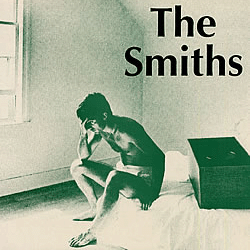
I’m beginning to sound like a broken record, but here’s yet another great B-side from The Smiths. On this occasion, Please, Please, Please Let Me Get What I Want appears as the B-side to their magnificent single William, It’s Really Nothing. Morrissey even said about Please, Please – “Hiding it away on a B-side was sinful” and “I feel sad about it now“.

Please, Please is a new addition to what is becoming a fairly extensive collection of The Smiths’ music in my Music Library Project. One of my favourite quotes about the band is: “The Smiths are the band from the ’80s – most anti-’80s.” They remain an enigmatic band to me for two main reasons:

Firstly, The Smiths feel like the gift that keeps on giving. Just when I think I’ve heard everything of value in their catalogue, another song seems to surface and it hits home. Today’s featured song is a good recent example of that.

Secondly, their music often feels like an acquired taste. It asks something of the listener – time, focus, and immersion – before its meaning really opens up. Many of their songs reward repeated listens, and each time, the appreciation and enjoyment seem to grow.

Please, Please, Please Let Me Get What I Want, in keeping with The Smiths’ usual approach, pairs Morrissey’s melancholic and slightly melodramatic vocals with Johnny Marr’s familiar, cutting guitar sound. Despite the downcast delivery, the subject matter is unusually hopeful for Morrissey, as he sings about having “good times for a change.” There is still an undercurrent of self-pity, reflecting on past misfortune, but this time he is pleading for a moment of happiness to last. The song is short, running at just 1:57, yet it gives it just enough time to make a subtle, yet affecting impression.


The following was abridged from the Wikipedia article below:

Johnny Marr wrote the music to “Please Please Please Let Me Get What I Want” shortly after its eventual A-side, “William, It Was Really Nothing“. Marr commented, “Because that was such a fast, short, upbeat song, I wanted the B-side to be different, so I wrote ‘Please Please Please Let Me Get What I Want’ on Saturday in a different time signature – in a waltz time as a contrast“. Marr has also noted that the music was an attempt to “capture the … spookiness and sense of yearning” in Del Shannon’s “The Answer to Everything“, a song his parents played for him as a child.

The band’s label, Rough Trade, initially was concerned about the song’s short length. Morrissey recalled, “When we first played it to Rough Trade, they kept asking, ‘Where’s the rest of the song?'” Morrissey, who characterized the song “a very brief punch in the face,” argued, “Lengthening the song would, to my mind, have simply been explaining the blindingly obvious“.

The song featured on the compilation albums Hatful of Hollow and Louder Than Bombs. The song was also included on the soundtrack album of the 1986 film Pretty in Pink and featured in the 1999 film Never Been Kissed. An instrumental cut of the cover from the Dream Academy was featured in the 1986 film Ferris Bueller’s Day Off.

[Verse 1]
Good times for a change
See, the luck I’ve had
Can make a good man turn bad

[Chorus]
So please, please, please
Let me, let me, let me
Let me, get what I want this time

[Verse 2]
Haven’t had a dream in a long time
See, the life I’ve had
Can make a good man bad

[Chorus]
So, for once in my life
Let me get what I want
Lord knows it would be the first time

References:
1. Please Please Please Let Me Get What I Want – Wikipedia

Tagged with: , ,
Posted in Music

Sad and Beautiful World (2025) – Mavis Staples

There are two things I find so alluring about this meditative and sombre song. Firstly, Mavis Staples’ vocals carry profound emotional depth and feel timeworn and soulful, shaped by decades of lived experience. Critic C.J. Fox once described it as “a voice as warm and welcoming as a mama’s hug.”
Secondly, the sparse instrumentation – particularly the interlacing slide guitar – evokes a deep sense of nostalgic Americana – visions of breezy air and open terrain, adding rich texture to the song’s melancholy mood.

Together, the music and Staples’ voice embody the song’s oxymoronic title – sad and beautiful at the very same time. She finds beauty even amid the grief over everything that’s been lost.

Sad and Beautiful World was original written by Mark Linkous a.k.a. Sparklehorse. It is the title track from Mavis Staples 14th studio album released in November 2025.

Martin Anderson from WNCW 88.7 said this about the album:
The album spans seven decades of the American songbook – a range nearly as vast as Mavis’ career – and includes reinventions of timeless songs as well as original music. It also includes cameos by artists who have become part of Mavis’ world, many of whom are legends in their own right: Buddy Guy, Bonnie Raitt, Jeff Tweedy, Derek Trucks, Katie Crutchfield, MJ Lenderman, Justin Vernon, and others shine a light on her while Mavis does what only she can do. Embracing vulnerability, she sings close and deep here, drawing the listener into a circle filled with her unforgettable presence.


Mavis Staples is an American singer born on July 10, 1939, in Chicago, Illinois. She began her career singing gospel music with her family group, The Staple Singers, formed by her father Roebuck “Pops” Staples. The group gained national attention in the 1950s and later moved into soul and folk music during the 1960s and 1970s, recording songs that reflected social and political themes of the civil rights era. Mavis Staples launched a solo career in 1969 and has continued recording and performing into the 21st century. She has worked with a wide range of artists and producers across gospel, soul, R&B and folk music.

[Verse 1]
Sometimes I get so sad
Sometimes you just make me mad

[Chorus]
It’s a sad and beautiful world
It’s a sad and beautiful world

[Verse 2]
Sometimes I just won’t go
Sometimes I just won’t say no

[Chorus]
It’s a sad and beautiful world

[Verse 3]
Sometimes days go speeding past
Sometimes this one seems like the last

[Chorus]
It’s a sad and beautiful world

References:
1. Mavis Staples – Sad and Beautiful World – WNCW 88.7

Tagged with: ,
Posted in Music

Mr Rock & Roll (2007) – Amy Macdonald

With family ancestry that partly originates from Scotland, I’ve always had a soft spot for anything Scottish, and that definitely includes Amy Macdonald’s music. Her whole folk-indie rock sound is right up my alley, which probably comes as no surprise to anyone here. When I saw her sing the Scottish anthem Flower of Scotland in near-freezing temperatures in a football stadium – my god, did she have the vocal chops. It still sends shivers down my spine whenever I see it.

Now onto today’s song, Mr Rock & Roll. I’ve heard my fair share of catchy songs that grab you from the get-go, but to these ears, Mr Rock & Roll operates on a whole other level of infectiousness. The immediacy of its appeal lies in that buoyant, jangly guitar rhythm – it’s really the backbone of the song.

Then you’ve got Macdonald’s super-cool Scottish accent. She sings so clearly, confidently, and with some rawness. There’s a real narrator aspect to her voice and what she’s saying is top-notch storytelling. From the lyrics, you realise in life you meet people that are great in your life, then they become strangers, then same thing repeats again and again.

The arrangement perfectly complements her lyrical tales of quirky characters and emotional longing. Overall, Mr Rock & Roll is upbeat, punchy, and effortlessly melodic. Along with This Is The Life – another song recently featured here – it marked Amy Macdonald’s breakthrough moment.


The following was abridged from the Wikipedia article below:

Mr. Rock & Roll is the first track on Macdonald’s debut album, This Is the Life (see image inset) and was released in the UK on 16 July 2007. The song is to date her most successful in the UK, charting at No. 12 in the UK and No. 1 in Scotland.

Curious trivia for you – This song was featured on the BBC Olympics 2008 programming, where it was played as the show looked over the day’s events.

[Verse 1]
So-called Mr. Rock and Roll he’s dancing on his own again
Talking on his phone again
To someone who tells him that his balance is low
He’s got nowhere to go, he’s on his own again

Rock chick of the century is acting like she used to be
Dancing like there’s no one there
Before she ever seemed to care, now she wouldn’t dare
It’s so rock and roll to be alone

[Chorus]
And they’ll meet one day far away, and say
“I wish I was something more”
And they’ll meet one day far away and say
“I wish I knew you, I wish I knew you before”

[Verse 2]
Mrs. Black and White, she’s never seen a shade of grey
Always something on her mind, every single day
But now she’s lost her way
And where does she go from here?

Mr. Multicultural sees all that one could see
He’s living proof of someone very different to me
But now he wants to be free
Free so he can see

[Chorus]

[Bridge]
He’ll say, “I wish I knew you
I wish I met you when time was still on my side”
She’ll say, “I wish I knew you
I wish I loved you before I was his bride”

[Verse 3]
And so they must depart, too many more broken hearts
But I’ve seen that all before
In TV, books, and film and more
And there’s a happy ending, every single day

References:
1. Mr Rock & Roll – Wikipedia

Tagged with: , , ,
Posted in Music

Tomorrow Is a Long Time (1963) – Bob Dylan

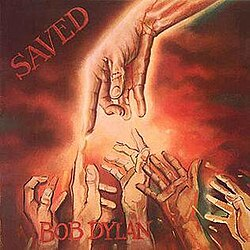
Recently I wrote how Donovan’s Catch the Wind was one of the most impactful folk love ballads I had ever heard, and certainly one of the most cherished songs of my youth. Well, here comes another that I would place just as highly and that held a similarly special place in my early teenage years. I first heard Tomorrow Is a Long Time when I picked up Bob Dylan’s Masterpieces (the triple-LP greatest hits album), and it floored me from the get-go. I felt like I was listening to an English traditional romantic ode from a bygone era. Dylan’s voice projects loneliness and longing, yet it remains modest and restrained as he pines for his love. It is one of his few early songs where he reveals fragility and tenderness with such openness and humility:

I can’t see my reflection in the waters
I can’t speak the sounds that show no pain


It is here – through inward recognition and reflection – that Dylan presents himself as a young, idealistic man, washed far from shore, with “no direction home.” He stands alone with little more than faith that his “true love” – the thing he seeks and prays for- might be both a real love on whom he can finally rest his head, and a quiet appeal to the music goddess herself: a plea to be set upon a path of artistic fulfilment, to give his life meaning, and to ensure he is never again lost or untethered from his moorings.

It is also timely that just a week ago, when I presented The Smashing Pumpkins’ song Today, there was the same futile resignation that “tomorrow’s much too long” to reach. The same sense of pain runs through Tomorrow Is a Long Time, where suffering and longing in the present stretch time itself, making every passing minute feel like an eternity. Despite what seems like a hopeless state – I can’t hear the echo of my footsteps / Or can’t remember the sound of my own name – the final verse ends with quiet assurance, recognising not only the beauty of nature, but the infinite beauty found in his true love’s eyes.


The following was mostly abridged from the Wikipedia article below:

Tomorrow Is a Long Time is yet another previously unreleased masterpiece Bob wrote in his very early days which didn’t see the light of day until it was released 8 years later in 1971 on his Greatest Hits Vol II. It was subsequently included in the triple LP compilation, Masterpieces. The song is actually a live performance recorded from his Town Hall show in April 12, 1963. Dylan originally recorded the song in December 1962 as a demo for M. Witmark & Sons, his publishing company which was long available as a bootleg. It was released by Columbia in 2010 on The Bootleg Series Vol. 9: The Witmark Demos, 1962–1964.

Elvis Presley recorded the song on May 26, 1966, during a session for his album How Great Thou Art. The song originally appeared as a bonus track on the album Spinout. Dylan once said that Presley’s cover of the song was “the one recording I treasure the most.”

[Verse 1]

If today was not a crooked highway
If tonight was not a crooked trail
If tomorrow wasn’t such a long time
Then lonesome would mean nothing to you at all
Yes, and only if my own true love was waiting
And if I could hear her heart a-softly pounding
Yes, and only if she was lying by me
Then I’d lie in my bed once again….

[Verse 2]
I can’t see my reflection in the waters
I can’t speak the sounds that show no pain
I can’t hear the echo of my footsteps
Or can’t remember the sound of my own name
Yes, and only if my own true love was waiting
And if I could hear her heart a-softly pounding
Yes, and only if she was lying by me
Then I’d lie in my bed once again…

[Verse 3]
There’s beauty in that silver, singing river
There’s beauty in the sunrise in the sky
But none of these and nothing else can touch the beauty
That I remember in my true love’s eyes
Yes, and only if my own true love was waiting
And if I could hear her heart a-softly pounding
Yes, and only if she was lying by me
Then I’d lie in my bed once again…

References:
1. Tomorrow Is a Long Time – Wikipedia

Tagged with: , , , , ,
Posted in Music

19/01/26 – 25/01/26 – Operation Barbarossa and Stalingrad Special

news on the march

Welcome to Monday’s News on the March – The week that was in my digital world.

Stalingrad: The Deadliest Battle in History

– Audio Presentation at War Historian Sleepy

In yesterday’s article I mentioned that I had been listening to audio presentations about one of World War II’s deadliest and most decisive battles – the Battle of Stalingrad. This particular presentation which is AI-rendered, titled The Deadliest Battle in History, could hardly have portrayed the event more vividly. The events are broken down with such precision and nerve-wracking detail that you almost feel worn out by the end.

The irony is that the AI narrator’s voice is designed to induce sleep. It is calm, slow, and soothing. Yet despite this, I found myself completely immersed in the telling of this extraordinary battle and had to turn it off to get to sleep – and then hold out to revisit it the next day.

Before turning to the battle of Stalingrad itself, it is worth outlining Operation Barbarossa – Hitler’s invasion of the Soviet Union in June 1941. I have always been perplexed, like so many others, by Hitler’s decision to invade Russia at all. Why launch such a massive campaign while already fighting across much of Europe? Why knowingly commit to a two-front war, leaving German forces stretched, exposed, and vulnerable? And why not wait until western Europe was fully secured, or focus more decisively on Britain?

Even Joseph Stalin, the Soviet leader, was caught off guard by the invasion. Germany and the USSR had signed the Molotov–Ribbentrop Pact, a non-aggression treaty, and Hitler’s attack shattered that uneasy agreement. Stalin was reportedly so shocked that he delayed mounting an effective response. In the early stages of Barbarossa, Soviet defences were disorganised, and German forces advanced with alarming speed – in some areas reaching the outskirts of Moscow itself.

One of the most astonishing aspects of the campaign is how close the Wehrmacht came to Moscow. German troops were within viewing distance of the Kremlin’s towers. What many historians consider Hitler’s most costly mistake was his decision not to concentrate his forces on capturing Moscow. Instead, he diverted major resources southward, aiming to seize oil fields in the Caucasus and the industrial city of Stalingrad. This decision left German forces overextended, poorly supplied, and increasingly vulnerable – especially as winter set in.

By late 1942, Stalingrad had become the focal point of the German advance. The initial German air and artillery bombardment was devastating. On the first day alone, an estimated 40,000 civilians were killed. Large parts of the city were reduced to rubble. Those who survived – soldiers and civilians alike – sheltered in basements, ruins, and sewers, defending what remained of their city under unimaginable conditions.

What makes the defence of Stalingrad so remarkable is how long these starving, exhausted, and badly supplied Soviet forces held out against a technologically superior enemy. The Germans possessed overwhelming air power, heavy armour, and experienced troops – yet they struggled to break Soviet resistance.

Faced with near-impossible odds, Soviet defenders relied on urban and guerrilla warfare. Snipers became a serious threat, forcing German troops to move cautiously. However, once sniper positions were suspected, entire sections of buildings were often destroyed by artillery or air strikes to eliminate them.

The fighting descended into chaos. Combat took place street by street, room by room, basement by basement, and sewer by sewer. The Soviets relied on patience, stealth, and intimate knowledge of their surroundings. In some cases, soldiers lay hidden in rubble, waiting for German units to pass before striking. A single Soviet soldier could disable or destroy a group of enemies using explosives at close range, often at the cost of his own life. They had the advantage of stealth through urban chaos and local knowledge and terrain.

Stalingrad ultimately became the turning point of the war on the Eastern Front – a battle defined by unimaginable loss, endurance, and sacrifice.

I’ll leave the remainder of this truly bloody, horrifying, and history-shaping battle to the audio presentation itself. It is a compelling account, and I recommend it highly.

That is all. Thank you for reading.

Tagged with: , , , , ,
Posted in News, politics

Done With Bonaparte (1996) – Mark Knopfler

Mark Knopfler’s Done With Bonaparte comes from his 1996 debut solo album Golden Heart, released shortly after the second and final break-up of Dire Straits in 1995. He supported the release of the album with the Golden Heart Tour of Europe. One of the early shows was recorded and released as a DVD titled A Night in London which features Done With Bonaparte at the end of this post. The tour marked a clear turning point for Knopfler. He stepped away from the role of arena-rock bandleader and into something more personal and understated. The performances leaned toward intimacy and nuance rather than spectacle.

Done With Bonaparte is arguably one of the album’s strongest tracks (along with Darling Pretty), largely because Knopfler’s distinctive guitar work blends so naturally with the traditional and folk instruments that underpin the song.

When I first heard Done With Bonaparte, I assumed Knopfler had adapted an old nineteenth-century folk ballad and given it a Celtic flavour. In fact, the song is entirely his own composition. Knopfler is rightly celebrated as one of the great guitarists, but his gift for lyrical storytelling is often overlooked. This song is a good reminder of that strength.The lyrics are told from the perspective of a war-weary soldier who has survived the brutal realities of Napoleon’s Russian campaign. The language and imagery deliberately echo the era and feel as though the song could have been written at the time.

The song is especially timely for me, as I have been listening recently to accounts of the Wehrmacht’s defeat at Stalingrad during World War II. While Done With Bonaparte is rooted firmly in the Napoleonic wars, its emotional core feels universal. It even brings to mind the story of General Heinz Guderian visiting Hitler after the failure before Moscow and noticing Hitler’s extensive reading on Napoleon’s Russian campaign – lessons that clearly went unlearned. Knopfler’s song could just as easily speak for the countless German soldiers lost on the Eastern Front, or for soldiers in any war where history repeats itself and ordinary men pay the price.


Golden Heart reached the top -10 position on charts in Austria, Belgium, Finland, Italy, the Netherlands, Norway, Sweden, Switzerland and the United Kingdom. The album peaked at 105 on the Billboard in the United States.

[Verse 1]
We’ve paid in hell since Moscow burned
As Cossacks tear us piece by piece
Our dead are strewn a hundred leagues
Though death would be a sweet release
And our grande armée is dressed in rags
A frozen, starving, beggar band
Like rats we steal each other’s scraps
Fall to fighting hand to hand

[Chorus]
Save my soul from evil, Lord
And heal this soldier’s heart
I’ll trust in thee to keep me, Lord
I’m done with Bonaparte

[Verse 2]
What dreams he made for us to dream
Spanish skies, Egyptian sands
The world was ours, we marched upon
Our little Corporal’s command
And I lost an eye at Austerlitz
The sabre slash yet gives me pain
My one true love awaits me still
The flower of the Aquitaine

[Verse 3]
I pray for her who prays for me
A safe return to my belle France
We prayed these wars would end all wars
In war, we know, is no romance
And I pray our child will never see
A little Corporal again
Point toward a foreign shore
Captivate the hearts of men

References:
1. Golden Heart – Wikipedia

Tagged with: , ,
Posted in Music

Follow Blog via Email

Enter your email address to follow this blog and receive notifications of new posts by email.

Join 778 other subscribers

← Back

Thank you for your response. ✨