
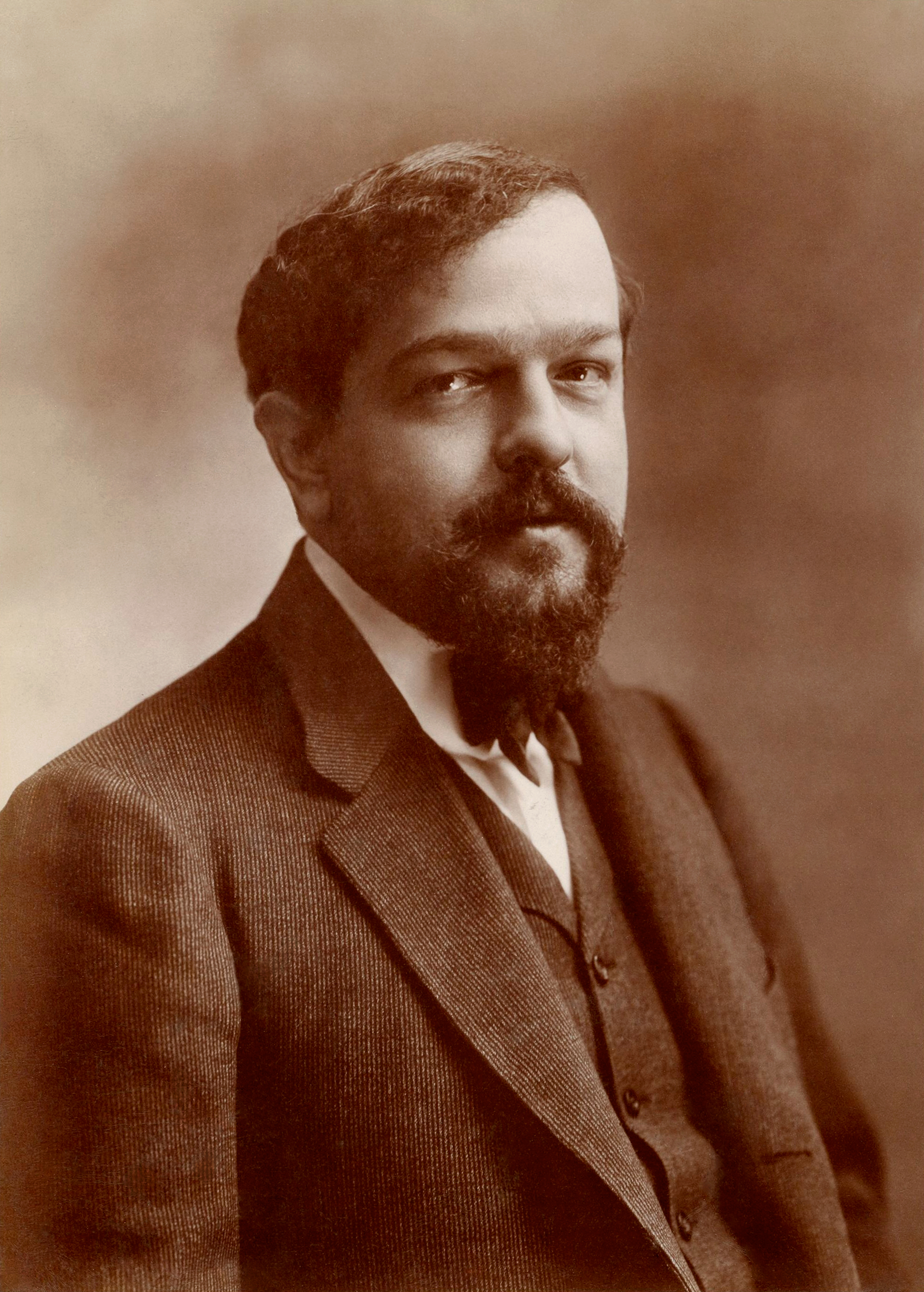
On this wet and chilly morning here in Bogotá, I present to you this delightful little piece by the French composer Claude Debussy. La fille aux cheveux de lin is the eighth of the composer’s Préludes, Book I (1909–1910). The title translates roughly to The Girl with the Flaxen Hair. Flaxen is a pale yellow, wheat-like colour – like that of the girl in the video below. The image appears in fine art as a symbol of innocence and naivety.
‘When I was pregnant I played this song to my unborn child. She’s now a happy little girl with flaxen hair. And still wants to listen to this song before going to bed sometimes‘.
– Commentator in the video below
Despite its brevity, The Girl with the Flaxen Hair lifted my mood on this dreary, peculiarly dark morning. This light and lucid piece is charming and amorous. You can see why it drew its inspiration from the wonderfully romantic poem of the same name below. For, love, in clear summer sunlight / Has soared with the lark and sung now. It’s also easy to see why it’s one of Debussy’s most recorded works.
Despite its relative simplicity, it remains a very popular solo piano piece – one many of you will likely recognise. In writing it, Debussy steps away from some of his more complex later tendencies, returning instead to a clearer, more restrained style with simple, transparent harmonies.
Below is Leconte de Lisle‘s poem by the same name, translated into English below (Wikipedia):
On the lucerne midst flowers in bloom,
Who sings praises to morning?
It is the girl with golden hair,
The beauty with lips of cherry.
For, love, in clear summer sunlight,
Has soared with the lark and sung now.
Your mouth has such colours divine,
My dear, so tempting to kisses.
On grass in bloom, talk to me, please,
Girl with fine curls and long lashes.
For, love, in clear summer sunlight,
Has soared with the lark and sung now.
Do not say no, cruel maiden.
Do not say yes. Better to know
The long lasting gaze of your eyes
And your rosy lips, oh, my belle.
For, love, in clear summer sunlight,
Has soared with the lark and sung now.
Farewell, you deer, farewell you hares
And the red partridge. I want
To stroke the gold of your tresses
Smothering lips with my kisses.
For, love, in clear summer sunlight,
Has soared with the lark and sung now
References:
1. La fille aux cheveux de lin – Wikipedia

“The more I live, the more I learn. The more I learn, the more I realize, the less I know.”- Michel Legrand


This is one of only a few pieces I know by Debussy. I’m attracted to it for similar reasons, particularly the lightness, the simplicity while at the same time there is a fair bit going on. The poem is a nice add-on; I enjoyed reading that and listening on a cold and dreary-looking morning here.
By the way, I made a start on the ‘Origin of Everything’ video you shared and am going to get back there when I can. From the first couple of minutes, it had my interest.
I hope the day clears and brightens where you are, and have a fine Saturday, Matt.
Crappy weather your way as well, Steve?
It was astute of you to point out how “there’s a fair bit going on” despite its perceived simplicity. After a few re-listens this morning, I found myself thinking the same – but failed to mention it. Thankfully, you did that for me, lol.
I was hoping the weather would shift back to its usual sunny morning self, but no such luck – it doesn’t seem likely either. So, no clothes washing for me today. Hopefully it improves where you are, too.
Oh – and I hope you like the video. It’s one of the most intriguing and informative ones I’ve seen in a good while. Cheers.
Weather is all over the place here. 22-24C on Wednesday and Thursday, then back down to freezing on Friday, and even a few flakes of snow falling. Halfway back to decent tomorrow for most of the week. Pretty unusual for us. Thursday felt like what the Sting song says, “all four seasons in one day.” lol
That’s a staggering variation in temperature your way, Steve — just as you said. I’m glad it looks like you’ve got a good week ahead on the climate front.
Here in Bogotá, the temperature stays fairly consistent year-round thanks to its equatorial location and high altitude. The main variation comes from precipitation, with distinct wet and dry seasons. Our average temperature hovers around 13 °C, which is pretty boring — compared to Australia’s dramatic four-season shifts.
Have a great day!
We do have some pretty severe differences in temperature, though not usually so closely stacked. But in recent years the timing and severity of seasonal transitions have changed and been more noticeable.
The consistency and reliability must be pleasant there; sounds much more moderated.
Pretty great day, thanks, and I hope yours was, too.
Yes, it gets a bit monotonous on the climate front here. The good thing is you only have to travel a couple of hours because it’s so mountainous to get a whole radical climate change. The jungle territories are wondrous in terms of biodiversity and sightseeing.
I see what you mean about the recent seasonal transitions. Cheers buddy.
The variety of terrain and associated microclimates is something rather foreign to me, having spent my life on the prairies, though travel has given glimpses of some. Cheers to you, mate.
I love Debussy. I played this many years ago. I no longer have the music. I should make a note (no pun intended) to find it at the downtown library. They have a large collection of music ~ I should know ~ I inventoried it 40 years ago.
I think I hardly know of his music apart from this. You go way back with your library’s music. Nice job. I hope it’s all still there.
I hope so, too. So much of the collection has been sold off. Not just in the music department but in all the departments. Federal funding has basically dried up. The money has to come from somewhere.
Another fake attempt.