Pictures of You (1990) – The Cure

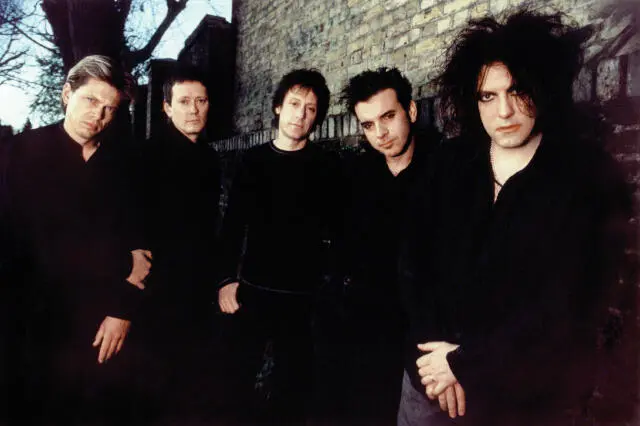
By 1989, Cure lead singer and songwriter Robert Smith was a bit weary of his band’s gradual movement toward the pop charts away from their moody early work. He felt he needed to create something lasting, a coherent album-length artistic statement. So he slowed down the tempos, turned up the torment, and wrote the songs that would make up Disintegration, the band’s melancholy masterwork which contained “Pictures Of You.”

The Cure, “Pictures Of You” – American Songwriter

The instrumental introduction in The Cure’s Pictures of You is immense and my favourite part of the track. I always preferred how this song sounded Live over the studio release because of the reverb effect, so I have relayed the live version below from their gig at The Palace, Auburn Hills, Michigan. This music portal which is Pictures of You instantly takes me back 30 years. These 7 minutes of music have given me so many hours of joy and deep reflection; bringing back memories so thick of places and especially people in my renegade period of early adulthood. Perhaps my attachment to this song is not as fervent as it once was, but I still remain introspective about what it represents.

Pictures of You is the second song by The Cure to feature here after their previous entry Friday I’m in Love. It was released as the fourth and final single from the band’s eighth studio album, Disintegration. The single reached No. 24 on the UK Singles Charts. In 2011, the song was voted number 283 on Rolling Stone‘s The 500 Greatest Songs of All Time list.

[Verse 1]
I’ve been looking so long at these pictures of you
That I almost believe that they’re real
I’ve been living so long with my pictures of you
That I almost believe that the pictures are all I can feel

[Verse 2]
Remembering you standing quiet in the rain
As I ran to your heart to be near
And we kissed as the sky fell in, holding you close
How I always held close in your fear

[Verse 3]
Remembering you running soft through the night
You were bigger and brighter and wider than snow
And screamed at the make-believe, screamed at the sky
And you finally found all your courage to let it all go

[Verse 4]
Remembering you fallen into my arms
Crying for the death of your heart
You were stone white, so delicate, lost in the cold
You were always so lost in the dark

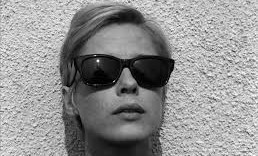
Background: According to interviews, the inspiration of the song came when a fire broke loose in Robert Smith’s home. After that day, Smith was going through the remains and came across his wallet which had pictures of his wife, Mary. The cover of the single is one of the pictures. The same picture was used as the cover of the “Charlotte Sometimes” single, but that image was heavily warped and distorted.

Smith explained his motivations for the album in a 1989 interview. “With Disintegration, I wanted to see if The Cure was still able to make a record which had a real substance and if we were able to express and share such deep feelings,” he said. “The kind of things you feel the first time somebody kisses you violently on the mouth. It’s this kind of intensity, when you’re young, that you must never forget with age. Never…”

The Cure, “Pictures Of You” – American Songwriter

Reference:
1. Pictures of You (The Cure song) – Wikipedia
2. The Cure, “Pictures Of You” – American Songwriter

Tagged with: , ,
Posted in Music

Pictures at an Exhibition – Promenade (1874) – Modest Mussorgsky

In this piece (Promenade) Mussorgsky depicts himself “roving through the exhibition, now leisurely, now briskly in order to come close to a picture that had attracted his attention, and at times sadly, thinking of his departed friend.

Vladimir Stasov

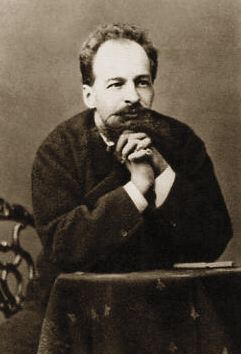
Pictures at an Exhibition Promenade is a piano suite in ten movements, plus a recurring and varied Promenade theme, written in 1874 by Russian composer Modest Mussorgsky. It is a musical depiction of a tour of an exhibition of works by architect and painter Viktor Hartmann (pictured inset) put on at the Imperial Academy of Arts in Saint Petersburg, following his sudden death of an aneurysm at the age of 39. Mussorgsky was deeply affected by Hartmann’s passing and conceived a musical memorial to Hartmann, with each movement depicting one of the artist’s works. It was composed in twenty days. 

Mussorgsky first met Hartmann in 1868 not long after Hartmann’s return to Russia from abroad. Both men were devoted to Russian art and quickly became friends. Hartmann gave Mussorgsky two of the pictures that later formed the basis of Pictures at an Exhibition. Each movement of the suite is based on an individual work, some of which are lost. Mussorgsky links the suite’s movements in a way that depicts the viewer’s own progress through the exhibition. Two Promenade movements stand as portals to the suite’s main sections. Their regular pace and irregular meter depicts the act of walking.

References:
1. Pictures at an Exhibition – Wikipedia
2. Mussorgsky’s “Pictures at an Exhibition”: A Showpiece in Multiple Versions – the listeners club

Tagged with: , ,
Posted in Music

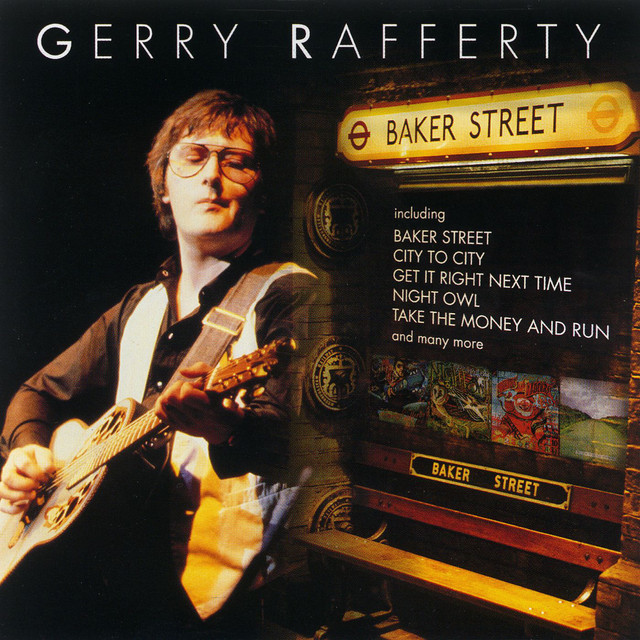
Baker Street (1978) – Gerry Rafferty

This song is one of the best pop singles of the 1970s. It was on the album City To City. This was Rafferty’s first release after the breakup of his former band Stealer’s Wheel. Rafferty had been unable to release any material due to disputes about the band’s remaining contractual recording obligations, and his friend’s Baker Street flat was a convenient place to stay as he tried to remove himself from his Stealers Wheel contracts. It was his second solo album, the first being Can I Have My Money Back? released in 1971.

Gerry Rafferty – Baker Street at Max PowerPop

Baker Street was another song jogged to my memory by Max’s recent article at PowerPop. I had not heard this song in decades, but it sure did bring back some good memories and reminded me why the 70’s were so good for music. The arrangement is known for its unforgettable saxophone riff. It contains one of the most iconic intros to any song and still get the adrenaline flowing 46 years later. I really like his song Right Down the Line as well which will feature here when we reach the ‘R’s in the music library project.  

Baker Street is a song written Scottish singer-songwriter Gerry Rafferty. It won the 1979 Ivor Novello Award for Best Song Musically and Lyrically and reached the top three in the UK, US and elsewhere. As Max alluded to above:

“Everybody was suing each other, so I spent a lot of time on the overnight train from Glasgow to London for meetings with lawyers. I knew a guy who lived in a little flat off Baker Street. We’d sit and chat or play guitar there through the night.”

[Verse 1]
Windin’ your way down on Baker Street
Light in your head and dead on your feet
Well another crazy day, you’ll drink the night away
And forget about everything
This city desert makes you feel so cold
It’s got so many people but it’s got no soul
And it’s taking you so long to find out you were wrong
When you thought it held everything
You used to think that it was so easy
You used to say that it was so easy
But you’re tryin’, you’re tryin’ now
Another year and then you’d be happy
Just one more year and then you’d be happy
But you’re cryin’, you’re cryin’ now

[Verse 2]
Way down the street there’s a light in his place
He opens the door he’s got that look on his face
And he asks you where you’ve been
You tell him who you’ve seen and you talk about anything
He’s got this dream about buyin’ some land
He’s gonna give up the booze and the one night stands
And then he’ll settle down, in some quiet little town
And forget about everything
But you know he’ll always keep movin’
You know he’s never gonna stop movin’
‘Cause he’s rollin’, he’s the rollin’ stone
And when you wake up, it’s a new mornin’
The sun is shinin’, it’s a new mornin’
And you’re goin’, you’re goin’ home

The resolution of Rafferty’s legal and financial frustrations may have accounted for the exhilaration of the song’s final verse:

When you wake up it’s a new morning
The sun is shining, it’s a new morning
You’re going, you’re going home.

Rafferty’s daughter Martha suggested in 2012 that he could also have taken inspiration from a book he was reading while he was travelling between the two cities, Colin Wilson’s The Outsider (1956), which explored ideas of alienation and creativity and a longing to be connected.

References:
1. Baker Street (song) – Wikipedia

Tagged with: , ,
Posted in Music

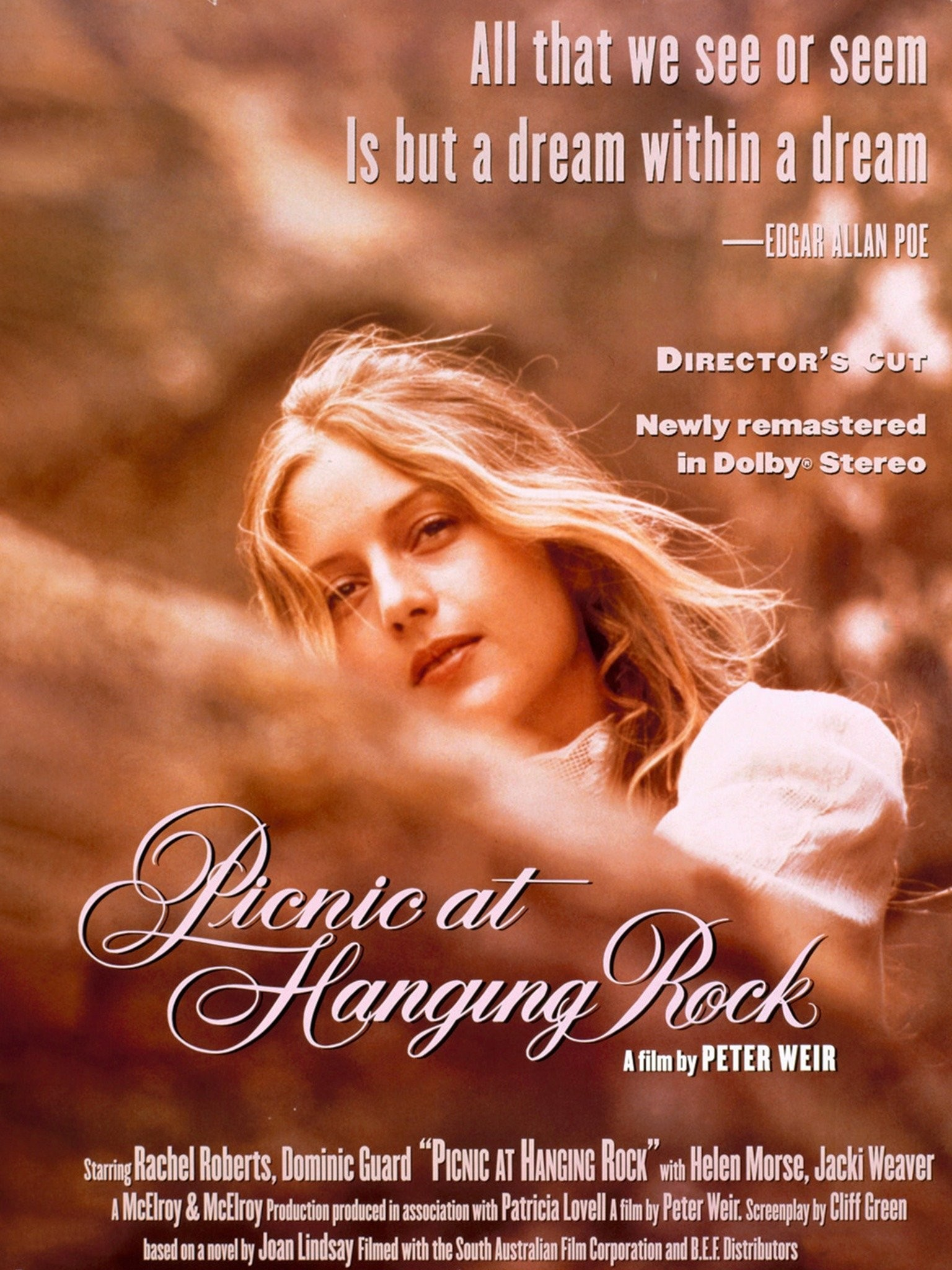
Doina: Sus Pe Culmea Dealului (Picnic at Hanging Rock Theme Music) – Gheorghe Zamfir

Before I left Australia to come to Colombia, I went to Hanging Rock in Victoria, Australia as a personal pilgrimage. Hanging Rock is an archetypal character in the movie. I felt great nostalgia wandering this ethereal and dreamy landscape. I can understand why some of the cast and executive producer were afraid to return to Hanging Rock. According to IMDB executive producer Patricia Lovell said she went back once in 1985 and she left almost immediately and refuses to go back to this day.

Picnic at Hanging Rock 1975- Peter Weir (Friday’s Finest)

Today we go back to the beginning of it all. The Australian art-house cinema classic Picnic at Hanging Rock directed by Peter Weir launched my movie series – ‘Friday’s Finest‘ in August, 2019. Its theme music Doina: Sus Pe Culmea Dealului by the Romanian (pan flute) musician Gheorghe Zamfir is a traditional Romanian panpipe piece and the subject of today’s post. There is currently no official soundtrack commercially available of Picnic at Hanging Rock.

Zamfir is known for playing an expanded version of normally 20-pipe nai, with 22, 25, 28 or even 30 pipes, to increase its range, and obtaining as many as eight overtones (additional to the fundamental tone) from each pipe by changing his embouchure. Zamfir is known as “The Master of the Pan Flute“. Between 1976 and 1983, Zamfir had six albums peak within the Australian top 100 albums charts, with The Flutes of Pan, his best, peaking at number 26 in 1980.

Zamfir’s first appearance as soloist interpreter in a movie soundtrack was in Vladimir Cosma’s 1972 Le grand blond avec une chaussure noire, whose soundtrack became a worldwide hit. He was asked by Ennio Morricone to perform the pieces Childhood Memories and Cockeye’s Song for the soundtrack of Sergio Leone’s 1984 gangster film Once Upon a Time in America. His performance can also be heard throughout the 1984 film The Karate Kid plus the sequels. One of Zamfir’s most famous pieces is The Lonely Shepherd which featured in Quentin Tarantino’s 2003 film Kill Bill: Volume 1.

References:
1. Picnic at Hanging Rock (film) – Wikipedia
2. Gheorghe Zamfir – Wikipedia

Tagged with: ,
Posted in Music

Photograph (1973) – Ringo Starr

I saw a John Lennon interview where he said he used to worry about Ringo and what he would do after the Beatles. Suddenly Ringo was on top of the world and John jokingly said he telegrammed Ringo and asked Ringo would he “write me a hit?”

– Max at PowerPop

Yesterday’s featured song Bad Moon Rising, as well as today and an upcoming song were all jogged to my memory from fellow blogger’s Max web site PowerPop.
Photograph was released as the lead single from former Beatles drummer Ringo Starr’s 1973 album Ringo. It was a major international hit charting in 10 different countries, including hitting No 1 in the United States, Canada and Australia. Starr and Harrison began writing the song on a luxury yacht in the South of France in 1971, during a period when Starr was focused on developing his acting career. Harrison also contributed guitar and backing vocals to the track. The lyrics are a reflection on lost love, whereby a photograph is the only reminder of the protagonists’ shared past. 

[Chorus]
Every time I see your face, it reminds me of the places
We used to go
But all I’ve got is a photograph, and I realise you’re not
Comin’ back anymore

[Verse 1]
I thought I’d make it
The day you went away
But I can’t make it
‘Til you come home again to stay

[Chorus]
I can’t get used to livin’ here while my heart is broke
My tears I cried for you
I want you here to have and hold as the years go by
And we grow old and grey

Starr sang Photograph at the 56th Annual Grammy Awards, during which he and Paul McCartney, as the two surviving ex-Beatles, were honoured with the Recording Academy’s Lifetime Achievement Award. Rolling Stone reported on Starr’s performance of the song: “Backed by a massive full band, he bounced around the stage while old black-and-white photographs showed on a big screen behind him.” In the album review for Rolling Stone, Ben Gerson highlighted Photograph as one of the “three most wonderful songs” on Ringo, along with the Lennon-composed I’m the Greatest and the Harrison–Mal Evans collaboration You and Me (Babe).

References:
1. Photograph (Ringo Starr song) – Wikipedia

Tagged with: , , , ,
Posted in Music

Bad Moon Rising (1969) – Creedence Clearwater Revival

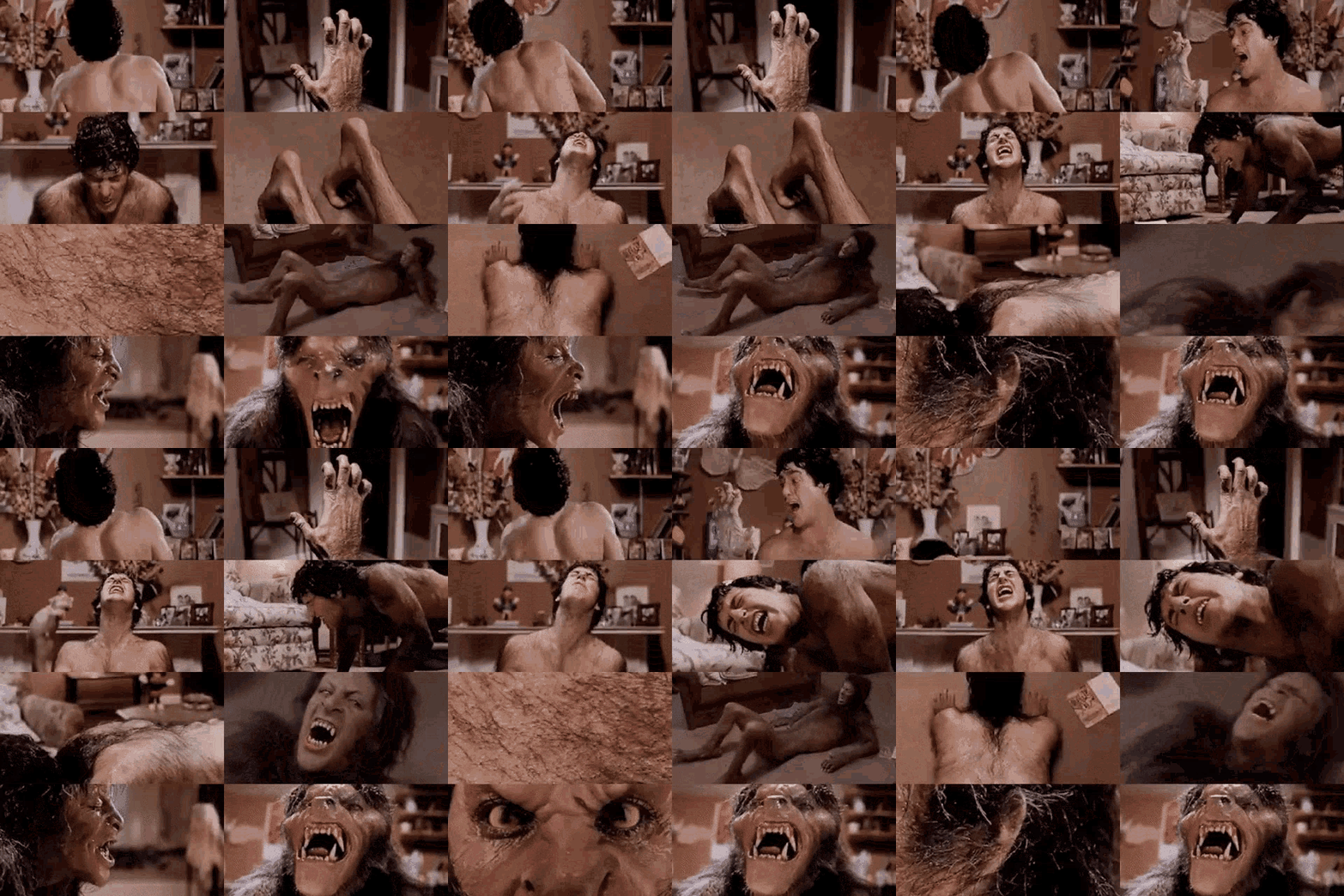
American Werewolf In London Werewolf GIF - American Werewolf In London Werewolf GIFs

The scene of the American’s (Dave) conversion to a werewolf (with Creedence’s Bad Moon Rising) is both terrifying and a technical marvel. It is said the real star of this film is the Oscar-winning transformation effects by Rick Baker, who changed the face of horror makeup in the 1980s. Also the whole music soundtrack is dedicated to the ‘Moon’.

An American Werewolf in London (1981) – John Landis (Friday’s Finest)

Creedence Clearwater Revival have a sense of impending doom on their 1969 hit “Bad Moon Rising.” The song was the lead single from Creedence Clearwater Revival’s third studio album, Green River. The song reached No. 2 on the Billboard Hot 100 singles chart and No. 1 on the UK Singles Chart for three weeks in September 1969.

Lead singer and songwriter John Fogerty told Team Rock that the name “Bad Moon Rising” came from a book of song titles that he kept. he said, “I didn’t even know what it meant, I just liked how the words sounded.” The lyrics were inspired by a 1941 black-and-white film Fogerty had watched called The Devil and Daniel Webster. He said:

The scene I liked is where there’s a devastating hurricane; furniture, trees, houses, everything’s blowing around. That story and that look really stuck in my mind and they were the germ for the song.

[Verse 1]
I see the bad moon arising
I see trouble on the way
I see earthquakes and lightnin’
I see bad times today

[Chorus]
Don’t go around tonight
Well, it’s bound to take your life
There’s a bad moon on the rise

[Verse 2]
I hear hurricanes a-blowing
I know the end is coming soon
I fear rivers overflowing
I hear the voice of rage and ruin

[Chorus]
Don’t go around tonight
Well, it’s bound to take your life
There’s a bad moon on the rise
All right

Fogerty allegedly wrote the song the same day Richard Nixon was elected president—he denies the song has a political subtext. However, the song still became an anthem both for troops in Vietnam and anti-war protestors across the country. Fogerty acknowledges the song’s political undercurrent:

The song was a metaphor. I wasn’t just writing about the weather. The times seemed to be in turmoil. Martin Luther King and Robert F. Kennedy had been assassinated. I knew it was a tumultuous time.

References:
1. Bad Moon Rising – Wikipedia
2. Bad Moon Rising Lyrics – Genius

Tagged with: , , ,
Posted in Music

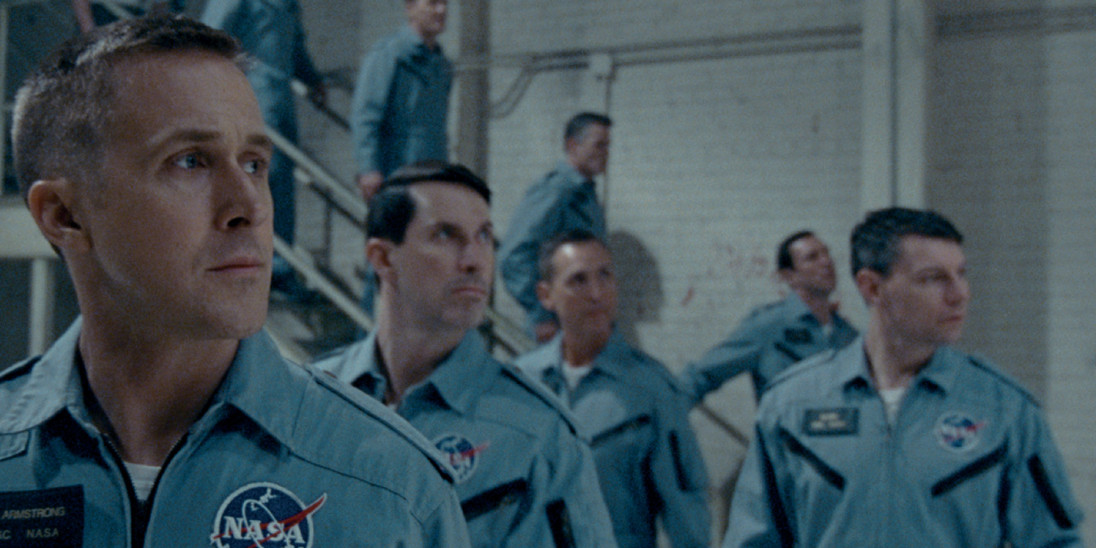
First Man (2014) – Damien Chazelle (Friday’s Finest)

First Man is the third movie by Damien Chazelle to be presented here after his previous entry Whiplash. It is a 2018 American biographical drama film developed from a screenplay by Josh Singer, based on the 2005 book of the same name by James R. Hansen. The project was originally announced in 2003, with Clint Eastwood slated to direct. After that rendition fell through, Chazelle, Gosling and Singer all signed on by 2015.

IMDB Storyline:
A Biopic on the life of the legendary American Astronaut Neil Armstrong from 1961-1969, on his journey to becoming the first human to walk the moon. Exploring the sacrifices and costs on the Nation and Neil himself, during one of the most dangerous missions in the history of space travel.

The film received critical acclaim, particularly regarding the direction, Gosling and Foy’s performances, musical score, and the Moon landing sequence. Similar to my last Friday’s Finest submission – Mr. Turner; despite the very positive reviews from critics at 87%, First Man has received just a 68% Audience Score at Rotten Tomatoes. I’m bemused at the reviews of “boring” or “too long”. This is not Apollo 13 or The Right Stuff, and is not meant to be. It is a character study based on a book James R Hansen which is a biography of Neil Armstrong, rather than a story of the moon landing per se. Of course the movie is going to show the moon landing, and the events which lead up to it, but these are just part of what the movie is about.

We see how hard it is to be a test pilot then astronaut. The launches and flights are seen from Neil’s perspective, his visceral experience of being on top of a missile smashing into space. These scenes are not spectacular, in the Apollo 13 sense, but dark, claustrophobic, noisy and confusing, like it really was. Armstrong is shown as an introverted man of few words and not particular friendly. But he has extraordinary coolness under extreme pressure. That’s why he was chosen as the first man. The movie portrays a real marriage, so unlike what is normal in Hollywood that it seems to be a shock to a lot of people. I certainly could relate to one or two exchanges between Neil and his wife Janet. Clare Foy portrays her as a sweet but strong woman.

Filming: It was shot without the use of green screen. Instead, LED displays of up to 10 meters were used. These projected images that would simulate the exterior of the spacecraft, both the Earth and space. Next to the screens, several simulators were built, each corresponding to a spacecraft. These were programmed to move synchronized with the images of the spherical LED screens that could be seen through the windows.

To recreate Armstrong’s home, the production crew built a replica of it in an empty lot. The lunar surface was recreated by building a set on the Vulcan quarry in Atlanta. Chazelle filmed these sequences at night, using a custom 200,000-watt light to duplicate the effect of sunlight on the surface. For the simulation of low gravity on the lunar surface, a balancing system calibrated for the actors was constructed. NASA historian Christian Gelzer, as well as astronauts Al Bean (from Apollo 12) and Al Worden (from Apollo 15), were on set as technical consultants.

IMDB Trivia:

  • Mark Armstrong and Rick Armstrong said that this film contained the most accurate portrayal of their father Neil Armstrong and their mother Janet Armstrong.
  • Apollo astronauts were considered government employees, with most at the rank of Captain. Regardless of their substantial education, the average yearly income of these astronauts in the 1960s was $17,000 (~$112,000 in 2019 money) solely based on military rank, and were not paid any hazard pay…. they were deducted for living expenses when aboard the spacecraft, as food and a bed were provided for them.
  • The “1201” and “1202” alarms that sounded during the lunar descent was an indication that the computer was receiving more data than it could process. The procedure to fix this was to cycle the switch, which essentially ended the bottleneck. This was not the last time this error had been encountered in an Apollo flight. When Apollo XII was struck by lightning during its launch, it also triggered a 1202.
  • The Apollo 11 crew eat steak and eggs before their launch. This has been the traditional launch day breakfast of NASA astronauts since 1961, when it was served to Alan Shepard for the first Project Mercury flight.

Spoiler alert: Do not read on if you haven’t seen “First Man and want to see it.
The film excerpt I have included below is the moving scene when Neil Armstrong releases his daughter’s bracelet on the Moon in remembrance of his family and her. To me it’s the most powerful scene of the movie. The compounding factors of where he was, the broken heart for his daughter and the music tied it all together into a seriously heart wrenching moment.
Fact check – Did Neil Armstrong Really Leave That Bracelet on the Moon? Armstrong never talked about it but his sister feels that he might have done so, given that he had 11 minutes alone on the moon — mostly exploring what is known as the East Crater — where no one knows exactly what he did. “Did he take something of Karen with him to the Moon?” Armstrong’s sister June asked Hansen rhetorically in the book. “Oh, I dearly hope so.” Buzz Aldrin and Armstrong did take personal kits to the moon, although Armstrong “never released any information about the contents of his PPK.”

References:
1. First Man (film) – Wikipedia
2. First Man – IMDB
3. ‘First Man’ Fact Check: Did Neil Armstrong Really Leave That Bracelet on the Moon? – The Wrap

Tagged with: , , , , ,
Posted in Movies and TV

Philadelphia Freedom (1975) – Elton John

The Number Ones: Elton John's “Philadelphia Freedom”

Philadelphia Freedom is the 10th track to feature here from Elton Hercules John. I listened to him more than any other music artist before I reached the age around 13. To say his early records did the rounds on our family turntable would be an understatement. One of my biggest regrets as far as musical yearnings is concerned is not having seen him in concert.
Philadelphia Freedom was released as a single in 1975, credited to the Elton John Band. The song was the fourth of John’s six number 1 US hits during the early and mid-1970s, which saw his recordings dominating the charts.

I used to be a rollin’ stone, you know
If a cause was right
I’d leave to find the answer on the road
I used to be a heart beatin’ for someone
But the times have changed
The less I say, the more my work gets done

[Chorus]
‘Cause I live and breathe this Philadelphia freedom
From the day that I was born, I’ve waved the flag
Philadelphia freedom took me knee–high to a man, yeah
Gave me peace of mind my daddy never had

[Post-Chorus]
Oh, Philadelphia freedom, shine on me, I love ya
Shine the light through the eyes of the ones left behind
Shine the light, shine the light
Shine the light, won’t you shine the light?
Philadelphia freedom, I lo-o-ove ya
Yes, I do

Philadelphia freedom was written by John and Taupin as a favour to John’s friend, tennis star Billie Jean King, who was part of the Philadelphia Freedoms professional tennis team. Elton John met Billie Jean King in 1973 and, according to reporters for CNN, they have since built a “powerful partnership in philanthropy, raising hundreds of millions of dollars…for equal rights and for HIV/AIDS causes“.

The song was at the time the only song Elton John and Bernie Taupin had ever consciously written as a single. In His Song: The Musical History of Elton John, Elizabeth Rosenthal recounts that Taupin said, “I can’t write a song about tennis“, and did not. Taupin maintains that the lyrics bear no relation to tennis, Philadelphia soul, or even flag-waving patriotism. Nonetheless, the lyrics have been interpreted as patriotic and uplifting.
The song’s sentiment, intentionally or not, meshed perfectly with an American music audience gearing up for the country’s bicentennial celebration in July 1976.

References:
1. Philadelphia Freedom (song) – Wikipedia

Tagged with: , , ,
Posted in Music

Philadelphia (1993) – Neil Young

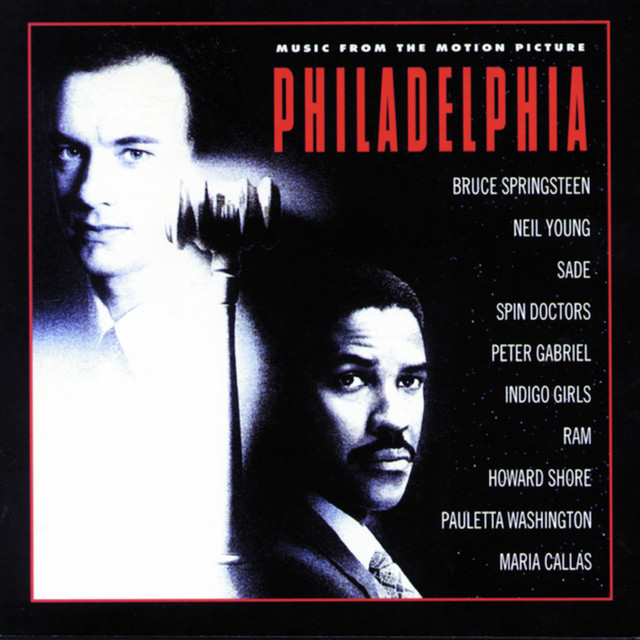
Streets of Philadelphia by Bruce Springsteen and sister song Philadelphia by Neil Young are from the Jonathan Demme movie of the same name. Bruce Springsteen won best original song at the 1994 Academy Awards while Neil Young was nominated. Both are exemplary ‘atmospheric’ compositions and showcase the unique musical talents of each. Streets of Philadelphia was a huge hit of course and my first encounter with the music from the film. It will be the subject of another post when we reach the ‘S’ songs in the music library project. Now onto Neil’s submission for the film:

I think the ending / wake scene (see below) from the 1993 Philadelphia film is one of the most affecting and touching scenes I have seen. The reason why it is so poignant is due in major part to Neil Young’s song Philadelphia. While Philadelphia was written specifically for the film of the same name, its message extends far beyond the boundaries of the movie.
The verses of Philadelphia paint vivid images of a city that embodies the concept of brotherly love. Neil Young sings, “City of brotherly love, place I call home. Don’t turn your back on me, I don’t want to be alone.” Here, he implores the city not to abandon him, as he seeks connection and understanding. This plea for companionship and acceptance resonates with so many of us who long for connection in a fast-paced and often disconnected world.

Sometimes I think that I know
What love’s all about
And when I see the light
I know I’ll be all right

I’ve got my friends in the world
I had my friends
When we were boys and girls
And the secrets came unfurled

City of brotherly love
Place I call home
Don’t turn your back on me
I don’t want to be alone
Love lasts forever

Someone is talking to me
Calling my name
Tell me I’m not to blame
I won’t be ashamed of love

Philadelphia
City of brotherly love
Brotherly love

Sometimes I think that I know
What love’s all about
And when I see the light
I know I’ll be all right
Philadelphia

Whenever I listen to “Philadelphia,” I am transported to a place of introspection and contemplation. It reminds me of the importance of love in my own life and inspires me to seek connection and understanding. With its beautiful melodies and powerful lyrics, this song continues to hold a special place in my heart and reminds me of the boundless power of music.

– Marty Mullin, contributor of Old Time Music

It’s said Jonathan Demme wanted a “Southern Man” style anthem but got two of the most heartbreaking songs of the year. Demme recounts how he was able to include two of the biggest rock stars on the planet, Neil Young and Bruce Springsteen, on his acclaimed film Philadelphia. At the time, Demme had never met or worked with Young.

We’re cutting the movie together and I’m like, [snaps his fingers], I’ve got such a great idea. We’re going to reach out to Neil Young to see if he would like to do a ‘Southern Man’-type anthem to start this movie, ’cause that will send such a strong, reassuring message to testosterone-fuelled men, which is our target audience. It’s like, ‘Well if Neil’s down with it,’ you know?

“So we sent Neil a tape of the movie and his manager calls back right away and says Neil likes the film, he’s wanted to make a statement — oh and by the way when I sent it to him, “Southern Man” was scoring the opening scene — so then, a week later, this audio cassette comes back and it’s Neil’s song for Philadelphia.

“I got in the car, which you always have to do to hear an important song in your life for the first time, so my wife and I popped it in and here’s this heartbreaking ‘Philadelphia’ song by Neil, and yes, I’m crying by the end of it, but I’m also like, this will be great at the end, but we still need the up-front thing.”

References:
1. Jonathan Demme on how he got Bruce Springsteen and Neil Young on the Philadelphia soundtrack – CBC
2. The Meaning Behind The Song: Philadelphia by Neil Young – Old Time Music

Tagged with: , ,
Posted in Music

Phar Lap Soundtrack (1983) – Bruce Rowland

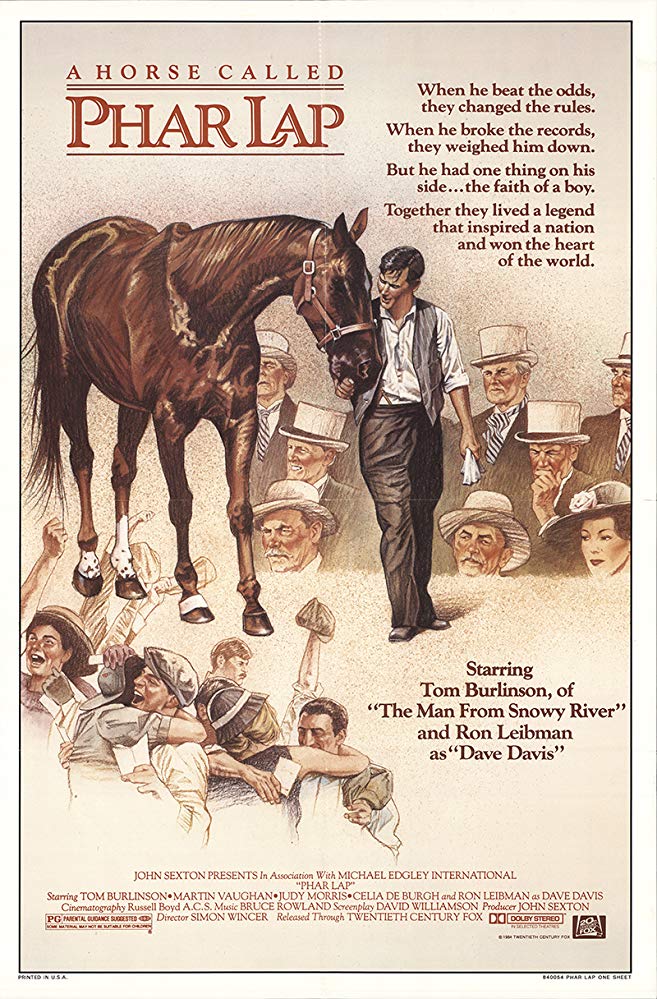
Phar Lap

If I was to choose just one Australian movie to take away with me on a Desert Island it would be Phar Lap. It is based on the true story of legendary Australian racehorse Phar lap which I showcased on Friday’s-Finest back in 2019. Phar Lap transports me to a time and place that I never grow tired of revisiting. The sights, smells and sounds of Australia and my youth all come flooding back. Any horse or sports lover should watch and enjoy this movie. The cinematography, production and music in particular is outstanding. It still remains one of the most popular Australian films.

Phar Lap (4 October 1926 – 5 April 1932) was a champion Thoroughbred racehorse whose achievements captured the public’s imagination during the early years of the Great Depression. Foaled in New Zealand, he was trained and raced in Australia by Harry Telford. Phar Lap dominated Australian racing during a distinguished career, winning a Melbourne Cup, two Cox Plates, an AJC Derby, and 19 other weight for age races. He then won the Agua Caliente Handicap in Tijuana, Mexico, in track-record time in his final race despite racing under duress with a injured hoof,and not used to racing on dirt tracks.

The subject of today’s post is the movie soundtrack by Bruce Rowland. The music throughout is fantastic but unfortunately the original music as ‘stand-alone’ pieces do not appear on YT. The best I can do is present these two videos below. The first one: Phar Lap – The Movie : Phar Lap’s last race before he died has disallowed playback from ‘other websites’. The music I wanted to highlight is the culminating minute of the film which starts at 7:19. I would like this as the final elegy at my funeral. The second video is an ensemble of melodies from Phar Lap, but unfortunately it is not the music as it appears in the film.

Bruce Rowland (born 9 May 1942 in Melbourne) is an Australian composer. Rowland received his education at Caulfield Grammar School, Melbourne in his hometown. He learned piano and was a keyboard player for Australian music groups, and singers.

Tagged with: , ,
Posted in Movies and TV, Music, Reflections

Follow Blog via Email

Enter your email address to follow this blog and receive notifications of new posts by email.

Join 780 other subscribers

← Back

Thank you for your response. ✨