There Is a Light That Never Goes Out (1986) – The Smiths

I didn’t realise that ‘There Is a Light That Never Goes Out’ was going to be an anthem, but, when we first played it, I thought it was the best song I’d ever heard.”

– Johnny Marr’s (guitarist) comment on the song’s enduring popularity

This classic Smiths song is everything that’s so darn cool about them, wrapped up in one package:

  • Morrissey’s warped, melancholic black-humour trickery – And if a double-decker bus crashes into us / To die by your side is such a heavenly way to die. AllMusic’s Tim DiGravina argued that, while depressed characters were a regular feature in Morrissey’s work, his lyric on “There Is a Light That Never Goes Out” “ups the sad-and-doomed quotient by leaps and bounds.”
  • Johnny Marr’s jangly, metallic yet rustic guitar sound,
  • an irresistibly alluring melody that makes you grin, even as it carries a romantic and pensive wistfulness,
  • and the subject matter itself – the joy and reckless abandonment of early adulthood, heading out with your partner simply to go “where there’s music and there’s people.” The narrative recalls the James Dean film Rebel Without a Cause (1955), in which Dean – an idol of Morrissey’s – flees his torturous home life, riding as a passenger with a potential romantic partner. Morrissey even echoes a line from that movie (“It is not my home”) in the song. 

The clever fan-made music video at the end of this post, adapted from scenes of 500 days of Summer, begins with hopeless romantic Tom Hansen listening to this very song in an elevator. Summer, standing beside him, turns and says: “I love the Smiths.” Tom, startled, replies: “Sorry?” She repeats: “I said I love the Smiths… you’ve got great taste in music.” Tom, suddenly besotted, asks: “You like the Smiths?” She smiles and answers: “Yeah. To die by your side is such a heavenly way to die… I love them.” Then she steps out of the elevator, leaving Tom stunned, his only response a whispered: “Holy shit.”

It’s so perfectly captured – that instant of connection when someone loves a song as deeply as you do. I totally get that.

There Is a Light That Never Goes Out makes you want to relive your youth – go out, take risks, have fun, and soak up life. It’s an absolute humdinger.

The following was abridged from the Wikipedia reference below:
It featured on the band’s third studio album The Queen Is Dead (1986), and was not released as a single in the United Kingdom until 1992, five years after their break-up. It peaked at No. 25 on the UK singles chart. The song has received considerable critical acclaim; in 2014, NME listed it as the 12th-greatest song of all time. In 2021, it was ranked at No. 226 on Rolling Stone’s list of the “500 Greatest Songs of All Time“.

The Smiths began working on “There Is a Light That Never Goes Out” during their late-1985 recording sessions at London’s RAK Studios. Morrissey was sceptical about using synthesised strings, the lack of a budget to hire a real string ensemble as well as the band’s reluctance to allow outsiders into the recording process. Marr later described the recording process of the song as “magical” and commented, “Someone told me that if you listen with the volume really, really up you can hear me shout ‘That was amazing’ right at the end.”

[Verse 1]
Take me out tonight
Where there’s music and there’s people
And they’re young and alive
Driving in your car
I never, never want to go home
Because I haven’t got one anymore
Take me out tonight
Because I want to see people
And I want to see lights
Driving in your car, oh, please don’t drop me home
Because it’s not my home, it’s their home
And I’m welcome no more

[Chorus]
And if a double-decker bus crashes into us
To die by your side is such a heavenly way to die
And if a ten tonne truck kills the both of us
To die by your side, well, the pleasure, the privilege is mine

[Verse 2]
Take me out tonight
Take me anywhere
I don’t care, I don’t care, I don’t care
And in the darkened underpass
I thought “Oh God, my chance has come at last”
But then a strange fear gripped me and I just couldn’t ask
Take me out tonight
Oh, take me anywhere
I don’t care, I don’t care, I don’t care
Driving in your car, I never, never want to go home
Because I haven’t got one
La-dee-dum, oh, I haven’t got one
Oh-oh, oh-oh-oh

[Chorus]

[Outro]
Oh, there is a light and it never goes out
There is a light and it never goes out
..

References:
1. There Is a Light That Never Goes Out – Wikipedia

Tagged with: , ,
Posted in Music

There is a Garden (1993) – Archie Roach

Archie Roach’s There is a Garden stands, to my ears, as a contemporary spiritual masterpiece. It is a song so stark and hauntingly simple in its arrangement, yet it’s precisely the absence of embellishment that makes it feel timeless, almost hymn-like. Archie’s plaintive, yearning voice set against the mournful undertone of the string, penetrates with amazing emotional effect. Quite simply this is one of my most cherished Australian songs.

David Bridie, who is my favourite Australian singer-songwriter and a recurring presence on this blog with well over twenty appearances – was the producer of Jamu Dreaming (1993), the album that gave us There is a Garden. Bridie’s minimalist, atmospheric touch accentuated Roach’s voice rather than burying it.

Born in Mooroopna, Victoria in 1956, Australian – aboriginal Archie Roach was taken from his family as a child – a victim of the government’s assimilation policies that created what is now called the Stolen Generations. This act of removal and cultural severance haunted him all his life, and became the raw material of his artistry starting with his debut album, Charcoal Lane (1990). There is a Garden though less celebrated than Took the Children Away, reflects the same deep scar while also revealing how hope can still emerge. The Garden becomes a space where healing might occur, if not in the current life, then in the next. Death is not seen as an end according to Aboriginal spiritual beliefs rather a transition; a journey back to the Dreaming from which all life originates.

When former Australian Prime Minister Kevin Rudd issued a national apology in 2008, it marked a moment of reckoning for the policies that uprooted Archie and thousands like him. Archie Roach passed away in 2022. Through songs like There is a Garden, he integrated Indigenous history into contemporary Australian music. More importantly, his work reached beyond the cultural sphere into politics and the public conscience, helping to begin the process of reconciliation.

When all the trees have gone
And all the rivers dried
Don’t despair, when all the flowers have died
For I have heard that there’s a garden, somewhere

When you hear the children cry
When you see them die
And mother can’t sing a lullaby
I can smell, blessed, warm spring rain

We are young, we are old
Although what we have, can’t be bought or sold
And we are paying for your crimes
Oh but every day, in every way
We get better all the time

And when everything is gone
And you’ve lost all hope
And you have come to the end of your road
Well I believe that the flowers will bloom again

We are young, we are old
Although what we have, can’t be bought or sold
And we are paying for your crimes
Oh but every day, in every way, we get better all the time
Yes everyday, in every way, we get better all the time

Tagged with: , , ,
Posted in Music

One Fine Day (1963) – The Chiffons

It was lovely to open the blinds this morning in Bogotá, Colombia, and see the makings of one fine day – perfect to lead us into today’s song. Being so close to the equator, this region doesn’t experience four traditional seasons but instead alternates between wet and dry periods, as is typical in the tropics. However, Bogotá sits high in the Andes at 2,640 meters above sea level, which moderates its climate and makes it quite different from lowland tropical regions. We’re now reaching the end of the relatively dry stretch (July–August) and heading into the wetter months of September through November. To give a sense of scale, Bogotá receives an average annual rainfall of about 2,300 mm, compared to roughly 700 mm in London – nearly three times as much. So, one must savour mornings like today, even if the forecast promises rain around noon.

I first heard One Fine Day at Christian’s Music Musings blog and swiftly added it my Music Library Project. So without further to do, I hand you over to Christian and the song below that:

The Chiffons/One Fine Day

After so much metal action, my next proposition is a bit of a breather, which takes us back to 1963. When I think of ’60s American girl groups, The RonettesThe Shirelles and Motown acts like The SupremesThe Marvelettes and Martha and the Vandellas come to mind. Another one are The Chiffons who like The Ronettes came from New York but were formed one year later, in 1960. One Fine Day, co-written by the songwriting powerhouse of Gerry Goffin and Carole King, appeared as a single in May 1963, peaking at no. 5 on the Billboard Hot 100. Goffin and King also penned another major 1963 hit for The ChiffonsHe’s So Fine (1963), which topped the U.S. pop chart and would get George Harrison in trouble in the mid-’70s when a judge in a lawsuit ruled Harrison had committed “subconscious” plagiarism (with My Sweet Lord). It appears a version of The Chiffons including original lead vocalist Judy Craig continues occasional performances to this day.

Tagged with: ,
Posted in Music

Lay Down Your Weary Tune (1963) – Bob Dylan

I remember procuring Bob Dylan’s Biograph (a 3 a three-cassette tape) when I was a young tacker. I devoured it as though I had found a treasure trove of lost musical artefacts although only 18 of the 53 tracks were previously unreleased including today’s featured track Lay Down Your Weary Tune. Over the years I had inexplicably let this one fall through the cracks (a sacrilege for a Dylanholic) and then one fine day it emerged from the recesses of my You Tube feed. Call me sentimental, but it was like having a dove return home from many years in foreign lands to rest her weary head. I also find myself just wanting to cradle up to it and rest as if my casket was going down.

Lay Down Your Weary Tune is one of Dylan’s earliest unreleased tracks, where you are left wondering – how on earth did he not give this one the green light. It was recorded for the studio sessions of 1963 album The Times They Are a-Changin’, but not released until more than two decades later on Biograph in 1985. To me the song sounds like a prelude to his later masterpiece Mr. Tambourine Man which is also a devotional piece to his musical muse.

Background (Mostly abridged from the Wikipedia article below)

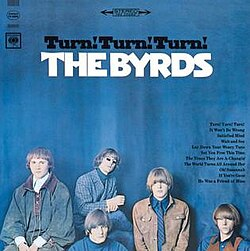
In the album liner notes, Dylan claims that in the song he was trying to capture the feeling of a Scottish ballad he had just heard but identified, but speculation includes The Water Is Wide (which he sang with Joan Baez in the Rolling thunder Revue), O Waly, Waly and I Wish, I Wish. The folk rock group the Byrds recorded Lay Down Your Weary Tune for their 1965 album Turn! Turn! Turn!.

Dylan wrote the song at Joan Baez’s house in Carmel, California, in late 1963. During the same visit, he also wrote the song The Lonesome Death of Hattie Carroll which I posted in May 2025. Dylan had originally wanted to sing Lay Down Your Weary Tune with Baez at her October 12, 1963, concert at the Hollywood Bowl, but Baez was not yet comfortable with the song. Dylan recorded the song in a single take on October 24, 1963, during the sessions for The Times They Are a-Changin. However, he decided to replace it on the album with the song Restless Farewell, a song he wrote as an angry response to a Newsweek reporter who in late October 1963 published a story about Dylan of which Dylan did not approve. In the interim, Dylan played Lay Down Your Weary Tune at a concert at Carnegie Hall on October 26, which was eventually released on the album Live at Carnegie Hall 1963.

Sociologist Steven Goldberg said it’s a song where Dylan’s focus changed from politics to mysticism. Music critic Michael Gray interpreted the song as, “a vision of the world, that is, in which nature appears not as a manifestation of God but as containing God in every aspect“. Gray also described it as, “one of the very greatest and most haunting creations in our language“. Christian theologian Stephen H. Webb has linked many of the images of the song to the Bible and calls it “one of the greatest theological songs since King David composed his psalms.”

[Chorus]
Lay down your weary tune, lay down
Lay down the song you strum
And rest yourself ‘neath the strength of strings
No voice can hope to hum

[Verse 1]
Struck by the sounds before the sun
I knew the night had gone
The morning breeze like a bugle blew
Against the drums of dawn

[Chorus]

[Verse 2]
The ocean wild like an organ played
The seaweed’s wove its strands
The crashing waves like cymbals clashed
Against the rocks and sands

[Chorus]

References:
1. Lay Down Your Weary Tune – Wikipedia

Tagged with: , ,
Posted in Music

Theme from Harry’s Game (1982) – Clannad

The enormity of the ‘Harry’s Game’ moment was not lost on Moya, who told The Guardian: 
“It was unreal for a small Irish folk band from Donegal. I was the first female Irish folk singer to break abroad. People started calling me the First Lady of Celtic Music, a title I’m really proud of.”

– Máire (Moya) Brennan

Upon reflection of yesterday’s senseless and cowardly assassination of freedom activist and conservative Charlie Kirk, the hauntingly beautiful Theme from Harry’s Game by the Irish folk group Clannad feels all the more timely. The vocalist Máire (Moya) Brennan told The Guardian: “The Irish Gaelic lyrics, derived from a saying in a book of old Irish proverbs that our grandfather had given Ciarán: ‘Everything that is and will be, will cease to be. The moon and the stars, youth and beauty’. There’s no solution to war, just people killing each other”. Ever since I first heard the theme in this scene from the 1992 movie Patriot Games adapted from the Tom Clancy book, it foraged its way somewhere deep-down.

It was commissioned as the theme for Harry’s Game, a Yorkshire Television miniseries adapted from a 1975 novel set in the Troubles in Northern Ireland. The song catapulted Clannad to international superstardom, with a Grammy and a Billboard Music Award to follow. Peaking at No.2 in Ireland and No.5 in the UK, it remains the only hit single in the UK ever to be sung entirely in the Irish language. The sound would become Clannad’s signature, and they would go onto to sell 20 million albums.
You may have heard of the famous Irish new-age Celtic singer Enya, well she began her music career (as the younger sister) with her family band Clannad, but left in 1982 with their manager and producer Nicky Ryan to pursue a solo career.

The influence of Gregorian chant was an important strand in the musical mix. The lyrics laced the verse of a Connacht Irish Proverb with a chorus of ancient mouth music, conjuring the wilds of Ireland. The hymn-like song famously took just hours to write, but the sound had been years in the making. Brennan said “We wrote it in a couple of hours and thought, great, it’s a nice tune and everything,” she added, “but we didn’t realise the sound we created had developed over the six albums before, with all the experimentation we did with words and voices and harmonies.”

She compared the chorus to an aural fiddle: “Fol de liddle, taddle do, diddley idle oh.” Nonsense sounds like these are often inserted into Irish folk songs, as a free-form play or an expression of verbal dexterity.

The translation below from Irish Gaelic to English was made by retired editor Tom Thomson and his interpretation is below that.

East and west will go away
As has happened before
The moon and the sun

Fol lol the doh fol the day
Fol the day fol the day

The moon and the sun will go away,
The young people, and later their fame

Fol lol the doh fol the day
Fol the day fol the day

Fol lol the doh fol the day
Fol the day fol the day

A going away that has happened before,
The young man and later his fame

Fol lol the doh fol the day
Fol the doh fol the day

Author’s comments:

Rather sad and pessimistic and absolutely true – the civil war, the troubles, the current unwillingness of politicians in the North to even try to work all go together to suggest that it will indeed all happen again and be forgotten and then happen again.

References:
1. Theme from Harry’s Game – Wikipedia
2. Theme From Harry’s Game – Great Irish Songbook

Tagged with: ,
Posted in Music

It Must Be Him (1967) – Vikki Carr

When I was a teenager, Moonstruck was one of my family’s favourite movies. We watched it together so often. The film borders on art-house because it’s steeped in cultural content and a style distinct from that seen in mainstream film. It’s quirky and certainly brash in terms of performance delivery and writing and the music therein is a spectacular reflection of its capriciousness. I purchased the soundtrack on cassette and listened to it to death. That’s where I relished in today’s featured song —It Must Be Him by Vikki Carr. Her impeccable singing on The Ed Sullivan Show, featured at the end of this post, is one for the ages. Pure class. As someone in the comments noted: “Singing live and totally on key…a lost art!”

It Must Be Him was originally a French song called Seul Sur Son Étoile and then the English version recorded by Vikki Carr, with lyrics by Mack David, was a hit around the world, reaching No. 3 in the United States, No. 2 in the UK, and No. 1 in Australia. The singer describes anxiously waiting by her telephone, desperately hoping that her former boyfriend will call, although they had separated. Carr went on to record it in Spanish and Italian, as well.

Vikki Carr (born Florencia Bisenta de Casillas-Martinez Cardona in 1941, El Paso, Texas) is an American singer whose soaring vocals and emotional intensity made her one of the most distinctive pop balladeers of the 1960s and 70s. Her breakthrough came with “It Must Be Him”. Its success catapulted her into international fame, particularly in the U.S. and the U.K., and it remains the defining song of her career, emblematic of her flair for passionate, theatrical delivery.

[Verse 1]
I tell myself, “What’s done is done”
I tell myself, “Don’t be a fool”
Play the field, have a lot of fun
It’s easy when you play it cool
I tell myself, “Don’t be a chump
Who cares? Let him stay away”
That’s when the phone rings and I jump
And as I grab the phone I pray

[Chorus]
Let it please be him, oh, dear God
It must be him, it must be him
Or I shall die, or I shall die
Oh, hello, hello, my dear God
It must be him, but it’s not him
And then I die, that’s when I die

[Verse 2]
After a while, I’m myself again
I pick the pieces off the floor
Put my heart on the shelf again
You’ll never hurt me anymore
I’m not a puppet on a string
I’ll find somebody else someday
That’s when the phone rings
And once again, I start to pray

[Chorus]

[Outro]
Let it please be him, oh, dear God
It must be him, it must be him
Or I shall die, or I shall die

References:
1. It Must Be Him (song) – Wikipedia

Tagged with: ,
Posted in Music

The Hebrides (Overture) 1833 – Felix Mendelssohn

I had left Mendelssohn’s The Hebrides out of my music project, perhaps because I’d heard its opening so often in popular culture that I dismissed it as just another overplayed classical motif – much like his famous Wedding March. But when it unexpectedly came on my music player the other day and I listened through to the end, I was swept up like a feather in its whirlwind serenade and completely captivated. An overture is an orchestral introduction to a larger work, but in this case Mendelssohn wrote it as a stand-alone concert piece rather than as a prelude to a theatre work.

Most of the following was abridged from the 2 references at the end of this post:

The piece was inspired by Felix Mendelssohn‘s 1829 visit to the Hebrides islands off Scotland’s west coast, which he made at age 20 while traveling with his childhood friend Carl Klingemann. The two roved among the lakes and moors of the Scottish Highlands, and Mendelssohn wrote colourful letters home about their adventures. He described the “comfortless, inhospitable solitude,” which stood in contrast to the entrancing beauty and wildness of the countryside. Here was a place very different from Berlin, where the young composer had grown up. Mendelssohn loved Scotland, and he was stimulated by its sights and sounds. (His Symphony No. 3 in A Minor, Op. 56, was also known as the Scottish Symphony.)

Sketch of a landscape in Scotland by Felix Mendelssohn, in his letter of 1 August 1829 to his sister Fanny

The Hebrides was inspired specifically by the Scottish island of Staffa, with its basalt sea cave known as Fingal’s Cave. In an exuberant letter, he described the experience to his sister Fanny, and, wishing to convey to her how deeply he was moved, he wrote down for her a few bars of the melody that he later used at the beginning of his overture. It was later dedicated to Frederick William IV of Prussia, then Crown Prince of Prussia (a German state centred on the North European Plain). The final revision was completed by 20 June 1832 and premiered on 10 January 1833 in Berlin under the composer’s own baton. The original handwritten score for the overture was purchased by the Bodleian Library on the 400th anniversary of its founding in 2002 for £600k.

Felix Mendelssohn (1809–1847) was a German composer, pianist, and conductor who became one of the leading figures of early Romantic music. Born into a wealthy, cultured family in Hamburg, he showed great talent from a young age, writing symphonies, concertos, chamber music, and piano works that combined classical balance with Romantic feeling. Mendelssohn is best known for works like the Overture to A Midsummer Night’s Dream, the Italian Symphony, and his Violin Concerto in E minor. He also revived interest in Johann Sebastian Bach by conducting a landmark performance of the St. Matthew Passion in 1829. Though he enjoyed fame across Europe and founded Germany’s first music conservatory in Leipzig, his life was cut short at just 38, leaving behind a legacy of elegance, melody, and inspiration.

References:
1. The Hebrides (overture) – Wikipedia
2. The Hebrides, Op. 26 – Britannica

Tagged with: ,
Posted in Music

The Wrestler (2008) – Bruce Springsteen

I won’t be spending too much time on today’s track from the movie of the same name, because it featured prominently in my Friday’s Finest instalment of the The Wrestler movie where I wrote:

Rourke told Springsteen about his upcoming film and asked if Springsteen could write a song for it. Springsteen subsequently did, played it for Rourke and director Darren Aronofsky before a concert. When they liked it, Springsteen gave them the song for no fee. The song was widely expected to receive a nomination for the Academy Award for Best Original Song where Springsteen would perform it on the awards show, but in what Rolling Stone termed “shocking news”, it was denied a nomination when the Academy nominated only three songs in the category rather than the usual five.

So, the winner of Best Song at the Golden Globes is snubbed from even a nomination at the 81st Academy Awards – and to make matters worse, Mickey Rourke delivers a career-defining, physically and emotionally grueling performance in independent cinema, only to be snubbed by the Academy as well. My friend Bernie at Reely Bernie couldn’t have described it any better:

Talk about yet another example of the gray-haired traditionalists denying smaller films and stunning performances for bigger names like Sean Penn. I’m a huge Rourke/underdog fan. He’s made some lousy decisions in his life, but onscreen, he makes you want to hug him.

Springsteen is, of course, no stranger to writing songs for films which include Streets of Philadelphia for the 1993 film of the same name, which was written for the story of a lawyer with AIDS and earned him an Academy Award for Best Original Song. He also wrote Dead Man Walkin‘ for the 1995 film Dead Man Walking, which earned him an Oscar nomination.

Further from Wikipedia – The origins of the song (The Wrestler) are based in a lost and resumed friendship between Springsteen and Wrestler lead actor Mickey Rourke. Springsteen recorded it at his Thrill Hill Recording studio in New Jersey, played all the instruments, and produced it himself.

[Intro]
Two, three, four

[Verse 1]
Have you ever seen a one-trick pony in the field, so happy and free?
If you’ve ever seen a one-trick pony, then you’ve seen me
Have you ever seen a one-legged dog making its way down the street?
If you’ve ever seen a one-legged dog, then you’ve seen me

[Chorus]
Then you’ve seen me
I come and stand at every door
Then you’ve seen me
I always leave with less than I had before
Then you’ve seen me
Bet I can make you smile when the blood, it hits the floor
Tell me, friend, can you ask for anything more?
Tell me can you ask for anything more?

[Verse 2]
Have you ever seen a scarecrow filled with nothing but dust and weeds?
If you’ve ever seen that scarecrow, then you’ve seen me
Have you ever seen a one-armed man punching at nothing but the breeze?
If you’ve ever seen a one-armed man, then you’ve seen me

[Chorus]

[Bridge]
These things that have comforted me I drive away
This place that is my home I cannot stay
My only faith’s in the broken bones and bruises I display

[Outro]
Have you ever seen a one-legged man trying to dance his way free?
If you’ve ever seen a one-legged man, then you’ve seen me

References:
1. The Wrestler (song) – Wikipedia

Tagged with: , ,
Posted in Music

Together (2025) – Michael Shanks (Friday’s Finest)

IMDB Storyline:
Years into their relationship, Tim and Millie find themselves at a crossroads as they move to the country. With tensions already flaring, an encounter with an unnatural force threatens to corrupt their lives, their love and their flesh.

I recently wrote a review for Friday’s Finest on Wes Anderson’s The Phoenician’s Scheme, which was my No. 1 film of the year so far – until I saw Together, a film so darn relatable that I absolutely revelled in it. Oddly enough, the pull of the movie felt analogous to the magnetic attraction between the partners themselves. I found myself laughing and scared at the same time, completely invested in the couple, played with honesty and ease by real-life married duo Dave Franco and Alison Brie. And – call me a morbid peeper – but the sex scenes really did it for me.

I actually wanted to see it again, but I couldn’t – its run here in Colombian cinemas was cut surprisingly short, clearly not gelling with audiences. Meanwhile, another horror movie, Weopons (released here as The Hour of the Disappearance), is still going strong on the listings. I saw that one twice, the second time with my son, and it only got better on repeat viewing. That’s another smart, taut, and oddly funny horror film I’d highly recommend.

If there’s a movie that captures, through supernatural metaphor, what’s going wrong in modern society and relationships, it’s Together. It works as a mirror of our times: a surreal but recognisable reflection on gender fluidity, empathy turned inward, and love tipping into obsession. The first issue it dramatizes is blurred gender identity – men becoming more like women and vice versa – which is echoed in the couple’s gradual physical and emotional merging. The second is a kind of “fashionable empathy,” where standing in another’s shoes is pushed to extremes. Instead of genuine compassion or objectivity, the film shows empathy warped into control and self-erasure. The third is toxic dependency, which my friend Bernie nailed in his own review: “this midnight movie examines you need me more than I need you, but I can’t live without you’… Metaphor for codependency becomes a treacherously entertaining ordeal.

⚠️ Huge spoiler alert ahead: if this movie intrigues you, stop reading here. The less you know, the better, because it’s bonkers. This part is for those who’ve already seen it.

It wasn’t until about 30 seconds after the end credits rolled that it hit me: the neighbour, like our central couple and their newly merged selves, was in fact androgynous too – the product of Plato’s “together-ness” taken to its unnerving extreme. Regarding the film’s focus on toxic relationships, the couple ultimately joins the cult of sad marriages, where partners lose their individuality and fuse into one, choosing fear and comfort over truth. Ingenious.

I’ve avoided giving scores in previous Friday’s Finest instalments, but I’ll do something different: Together gets 4.5 out of 5 stars from me.

References:
1. Together – IMDB
2. Together (2025 Film) – Wikipedia

Tagged with: , , , , ,
Posted in Movies and TV

The Words (2014) – Christina Perri

Now to the cream of the crop. Christina Perri released the delectable ballad The Words in 2014 on her album Head or Heart, after first promoting the singles Human and Burning Gold, both of which have already featured here. To give the song an international push, a music video was released starring Colin O’Donoghue – better known to many as Captain Hook in Once Upon a Time. Christina confirmed the song was dedicated to Hook and Emma, a couple in the series. Of course, Perri is no stranger to tying her music to big-screen love stories – her song A Thousand Years, written for the Twilight saga, remains her signature hit.

I mentioned in my earlier article about the Brokeback Mountain theme that The Words bears a striking musical resemblance to it, and that still rings true for me today. Longtime readers will also know Christina Perri is my favourite female artist. I could watch the video for The Words until the cows come home, not just for the song, but because how beautifully the story unfolds – and then the unexpected ending where everything suddenly clicks. Few songs and videos feel as seamlessly entwined as this one, and it’s wonderfully filmed.

A spoiler alert here: if you haven’t seen the video, do yourself a favour, watch it first, and then come back for a breakdown of what on earth is going on (and your own two bob is welcome since it’s all up for interpretation).

Video story breakdown

Perri haunts O’Donoghue’s character like a ghost drifting through his country house. She appears and disappears, as if she might be the memory of a love he’s lost, her presence hanging around him in silence. This gives weight to the line: “’Cause love is a ghost you can’t control.” His tending to orchids is an important detail – we see later how this connects. Orchids, after all, are a striking metaphor for love: rare, delicate, and requiring patience and care to truly bloom.

Towards the end, we see him take the orchids into town and step into a florist. That’s where the real Perri appears as a shop assistant. When their eyes meet – clearly not for the first time – she delivers the killer line: “And I know / The scariest part is letting go.” From O’Donoghue’s reaction, it’s obvious they’ve both been thinking of each other all along. She’s lingered in his thoughts, which explains why her presence felt so near to him. For me, the song captures that hopeful moment of taking a chance on love again.

The following was extracted from the Wikipedia article below:
The Words comes from Head or Heart, the second studio album by American singer-songwriter. The first song that she wrote for the album was “Trust”, according to Perri, which inspired the rest of the album. She wrote it by herself for three months and then along with other songwriters for another three months, and recorded a total of 49 songs that she had to choose from for the album by May 2013. Perri says that these 13 songs that she has chosen for the album “were what I think are pure songs, where I wasn’t trying.

Head or Heart debuted at number four on the US Billboard, selling 40,000 copies in its first week.

[Verse 1]
All of the lights land on you
The rest of the world fades from view
And all of the love I see
Please please say you feel it too
And all of the noise I hear inside
Restless and loud, unspoken and wild
And all that you need to say
To make it all go away
Is that you feel the same way too

[Chorus]
And I know
The scariest part is letting go
‘Cause love is a ghost you can’t control
I promise you the truth can’t hurt us now
So let the words slip out of your mouth

[Verse 2]
And all of the steps that led me to you
And all of the hell I had to walk through
But I wouldn’t trade a day for the chance to say
“My love, I’m in love with you”

[Chorus]

[Bridge]
I know that we’re both afraid
We both made the same mistakes
An open heart is an open wound to you
And in the wind of a heavy choice
Love has a quiet voice
Still your mind, now I’m yours to choose

References:
1. Head or Heart – Wikipedia

Tagged with: , , ,
Posted in Music

Follow Blog via Email

Enter your email address to follow this blog and receive notifications of new posts by email.

Join 778 other subscribers

← Back

Thank you for your response. ✨