Just Like a Woman (1966) – Bob Dylan

“There’s never a moment in the song, despite the little digs and the confessions of pain, when you can’t hear the love in his voice”

– Paul Williams, in his book Bob Dylan: Performing Artist, Book One 1960–1973

I posit that today’s featured song Just Like a Woman and its companion of sorts, Lay Lady Lay (posted here 13 months ago), are not only two of Dylan’s most popular and accessible tracks, but also among his most sumptuous and romantic. While they differ in musical style and vocal delivery – both exude an unmistakable sensuality. This stems largely from their lush arrangements and the intimate, yearning quality of their lyrics. Each song enjoyed notable commercial success too, charting at No. 33 (Just Like a Woman, 1966) and No. 7 (Lay Lady Lay, 1969) on the US Billboard.

Just Like a Woman comes from one of, if not Dylan’s most highly recognised and celebrated albums – Blonde on Blonde. He described the record as ‘That Thin, Wild Mercury Sound‘.  He recorded the song at Columbia Studio A, Nashville, Tennessee where he did seven complete takes, and multiple rehearsals and partial takes were recorded. Take 18, the last of the session, was used on the album. It is arguably the most “radio-friendly” track on the album apart from perhaps I Want You.
The single wasn’t given a release in the UK, but Manfred Man scored a hit (like they did with Dylan’s The Mighty Quinn) with their version reaching No. 10 in the UK and No 1 in Sweden.

Some critics have suggested that the song was inspired by Edie Sedgwick (“fog, amphetamine and pearls“), while others consider that it refers to Dylan’s relationship with fellow folk singer Joan Baez (Please don’t let on that you knew me when/I was hungry and it was your world). Some allege there is some sexism in the lyrics and you can read more about it in the Wikipedia reference below including the counter-arguments.

According to his official website, Dylan played the song live in concert 871 times from 1966 to 2010. In his 1966 tour performances, Dylan chose to play the song solo rather than with the band that accompanied him on the tour.

[Verse 1]
Nobody feels any pain
Tonight as I stand inside the rain
Everybody knows that baby’s got new clothes
But lately I see her ribbons and her bows
Have fallen from her curls

[Chorus]
She takes just like a woman, yeah she does
She makes love just like a woman, yeah she does
And she aches just like a woman
But she breaks just like a little girl

[Verse 2]
Queen Mary, she’s my friend
Yes, I believe I’ll go see her again
Nobody has to guess that baby can’t be blessed
‘Til she finally sees that she’s like all the rest
With her fog, her amphetamine and her pearls

[Bridge]
Yeah, it was raining from the first
And I was dying there of thirst
So I came in here
And your long-time curse hurts
But what’s worse
Is this pain in here
I can’t stay in here

[Verse 3]
Ain’t it clear that I just can’t fit
Yes, I believe it’s time for us to quit
But when we meet again, introduced as friends
Please don’t let on that you knew me when
I was hungry and it was your world

References:
1. Just Like a Woman – Wikipedia

Tagged with: , , ,
Posted in Music

Rorate caeli (1673) – Gregorian Chant

Medieval manuscript of the Gregorian chant “Rorate caeli”

My friend Bruce (from Weave a Web) recommended this chant a few years ago. I’m the least bit familiar with Catholic hymns especially one’s sung in Latin, but I like the tranquil state this beautiful devotional piece puts me in. It is so peaceful and relaxing. The chant is traditionally sung in a form called plainsong, a simple and meditative musical style. It’s interesting this article arrives on a Saturday morning since this is when it is sung during Advent.

Rorate caeli (“Drop down, ye heavens”) is a centuries-old Advent chant from the Christian liturgical tradition. Sung during the season leading up to Christmas, it expresses deep yearning for spiritual renewal and the coming of the Messiah. The chant has become especially associated with a unique candlelit service known as the Rorate Mass, typically celebrated early in the morning during Advent.

One of the most beautiful traditions associated with this chant is it is often celebrated before sunrise in a darkened church lit only by candles. This powerful atmosphere reflects both the darkness of the world awaiting redemption and the light of hope through Mary and Christ. While especially observed on Saturdays during Advent, in some regions it is held daily.

The Latin words Rorate caeli are taken from Isaiah 45:8, as translated in the Vulgate, the Latin Bible used by the Western Church for much of its history. The phrase reflects a call for divine mercy and hope:

“Drop down dew, O heavens, from above, and let the clouds rain down the Just One.”

This verse, and the chant built around it, captures the spirit of longing that defines Advent – the anticipation of Christ’s coming, not only in celebration of His birth but also in spiritual renewal.

In the 17th century, the chant evolved into a fuller hymn by incorporating additional passages from Scripture related to Advent themes. The earliest known version of this extended hymn form appears in the Oratorian Officia Propria (1673), a liturgical book used by the Oratory of Saint Philip Neri.

LatinEnglish
Roráte caéli désuper,
et núbes plúant jústum.
Drop down, ye heavens, from above,
and let the skies pour down righteousness.
Ne irascáris Dómine,
ne ultra memíneris iniquitátis:
ecce cívitas Sáncti fácta est desérta:
Síon desérta fácta est, Jerúsalem desoláta est:
dómus sanctificatiónis túæ et glóriæ túæ,
ubi laudavérunt te pátres nóstri.
Be not wroth very sore, O Lord,
neither remember iniquity for ever:
thy holy city is a wilderness,
Sion is a wilderness, Jerusalem a desolation:
our holy and our beautiful house,
where our fathers praised thee.
Peccávimus, et fácti súmus tamquam immúndus nos,
et cecídimus quasi fólium univérsi:
et iniquitátes nóstræ quasi véntus abstulérunt nos:
abscondísti faciem túam a nóbis,
et allisísti nos in mánu iniquitátis nóstræ.
We have sinned, and are as an unclean thing,
and we all do fade as a leaf:
and our iniquities, like the wind, have taken us away:
thou hast hid thy face from us:
and hast consumed us, because of our iniquities.
Víde Dómine afflictiónem pópuli túi,
et mítte quem missúrus es:
emítte Agnum dominatórem térræ,
de Pétra desérti ad móntem fíliæ Síon:
ut áuferat ípse júgum captivitátis nóstræ.
Behold, O Lord, the affliction of thy people,
and send forth him whom thou wilt send;
send forth the Lamb, the ruler of the earth,
from Petra of the desert to the mount of the daughter of Sion:
that he may take away the yoke of our captivity.
Vos testes mei, dicit Dóminus,
et servus meus quem elégi;
ut sciátis, et credátis mihi:
ego sum, ego sum Dóminus, et non est absque me salvátor:
et non est qui de manu mea éruat.
Ye are my witnesses, saith the Lord,
and my servant whom I have chosen;
that ye may know me and believe me:
I, even I, am the Lord, and beside me there is no Saviour:
and there is none that can deliver out of my hand.
Consolámini, consolámini, pópule méus:
cito véniet sálus túa:
quare mæróre consúmeris,
quia innovávit te dólor?
Salvábo te, nóli timére,
égo enim sum Dóminus Déus túus,
Sánctus Israël, Redémptor túus.
Comfort ye, comfort ye my people;
my salvation shall not tarry:
why wilt thou waste away in sadness?
why hath sorrow seized thee?
Fear not, for I will save thee:
For I am the Lord thy God,
the Holy One of Israel, thy Redeemer.

References:
1. Rorate Caeli – Wikipedia

Tagged with: , , ,
Posted in Music

A View To a Kill (1985) – Duran Duran

View to a Kill is not the typical song I would present here, but I have always had a guilty pleasure for it. Sure, it reeks of brutal 80’s synths, however it still has swagger and some heavy power unlike some other Bond themes songs. I also liked it because it was the theme song from Roger Moore’s last James Bond movie. I had a penchant for his portrayals since that is Bond I grew up on and I don’t care who knows it. My personal connection is fleshed-out in another James Bond theme song – Sheena Easton’s For Your Eyes Only.

View to a Kill is the only James Bond theme song to have reached number one on the US Billboard; it also made it to number two for three weeks on the UK Singles Chart. The song was one of the band’s biggest hits. It was also the last song recorded by the English pop group before their split, until their reunion in 2001. The song was recorded at Maison Rouge Studio and CTS Studio in London with a 60-piece orchestra.

So the story goes – Duran Duran were chosen to do the song after bassist John Taylor (a lifelong Bond fan) approached producer Cubby Broccoli at a party and somewhat drunkenly asked, “If I give you a fiver, can I write a theme tune please.” The band was then introduced to Bond composer John Barry and they collaborated together rather harmoniously with Duran Duran left to the songwriting duties and Barry the final arrangement and orchestral parts.

[Verse 1]
Meeting you with a view to a kill
Face to face in secret places, feel the chill

Nightfall covers me, but you know the plans I’m making
Still overseas, could it be the whole Earth opening wide
A sacred why, a mystery gaping inside
A week is why, until we…

[Chorus]
Dance into the fire
That fatal kiss is all we need
Dance into the fire
To fatal sounds of broken dreams
Dance into the fire
That fatal kiss is all we need
Dance into the fire

[Verse 2]
The choice for you is the view to a kill
Between the shades assassination standing still

The first crystal tears fall as snowflakes on your body
First time in years to drench your skin in lover’s rosy stain
A chance to find the phoenix for the flame
A chance to die, but can we…

References:
1. A View to a Kill (song) – Wikipedia

Tagged with: , ,
Posted in Music

The Painter (2005) – Neil Young

Neil Young with the full entourage of the Prairie Wind concert at the Grand Ole Opry House

I was first introduced to Neil’s album Prairie Wind when I heard it played in the Heart of Gold documentary directed by Jonathan Demme (Silence of the Lambs, Philadelphia). In the documentary Neil Young performed Prairie Wind at the famous Ryman Auditorium also known as Grand Ole Opry House in Nashville. The first half of the concert consists entirely of songs from Prairie Wind, and the second half consists of acoustic songs from throughout Young’s career.

The concert was Neil Young’s comeback performance after brain surgery. So the songs and the Demme documentary find Young reminiscing about his youth, reflecting on the passing of time, and considering his own mortality in light of his father’s illness and his own health scare. I couldn’t stop watching this documentary when I first procured it and the songs still resonate as strongly with me today as they did back then. For someone who hadn’t previously been very familiar with Neil Young’s career, I found the Prairie Wind concert / documentary a great introduction to Neil Young’s music.

Today’s featured track The Painter opened the concert as well as the album. It is said the original inspiration (The Painter) is Neil’s daughter Amber Jean. She earned a Master’s degree at the San Francisco Art Institute, where she studied painting. You can read more about Amber here.
It’s a reflective song about embracing the present and the creative spirit and while dreams are important, staying grounded and true to yourself is key. I love the production and the sound quality, so open and airy but warm at the same time.

Young recorded the album’s songs on a guitar owned by Hank Williams. Prairie Wind features an acoustic-based sound reminiscent of his earlier commercially successful albums like Heart of Gold and Harvest Moon. The album debuted on the Billboard 200 album chart at number 11. The Painter received a nomination at the 2006 Grammy Awards – Best Rock Solo Performance.

[Verse 1]
The painter stood before her work
She looked around everywhere
She saw the pictures and she painted them
She picked the colors from the air

[Verse 2]
Green to green, red to red
Yellow to yellow in the light
Black to black when the evening comes
Blue to blue in the night

[Chorus]
It’s a long road behind me
It’s a long road ahead
If you follow every dream, you might get lost

[Verse 3]
She towed the line, she held her end up
She did the work of two men
But in the end, she fell down
Before she got up again

[Verse 4]
I keep my friends eternally
We leave our tracks in the sound
Some of them are with me now
Some of them can’t be found

[Chorus]
It’s a long road behind me
And I miss you now
If you follow every dream, you might get lost

References:
1. Prairie Wind – Wikipedia

Tagged with: , , ,
Posted in Music

The Only Heartbreaker (2021) – Mitski

I really like the vibe and retro sound of this modern hit song The Only Heartbreaker. It is Mitski’s most successful in the US reaching No. 1 on the Billboard Adult Alternative Airplay chart. Mitski is a Japanese-American singer-songwriter and has been recording and releasing music since 2012. For the recording she programmed synths and keyboards and her longtime producer Patrick Hyland played guitar and percussion. It’s a call-back to the exuberant synth-pop of the 1980s.

The song implicates herself in the inevitable unraveling of a toxic relationship. Mitski said that the song depicts “the person always messing up in the relationship, the designated Bad Guy who gets the blame It could simply be about that, but I also wanted to depict something sadder beneath the surface, that maybe the reason you’re always the one making mistakes is because you’re the only one trying.”

The track was co-written with Semisonic frontman Dan Wilson, marking the first time Mitski has ever teamed up with another songwriter. Dan Wilson has a long history of working with musicians like Adele, Taylor Swift, and the Chicks (back when they were going by Dixie). In a new interview with Apple Music, Mitski talked about that collaborative process:

This is the first song in my entire discography of however many albums I’ve made where I have a co-writer, and it’s because this song was this puzzle that I couldn’t solve. And I was just sitting on it forever. I have so many iterations of it. Nothing felt right. And right when I was stewing over it, I was actually in LA, doing co-write sessions for other artists. And we had this one day, or I had this one day with Dan Wilson. I had every intention to write for somebody else, but then I just sat down at his piano, and I was like, he’s one of the best, smartest songwriters in the world. Maybe he can help me with this song. And so I brought the song to him, and it turned out he’s really good. He helped me solve so many of the problems and kind of lead me out of the labyrinth of it. And yeah, I’m really glad that I took that chance with him.

The official video below shows Mitski dancing through a forest and reeling in despair as she realizes that she’s unintentionally killing everything she comes into contact with. Personally, I much prefer to enjoy the song as an audio stand-alone, as I often find that these image-saturated, heavily produced videos can distract from the pure listening experience and hinder full immersion in the music.
Interestingly, the former US president Barack Obama included The Only Heartbreaker in his list of top songs of 2021.

[Verse 1]
If you would just make one mistake
What a relief that would be
But I think for as long as we’re together
I’ll be the only heartbreaker

[Chorus]
I’ll be the only heartbreaker
I’ll be the only heartbreaker

[Verse 2]
So I’ll be the loser in this game
I’ll be the bad guy in the play
I’ll be the water main that’s burst and flooding
You’ll be by the window, only watching

[Bridge]
(I apologize)
(You forgive me)
(I apologize)
(You forgive me)

References:
1. The Only Heartbreaker – Wikipedia

Tagged with: , ,
Posted in Music

Livin’ Thing (1976) – Electric Light Orchestra

ELO are renowned for having catchy records and Livin’ Thing is one shining example. It that has all the vocal and instrumental hooks to keep you listening. The song just radiates as it modulates upwards into a falsetto Jeff Lynne vocal and combined with the soulful backing vocals added and a powerful group string section. I think Record World nailed it when they described the song as having “a savoury rock sound“. The official video below shows the ensemble of instruments and how they individually prod the song to become this flourishing sound.

Been loving this tune since I was kid and certainly takes me back to when I sat around the turntable in front of the fireplace and put the needle down on this record. It still sends chills down my spine as Lynn launches into the chorus with Higher and higher, baby. ELO have definitely got their own sound and there won’t be another like them.

Livin’ Thing was written by Jeff Lynne and appears on ELO’s 1976 album A New World Record. The song reached No. 4 in the UK, No. 13 on the US Billboard and No. 2 in Australia. It’s the second song to be presented here from the record after Telephone Line. Jeff Lynne, of course has featured here multiple times not just with ELO but with his involvement in the 80’s super group The Traveling Wilburys.

Reflecting on the 1970s, Lynn told Rolling Stone magazine:
I was reluctant to become a real rock star. I was shy and was always told to not get a big head. And my favourite thing in the world was to work 14 hours a day in the studio. Everything else was peripheral to me, like having the record out and promoting it. I did have a big house, but I didn’t do rock-star things. I never saw myself like that. I was a songwriter, singer and producer. Rock stars are different. They dress all flashy and hang out in nightclubs. That just wasn’t my priority. I liked to spend my spare moments at the pub.”

ELO are regarded by many as the best live Classical Rock Band and are still touring. In 2019, Jeff Lynne launched a new album, called From Out of Nowhere and it went to number 1 on the UK Albums Chart. Lynne was appointed Officer of the Order of the British Empire (OBE) in the 2020 Birthday Honours for services to music

[Verse 1]
Sailin’ away on the crest of a wave
It’s like magic
Oh, rollin’ and ridin’ and slippin’ and slidin’
It’s magic

[Pre-Chorus]
And you, and your sweet desire
You took me, oh
Higher and higher, baby

[Chorus]
It’s a livin’ thing
It’s a terrible thing to lose
It’s a given thing
What a terrible thing to lose

[Post-Chorus]
(I’m takin’ a dive)
(Dive)

[Verse 2]
Making believe this is what you conceived
From your worst day (I’m takin’ a dive)
Oh, moving in line, then you look back in time
To the first day (I’m takin’, I’m takin’)

[Verse 3]
Takin’ a dive ’cause you can’t halt the slide
Floating downstream (I’m takin’ a dive)
Oh, so let her go, don’t start spoiling the show
It’s a bad dream (I’m takin’, I’m takin’)

References:
1. Livin’ Thing – Wikipedia

Tagged with: , ,
Posted in Music

16/6/25 – 22/6/25 – Field of Dreams, Woodstock & Citizen Kane

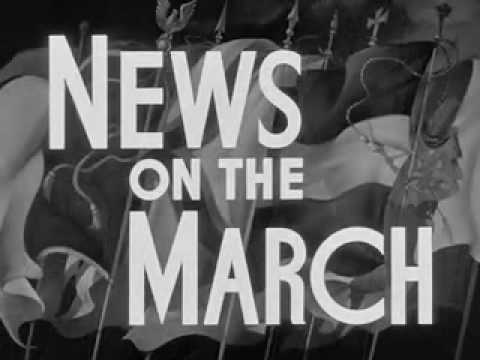
news on the march

Welcome to Monday’s News on the March – The week that was in my digital world.

Field of Dreams – Script to Screen
Video interview at University California Television

Field of Dreams is one of my favourite sporting movies and remains at No. 17 on my all-time favourite movies list. I watched it again for the umpteenth time only recently with my children. Way back in 2014 near the inception of my blog I wrote an article called Baseball Romanticism and Perfecting the Strike Zone in which I quoted Terence Mann’s unforgettable People Will Come speech from the movie.
So it was a big surprise when this video interview with Field of Dream’s writer/director Phil Alden Robinson came into my You Tube feed. I couldn’t recommend it more highly to fans of the film. Phil is very generous and humiliating and offers such fascinating insight into the production of the film.

The Woodstock 69 Line Up
Web page presentation at Woodstock.com

I recently discussed the Isle of Wight festival in Dylan’s Mighty Quinn article. This festival occurred two weeks after the Woodstock festival both in August 1969. Dylan of course shunned the Woodstock Festival, held near his home in upstate New York, for his comeback show on the little-known Isle of Wight on the other side of the Atlantic. During my research for the Quinn song I stumbled upon this marvellous web page called The Woodstock 69 Line Up. The web design and presentation is some of the best I have ever seen, and contains such stunning photography and comprehensive information about each performing artist and act. It’s just such a wondrous record of the legendary event whereby any music aficionado should have more than enough to chew on.

1960: How did Orson Welles make Citizen Kane?
Video interview at BBC Archive

My father attempted to introduce me to Citizen Kane as a young’un, but I would always fall asleep just after Charles Forster Kane (also a young’un) was torn away from his snow sled. The movie now sits at No. 3 on my movie list. Anyway, on a recent Monday News on the March edition, I mentioned how two of my favourite movie-making documentaries were Hearts of Darkness: A Filmmaker’s Apocalypse and The Battle Over Citizen Kane. Then fortuitously just yesterday this 1960 BBC interview arrived with Orson – How did Orson Welles make Citizen Kane?

Let me just say this: I don’t think I’ve heard Orson say anything where I didn’t find myself engrossed whether it’s his narration of my favourite short story by Oscar Wilde – The Happy Prince or his infamous broadcast of H. G. Wells – The War of the Worlds that caused all sorts of panic and strife. Even beyond that, his unscripted interviews such as today’s I find myself equally entranced. His wit and elocution is masterful. To me this interview is a wonderful accompaniment of the aforementioned documentary on Kane. For the cinephiles out there I hope you enjoy it as much as I did.

An aside; the source of inspiration for my Monday’s segment title – ‘News on the March‘ came straight out of the movie Citizen Kane, hence why you see the images which bookend these posts.

That is all. Thank you for reading.

Tagged with: , , , , , , ,
Posted in Movies and TV, Music

The One I Love (2005) – David Gray

David Gray singing ‘The One I Love’ at London’s Hammersmith Apollo concert in 2005

‘Just occasionally though, a song comes suddenly and out of nowhere, fully formed.’

The music of British singer-songwriter David Gray seems to make a near-annual appearance here, with today’s featured track marking his seventh entry – following Say Hello, Wave Goodbye (1998), which I last featured in August 2024. As that title hints, time has no intention of hitting the brakes. I could’ve sworn it hadn’t been that long since I posted that gem – still my favourite song of his.

The One I Love is a close runner-up, and fittingly, it was one of the very first songs I heard by him. Then again, I hold all of his songs featured here in almost equal affection. I was first introduced to David’s music by a friend during a car trip to Hanging Rock, just outside Melbourne, around 2007.

The One I Love was released on 29 August 2005 as the first single from his seventh studio album, Life in Slow Motion (see image inset). The song is Gray’s second-highest achievement on the UK Singles Chart, peaking at number eight. Worldwide, the song reached number six in Ireland and number 31 in New Zealand. In the United States, it topped the Billboard (Adult Alternative Airplay) chart for six weeks.

There are few other alternative rock balladeers whose voice, melody and lyrics resonate with me as strongly as his does. His voice carries a weathered, rustic charm that finds a perfect counterpart in the warmth of his acoustic arrangements. He’s created overall a unique sound, entirely his own which can’t be confused. It has garnered him a significant following, particularly in the UK and Ireland.

David’s an ol’ smoothie too since he gravitates towards themes of love and emotional depth. Look no farther than The One I Love. “Writing and singing are acts of devout attention” he said in the Arts desk article below. He went on to describe the creative process as ‘A slow and measured ascent with occasional downhill sections, hopefully culminating in a view from the summit!‘ 

He said in this interview about The One I Love:
We spent so long mixing it and recording it. I couldn’t actually hear it. It took about 6 months before I could hear the song. When something becomes a single and everyone decides they like it, and this is probably true of me in life, so in the moment somebody wants to be your friend… and it’s not the way it works. ‘I wouldn’t want to be part of any club that would want me as a member’ to use that Woody Allen line. So everyone is saying it’s great and to me I can’t tell anymore‘.

I can.

Gonna close my eyes
Girl and watch you go
Running through this life, darling
Like a field of snow
As the tracer glides
In its graceful arc
Send a little prayer out to ya
‘Cross the falling dark

Tell the repo man
And the stars above
That you’re the one I love
Yeeaah

Perfect summer’s night
Not a wind that breathes
Just the bullets whispering gentle
‘Mongst the new green leaves
There’s things I might have said
Only wish I could
Now I’m leaking life faster
Than I’m leaking blood

Tell the repo man
And the stars above
That you’re the one I love
You’re the one I love
The one I love

Yuuhuu
Yuuhuu

Don’t see Elysium
Don’t see no fiery hell
Just the lights up bright baby
In the bay hotel
Next wave coming in
Like an ocean roar
Won’t you take my hand, darling
On that old dancefloor

We can twist and shout
Do the turtle dove
And you’re the one I love
You’re the one I love
The one I love

Below, I have presented the official video version and the live version at London’s Hammersmith Apollo.

References:
1. The One I Love (David Gray song) – Wikipedia
2. First Person: singer-songwriter David Gray on how the songs on his new album came to him – The arts desk

Tagged with: , ,
Posted in Music

The Nutcracker (1892) – Pyotr Ilyich Tchaikovsky

The Nutcracker is an 1892 two-act classical ballet by Russian composer Pyotr Ilyich Tchaikovsky. It is the second entry here from the composer after the 1812 Overture (1882).

The Nutcracker is set on Christmas Eve at the foot of a Christmas tree in a child’s imagination featuring a Nutcracker doll. The plot is an adaptation of Alexandre Dumas’s 1844 short story The Nutcracker, itself a retelling of E. T. A. Hoffmann’s 1816 short story The Nutcracker and the Mouse King. Since the late 1960s, The Nutcracker has been danced by many ballet companies, especially in North America. Major American ballet companies generate around 40% of their annual ticket revenues from performances of the ballet.

Synopsis

The Nutcracker tells the tale of a young girl named Clara who receives a wooden nutcracker as a Christmas gift from her mysterious godfather, Drosselmeyer. That night, the nutcracker comes to life, battles the evil Mouse King, and transforms into a prince. Together, Clara and the prince journey through a magical world, first to the Land of Snow and then to the Land of Sweets, where they are welcomed by the Sugar Plum Fairy and treated to a dazzling array of dances from around the world. The ballet blends fantasy, childhood wonder, and festive tradition, culminating in a dreamlike finale that leaves Clara back at home- uncertain if it all truly happened.


The two pieces I presented below from the Nutcracker are the Pas de deux (Step of Two) and Overture respectively. The reason I presented the Pas de deux before the Overture (which of course opens the concert) is because it is my preferred piece from the Ballet. It is simply one of the most hauntingly beautiful pieces I have heard.

Pas de deux
(Sugar Plum Fairy and Her Cavalier) grand pas de deux 14th scene in Act 2.
Pas de deux nearly always follows the Waltz of the Flowers scene – a very famous piece in its own right. In ballet, a pas de deux (French, literally “step of two”) is a dance duet in which two dancers, typically a male and a female, perform ballet steps together.

Tchaikovsky is said to have argued with a friend who wagered that the composer could not write a melody based on a one-octave scale in sequence. Tchaikovsky asked if it mattered whether the notes were in ascending or descending order and was assured it did not. This resulted in the Adagio from the Grand pas de deux. Another story is told that Tchaikovsky’s sister Alexandra had died shortly before he began composition of the ballet and that his sister’s death influenced him to compose a melancholy, descending scale melody for the adagio of the Grand Pas de Deux.

The performance below is by the Royal Ballet from the the Royal Opera House in London. The principals of The Royal Ballet are Marianela Nuñez and Vadim Muntagirov. In fact The Nutcracker will be performed at the Royal Opera House later this year from 22 November 2025 to 5 January 2026.

Overture
The performance below is by the Moscow Ballet. The Overture opens The Nutcracker and it shows where Uncle Drosselmeyer puts the finishing touches on his Christmas gifts for the party that evening. He has magic dolls of all kinds ready to dance for Masha and Fritz.

References:
1. The Nutcracker – Wikipedia

Tagged with: , , ,
Posted in Music

Masters of War (1963) – Bob Dylan

“I’ve never written anything like that before. I don’t sing songs which hope people will die, but I couldn’t help it with this one. The song is a sort of striking out… a feeling of what can you do?”

– In the album notes to The Freewheelin’ Bob Dylan

Masters of War stands as one of contemporary music’s most austere, bitter, and incisive anti-war anthems. Rarely has Dylan sounded so direct and merciless in his phrasing. Gone are the surrealism and poetic flourishes – here, the words spill out raw and unfiltered. Unlike his more prophetic works such as A Hard Rain’s a-Gonna Fall and Blowing in the Wind, where Dylan seems mature beyond his years, Masters of War contains youthful indignation and fury. That vulnerability – his age, his sarcasm, his anger – amplifies the power of the song against those who profit from conflict. It’s a cross generational outpouring which he would later revisit, but to a more nuanced degree in The Times They Are A-Changin.

Dylan wrote Masters of War over the winter of 1962–63 during the height of Cold War paranoia and the escalating arms race between the United States and the Soviet Union. He released it on the album The Freewheelin’ Bob Dylan in the spring of 1963. It was set to the traditional melody of the folk song Nottamun Town, the arrangement by veteran folksinger Jean Ritchie. Unknown to Dylan, the song had been in Ritchie’s family for generations, and she wanted a writing credit for her arrangement. In a legal settlement, Dylan’s lawyers paid Ritchie $5,000 against any further claims.

Some of Dylan’s notable performances of Masters of War include:
–  At New York City’s Town Hall on April 12, 1963
– During the 1991 Grammy Awards ceremony where he received a Lifetime Achievement Award, and
– At his Hiroshima concert in Japan in 1994.

American folk revival musician Pete Seeger covered the song on his 1965 album Strangers and Cousins. Recorded live in Japan, the cover features Seeger playing an acoustic guitar, with each lyric followed by a spoken translation of the lyric by a Japanese translator. Seeger and Dylan had a close personal and professional relationship, with Dylan citing Seeger as a source of inspiration in both musical and political spheres. Additionally, Seeger shared many of the pacifist values expressed by Dylan in Masters of War.

Another noteworthy cover was Eddie Vedder (Pearl Jam) performing Masters of War at Bob Dylan’s 30th anniversary concert in Madison Square Garden, 1992. Just to think that less than 2 years previously Vedder was working as a security guard for a petroleum company in San Diego, California.  

In 2025, Rolling Stone ranked Masters of War as the 6th greatest protest song of all time.

[Verse 1]
Come, you masters of war, you that build the big guns
You that build the death planes, you that build all the bombs
You that hide behind walls, you that hide behind desks
I just want you to know I can see through your masks

[Verse 2]
You that never done nothing but build to destroy
You play with my world like it’s your little toy
You put a gun in my hand and you hide from my eyes
And you turn and run farther when the fast bullets fly

[Verse 3]
Like Judas of old, you lie and deceive
A world war can be won you want me to believe
But I see through your eyes and I see through your brain
Like I see through the water that runs down my drain

[Verse 4]
You fasten all the triggers for the others to fire
Then you set back and watch while the death count gets higher
You hide in your mansion while the young people’s blood
Flows out of their bodies and is buried in the mud

[Verse 5]
You’ve thrown the worst fear that can ever be hurled
Fear to bring children into the world
For threatening my baby, unborn and unnamed
You ain’t worth the blood that runs in your veins

[Verse 6]
How much do I know to talk out of turn?
You might say that I’m young, you might say I’m unlearned
But there’s one thing I know, though I’m younger than you
That even Jesus would never forgive what you do

[Verse 7]
Let me ask you one question is your money that good?
Will it buy you forgiveness? Do you think that it could?
I think you will find, when your death takes its toll
All the money you made will never buy back your soul

[Verse 8]
And I hope that you die and your death will come soon
I will follow your casket by the pale afternoon
And I’ll watch while you’re lowered down to your deathbed
And I’ll stand over your grave ’til I’m sure that you’re dead

References:
1. Masters of War – Wikipedia

Tagged with: , , , ,
Posted in Music

Follow Blog via Email

Enter your email address to follow this blog and receive notifications of new posts by email.

Join 753 other subscribers

← Back

Thank you for your response. ✨