The Alcott (2023) – the National (Ft. Taylor Swift) Cover – Alex and Jo Music

It’s about two people with a long history returning to a place and trying to relive a certain moment in time. It’s got the feeling of a last-ditch effort to hold onto the relationship, but there’s a hint of something positive where you can see the beginnings of a reconnection.I was writing about my wife, but, you know, it sets a scene of a person with a notebook writing in a bar basically. And she knew exactly, you know, she fit right into that spot and she knows.

– Matt Berninger (vocals and co-founder of the National) interview on Alt Ctrl Radio on Apple Music 1

The Alcott is yet another very modern song I first heard by the lovely Serbian twins – Alex and Jo (see image inset). Their rendition of this prominently piano ballad swept me away and I had to find the original. I have presented both versions below.
The Alcott is the third song to be presented here from The National after their previous entry Runaway. The single (featuring Taylor Swift) is from the National’s ninth studio album First Two Pages of Frankenstein.

Aaron Dessner (guitarists and co-founder) recalled in press materials: ‘Matt Berninger wrote the main part of the song to some music I had written which Taylor had heard and I knew liked, so I thought it might be something she would really click with. I sent it to her, and was a little nervous as I didn’t hear back for 20 minutes or so. By the time she responded, Taylor had written all her parts and recorded a voice memo with the lyrics she’d added in a dialogue with Matt, and everyone fell immediately in love with it. It felt meant to be“.

Matt Berninger added in the interview on Apple Music 1: “Well, I met Taylor a long time ago, and a long time ago we knew Taylor was a fan, and, eventually, we got to know her a little better. And then her work with Aaron was so brilliant, and I know that she was really, you know, interested in the writing process and how Carin [Besser] and I collaborate”.

Dessner has also joined Swift onstage in Tampa, Florida during her ‘Eras‘ Tour. He recalled that the gig was “the greatest show I’ve ever seenThe scale of the tour. And the music, the visual design, the choreography and her musicianship, it’s on a level that I’ve never seen anything like..To me, it’s something to aspire to: to be that ambitious with her music. I think sometimes people ask me questions about working with pop stars like it’s not an honour, but it’s a total honour. I learned way more from her than she’s learned with us“.

[Verse 1: Matt Berninger]
I get myself twisted in threads
To meet you at The Alcott
I’d go to the corner in the back
Where you’d always be
And there you are, sittin’ as usual
With your golden notebook
Writin’ something about someone
Who used to be me

[Chorus: Matt Berninger & Taylor Swift, Matt Berninger]
And the last thing you wanted
Is the first thing I do
I tell you my problems
You tell me the truth
It’s the last thing you wanted
It’s the first thing I do
I tell you that I think I’m fallin’
Back in love with you

[Verse 2: Matt Berninger, Taylor Swift, Both]
I sit there silently
Waitin’ for you to look up (Ah)
I see you smile
When you see it’s me
I had to do something
To break into your golden thinking (Ah)
How many times will I do this
And you’ll still believe? (Ah)

[Chorus: Matt Berninger & Taylor Swift, Taylor Swift]

[Bridge: Matt Berninger, Taylor Swift]
And I’ll ruin it all over
I’ll ruin it for you
I’ll ruin it all over
And over like I always do
I’ll ruin it all over
(Why don’t you rain on my parade?)
I’ll ruin it for you
(Shred my evening gown)
I’ll ruin it all over
(Read my sentence out loud)
And over like I always do
(‘Cause I love this curse on our house)

The Alcott reached No. 11, 90 and 26 on the US, UK and Australian charts respectively.

References:
1. The Alcott – Wikipedia
2. The National share lyric video for ‘The Alcott’ featuring Taylor Swift – NME
3. Taylor Swift Joins the National on New Song ‘The Alcott’ – Our Culture
Tagged with: , , , , ,
Posted in Music

10/3/25 – 16/3/25 – A Complete Unknown, Tarantino & Running

news on the march

Welcome to Monday’s News on the March – The week that was in my digital world.

Some Thoughts on A Complete Unknown
Movie Review by Scott Bunn at Recliner Notes

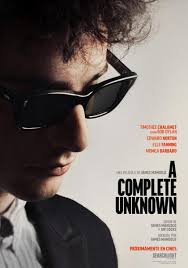
I eventually saw A Complete Unknown just after it premiered here in Colombia on the 20th of February. I don’t remember anticipating a movie as much for over as long a period as I have with this one, which I believe in some regard was to my detriment. I had also seen every vignette from the movie beforehand so often when a scene came up in the movie I already had seen it ten’s of times.

The attention to detail, the music production (which brilliantly replicated the era’s sound), and the acting were exemplary. That said, I felt the film ran about 15 minutes too long, as certain moments dragged. Alternatively, they could have further developed the relationship between Bob and Sylvia (Suze Rotolo) to deepen that narrative. One of the most impactful scenes for me was when Sylvia leaves Bob for the ferry during the festival – it’s the moment his heart finally cries out in pain. He’s no longer that guy spinning plates on sticks. Don’t tell me that Dylan’s management who had their hands all over this baby didn’t let that scene encapsulate in particular Dylan’s loss of Sylvia (ie Suze Rotolo) accurately, even as he feels now.

As impressive as Chalamet’s singing was, I still missed the distinct timbre, intonations, and inflections of Dylan’s real voice. I had a similar feeling watching the biopic of Elton John’s Rocketman – no matter how well-executed, it’s hard not to long for the original. Although his singing to Woodie at the beginning in the hospital and holding that pause was all-so Dylan. I couldn’t be more in awe of what Chalamet achieved; he captured Dylan’s mannerisms remarkably well. The vocal performance that truly floored me, though, was Monica Barbaro’s portrayal of Joan Baez.

I’ll definitely watch A Complete Unknown again – this time without the distractions of my children. Not that they ran amok or anything, but relying on subtitles for a 140-minute film can be a daunting task for young kids.

I have read ten’s of movie reviews of A Complete Unknown, but the one which I felt more in tune with and reflected my own opinions were Scott Bunn’s at Recliner Notes. I recently wrote about Scott’s marvellous blog in the Dylan article of Tell Me Momma. Here are some extracts of what he wrote about A Complete Unknown:

In short, it’s pretty good! It certainly lives up to the promise of providing a compelling, and even sometimes thrilling depiction and introduction of the myth of the young Bob Dylan, the wonder boy who wrote “A Hard Rain’s A‐Gonna Fall” at the age of 21…..

(Chalamet) was able to credibly portray a public figure that is so widely well known that Bob Dylan impressions are now considered hacky. Every now and then, his voice falls into the easy-to-mimic Dylan voice, but, for the most part, Chalamet convincingly made the main character in A Complete Unknown seem like a guy rather than a cartoon character.

All of the scenes between Dylan and Woody Guthrie (played compellingly by Scoot McNairy) were beautifully staged and presented. The opening meeting when Bobby plays “Song to Woody Guthrie” to Pete Seeger and Woody in the hospital was lovely to the point that brought me to tears as did their final meet-up at the conclusion of the movie.

The performance of Seeger by Edward Norton was extraordinary. He perfectly captured the essence of the man — another legend in his own right — from the way he sang, held his banjo, comported his face, and physically moved through film...

The 1965 Newport Folk Festival sequence mostly worked as a whole from the intensity of the moment down to the woman boogying in her seat in the front row….

So much has been documented about Dylan’s life that this movie serves as a reminder that it’s impossible to know everything that this guy went through day-to-day, hour-to-hour in those four years. A Complete Unknown imagines a few quiet moments that only a fictionalized version of a Bob Dylan life can do: a motorcycle ride through a city or a visit to Woody Guthrie that no one but the two of them ever knew about. 

There weren’t any drugs in A Complete Unknown and only a little drinking, which was a curious decision considering Chalamet’s Bob is smoking in nearly every scene. The tobacco use is certainly period accurate, but a 1965 Dylan needs to have that up-all-night, wired intensity that is almost certainly narcotically enhanced.

I felt that conflating the 1965 Newport performance of “Like A Rolling Stone” with the ”Judas” moment in Manchester a year later is unconscionable. Dylan going electric is significant and dramatic enough. Melding the two inciting incidents together was unnecessary and even laughable. It was music biopic-ness at its worst. They might as well have shown someone throwing a cross on stage too. 

Read the entire article at Recliner Notes.

The Most Epic Documentary About Quentin Tarantino Ever Made (No Clickbait… It’s a Fact)
Documentary at Kolo Kino

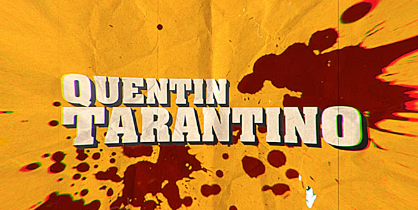
The last time I wrote about Quentin here was in September last year concerning the magnificent soundtrack from his Kill Bill movies, in particular – Battle Without Honor or Humanity (2000) by Tomoyasu Hotei.
I saw the ‘Most Epic’ Tarantino documentary last night when I found my self with nothing to do. I was wary of the cavalier ‘title’, but after I watched a while I felt it was the quintessential documentary about Quentin Tarantino’s movie making career. My only negativism was the large quantity of advertisements interspersed breaking up my enjoyment of it.

Video description:
If you’re tired of lazy, watered-down recaps that barely scratch the surface of greatness, this is the only Quentin Tarantino documentary you need to watch. We’re talking about a full-scale, no-holds-barred breakdown of his legendary career – from Pulp Fiction and Kill Bill to Inglourious Basterds, Django Unchained, and Once Upon a Time in Hollywood. But that’s not all.
This isn’t just about the movies – it’s about the man behind the camera. His wild inspirations, his relentless battles to change Hollywood, and the victories that made him a cinematic icon.
(watch the documentary here).

21 Years Of Running Have Led To THIS
Video blog at Phily Bowden

One of my guilty pleasures is devouring high-end adventure videos mostly about running. I enjoy running on occasion (especially at the gym), but it’s mostly a hobby. Recently as last November on News on the March, I presented a fantastic video about the unique sporting event – Backyard Ultra Marathon which I couldn’t recommend more highly even if one has a skerrick of interest in the topic.

One recent blog series that came into my feed (and I subscribed to) is by professional marathon runner – Phily Boden. She is charismatic, transparent and inspiring – a ‘cool’ chick basically and possesses the ‘smarts’ too. Currently her series is focused on her specific preparation for the upcoming London Marathon which will be transmitted here on ESPN. Phily is currently ranked 3rd in the UK and I am looking forward to tracking her development leading up to (as the title suggests) the biggest sporting occasion of her life.

I keep it 100% real on here, what you see is what you get, and I’m here to take you on the ride wherever it takes me: highs, lows and parts not mentionable at the dinner table all included‘.

London Marathon preparations are hotting up so I thought I would bring you along for the ride from the moment I wake up till the moment I fall asleep. At the moment we are training up in Flagstaff Arizona for the wins that training at altitude gives you come April 27th at the London Marathon. (Watch the video here)

That is all. Thank you for reading.

Tagged with: , , , , , , , ,
Posted in Movies and TV, News, Sport and Adventure

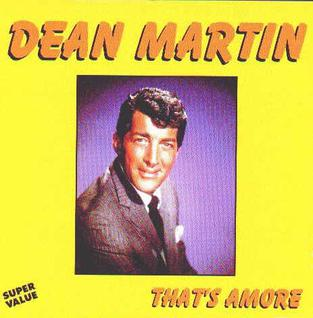
That’s Amore (1953) – Dean Martin

The following article is interspersed with extracts from the Wikipedia reference below:

I first heard this unforgettable classic song about love in the 1987 movie Moonstruck which I reviewed back in 2021. The soundtrack is a great montage of Italian music including Giacomo Puccini’s Musetta’s Waltz and O Soave Fanciulla from his opera La Boheme. That’s Amore (En. That’s Love) had to be a staple of every Italian household in Brooklyn. That’s Amore also appears in the Alfred Hitchcock’s 1954 film Rear Window. It is delivered by one of the greatest singers of the swing era Dean Martin. Dean has that smooth, pure Italian voice and it became his signature song. Music critic Joe Queenan said That’s Amore was one of many songs in the 1950’s credited for helping restore Italy’s image as a magical land of romance that had been ruined after the reign of fascist Mussolini.

That’s Amore first appeared in the soundtrack of the Dean Martin and Jerry Lewis comedy film The Caddy, released in 1953. Lewis commissioned composer Harry Warren and lyricist Jack Brooks to write songs for Martin to sing in the movie. According to Lewis, he personally paid them $30,000 secretly in the hope that one would be a hit for Martin. In the film here the song is performed mainly by Martin, with Lewis joining in and then the other characters in the scene follow. It received a nomination for the Academy Award for Best Original Song of that year, but it lost to Secret Love from Calamity Jane starring Doris Day.

On November 7, 1953, Martin’s record of the song, with You’re the Right One (which was recorded at the same session as “That’s Amore“) on the flip side, peaked at No. 2 on the Billboard charts. That’s Amore was used as the title for a 2001 video retrospective of Martin’s career; and his son, Ricci Martin, titled his 2002 biography That’s Amore: A Son Remembers Dean Martin.

[Intro: Choir]
(In Napoli where love is king)
(When boy meets girl)
(Here’s what they say)

[Chorus: Dean Martin]
When the moon hits your eye
Like a big pizza pie, that’s amore
When the world seems to shine
Like you’ve had too much wine, that’s amore

[Bridge: Dean Martin]
Bells will ring, ting-a-ling-a-ling
Ting-a-ling-a-ling and you’ll sing, “Vita bella”
Hearts will play tippy-tippy-tay
Tippy-tippy-tay like a gay tarantella

[Verse: Dean Martin]
When the stars make you drool
Just like a pasta e fasule, that’s amore
When you dance down the street
With a cloud at your feet, you’re in love

When you walk in a dream
But you know, you’re not dreaming, signore
Scusami, but you see
Back in old Napoli, that’s amore

[Chorus: (Choir) & Dean Martin]

[Bridge: (Choir) & Dean Martin]
(Bells will ring ting-a-ling-a-ling)
(Ting-a-ling-a-ling and you’ll sing, “Vita bella, vita bella, vita bella”)
(Hearts will play tippy-tippy-tay)
(Tippy-tippy-tay like a gay tarantella) Lucky fella

[Verse: Dean Martin & Choir]
When the stars make you drool
Just like a pasta e fasule, that’s amore (That’s amore)
When you dance down the street
With a cloud at your feet, you’re in love

When you walk in a dream
But you know, you’re not dreaming, signore
Scusami, but you see
Back in old Napoli, that’s amore

[Outro: Dean Martin]
(Amore) That’s amore

References:
1. That’s Amore – Wikipedia

Tagged with: , , ,
Posted in Music

That Lucky Old Sun (2015) – Bob Dylan

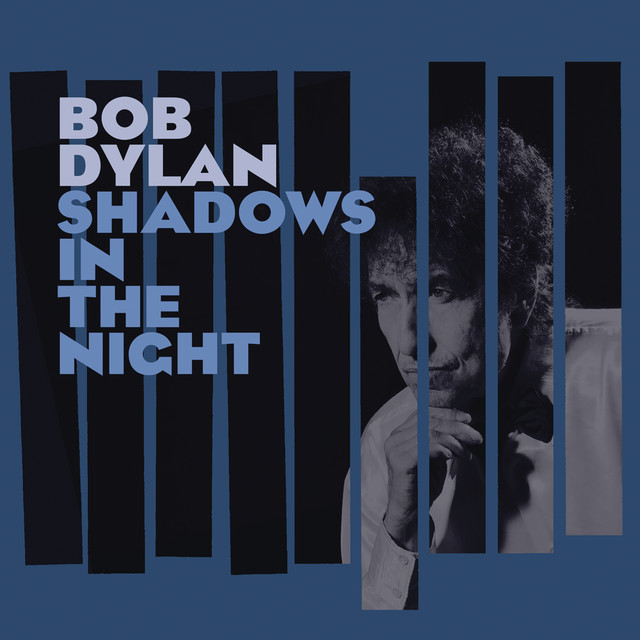
I don’t see myself as covering these songs in any way. They’ve been covered enough. Buried, as a matter a fact. What me and my band are basically doing is uncovering them. Lifting them out of the grave and bringing them into the light of day‘.

– Bob Dylan in a press release of Shadows in the Night

My expectations of Bob Dylan doing a crooner album of old Frank Sinatra songs were analogous to those coming into his unexpected making of a Christmas record. They were underwhelming and I couldn’t help but feel disappointed, at best nonchalant; since I had on both occasions anticipated a new album of original compositions. Also how could he pull that off – given his age? By reinventing beloved tunes of yesteryear and somehow still hold true to his proclivity of pushing boundaries in songwriting. Even the greats fade in their senility recalling their longing and re-heaping nostalgic tendencies.

I regret not having more faith because if there is anything I have learnt from being a Dylanholic since my early adolescence is his unblemished record of reinvention and making song-art miraculously feel anew. Upon hearing his 2015 album of Shadows in the Night like I did Christmas in the Heart, I was pleasantly surprised by how much I enjoyed them, even more so with the former and in particular today’s featured song That Lucky Old Sun. As he prefaced, ‘ (what) me and my band are basically doing is uncovering them.

To tell you how satisfying the experience was on a personal level is by recalling my Mother’s instant feedback about it. Words escape me to encapsulate it, but I’ll try with an overused phrase, that That Lucky Old Sun basically ‘knocked me for six’. It was the first time my Mother expressed a glowing acknowledgement of a Bob Dylan song, even bordering on confessing it as a slobbering mess. I’d wrote about her mocking me in my youth constantly singing Congratulations by accentuating Dylan’s nasal delivery. She had me in stitches, all the same. Now fast-forward 3 decades her unabashed recognition of this ‘one’ song and in the twilight years of Dylan’s career couldn’t have been more stunning to my senses.

Thank you for allowing me to divulge, but now onto the song itself.

Those who complain that Dylan can’t sing are treated to a masterclass in timing, phrasing, nuance and interpretation. Even the cracks in his voice leave a poignant trail.

Irish Times

Apart from how Dylan’s voice is described above, the musicianship of That Lucky Old Sun is just sublime and transports the listener back to a time; which Dylan has the uncanny knack-for; into a piece of Americana that is rarely, if at all heard of in modern music. It is deeply spiritual; where the workers seem those with riches or inherited riches as doing nothing but “roll around heaven all day” like that lucky old sun. Like Ol’ Man River, That Lucky Old Sun‘s lyrics contrast the toil and intense hardship of the singer’s life with the obliviousness of the natural world. Dylan’s version continues to give me goosebumps and makes my eyes well-up with tears.

Thanks to the unheralded Dylan devoted blog – Untold Dylan which I have referred to here often, I heard Dylan’s first version of Lucky Old Sun recorded at a rehearsal with Tom Petty and The Heartbreakers.

As told: ‘Written in 1949 by Beasley Smith and Haven Gillespie, everyone who is anyone has recorded this track. From Jerry Lee Lewis and Ray Charles to Willie Nelson and Johnny Cash. Brian Wilson even wrote an entire song cycle around the track in 2008 with his wonderful “That Lucky Old Sun” album’.
Frank Sinatra released his competing version of the song on the Columbia label and reached the best sellers chart on October 29, 1949 and peaked at No. 16. Included on his The Best of The Columbia Years 1943–1952 album.

[Verse 1]
Up in the mornin’, out on the job
Work like the devil for my pay
But that lucky old sun has nothin’ to do
But roll ’round heaven all day

[Verse 2]
Fuss with my woman, toil for my kids
Sweat ’til I’m wrinkled and gray
While that lucky old sun has nothin’ to do
But roll ’round heaven all day

[Verse 3]
Good Lord above, can’t you see I’m pining
Tears in my eyes
Send down that cloud with a silver lining
Lift me to Paradise

Show me that river, take me across
And wash all my trouble away
Like that lucky old sun, give me nothin’ to do
But roll ’round heaven all day

[Verse 4]
Oh Lord above, can’t you know I’m pining
Tears in my eyes
Send down that cloud with a silver lining
Lift me to Paradise

Show me that river, take me across
And wash all my trouble away
Like that lucky old sun, give me nothin’ to do
But roll ’round heaven all day

References:
1. Dylan’s Lost album: track 6. Lucky old Sun – Untold Dylan
2. That Lucky Old Sun – Wikipedia

Tagged with: , , ,
Posted in Music

Flow (2024) – Gints Zilbalodis (Friday’s Finest)

Latvian theatrical release poster

Storyline:

A Latvian, French, and Belgian co-production, Flow features no dialogue and follows a cat trying to survive along with other animals in a seemingly post-apocalyptic world as the water level dramatically rises.
The world seems to be coming to an end, teeming with the vestiges of a human presence. Cat is a solitary animal, but as its home is devastated by a great flood, he finds refuge on a boat populated by various species, and will have to team up with them despite their differences. In the lonesome boat sailing through mystical overflowed landscapes, they navigate the challenges and dangers of adapting to this new world.

I watched the animated adventure film Flow with my children last weekend, and we all left the theatre feeling unexpectedly pristine and invigorated. Let me explain – after devouring a bucket of popcorn, a hot dog, and a Pepsi large enough to sink the very boat we had just seen the protagonists stranded on, we walked down the cinema stairs toward the exit. Glancing at each other with a newfound energy, we simultaneously remarked, “That was a good movie.”

And Flow is a highly unusual one at that. In some ways it feels more akin to a dream. It’s liberating from imposed narrations and expectations and perfectly embodying the “show, don’t tell” principle.
For its 85-minute runtime, it feels as though your perception has been transformed – not just as a human observer, but as if you’ve stepped into the very perspective of the animals on screen. You begin to see the world as they do, attuned to a reality entirely distinct from our own. The animals act like animals, and that gives their adventure an authenticity that, in moments of both delight and peril, makes the emotion that much more powerful. By the time the credits roll, you’re reluctant to let go of that newfound way of seeing.
It’s interesting how Flow follows last week’s ‘Friday’s Finest‘ selection of Life of Pi since both films explore animals and themes of survival and connection.

Just prior to our viewing, I watched on Academy Awards night Flow take home the gong for Best Animated Feature; the first independent film to win and the second animated film to be nominated for both the Academy Award for Best International Feature Film. Flow received critical acclaim (97% on Rotten Tomatoes and 98% audience score) and broke several Latvian box-office records, becoming the most-viewed film in Latvian theatres in history, including foreign films. So popular in fact – a statue of the cat from Flow was installed in Riga. It was initially installed outside of the Freedom Monument, and is planned to be moved to the Town Hall Square in April 2025.

Production of Flow started in 2019, and lasted five-and-a-half years with the animation done using the free and open-source software Blender. Because the budget of the film was so tight, there are no deleted scenes from the film. Every scene produced is in the final cut of the movie. Also, the team was very adamant in getting all of the “voices” to be done by real animals, so they recorded real animals for the movie. Due to the success of Flow, el director Zilbalodis said that he had been approached to create a sequel to Flow, but chose not to make one, instead focusing on a different project with dialogue.

References:
1. Flow (2024 film) – Wikipedia
2. Flow – IMDB

Tagged with: , ,
Posted in Movies and TV

Thank U (1998) – Alanis Morissette

Basically, I had never stopped in my whole life, hadn’t taken a long breath, and I took a year and a half off and basically learned how to do that. When I did stop and I was silent and I breathed… I was just left with an immense amount of gratitude, and inspiration, and love, and bliss, and that’s where the song came from, you know.

– Alanis who talked with MTV about the break between LPs and the first single.

After the massive success of her breakthrough album Jagged Little Pill (1995), Morissette was considered one of the biggest music stars in the world, and many fans anxiously awaited a follow-up album. During a trip to India, in 1997, Alanis wrote some songs, including Thank U. The lyrics document Morissette’s spiritual awakenings following her trip to India, as well as other physical and internal journeys. In Thank U (later changed to Thank You on her 2005 Greatest Hits compilation), Alanis expresses the heartfelt gratitude, inspiration, and compassion that she felt at the time she wrote it.
I have always been a great admirer of this song and is my Desert Island Alanis song choice, although her 2019 hit Reasons I Drink is close on its tail.

Thank U was from her fourth studio album, Supposed Former Infatuation Junkie (1998). The song was written by Alanis Morissette and Glen Ballard, who produced her previous record, Jagged Little Pill. Alanis’ first entry here at Observation BloggerHand in My Pocket was from that same album. On the Billboard Hot 100 chart, Thank U peaked at number 17 and in Canada hit No. 1 and stayed there for 3 consecutive weeks. It also peaked at No. 15 on the Australian charts – where I first heard it.
Thank U was nominated for Best Female Pop Vocal Performance at the 2000 Grammy Awards, but lost to Sarah McLachlan’s I Will Remember You. Also, while we are on Sarah’s song, I point you to Andy Bernard’s version of it here from The Office.

The music video below for Thank U stands out for its bold depiction of vulnerability and self-exploration, making a significant impact alongside the song’s introspective themes. Morissette is completely nude with her long hair shrouding her breasts and her pubic region blurred out. It was directed by French director Stéphane Sednaoui (who previously directed “Ironic” for Morissette).

While being asked why she chose to be nude in the video, Morissette said, “Actually, the idea for that video hit me in my shower – I was thinking about the song and its simplicity and its baring itself, and I just thought, ‘Wouldn’t it be great if I could just walk around New York City or grocery stores in just a symbolism of being naked everywhere I went?‘ It was filmed in Downtown Los Angeles, under a closed set.

[Verse 1]
How ’bout getting off of these antibiotics
How ’bout stopping eating when I’m full up
How ’bout them transparent dangling carrots
How ’bout that ever elusive kudo

[Chorus]
Thank you India
Thank you terror
Thank you disillusionment
Thank you frailty
Thank you consequence
Thank you, thank you silence

[Verse 2]
How ’bout me not blaming you for everything
How ’bout me enjoying the moment for once
How ’bout how good it feels to finally forgive you
How ’bout grieving it all one at a time

[Bridge]
The moment I let go of it
Was the moment I got more than I could handle
The moment I jumped off of it
Was the moment I touched down

[Verse 3]
How ’bout no longer being masochistic
How ’bout remembering your divinity
How ’bout unabashedly bawling your eyes out
How ’bout not equating death with stopping

References:
1. Thank U – Wikipedia

Tagged with: , ,
Posted in Music

Tell Me, Momma (Live 1966) – Bob Dylan & the Hawks (the Band)

“That tour was a very strange process…We’d go from town to town, from country to country and it was like a job. We set up, we played, they booed and threw things at us. Then we went to the next town, played, they booed, threw things, and we left again. I remember thinking, ‘This is a strange way to make a buck.'”

– Robbie Robertson, guitar player of The Hawks 

Tell Me Momma was played on Dylan’s 1966 world tour with the Band (then known as the Hawks). It was used as the opener for the electric set, being played a total of 15 times during the tour. The song was not recorded on a studio album and was never performed again. The ‘Live at Free Trade Hall, Manchester, UK – May 17, 1966 – Official Bootleg‘ is my favourite live concert performance and the box CD set with the inner booklet still adorns my modest library in my living room. Tell Me Momma is the fifth song presented so far from Dylan’s electric set after his previous entry One Too Many Mornings.

For the remainder of this article, I am going to forward extracts from Recliner Notes‘ exceptional article on Tell Me Momma. For any Bob Dylan fans out there I point you to his Bob Dylan series articles because he is so well-versed on all things Dylan:

Alongside all of the usual trappings of a rock and roll tour, there was also a film crew traveling alongside Dylan, capturing his every move. The pressures resulting from all of these various circumstances must have been tremendous on Dylan. The adversity of the tour manifested itself through Dylan in many ways. Here’s one example as recorded by the film crew and later released as part of 2005’s documentary No Direction Home: Bob Dylan:

What a dazzling example of Dylan’s mind at work, creating a hilarious piece of surreal poetry in real time. It’s a form of found art, but it’s Dylan who generates the work through his life as art. The various extremities of the 1966 tour were also revealed onstage. As Robertson also said to Crowe in the interview quoted above:

“You can hear the violence and the dynamics in the music.”

“Tell Me, Momma” lets us in on the musicians getting ready for the full band performance. Garth Hudson tests his organ sound. Robertson noodles a bit on the electric guitar. Then another electric guitar — that has to belong to Dylan — begins strumming and strumming and strumming before a quick count by Dylan launches a tremendous sound as if a large wave has fallen on the audience. Unlike a wave that recedes giving a momentary pause, this roar continues before balancing into a rock ‘n roll song.

Dylan begins singing and his voice is different from the acoustic set. The subtleness of his delivery is gone, mostly giving way to powerful howling which was needed to be heard over the musical barrage. He sounds like a poisonous viper at times, spitting out lines such as “Cold black water dog, make no tears.” Yet Dylan also is practically purring when he sings, “Don’t you remember makin’ baby love?”

Dylan’s vocals are entwined in the music being produced by the band, especially during the stop-stop move they pull off during the line “But I know that you know that I know that you show.” It’s a funny bit of writing, demonstrating the push-pull power imbalance of the relationship at the center of the song. The band emphasizes each “know” with “bang.” – Read the remainder of Scott Bunn’s (Recliner Notes) vivid description of the song here.

A performance of the song at Paris’ L’Olympia on 24 May 1966 featured in D. A. Pennebaker’s documentary Eat the Document. The same video of Dylan and the Hawks shown in Eat the Document was shown in Martin Scorsese’s 2005 Documentary No Direction Home.

[Verse 1]
Ol’ black Bascom, doesn’t break no mirrors
Cold black water dog, make no tears
You say you love me with what may be love
Don’t you remember making baby love?
Got your steam drill bit and you’re looking for some kid
To get it to work for you like your nine-pound hammer did
But I know that you know that I know that you show
Something is tearing up your mind

[Chorus]
Tell me, momma
Tell me, momma
Tell me, momma, what is it?
What’s wrong with you this time?

[Verse 2]
Hey, John, come and get me some candy goods
Shucks, it sure feels like it’s in the woods
Spend some time on your January trips
You got tombstone moose up and your grave-yard whips
If you’re anxious to find out when your friendship’s gonna end
Come on, baby, I’m your friend
And I know that you know that I know that you show
Something is tearing up your mind

[Verse 3]
Oh, we bone the editor, can’t get rid
But his painted sled, instead it’s a bed
Yes, I see you on your window ledge
But I can’t tell just how far away you are from the edge
And, anyway, you’re just gonna make people jump and roar
Watcha wanna go and do that for?
For I know that you know that I know that you know
Something is tearing up your mind

References:
1. Tell Me, Momma -Wikipedia
2. Tell Me, Momma – Recliner Notes

Tagged with: , , , ,
Posted in Music

Tell Me That It Isn’t True (1969) – Bob Dylan

I hadn’t realized how much you could get out of voice till I lost it in a motorcycle accident in 1966. When it came back, I had this rich, deep sound.”
– Dylan in a 2004 interview

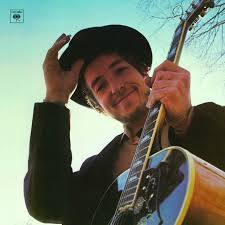
Tell Me That It Isn’t True is the fourth song to feature here from Bob Dylan’s 1969 record Nashville Skyline after his previous entry Lay Lady Lay. The song achieves this warm and mellow sound which reflects the relaxed and joyful approach to the record which was only 4 days in the making. Nashville Skyline is arguably the most laid back album of Dylan’s career and was a far departure from that thin, wild mercury sound attributed to Blonde on Blonde a few years prior.
He embraced a distinct country music sound influenced by his collaborations with Johnny Cash around this time. Also his raspy voice was stripped away to a soft, affected country croon. It’s also suggested this significant voice transformation may have been partly due to his cessation of smoking. Overall, the album saw Dylan building on the rustic style he experimented with on John Wesley Harding. In fact the working title for the album was John Wesley Harding Vol. 2.

Tell Me That It Isn’t True is a lovely, lilting lament from a spurned lover to another (“They say that you’re planning to put me down … they say that you’ve been seen with some other man”). It’s so simple yet graceful. Clocking in well under three minutes, the song is propelled by a lively drumbeat, shimmering with layered guitars, accented by a touch of honky-tonk piano, and elevated by Dylan’s surprisingly lighthearted and inviting vocal delivery. It’s such an underrated song in his cannon and there are hundreds out there.

The concept of recording a country album in Nashville was first discussed with Dylan in 1965 by Johnny Cash, who expressed interest in producing such an album. “I’ve got my own ideas about that Nashville sound and I’d like to try it with Bob,” Cash said in a 1965 interview. Despite the dramatic, commercial shift in direction, the fans, press and critics gave Nashville Skyline a warm reception. It reaching No. 3 in the U.S., the album also scored Dylan his fourth UK No. 1 album.

[Verse 1]
I have heard rumors all over town
They say that you’re planning to put me down
All I’d like you to do
Is tell me that it isn’t true

[Verse 2]
They say that you’ve been seen with some other man
That he’s tall, dark and handsome, and you’re holdin’ his hand
Darling, I’m a-countin’ on you
Tell me that it isn’t true

[Bridge]
To know that some other man is holdin’ you tight
It hurts me all over, it doesn’t seem right

[Verse 3]
All of these awful things that I have heard
I don’t wanna believe them, all I want is your word
So, darlin’, you better come through
Tell me that it isn’t true

[Guitar Solo]

[Verse 3]
All of these awful things that I have heard
I don’t want to believe them, all I want is your word
So, darlin’, I’m countin’ on you
Tell me that it isn’t true

References:
1. Nashville Skyline – Wikipedia

Tagged with: , ,
Posted in Music

Nessun Dorma (1924) – Giacomo Puccini (Ft. Luciano Pavarotti)

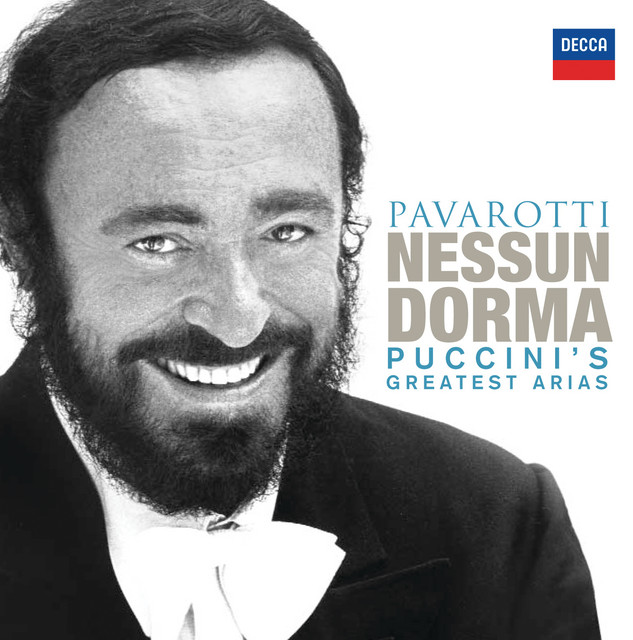
Nessun Dorma (Let no one Sleep) from the final act of Puccini’s opera Turandot is one of Puccini’s most renowned arias. It achieved pop status after Luciano Pavarotti’s 1972 recording of it was used as the theme song of BBC television’s coverage of the 1990 FIFA World Cup in Italy. The previous entry here from Turandot was Signore, Ascolta! (My lord, listen!) performed by Maria Callas. Puccini left Turandot unfinished at the time of his death in 1924; but it premiered in 1926 after the music was posthumously completed by Franco Alfano.

The aria is sung by Calaf, il principe ignoto (the unknown prince), who falls in love at first sight with the beautiful but cold Princess Turandot. Any man who wishes to wed Turandot must first answer her three riddles; if he fails, he will be beheaded. In the aria, Calaf expresses his triumphant assurance that he will win the princess.

On the Eve of the 1990 World Cup final in Italy, a ‘supergroup’ of three of the most beloved tenors, consisting of Italian Luciano Pavarotti and Spaniards Plácido Domingo and José Carreras began a 13 year collaboration. They performed at the ancient Baths of Caracalla in Rome watched by a global television audience of around 800 million. I was in awe of this concert and rewatched it countless times. It also appears on the best-selling classical album lists of all time.

The performance below of Nessun Dorma is from celebrated Italian tenor Pavarotti (1935–2007) who sang the aria with The Three Tenors in Los Angeles in 1994 to celebrate the 1994 World Cup. Interestingly, Pavarotti rarely sang the role of Calaf on stage. The Three Tenors went on to perform at two further World Cup Finals – 1998 in Paris, and 2002 in Yokohama.

I saw Nessun dorma recently put to magnificent use in Mission: Impossible – Rogue Nation (with the scene set within a performance of Turandot itself).

(English translation)
[CALAF]
No one sleeps! No one sleeps!
Even you, oh princess
In your cold room
Look at the stars
That tremble with love and with hope

But my mystery is locked inside me
No one will know my name!
No, no! On your mouth
I will say it when the light shines

And my kiss will dissolve
The silence that makes you mine

[PEOPLE OF PEKING]
No one will know his name
And we, alas, will have to die, to die!

[CALAF]
Disappear, night!
Fade away, stars!
Fade away, stars!
At dawn, I will win!
I will win! I will win!

References:
1. Nessun dorma – Wikipedia
2. The Three Tenors – Wikipedia

Tagged with: , , ,
Posted in Music

Downbound Train (1984) – Bruce Springsteen

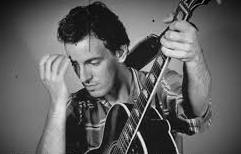
I think Downbound Train is one of the most unheralded songs on Bruce’s massive – hit album Born in the USA (BITUSA), yet due to its unassuming melancholic appeal it’s one of the songs from the album I now prefer to revisit. In other words it hasn’t worn out at all to my musical senses, on the contrary, my appreciation of it has only risen over the years. Downbound Train was of course one of the 70 songs Bruce had to choose from for BITUSA. This album is so big that every song has its own Wikipage – That’s when you know you have hit the ball out of the park as a singer-songwriter ;-P

Downbound Train is considered the most depressing song on the album; ok lets have that – I consider the lyrics as some of his finest as far as building upon his blue collar image. It’s a great example of Springsteen’s lucidity as a songwriter. “Last night I heard your voice..” and ‘Now I work down at the car wash/where all it ever does is rain.’ And we are right there picturing him go through all this. The song tells the story of a man whose life is mired in decline after he gets laid off. It’s a about the harsh realities and choices of life: job and love, and the pursuit of happiness in simple things. Also, this song has an acoustic solo version that was originally part of what would later become the Nebraska album.

It’s interesting how musical tastes can change over time, since upon first hearing the record my favourite songs were perhaps Glory Days, I’m Goin Down, Darlington County, Dancing in the Dark and My Hometown. Now I look forward most to hearing the live version of Born in the USA (from Live Amnesty International), I’m Going Down and today’s featured track Downbound Train. Also, I probably enjoy hearing more songs from his maligned 1992 double release albums Human Touch / Lucky Town (especially the latter) than I do just about any other record release by him. Observers in fact analysed Downbound Train with naturalistic imagery lacing the song throughout in an approach that Springsteen would return to heavily in his Dylan – Series of Dreams – influenced early 1990s.
In addition I like to hear his previously unreleased songs including County Fair, Loose Change and Happy.

The following includes extracts from the Wikipedia reference below:
The song was recorded on May 6, 1982 at the Power Station at the end of the “Electric Nebraska” sessions. Like several other Born in the U.S.A. songs, including “Working on the Highway” and the title track, a solo acoustic version of “Downbound Train” was originally recorded on the demo that eventually became the Nebraska album.

Though it was not one of the seven singles released from the album, the song nevertheless gained some album-oriented rock radio airplay and was featured fairly regularly on the Born in the U.S.A. Tour. It has been performed sporadically in tours since. Overall, the song has been played in concert about 130 times through 2008.

[Verse 1]
I had a job, I had a girl
I had something going, mister, in this world
I got laid off down at the lumberyard
Our love went bad, times got hard
Now I work down at the car wash
Where all it ever does is rain
Don’t you feel like you’re a rider
On a downbound train?

[Verse 2]
She just said “Joe, I gotta go
We had it once, we ain’t got it anymore”
She packed her bags, left me behind
She bought a ticket on the Central Line
Nights as I sleep, I hear that whistle whining
I feel her kiss in the misty rain
And I feel like I’m a rider
On a downbound train

[Verse 3]
Last night, I heard your voice
You were crying, crying, you were so alone
You said your love had never died
You were waiting for me at home
Put on my jacket, I ran through the woods
I ran till I thought my chest would explode
There in a clearing beyond the highway
In the moonlight, our wedding house shone
I rushed through the yard, I burst through the front door
My head pounding hard, up the stairs I climbed
The room was dark, our bed was empty
Then I heard that long whistle whine
And I dropped to my knees, hung my head, and cried
Now I swing a sledgehammer on a railroad gang
Knocking down them cross ties, working in the rain
Now don’t it feel like you’re a rider on a downbound train?

Reference:
1. Downbound Train – Wikipedia

Tagged with: , ,
Posted in Music

Follow Blog via Email

Enter your email address to follow this blog and receive notifications of new posts by email.

Join 780 other subscribers

← Back

Thank you for your response. ✨