Spring Rain (1986) – The Go-Betweens

“There’s a gentle lope and swing as much breezy ’60s pop as there is roots revival intensity”

AllMusic

Spring Rain is the 10th song to appear here from my dual favourite Australian band The Go-Betweens after their previous entry Right Here. Their prominence is comparable in numbers to another stellar, but cruelly underrated Australian group – My Friend the Chocolate Cake. The Go-Betweens remain somewhat of an enigma in Australian contemporary music circles since they were, as the BBC put it – The 80s band that never conquered the world, but their enduring legacy and vast influence on the music industry cannot be understated.
I might sound like a broken record, but to my listening ears no other Australian band encapsulates more instinctively the quintessential Australian ‘sound’ than the The Go-Betweens, analogous to how the wordsmanship of Australian author Tim Winton reacquaints me with my island home when I dive into one of his books.

Spring Rain is the first single from the band’s fourth album Liberty Belle and the Black Diamond Express. It is written by Robert Forster who appears in the music video below. He said the song was written when he was in London in his late twenties, looking back on a time when he was in his late teens and living in Brisbane suburbia. The lyrics appear an inner monologue, with the singer contemplating his rather monotonous life, waiting for a change to come. He feels alienated by the people around him who rather look for material goals.

Forster says the title is an homage to the Creedence Clearwater Revival songs “Who’ll Stop the Rain?” and “Have You Ever Seen The Rain?”, who also have the word ‘rain’ in it. In his memoir “Grant & I”, Forster writes:

‘Spring Rain’ was my second song – there are now four – with the word ‘rain’ in the title.

[Verse 1]
Dressed in a white shirt with my hair combed straight
Here in my black shoes and me without a date
Me without hindsight, me without
When will change come
Just like Spring Rain

[Chorus]
Falling down like sheets
(falling down like sheets)
Coming down like love
(coming down like love)
Falling at my feet
(falling just like)
Spring Rain

[Verse 2]
Standing on the lawn with cousins and child brides
Caught for the camera on their best sides
Being caught forewarned
Their best sides
When will change come
Just like Spring Rain

[Chorus]

[Verse 3]
Driving my first car
My elbows in the breeze
With all these people that I Never, never need
These people are excited by their cars
I want surprises
Just like Spring Rain

References:
1. Spring Rain – Genius Lyrics
2. Spring Rain (The Go-Betweens song) – Wikipedia
Tagged with: , ,
Posted in Music

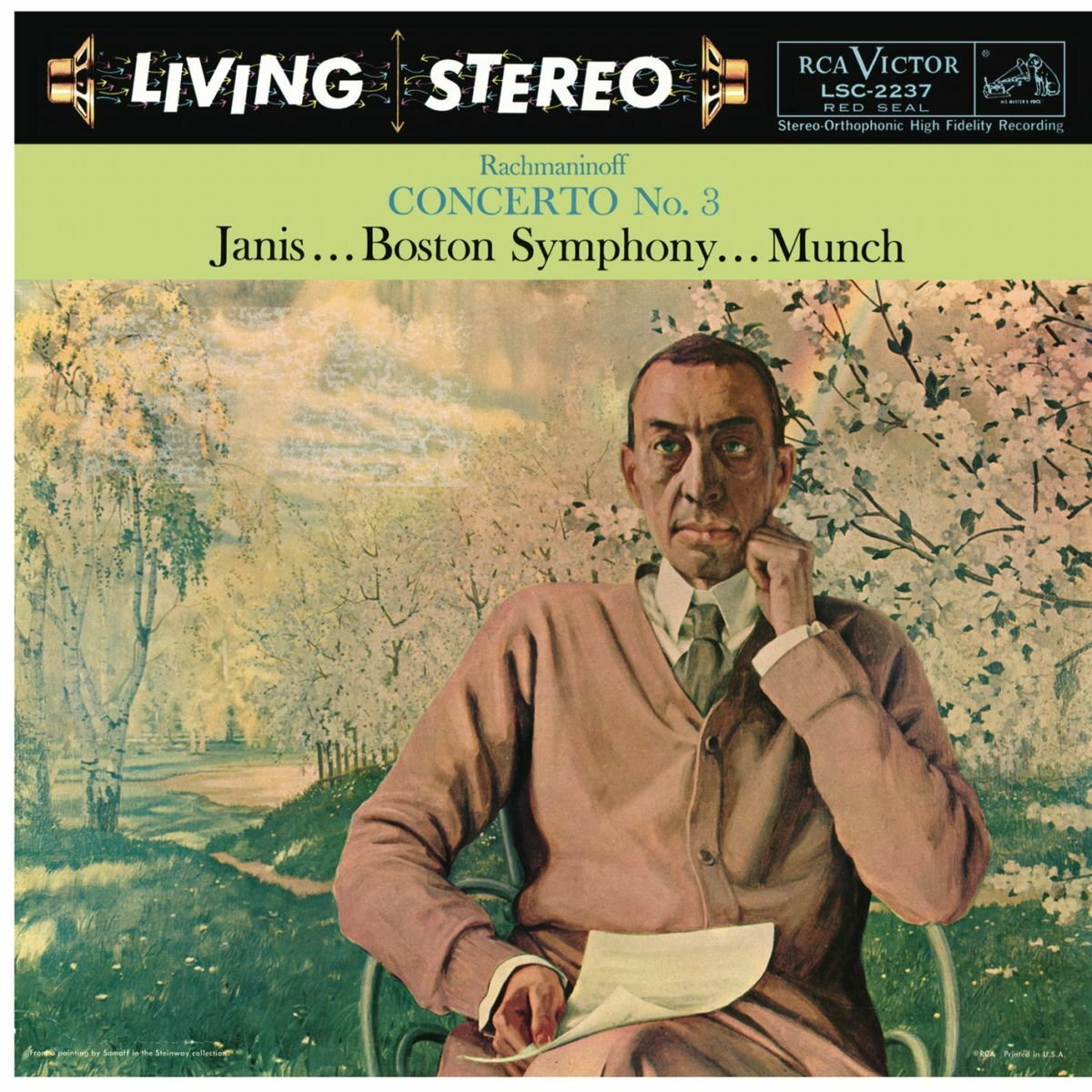
Piano Concerto No. 3 in D minor Op. 30 (1909) – Sergei Rachmaninoff

Below is a quote from the Australian movie Shine (1996) (which featured here at Friday’s Finest in 2021), referring to how today’s featured movement from Rachmaninoff – Piano Concerto No. 3 (Rach 3) is a notoriously challenging piece:

  • Cecil Parkes: No one’s ever been mad enough to attempt the Rach Three.
  • David Helfgott: Am I mad enough, professor? Am I?

The Russian classical music composer Sergei Rachmaninoff is no stranger to this blog having featured here 5 times already. I was a relative latecomer to appreciating Rachmaninoff, but now I listen to him frequently. I first heard his music when academy award winner Geoffrey Rush wowed audiences playing David Helfgott in the Australian movie – Shine.

Most of the following was extracted and paraphrased in part from the Wikipedia reference below:

Piano Concerto No. 3 was composed during the summer of 1909 and made its debut on November 28 of the same year in New York City, with Rachmaninoff himself as the soloist. He was joined by the New York Symphony Society, conducted by Walter Damrosch. This concerto is widely regarded as one of the most demanding works in the classical piano repertoire, pushing even seasoned pianists to their technical limits. Josef Hofmann, the pianist to whom the work is dedicated, never publicly performed it, saying that it “wasn’t for” him. 

Rachmaninoff, being a masterful pianist, tailored his compositions for the piano to match both his personal preferences and his unique abilities. Standing tall with long, nimble fingers, he possessed an impressive hand span. His pieces are notoriously demanding, especially for pianists with smaller hands, and even those with average reach may find his works particularly challenging to play.

Due to time constraints, Rachmaninoff could not practice the piece while in Russia. Instead, he practiced Piano Concerto No. 3 on a silent keyboard that he brought with him while en route to the United States.
Public opinion regarding the Third Concerto was mixed in the beginning, but by 1919 it turned more positive. The concerto soon became more popular in the United States than the Second Concerto, partially due to the fact that Rachmaninoff wrote the Third specifically for his American tour.
According to Rebecca Mitchell’s “In Search of Russia: Sergei Rakhmaninov and the Politics of Musical Memory after 1917”, Rachmaninoff became a symbol of an old, nationalistic identity of Russia; many believed he was among the last. The Third Concerto served the same purpose as the Second he “spoke directly to the Russian soul.”

To set the scene for the video below from Shine which features Piano Concerto No. 3:

David Helfgott (Noah Taylor) who is now a star student at the Royal College of Music in London, and one of the candidates for the Concerto Medal. He proposes performing Rachmaninoff’s 3rd Concerto for Piano for his competition piece. His teacher, Professor Cecil Parkes (John Gielgud) begins the task of preparing him for a piece that he describes as ‘a monster’. Parkes warns him that it’s dangerous. Below is the result.

References:
1. Piano Concerto No. 3 (Rachmaninoff) – Wikipedia

Tagged with: , ,
Posted in Music

4/11 – 10/11/24 – Wedding Song, Roman Conquest & The Matterhorn

news on the march

Welcome to Monday’s News on the March – The week that was in my digital world.

Something (1969) – The Beatles
Commentary by Nancy (The Elephant’s Trunk) at Observation Blogger

My modest readership includes a few Beatles devotees, so I wasn’t surprised to see the beautifully George Harrison-penned song Something become a popular topic of discussion. One comment that stood out came from my friend and fellow blogger, Nancy, whose blog, The Elephant’s Trunk, I read almost daily. In response to the song Something Nancy shared that it was her wedding song. That certainly got my attention and I responded, “I can’t even begin to fathom the deep emotional connection you must have with this song.” Below is Nancy’s beautiful account of how Something was used at her wedding, which she graciously allowed me to share with all of you:

Nothing but sweet memories whenever I hear this song, which we both agreed on. However, my dad was very old school and insisted we have a live band instead of a DJ for the reception. The band was not a professional wedding band, just a bunch of older guys from the post office where dad worked who got together and jammed. When I heard their cover of Something, I nearly cried and threw one of my very rare hissy fits. This happened days before the wedding so we had time. I told my dad we could hire his friends for the reception with one exception: we had to play the actual recording of the Beatles doing Something for my wedding dance. Dad didn’t like it but knew better than to argue. We compromised and everyone was happy in the end. If I hadn’t stuck to my guns, I would have regretted it for the rest of my life.

The Roman Conquest of Britain | Julius Caesar’s Invasion | Part 1
Video discussion at The Rest is History

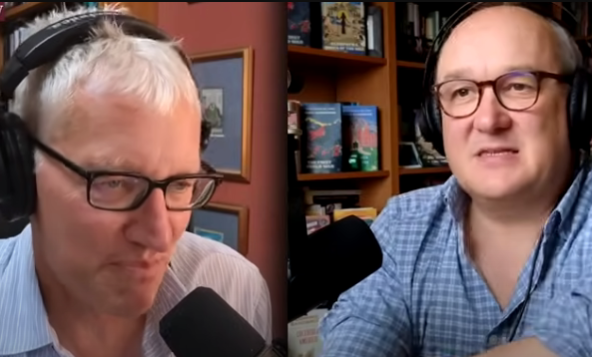
While recently listening to Brown University professor Glenn Lowry’s podcast with fellow cohort John McWhorter who teaches at Colombia University, the latter spoke about his proclivity to listen to The Rest is History podcast presented by historians Tom Holland and Dominic Sandbrook (see image left). So I checked it out and was impressed to say the least. I have since delved into many of their presentations; two series in particular one about Martin Luther: The Man Who Changed the World and the second – today’s featured topic The Roman Conquest of Europe. I don’t foresee my enjoyment of their podcasts waning any time soon.

Julius Caesar saw the Britons as brutal savages. Yet the Romans romanticised their lack of civilisation, deeming them as untainted by Mediterranean luxury. In 55 BC, after sending scouts along the Kentish coast, Caesar launched an invasion of the island as part of his Gallic Wars campaign. After a disastrous first attempt marred by storms, the “menacing horde of barbarians” of the English Home Counties asked Caesar for help and he returned with a bigger, stronger army to support their prince. Will this campaign succeed?

The Matterhorn // The Most Recognizable Mountain in the World
Video presentation at Mediocre Amateur

Apart from history presentations I have also been devouring high-end adventure ones about ultra-marathon running and mountain climbing in particular. My latest foray here was this video about ‘free-climbing with Alex Honnold’ which was insane. Now on to today’s latest adventure – The Matterhorn (image left) located in Switzerland one of the best-known mountains in the Alps. This video had me on the edge as well.

When I was young some of the first mountains I heard about were Everest, K2, and the Matterhorn. I think I recognized the Matterhorn before I knew the name of most my local mountains. I only recently looked into climbing the Matterhorn. Up until a few years ago I thought it’s pointy summit was unobtainable. Crowds, costs and technical skills made the peak seem out of reach. I had heard that long lines up the Hörnli Route could turn a day out into a horrible 20 hour nightmare. People I spoke with who had climbed it claimed that route finding after the Hörnlihütte was impossible without a guide….

That is all. Thank you for reading.

news on the march the end
Tagged with: , , , , , , , ,
Posted in Music, News, Sport and Adventure

Spoonman (1994) – Soundgarden

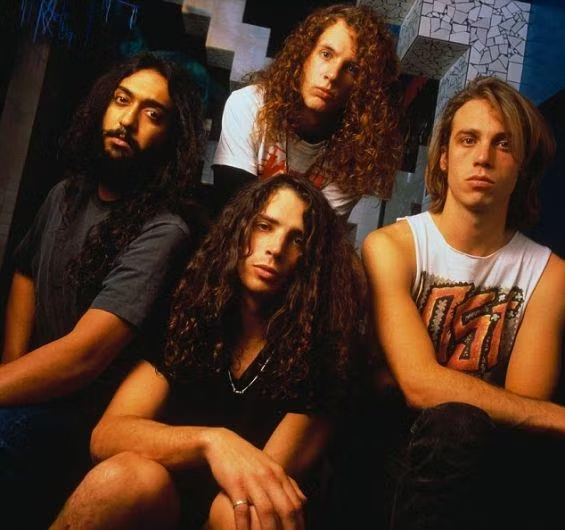
Spoonman is one of the most emblematic pieces of the grunge movement in the early 90’s. The band led charismatically by the late Chris Cornell was characterised by its heavy sound and introspective lyrics. Spoonman in particular combines a powerful guitar riff with a lyric that pays homage to an actual street musician whose real name was Artis the Spoonman who played the spoons as a musical instrument in Seattle, the home city of the band. The repeated call for the Spoonman to ‘come together with your hands‘ and ‘save me‘ is like a plea to enable the healing and unifying power of music and restore its community.

I remember when we heard this song come on in my early adulthood, my mate Mal would produce his pair of spoons and try to replicate their usage in the song. There is a drum solo using pots and pans which I always considered the crowning jewel of musicianship in Spoonman. I never get tired of them beats. The rhythm throughout is driving and relentless, powered by a syncopated groove that mirrors the percussive clatter of spoons, giving the song a raw, primal energy capturing the essence of the Spoonman’s artistry. The intensity culminates by the repeated lines ‘come on while I get off‘ which may suggest a release of energy or emotion through the act of musical performance.

[Verse 1]
Feel the rhythm with your hands
(Steal the rhythm while you can)
Spoonman
Speak the rhythm on your own
(Speak the rhythm all alone)
Spoonman

[Chorus]
Spoonman, come together with your hands
Save me, I’m together with your plan
Save me, yeah
Save, oh

[Verse 2]
All my friends are Indians
(All my friends are brown and red)
Spoonman
And all my friends are skeletons
(And beat the rhythm with their bones)
Spoonman, ohoh, mmm

[Chorus]
Spoonman, come together with your hands
Save me, I’m together with your plan
Save me
Save, save me
Save me, yeah
Save

The following information contain extracts from the Wikipedia reference below:

Written by the band’s frontman, Chris Cornell, Spoonman was released on February 14, 1994, as the first single from the band’s fourth studio album Superunknown. Spoonman is credited as one of the songs that launched Soundgarden’s career into the mainstream. The song peaked at number three on the Billboard Album Rock Tracks chart.

Spoonman was originally written for the soundtrack to the 1992 film Singles. At that time, Soundgarden, along with Pearl Jam, were working on the soundtrack for the film. Pearl Jam’s bass guitarist, Jeff Ament, had been put in charge of creating the name for a fictional band that would appear in the film. Before finally choosing Citizen Dick for its name, Ament had compiled a list of potential names, which included the name Spoonman.

Soundgarden’s vocalist and songwriter, Chris Cornell, eventually used the names on the list to create songs for the film. Spoonman was among these, and an acoustic version was created from it. This early version of the song is played during a scene in the film in which a poster advertising a Citizen Dick show is stapled to a lightpost. Rather than just leave the song on the film’s soundtrack, Soundgarden began working on an electric version of Spoonman

The song’s inspiration, Artis the Spoonman, played a prominent role in the song. The final version of the song featured Artis the Spoonman playing his spoons as part of the song’s bridge. Drummer Matt Cameron also plays pots and pans on the song. The music video features Artis prominently, making him the focus of the video instead of the band, who are shown only in black-and-white still photographs.

References:
1. Spoonman – Wikipedia

Tagged with: , , ,
Posted in Music

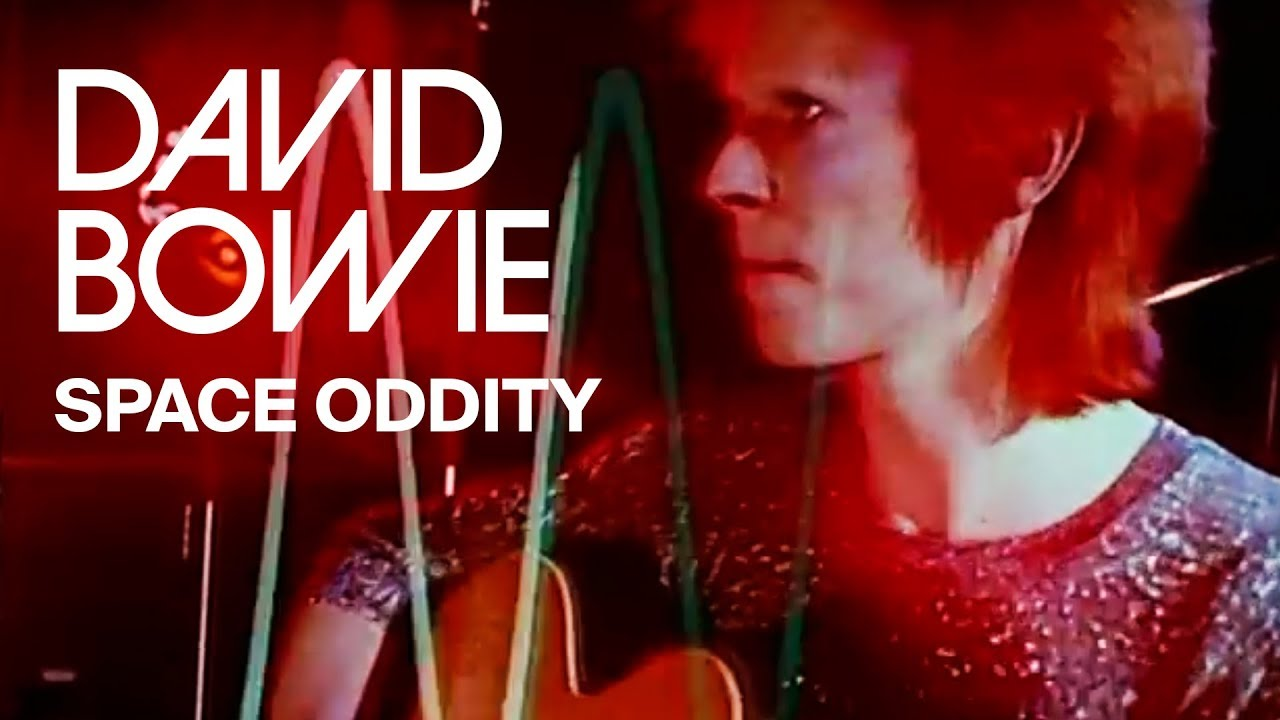
Space Oddity (1969) – David Bowie

Space Oddity is a song by the late-great English singer-songwriter David Bowie. It was released on 11 July 1969 as the opening track of his second studio album, David Bowie. It is widely considered among the finest work (and most recognisable) of Bowie’s career and appeared on numerous best-of lists and was inducted into the Grammy Hall of Fame in 2018.

Major Tom is a fictional character created by David Bowie for this song. It was partly inspired by Stanley Kubrick’s film 2001: A Space Odyssey (1968) and Bowie’s feelings of alienation at that point in his career and his break-up with the dancer Hermione Farthingale.

I went stoned out of my mind to see the movie and it really freaked me out, especially the trip passage“.

– David Bowie

Rush-released as a single to capitalise on the Apollo 11 Moon landing, Space Oddity received critical praise and was used by the BBC as background music during its coverage of the event. It initially sold poorly but soon reached number five in the UK. Bowie did not have another hit after it until the release of Starman in 1972. Space Oddity was a mainstay during Bowie’s concerts until 1990, after which it was played sporadically until 2002.

Characterised as psychedelic folk, the song is a “lost in space” story, which generated later more songs and sequels about the character by David Bowie (Ashes to Ashes and Hallo Spaceboy).

[Intro]
Ground Control to Major Tom
Ground Control to Major Tom
Take your protein pills and put your helmet on
(Ten) Ground Control (Nine) to Major Tom (Eight, seven)
(Six) Commencing (Five) countdown, engines on
(Four, three, two)
Check ignition (One) and may God’s love (Lift off) be with you

This is Ground Control to Major Tom
You’ve really made the grade
And the papers want to know whose shirts you wear
Now it’s time to leave the capsule if you dare
This is Major Tom to Ground Control
I’m stepping through the door
And I’m floating in a most peculiar way
And the stars look very different today

For here, am I sitting in a tin can
Far, above the world
Planet Earth is blue
And there’s nothing I can do

Though I’m past one hundred thousand miles
I’m feeling very still
And I think my spaceship knows which way to go
Tell my wife I love her very much, she knows

[Bridge]
Ground Control to Major Tom
Your circuit’s dead, there’s something wrong
Can you hear me, Major Tom?
Can you-

From Wikipedia:

One of the first people to hear Space Oddity was Calvin Mark Lee, the head of A&R at Mercury Records in London. Lee considered the song “otherworldly” and knew it was Bowie’s ticket to be signed by the label.The head of Mercury, Lou Reizner, was unimpressed with Bowie’s output and was unwilling to sign him. Eager to sign Bowie, Lee, without Reizner’s knowledge, financed a demo session for Space Oddity. Lee later told Spitz: “We had to do it all behind Lou’s back. But it was such a good record.”

Nicholas Pegg and Doggett compare the song’s style, structure, lyrics and arrangement to those of the Bee Gees’ 1967 single “New York Mining Disaster 1941“, which has similar minor chords and chorus. Hutchinson later stated: “Space Oddity was a Bee Gees type song. David knew it, and he said so at the time … the way he sang it, it’s a Bee Gees thing.”

References:
1. Space Oddity – Wikipedia

Tagged with: ,
Posted in Music

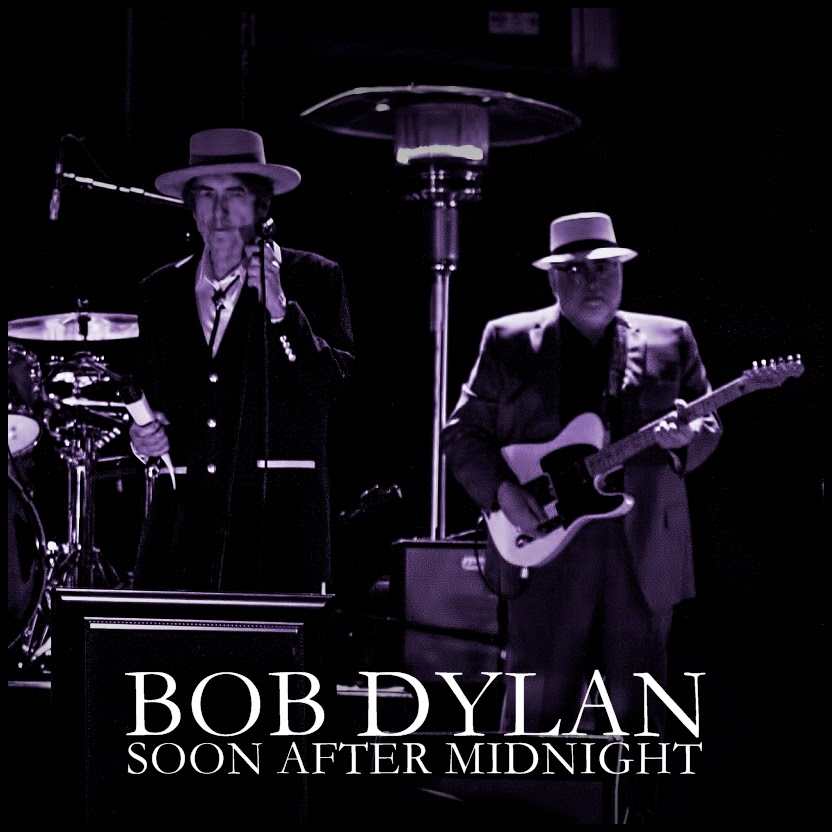
Soon After Midnight (2012) – Bob Dylan

Soon After Midnight is track 2 on Bob Dylan’s 2012 album Tempest and the third track to appear here from the album after his previous entry Pay in Blood. Like much of Dylan’s 21st-century output, he produced the album himself using the pseudonym Jack Frost. I have always loved the murder – ballad Soon After Midnight as I do the whole first half of his 35th studio album. The album was recorded at Jackson Browne’s Groove Masters Studios in Santa Monica, California and peaked at number 3 on the Billboard 200.

Soon After Midnight drifts between love and violence, set against the backdrop of a gritty, shadowy underworld. Dylan creates an atmosphere of subtle menace, especially when he sings lines like, “Two-timing Slim, who’s ever heard of him? / I’ll drag his corpse through the mud.” This vivid image injects a sly hint of violence into the song’s otherwise tender tone, blurring the line between sweetness and threat—a hallmark of noir. In the noir style, innocence often hides danger, much like an anti-hero who embodies both romantic allure and peril. For a more detailed and nuanced exploration, check out David Weir’s insightful analysis. Weir, a philosophy tutor and former English teacher, offers a compelling breakdown of the song’s themes and layers.

Like the Rolling Stone article I would also place Soon After Midnight in my “The 25 Best Bob Dylan Songs of the 21st Century“. Between 2012 and 2021, Dylan played the song live over 470 times.

[Verse 1]
I’m searching for phrases to sing your praises
I need to tell someone
It’s soon after midnight
And my day has just begun

[Verse 2]
A gal named Honey took my money
She was passing by
It’s soon after midnight
And the moon is in my eye

[Verse 3]
My heart is cheerful, it’s never fearful
I’ve been down on the killing floors
I’m in no great hurry, I’m not afraid of your fury
I’ve faced stronger walls than yours

[Verse 4]
Charlotte’s a harlot, dresses in scarlet
Mary dresses in green
It’s soon after midnight
And I’ve got a date with the fairy queen

[Verse 5]
They chirp and they chatter, what does it matter?
They’re lying there dying in their blood
Two-timing Slim, who’s ever heard of him?
I’ll drag his corpse through the mud

[Verse 6]
It’s now or never, more than ever
When I met you I didn’t think you would do
It’s soon after midnight
And I don’t want nobody but you

The following was extracted from the first Wikipedia reference below:

The title is a reference to “fairy time” in William Shakespeare’s play A Midsummer Night’s Dream. Also the line “I’ve got a date with the fairy queen” is referred to in the same play where the character Bottom has an encounter with Titania, the fairy queen, shortly after midnight.

In their book Bob Dylan All the Songs: The Story Behind Every Track, authors Philippe Margotin and Jean-Michel Guesdon note that the song’s intro owes a debt to A New Shade of Blue by The Bobby Fuller Four and discuss how Dylan’s vocal is “sweet and gentle”, taking on a “new patina that makes it less aggressive” than on other recent songs. They also praise the “excellent” playing of the band, “especially Donnie Herron’s steel guitar solo, doubled by a six-string guitar”.

References:
1. Soon After Midnight – Wikipedia
2. Tempest (Bob Dylan album) – Wikpedia
3. Soon After Midnight – Bob Dylan Song Analysis

Tagged with: , , , , , , , ,
Posted in Music

Songbird (Fleetwood Mac song) 1997- Eva Cassidy

Songbird is the third Eva Cassidy song to appear here after her previous entry Over the Rainbow. Her version of the Christine McVie-penned track from Fleetwood Mac’s Rumours was added to her posthumous albums. It was released on her first solo studio album Eva By Heart in 1997 one year after her death and then released again as the title track of a compilation album (see image above) in 1998. The compilation album was certified Platinum in 2008 for shipments in excess of one million copies.

I always considered Eva Cassidy’s voice one of the most angelic and purest I have heard in contemporary modern music yet she tragically passed away without finding commercial success in her lifetime. She died of melanoma in 1996 at the age of 33 and was virtually unknown outside of her native Washington D.C. Fortunately we are blessed to have many live and studio recordings of her songs.

[Verse 1]
For you, there’ll be no crying
For you, the sun will be shining
‘Cause I feel that when I’m with you
It’s alright
I know it’s right

[Chorus]
And the songbirds keep singing like they know the score
And I love you, I love you, I love you
Like never before

[Verse 2]
To you, I would give the world
To you, I’d never be cold
‘Cause I feel that when I’m with you
It’s alright
I know it’s right

[Chorus]
And the songbirds keep singing like they know the score
And I love you, I love you, I love you
Like never before
Like never before
Like never before

The following information was extracted from the second reference below:

The original song appeared on Fleetwood Mac‘s 1977 album Rumours and was released as the B-side of the single Dreams. It is one of four songs written solely by the English musician and singer-songwriter Christine McVie on the album. She was the keyboardist and one of the vocalists and songwriters of the band.

McVie wrote Songbird in half an hour around midnight, but didn’t have anyone around to record it. To ensure she did not forget the chord structure and melody, McVie remained awake the entire night. The next day, McVie played the song and producer Ken Caillat loved the track and suggested she record it alone in a concert style approach. 

McVie frequently sang the song at the end of Fleetwood Mac concerts. Her former husband, John McVie, recalled that “When Christine played “Songbird”, grown men would weep.”

References:
1. Songbird (Eva Cassidy album) – Wikipedia
2. Songbird (Fleetwood Mac song) – Wikipedia

Tagged with: , , ,
Posted in Music

Song to the Siren (1970) – Tim Buckley

In 2019, around the early days of my Music Library Project I wrote an article about a scarcely known Australian movie called Candy starring Heath ledger and Abbie Cornish. Tim Buckley’s Song to the Siren features prominently in it; once at the beginning of the movie with Paula Arundell’s stunning version (seen at the end of this post with scenes from the movie) and Tim Buckley’s original at the end. In that article I mentioned Tim Buckley’s version briefly, but it didn’t do him justice. It felt like a duty to devote an entire piece to his rendition – so here we are today.

Saying this movie and song linger deep within my psyche would be an understatement. Song to the Siren ranks among the greatest ballads I’ve ever heard. I don’t know how to listen to this song without tears welling-up. Before diving into more details about the song and its creators, I invite you to first read these beautifully crafted words by Tim Buckley and Larry Beckett:

Long afloat on shipless oceans
I did all my best to smile
’til your singing eyes and fingers
Drew me loving to your isle

And you sang:
“Sail to me
Sail to me
Let me enfold you
Here I am
Here I am
Waiting to hold you”

Did I dream you dreamed about me?
Were you hare when I was fox?
Now my foolish boat is leaning
Broken lovelorn on your rocks

For you sing:
“Touch me not
Touch me not
Come back tomorrow
O my heart
O my heart
Shies from the sorrow”

I am puzzled as the oyster
I am troubled as the tide:
Should I stand amid your breakers?
Should I lie with death, my bride?

Hear me sing:
“Swim to me
Swim to me
Let me enfold you
Here I am
Here I am
Waiting to hold you”

Song to the Siren was released in 1970, on Tim’s album ‘Starsailor’. In tune with the “sailor” theme of the album, revolving around voyages, the song is heavily based on the mythical figure of Sirens, as seen in Homer´s “The Odyssey“. It beggars belief that Tim Buckley known for pioneering new sounds like he did in Lorca, tragically passed away without finding commercial success in his lifetime.

The following was extracted from the Wikipedia reference below:
Pat Boone was the first to release a recording of the song when it was featured on his 1969 album Departure, predating Buckley’s album. The song has become perhaps Buckley’s most famous due to a number of artists covering the song after his death in 1975.

Song to the Siren was written in 1967, but Buckley was dissatisfied with early attempts at recording it. It would finally appear on his album Starsailor three years later. In 1968, Buckley first performed the song solo in its original folk song style as a guest star on the series finale of The Monkees as seen below.

Lyricist Larry Beckett recalled to Uncut of Tim Buckley:
I only saw him actually compose to my lyrics once, and it was ‘Song To The Siren.’ He looked at that page, which had only taken me a few minutes to write, days before, and started playing and singing the song as if it was already written. He made some minor adjustments and it was complete. We were astonished.

Buckley and Beckett regarded this song as their greatest collaboration, with Beckett later stating “It’s a perfect match of melody and lyrics. There was some kind of uncanny connection between us.”

References:
1. A Little Known Australian Movie called ‘Candy’ and Tim Buckley’s ‘Song to the Siren’ – Observation Blogger
2. Song to the Siren – Wikipedia
3. Tim Buckley – Wikipedia

Tagged with: , , , ,
Posted in Music

The Abduction of 5 Female Israelis on Oct 7, 2023

Warning: Graphic Footage.

So lest we forget the events which took place on Oct 7, 2023 in conjunction with my article Prof Conf on Sexual Violence Aspects of October 7th, 2023 in Israel, I point you to this video below of 5 female Israelis, namely Liri Albag, Karina Ariev, Agam Berger, Daniela Gilboa and Naama Levy held hostage at the Nahal Oz base on 9.00am of that barbaric day. The video states they have been held hostage for more than 8 months.

Further it is stated: ‘the translated footage taken from Hamas body cameras, and obtained from the IDF, was edited and censored to remove the most disturbing moments but it still contains graphic footage‘.

This video as alarming as it is, should be seen by responsible adults to inculcate the true horror of what was besieged on the Israeli people. I would recommend its widest dissemination possible so that people are informed of what occurred.

Tagged with: , , , ,
Posted in News

Song For Guy (1978) – Elton John

As I was writing this song one Sunday, I imagined myself floating into space and looking down at my own body. I was imagining myself dying. Morbidly obsessed with these thoughts, I wrote this song about death. The next day I was told that Guy [Burchett], our 17-year-old messenger boy, had been tragically killed on his motorcycle the day before. Guy died on the day I wrote this song.

— Elton John, from the sleeve notes of the 7-inch single

I think the photo of Elton above is about my favourite of him. That could quite easily adorn my living room alongside my son’s Rocky IV poster. Song For Guy is the ending track to Elton’s A Single Man album. It is an instrumental piece and as stated above was written on the day Guy Burchett, the messenger boy for Elton, was killed in an accident. It’s one of the only Elton John songs solely credited to Elton as most of his songs were written with lyricist Bernie Taupin. In a 2013 interview with Rolling Stone, Elton John said:

I made it (A Single Man) without Taupin. Bernie and I never split up. But we were doing a lot of drugs and drinking heavily, and he was beginning to write with other people, which made me a little jealous, but I decided I’d write with some other people. We never discussed it, we just let it go, and it hurt. It hurt him and it hurt me, but we both had the resilience and the intelligence to know that if we didn’t let each other write with other people, it would be the end of our relationship.

My favorite track from A Single Man is “Song for Guy” – it was different, it was an instrumental, it was just me doing everything. It meant so much to me, that track. It was a huge record in England and everywhere else in the world, but it was my first single that didn’t make the Top 100 in the U.S. That was the reason I got bloody-minded and left MCA Records. I wanted­ to have an instrumental on the charts. They said, “You can’t.” So I said, “F/&k you, I’m joining Geffen.” In retrospect, that was a big mistake.

According to Wikipedia:
The song opens with a solo piano, which is then accompanied by a looped Roland CR-78 drum machine,with occasional shaker and wind chimes alternating; other keyboards are often layered in shortly after, with a bass guitar mainly accompanying this. It is instrumental until the end, in which the words “Life isn’t everything” are repeated….

The song was one of his most successful singles in the UK, peaking at No. 4 in January 1979, and remaining on the chart for ten weeks. It marked his return to the Top Ten for the first time since 1976’s Don’t Go Breaking My Heart, which reached No. 1 on the same chart. The single was not released in the US until March 1979 where it barely made the charts, peaking at No. 110.

[Chorus]
Life isn’t everything
Isn’t everything
Isn’t everything

Life, life, life, life
Life, life, life, life, life, life

References:
1. Song For Guy – Elton John

Tagged with: , ,
Posted in Music

Follow Blog via Email

Enter your email address to follow this blog and receive notifications of new posts by email.

Join 780 other subscribers

← Back

Thank you for your response. ✨