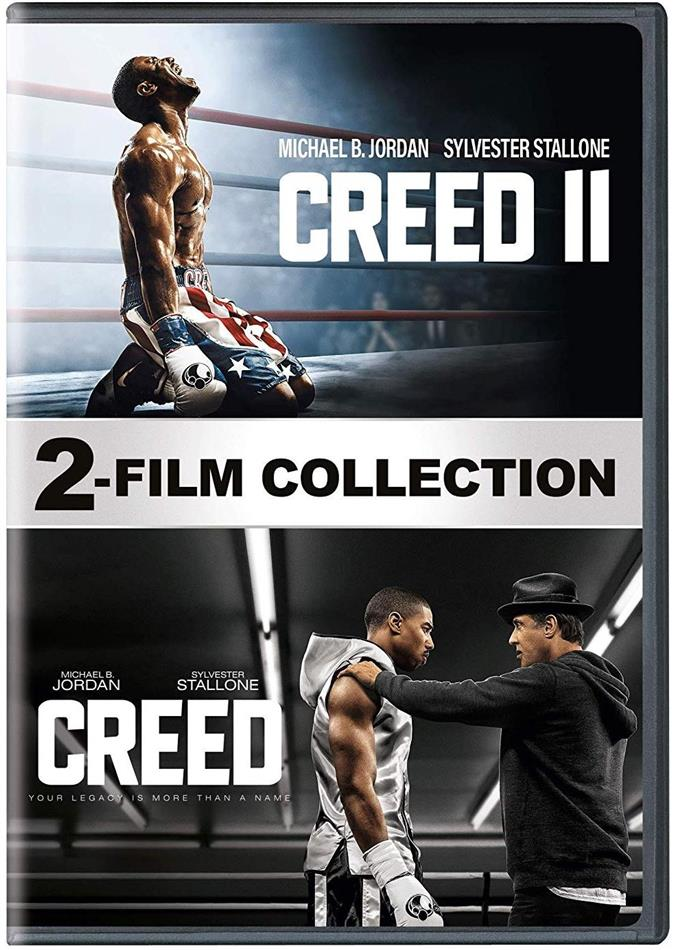
Creed (2015) / Creed II (2018) – Ryan Coogler / Steven Caple Jr. (Friday’s Finest)

For the first time we have a double header at ‘Friday’s Finest‘ in Creed and Creed II. I have made it no secret that my affection for the early ‘Rocky’ films runs deep; referencing them in various articles ranging from the music of Christina Perri to Van Damme’s ‘Kickboxer‘.

My 14 year boy recently came back from a school excursion to a book and movie fair and presented me a Rocky IV poster which I recently put up on my living room wall. He’s crafty my son; since he didn’t want to lug it around all day so he paid a girl from his class (as you do) $5.000 pesos to do the carrying for him. I didn’t know if I should praise or rebuke him upon learning that, instead I did neither.

I always felt the Rocky franchise took a nose dive after Rocky II. The scripts, the stories and acting got incrementally worse culminating in the bombs Rocky V and Rocky Balboa. Some may think I’m being too harsh on the latter, anyhows…So when a hybrid franchise was released in 2015 called Creed I was less than roused with the prospect of seeing my beloved ‘original’ Rocky further decimated akin to what Disney did to Star Wars in their abysmal rebooted ‘woke’ trilogy. Despite learning that Creed had glowing reviews from critics and audiences alike, I was still reluctant to entertain the idea of seeing it in the event it would shatter the Rocky ‘lore’ as Kathleen Turner did to the Lucas’ Star Wars one.

Fast forward, perhaps two years ago I was zapping through my cable channels with nothing better to do when I put a tentative finger on the ‘play’ button midway through a ‘Creed‘ viewing. Call me cynical, but I was just hanging-out to see something f&/king ‘woke’, hand-me-down or blatantly inferior than the original movies so I had an excuse to change the channel and save myself the torture of viewing yet another failed reboot. But low and behold after viewing a few scenes my distrust and pessimism turned to one of pleasant relief and surprise. What I was seeing was very solid and nuanced acting, a mature and tight script, an invigorated plot that felt respectful to its source (the Rocky ‘lore’), but also refreshingly new – its own beast as it were.

IMDB Storyline:
Adonis Johnson is the son of the famous boxing champion Apollo Creed, who died in a boxing match in Rocky IV (1985). Adonis wasn’t born until after his father’s death and wants to follow his fathers footsteps in boxing. He seeks a mentor who is the former heavyweight boxing champion and former friend of Apollo Creed, the retired Rocky Balboa. Rocky eventually agrees to mentor Adonis. With Rocky’s help they hope to get a title job to face even deadlier opponents than his father. But whether he is a true fighter remains to be seen.

I ended up watching Creed in its entirety as well as its sequel, and on subsequent viewings I became even more engaged and impressed. Apart from the aforementioned praises, what I found quite remarkable in this new embarkation were 3 standout aspects:

  • The sheer authenticity and credibility of Stallone’s acting in his reprised role. Although young Michael B. Jordan has the title role and does a sterling job in Creed, the film really belongs to Sylvester Stallone. Sly joins an exclusive club of players like Bing Crosby, Paul Newman, and Al Pacino who got two Oscar nominations for playing the same role.
    I don’t think I have seen better performances from him (in any movie) since his original Rocky I portrayal than in Creed I and II (perhaps more so the sequel).
    Beware: Spoiler alert!
    At the end of this post I have presented an emotional scene when Rocky learns he has cancer. The acting there-in is a good sample of just where Stallone goes with this. Also consider the following:
    Just as the film was entering pre-production, Sylvester Stallone’s oldest son Sage Stallone who appeared in Rocky IV died of a heart attack (36 years old). Stallone has admitted that the loss almost sent him into a full breakdown, but Ryan Coogler was eventually able to convince him to use the film as a dedication to Sage, focusing specifically on the father-son relationships that appear in it. Although initially resistant, Stallone said at the Golden Globes that Creed helped him cope with Sage’s death.
  • The acting and chemistry between Adonis Johnson (Creed) and his mystical and multifaceted girlfriend Bianca played by Michael B. Jordan and Tessa Thompson respectively is fascinating. I mean, we as the audience are invested in and rooting for this couple from the get-go and onwards as their relationship evolves. It’s definitely not Hollywood ‘romance’ by numbers formulaic.
  • The other element I admired so much about Creed I and II were the fight scenes. The choreography, realism and attention to detail made you feel you were witnessing the explosive action from inside the ring. They well surpassed any other fights I have seen in Rocky or any other boxing film for that matter. And that list is as long as my arm.

History has a strange way of repeating itself. Almost 50 years ago, Rocky Balboa became a household name and turned an unwanted actor into one of the greatest success stories in Hollywood. The fact that Rocky (1976) won three Academy Awards including Best Picture is of little importance compared to the real life struggle behind the making of that film. For Sylvester Stallone, it was a rags to riches story that mirrored his real life struggles to make a decent and honest living. Cut from the same cloth maybe, but Creed I and II are much more than just the seventh and eight installments in the Rocky film franchise. As a no- holds-barred sports drama, this is every bit an exceptional crowd pleaser with a lot of heart, plenty of amusing jabs to the ribs, and an unexpected but emotional haymaker to the gut. And a lot more. Quality.

Tagged with: , , , , , ,
Posted in Movies and TV

Sin Poderte Hablar (1979) – Willie Colón

Most of the Salsa that has appeared here so far is from a genre of salsa romántica known colloquially as Salsa Rosa (Salsa Rose) which garnered popularity in the late 80’s. It is a softer and more delicate Salsa raising emotions of romance and sex; with hits from the likes of Puerto Rican legends Eddie Santiago and Jerry Rivera. Critics of salsa romántica called it a “commercialized, watered-down” form of Latin pop in which formulaic, sentimental love ballads were simply put to an Afro-Cuban beat—leaving no room for classic salsa’s brilliant musical improvisation, or for classic salsa lyrics that tell stories of daily life or provide social and political commentary.

Today’s Salsa is from one of the pioneers of Salsa music and a best-selling artist in the genre – Willie Colón. On his website, Colón claims to hold the “all time record for sales in the Salsa genre, [having] created 40 productions that have sold more than thirty million records worldwide.” Today’s featured track Sin Poderte Hablar (I can’t talk to you) is from his 1979 record – ‘Solo’ which fittingly is one of Colón’s solo albums featuring a mix of traditional and modern Salsa styles, with Colón’s distinctive trombone playing and vocals taking center stage. Solo has been praised for its energetic and soulful performances, making it a standout in Colón’s discography.

What I enjoy and admire most listening to Sin Poderte Hablar is how it blends classic salsa (by its rich rhythmic foundation) and Western pop sensibilities reminiscent of the kitsch ’60’s city sounds of Petula Clark’s Downtown, a ‘Breakfast at Tiffanys’ Sally’s Tomato or Burt Bacharach. The slight crossover feel or ‘fusion’ between traditional and modern (salsa romántica at least lyrically), and latino and western music enabled it to gain mainstream attention amongst American and Latin audiences at the same time. When hearing Sin Poderte Hablar you really do feel like you are the forefront of salsa’s evolution. Colón was a true innovator.

An English translation of the lyrics follow:

[Verse x 2]
I know I shouldn’t say
What my emotion dictates
I feel like you like me (Ah la la la)
And I don’t know why
Jealousy is killing me
I want to be close to you
And my love is waiting for you
I want to make you happy
Oh, oh, oh
I would like to tell you so many things
When you’re looking at me
But I already know that life is like that
When time goes by
And I can’t talk to you

(And I can’t talk to you, and I can’t talk to you)
Stay seated where you are
Until the end, as if nothing
By your side your control
You will be able to notice our looks
You drive me crazy
I can’t control myself anymore
I would give my whole life
To be able to kiss you
But I can only look at you, babe
And I can’t talk to you

(And I can’t talk to you) What bad luck I have
If I could talk to you
I’d tell you what I feel
You’d be my lover
But I can only look at you, babe
And I can’t talk to you
In a room full of people
A heart was dying
Knowing that never ever
Will I be able to achieve what I expected
(And I can’t talk to you)

References:
1. Willie Colón – Wikipedia

Tagged with: , ,
Posted in Music

Sing (Your Love) 2004 – Hillsong (Ft. Reuben Morgan)

Sing (Your Love) comes from one of my favourite Australian albums – For All You’ve Done. This evangelical Christian album peaked at No1 on the mainstream music charts in Australia. Soon after I was baptised by the Mornington Baptist Church in 2003 I couldn’t hear enough of this album. I would now consider myself more of an agnostic-judeo christian who holds dear ‘The Logos‘ (the divine animated force which pervades the Universe and the ‘Word’ made into flesh), archetypes, meta-heroes and spiritual truths of Biblical scripture. I remain very fond of Christian music as most of my long time readers could attest.

For All You’ve Done is the thirteenth album in the live praise and worship series of contemporary worship music by Hillsong Church. It was recorded in the Spring of 2004 at The Sydney Entertainment Centre with a 500-voice choir and a house packed with worshippers as seen below. Some have called it the golden era of Hillsong (the early 2000’s) with so many outstanding songs. Hillsong is one of the largest evangelical Christian churches in the world. What began as a small pentecostal church in a suburb of Sydney now holds services on all six habitable continents, with 30 locations and more than 80 affiliated campuses.

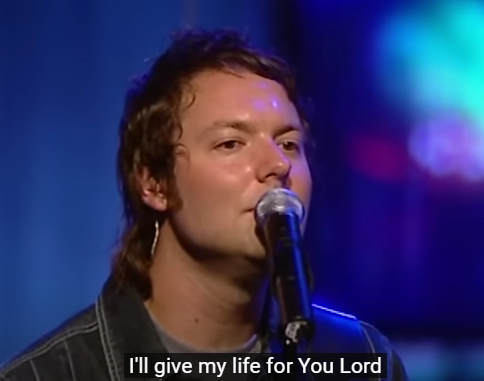
The performer of Sing (Your Love) is Reuben Morgan (image above) who I had the good fortune to meet for dinner at my local church in South-east of Melbourne and present the lyrics during his show. He has featured here previously with the effervescent – Mighty To Save. Born 9 August 1975, Reuben Timothy Morgan is an Australian worship pastor at Hillsong Church and one of several worship leaders and songwriters in Hillsong Worship group.

It used to be darkness
Without You
I lived my life in blindness
But now I’m found


And I’ll sing
Sing I love You so
And I’ll sing
Because the world can’t take away
Your love

Found me in weakness
Broken
You came to me in kindness
And now I live

I’ll give my life for You Lord
For all You’ve done
I’ll give my life for You Lord
For all You’ve done

Tagged with: , , ,
Posted in Music

My Happiness (1958) – Connie Francis

This article about Connie Francis’ enchanting version of My Happiness contains extracts from the two Wikipedia references at the end of this post:

Connie Francis – whose favourite song at the age of eight had been the Jon and Sondra Steele version of My Happiness – remade the song in a November 6, 1958 session at the Radio Recorders studio in Hollywood, California. The song almost became Francis’s first number one hit in the first months of 1959, but was kept at number two by another remake of a standard: the Platters‘ version of Smoke Gets in Your Eyes.

My Happiness was initially made famous in the mid-20th century. An unpublished version of the melody with different lyrics was written by Borney Bergantine in 1933. Bergantine was orchestra leader of “The Happiness Boys“, a Kansas City band of the 1930s.  My Happiness was played by “The Happiness Boys” wherever they performed. It was several years before the song itself, which Bergantine wrote about 1931, was recorded on an independent label.

Connie Francis (born Concetta Rosa Maria Franconero; December 12, 1937) is an American pop singer, actress, and top-charting female vocalist of the late 1950s and early 1960s. She is estimated to have sold more than 100 million records worldwide. She was the first woman in history to reach No. 1 on the Billboard Hot 100, just one of her other 53 career hits.
Francis was born to an Italian-American family in Newark, New Jersey. In her autobiography Who’s Sorry Now? published in 1984, Francis recalls that she was encouraged by her father to appear regularly at talent contests, pageants, and other neighbourhood festivities from the age of four as a singer and accordion player. During rehearsals for her appearance on Arthur Godfrey’s Talent Scouts in December 1950, Francis was advised by Godfrey to change her stage name to Connie Francis for easier pronunciation. Godfrey also told her to drop the accordion—advice she gladly followed, as she had begun to hate the large and heavy instrument.

After some early commercial failures and being informed by MGM Records that her contract would not be renewed, Francis considered a career in medicine. At what was to have been her final recording session for MGM on October 2, 1957, with Joe Lipman and his orchestra, she recorded a cover version of the 1923 song Who’s Sorry Now?. Francis has said that she recorded it at the insistence of her father, who was convinced it stood a chance of becoming a hit because it was a song adults already knew and that teenagers would dance to if it had a contemporary arrangement. Francis did not like the song and argued about it with her father heatedly. The single seemed to go unnoticed like all previous releases, just as Francis had predicted, but on January 1, 1958, it debuted on Dick Clark’s American Bandstand.

Francis watched the show and wrote in her diary:

I heard Dick Clark mention something about a new girl singer. So, what else is new? Another girl singer. There are ninety-five million females in the country, and I’ll bet ninety-five percent of them sing. “There’s no doubt about it”, predicted Mr. Clark. “She’s is headed straight for the number one spot”. I began feeling sorry for myself and a bit envious, too. Good luck to her, I thought. And then Mr. Clark just happened to play a song called “Who’s sorry now” – MY “Who’s Sorry Now”! Well, the feeling was cosmic – just cosmic! Right there in my living-room, it became Mardi Gras-time and New Year’s Eve at the turn of the century!

And on February 15 of that same year, Francis performed it on the first episode of The Saturday Night Beechnut Show, also hosted by Clark. By mid-year, over a million copies had been sold, and Francis was suddenly launched into worldwide stardom.

Evening shadows make me blue
When each weary day is through
How I long to be with you
My happiness

Every day I reminisce
Dreaming of your tender kiss
Always thinking how I miss
My happiness

A million years it seems
Have gone by since we shared our dreams
But I’ll hold you again
There’ll be no blue memories then

Whether skies are gray or blue
Any place on earth will do
Just as long as I’m with you
My happiness

Whether skies are gray or blue
Any place on earth will do
Just as long as I’m with you
My happiness

References:
1. My Happiness (1948 song) – Wikipedia
2. Connie Francis – Wikipedia

Tagged with: ,
Posted in Music

I Guess That’s Why They Call It the Blues (1983) – Elton John

But more than ever, I simply love you
More than I love life itself

When Elton sings the above lines in today’s featured track, it sends chills down my spine. It’s simply devine and one of my favourite romantic songs from his vast catalogue. Bernie Taupin’s lyrical prowess certainly does shine in this as well. What a fabulous pairing those two were in contemporary music. I liked when John performed the song live playing it as part of a medley with his hit Blue Eyes.

I Guess That’s Why They Call It the Blues was released as the first single from John’s 17th studio album Too Low for Zero. It was the first single since 1975’s Someone Saved My Life Tonight to feature the classic lineup of the Elton John Band. I know Elton deservedly gets a lot of plaudits for his 70’s output but as far as my musical apreciación goes, I consider his 1983 Too Low For Zero record one of his greatest musical feats perhaps since Goodbye Yellow Brick Road.

The following are extracts from the Wikipedia reference below:
The song became one of John’s biggest hits of the 1980s in the United States, holding at No. 2 for four weeks on the Adult Contemporary chart, and reaching No. 4 on the Billboard Hot 100. It also reached the top ten in five countries, including the UK, peaking at number five.
The song received largely favourable reviews, with Bill Janovitz of AllMusic declaring the song “likely to stand the test of time as a standard.” He added: “As with the lyric, the music has more than a tinge of nostalgia, with a ’50s-like R&B shuffle, a jazzy piano theme, and an inspired, Toots Thielemans-like harmonica solo from Stevie Wonder‘.

[Verse 1]
Don’t wish it away
Don’t look at it like it’s forever
Between you and me, I could honestly say
That things can only get better

[Pre-Chorus]
And while I’m away
Dust out the demons inside
And it won’t be long before you and me run
To the place in our hearts where we hide

[Chorus]
And I guess that’s why they call it the blues
Time on my hands could be time spent with you
Laughin’ like children, livin’ like lovers
Rollin’ like thunder under the covers
And I guess that’s why they call it the blues

[Verse 2]
Just stare into space
Picture my face in your hands
Live for each second without hesitation
And never forget I’m your man

[Pre-Chorus]
Wait on me, girl
Cry in the night if it helps
But more than ever, I simply love you
More than I love life itself

[Chorus]

[Harmonica solo: Stevie Wonder]

The original music video (below), one of twenty directed for John by Australian Russell Mulcahy, tells the story of two 1950s-era young lovers who are separated when the man is forced to leave for National Service, depicting the trials and tribulations he experiences there, and then are finally reunited at the end of the song.

References:
1. I Guess That’s Why They Call It the Blues – Wikipedia

Tagged with: ,
Posted in Music

Envidia (2024) – Nathy Peluso

the queen of self-assured experimentation

Nathy Peluso is a genuine Latin Pop polymath in the modern Latina music world; a sort of Jekyll and Hyde figure battling between herself and her bold pop star persona. She opens her latest album Grasa (Eng: Fat) with a lyric suggesting her ambition is killing her, but the scope and execution of the whole album suggest an artist who is very much alive.
In the past she has drawn a lot of heat due to her snarling bombast, teeth gritted swagger and obscene lyrics on her infamous, but humorous rap songs such as Nasty Girl and Sana Sana which by the way are some of the most exemplary acts of ‘raw’ music delivery I have ever seen. But then there’s all these other sides to her music:

The Argentine-Spanish singer-songwriter is no stranger to this blog, having been featured four times already. As a devoted admirer of her work, I can assure you there will be much more of her music to come. She has been nominated for 3 Latin Grammy awards which will be presented in 46 days (Best Rap/Hip Hop Song with Aprender a Amar, Best Alternative Song with El Día Que Perdí Mi Juventud and Best Long Form Music Video – Grasa).

The lyrics of today’s featured track Envidiosa (Eng: Envious) are abundantly transparent, potent and prophetic regarding her own personal philosophy and conception of ‘success’; reinforcing her dedication to artistry over fame. It dives deep into themes of envy and empowerment as an unapologetic, boundary-pushing artist. It suggests a confrontation with those who criticize or undermine her success, possibly driven by insecurity or resentment. It requires discipline and hard work to stay true to her craft and herself which is analogous to her message in the rap song from the same album Grasa Aprender a Amar‘ (Learn to Love) where she snarls – ‘Nothing good came from rushing, nothing is achieved without discipline.’

The performance of Envidiosa I have presented below is from the Tiny Desk concert where she delivered a versed ode to Latin American and Spanish rhythms. Peluso is a master of the unexpected, and from first note to last the concert represented what an artist can bring when they highlight the full breadth of their vision. Her soulful and wildly skilled vocal performance in Envidiosa is one for the ages. I hope you enjoy it.

An English translation of Envidiosa follows:

Where are you going?
I saw the way you looked at me
with such arrogance
If I tell you the truth
If I were you
I’d think about it
I like to hear him criticise me when I go out driving
my glamorous Mercedes on a Sunday
Be careful about what you’re going to say
They say being envious is usually contagious
I’d like to see how they would act
How curious I’d be to see
What they would do in my place
I’d bet they wouldn’t last
that it would take them very little time to bail out

They say God gives
one chance
to everyone who asks
But without working
and looking at everyone else
nobody achieves it


What do I care about people?
I was born to win
Let them speak to the winds
My mother gave me a talent
knowing how to ignore them
Let them say whatever they want
I was born to win
My mother gave me a talent (Mum, tell them)
Knowing how to ignore them

References:
1. Nathy Peluso: Grasa review – don’t overlook this Latin pop polymath – The Guardian

Tagged with: , ,
Posted in Music

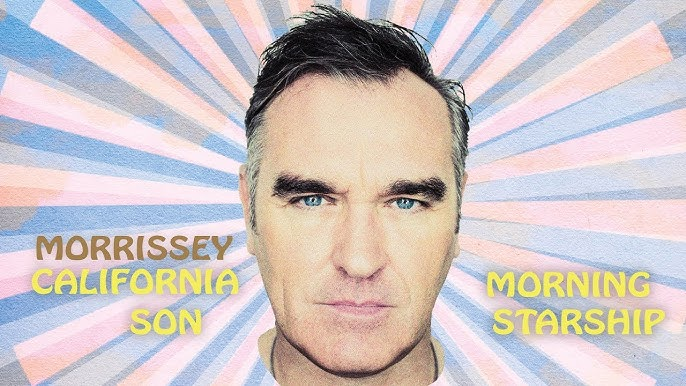
Morning Starship (2019) – Morrissey

Morning Starship is a recent Morrissey track and entails a Sci-Fi love story which blends cosmic themes and introspective lyricism. Like a lot of his tunes including with The Smiths it can take a little time for my ears to adjust (or an acquired taste if you will), but once I’m in its tractor beam there’s no getting out. His voice rings true to me. Originally recorded by Jobriath, a relatively obscure artist from the 1970s, Morrissey revived this tune for his 2019 album California Son bringing his unique vocal style and persona to Jobriath’s dreamlike narrative. Morning Starship narrates a fantastical space voyage, but it’s also imbued with themes of alienation and longing, making it a fitting choice for Morrissey. You can find a short video at the end of this post about how Morrissey’s rendition was conceived and produced.

Today’s featured track is the fourth song so far to be presented here from Morrissey (Post Smiths) after his previous entry Rebels Without Applause (2022). His cover of Morning Starship was part of his California Son project, where he paid homage to the artists and songs that had influenced him. The album featured covers of ’60s and ’70s tracks from artists like Joni Mitchell, Bob Dylan, Roy Orbison, Carly Simon & Burt Bacharach. Recorded in 2018, his twelfth solo studio album was produced by Joe Chiccarelli, a frequent collaborator of Morrissey having produced his previous two studio albums. From 2 May to 11 May 2019, Morrissey performed a seven-day Broadway residency at the Lunt-Fontanne Theater. The setlist included material from California Son.

The video featured below is a live recording of Morning Starship in Toronto, 2019.

[Verse 1]
Who was that sneaking up the stairs?
Taking a hairpin from her hair
A vision of the locks fallin’ down
Crossed my mind and played with the sound
Of tapping, gentle tapping at my morning starship

[Verse 2]
The crystal glint of the turning glass
The creaking sound of the rusted latch
As she slowly opened the door
The darkness told me nothing more
Except to say that she was near my morning starship

[Verse 3]
She stood within the threshold silently
A ray of moonlight caught her eyes
Without a word she said, “Could I come in?”
And I said, “Well, you’re in already
You might as well sit down and stay awhile”

[Verse 4]
She made her way across the room
Her golden hair eclipsed the moon
The perfect head framed in silver blue
Found its way to mine and then I knew
The girl, the girl, the girl had flown my morning starship

[Verse 5]
She’s gone away, what can I do?
She took the key, she’s got the clue
Mysteries unfold with the latch
What she knows I’ll never forget
The girl, the girl, the girl has flown my morning starship
Yeah, she travels with me now in my morning starship
Oh, boom, boom, boom, morning starship

References:
1. California Son – Wikipedia

Tagged with: , ,
Posted in Music

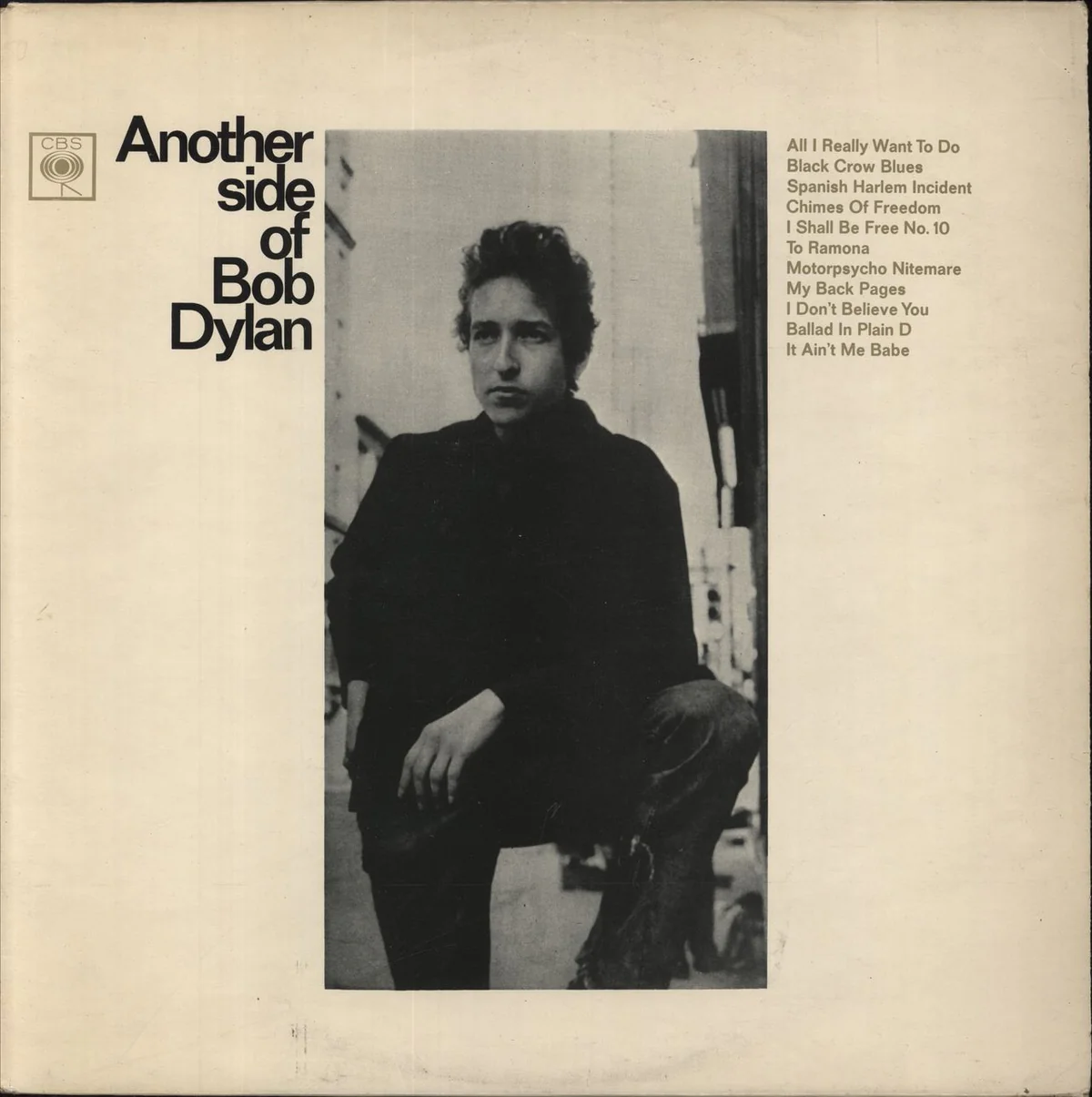
My Back Pages (1964) – Bob Dylan

The song’s title evokes both the “back pages” of a book – its end – and the “pages” of life that lay behind a person as they proceed onward from start to finish. As Dylan turns the page on his past life and considers his end, is he moving through a book (and a lifetime) from left to right? Or wait, is he moving the pages themselves from right to left?

After being called the spokesman of a generation and becoming the poster boy for the folk movement in the early 60’s with albums like The Freewheelin’ Bob Dylan and The Times They Are A-Changin’ Dylan began to be disillusioned with the idealistic narrowness that surrounded him.
I have a quote which appears at the end of each of my posts:
The more I live, the more I learn. The more I learn, the more I realize, the less I know.” attributed to the late French composer and singer Michel Legrand.
Both politics and the idea of progress are less clear than they once seemed; innocence and experience intermingle. To me this song above any other by Dylan is his pledge to stay young, individualistic, relevant, (and be born) and not be led astray by his own egocentricity and by those in the establishment whom purport to have the ‘truth’. Its lyrics—in particular the refrain “Ah, but I was so much older then/I’m younger than that now“—could be interpreted as a rejection of Dylan’s earlier personal and political idealism. Dylan criticizes himself for having been certain that he knew everything and apologizes for his previous political preaching, noting that he has become his own enemy “in the instant that I preach‘.

“There aren’t any finger pointing songs [here] … Now a lot of people are doing finger pointing songs. You know, pointing to all the things that are wrong. Me, I don’t want to write for people anymore. You know, be a spokesman.”
– As Dylan stated to Nat Hentoff at the time that “My Back Pages” and the other songs on Another Side of Bob Dylan were written.

He takes a Socrates approach in his internal dialogue here of being the ‘eternal enquirer’ and incorporating systematic doubt and questioning to elicit a clearer expression of the truth. To that extent I believe My Back Pages is one of the most fundamental songs in Dylan’s artistic growth. In my own youth, as I began exploring Dylan’s music, this song stood out more than any other, having the greatest impact on my psyche and personal development.

My Back Pages is a song included on his 1964 album Another Side of Bob Dylan and one of (if perhaps) the last songs he wrote for the album being the last committed to tape for the album. He initially recorded it under the working title ‘Ancient Memories‘. The song was partly based on the traditional folk song Young But Growing which Dylan would later perform a few years later with the Band and released on the Basement Tapes Complete Volume 11. This Dylan rendition remains one of my favourite songs from all of the Basement Tapes.

Although Dylan wrote the song in 1964, he did not perform it live until 1988. I have included below the original studio release a beautiful live version containing a crude Spanish translation. ‘My Back Pages‘ has been covered by artists as diverse as the Byrds, the Ramones, the Nice, Steve Earle, Eric Johnson, and the Hollies. The Byrds’ version, was issued as a single in 1967 and proved to be the band’s last Top 40 hit in the U.S.

[Verse 1]
Crimson flames tied through my ears
Rolling high and mighty traps
Pounced with fire on flaming roads
Using ideas as my maps
“We’ll meet on edges, soon,” said I
Proud ‘neath heated brow

[Refrain]
Ah, but I was so much older then
I’m younger than that now

[Verse 2]
Half-wracked prejudice leaped forth
“Rip down all hate,” I screamed
Lies that life is black and white
Spoke from my skull, I dreamed
Romantic facts of musketeers
Foundationed deep, somehow

[Refrain]
Ah, but I was so much older then
I’m younger than that now

[Verse 3]
Girls’ faces formed the forward path
From phony jealousy
To memorizing politics
Of ancient history
Flung down by corpse evangelists
Unthought of, though, somehow

[Refrain]
Ah, but I was so much older then
I’m younger than that now

[Verse 4]
A self-ordained professor’s tongue
Too serious to fool
Spouted out that liberty
Is just equality in school
“Equality,” I spoke the word
As if a wedding vow

[Refrain]
Ah, but I was so much older then
I’m younger than that now

[Verse 5]
In a soldier’s stance, I aimed my hand
At the mongrel dogs who teach
Fearing not I’d become my enemy
In the instant that I preach
My existence led by confusion boats
Mutiny from stern to bow

[Refrain]
Ah, but I was so much older then
I’m younger than that now

[Verse 6]
Yes, my guard stood hard when abstract threats
Too noble to neglect
Deceived me into thinking
I had something to protect
Good and bad, I define these terms
Quite clear, no doubt, somehow

[Refrain]
Ah, but I was so much older then
I’m younger than that now

References:
1. My Back Pages – Bob Dylan

Tagged with: , ,
Posted in Music

Runaround Sue (1961) – Dion

It really is about a girl who was kind of loose in the neighbourhood. The word Sue just fit for the song – you couldn’t use Roberta, or Alice, or whatever. I’m not going to mention who it’s really about, but between you and I, the girl called in to an interview show I was on about 20 years ago. She had married a rabbi, had six kids and sounded wonderful! And I thought how good it was to hear from her, you know. Chalk it up to being young and foolish, a lot of young people are, but she turned out wonderful.
– Dion

I was reunited with the legendary ‘doo-wop’ Runaround Sue when I read fellow blogger, Nancy’s article attached at the end of this post. Here are some extracts from her first – hand observations growing up on Belmont Avenue in the Bronx, NY just a smidgen after Dion DiMucci’s time there:

We’d usually go to Sal’s Pizzeria on Belmont Avenue where the pizza was like nothing you ever tasted. It was thin and soft and light as a feather. On just about every street corner, doo-wop groups would gather and sing song after song and everyone would dance. Man, those were some of the best times.

One singer from Belmont Avenue (sadly a little before my time) was an Italian kid named Dion DiMucci. Dion’s dad Pasquale was a vaudeville entertainer and Dion would accompany him whenever he went on tour. Dion developed a love of country music, particularly Hank Williams, but he was really into the blues, doo-wop and rock and roll. His singing was honed on the street corners and local clubs of the Bronx…

This success won a place for Dion and the Belmonts on the ill-fated “The Winter Dance Party” tour with Buddy Holly, Ritchie Valens, the Big Bopper and other performers. On February 3, 1959, after a concert stop in Clear Lake, Iowa, Buddy Holly and the others decided to charter a flight to the next venue rather than travel on the tour bus. Dion was invited to accompany the group but declined when he heard the price of the ticket was $36. That was the same amount of money his parents spent for one month’s rent for their apartment and Dion couldn’t justify the expense.

In 1961 Dion released “Runaround Sue” which stormed up the U.S. charts, reaching No. 1 and No. 11 in the UK, where he also toured. “Runaround Sue” sold over a million copies and was followed by “The Wanderer” another big hit for Dion. 

In 2024, at the age of 84, Dion is still recording new songs and his career is going strong.
(For more information on the latest from Dion I point you to two articles from another blogger friend, Christian: The Wanderer Continues to March On and Dion Releases Incredible Blues Album)

Without further ado, I present Nancy’s dazzling article on the origins of Runaround Sue. Much like the pizza from her hometown, this article is so rich, you can practically taste the music in the air where she grew up.

Tagged with: , , ,
Posted in Music

Follow Blog via Email

Enter your email address to follow this blog and receive notifications of new posts by email.

Join 780 other subscribers

← Back

Thank you for your response. ✨