So lest we forget the events which took place on Oct 7, 2023 in conjunction with my article Prof Conf on Sexual Violence Aspects of October 7th, 2023 in Israel, I point you to this video below of 5 female Israelis, namely Liri Albag, Karina Ariev, Agam Berger, Daniela Gilboa and Naama Levy held hostage at the Nahal Oz base on 9.00am of that barbaric day. The video states they have been held hostage for more than 8 months.
Further it is stated: ‘the translated footage taken from Hamas body cameras, and obtained from the IDF, was edited and censored to remove the most disturbing moments but it still contains graphic footage‘.
This video as alarming as it is, should be seen by responsible adults to inculcate the true horror of what was besieged on the Israeli people. I would recommend its widest dissemination possible so that people are informed of what occurred.
As I was writing this song one Sunday, I imagined myself floating into space and looking down at my own body. I was imagining myself dying. Morbidly obsessed with these thoughts, I wrote this song about death. The next day I was told that Guy [Burchett], our 17-year-old messenger boy, had been tragically killed on his motorcycle the day before. Guy died on the day I wrote this song.
— Elton John, from the sleeve notes of the 7-inch single
I think the photo of Elton above is about my favourite of him. That could quite easily adorn my living room alongside my son’s Rocky IV poster. Song For Guy is the ending track to Elton’s A Single Man album. It is an instrumental piece and as stated above was written on the day Guy Burchett, the messenger boy for Elton, was killed in an accident. It’s one of the only Elton John songs solely credited to Elton as most of his songs were written with lyricist Bernie Taupin. In a 2013 interview with Rolling Stone, Elton John said:
I made it (A Single Man) without Taupin. Bernie and I never split up. But we were doing a lot of drugs and drinking heavily, and he was beginning to write with other people, which made me a little jealous, but I decided I’d write with some other people. We never discussed it, we just let it go, and it hurt. It hurt him and it hurt me, but we both had the resilience and the intelligence to know that if we didn’t let each other write with other people, it would be the end of our relationship.
My favorite track from A Single Man is “Song for Guy” – it was different, it was an instrumental, it was just me doing everything. It meant so much to me, that track. It was a huge record in England and everywhere else in the world, but it was my first single that didn’t make the Top 100 in the U.S. That was the reason I got bloody-minded and left MCA Records. I wanted to have an instrumental on the charts. They said, “You can’t.” So I said, “F/&k you, I’m joining Geffen.” In retrospect, that was a big mistake.
According to Wikipedia: The song opens with a solo piano, which is then accompanied by a looped Roland CR-78 drum machine,with occasional shaker and wind chimes alternating; other keyboards are often layered in shortly after, with a bass guitar mainly accompanying this. It is instrumental until the end, in which the words “Life isn’t everything” are repeated….
The song was one of his most successful singles in the UK, peaking at No. 4 in January 1979, and remaining on the chart for ten weeks. It marked his return to the Top Ten for the first time since 1976’s Don’t Go Breaking My Heart, which reached No. 1 on the same chart. The single was not released in the US until March 1979 where it barely made the charts, peaking at No. 110.
[Chorus] Life isn’t everything Isn’t everything Isn’t everything
Life, life, life, life Life, life, life, life, life, life
On October 21, I wrote about Dylan’s Experimental Documentary ‘Eat the Document’ which features clips of his monumental ‘Play it Loud!’ second set songs as heard in the Bob Dylan Live 1966 Bootleg. I always considered it the beacon of rock defining moments in my music collection. Today’s featured track, One Too Many Mornings, is a song Dylan performs with such raw energy that it leaves the English audience (conmensúrate with the rest of his set) almost bewildered as can be seen by the emotional reactions of the exiting audience in his documentary. Their ears, accustomed to the gentler sounds of folk, are jolted by these unexpected renditions and audacious presentation. They perhaps came expecting to see Joan Baez’s anointed “prince of folk” deliver his usual sound—only to encounter something wholly different, challenging their perception of live music in a way rarely, if ever, experienced before or since.
One Too Many Mornings was originally recorded on Dylan’s 1964 record The Times They Are A-Changin’. Dylan skillfully captures the nostalgic ache of a post-breakup landscape filled with loneliness—a separation where the reasons aren’t exactly clear, but where love has quietly faded away. Across three verses, he returns to the refrain, “just one too many mornings, and a thousand miles behind,” creating an image of a solitary man, recently parted, drifting through life as he tries to piece together the aftermath. The relationship hasn’t ended in a dramatic fallout, but rather in a soft, muted departure.
[Verse 1] Down the street, the dogs are barkin’ and the day is a-gettin’ dark As the night comes in a-falling, the dogs will lose their bark And the silent night will shatter from the sounds inside my mind
[Refrain] Yes, I’m one too many mornings and a thousand miles behind
[Verse 2] From the crossroads of my doorstep, my eyes start to fade And I turn my head back to the room where my love and I have laid And I gaze back to the street, the sidewalk, and the sign
[Refrain] And I’m one too many mornings and a thousand miles behind
[Verse 3] It’s a restless hungry feeling that don’t mean no one no good When everything I’m a-sayin’, you can say it just as good You’re right from your side, I am right from mine
[Refrain] We’re both just one too many mornings and a thousand miles behind
Johnny Cash covered the song numerous times, including on the album Johnny & June in 1978. He also recorded two versions of the song with Dylan while Dylan was recording Nashville Skyline. One can be seen here. Cash would cover it again as a duet with Waylon Jennings for the album Heroes in 1986. I find it fascinating that Johnny Cash couldn’t shake this song from his mind for years, feeling compelled to record it repeatedly — despite all the incredible works in Dylan’s repertoire. If this song resonated so deeply with Cash, then it’s definitely something worth appreciating in my book.
After an intense ’70s rock classic, it’s time to ease off the gas pedal with some beautiful progressive bluegrass. This takes us to 1992 and Slide Rule, the sixth solo album by Jerry Douglas who is widely recognized as a Dobro maestro. I first came across his name in connection with John Hiatt’s May 2021 album Leftover Feelings he recorded with the Jerry Douglas Band, which I reviewed here at the time. The gorgeous I Don’t Believe You’ve Met My Baby, written by Autry Inman, features Alison Krauss on vocals.
A fan wrote about Alison Krauss’ vocals in Alison Krauss & Jerry Douglas collaboration of James Taylor’s Carolina In My Mind that ‘When God gets tired of listening to the angels and their harps, I am convinced he puts on Alison Krauss. Because she is that good‘. This is how I felt when I first heard today’s featured track I Don’t Believe You’ve Met My Baby. I thought I’d woken up and gone to heaven. And don’t get me started when she sings the title of the song at 1:36. Such musical bliss. Angelic voice.
It carries the mystique of Celtic music, layered with bluegrass instrumentation reminiscent of the Fureys’ Belfast Mill. Yet here, there’s a heartfelt, homespun quality, brought to life by Krauss’ warm, honeyed vocals. The romance is dripping from these spectacular penned verses that it makes you feel like falling in love all over again. As Christian wrote in his page I Don’t Believe You’ve Met My Baby is a song written by Autry Inman and first recorded by The Louvin Brothers in 1955. It has been covered by many artists including the legendary Dolly Parton with her country-pop version here.
Last night, my dear, the rain was falling I went to bed so sad and blue Then, I had a dream of you
I dreamed I was strolling in the evening Underneath the harvest moon I was thinking about you
Then we met out in the moonlight The stars were shining in your eyes But another was there too
“I don’t believe you’ve met my baby” You looked at her, you looked at me I wondered who you were talking to
I shook the hand of your stranger But I was shaking more inside I was still wondering who
Your arm was resting on her shoulder You smiled at her, she smiled at you Her eyes were filled with victory
She said, “My brother wants to marry” And then my heart was filled with ease I knew that you would marry me
It’s clear I Don’t Believe You’ve Met My Baby has become a classic of country and bluegrass music. The song’s enduring popularity is a testament to Autry Inman’s skill as a songwriter. Following every tangent this song inspires feels too cumbersome for me. So I’ll leave it as a taster as Christian did for me in his blog.
Haydée Mercedes “La Negra” Sosa was an Argentine singer who was popular throughout Latin America and many countries outside the region. With her roots in Argentine folk music, Sosa became one of the preeminent exponents of El nuevo cancionero (The new songbook). She gave voice to songs written by many Latin American songwriters. Her music made people hail her as the “voice of the voiceless ones”. She was often called “the conscience of Latin America”…..
After the military junta of Jorge Videla came to power in 1976, the atmosphere in Argentina grew increasingly oppressive. Sosa faced death threats against both her and her family, but refused for many years to leave the country. At a concert in La Plata in 1979, Sosa was searched and arrested on stage, along with all those attending the concert. Their release came about through international intervention. Banned in her own country, she moved to Paris and then to Madrid.
Sosa returned to Argentina from her exile in Europe in 1982, several months before the military regime collapsed as a result of the Falklands War.
Sólo Le Pido a Dios (Eng. I only ask God) was originally written and performed by Argentine singer-songwriter León Gieco in 1978. It was later performed by Argentine singer Mercedes Sosa (1935-2009) and it is her version (see below) which is the most recognised internationally. Sólo Le Pido a Dios is an anthem that was widely used throughout the social and political hardships and civil wars across Latin America, particularly in Argentina and Chile. It was written around the time that a military conflict between these two countries seemed all but inevitable. It belongs to the ‘Nueva Canción’ musical movement. It has also been performed by other groups and singer songwriters such as Bruce Springsteen (see his version below), Pete Seeger, U2, and Shakira.
A crude English translation of the lyrics follows:
I only ask of God that the pain is not indifferent to me, That the dried death does not encounter me Empty and alone without having done enough.
I only ask of God that injustice is not indifferent to me, That they do not strike my other cheek after a claw has scratched my fortune.
I only ask of God that war is not indifferent to me, It’s a large monster and it treads heavily on all the poor innocence of the people.
It’s a large monster and it treads heavily on all the poor innocence of the people.
I only ask of God that treason is not indifferent to me, If a traitor can do more than a few, that this number of people will not forget easily.
I only ask of God that the future is not indifferent to me, Hopeless are those who must march on to live a different culture.
The following was extracted from the Wikipedia reference below: Gieco wrote it in 1978, at his parents’ house in his childhood village of Cañada Rosquín, a small town in the north of Santa Fe Province, Argentina. He wrote it in the presence of his father, who told him that the song would be “world-renowned”, which it eventually was. Gieco composed this song by first trying out melodies with his harmonica and guitar, then writing personal feelings which gradually turned into phrases inspired by the harsh social events of the time, such as the military dictatorship of his country, Mercedes Sosa’s exile, and the threat of war between Chile and Argentina at the time.
Gieco doubted whether or not to include the song on his 1978 album IV LP, believing it was “boring and monotonous“, but finally did, following the advice of Charly García. Thereafter, Gieco sang it as his closing song and has played it in all his national and international tours.
As I was waiting in line at my local supermarket I opened up a women’s fashion magazine called Marie Claire. They say they are ‘a magazine for modern women that is interested in fashion, beauty, lifestyle and is committed to gender issues, women’s realities and the environment‘. I hadn’t flipped through a women’s fashion magazine in years, but as I skimmed the pages, the models in the photos stopped me in my tracks. I know beauty is in the eye of the beholder and all, but I couldn’t help feeling baffled and a bit disheartened. Where were the gorgeous, vibrant models I remembered from past beauty magazines or comparable to how Julia Roberts is presented in this scene from Pretty Woman? Women who looked like women—who even smiled. Instead, the pages I saw were filled with ultra-serious faces, dressed in metrosexual or androgynous styles. Is this really the ideal that young women aspire to now? Or is it what they’re being encouraged to become?
Not including his music in the super group The Traveling Wilburys, Oh, Pretty Woman is the 4th song to be presented here so far from Roy Orbison after his previous entry She’s a Mystery to Me. Today’s featured track might possibly be one of the world’s most recognisable and iconic pop tunes thanks in large part to the aforementioned movie by almost the same title – Pretty Woman. The movie gave the song immediate traction and launched it to a wider audience than otherwise; extending Roy’s appeal and legacy. Although I realise it was huge already being the 1964 mega hit, reaching No. 1 both in the US and the UK and spending three weeks there on the Billboard chart. Orbison posthumously won the 1991 Grammy Award for Best Male Pop Vocal Performance for the recording of Oh, Pretty Woman from his 1988 HBO television special Roy Orbison and Friends: A Black and White Night. In 1999, the song was inducted into the Grammy Hall of Fame and was named one of the Rock and Roll Hall of Fame’s 500 Songs that Shaped Rock and Roll.
The title was inspired by Orbison’s wife, Claudette, interrupting a conversation to announce that she was going out. When Orbison asked if she had enough cash, his co-writer Bill Dees interjected, “A pretty woman never needs any money.”
[Verse 1] Pretty woman, walking down the street Pretty woman, the kind I’d like to meet Pretty woman, I don’t believe you You’re not the truth No one could look as good as you Mercy!
[Verse 2] Pretty woman, won’t you pardon me? Pretty woman, I couldn’t help but see Pretty woman, that you look lovely as can be Are you lonely just like me? Rwar-r-r-r-r-r-r-r-r-r
[Middle-Eight] Pretty woman, stop a while Pretty woman, talk a while Pretty woman, give your smile to me Pretty woman, yeah, yeah, yeah Pretty woman, look my way Pretty woman, say you’ll stay with me ‘Cause I need you, I’ll treat you right Come with me, baby, be mine tonight
[Verse 3] Pretty woman, don’t walk on by Pretty woman, don’t make me cry Pretty woman, don’t walk away, hey
[Outro] Okay If that’s the way it must be, okay I guess I’ll go on home, it’s late There’ll be tomorrow night, but wait What do I see? Is she walking back to me? Yeah, she’s walking back to me Oh, oh, pretty woman
For more background on this song and Roy Orbison’s tragic family history I point you to fellow blogger Max’s 2023 article of Oh, Pretty Woman. Below is an extract:
It started on June 6, 1966, when Claudette and Roy were riding motorcycles. Claudette hit the door of a pickup truck and was killed instantly. Orbison poured himself into his work after that. He wrote and toured but was out of step with the mid to late-sixties music. It was in Birmingham, England in September 1968 when catastrophe struck once more. News reached Orbison that a fire had broken out at his home in Tennessee and that his two eldest sons had tragically passed away. His younger child went to live with his grandparents.
And do you feel me beside you in your bed There beside you where I used to lay
I’ve long looked forward to writing about today’s featured track, Sometimes Love Just Ain’t Enough. I’ve always admired the songwriting in this rock ballad, especially the lyrics, and I was eager to find out the story behind it. I first listened to this song a lot in 1993 on a road trip from Canberra to Brisbane where my friend Michael and I stopped at various camping sites along the way. My Mum always got so emotional when she played the Anne Murray song – You Needed Me and I too with Sometimes Love Just Ain’t Enough which made me so melancholy, glassy-eyed and weak at the knees, but in a good way – like it was healing for the soul.
I was always curious to know why that love wasn’t enough to sustain their relationship. There are some cues when Henley starts singing, ‘Yes, I may have hurt you‘. One things for certain, it’s much easier to fall in love than to stay in love. This song nails that perfectly. I really like Henley’s voice in this. I always preferred his music post Eagles in the 80’s which culminated in two of the finest rock ballads I have had the privilege to hear – The End of the Innocence and The Heart of the Matter.
Most of the following has been extracted from the Wikipedia reference below: Smyth is the lead singer for the band Scandal and she had previously provided backing vocals on Henley’s solo albums Building the Perfect Beast (1984) and The End of the Innocence (1989). Sometimes Love Just Ain’t Enough was written by Smyth and Glen Burtnik and was released as a single in August 1992. It reached No. 1 in Canada, where it was the most successful single of 1992, and peaked at No. 2 on the US Billboard. It remained in the top 40 for 20 weeks. The song was nominated for a Grammy Award in the category Best Pop Vocal.
‘She played him a demo version of the song that she recorded with Burtnik, and Henley loved it. Glen explained: “There was the harmony part I was singing with Patty which he learned and sang beautifully when he agreed to appear on her record. I feel forever indebted to Don Henley for his appearing on her recording. He was at the peak of his solo years and I believe it drew attention to the song which might not have happened otherwise.”
– Glen Burtnik – Songfacts
Now, I don’t wanna lose you But I don’t wanna use you Just to have somebody by my side And I don’t wanna hate you I don’t wanna take you But I don’t wanna be the one to cry
And that don’t really matter To anyone anymore But like a fool I keep losing my place And I keep seeing you walk through that door
But there’s a danger in loving somebody too much And it’s sad when you know it’s your heart you can’t trust There’s a reason why people don’t stay where they are Baby, sometimes love just ain’t enough
Now, I could never change you I don’t want to blame you Baby, you don’t have to take the fall Yes, I may have hurt you But I did not desert you Maybe I just want to have it all
It makes a sound like thunder It makes me feel like rain And like a fool who will never see the truth I keep thinking something’s gonna change
[Chorus]
[Bridge] And there’s no way home When it’s late at night and you’re all alone Are there things that you wanted to say And do you feel me beside you in your bed There beside you where I used to lay
I’ve always liked the understated album cover of Darkness on the Edge of Town. It seems like Bruce wasn’t interested in the usual pomp and spectacle—no elaborate “Bringing It All Back Home” setup here. Instead, it’s as if he just threw on a black jacket after rolling out of bed, got the shot, and moved on. That straightforward approach leads us neatly into today’s featured track, ‘Something in the Night.’ This is Bruce stripped down to the essentials, with raw ache in his voice, laying it all out there. What’s not to love?
Something in the Night is the third song from his fourth studio album Darkness on the Edge of Town presented here after his previous entry Racing in the Street. Both songs are about cars and yearning for something better, something that’s just out of reach. I love the simplicity of his lines about being born with nothing and being better off that way; otherwise, they’ll just take it all away. The exuberance of the idealism and escapism of youth was captured in his magnum opus – Born to Run, but there is something darker here on display. It may be that credulity portrayed earlier ends up coming to a screaming halt (And left us running burned and blind) as the responsibility of adulthood and reality of life comes a calling.
Also consider that musically, Darkness on the Edge of Town strips the Wall of Sound production of its predecessor, Born to Run for a rawer sound emphasizing the band as a whole and where Bruce was going with more sombre and personal undertakings such as The River and Nebraska. Here in ‘Something..’ the lyrics are stripped back and like the rest of the album focus on ill-fortuned characters including his father in Factory.
Well, I’m riding down Kingsley Figuring I’ll get a drink Well, I turn the radio up loud So I don’t have to think
And I take her to the floor Looking for a moment when the world seems right And I tear into the guts, mmm Of something in the night
Well, you’re born with nothing And better off that way Soon as you’ve got something, they send Someone to try and take it away
Well, you can ride this road till dawn Without another human being in sight Yeah, just kids wasted on, mmm Something in the night
[Bridge] Well, nothing is forgotten or forgiven When it’s your last time around And I got stuff running ’round my head That I just can’t live down
Well, we found the things we loved They were crushed and dying in the dirt We tried to pick up the pieces And get away without getting hurt
But they caught us at the state line Burned our cars in one last fight And left us running burned and blind, mmm Chasing something in the night
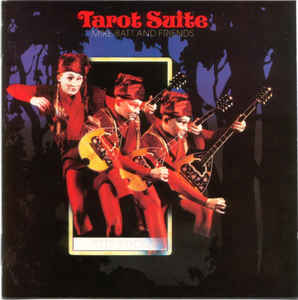
The album Tarot Suite (shown inset), which features Lady of the Dawn was a treasured presence in our household as I grew up on Sydney’s western outskirts. Despite the limited information available about it—even lacking a dedicated Wikipedia page—Tarot Suite, recorded with the London Symphony Orchestra, holds an enigmatic quality that mirrors its tarot-inspired theme. The album presents a distinctive fusion of rock, pop, and classical music, inspired by the 22 major arcana tarot cards. Its concept is elaborated in the inner sleeve, which includes notes on the tarot, card motifs, track titles, credits, and lyrics.
The fourth track on the album, Lady of the Dawn, is a love ballad deeply rooted in ancient, mystical, and archetypal feminine folklore. The song explores the allure and magnetism of the feminine figure and the way the masculine is drawn to her purity, symbolizing new beginnings and rebirth. The Lady emerges as a symbolic embodiment of the protagonist’s aspirations and deepest desires, even if these desires remain just out of reach. Musically, Lady of the Dawn veers away from the medieval rock stylings of preceding tracks like Journey of a Fool and Imbecile, which also incorporate mythology and tarot themes.
Lady of the dawn You opened up my sleeping eyes I never knew That I was born
But I like you for your body And I love you ’cause you’re wise I am your prisoner You’re my lady of the dawn
You are the dealer In this strange uncertain game Take my cards and deal again I can feel my life is changing
Woman, now you’ve taught my how to learn Teach me to earn The love you give to me The love you give to me
Lady of the dawn You opened up my sleeping eyes I never knew That I was born
But I like you for your body And I love you ’cause you’re wise I am your prisoner You’re my lady of the dawn
I was waiting In the darkness of the night Only now, I see the light Softly shining in the side lids
Woman, if you really hold the key Turn it for me And help me understand Help me understand
Lady of the dawn You opened up my sleeping eyes I never knew That I was born
But I like you for your body And I love you ’cause you’re wise I am your prisoner And you’re my lady of the dawn
Despite Tarot Suite‘s relative obscurity it has retained somewhat of a dedicated fan base based on feedback from my previous posts especially my first from the album – Imbecile. And lets not forget how Journey of a Fool was used as the theme for the Sydney radio station Triple M; from its first broadcast in 1980 until the 1990s. Over the course of May 2010, this theme tune was re-recorded by Slash, former Guns N’ Roses guitarist, as a new theme to mark the 30th anniversary of Triple M in Sydney. A fellow blogger friend Christian at Christian’s Music Musingsstated in my June post of Run Like the Wind which is the finale of the album that Lady of the Dawn ‘received a good amount of air time on my go-to German pop radio station at the time‘.
Michael Philip Batt, LVO (born 6 February 1949) is an English singer-songwriter, musician, arranger, record producer, director, and conductor. Having attained international recognition as a solo artist, his notable contributions in the UK include creating The Wombles pop act, writing hits including the chart-topping Bright Eyes (also ft. Art Garfunkle), and introducing Katie Melua to the music scene.
He has conducted many orchestras, including the London Symphony, Royal Philharmonic, London Philharmonic, Sydney Symphony and Stuttgart Philharmonic in both classical and pop recordings and performances.
I too got swept-up in the Robbie Williams’ craze when he was churning out hit out of hit both sides of the turn of the century. On this still fresh yet sunny Saturday morning in Bogotá, I gave today’s featured track a spin for the first time in a long time and found myself singing it with full gusto. I had forgotten how much I liked it and still do. This is the third Williams song to appear here after his other stand-outs Angels and Feel. Given the amount of airplay these tunes have received in the Western World, even here in Colombia, it is almost certain you would be familiar with them.
Something Beautiful is a song co-written by Guy Chambers and Robbie Williams. Originally offered to Welsh singer Tom Jones (After his team passed on the song, Williams decided to keep it for himself), it was released as the third single from Williams’ fifth studio album Escapology (2002). According to Songfacts, Williams explained on his website he wasn’t in a good place when he wrote the song, describing it as being about “sitting in bed at night thinking ‘I wish I wasn’t here by myself.'” Nevertheless, the song ends on a positive note, with Williams singing in the chorus: “You won’t be lost, hurt, tired, and lonely, something beautiful will come your way.”
[Verse 1] You can’t manufacture a miracle The silence was pitiful that day And love is getting too cynical Passion’s just physical these days
[Pre-Chorus] You analyse everyone you meet But get no sign, loving kind Every night you admit defeat And cry yourself blind
[Chorus] If you can’t wake up in the morning ‘Cause your bed lies vacant at night If you’re lost, hurt, tired or lonely Can’t control it, try as you might May you find that love that won’t leave you May you find it by the end of the day You won’t be lost, hurt, tired and lonely Something beautiful will come your way
[Verse 2] The DJ said on the radio Life should be stereo each day And the past that cast the unsuitable Instead of some kind of beautiful You just couldn’t wait
[Pre-Chorus] All your friends think you’re satisfied But they can’t see your soul, no, no, no Forgot the time feeling petrified When they lived alone
The music video below, entitled Manufactured Miracles, is a parody of reality television shows such as Pop Idol, which were hugely dominant in the media at the time. It depicts people auditioning to appear in the video, with Williams’ dad Pete Conway among the judges. At the end of the video, British contestant Peter Caruna is revealed as the winner of the competition. Caruna went on to work as both a Williams and Simon Cowell look-alike, and feature in commercials for the frozen pizza brand Chicago Town.
Robbie is just one month shy younger than me born on February 13, 1974 which makes him an Aquarius. We could have been good friends..I get along very well with Water Bearers.