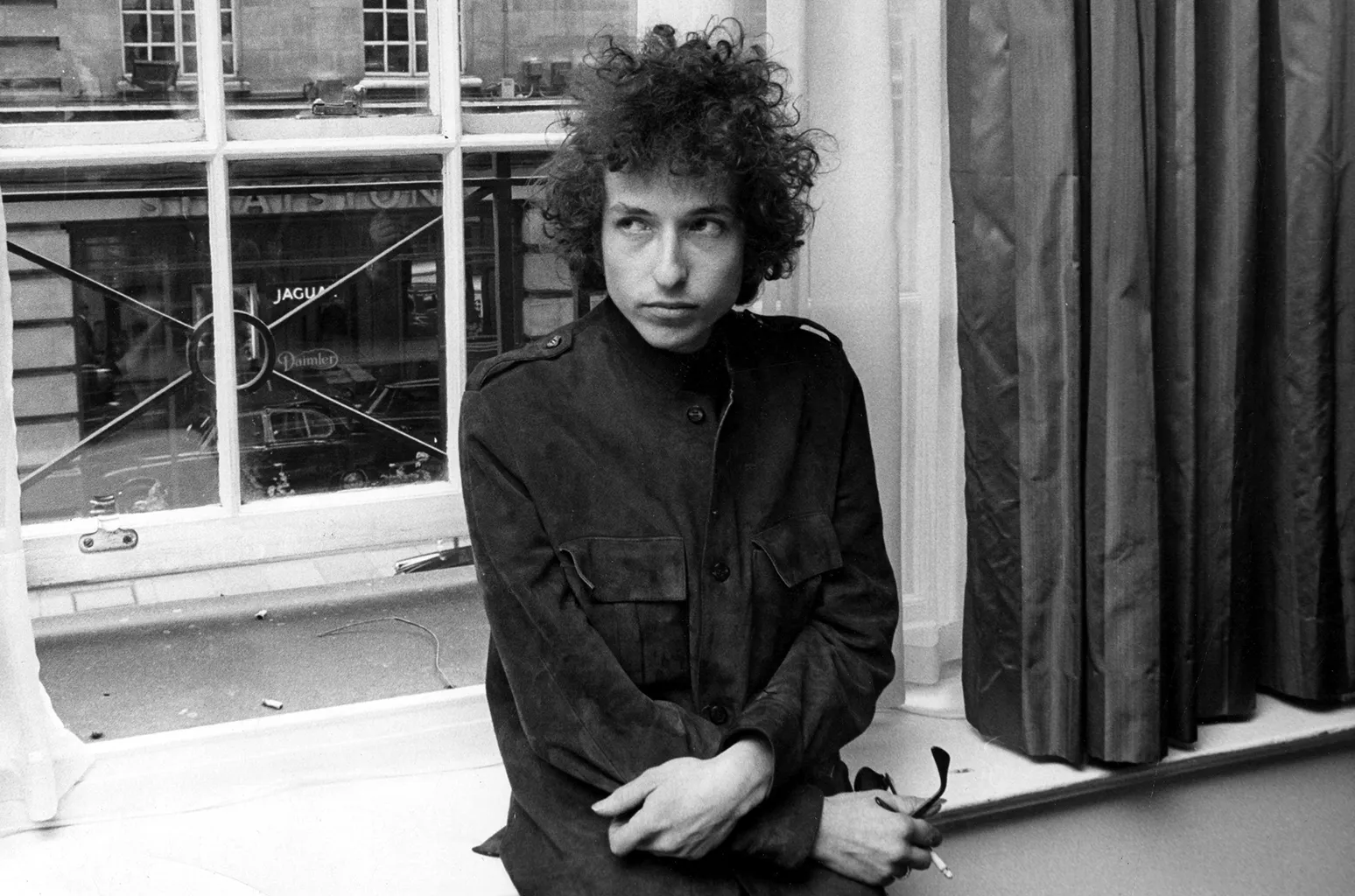
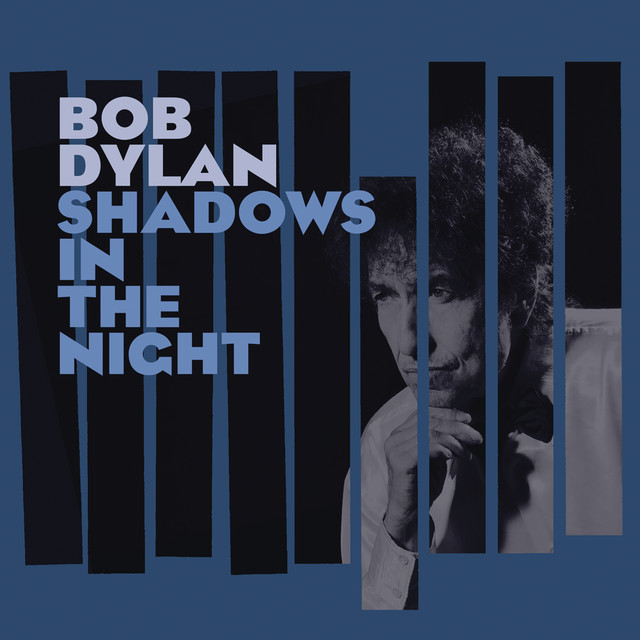
That Lucky Old Sun (2015) – Bob Dylan

’I don’t see myself as covering these songs in any way. They’ve been covered enough. Buried, as a matter a fact. What me and my band are basically doing is uncovering them. Lifting them out of the grave and bringing them into the light of day‘.

– Bob Dylan in a press release of Shadows in the Night

My expectations of Bob Dylan doing a crooner album of old Frank Sinatra songs were analogous to those coming into his unexpected making of a Christmas record. They were underwhelming and I couldn’t help but feel disappointed, at best nonchalant; since I had on both occasions anticipated a new album of original compositions. Also how could he pull that off – given his age? By reinventing beloved tunes of yesteryear and somehow still hold true to his proclivity of pushing boundaries in songwriting. Even the greats fade in their senility recalling their longing and re-heaping nostalgic tendencies.

I regret not having more faith because if there is anything I have learnt from being a Dylanholic since my early adolescence is his unblemished record of reinvention and making song-art miraculously feel anew. Upon hearing his 2015 album of Shadows in the Night like I did Christmas in the Heart, I was pleasantly surprised by how much I enjoyed them, even more so with the former and in particular today’s featured song That Lucky Old Sun. As he prefaced, ‘ (what) me and my band are basically doing is uncovering them.

To tell you how satisfying the experience was on a personal level is by recalling my Mother’s instant feedback about it. Words escape me to encapsulate it, but I’ll try with an overused phrase, that That Lucky Old Sun basically ‘knocked me for six’. It was the first time my Mother expressed a glowing acknowledgement of a Bob Dylan song, even bordering on confessing it as a slobbering mess. I’d wrote about her mocking me in my youth constantly singing Congratulations by accentuating Dylan’s nasal delivery. She had me in stitches, all the same. Now fast-forward 3 decades her unabashed recognition of this ‘one’ song and in the twilight years of Dylan’s career couldn’t have been more stunning to my senses.

Thank you for allowing me to divulge, but now onto the song itself.

Those who complain that Dylan can’t sing are treated to a masterclass in timing, phrasing, nuance and interpretation. Even the cracks in his voice leave a poignant trail.

– Irish Times

Apart from how Dylan’s voice is described above, the musicianship of That Lucky Old Sun is just sublime and transports the listener back to a time; which Dylan has the uncanny knack-for; into a piece of Americana that is rarely, if at all heard of in modern music. It is deeply spiritual; where the workers seem those with riches or inherited riches as doing nothing but “roll around heaven all day” like that lucky old sun. Like Ol’ Man River, That Lucky Old Sun‘s lyrics contrast the toil and intense hardship of the singer’s life with the obliviousness of the natural world. Dylan’s version continues to give me goosebumps and makes my eyes well-up with tears.

Thanks to the unheralded Dylan devoted blog – Untold Dylan which I have referred to here often, I heard Dylan’s first version of Lucky Old Sun recorded at a rehearsal with Tom Petty and The Heartbreakers.

As told: ‘Written in 1949 by Beasley Smith and Haven Gillespie, everyone who is anyone has recorded this track. From Jerry Lee Lewis and Ray Charles to Willie Nelson and Johnny Cash. Brian Wilson even wrote an entire song cycle around the track in 2008 with his wonderful “That Lucky Old Sun” album’.
Frank Sinatra released his competing version of the song on the Columbia label and reached the best sellers chart on October 29, 1949 and peaked at No. 16. Included on his The Best of The Columbia Years 1943–1952 album.

[Verse 1]
Up in the mornin’, out on the job
Work like the devil for my pay
But that lucky old sun has nothin’ to do
But roll ’round heaven all day

[Verse 2]
Fuss with my woman, toil for my kids
Sweat ’til I’m wrinkled and gray
While that lucky old sun has nothin’ to do
But roll ’round heaven all day

[Verse 3]
Good Lord above, can’t you see I’m pining
Tears in my eyes
Send down that cloud with a silver lining
Lift me to Paradise

Show me that river, take me across
And wash all my trouble away
Like that lucky old sun, give me nothin’ to do
But roll ’round heaven all day

[Verse 4]
Oh Lord above, can’t you know I’m pining
Tears in my eyes
Send down that cloud with a silver lining
Lift me to Paradise

Show me that river, take me across
And wash all my trouble away
Like that lucky old sun, give me nothin’ to do
But roll ’round heaven all day

References:
1. Dylan’s Lost album: track 6. Lucky old Sun – Untold Dylan
2. That Lucky Old Sun – Wikipedia

Tagged with: , , ,
Posted in Music

Flow (2024) – Gints Zilbalodis (Friday’s Finest)

Latvian theatrical release poster

Storyline:

A Latvian, French, and Belgian co-production, Flow features no dialogue and follows a cat trying to survive along with other animals in a seemingly post-apocalyptic world as the water level dramatically rises.
The world seems to be coming to an end, teeming with the vestiges of a human presence. Cat is a solitary animal, but as its home is devastated by a great flood, he finds refuge on a boat populated by various species, and will have to team up with them despite their differences. In the lonesome boat sailing through mystical overflowed landscapes, they navigate the challenges and dangers of adapting to this new world.

I watched the animated adventure film Flow with my children last weekend, and we all left the theatre feeling unexpectedly pristine and invigorated. Let me explain – after devouring a bucket of popcorn, a hot dog, and a Pepsi large enough to sink the very boat we had just seen the protagonists stranded on, we walked down the cinema stairs toward the exit. Glancing at each other with a newfound energy, we simultaneously remarked, “That was a good movie.”

And Flow is a highly unusual one at that. In some ways it feels more akin to a dream. It’s liberating from imposed narrations and expectations and perfectly embodying the “show, don’t tell” principle.
For its 85-minute runtime, it feels as though your perception has been transformed – not just as a human observer, but as if you’ve stepped into the very perspective of the animals on screen. You begin to see the world as they do, attuned to a reality entirely distinct from our own. The animals act like animals, and that gives their adventure an authenticity that, in moments of both delight and peril, makes the emotion that much more powerful. By the time the credits roll, you’re reluctant to let go of that newfound way of seeing.
It’s interesting how Flow follows last week’s ‘Friday’s Finest‘ selection of Life of Pi since both films explore animals and themes of survival and connection.

Just prior to our viewing, I watched on Academy Awards night Flow take home the gong for Best Animated Feature; the first independent film to win and the second animated film to be nominated for both the Academy Award for Best International Feature Film. Flow received critical acclaim (97% on Rotten Tomatoes and 98% audience score) and broke several Latvian box-office records, becoming the most-viewed film in Latvian theatres in history, including foreign films. So popular in fact – a statue of the cat from Flow was installed in Riga. It was initially installed outside of the Freedom Monument, and is planned to be moved to the Town Hall Square in April 2025.

Production of Flow started in 2019, and lasted five-and-a-half years with the animation done using the free and open-source software Blender. Because the budget of the film was so tight, there are no deleted scenes from the film. Every scene produced is in the final cut of the movie. Also, the team was very adamant in getting all of the “voices” to be done by real animals, so they recorded real animals for the movie. Due to the success of Flow, el director Zilbalodis said that he had been approached to create a sequel to Flow, but chose not to make one, instead focusing on a different project with dialogue.

References:
1. Flow (2024 film) – Wikipedia
2. Flow – IMDB

Tagged with: , ,
Posted in Movies and TV

Thank U (1998) – Alanis Morissette

Basically, I had never stopped in my whole life, hadn’t taken a long breath, and I took a year and a half off and basically learned how to do that. When I did stop and I was silent and I breathed… I was just left with an immense amount of gratitude, and inspiration, and love, and bliss, and that’s where the song came from, you know.

– Alanis who talked with MTV about the break between LPs and the first single.

After the massive success of her breakthrough album Jagged Little Pill (1995), Morissette was considered one of the biggest music stars in the world, and many fans anxiously awaited a follow-up album. During a trip to India, in 1997, Alanis wrote some songs, including Thank U. The lyrics document Morissette’s spiritual awakenings following her trip to India, as well as other physical and internal journeys. In Thank U (later changed to Thank You on her 2005 Greatest Hits compilation), Alanis expresses the heartfelt gratitude, inspiration, and compassion that she felt at the time she wrote it.
I have always been a great admirer of this song and is my Desert Island Alanis song choice, although her 2019 hit Reasons I Drink is close on its tail.

Thank U was from her fourth studio album, Supposed Former Infatuation Junkie (1998). The song was written by Alanis Morissette and Glen Ballard, who produced her previous record, Jagged Little Pill. Alanis’ first entry here at Observation Blogger – Hand in My Pocket was from that same album. On the Billboard Hot 100 chart, Thank U peaked at number 17 and in Canada hit No. 1 and stayed there for 3 consecutive weeks. It also peaked at No. 15 on the Australian charts – where I first heard it.
Thank U was nominated for Best Female Pop Vocal Performance at the 2000 Grammy Awards, but lost to Sarah McLachlan’s I Will Remember You. Also, while we are on Sarah’s song, I point you to Andy Bernard’s version of it here from The Office.

The music video below for Thank U stands out for its bold depiction of vulnerability and self-exploration, making a significant impact alongside the song’s introspective themes. Morissette is completely nude with her long hair shrouding her breasts and her pubic region blurred out. It was directed by French director Stéphane Sednaoui (who previously directed “Ironic” for Morissette).

While being asked why she chose to be nude in the video, Morissette said, “Actually, the idea for that video hit me in my shower – I was thinking about the song and its simplicity and its baring itself, and I just thought, ‘Wouldn’t it be great if I could just walk around New York City or grocery stores in just a symbolism of being naked everywhere I went?‘ It was filmed in Downtown Los Angeles, under a closed set.

[Verse 1]
How ’bout getting off of these antibiotics
How ’bout stopping eating when I’m full up
How ’bout them transparent dangling carrots
How ’bout that ever elusive kudo

[Chorus]
Thank you India
Thank you terror
Thank you disillusionment
Thank you frailty
Thank you consequence
Thank you, thank you silence

[Verse 2]
How ’bout me not blaming you for everything
How ’bout me enjoying the moment for once
How ’bout how good it feels to finally forgive you
How ’bout grieving it all one at a time

[Bridge]
The moment I let go of it
Was the moment I got more than I could handle
The moment I jumped off of it
Was the moment I touched down

[Verse 3]
How ’bout no longer being masochistic
How ’bout remembering your divinity
How ’bout unabashedly bawling your eyes out
How ’bout not equating death with stopping

References:
1. Thank U – Wikipedia

Tagged with: , ,
Posted in Music

Tell Me, Momma (Live 1966) – Bob Dylan & the Hawks (the Band)

“That tour was a very strange process…We’d go from town to town, from country to country and it was like a job. We set up, we played, they booed and threw things at us. Then we went to the next town, played, they booed, threw things, and we left again. I remember thinking, ‘This is a strange way to make a buck.'”

– Robbie Robertson, guitar player of The Hawks 

Tell Me Momma was played on Dylan’s 1966 world tour with the Band (then known as the Hawks). It was used as the opener for the electric set, being played a total of 15 times during the tour. The song was not recorded on a studio album and was never performed again. The ‘Live at Free Trade Hall, Manchester, UK – May 17, 1966 – Official Bootleg‘ is my favourite live concert performance and the box CD set with the inner booklet still adorns my modest library in my living room. Tell Me Momma is the fifth song presented so far from Dylan’s electric set after his previous entry One Too Many Mornings.

For the remainder of this article, I am going to forward extracts from Recliner Notes‘ exceptional article on Tell Me Momma. For any Bob Dylan fans out there I point you to his Bob Dylan series articles because he is so well-versed on all things Dylan:

Alongside all of the usual trappings of a rock and roll tour, there was also a film crew traveling alongside Dylan, capturing his every move. The pressures resulting from all of these various circumstances must have been tremendous on Dylan. The adversity of the tour manifested itself through Dylan in many ways. Here’s one example as recorded by the film crew and later released as part of 2005’s documentary No Direction Home: Bob Dylan:

What a dazzling example of Dylan’s mind at work, creating a hilarious piece of surreal poetry in real time. It’s a form of found art, but it’s Dylan who generates the work through his life as art. The various extremities of the 1966 tour were also revealed onstage. As Robertson also said to Crowe in the interview quoted above:

“You can hear the violence and the dynamics in the music.”

“Tell Me, Momma” lets us in on the musicians getting ready for the full band performance. Garth Hudson tests his organ sound. Robertson noodles a bit on the electric guitar. Then another electric guitar — that has to belong to Dylan — begins strumming and strumming and strumming before a quick count by Dylan launches a tremendous sound as if a large wave has fallen on the audience. Unlike a wave that recedes giving a momentary pause, this roar continues before balancing into a rock ‘n roll song.

Dylan begins singing and his voice is different from the acoustic set. The subtleness of his delivery is gone, mostly giving way to powerful howling which was needed to be heard over the musical barrage. He sounds like a poisonous viper at times, spitting out lines such as “Cold black water dog, make no tears.” Yet Dylan also is practically purring when he sings, “Don’t you remember makin’ baby love?”

Dylan’s vocals are entwined in the music being produced by the band, especially during the stop-stop move they pull off during the line “But I know that you know that I know that you show.” It’s a funny bit of writing, demonstrating the push-pull power imbalance of the relationship at the center of the song. The band emphasizes each “know” with “bang.” – Read the remainder of Scott Bunn’s (Recliner Notes) vivid description of the song here.

A performance of the song at Paris’ L’Olympia on 24 May 1966 featured in D. A. Pennebaker’s documentary Eat the Document. The same video of Dylan and the Hawks shown in Eat the Document was shown in Martin Scorsese’s 2005 Documentary No Direction Home.

[Verse 1]
Ol’ black Bascom, doesn’t break no mirrors
Cold black water dog, make no tears
You say you love me with what may be love
Don’t you remember making baby love?
Got your steam drill bit and you’re looking for some kid
To get it to work for you like your nine-pound hammer did
But I know that you know that I know that you show
Something is tearing up your mind

[Chorus]
Tell me, momma
Tell me, momma
Tell me, momma, what is it?
What’s wrong with you this time?

[Verse 2]
Hey, John, come and get me some candy goods
Shucks, it sure feels like it’s in the woods
Spend some time on your January trips
You got tombstone moose up and your grave-yard whips
If you’re anxious to find out when your friendship’s gonna end
Come on, baby, I’m your friend
And I know that you know that I know that you show
Something is tearing up your mind

[Verse 3]
Oh, we bone the editor, can’t get rid
But his painted sled, instead it’s a bed
Yes, I see you on your window ledge
But I can’t tell just how far away you are from the edge
And, anyway, you’re just gonna make people jump and roar
Watcha wanna go and do that for?
For I know that you know that I know that you know
Something is tearing up your mind

References:
1. Tell Me, Momma -Wikipedia
2. Tell Me, Momma – Recliner Notes

Tagged with: , , , ,
Posted in Music

Tell Me That It Isn’t True (1969) – Bob Dylan

“I hadn’t realized how much you could get out of voice till I lost it in a motorcycle accident in 1966. When it came back, I had this rich, deep sound.”
– Dylan in a 2004 interview

Tell Me That It Isn’t True is the fourth song to feature here from Bob Dylan’s 1969 record Nashville Skyline after his previous entry Lay Lady Lay. The song achieves this warm and mellow sound which reflects the relaxed and joyful approach to the record which was only 4 days in the making. Nashville Skyline is arguably the most laid back album of Dylan’s career and was a far departure from that thin, wild mercury sound attributed to Blonde on Blonde a few years prior.
He embraced a distinct country music sound influenced by his collaborations with Johnny Cash around this time. Also his raspy voice was stripped away to a soft, affected country croon. It’s also suggested this significant voice transformation may have been partly due to his cessation of smoking. Overall, the album saw Dylan building on the rustic style he experimented with on John Wesley Harding. In fact the working title for the album was John Wesley Harding Vol. 2.

Tell Me That It Isn’t True is a lovely, lilting lament from a spurned lover to another (“They say that you’re planning to put me down … they say that you’ve been seen with some other man”). It’s so simple yet graceful. Clocking in well under three minutes, the song is propelled by a lively drumbeat, shimmering with layered guitars, accented by a touch of honky-tonk piano, and elevated by Dylan’s surprisingly lighthearted and inviting vocal delivery. It’s such an underrated song in his cannon and there are hundreds out there.

The concept of recording a country album in Nashville was first discussed with Dylan in 1965 by Johnny Cash, who expressed interest in producing such an album. “I’ve got my own ideas about that Nashville sound and I’d like to try it with Bob,” Cash said in a 1965 interview. Despite the dramatic, commercial shift in direction, the fans, press and critics gave Nashville Skyline a warm reception. It reaching No. 3 in the U.S., the album also scored Dylan his fourth UK No. 1 album.

[Verse 1]
I have heard rumors all over town
They say that you’re planning to put me down
All I’d like you to do
Is tell me that it isn’t true

[Verse 2]
They say that you’ve been seen with some other man
That he’s tall, dark and handsome, and you’re holdin’ his hand
Darling, I’m a-countin’ on you
Tell me that it isn’t true

[Bridge]
To know that some other man is holdin’ you tight
It hurts me all over, it doesn’t seem right

[Verse 3]
All of these awful things that I have heard
I don’t wanna believe them, all I want is your word
So, darlin’, you better come through
Tell me that it isn’t true

[Guitar Solo]

[Verse 3]
All of these awful things that I have heard
I don’t want to believe them, all I want is your word
So, darlin’, I’m countin’ on you
Tell me that it isn’t true

References:
1. Nashville Skyline – Wikipedia

Tagged with: , ,
Posted in Music

Nessun Dorma (Turandot) 1924 – Giacomo Puccini (Ft. Luciano Pavarotti)

Nessun Dorma (Let no one Sleep) from the final act of Puccini’s opera Turandot is one of Puccini’s most renowned arias. It achieved pop status after Luciano Pavarotti’s 1972 recording of it was used as the theme song of BBC television’s coverage of the 1990 FIFA World Cup in Italy. The previous entry here from Turandot was Signore, Ascolta! (My lord, listen!) performed by Maria Callas. Puccini left Turandot unfinished at the time of his death in 1924; but it premiered in 1926 after the music was posthumously completed by Franco Alfano.

The aria is sung by Calaf, il principe ignoto (the unknown prince), who falls in love at first sight with the beautiful but cold Princess Turandot. Any man who wishes to wed Turandot must first answer her three riddles; if he fails, he will be beheaded. In the aria, Calaf expresses his triumphant assurance that he will win the princess.

On the Eve of the 1990 World Cup final in Italy, a ‘supergroup’ of three of the most beloved tenors, consisting of Italian Luciano Pavarotti and Spaniards Plácido Domingo and José Carreras began a 13 year collaboration. They performed at the ancient Baths of Caracalla in Rome watched by a global television audience of around 800 million. I was in awe of this concert and rewatched it countless times. It also appears on the best-selling classical album lists of all time.

The performance below of Nessun Dorma is from celebrated Italian tenor Pavarotti (1935–2007) who sang the aria with The Three Tenors in Los Angeles in 1994 to celebrate the 1994 World Cup. Interestingly, Pavarotti rarely sang the role of Calaf on stage. The Three Tenors went on to perform at two further World Cup Finals – 1998 in Paris, and 2002 in Yokohama.

I saw Nessun dorma recently put to magnificent use in Mission: Impossible – Rogue Nation (with the scene set within a performance of Turandot itself).

(English translation)
[CALAF]
No one sleeps! No one sleeps!
Even you, oh princess
In your cold room
Look at the stars
That tremble with love and with hope

But my mystery is locked inside me
No one will know my name!
No, no! On your mouth
I will say it when the light shines

And my kiss will dissolve
The silence that makes you mine

[PEOPLE OF PEKING]
No one will know his name
And we, alas, will have to die, to die!

[CALAF]
Disappear, night!
Fade away, stars!
Fade away, stars!
At dawn, I will win!
I will win! I will win!

References:
1. Nessun dorma – Wikipedia
2. The Three Tenors – Wikipedia

Tagged with: , , ,
Posted in Music

Downbound Train (1984) – Bruce Springsteen

I think Downbound Train is one of the most unheralded songs on Bruce’s massive – hit album Born in the USA (BITUSA), yet due to its unassuming melancholic appeal it’s one of the songs from the album I now prefer to revisit. In other words it hasn’t worn out at all to my musical senses, on the contrary, my appreciation of it has only risen over the years. Downbound Train was of course one of the 70 songs Bruce had to choose from for BITUSA. This album is so big that every song has its own Wikipage – That’s when you know you have hit the ball out of the park as a singer-songwriter ;-P

Downbound Train is considered the most depressing song on the album; ok lets have that – I consider the lyrics as some of his finest as far as building upon his blue collar image. It’s a great example of Springsteen’s lucidity as a songwriter. “Last night I heard your voice..” and ‘Now I work down at the car wash/where all it ever does is rain.’ And we are right there picturing him go through all this. The song tells the story of a man whose life is mired in decline after he gets laid off. It’s a about the harsh realities and choices of life: job and love, and the pursuit of happiness in simple things. Also, this song has an acoustic solo version that was originally part of what would later become the Nebraska album.

It’s interesting how musical tastes can change over time, since upon first hearing the record my favourite songs were perhaps Glory Days, I’m Goin‘ Down, Darlington County, Dancing in the Dark and My Hometown. Now I look forward most to hearing the live version of Born in the USA (from Live Amnesty International), I’m Going Down and today’s featured track Downbound Train. Also, I probably enjoy hearing more songs from his maligned 1992 double release albums Human Touch / Lucky Town (especially the latter) than I do just about any other record release by him. Observers in fact analysed Downbound Train with naturalistic imagery lacing the song throughout in an approach that Springsteen would return to heavily in his Dylan – Series of Dreams – influenced early 1990s.
In addition I like to hear his previously unreleased songs including County Fair, Loose Change and Happy.

The following includes extracts from the Wikipedia reference below:
The song was recorded on May 6, 1982 at the Power Station at the end of the “Electric Nebraska” sessions. Like several other Born in the U.S.A. songs, including “Working on the Highway” and the title track, a solo acoustic version of “Downbound Train” was originally recorded on the demo that eventually became the Nebraska album.

Though it was not one of the seven singles released from the album, the song nevertheless gained some album-oriented rock radio airplay and was featured fairly regularly on the Born in the U.S.A. Tour. It has been performed sporadically in tours since. Overall, the song has been played in concert about 130 times through 2008.

[Verse 1]
I had a job, I had a girl
I had something going, mister, in this world
I got laid off down at the lumberyard
Our love went bad, times got hard
Now I work down at the car wash
Where all it ever does is rain
Don’t you feel like you’re a rider
On a downbound train?

[Verse 2]
She just said “Joe, I gotta go
We had it once, we ain’t got it anymore”
She packed her bags, left me behind
She bought a ticket on the Central Line
Nights as I sleep, I hear that whistle whining
I feel her kiss in the misty rain
And I feel like I’m a rider
On a downbound train

[Verse 3]
Last night, I heard your voice
You were crying, crying, you were so alone
You said your love had never died
You were waiting for me at home
Put on my jacket, I ran through the woods
I ran till I thought my chest would explode
There in a clearing beyond the highway
In the moonlight, our wedding house shone
I rushed through the yard, I burst through the front door
My head pounding hard, up the stairs I climbed
The room was dark, our bed was empty
Then I heard that long whistle whine
And I dropped to my knees, hung my head, and cried
Now I swing a sledgehammer on a railroad gang
Knocking down them cross ties, working in the rain
Now don’t it feel like you’re a rider on a downbound train?

Reference:
1. Downbound Train – Wikipedia

Tagged with: , ,
Posted in Music

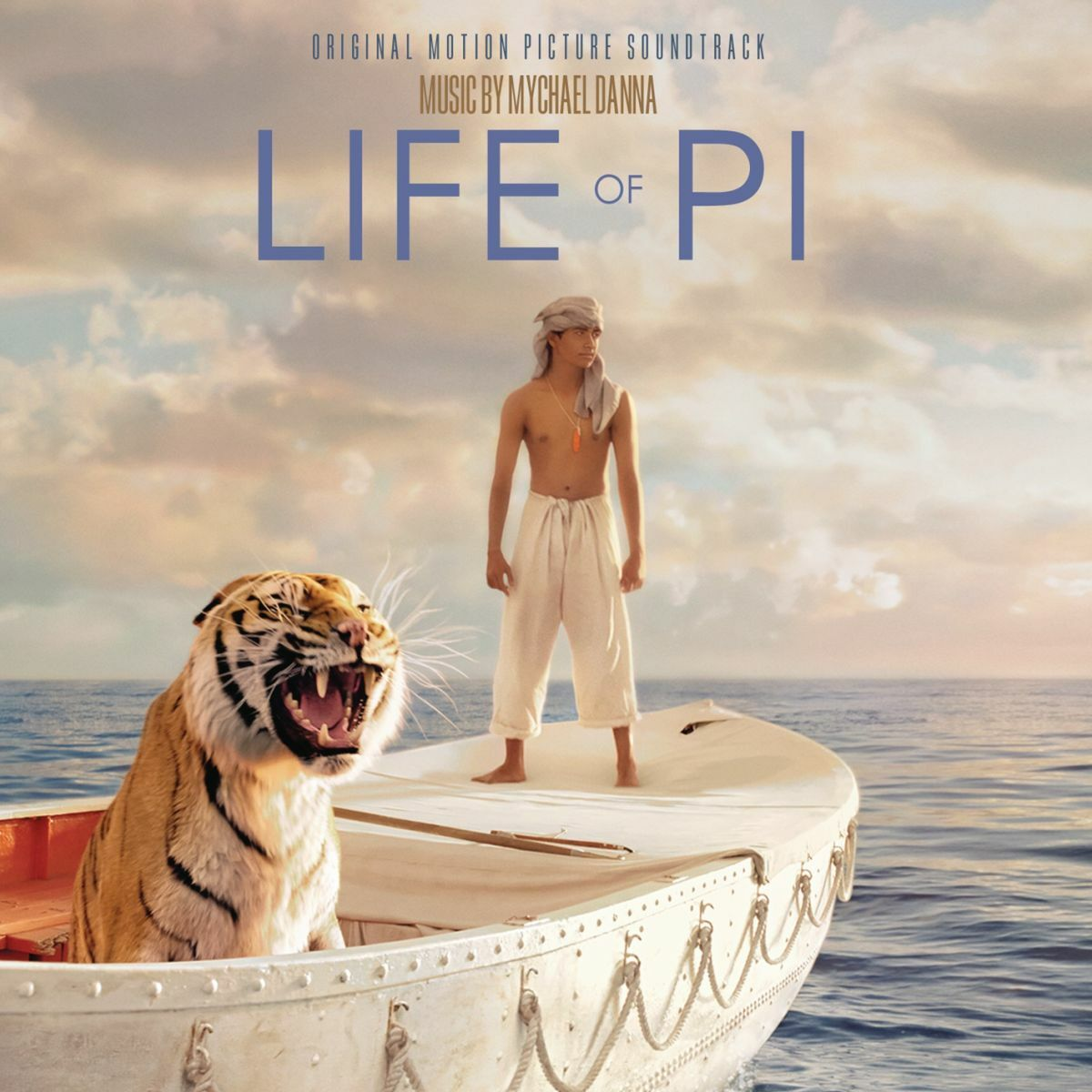
Pi’s Lullaby (Life of Pi) 2012 – Mychael Danna (Ft. Bombay Jayashri) Friday’s Finest

The 2012 movie Life of Pi currently sits at No. 58 on my 100 favourite movies list. Whenever it comes on cable here, which is often, I sometimes immerse myself in it for the umpteenth time. When I very recently viewed the opening credits scene of the movie, I wondered why I hadn’t featured this wondrous music and scene on my blog, so here we are today. It’s a sad ending for that beautiful zoo. A memory that once felt real, now feels like a dream. Happens to the best of us.
Pi’s Lullaby was written for the opening of the 2012 film Life of Pi. It was nominated for an Academy Award for Best Original Song, the first song in Tamil ever to be so honoured.

Pi’s Lullaby was composed by Mychael Danna, with lyrics by Bombay Jayashri, who also performed the song. The track’s delicate Carnatic-style melody, paired with Jayashri’s ethereal vocals, creates an atmosphere of warmth and wonder, mirroring the tranquil visuals of the zoo at dawn (as seen in the opening scene at the bottom of this post). As the camera glides over lush enclosures bathed in golden light, showcasing animals in a state of peaceful coexistence, the lullaby’s gentle cadence reinforces the film’s themes of harmony, innocence, and the delicate balance of life.

IMDB Storyline:
In Canada, a writer visits the Indian storyteller Pi Patel and asks him to tell his life story. Pi tells the story of his childhood in Pondicherry, India, and the origin of his nickname. One day, his father, a zoo owner, explains that the municipality is no longer supporting the zoo and he has hence decided to move to Canada, where the animals the family owns would also be sold. They board on a Japanese cargo ship with the animals and out of the blue, there is a storm, followed by a shipwrecking. Pi survives in a lifeboat with a zebra, an orangutan, a hyena and a male Bengal tiger nicknamed Richard Parker. They are adrift in the Pacific Ocean, with aggressive hyena and Richard Parker getting hungry. Pi needs to find a way to survive.

English translation below:

Oh my love
Oh the delight of my eyes
Would you not sleep my flower?
Are you the peacock or the plumage of the peacock?
Are you the cuckoo or the cry of the cuckoo?
Are you the moon or the light of the moon?
Are you the eyelashes, or the dream?
Are you the flower or the nectar?
Are you the fruit or the sweetness?

The following was extracted from the Wikipedia reference below:

According to Jayashri’s blog, in order to convey the mood he wanted for the song, director Ang Lee told her “A child sleeps not because he is sleepy, but because he feels safe.”

Controversy

The Irayimman Thampi Memorial Trust alleged that the first eight lines of “Pi’s Lullaby” were not an original composition but a mere translation into Tamil of Irayimman Thampi’s famous lullaby in Malayalam, “Omanathinkal Kidavo”. Jayashri however maintains that she merely wrote what came to her heart and has denied the allegation against her.

Earlier, Jayashri had used Thampi’s lullaby in her Album named ‘Vatsalyam’, released in 2003

References:
1. Pi’s Lullaby – Wikipedia

Tagged with: , , ,
Posted in Music

Stick Season (2022) – Noah Kahan (Alex and Jo Music)

You tube’s best kept secret female duo ‘Alex and Jo‘ are back again to treat us with their lovely version of Noah Kahan’s big hit Stick Season. Today’s featured song marks the sixth occasion the Serbian twins have appeared here with their last entry being I’ll Be Home For Christmas (No 9 on the Christmas countdown this past season). How they haven’t already been discovered by a mega fancy music / tv producer to grace one of these big talent shows is anyone’s guess. Heck, if Christina Perri had heard their rendition of her magnificent Back in Time she of all people would be the first to sing their praises.

Through their channel, I’ve discovered mostly new music including Stick Season that I might never have come across otherwise, and for that, I’m grateful. Their soothing voices and homely presence always put me in a good head space. It’s simply a privilege to be welcomed into their musical sanctuary and witness them immerse themselves in a song.

Stick Season is the title track of the 2022 album by Noah Kahan (image inset). He wrote the album in the woods of Vermont where he grew up. With the success of Stick Season, Kahan toured around the United States and Europe with a majority of his shows sold out. Going by the lyrics alone Stick Season is indeed a very relatable song since it balances a mixture of pain, optimism, and healing. I can see how it would appeal to lovers of pop, indie, and folk music.  Also people who live in small towns like in New England can relate to the hardships on the record such as leaving your hometown, losing childhood dogs, and divorced parents.

The following was extracted from the Wikipedia reference below:

The song title refers to a term for autumn in New England, the period after Halloween before the winter snow begins, which Kahan called “a time of transition” and “super depressing” as “it just means that winter is coming soon and it creates a lot of anxiety” and “nobody really likes it“.

The song went viral on TikTok and charted internationally after American singer-songwriter Olivia Rodrigo covered it on BBC Radio 1 in the United Kingdom, causing it to reach number one in various countries including Australia, Belgium (Flanders), Ireland, the Netherlands, and the United Kingdom, as well as charting in the top 10 in Canada, New Zealand, and the United States.

[Verse 1]
As you promised me that I was more than all the miles combined
You must’ve had yourself a change of heart like halfway through the drive
Because your voice trailed off exactly as you passed my exit sign
Kept on drivin’ straight and left our future to the right
Now I am stuck between my anger and the blame that I can’t face
And memories are somethin’ even smoking weed does not replace
And I am terrified of weather ’cause I see you when it rains
Doc told me to travel, but there’s Covid on the planes

[Chorus]
And I love Vermont, but it’s the season of the sticks
And I saw your mom, she forgot that I existed
And it’s half my fault, but I just like to play the victim
I’ll drink alcohol ’til my friends come home for Christmas
And I’ll dream each night of some version of you
That I might not have, but I did not lose
Now you’re tire tracks and one pair of shoes
And I’m split in half, but that’ll have to do

[Verse 2]
So I thought that if I piled something good on all my bad
That I could cancel out the darkness I inherited from Dad
No, I am no longer funny ’cause I miss the way you laugh
You once called me “forever,” now you still can’t call me back

[Chorus]

[Bridge]
Oh, that’ll have to do
My other half was you
I hope this pain’s just passin’ through
But I doubt it

References:
1. The Story Behind The “Stick Season” Grammy Nominated Singer, Noah Kahan – Rampage
2. Stick Season (song) – Wikipedia

Tagged with: , ,
Posted in Music

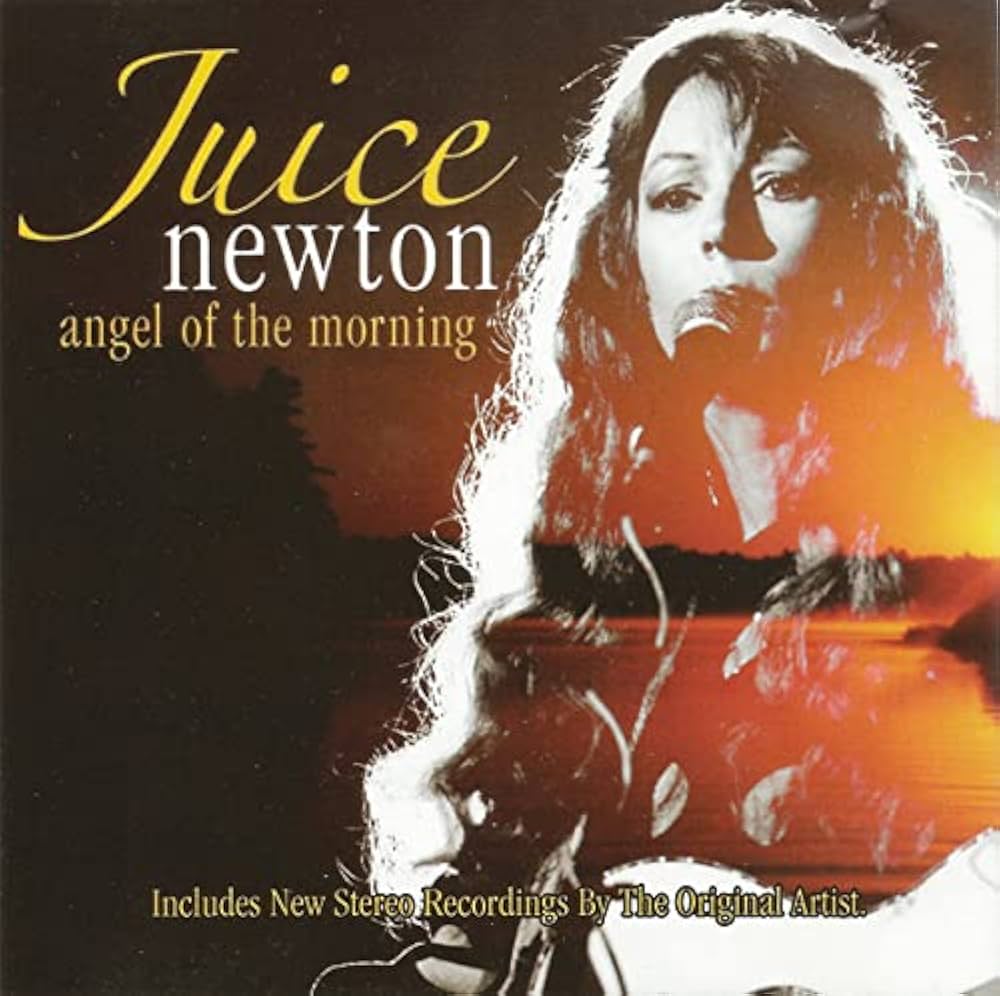
Angel of the Morning – Merrilee Rush (1968) / Juice Newton (1981)

I wrote Angel of the Morning after hearing the Rolling Stones song Ruby Tuesday on the car radio when I was driving into New York City. I wanted to capture that kind of passion.

– Chip Taylor

Angel of the Morning starts as a conventional love ballad, but the moment the chorus soars, it transforms into an unmistakable power ballad – one that never fails to send shivers down my spine. This was one of the first power ballads I remember hearing, and while the awe I felt in my impressionable youth may have softened over time, my admiration remains intact. The lyrics are both sensual and daring, as the singer surrenders to the night, embracing the intimacy and staying to witness the dawn with her lover.

I see no need to take me home
I’m old enough to face the dawn

There are more versions of this song than you can poke a stick at. Younger generations may be most familiar with rapper Shaggy’s version – Angel (2001), which upon first-listen made me want to throw a brick through a glass pane window. My two favourite versions (presented below) are by Merrilee Rush and the Turnabouts (1968) which incorporated a country sound and of course the most commercially successful version by Juice Newton.

Angel of the Morning was written by Chip Taylor in 1967 and first charted with the version by Merrilee Rush. The song was originally offered to Connie Francis, but she turned it down because she thought that the lyrical message was too lewd for her image. 

If morning’s echoes say we’ve sinned
Well, it was what I wanted now

By golly, what I would give to have heard a version by Connie!
Rush’s 1968 version version was released in February 1968, and reached No. 7 on the Billboard, also No. 1 in Canada, Australia, and New Zealand. Newton’s version from 1981 reached No. 4 on the Billboard and more than one million copies were sold in the United States. It reached the Top 5 in a number of other countries, including Canada (No 1) and Australia (No 2).  

[Verse 1]
There’ll be no strings to bind your hands
Not if my love can’t bind your heart
There’s no need to take a stand
For it was I who chose to start

[Pre-Chorus 1]
I see no need to take me home
I’m old enough to face the dawn

[Chorus]
Just call me angel of the morning, angel
Just touch my cheek before you leave me, baby
Just call me angel of the morning, angel
Then slowly turn away from me

[Verse 2]
Maybe the sun’s light will be dim
And it won’t matter anyhow
If morning’s echoes say we’ve sinned
Well, it was what I wanted now

[Pre-Chorus 2]
And if we’re victims of the night
I won’t be blinded by the light

[Chorus]

[Bridge]
Through the tears
Of the day
Of the years
Baby!

References:
1. Angel of the Morning – Wikipedia

Tagged with: , , ,
Posted in Music

Follow Blog via Email

Enter your email address to follow this blog and receive notifications of new posts by email.

Join 783 other subscribers

← Back

Thank you for your response. ✨