Do you want to know what is a travesty? That this song Please Waste Your Time has attained just 1.1k views in 3 months. There is something seriously amok if new confounding music such as this is not being more widely recognised. Christian at Christian’s Music Musings presented this on his blog not too long ago:
Potato Beach are another psychedelic garage rock band, from Vienna, Austria, who were formed in 2020. From their Bandcamp profile: Anja, Peter, Sven, Lili and Jannik try to make everything sound like the 60s, even though they live in 2022. Because they are not cool enough to move to L.A., they are trying to bring the seductive sound of bands such as The Brian Jonestown Massacre, Allah-Las and La Luz to Austria. Off their first full-length album Dip In, here’s Please Waste Your Time – that cool retro grabbed me right away! – New Music Musings March 16, 2024
I hope you enjoy this as much as I do. This song cruises.
TheSmiths‘ music features here regularly. They are a punk-pop English group regarded as one of the most important acts to emerge from the British independent music scene of the 1980s. They are one of my favourite bands outright. I came to their music late in my musical journey. I’m relieved I did, but it’s unfortunate I didn’t learn to appreciate them in my adolescence when they came onto the scene. Reel Around the Fountain is the first track off their 1984 record The Smiths. The track was penned by Morrissey and composed by Johnny Marr. The Smiths was a commercial success, peaking at number 2 on the Official Albums Chart and staying on the chart for 33 weeks.
Today’s track Reel Around the Fountain caused a lot of controversy over the song lyrics. Some claimed it glorified paedophilia and was basically a song about an adult grooming a child to have sex with. I highly doubt it’s endorsing child abuse. “People see no worth in you…“…. that seems like it’s sympathetic to the victim, possibly now a socially dysfunctional older person.
Some of the lyrics are indeed confusing and vague, lines like: “It’s time the tale were told, Of how you took a child And you made him old” and “Oh, people said that you were easily led And they were half-right Oh, they, oh, they were half-right, oh”. Morrissey has denied the accusations many times. He was quoted in an interview with Rolling Stone saying the song was about “loss of innocence, that until one has a physical commitment with another person, there’s something childlike about the soul.” Either way its a beautiful melody with head scratching lyrics for sure.
[Verse 1] It’s time the tale were told Of how you took a child And you made him old It’s time the tale were told Of how you took a child And you made him old You made him old
[Pre-Chorus] Reel around the fountain Slap me on the patio I’ll take it now Oh, woah-woah-woah-woah-woah-woah
[Chorus] Fifteen minutes with you Well, I wouldn’t say no Oh, people said that you were virtually dead And they were so wrong Fifteen minutes with you Oh, well, I wouldn’t say no Oh, people said that you were easily led And they were half-right Oh, they Oh, they were half-right, oh
[Verse 2] I dreamt about you last night And I fell out of bed twice You can pin and mount me like a butterfly But, “Take me to the haven of your bed” Was something that you never said Two lumps, please, you’re the bee’s knees But so am I
Marr told Mojo in October of 2012 about writing the melody of the song:
“The melody came from me trying to play the Jimmy Jones R&B song Handy Man. I heard it as a kid on a jukebox when I went on holiday aged 12 or 13. It stuck in my mind. I liked the chord change and because I was on holiday I had to remember it, as I didn’t have a guitar with me. Then around the time the band formed someone put it on a compilation tape, then Joe Moss and I were in Crazy Face one morning and he played it, so it was in the air and when I tried to play it this string of strange chord changes fell from my fingers.”
It seems like only yesterday that Bob Marley’s early pioneering hit Mr. Brown featured here and now we have another song, but this time from the other bookend of his discography (and fittingly so) – Redemption Song. This is the final track on Bob Marley & the Wailers’ twelfth album made Uprising. I always found Redemption Song akin to an emancipation hymn; a contemporary spiritual masterpiece which always gave me goosebumps. Written during the final stages of Marley’s battle with cancer, Redemption Song is a poignant reflection of his life, beliefs, and enduring legacy.
Diagnosed with malignant melanoma in 1977, Marley faced his mortality with a determined spirit. According to his widow, Rita Marley, the song emerged from a deep sense of introspection and spiritual resolve. Marley drew inspiration from the words of Marcus Garvey, the Jamaican political leader and staunch advocate for black empowerment. Garvey’s 1937 speech, “The Work That Has Been Done,” provided the memorable line: “Emancipate yourselves from mental slavery; none but ourselves can free our minds.”
[Verse 1] Old pirates, yes, they rob I Sold I to the merchant ships Minutes after they took I From the bottomless pit But my hand was made strong By the hand of the Almighty We forward in this generation Triumphantly
[Chorus] Won’t you help to sing These songs of freedom? ‘Cause all I ever have Redemption songs Redemption songs
[Verse 2] Emancipate yourselves from mental slavery None but ourselves can free our minds Have no fear for atomic energy ‘Cause none of them can stop the time How long shall they kill our prophets While we stand aside and look? Ooh, some say it’s just a part of it We’ve got to fulfill the book
[Chorus]
[Verse 3] Emancipate yourselves from mental slavery None but ourselves can free our mind Whoa! Have no fear for atomic energy ‘Cause none of them-ah can-ah stop-ah the time How long shall they kill our prophets While we stand aside and look? Yes, some say it’s just a part of it We’ve got to fulfill the book
Unlike many of Marley’s tracks, which are steeped in reggae rhythms, Redemption Song is delivered with the simplicity of an acoustic guitar. This stripped-back arrangement amplifies the message, making the lyrics the focal point. The song’s themes of freedom, self-determination, and spiritual redemption resonate deeply, not only within the context of Marley’s life but also within the broader struggles for social and racial justice.
The track was laid down at Tuff Gong Studios in Kingston, Jamaica, during the sessions for the album Uprising in 1980. The studio process was intimate, with Marley often working alone to capture the raw emotion of the song. His acoustic performance was so compelling that it was decided to release the track in its bare form, devoid of additional instrumentation. Rolling Stone magazine ranked it 42nd on its list of the “500 Greatest Songs of All Time,” and it was included in the Rock and Roll Hall of Fame’s “500 Songs that Shaped Rock and Roll.”
“It was a piece of America that was just more musical. I have no idea why but when I first went there when I was sixteen years old and I first got off the bus in Arkansas, it hit me right away. It smelled. You could smell the music. The air you could taste it, you could hear everything. Right away I said, I get it.” – Robbie Robertson interview Classic Albums in 1997
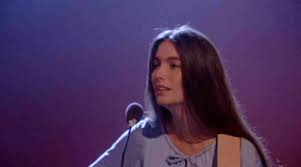
I adore today’s featured track Evangeline as I do the whole Last Waltz package. I presumed it was a traditional southern standard, but this song was written by The Band’s enigmatic lead guitarist and primary songwriter Robbie Robertson and he was still finishing it during Thanksgiving of 1976 as his old band-mates were gathering one last time in San Francisco’s Winterland Ballroom.
Evangeline didn’t find it’s home that night amongst the rock n rollers who filled the stage. It would be later when Robertson was mixing the live recording of The Last Waltz when someone remembered they had invited a young country singer to perform with them that past Thanksgiving, but she hadn’t been able to make it. The song Emmylou Harris was suppose to sing was Evangeline and when she finally did sing it as a duet with The Band it found its way home by becoming an instant southern classic.
The song tells the poignant story of a woman named Evangeline Bellefontaine, who waits in vain for her lover Gabriel, lost to the treacherous waters of the Mississippi River. It is inspired by the epic poem Evangeline, A Tale of Acadieby Henry Wadsworth Longfellow. Evangeline was to blend the rich storytelling traditions of American folklore with the roots rock essence of The Band. Robbie Robertson sought to craft a song that felt both ancient and immediate, with a tale as old as time yet resonant with contemporary listeners.
She stands on the banks of the mighty Mississippi Alone in the pale moonlight Waitin’ for a man, a riverboat gambler Said that he’d return tonight
They used to waltz on the banks of the mighty Mississippi Lovin’ the whole night through He was a riverboat gambler off to make a killin’ And bring it on back to you
Evangeline, Evangeline Curses the soul of the Mississippi queen That pulled her man away (Read the remainder here)
Levon Helm described the scene at The Winterland Ballroom in San Francisco, home of the last ever performance of The Band, when the drummer wrote in his book The Wheel’s on Fire, “It was a madhouse backstage. Jerry Brown, governor of California, wanted to shake hands with us. We had to rehearse a new song called “Evangeline” that Robbie had written only the night before, because we had to perform it during the last part of the show for the sake of film continuity. In fact, the piece was still unfinished, and Robertson and [The Band’s producer and arranger] John Simon were huddled in a corner, frantically trying to figure out an arrangement we could play without rehearsal. Then we managed to play, “Evangeline” in a sort of country two-step, reading the lyrics off of cue cards held behind the cameras, but the lack of rehearsal really told the story.”
Robbie Robertson talked about Evangeline in an interview with Musician Magazine’s Joshua Baer, when The Band’s musical leader said, “I’d written Evangeline as part of The Last Waltz Suite. We did it in the concert and we did some of the other things from the suite at the concert too. But when we were done, it’s like all of these artists represented an element of popular music in their own right. Emmylou Harris was fresh and kind of represented a new school of the country music thing and also she’s very photogenic. She has a great relationship with the camera.”
Emmylou Harris also ended up releasing Evangeline as the title song on her 1981 album.
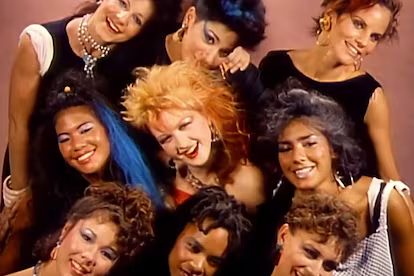
I was a boy once who wanted to have fun. And you know how I got my kicks? You guessed it! By hearing Girls Just Want to Have Fun. Woohoo! Interestingly the original version was from a male perspective, but Lauper, with her signature flair and uncanny knack for flipping the script, transformed it into a feminist anthem: A rallying cry for women everywhere, celebrating their right to have fun without being judged. I could have rattled out copious reasons on why I was so fascinated with this song in my youth and spouted innumerable superlatives. I wonder how much of that could have been put down to hormonal shifts and testosterone. Or that the song was still fresh and ‘catchy’ as hell. There is still some allure of it in my andropause…. so here goes… Rolling…..
“I wanted to make a song that people could relate to, something that felt good, but also had depth. ‘Girls Just Want to Have Fun’ was my way of saying, let’s not take ourselves too seriously—let’s enjoy life!” – Cyndi Lauper
The thing is folks. As alluded to in the opening stanzas above; Cyndi, the then-unknown artist didn’t write this song. It was written and demoed by Robert Hazard in 1979 then found and revived by Rick Chertoff and rewritten by Hazard (who retained all songwriting credits) for Cyndi Lauper. You can’t deny the inefable impact of Lauper’s exuberant delivery and playful demeanor with this. It resonated with millions and moreover became a staple for anyone feeling the need to break free from societal norms and pressures.
[Verse 1] I come home in the mornin’ light My mother says, “When you gonna live your life right?” Oh, mama dear, we’re not the fortunate ones And girls, they wanna have fun Oh, girls just wanna have fun
[Verse 2] The phone rings in the middle of the night My father yells, “What you gonna do with your life?” Oh, daddy dear, you know you’re still number one But girls, they wanna have fun Oh, girls just wanna have
[Chorus] That’s all they really want Some fun When the workin’ day is done Oh, girls, they wanna have fun Oh, girls just wanna have fun (Read the remainder here)
Lauper, known for her eclectic style and vibrant personality, brought an energy to the studio that was contagious. The production, led by Rick Chertoff, embraced the new wave and pop-rock vibes of the era; incorporating synthesizers, jangly guitars, and a beat you couldn’t help but dance to, resulting in a song that felt both polished and effortlessly fun.
The release of Girls Just Want to Have Fun catapulted Cyndi Lauper into stardom. The single reached No. 2 on the Billboard Hot 100 and became a global hit, topping charts in over ten countries. Its music video (see below), features Lauper’s mother and wrestler Captain Lou Albano as her father.
Well, I sat by her side and for a while I tried To make that girl my wife She gave me her best advice and she said Go home and lead a quiet life Well, I been to the east and I been to the west And I been out where the black winds roar Somehow though I never did get that far With the girl from the Red River Shore
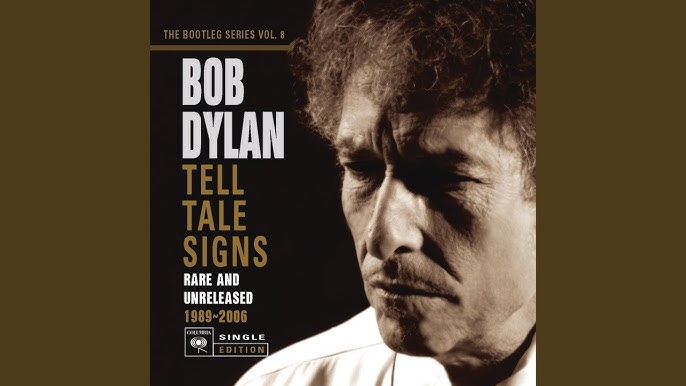
Red River Shore is an unheralded later day 8 verse love song from Dylan. Recorded during the sessions for his 1997 album Time Out of Mind, this song remained unreleased until it surfaced in the 2008 Bootleg Series Vol. 8: Tell Tale Signs. Why such a compelling piece of music was left in the vaults for over a decade is a mystery that continues to intrigue fans and critics alike. Also it was never performed live. I have listened to this song front to back, over and over and read it as a stand-alone poem. The song’s lyrics weave a poignant narrative of unfulfilled love and nostalgia, encapsulating a timeless quality. Every partaking feels like I’m drinking from the wellspring of a lost paradise; a mythical place called The Red River Shore. Consider the following in the illuminating article Red River Shore 1997 – My Year With Bob Dylan:
If you look closely at a traditional Persian rug, you will always find a mistake in the pattern. A shape might be missing the border along one edge. A horse motif might have five legs. This is deliberate, an expression of religious humility. Only God is perfect, the thinking goes, so it would be wrong to attempt to create a perfect pattern. There should always be a small, deliberate error.
The tradition is widespread in the Muslim world, but it originated in Judaism.
Maybe it is some nod to the faith of his fathers, then, that causes Bob Dylan to infuriate his fans and the musicians who play with him by, time after time, leaving the best song from a recording session off the subsequent album.
He left ‘Blind Willie McTell’ off Infidels. He left ‘Series of Dreams’ off Oh Mercy. He left ‘I Shall be Released’ off The Basement Tapes. And he left this song off Time Out of Mind.
‘Red River Shore’, as in so much of Dylan’s best work, takes bits and pieces of something traditional, combines and shapes them in new ways, and produces a song which is both authentic and new.
The mid-90s found Dylan grappling with the weight of his legacy and a changing music landscape. With Time Out of Mind, Dylan reclaimed his position as a vital voice in contemporary music, diving deep into themes of loss, longing, and existential reflection. The recording sessions for Time Out of Mind were famously intense, with producer Daniel Lanois fostering a moody, atmospheric soundscape that complemented Dylan’s introspective lyrics. Dylan faced a serious health scare just before its release in 1997. In May of that year, Dylan was hospitalized due to a life-threatening condition called histoplasmosis.
“There was a lot of magic in those sessions. We knew we were onto something special.” – Adam Granduciel
Red Eyes is the seventh song to appear here from The War on Drugs after their previous entry Pain. I like the striding energy of this track. Principal singer songwriter Adam Granduciel’s somewhat abtract lyrics fade into the music like the haze of reverb. He’s not searching for the lines you’ve never heard before instead, he’s looking for a way out of empty grief: ‘Don’t wanna let the dark night cover my soul’. While the recurring “Woo!” exclamations throughout the song inject a sense of euphoria and release.
Red Eyes was the first single off their critically acclaimed album Lost In The Dream and born from a period of intense personal and artistic turmoil for Granduciel. Following the band’s previous album, Slave Ambient, he grappled with anxiety and a sense of disconnection. The frontman of The War on Drugs revealed in an interview that the album Lost in the Dream was heavily influenced by his battle with depression and anxiety. He described the process as a therapeutic endeavor, stating, “I was going through a dark time, and music became my refuge, a way to process my emotions and experiences” .
Red Eyes emerged as a beacon of light amidst the darkness, a cathartic expression of Granduciel’s journey through and out of his struggles. His perfectionism is well-documented; he often spent countless hours layering guitars, tweaking synthesizers, and perfecting vocals. “There were moments where we’d spend an entire day just to get the right guitar tone or the perfect drum sound”. The result is a dreamy soundscape that feels both expansive and intimate.
[Verse 1] Come and see Where I witness everything On my knees You beat it down to get to my soul Against my will Anyone could tell us you’re coming Baby don’t mind Leave it on the line, leave it hanging on a rail
[Verse 2] Come and ride away It’s easier to stick to the old Surrounded by the night Surrounded by the night, and you don’t give in But you abuse my faith Losing every time but I don’t know where You’re on my side again So ride the heat wherever it goes I’ll be the one to care, woo!
[Chorus] You’re all I’ve got, wait Don’t wanna let the dark night cover my soul Well, you can see it through the darkness coming my way Well, we won’t get lost inside it all again (Read the remainder here)
As nice a nod Rebels Without Applause is to that of Rebel Without a Cause, the James Dean-led feature from the 1950s, that is where the similarities start and end. One a piece of rebellious redemption, another a track from a yet-to-be-released album from Morrissey. Controversy or not, the man can still sing, and his placement on this latest track ahead of his upcoming album Bonfire of Teenagers, is as solid a late-game piece from the former frontman of The Smiths. If anything, it is vaguely reminiscent of that period, with floaty guitars and wistful lyrical opportunities. – Rebels Without Applause (Cult Following)
Rebels Without Applause is the first song by The Smiths or Morrissey to appear here in nearly a year after the previous entry I Won’t Share you. Today’s featured track is a standard Morrissey song which includes the familiar Johnny Marr-esque jangly metallic guitar we’ve become accustomed (but more sedated for better or worse) and Morrissey’s signature swooning voice. Having said that; there is ‘nothing by numbers’ with the outro of this song when he sings: Generation X and X-Ray Spex. That line and his delivery is (as they say) is worth the price of admission alone.
When I was younger I was reluctant to embrace The Smiths because I found Morrissey’s voice whiny and somehow off putting, but ever since a friend recommended a few years ago some of their music I have become a big fan. In fact I am yet to hear a bad song by them. In some ways Morrissey as a solo artist has carried the torch from whence The Smiths parted ways, but it could be argued his output are just mere flickers from the bright flame that was The Smiths. I get that. But this song seems proof that Morrissey is not completely spent just yet.
I didn’t know what to think of Rebels Without Applause, which is the same way I have thought about nearly all his music after first listen. I realise I have to dive into it again to grasp it. For me, that’s what great music does for me. I listen to it, but I have to hear it again to inculcate its significance and adapt my ears. After hearing ‘maybe’ 90% of songs in general I get a sudden realisation of ‘yeh I get it‘, but with The Smiths and Morrissey I need to hear their music again and again. Typically it resonates more on repeated listens.
[Verse 1] The gang’s all gone and I smolder on I, who saw them leave, I cry bereaved One by one, I saw them stall Rebels without applause
[Verse 2] The gang’s all gone and now I am the only one No more to give, too late to live Last on the bill, I see them still Rebels without applause
[Chorus] Bawdy boys of song and girls all gone wrong I loved them all Bawdy boys of song and girls all gone wrong I loved them all (Read the remainder here)
Rebels Without Applause was the first song released from Morrissey’s ‘unreleased’ studio album Bonfire of Teenagers. He described it as “the best album of [his] life“. It features a number of guest appearances from various musicians, such as Iggy Pop, Jesse Tobias, Chad Smith, Flea and Josh Klinghoffer. The album’s title track is about the 2017 Manchester Arena bombings, which Morrissey described as “England’s 9/11“.
Rebels Without Applause seems to originate from Morrissey’s reflections on unsung heroes and the often unnoticed acts of rebellion that shape our world. As he mentioned in an interview, the song is a homage to “those who fight the good fight in silence, without the grandstanding or recognition they deserve“. This theme of quiet resistance and the lack of acknowledgement resonates deeply in today’s social media-driven culture where visibility often overshadows substance.
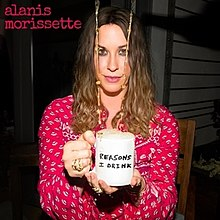
In my last post on Alanis Morissette – Hand in my Pocket, I was wondering what she had been up to in recent times. The last time I saw her was in a Curb Your Enthusiasm episode seen here where she sabotages her own set. I suppose it was to appease Larry’s storyline, which is self effacing on her part. Jeff at Eclectic Music Lover filled me in a little on Alanis and recommended Reasons I Drink. What a cracking song and the accompanying music video is outstanding. It’s uncanny how this song appears today in the Music Library Project since I was just telling Christian yesterday at his blog – Christian’s Music Musings how much I like this song in response to his regular feature – The Sunday Six.
Reasons I Drink stands out as a poignant testament to the struggles and triumphs of navigating the human condition. Released in 2019, this compelling track from her ninth studio album, Such Pretty Forks in the Road, encapsulates a deeply personal journey through the lens of addiction and coping mechanisms. In an interview with Rolling Stone, Morissette revealed, “It’s about my lifelong journey of being addicted to substances and behaviors to avoid pain and to avoid facing my own issues“. I too have faced addictions for almost all of my adult life and reflected upon it on occasion like here – I Won’t Forget and The Last Words – “Every Passing Minute is Another Chance to Turn it all Around.”
[Verse 1] These are the reasons I drink The reasons I tell everybody I’m fine even though I am not These are the reasons I overdo it I have been working since I can remember, since I was single digits Now, even though I’ve been busted I don’t know where to draw the line ’cause that groove has gotten so deep
[Pre-Chorus 1] And nothing can give reprieve like they do Nothing can give a break for this soldier like they do
[Chorus 1] Here we are I feel such rapture and my comfort is so strong, oh One more hit It feels so helpful in my need for respite, oh
[Verse 2] And here are the reasons I eat Reasons I feel everything so deeply when I’m not medicated And so that’s it, I am buying a Lamborghini To make up for these habits, to survive this sick industry
I’m hardly a connoisseur of Alanis’ discography, but from the scant I have heard I’ve become an admirer of her innate talent, transparency and audacity as a singer-songwriter (and special mention to her stand-out track Thank U). Twenty nine years ago Alanis became an overnight superstar because she was jilted and angry and she thought the world ought to know. Now that she’s older, she seems to have reconciled some of her demons but the embers of her angst have been replaced with generalized anxiety and depression on Such Pretty Forks in the Road, which is her first record in eight years and ninth overall.
Rayando El Sol (Scratching at the Sun) is an iconic Latin rock ballad by Mexican pop-rock band Maná that became an anthem of a generation. It has resonated deeply with fans across the Latin speaking world including yours truly, so much so I consider Rayando El Sol one of the most alluring and heartfelt rock ballads I’ve heard in my short existence. The song narrates the pain of unrequited love and the endless yearning encapsulated beautifully in the chorus: which translates as “Scratching at the sun, desperation, it’s easier to reach the sun than your heart“.
In an interview with Billboard magazine, vocalist Fernando Olvera, popularly known as Fher, shared details about the group’s difficult beginnings. He revealed that the group went through long periods of economic adversity, to such a degree that they considered abandoning their passion for music. The turning point for Maná came with the creation of “Rayando el Sol”, a song that Fher and Álex González composed in a moment of discouragement, in an unfurnished apartment in Colonia Roma. This song, included in their second album “Falta de amor” released in 1990, marked a before and after in the band’s career, becoming one of their biggest hits and reaffirming their decision to continue in the world of music.
Below is a loose English translation of part of the lyrics:
[Verse 1] The sun is shining, shining for you This pain hurts me, it burns me without your love You haven’t called me, I’m desperate There are many moons that I have cried for you
[Chorus] The sun is shining, oh, eh, oh, despair It’s easier to reach the sun than your heart I’m dying for you, oh, eh, oh, living without you And I can’t stand it, it hurts me so much to be like this the sun is shining
[Verse 2] I went to your house and I didn’t find you In the park; in the square; in the cinema I looked for you I have you trapped between my skin and my soul I can’t do so much anymore and I want to be with you
Maná was formed in 1986 by José Fernando “Fher” Olvera (vocals), Ulises Calleros (guitar), and Juan Calleros (bass guitar), who had been performing together in a band called Sombrero Verde since the mid-1970s and disbanded in 1983. Rayando El Sol was released on the band’s second album Falta Amor (Missing Love) and became its first hit single. The group toured heavily in support of the album, performing more than 250 times throughout Latin America, including shows in Mexico, Peru, Ecuador, and Colombia.







 Observation Blogger