This classic and memorable romantic theme from the film Franco Zefferelli’s Romeo and Juliet score was composed and conducted by the Italian composer Nino Rota. I don’t know how I came into possession of this music, but I imagine it was after downloading a mega-compilation of classical music. I’m sure grateful I am able to hear this exquisite piece in my collection. I don’t believe I have seen this movie version of the Shakespearean play, but at least the music reflects the tragic passion of the famous story. The movie has a very high audience score of 7.6 on IMDB.
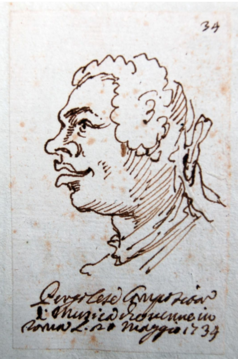
Nino Roto (image left) has a remarkable film score acumen. Apart from his two Shakespeare screen adaptions, he is known for the music for films of Federico Fellini and for the first two installments of Francis Ford Coppola’s The Godfather trilogy, earning the Academy Award for Best Original Score for The Godfather Part II (1974). He wrote more than 150 scores for Italian and international productions from the 1930s until his death in 1979 — an average of three scores each year over a 46-year period.
Alongside this great body of film work, he composed ten operas, five ballets and dozens of other orchestral, choral and chamber works, the best known being his string concerto. Rota was born Giovanni Rota Rinaldi on 3 December 1911, into a musical family in Milan, Italy. Rota was a renowned child prodigy — his first oratorio, L’infanzia di San Giovanni Battista, was written at age 11 and performed in Milan and Paris as early as 1923; his three-act lyrical comedy after Hans Christian Andersen, Il Principe Porcaro, was composed when he was just 13 and published in 1926.
This is a fantastic Dylan performance of the ‘Mexican feel’ Romance in Durango; the seventh song (or the second song on Side 2 of the vinyl) on Bob Dylan’s 1976 album Desire. It has everything, a song with a cinematic story (similar to a cowboy movie scenario) and Dylan is fully locked into this performance with his facial expressions and his singing style and phrasing changing on different words/verses. Also, is there a more evocative opening of any Dylan song than this?
Hot chili peppers in the blistering sun Dust on my face and my cape.
The first-person narrator tells of an adventure in Durango, Mexico, where Sam Peckinpah’s Pat Garrett and Billy the Kid, which Dylan both scored and acted in, had been filmed in 1972 and 1973.
Wikipedia states: It was written by Dylan and Jacques Levy, who collaborated with Dylan on most of the songs on the album. The chorus contains several lines sung in Spanish, resulting in the song being released as a single in Spain in 1977….The song is performed in the key of D major and its arrangement has, according to Dylan scholar Tony Attwood, “a Mexican feel” imparted through the instrumentation (“the trumpet calls”) and percussion (“the rhythms associated with Central American music”)…The studio version features twenty musicians and backup singers, including Eric Clapton on guitar, the only recording from the earliest sessions of Desire that ended up on the album (before Dylan decided to shift to a more “small-band approach”
[Verse 1] Hot chili peppers in the blistering sun Dust on my face and my cape Me and Magdalena on the run I think this time we shall escape
Sold my guitar to the baker’s son For a few crumbs and a place to hide But I can get another one And I’ll play for Magdalena as we ride
[Chorus] No Ilores, mi querida (Do not cry my darling) Dios nos vigila (God is watching over us) Soon the horse will take us to Durango Agarrame, mi vida (hold me, my love, my life) Soon the desert will be gone Soon you will be dancing the fandango
[Verse 2] Past the Aztec ruins and the ghosts of our people Hoof beats like castanets on stone At night I dream of bells in the village steeple Then I see the bloody face of Ramon
Was it me that shot him down in the Cantina Was it my hand that held the gun? Come, let us fly, my Magdalena The dogs are barking and what’s done is done
[Chorus]
[Verse 3] In the corrida we’ll sit in the shade And watch the young torero stand alone We’ll drink tequila where our grandfathers stayed When they rode with Villa into Torreón
Then the padre will recite the prayers of old In the little church this side of town I will wear new boots and an earring of gold You’ll shine with diamonds in your wedding gown
The way is long but the end is near Already the fiesta has begun The face of God will appear With His serpent eyes of obsidian
[Chorus]
[Verse 4] Was that the thunder that I heard? My head is vibrating, I feel a sharp pain Come sit by me, don’t say a word Oh, can it be that I am slain?
[Chorus]
Further information from Wikipedia: “Romance in Durango” placed 79th on a Rolling Stone list of the “100 Greatest Bob Dylan Songs”. In an article accompanying the list, Scott Avett of The Avett Brothers praised the song’s melody and lyrics: “The melody of ‘Romance in Durango’ makes the whole song work; it’s so serious and driven. And like most of Desire and Blood on the Tracks, it is relatively repetitive, but it’s so good it can kind of just keep going and going. That’s really much harder to do than I think anybody who isn’t trying to make music knows. As far as the lyrics go, it’s an amazing endeavor; Dylan was able to put his mind and heart into a specific scene – of being a lone renegade in the desert, up to all these trying and dangerous things. You’re buying all the masculinities and going right along with it. It’s convincing“
I listened to Roy Orbison’s music a lot in my youth. I believe I wore out the Essential Roy Orbison compilation record especially today’s featured track Crying. I imagine Crying is one of the most recognisable love ballads in contemporary music. Up to now all of the music that has featured Roy here was part of his time at The Traveling Wilburys. I’m afraid I let his other big hits Only the Lonely and Pretty Woman fall by the wayside, but I’ll make up for it and present them at a later date amongst others. Roy’s operatic vocal style and range has always been monumental and it is no better showcased than in this classic signature song, although Not Alone Anymore to my ears gives it stiff competition.
Crying is a song written by Roy Orbison and Joe Melson for Orbison’s third studio album of the same name (1962). Released in 1961, it was a number 2 hit in the US for Orbison. I also like Llorando, the Spanish version of this song in the David Lynch masterpiece Mulholland Drive which I reviewed back in July 2021. In 2002, Crying was honoured with a Grammy Hall of Fame Award. In 2010, Rolling Stone ranked it 69th on their list of the 500 greatest songs of all time.
Crying emerged during a period when Orbison was already enjoying considerable success, but he sought to explore deeper, more poignant themes in his music. It was a departure from the more upbeat rockabilly style that characterized much of Orbison’s early work. Instead, it delved into the raw, unfiltered pain of heartache and loss.
[Verse 1] I was alright for a while I could smile for a while But I saw you last night You held my hand so tight As you stopped to say, “Hello”
[Chorus] Oh, you wished me well You couldn’t tell That I’d been crying over you Crying over you When you said, “So long” Left me standing all alone Alone and crying, crying Crying, crying
[Post-Chorus] It’s hard to understand But the touch of your hand Can start me crying
[Verse 2] I thought that I was over you But it’s true, so true I love you even more Than I did before But, darling, what can I do? (read the remainder here)
Arcadia is the second song posted here by Lana Del Rey after the first entry Radio. It amongst other songs were recommended to me by Madeleine at Classic Film and TV Corner:
Lana is one of my favourite singers. I think she is possibly the most unique artist working at the moment. I love how she mixes modern and vintage imagery in her music videos. What a talent.
Based on what I’ve heard so far by Lana (although I’m still just scratching the surface of her extensive discography) I can understand why Madeleine expressed such high praise for her artistry. Lana’s individuality and transparency in ‘presentation’, melodic and lyrical lucidness and originality (analogous to how I would describe Argentinian artist Nathy Peluso) is seemingly re-landscaping the modern music scene as we speak. Rolling Stone UK named Lana Del Rey – The Greatest American Songwriter of the 21st Century.
As some of you will know I normally forward an extract of the lyrics of songs in my articles, but such is my intrigue and admiration for the lyrics for Arcadia I have presented all of them below. She has crafted atmospheres that feel both intimate and expansive. Lana seems to be expressing herself as if she was a by-product of her place and the inherent materialism associated with our age, but will forge to develop upon her individual talents, expression and sexuality. In an interview with Rolling Stone, she mentioned that Arcadia was conceived during a period of introspection, when she was searching for a sense of peace amidst the chaos of the world.
When Lana sings, ‘America, America‘ I stop and pause and find myself windswept in feelings associated with Musica Americana which are hard to describe. Oh and don’t mention when she sings: ‘America, I need a miracle‘ which almost turns me into a blubbering mess. Other songs by hers will be presented here showcasing what I believe is her innate ability to capture Musica Americana: Wild at Heart and Yosemite.
Arcadia was released as the second and final single from her 2021 album Blue Banisters. The song was written and produced by the singer alongside Drew Erickson. The song is named after Arcadia, California. Although it could also be reference to the idyllic vision of pastoral harmony, derived from the ancient Greek region of Arcadia. The song received critical acclaim from critics. In an article for the Los Angeles Times, Christi Carras described the song as a “languid new ballad” and music video as “love letters to Arcadia and Los Angeles“. The music video for Arcadia was directed by Del Rey, although the singer stated on Twitter that it was “directed by nobody“. I love how they transform the song into another beast towards the end by being a Tarantino-esque ‘rap-marriachi‘ motif. To my sensory, it is most excellent.
[Verse 1] My body is a map of LA I stand straight like an angel with a halo Hangin’ out the Hilton Hotel window Screamin’, “Hey, you, baby, let’s go” My chest, the Sierra Madre My hips, every high and byway That you trace with your fingertips like a Toyota Run your hands over me like a Land Rover
[Chorus] In Arcadia, Arcadia All roads that lead to you as integral to me as arteries That pump the blood that flows straight to the heart of me America, America I can’t sleep at home tonight, send me a Hilton Hotel Or a cross on the hill, I’m a lost little girl Findin’ my way to you, Arcadia
[Verse 2] My body is a map of LA And my heart is like paper, I hate you I’m not from the land of the palms, so I know I can’t stay here I’m not native, but My curves, San Gabriel all day And my lips like the fire licks the bay If you think that you know yourself, you can come over Lay your hands on me like you’re a Land Rover
[Chorus]
[Outro] They built me up three-hundred feet tall just to tear me down So I’m leavin’ with nothing but laughter and this town Arcadia Findin’ my way to you I’m leavin’ them as I was, five-foot-eight, Western belt Plus the hate that they gave By the way, thanks for that, on the way, I’ll pray for you But you’ll need a miracle, America
I can’t believe I let this upbeat and brassy hit from Elton John’s classic 80’s record – Too Low For Zero pass under the radar. So we are backtracking today in the alphabetical listing to present Kiss the Bride. I loved the song growing up and I didn’t make it any secret at school what I thought about it. Allow me to digress…. One of my best friends at school Gary did a caricature of my family which resides in my reflection menu, and he just happened to be a huge Billy Joel fan. We used to have it out, because my musical tastes were oriented towards Elton John and his Billy. I remember when today’s featured track Kiss the Bride came out and he would chastise me singing the chorus, ‘I want to kiss the bridegroom‘! Like his caricature, it was a pretty smart retort.
I know Elton John deservedly gets a lot of plaudits for his 70’s output and I couldn’t be more in accordance, but as far as my musical apreciation goes I consider his 1983 Too Low For Zero record one of his greatest musical feats perhaps since Goodbye Yellow Brick Road. Kiss the Bride emerged during a creatively fruitful period for Elton John and his longtime collaborator, lyricist Bernie Taupin. The early 1980s marked a return to form for John, who had been experimenting with different sounds and styles.
The title track is one of my top 5 favourite songs by Elton and I consider the opening track Cold as Christmas and Crystal presented here back here in 2021 examples of lesser-known gems from his extensive discography. Not to mention: I’m Still Standing and I Guess That’s Why They Call It the Blues which propel this album into the stratosphere of ‘classic contemporary albums’. The album also marked the reunion of John’s classic band lineup from the 1970s, including Davey Johnstone on guitar, Dee Murray on bass, and Nigel Olsson on drums. This reunion infused the album with a familiar energy that resonated with fans.
Kiss the Bride written by John and Bernie Taupin was released as the third single from the record and was a top 40 hit in many countries. It reached No. 20 on the UK Singles Chart, No. 25 on the US Billboard Hot 100 chart, and No. 25 in Australia to name just a few countries. John played this song on setlists from 1984 until the 1989 leg of his Sleeping with the Past Tour. The video below characteristic of the 1980s MTV era, contributed to the song’s visibility and popularity.
[Verse 1] Well, she looked a peach in the dress she made When she was still her mama’s little girl And when she walked down the aisle, everybody smiled At her innocence and curls And when the preacher said, “Is there anyone here Got a reason why they shouldn’t wed?”
[Pre-Chorus] I shoulda stuck up my hand I shoulda got up to stand And this is what I should have said
[Chorus] I wanna kiss the bride, yeah! I wanna kiss the bride, yeah! Long before she met him, she was mine, mine, mine Don’t say, “I do”, say, “bye, bye, bye” And lemme kiss the bride, yeah! I wanna kiss the bride, yeah!
[Verse 2] Underneath her veil, I could see a tear Tricklin’ down her pretty face And when he slipped on the ring, I knew everything Would never be the same again But if the groom woulda known, he’d have had a fit About his wife and the things we di
I adored the raw emotion and introspection of River ever since I first heard it. I wrote a post about it in 2013, which was my first foray into blog writing. Penned and performed by Canadian singer-songwriter Joni Mitchell, this haunting ballad continues to move me. Originally released on her legendary record Blue it made me yearn for this place of solace. I have never skated on a river, but did skate on the ice rinks way back when. Come to think of it I haven’t seen one in decades, but that poignant imagery of skating on a river..that’s something.
Blue marked a pivotal moment in Mitchell’s career establishing her as not only a gifted musician but also a discerning lyricist capable of laying bare the complexities of human emotions. River was never released as a single but reveals one of Mitchell’s most vulnerable moments in songwriting, opening up about a breakup and the deep bond that’s difficult to shake. The lyrics of River are thought to have been inspired by the end of Mitchell’s relationship with musician Graham Nash; the two dated from 1968 through 1970.
[Verse 1] It’s coming on Christmas They’re cutting down trees They’re putting up reindeer And singing songs of joy and peace Oh, I wish I had a river I could skate away on
[Verse 2] But it don’t snow here It stays pretty green I’m gonna make a lot of money Then I’m gonna quit this crazy scene I wish I had a river I could skate away on
[Chorus] I wish I had a river so long I would teach my feet to fly Oh, I wish I had a river I could skate away on I made my baby cry
[Verse 3] He tried hard to help me You know, he put me at ease And he loved me so naughty Made me weak in the knees Oh, I wish I had a river I could skate away on (Read the remainder here)
Riverholds second place among Mitchell’s songs most recorded by other artists. Everyone from Mitchell’s former beau James Taylor to Barry Manilow, Sarah McLachlan, Judy Collins, Idina Menzel, Travis, Cee Lo Green, Ellie Goulding, and even Olivia Rodrigo and Harry Styles, have covered River. In 2021, it was ranked at No. 247 on Rolling Stone’s “Top 500 Best Songs of All Time”.
Today’s track Rise is the second song to appear here from Eddie Vedder’s visceral Into the Wild (2007) soundtrack after the previous entry Guaranteed. The film and its music had a big impact on me when it came out and I continue to enjoy it when it comes on cable. It’s a confounding movie and I imagine most readers here would be familiar with it. The film, based on Jon Krakauer’s book of the same name, tells the true story of Christopher McCandless, a young man who abandons his material possessions and ventures into the Alaskan wilderness in search of deeper meaning. Vedder’s involvement in the project stemmed from his admiration for McCandless’s quest and Penn’s vision for the film. My biggest take-away from it was after all of the soul-searching the American wanderer Christopher McCandless did, he could only arrive at one conclusion – Happiness is only real when shared (as recorded in his journal).
Director Sean Penn hand-picked iconic Pearl Jam frontman Vedder to provide the music for the film and said that as soon as he heard Vedder’s songs he “just felt that for sure this is the musical voice of (actor) Emile (Hirsch’s) character.” There is an intriguing Charlie Rose interview here with Sean Penn and Eddie Vedder about the movie and their collaboration. Eddie Vedder said about his writing of the soundtrack: ‘I wouldn’t want to romanticize my input of the process, but..two weeks or three weeks went by and I kind of woke up and it was done. And I don’t really remember a whole lot about it…it was from some place and I’m not really sure where it was.‘
At the 2009 Grammy Awards, Rise received a nomination for Best Rock Vocal Performance, Solo. Through Vedder’s deep and resonant voice it encapsulates the spirit of personal growth and the journey towards self-realization. That is what makes Eddie Vedder truly unique. When one hears his voice, it can’t be mistaken for another. I have always been drawn to it since hearing the debut album masterpiece Ten which has featured here time and again.
[Verse 1] Such is the way of the world You can never know Just where to put all your faith And how will it grow?
[Chorus] Gonna rise up Burning black holes in dark memories Gonna rise up Turning mistakes into gold
[Verse 2] Such is the passage of time Too fast to fold Suddenly swallowed by signs Lo and behold
[Chorus] Gonna rise up Find my direction magnetically Gonna rise up Throw down my ace in the hole
When I listened to Ring Them Bells growing up it cast me into visions of an Amish existence akin to that portrayed in the Peter Weir movie Witness. You know: fortress, bells, plows, cows, iron, valleys, willow and lilies. I believe I got my game name ‘SacredCow‘ from this song, although some read it ‘scaredcow‘. I always wondered if that was done in jest or not. To quote Dylan from Not Dark Yet: ‘Why should I even care‘? Ring Them Bells solders the modern to the ancient: ‘Ring them bells, ye heathen / From the city that dreams and Oh, it’s rush hour now / On the wheel and the plow.
When it’s all said and done, Ring Them Bells is a contemporary spiritual masterpiece. Bob Dylan never left gospel. It’s actually within him. It displays the poetic depth and spiritual fervor that has come to define much of his later work. It’s just so darn underappreciated even in Dylan fan circles because it comes from that …. wait for it….drum rolling….maligned Dylan 80’s decade. Give me a break. Its symbolic use of bells, which represent various calls to consciousness, spiritual awakening and communal responsibility is other worldly.
Bob Dylan released Ring Them Bells in 1989 as part of his critically acclaimed album Oh Mercy and it’s the third song so far to feature here from it after the previous entry Most of the Time. The recording of Oh Mercy took place in New Orleans with producer Daniel Lanois, whose atmospheric production style added a haunting, almost mystical quality to the album. Lanois, known for his work with U2 and Peter Gabriel, helped craft a sonic landscape that perfectly complemented Dylan’s vision. Reflecting on the album, Dylan mentioned, “I wanted to make a record that was more for the present time, more relevant to the state of the world.” (Bob Dylan: Chronicles, Volume One).
[Verse 1] Ring them bells, ye heathen From the city that dreams Ring them bells from the sanctuaries ’Cross the valleys and streams For they’re deep and they’re wide And the world’s on its side And time is running backwards And so is the bride
[Verse 2] Ring them bells St. Peter Where the four winds blow Ring them bells with an iron hand So the people will know Oh, it’s rush hour now On the wheel and the plow And the sun is going down Upon the sacred cow
[Verse 3] Ring them bells Sweet Martha For the poor man’s son Ring them bells so the world will know That God is one Oh, the shepherd is asleep Where the willows weep And the mountains are filled With lost sheep
[Verse 4] Ring them bells for the blind and the deaf Ring them bells for all of us who are left Ring them bells for the chosen few Who will judge the many when the game is through Ring them bells, for the time that flies For the child that cries When innocence dies
[Verse 5] Ring them bells St. Catherine From the top of the room Ring them from the fortress For the lilies that bloom Oh, the lines are long And the fighting is strong And they’re breaking down the distance Between right and wrong
“The song’s about a girl that I knew in college. It doesn’t really matter who the girl is, it’s just about a girl.” — Donald Fagen, co-founder of Steely Dan
Rikki Don’t Lose that Number is another song we had just been discussing and low and behold it appears here surreptitiously. I first heard it in the 1989 Cameron Crowe movie Say Anything, in which the lyrics were sung by actor John Mahoney seen here. By the way, Say Anything is a really good teen romance movie which I should have already presented on Friday’s Finest. The chorus in this song always wowed me, just like it did with John Mahoney’s character where I feel compelled to sing it at the top of my lungs.
Other than this song, I’m afraid I never warmed to Steely Dan’s music but that is not from my lack of trying. I understand how their musicianship has bolstered quite the following as some here can attest.
According to Donald Fagen, the song is inspired by a real-life encounter during his time at Bard College. The Rikki in question was reportedly Rikki Ducornet, an artist and writer who shared a moment with Fagen at a party. The use of jazz influences is a hallmark of Steely Dan’s style, and here it seamlessly blends with pop rock elements, making it accessible while still maintaining depth and complexity.
[Verse 1] We hear you’re leavin’, that’s okay I thought our little wild time had just begun I guess you kind of scared yourself, you turn and run But if you have a change of heart
[Chorus] Rikki, don’t lose that number You don’t wanna call nobody else Send it off in a letter to yourself Rikki, don’t lose that number It’s the only one you own You might use it if you feel better When you get home
[Verse 2] I have a friend in town, he’s heard your name We can go out driving on Slow Hand Row We could stay inside and play games, I don’t know And you could have a change of heart (Read the remaining here)
Rikki Don’t Lose That Number became Steely Dan’s highest-charting single, peaking at No. 4 on the Billboard Hot 100. Its success marked a high point for the band, cementing their reputation not just as studio wizards but as hitmakers. The song made its live debut during Steely Dan’s 1974 tour, immediately becoming a crowd favorite. Over the years, it has remained a staple in their live performances, beloved for its catchy hooks and lyrical intrigue.
I can remember hearing The Go-Betweens for the first time on the radio the hairs went up on my arms and the back of my neck – Australian singer songwriter Paul Kelly.
As a prelude to discussing today’s featured track Right Here from one of my favourite Australian groups The Go-Betweens, I would like to pay special mention to the acclaimed 2017 music documentary of the same name (see image above). You can find further information about it at the IMDB page The Go-Betweens: Right Here and / or view the trailer here. You can also find this brief report from BBC Newsnight – The 80s band that never conquered the world.
Such is my fondness for their music, The Go-Betweens have already appeared 8 times which is comparable to the numbers of another stellar, but cruelly underrated Australian group – My Friend the Chocolate Cake. Some of you who follow here have also expressed your appreciation for The Go-Betweens. As alluded to above this group never really got a top 40 hit or became a household name, but you ask other music artists and music aficionados familiar with the inner sanctums of the Australian music industry to remark on the influence and legacy of The Go-Betweens and many couldn’t be more complimentary.
Right Here was released as the first single off their 5th album Tallulah. A promotional video was made for the single and prominently features joint band founder Grant McLennan and violinst Amanda Brown. The cover for the single was from a painting by McLennan (see wiki reference below). The song reached No. 82 on the UK Singles Charts but failed to chart elsewhere.
In the liner notes for the band’s compilation album, 1978-1990, McLennan writes that the song is about two friends of his, who worked in a funeral parlour and the constant exposure to the chemicals used in the preparation of the bodies turned them into addicts. Stating “I thought this would be a good subject to write about in a pop song.” Forster had a different interpretation of McLennan’s lyrics, describing it as, “a declaration of love. Amanda had been won and he was proud.”
It rains for days So you stay inside and lock your door Cryin’ all the time Crying for, you don’t know what for
You say, you’re undone by his kiss But don’t you think That for once in your life It should be like this
Your hands are tired Your eyes are blue
I’m keepin’ you right here Right here, right here Right here, right here Whatever I have is yours And it’s right here (Read the remainder here)
Kristi Coulter at Allmusic stated about Right Here: It’s one of the best love songs in the Go-Betweens’ not-inconsiderable catalog of them” and the “melody is one of Grant McLennan’s most memorable and the lyrics among his most heartfelt.” She goes on to state that “”Right Here” is that rarest of things, a love song that promises rescue while also strongly hinting that its subject take some responsibility for herself.”