No Need To Argue (1994) – The Cranberries

I’m surprised to learn this is the fifth song by the Cranberries to appear here so far after their previous entry Dreaming My Dreams. At the inception of my Music Library Project I wouldn’t have considered their music to feature so often, which is testament to the understated legacy of their early 90’s music output.
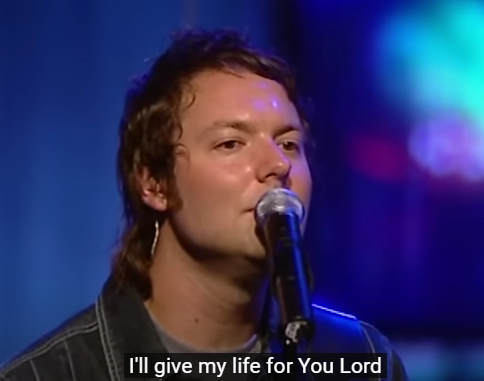
Today’s song No Need to Argue is the title track of their second record which is the band’s best-selling – 17 million copies worldwide as of 2014. Today’s melancholic and reflective track befittingly closes this marvellous record. Also, in light of the late Dolores Mary Eileen O’Riordan tragic passing at a relatively young age, this song feels even more poignant and affecting.

[Verse 1]
There’s no need to argue anymore
I gave all I could, but it left me so sore
And the thing that makes me mad
Is the one thing that I had

[Chorus]
I knew, I knew, I’d lose you
You’ll always be special to me
Special to me, to me

[Verse 2]
And I remember all the things we once shared
Watching TV, movies on the living room armchair
But they say it will work out fine
Was it all a waste of time

[Chorus]
Cause I knew, I knew, I’d lose you
You’ll always be special to me
Special to me, to me

[Verse 3]
Will I forget in time, ah
You said I was on your mind?
There’s no need to argue
No need to argue anymore
There’s no need to argue anymore

No Need To Argue is a smooth and intimate capella song where Dolores comes to term with the end of a special relationship. She has one of the most recognisable voices in rock in the 1990s, where she was known for her lilting mezzo-soprano voice, signature yodel, emphasized use of keening, and strong Limerick accent.

Death (according to the Wikipedia article below)

On 15 January 2018, (day and month of my birthday ’74) Dolores was found unresponsive in the bathroom of her London hotel room. An inquest at Westminster Coroner’s Court held on 6 September, ruled that she died as a result of accidental drowning in a bath following sedation by alcohol intoxication. Empty bottles were found in O’Riordan’s room (five miniature bottles and a champagne bottle) as well as some prescription drugs.

References:
1. No Need to Argue – Wikipedia
2. Dolores O’Riordan – Wikipedia

Tagged with: , ,
Posted in Music

A Hard Rain’s a-Gonna Fall (1962) – Bob Dylan

The key works of Dylan’s canon have invited debate for decades but there is a consensus that ‘A Hard Rain’s A-Gonna Fall‘ represents the first full blossom of Dylan as poet. The song’s “lines of terror” aren’t the finger-pointing literal ballads of the folk movement, but the cascade of symbolist/surrealist images that would later introduce listeners to Mr. Tambourine Man and the bleak Desolation Row. Such ambitious writing came as a shock to those expecting the second-coming of Woody Guthrie: “nothing in Dylan’s canon leads up to this example of wild mercury poetry … he abandoned any pretence that he was just a worried man with a worried mind and grabbed hold of word that has haunted him ever since – poet“. (Clinton Heylin)

Sotheby’s Auction page

This typescript (see image left), which was probably written above the legendary Gaslight Folk Club in August-September 1962 is a highly important early working draft of the song that first revealed Dylan’s poetic ambitions as a songwriter. It was sold by Sotheby’s in 2014 for $400,000.

More cherry – picked from Sotheby’s page:

The folksinger Tom Paxton recalls the origins of the ‘Hard Rain‘:

There was a hide-out room above The Gaslight where we could hang out. Once Dylan was banging out this long poem on Wavy Gravy’s typewriter. He showed me the poem and I asked, ‘Is this a song?’ He said, ‘No, it’s a poem.’ I said, ‘All this work and you’re not going to add a melody?‘”
Wavy Gravy was Hugh Romney who was helping to run The Gaslight as its poetry director.

Dylan’s template for ‘Hard Rain‘ was a traditional British folk-ballad, Lord Randal, from which the song takes its basic question and answer structure and also something of its tone: “The song, like the predecessor ballad, takes poison, and it knows what impends: hell” – Christopher Ricks, Dylan’s Visions of Sin (2001).

[Verse 1]
Oh, where have you been, my blue-eyed son?
And where have you been, my darling young one?
I’ve stumbled on the side of twelve misty mountains
I’ve walked and I crawled on six crooked highways
I’ve stepped in the middle of seven sad forests
I’ve been out in front of a dozen dead oceans
I’ve been ten thousand miles in the mouth of a graveyard

[Refrain]
And it’s a hard, it’s a hard, it’s a hard, it’s a hard
It’s a hard rain’s a-gonna fall

[Verse 2]
Oh, what did you see, my blue-eyed son?
And what did you see, my darling young one?
I saw a newborn baby with wild wolves all around it
I saw a highway of diamonds with nobody on it
I saw a black branch with blood that kept dripping
I saw a room full of men with their hammers a-bleeding
I saw a white ladder all covered with water
I saw ten-thousand talkers whose tongues were all broken
I saw guns and sharp swords in the hands of young children

[Refrain]
And it’s a hard, it’s a hard, it’s a hard, it’s a hard
It’s a hard rain’s a-gonna fall
(Read the remainder here)

There has naturally been much discussion of what ‘Hard Rain‘ portends. Dylan himself has given typically inconsistent answers. He has claimed (and also denied) that it was written in response to the Cuban Missile Crisis, but it was performed at Carnegie Hall on 22 September 1962, some weeks before the crisis erupted, and was almost certainly sung at the Gas Light at an even earlier date. This draft, which surely precedes the Carnegie Hall performance, shows once and for all that the structure and theme were in place before nuclear war was suddenly an imminent possibility. 

In Chronicles Dylan recalls that he took as his inspiration for the song an earlier, weirder, but just as harrowing, America of the 19th century. While poring over microfiche newspapers in the New York Public Library he found a world of slavery, religious movements, riots and anti-immigration violence until, “After a while you become aware of nothing but a culture of feeling, of black days, of schism, evil for evil, the common destiny of the human being getting thrown off course. It’s all one long funeral song…”

As with any great work of art, ‘Hard Rain‘ transcends its inspiration whatever that may have been. It sings of the dreadful allure of the promise of the end of days. Yet the song ends with an act of resilience, as the singer promises to continue with his song, “to tell it, and speak it, and think it, and breathe it“. 

I watched on television live Patti Smith perform Bob Dylan’s A Hard Rain’s A-Gonna Fall at the Nobel Prize Award Ceremony 2016. Patti forgot the lines and said “Sorry, I’m so nervous”. After humbly apologizing, she started again.

I always had a penchant for the orchestral version (see below) when Dylan performed at Nara, Japan, May 22, 1994 with the Tokyo New Philharmonic Orchestra conducted by Michael Kamen.

References:
1. The Freewheelin’ Bob Dylan – Wikipedia
2. A Hard Rain’s a-Gonna Fall – Wikipedia
3. Sotheby’s ‘It’s A Hard Rain’s Gonna Fall’, revised typescript

Tagged with: , ,
Posted in Music

Home Ain’t Where His Heart Is (Anymore) (1996) – Shania Twain

If foundations made of stone can turn to dust
Then the hardest hearts of steel can turn to rust

Home Ain’t Where His Heart Is (Anymore) is my Desert Island Shania Twain song. My music appreciation for this song is so steeped and unwavering. I wouldn’t flinch putting this song in my favourite 10 Country songs of all time. I don’t know how many times I’ve heard it, but it’s a lot. And every time I hear it, I fall in love with it all over again. This song makes you feel heartbroken even if your heart hasn’t been broken. To me lyrically and instrumentally Home Ain’t Where His Heart Is drips this pure ‘Country’ essence. And can we just talk about harmonies!? It really is a privilege to hear this calibre of music and if someone like Shania upsets the country ‘puritan’ apple cart by going commercial afterwards, I don’t really care because anyone who can pull this off deserves to do whatever the hell they want to do.

I might be in a small club in my lofty estimation of this song since it was the seventh single from Twain’s album The Woman In Me and the first to not reach the top 20 on the country chart, but I make no apologies for my unflappable adoration of it. It will always remain a masterpiece to me and demonstrate Shania at the pinnacle of her country music powers.

[Verse 1]
He knew how to reach me deep inside
And he found a part of me I could not hide
And we’d walk and talk and touch tenderly
Then he’d lay me down and make love to me

[Verse 2]
We built a love so strong it couldn’t break
There was not a road we were afraid to take
And we’d kiss all the way from Arkansas to Rome
‘Cause in each other’s arms, we were home sweet home


[Pre-Chorus 1]
But he don’t feel the same
Since our lives became
Years of bills, babies and chains

[Chorus]
Oh, home ain’t where his heart is anymore
He may hang his hat behind our bedroom door
But he don’t lay his head down to love me like before
Home ain’t where his heart is anymore
(read the remainder here)

Home Ain’t Where His Heart Is was written by Twain and her then-husband Robert John “Mutt” Lange. It also serves as the opening track to The Woman in Me. Billboard reviewed the song favorably, calling it a “powerfully affecting ballad” and praising Twain’s “sensitive treatment.”

Shania Twain has sold over 100 million records, making her one of the best-selling music artists of all time and the best-selling female artist in country music history.

References:
1. Home Ain’t Where His Heart Is (Anymore) – Wikipedia

Tagged with: , ,
Posted in Music

Atlantic City (1982) – Bruce Springsteen

The first line, “They blew up the Chicken Man in Philly last night,” was taken from a newspaper article about a mob hit in Atlantic City. The “Chicken Man” was Phil Testa, number two man in the Philadelphia Mob under Angelo Bruno.

After Bruno was murdered in his car, Testa was blown up by a bomb placed under his front porch. These hits were orchestrated by Nicky Scarfo, who took over the Philly boys so he could control the new Atlantic City gambling rackets. He made such a mess of things that he and most of his crew were either murdered or in jail within a few years.
– Bruce Springsteen – Atlantic City (Max at PowerPop)

Atlantic City is one of those Springsteen songs which I hesitate to play because it’s kind of dour just like the whole record Nebraska where it resides, but once I do play it I’m always relieved because I end up enjoying it. It’s an understated sound, but feels atmospheric and haunting. I like his intermittent hollowing in the background too. I’m thankful I was reunited with this song via Max’s blog at PowerPop and surprised to read The Nebraska album attained so much success peaking at No 3 in the Billboard 100, No 3 in the UK, Canada, and New Zealand in 1982.

According to Genius Lyrics:

Atlantic City depicts a young couple’s romantic escape to the New Jersey seaside resort of Atlantic City, where the man in the relationship intends to take a job in organized crime upon arriving in the city.

The song wrestles with the inevitability of death and the hope of rebirth in various ways, especially in life and in the actual city of Atlantic City, which was going through an attempted mob takeover while the state government was trying to implement casino gambling within the city.

Atlantic City started as a demo recorded in early 1981 at Springsteen’s home studio at Colts Neck, NJ called “Fistfull of Dollars” (for the Clint Eastwood movie). He changed the title and the chorus to “Atlantic City” later that year, and on January 3. 1982, recorded 4 takes, along with other “Nebraska” demos that later made up the album of the same name. Take 2 was the one chosen for the album, released in fall 1982.

[Verse 1]
Well, they blew up the chicken man in Philly last night
Now they blew up his house, too
Down on the boardwalk, they’re getting ready for a fight
Gonna see what them racket boys can do

[Verse 2]
Now there’s trouble busing in from out of state
And the D.A. can’t get no relief
Gonna be a rumble out on the promenade
And the gambling commission’s hanging on by the skin of its teeth

[Chorus]
Well now, everything dies, baby, that’s a fact
But maybe everything that dies someday comes back
Put your makeup on, fix your hair up pretty
And meet me tonight in Atlantic City

[Verse 3]
Well, I got a job and tried to put my money away
But I got debts that no honest man can pay
So I drew what I had from the Central Trust
And I bought us two tickets on that Coast City bus

The Band covered this song in 1993, years after Robbie Robertson left. I like this version just as well as Bruce’s original. Levon Helm does a great job on the vocals.
– Read Max’s article on The Band’s version of Atlantic City

References:
1. Atlantic City (song) – Wikipedia

Tagged with: , , ,
Posted in Music

Piano Concerto No. 2 II. Larghetto (1829) – Frederic Chopin (Ft. Arthur Rubinstein)

Chopin in 1829

Piano Concerto No. 2 is the fourth composition from Chopin to be presented here after the last entry – Nocturne Op.9 No.2. I first heard this exquisite piece in a documentary about Polish – American pianist Arthur Rubinstein (see image inset). He is widely regarded as one of the greatest pianists of all time and also many cite him as one of the greatest Chopin interpreters of his time. He played in public for eight decades and he plays Chopin’s Piano Concerto No. 2 in the video presented at the end of this article.

The following I translated from my daughter’s book on Chopin (see image inset):
Son of a Frenchman and Polish woman, Chopin was born 22 de February, 1810. Before he could learn to read he wanted to compose melodies. When he was 8-years old he played for large audiences and at 15 he was considered the finest pianist in Warsaw. Chopin wanted tranquility but in Warsaw large marching bands and the yells from angry people annoyed him. So, he decided to move to Paris where he discovered fame, luxury and high fashion. In Paris everyone celebrated the arrival of Chopin. He was renowned as the ‘Prince of Pianists. Chopin died in Paris at age 39. His last wishes were that they play Mozart at his funeral and let his heart rest forever in the Warsaw Cathedral.

Chopin composed the piece before he had finished his formal education, at around 20 years of age. It was first performed on 17 March 1830, in Warsaw, Poland with the composer as soloist. It was the second of his piano concertos to be published after the Piano Concerto No. 1 (See The Truman Show soundtrack), and so was designated as “No. 2“, even though it was written first.

Melinda Erickson in her ‘A Formal Analysis of Four Selected Piano Concertos of the Romantic Era‘ wrote that Piano Concerto No 2 was work of “undescribable beauty“. This nocturnal movement is said to have been inspired by Chopin’s distant idolization of Konstancja Gładkowska or of Tytus Woyciechowski.

References:
1. Piano Concerto No. 2 (Chopin) – Wikipedia
2. Arthur Rubinstein – Wikipedia

Tagged with: , ,
Posted in Music

Pueblo Nuevo (1997) – Buena Vista Social Club

Rubén González, in a concert with Buena Vista Social Club el 23 de abril de 1998.

Piano master of the Universe… Trumpet second master….

Pueblo Nuevo (New Town) is the third song to be presented here from the music documentary Buena Vista Social Club. Buena Vista (Good View) is a celebration of the music of Cuba. Director Wim Wenders and guitarist Ry Cooder teamed up again (after Paris,Texas) to celebrate Cuba’s “musical golden age” between the 1930s and 1950s. Anyone who is even remotely interested in musical heritage should find Buena Vista captivating. The album was recorded in just six days and contained fourteen tracks; opening with Chan Chan written by Compay Segundo. It went on to become a worldwide phenomenon, selling over 8 million copies. In 2020, the film Buena Vista Social Club was selected for preservation in the United States National Film Registry by the Library of Congress.

I have lived in Latin America for 15 years and heard a great deal of Latina Music and presented a lot of it here. Based on my music appreciation, one of the most reliable forms / genres of Latin music and that which I keep being drawn to is Bolero music and a style called Son Cubano (They are Cubans). Buena Vista is a mellower take on the Cuban son and bolero, as well as the danzón. The latter is the genre associated with today’s featured track Pueblo Nuevo.

Juventud del Pueblo Nuevo” (Youth from the New Town), or simply Pueblo Nuevo (New Town), is a danzón composed by Cuban bassist Israel López Cachao. It is one of his many compositions dedicated to a Cuban venue where he frequently played as part of the charanga Arcaño y sus Maravillas. It has become a standard of the genre, being regularly performed by danzón orchestras over the years.

The Buena Vista Social Club was named after the members’ club in the Buenavista quarter of Havana, a popular music venue in the 1940s. To showcase the popular styles of the time, such as sonbolero (aforementioned) and danzón; they recruited a dozen veteran musicians, some of whom had been retired for many years.

References:
1. Buena Vista Social Club – Wikipedia
2. Buena Vista Social Club (album) – Wikipedia
3. Rafael Ortiz Rodríguez – Cubanos Famosos

Tagged with: , ,
Posted in Music

The Promised Land (2023) – Nikolaj Arcel (Friday’s Finest)

In Danish and Spanish this film title is translated ‘The Bastard‘. Why the innocuous ‘The Promised Land‘ was chosen for its English title is anyone’s guess, because this film is anything but banal. I saw ‘The Bastard‘ at the cinema two days ago and I was left flabbergasted. You recall those inestimable movie experiences where waves of unremitting gratitude envelop you because you are struck with such awe and admiration of the art you are witnessing? Well that’s how I felt throughout this epic historical drama ‘The Bastard‘. This film and another recently reviewed film The Father as well as Dune 2 are three reasons why my 100 Favourite Movies List at IMDB is sorely overdue for an update of new additions and emissions. (Edited: List updated 26/4/2024)

I have always held the Danish actor Mads Mikkelsen in high esteem. Ever since his staggering portrayal of a teacher accused of sexually abusing a child in The Hunt I was on the lookout to watch anything in which he appeared. I thought he couldn’t top his performance in The Hunt, but he has outdone himself in The Bastard. When people down the road remember the legacy of Mads Mikkelsen, who is arguably the finest Scandinavian actor so far this century, I posit that The Bastard will be the film that cinephiles most cherish from him – his signature film; his magnum opus. If I was to reflect on which historical ‘frontier’ epics remind me in scope and storyline of the The Bastard, they would be Dances With Wolves and Braveheart. The major difference for me between those two and The Bastard is they didn’t make my top 100. This Danish entry for the Best International Feature Film at the 96th Academy Awards most certainly did.

IMDB Storyline:
The poor soldier Ludvig Kahlen arrives in 1755 on the barren Jutland heath with a single goal: to follow the king’s call to cultivate the land and thereby achieve wealth and honor himself. But Kahlen quickly makes an enemy. The merciless landowner, Frederik De Schinkel, who is sole ruler of the area, believes that the heath belongs to him and not the king. When De Schinkel’s serf runs away with his wife Ann Barbara and seeks refuge with Kahlen, the landowner does everything to drive Kahlen away and at the same time exact a cruel revenge. Kahlen does not bow, but stubbornly takes up the unequal battle and now risks both his life, but also the bond with the small, troubled family that has arisen around him on the heath.

The Bastard is directed by Nikolaj Arcel and based on a novel by Ida Jessen called The Captain and Ann Barbara. Arcel’s screenplay, written alongside frequent collaborator Anders Thomas Jensen tells a fascinating tale that offers insight into Danish history, while also functioning as a character study. It’s a movie that works on many levels; deftly balancing drama with comedy and violence with silence. The film presents Kahlen as a complex man who can’t see the forest for the trees, so to speak. Over the course of the picture, he undergoes a change of character, realising that there are other aspects to his life he should dedicate his time to, other than his pursuit of dominance over the inhospitable moorland.

This film is so visually evocative, boasting atmospheric cinematography which gives the film a wide, epic look, making the most of the rugged Danish landscape; compounding the harsh isolation of the Jutland moors. The production design is detailed and evocative, creating a period-accurate setting, while the costume design contributes to the narrative and its characters astutely. With a strong screenplay examining interesting themes, witty, minimalist dialogue (thank god) and well-drawn characters, the narrative consistently engages. It contains stupendous performances from all in the cast- led by the incomparable Mads Mikkelsen – The Bastard is a fascinating tale about a conquest of the useless that one wouldn’t want to miss.

The Promised Land had its world premiere on August 31, 2023 at the 80th Venice International Film Festival. On the website Rotten Tomatoes, 96% of 108 critics’ reviews are positive, with an average rating of 7.9/10. The website’s consensus reads: “Mads Mikkelson leads us through the savage terrain of The Promised Land with a glimmer of hope in this epic Nordic tale with Western bones.”

References:
1. The Promised Land (2023 film) – Wikipedia
2. The Promised Land (2023) – IMDB

Tagged with: , , , ,
Posted in Movies and TV

Be My Forever (2014) – Christina Perri (Ft. Ed Sheeran)

‘Big, big singer songwriters as Christina and I are, have a reputation for singing very depressing songs which is kind of why a lot of you are probably here. Because at some point at 2 o’clock in the morning you’ve sat by your lap top with half a glass of empty wine listening to Spotify crying. It happens to the best of us. But now and then Christina and I write happy songs. I probably have one in my career and Christina has done one as well…The happy song we do together I’d like to play for you right now.’

– Ed Sheeran at Air Canada Center in Toronto, 2015

I can’t believe it has been a whole three and a half months since my last Christina Perri post. Previously her songs were cranking out here like hot cakes. Today’s track Be My Forever is the twentieth song by Christina Perri to feature at Observationblogger. To say I’m smitten with her music would be an understatement. It’s funny, but I never imagined my music project would feature Ed Sheeran; the mega famous English singer songwriter who looks like he has gone 15 rounds with an industrial hairdryer. Perri has given him unprecedented access as it were. Good on him. Today’s song is a perky and cheerful number from my favourite female balladeer and troubadour. I wouldn’t consider it top shelf Perri material, but it’s pretty, pretty, pretty good.

[Verse 3: Christina Perri & Ed Sheeran]
You’re my bright blue sky
You’re the sun in my eyes
Oh baby, you’re my life
You’re the reason why
We’re on top of the world
We’re on top of the world now darling, so don’t let go
(One, two, three, four)

[Chorus: Christina Perri & Ed Sheeran]
And oh, we got time
Yeah
So darling just say you’ll stay right by my side
And oh, we got love
Yeah
So darling just swear you’ll stand right by my side

[Hook: Both]
Be my forever (x 6)

Be My Forever appears as the third track on her second studio album, Head or Heart. In a December 2013 interview with Radio.com, Perri revealed she had worked with Ed Sheeran on a track called “Be My Forever”. She stated:

“I was the most in love I may have ever been in my whole life, which is awesome because I knew I had a happy song in me. [..] As much as I love the heart-wrenching stuff, I didn’t want to force a happy song, and I think you can always tell when a song is fake. I remember going in the studio with this guy and him looking at me and I was glowing. And I’m like, I’m so sorry. I’m in love. This is going to be awful. We’re never going to write a song.”

Sheeran and Perri performed it live at Alice in Winterland 2014 on December 12, 2014 and at Ed Sheeran’s concert at Air Canada Center in Toronto on Sunday September 20, 2015.

References:
1. Be My Forever – Ed Sheeran Fandom
2. Head or Heart – Wikipedia

Tagged with: , ,
Posted in Music

The AnkiDroid Collection (Part 57) – Polymath, Christian text & Misanthrope

Ankidroid additions related to Science, History and Philosophy. More information about Anki can be found in this article.

Polymath

Polymath is the description for an individual whose knowledge spans a substantial number of subjects, draws on complex bodies of knowledge to solve problems.

One such example is Albert Schweitzer (pictured left). He was a theologian, organist, musicologist, writer, humanitarian, philosopher, and physician. He received the 1952 Nobel Peace Prize for his philosophy of Reverence for Life

Other people we know who are polymaths include Leonardo DaVinci, Sultan Mehmed II The Conqueror, Leibnitz and Elon Musk. They are successful, genius people because they tried new things and succeeded eventually.

Da Vinci who is famous as a painter only painted 28 paintings. Only 22 of them are left today, the others we know are from his notes. He did not see himself as an artist, he actually aspired to be an architect and engineer. Leonardo left many things unfinished behind, including his engineering designs.

The Earliest Christian Text

In Monday’s News on the March I presented a video interview of biblical scholar James Tabor at Blogging Theology. He contends at 21:30 in the video that the earliest Christian / Jesus movement document is 1 Thessalonians (addressed to the church in Thessalonica, in modern-day Greece) and opines how they were an apocalyptic movement where the Apostle Paul thinks he is going to live to see the end.

Alistair C. Stewart (historical theology teacher) at the Quora web site also suggested I Thessalonians is a good candidate (from the mid 40s CE). It is generally agreed by those qualified to comment that the Pauline letters precede the Gospels, so this would provide the earliest corpus.

Misanthrope

A misanthrope is a person who dislikes humanity and avoids society.

In one of French playwright Moliere’s best plays — and one of the greatest of all comedies — is The Misanthrope, first performed in 1666, when the King of France himself had assumed patronage of Molière’s company, and the actor/playwright was at the height of his career.
Spotlighting the absurdities of social and literary pretension, The Misanthrope shows us a man who is quick to criticize the hypocrisies, inconsistencies and faults of others, yet remains blind to his own. As “the misanthrope” grows more and more irritable with others, the play becomes more and more entertaining, even as a happy ending for the hero seems less and less likely.

Tagged with: , , , , , ,
Posted in Reading

Drift Away (1973) – Dobie Gray

Gray said in an interview that the song’s hook of “Gimme the beat boys and free my soul” has been misheard and incorrectly sung as “Gimme the Beach Boys,” “Gimme the wheat boys” (proposed for a cereal commercial), “Gimme the peat moss,” and “Gimme the meatballs.”
Max at PowerPop

I was reunited with this song at Max’s blog above. It had ‘Drift Away‘ but now it’s back. I never misheard the lyrics like Gray stated, but I sure did ‘dig’ this song in my youth. So put this addition to the project mostly down to ‘nostalgia’. It’s the title track on Dobie Gray’s 1973 record which peaked at No 5 on the Billboard chart and became his Gray’s biggest hit. ‘Drift Away‘ is a song by Mentor Williams, written in 1970 and originally recorded by British singer Mike Berry on his 1972 album Drift Away.

[Verse 1]
Day after day I’m more confused
Yet I look for the light through the pouring rain
You know that’s a game that I hate to lose
And I’m feelin’ the strain
Ain’t it a shame

[Chorus]
Oh, give me the beat boys and free my soul
I wanna get lost in your rock and roll and drift away
Oh, give me the beat boys and free my soul
I wanna get lost in your rock and roll and drift away

[Verse 2]
Beginning to think that I’m wastin’ time
I don’t understand the things I do
The world outside looks so unkind
So I’m countin’ on you
To carry me through
(read the remainder here)

Drift Away has been covered by a plethora of artists, too many to mention here, but I’ll mention a few: The Rolling Stones, Bruce Springsteen, Dolly Parton & Anne Murray (duet), Ringo Starr & Tom Petty (duet) Roy Orbison, Alanis Morisette & yours truly (in the shower).

Hey, just listen to the short opening guitar here and compare it to the opening of Jason Mraz’s I’m Yours. ‘Love and theft’ my friends.

“I think one of the hardest things for me to learn about songwriting was to really expose my feelings and weaknesses and to write personal, emotional things. As soon as I started doing that, I realized other people were relating to my songs. You can study how to write and spend a lot of time writing, but without this emotional content in a song, it’s just not there. ‘Drift Away’ was a big breakthrough for me. It was a song where it suddenly was okay for me to write about being hurt and let people know that I had been hurt and I wasn’t afraid to expose my feelings.”
– Mentor Williams (at Songfacts)

References:
1. Drift Away – Wikipedia

Tagged with: ,
Posted in Music

Follow Blog via Email

Enter your email address to follow this blog and receive notifications of new posts by email.

Join 753 other subscribers

← Back

Thank you for your response. ✨