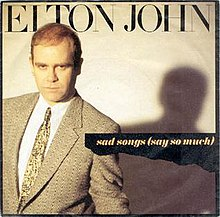
I mentioned in the article of Elton John’s song Sacrifice a few days ago another one of his would be forthcoming and here it is. I am not so enamoured with Sad Songs now as I was back then, but it brings back some good memories. When I was in the boy scouts in Western Sydney they had a badge for ‘entertainment’ and I sang today’s featured track to earn that recognition. Sad Songs (Say So Much) is the closing track on his 18th studio album Breaking Hearts, written by John and Bernie Taupin, released in 1984 as the lead single of the album. I liked another song from this record called Passengers.
[Verse 1] Guess there are times when we all need to share a little pain And ironin’ out the rough spots Is the hardest part when memories remain And it’s times like these when we all need to hear the radio ‘Cause from the lips of some old singer We can share the troubles we already know
[Chorus] Turn ’em on, turn ’em on Turn on those sad songs When all hope is gone (Ah) Why don’t you tune in and turn them on? They reach into your room, oh-oh-oh, oh Just feel their gentle touch (Gentle touch) When all hope is gone (Ooh) Sad songs say so much
[Verse 2] If someone else is sufferin’ enough, oh, to write it down When every single word makes sense Then it’s easier to have those songs around The kick inside is in the line that finally gets to you And it feels so good to hurt so bad And suffer just enough to sing the blues
Sad Songs reached No. 7 on the UK chart and No. 5 on the US Billboard Hot 100 chart. The lyrics describe how it sometimes helps for someone who is feeling sad, or who has lost a partner, to listen to old radio blues classics. The music video below was shot on a street in Rushcutters Bay, Sydney.
“…The Pretender, These Days, For Every Man, I’m Alive, Fountain of Sorrow, Running On Empty, For a Dancer, Before the Deluge. Now, I know the Eagles got in first; but let’s face it it – and I think Don Henley would agree with me – these are the songs they wish they had written. I wish I had written them myself, along with Like a Rolling Stone and Satisfaction…” – Bruce Springsteen in 2004 as part of his Rock & Roll Hall of Fameinduction speech for Jackson Browne.
Late for the Sky by Jackson Browne was recommended to me by blogger friend Christian at Christian’s Music Musings. If you would like to learn more about Jackson Browne and Christian’s personal connection with his music, then I highly recommend his article My Playlist: Jackson Browne. The above quote by Springsteen I lifted from that very article. In fact there is a plethora of Jackson Browne music and discussion in his blog, so do yourself a favour and pop on by. I, on the other hand am largely unfamiliar with his music although I liked listening to Running on Empty growing up. I love the movie by the same name that I reviewed back in 2019 which was a starring vehicle for the infinitely talented late- great River Phoenix, but has no connection with the Browne song.
What always appealed to me listening to Jackson Browne’s music was his soothing voice which has a blend of warmth, intimacy, and emotional depth. That is why I am so fond today’s featured track Late for the Sky because it showcases what I find so alluring about his voice. The song is slow-burning and ebbs and flows like a meandering river or the inward and outward movement of ocean tides. AllMusic critic William Ruhlmann described the song as a “slow, piano-based ballad in [Browne’s] familiar style” that is “a typically eloquent description of romantic discord.” The lyrics tell of a relationship that is doomed to fail because the singer’s lover’s expectations of him are too great.
Late for the Sky is the title track from his third studio album which peaked at number 14 on Billboard‘s Pop Albums chart. In 2020, the album was deemed “culturally, historically, or aesthetically significant” by the Library of Congress and selected for preservation in the National Recording Registry. The song was used in Martin Scorsese’s 1976 film, Taxi Driver, in a scene where Robert De Niro’s character “loses what’s left of his loose grip on reality.“
[Verse 1] Now the words had all been spoken And somehow the feeling still wasn’t right And still we continued on through the night Tracing our steps from the beginning Until they vanished into the air Trying to understand how our lives had led us there Looking hard into your eyes There was nobody I’d ever known Such an empty surprise To feel so alone
[Verse 2] Now for me some words come easy But I know that they don’t mean that much Compared with the things that are said when lovers touch You never knew what I loved in you I don’t know what you loved in me Maybe the picture of somebody you were hoping I might be?
[Bridge] Awake again, I can’t pretend And I know I’m alone And close to the end Of the feeling we’ve known
[Chorus] How long have I been sleeping? How long have I been drifting alone through the night? How long have I been dreaming I could make it right If I closed my eyes and tried with all my might To be the one you need?
My wife, Martha, introduced me to this song, when all we had was each other. We were married 23 years and she has now been gone for 11. It’s not our story exactly, but this song still makes me cry. -@vgalea (see YT comments in the audio link below)
Martha is the second song to feature here from Tom Waits’ debut album Closing Time after his first entry I Hope I Don’t Fall in Love With You. That song and today’s featured track are from Tom’s pre-minstrel days and are about as mellow as he gets. They are both hopelessly romantic and these lines from Martha in particular: There was no tomorrows, we packed away our sorrows / And we saved them for a rainy day remind me of what I tried to invoke in my reflective prose called Mornington. But there is a reason why Tom is a world renowned lyricist / writer of his epoch (not to mention musician, composer, singer, and actor) and I’m not.
Tom has a penchant for crafting songs that feel like short films or poignant novels. Martha is no exception. This ballad tells the tender, nostalgic story of an old man reaching out to a long-lost love, evoking powerful emotions through its simple yet profound narrative. Tom’s contemplative lyrics draw my mind to other sentimental nostalgic ballads like Bruce Springsteen’s The River, Leonard Cohen’s Chelsea Hotel, Joan Baez’s Diamonds and Rust and Christina Perri’s Back in Time.
[Verse 1] Operator, number please, it’s been so many years Will she remember my old voice while I fight the tears? Hello, hello there, is this Martha? This is old Tom Frost And I am calling long distance, don’t worry about the cost ‘Cause it’s been forty years or more, now Martha please recall Meet me out for coffee where we’ll talk about it all
[Chorus] And those were the days of roses, of poetry and prose And Martha all I had was you and all you had was me There was no tomorrows, we packed away our sorrows And we saved them for a rainy day
[Verse 2] And I feel so much older now, you’re much older, too How’s your husband? And how’s your kids? You know that I got married too Lucky that you found someone to make you feel secure ‘Cause we were all so young and foolish, now we are mature
[Chorus] And those were the days of roses, of poetry and prose And Martha, all I had was you and all you had was me There was no tomorrow, we packed away our sorrows And we saved ’em for a rainy day
[Verse 3] And I was always so impulsive, I guess that I still am And all that really mattered then was that I was a man I guess that our being together was never meant to be But Martha, Martha, I love you, can’t you see?
[Chorus] And those were the days of roses, of poetry and prose And Martha all I had was you and all you had was me There was no tomorrows, we packed away our sorrows And we saved ’em for a rainy day
[Outro] And I remember quiet evenings trembling close to you
Closing Time was the debut record from Tom Waits and is noted as being predominantly folk influenced. It did not chart and received little attention from music press. Some songs from the album were covered by Tim Buckley and Bette Midler. The album has since gained a contemporary cult following among rock fans. Tom Waits began his musical career in 1970, performing every Monday night at The Troubadour (featured in Elton John’s recent biopic – Rocketman), a venue in West Hollywood. In Rolling Stone, critic Stephen Holden praised Closing Time as “a remarkable debut album“. William Ruhlmann, in a retrospective AllMusic review, holds the album in high regard, describing Waits’ “lovelorn lyrics” as being “sentimental without being penetrating“, while also noting Waits’ gift for ‘self-conscious melancholy“.
Sacrifice inaugurates all ‘current’ (yet subject to change) 161 songs starting with ‘S’ in the music library project. That’s a lot of music, which will take at least the rest of the year to unpack. You thought that was a lot? Can you imagine songs starting with ‘T’ total – 183! That gives you a glimpse of what I will be doing (and hopefully you will be listening to) in 2025. Oh and a ‘heads-up’….another Elton song is due for release here in the upcoming days. If you can guess which one that will be, you will receive an Observation Blogger virtual ‘high five and on the flip-side‘. (Hint: the song naturally starts with ‘Sa……’ and it’s not Saturday Night’s Alright (For Fighting)‘). Good luck folks.
Elton had a resurgence in the early 90’s with hits like Sacrifice, Healing Handsboth from his 1989 record Sleeping in the Past (it wasn’t until ’90 that Sacrifice got its just-deserts), The One record in 1992 and of course Can You Feel the Love Tonight and Circle of Life from the iconic 1994 movie – The Lion King.
Allow me to digress..what amazed me on the musical front when I came to Colombia in 2009 was how scantily known Elton John was, not least of all his music; while other western (English sung) music from the likes of Guns N Roses, Air Supply, Queen, Michael Jackson, and Metallica were and remain household names. This was mainly due to which ‘pirated music’ was disseminated on the streets and developed traction. But that ‘history’ would require at least another article to explore thoroughly.
There was just one song by Elton which appeared frequently on Colombian music playlists and that is today’s featured track – Sacrifice. Few could tell you who sang it and almost no one was familiar with Elton’s 70’s classic output. I believe that is starting to change since music has become more accessible due to digital music applications like Spotify etc. Also a shout – out to Elton’s biopic Rocketman that has become a regular feature on Cable TV here and no doubt drawing a deluge of new fans to his music.
Sacrifice was written by Elton John and his long-time collaborator Bernie Taupin. Elton John himself has described Sacrifice in Rolling Stone as one of the best songs he and Taupin have ever written, which is a high compliment considering their extensive catalogue of hits. The lyrics of Sacrifice tell a story of a relationship strained by infidelity and emotional distance. Unlike many of John’s more upbeat tunes, this song delves into the complexities of love and the pain of realizing that sometimes, love alone isn’t enough to keep a relationship intact.
Despite its initial release as a single in 1989, Sacrifice didn’t achieve immediate success. It wasn’t until 1990, when it was re-released in the UK, that the song truly took off. It became Elton John’s first solo number-one hit in the UK. The song also performed well internationally, reaching the top 10 in several countries including Ireland, France, and Australia.
[Verse 1] It’s a human sign When things go wrong When the scent of her lingers And temptation’s strong Into the boundary Of each married man Sweet deceit comes callin’ And negativity lands
[Pre-Chorus] Cold, cold heart Hardened by you Some things lookin’ better, baby Just passin’ through
[Chorus] And it’s no sacrifice Just a simple word It’s two hearts livin’ In two separate worlds But it’s no sacrifice No sacrifice It’s no sacrifice at all
[Verse 2] Mutual misunderstandin’ After the fact Sensitivity builds a prison In the final act We lose direction No stone unturned No tears to damn you When jealousy burns
[Verse 9] Now they asked me to read a poem At the sorority sisters home Ah got knocked down and my head was swimmin’ I wound up with the Dean of Women Yippee! I’m a poet, and I know it Hope I don’t blow it
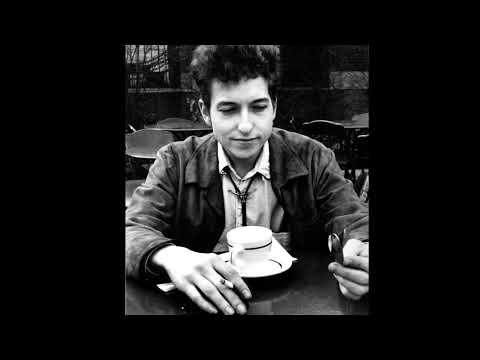
On June 14th this year, I wrote an article on Dylan’s Ring Them Bells and fellow blogger aficionado Nancy at The Sicilian Storyteller responded, ‘I have great memories of teaching a modified version of this song to our church’s Children’s Choir. Luckily for me the pastor at the time was a Dylan fan!‘ Her comment rejigged my memory of when I as Division leader led my team to sing for Music Night today’s featured track – ‘I Shall Be Free No 10’. I always considered it Dylan’s funniest lyricism and wordplay in a song. What flabbergasted me was when I searched No. 10 in my music library project I couldn’t find it. Like yesterday’s Tom Petty’s track – I Won’t Back Down I had (nearly unforgivably so) let it slip beneath the cracks.
A lot of people think that Bob Dylan’s 1965 masterpiece Subterranean Homesick Blues may well have been the first ever ‘Rap‘ song, but one could argue that I Shall Be Free No. 10 which precedes it, exhibits predominant features of the rap genre including the following: – Dylan’s rhythmic spoken delivery set to a consistent beat or rhythm, – How it features an ‘improvisational feel’, clever wordplay, cultural references, and a stream-of-consciousness style, elements that are central to many rap lyrics, and – social and political commentary, and Dylan’s song, though humorous and absurdist, touches on contemporary issues and critiques, similar to how many rap songs address societal themes.
Nestled in the middle of his album Another Side of Bob Dylan (which was one of the first I procured in my Dylan journey) I Shall Be Free No. 10 as alluded to above is a delightful blend of humor, social commentary, and what can only be described as proto-rap. It is the whimsical sequel to Dylan’s earlier song I Shall Be Free from his 1963 album The Freewheelin’ Bob Dylan. While its predecessor was a more straightforward folk tune, “No. 10” dives headfirst into a rambling, free-associative monologue that showcases Dylan’s knack for improvisation. Recorded in just one session on June 9, 1964, this track captures the spontaneity and wit that characterized much of Dylan’s early work. It has garnered a cult following among Dylan aficionados such as yours truly who appreciate its offbeat charm and sharp humor.
[Verse 1] I’m just average, common too I’m just like him, and the same as you I’m everybody’s brother and son I ain’t different than anyone Ain’t no use a-talk to me It’s just the same as talkin’ to you
[Verse 2] I was shadow boxing early in the day I figured I was ready for Cassius Clay I said “Fee, fie, fo, fum, Cassius Clay, here I come 26, 27, 28, 29, I’m gonna’ make your face look just like mine Five, four, three, two, one, Cassius Clay you’d better run 99, 100, 101, 102, your ma won’t even recognize you 14, 15, 16, 17, 18, 19, gonna knock him clean right out of his spleen”
[Verse 3] Well, I don’t know, but I’ve been told The streets of heaven are lined with gold I ask ya’ how things could get much worse If the Russians happen to get up there first Wowee! Pretty scary!
[Verse 4] Now, I’m liberal, but to a degree I want everybody to be free But if you think I’ll let Barry Goldwater Move in next door and marry my daughter You must think I’m crazy! I wouldn’t let him do it for all the farms in Cuba
[Verse 5] Well, I set my monkey on the log And ordered him to do the Dog He wagged his tail and shook his head And he went and did the Cat instead He’s a weird monkey, very funky
[Verse 6] I sat with my high-heeled sneakers on Waitin’ to play tennis in the noonday sun I had my white shorts rolled up past my waist And my wig-hat was fallin’ in my face But they wouldn’t let me on the tennis court
[Verse 7] I got a woman, she’s so mean She sticks my boots in the washing machine Sticks me with buckshot when I’m nude Puts bubblegum in my food She’s funny, wants my money, calls me “honey”
[Verse 8] Now I got a friend who spends his life Stabbin’ my picture with a Bowie knife Dreams of stranglin’ me with a scarf When my name comes up he pretends to barf I got a million friends!
[Verse 9] Now they asked me to read a poem At the sorority sisters home Ah got knocked down and my head was swimmin’ I wound up with the Dean of Women Yippee! I’m a poet, and I know it Hope I don’t blow it
[Verse 10] I’m gonna grow my hair down to my feet so strange So I look like a walking mountain range And I’m gonna’ ride into Omaha on a horse Out to the country club and the golf course Carryin’ The New York Times, shoot a few holes, blow their minds
[Verse 11] Now you’re probably wonderin’ by now Just what this song is all about What’s probably got you baffled more Is what this thing here is for:
(plays song’s riff)
It’s nothin’ It’s sumpin’ I learned over in England!
“At the session George Harrison sang and played the guitar. I had a terrible cold that day, and George went to the store and bought a ginger root, boiled it and had me stick my head in the pot to get the ginger steam to open up my sinuses, and then I ran in and did the take.” – Tom Petty
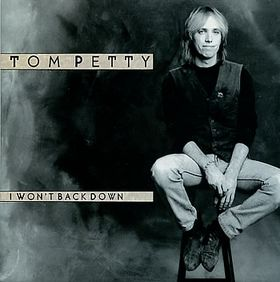
I was surprised to learn when I heard this song recently that I hadn’t already added it to my music library. Hence I am backtracking in the alphabetical listing to make amends since I always liked it ever since I first heard it as a 15 year-old. Outside of his input in the super group The Traveling Wilburys, I Won’t Back Down is the third song from Petty to feature here after his previous entries Learning to Fly and Free Fallin’. I have always considered Petty one of the great bastions of Musica Americana in the midst of the synthesiser and digital music revolution of the 80’s.
What I admired most about I Won’t Back Down is what it represented; an anthem of resilience, a rallying cry for those standing firm in the face of adversity. Due to its themes, the song was played often on American radio following the September 11 attacks. Released in 1989 as the lead single from his first solo album, Full Moon Fever, this track has cemented its place in rock history. It was co-written by Tom Petty and his longtime collaborator Jeff Lynne who has featured here with ELO and The Traveling Wilburys.
Upon its release, I Won’t Back Down achieved considerable success reaching number 12 on the Billboard Hot 100. It has been covered by numerous artists across different genres, including Johnny Cash and Pearl Jam. Petty once said, “That song frightened me when I wrote it. I didn’t understand it. But when I finished it, I understood it was about standing up for yourself” (Rolling Stone). Jeff Lynne, in an interview, mentioned, “It was a song that just came together so naturally. The message is simple but powerful” (Classic Rock).
[Verse 1] Well, I won’t back down No, I won’t back down You can stand me up at the gates of Hell But I won’t back down No, I’ll stand my ground Won’t be turned around And I’ll keep this world from draggin’ me down Gonna stand my ground And I won’t back down
[Chorus] (I won’t back down) Hey, baby, there ain’t no easy way out (I won’t back down) Hey, I will stand my ground (Ooh) And I won’t back down
[Verse 2] Well, I know what’s right I got just one life In a world that keeps on pushin’ me around But I’ll stand my ground And I won’t back down
Allow me to get this out of my system…Today is heaven as far as World Football is concerned and I couldn’t be more excited: England – Switzerland, Holland – Turkey, Colombia – Panama and Uruguay – Brasil. I’m almost salivating writing it. Colombia turns into a street festival when their football team plays. Not only that, my favourite Australian football team Richmond Tigers are set to play in 15 minutes time. Now onto to today’s featured track….
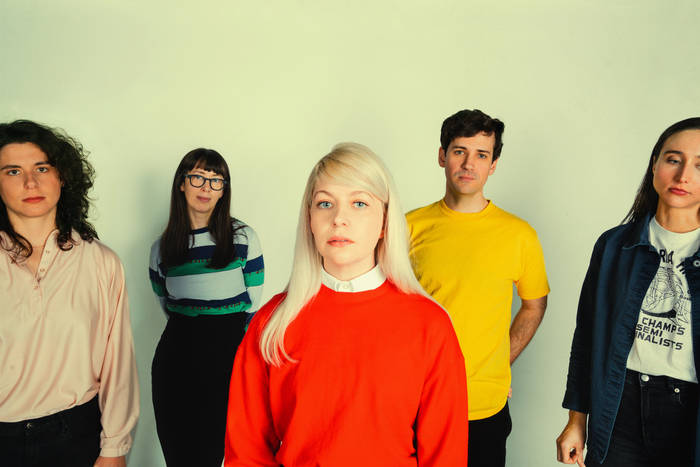
If I was currently in my teens or early twenties I’m almost certain I would be fully invested in the music by Alvvays. Perhaps even bought their albums and gone to see them in concert. This is the sixth appearance by them here and be assured it won’t be the last. Easy On Your Own? was the second song released from their latest record Blue Rev which has received widespread acclaim from music critics. At Metacritic, which assigns a normalized rating out of 100 the album received an average score of 86. Tim Sendra at Allmusic declared that, “the songs are memorable and fun, the performances are inspired, and the production is varied and always interesting,” and that “the result is a heavenly indie pop hit guaranteed to make their already besotted fans fall even more head over heels in love with the band.”
Wikipedia says Easy On Your Own? is a dream pop, indie rock and shoegaze song. The track uses audio feedback, distortion, and the glide guitar technique. Molly Rankin’s vocals are low in the mix compared to the instrumental. Opinions differ about what the lyrics mean. According to Stereogum, the lyrics of Easy On Your Own? are about “feeling disaffected and worrying about the future“. It could also be read as a lament on being alone after a breakup like what Consequence said: ‘the lyrics are about “[working] through a breakup“. I like this one from Paste which fuses the two camps: “neatly blurs the lines between a floundering relationship and the drudgery of our current times“. I love the strong imagery in the line “crawling in monochromatic hallways“.
I consider Easy On Your Own? a great ‘zeitgeist‘ song for this current epoch. I hope you enjoy it. Thanks for reading as always.
I dropped out College education’s a dull knife If you don’t believe in the lettered life Then maybe this is our only try And how I gauge Whether this is stasis or change Fill out the requirements on the page And burn out before you can get paid
[Pre-Chorus] ‘Cause we’re always Crawling in monochromatic hallways Dream we pull a one-eighty some day
[Chorus] If you don’t like it, well Say it’s over, well Weekends alone
[Verse 2] Evеr lay back and watch the sunrise? Ever hеar violins in your mind? You know it’s only wind outside
[Pre-Chorus]
[Chorus] If you don’t like it, well (You don’t like it) Say it’s over, well (Say it’s over) Weekends alone Does it get easier on your own? Does it get easier on your own?
[Bridge] I waited so long for you Wasted some of the best years of my life And I wanted to see it through This time This time
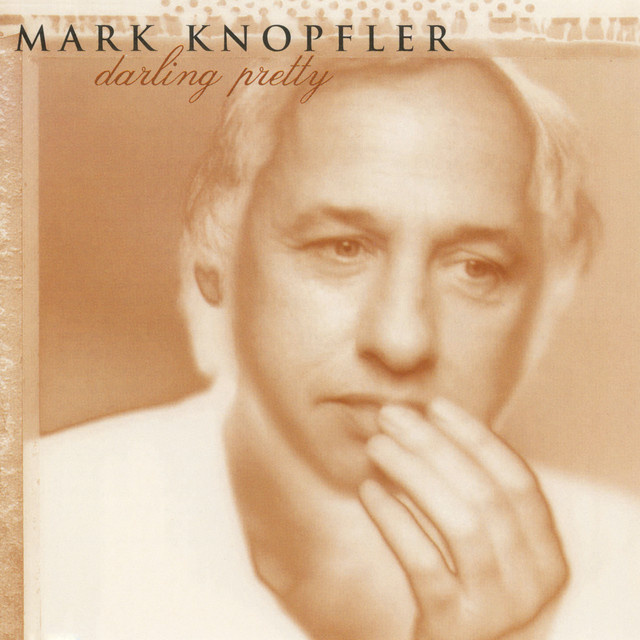
Darling Pretty was the first solo song by Mark Knopfler I was drawn to after the 2nd and final break up of Dire Straits in 1995. It’s a beautifully crafted rock ballad about someone he adores. It was the first single released from his debut solo studio album Golden Heart and reached number 33 in the UK Singles Chart. It was also featured in the 1996 film Twister. Following a successful career leading British rock band Dire Straits and composing a string of critically acclaimed film soundtrack albums, Knopfler recorded his first solo album, drawing upon the various musical influences he’d engaged since emerging as a major recording artist in 1978. The album reached the top-10 position on charts in Austria, Belgium, Finland, Italy, the Netherlands, Norway, Sweden, Switzerland and the United Kingdom, but strangely peaked at 105 on the Billboard 200 in the United States.
In an interview, Knopfler mentioned that the inspiration for Darling Pretty came from his reflections on love and the passage of time. The song weaves a tender narrative, underscored by Knopfler’s evocative guitar melodies and heartfelt lyrics. It’s a love song, but with the depth and nuance that Knopfler’s fans have come to expect. Darling Pretty made its live debut during Knopfler’s Golden Heart tour in 1996. The tour marked a significant shift as Knopfler transitioned from bandleader to solo artist, embracing a more personal and introspective performance style. The inaugural concert featured a mix of Dire Straits classics and Knopfler’s new solo material, with Darling Pretty often serving as an emotional highlight of the set. It solidified Knopfler’s reputation as a solo artist capable of producing deeply resonant music.
[Verse 1] It’s time to come away, my darling pretty It’s time to come away on the changing tide Time to come away, darling pretty And I need you darling by my side
[Verse 2] Heal me with a smile, darling pretty Heal me with a smile and a heart of gold Carry me awhile, my darling pretty Heal my aching heart and soul
[Bridge] Just like a castaway Lost upon an endless sea I saw you far away Come to rescue me
[Verse 3] Cast away the chains, darling pretty Cast away the chains away behind Take away my pain, my darling pretty And the chains that once were yours and mine
[Verse 4] There will come a day, darling pretty There will come a day when our hearts can fly Love will find a way, my darling pretty Find a heaven for you and I Love will find a way, my darling pretty Find a heaven for you and I
Russian Dance is one of 6 instrumentals from Tom Waits 12th studio album The Black Rider which is probably his most extreme album, not for its individual songs, but the contrasts between them. The Black Rider was a project born from a collaboration with playwright Robert Wilson and writer William S. Burroughs. The album was the soundtrack to a musical of the same name, an adaptation of the German folktale “Der Freischütz,” which tells the story of a man who makes a pact with the devil (Faustian Bargain) to prove his worth as a hunter in order to marry the huntsman’s daughter. (Read more here).
Waits’ composition for Russian Dance seems inspired by the musical traditions of Eastern Europe, particularly the frenetic energy and melancholic undertones of Russian and Balkan folk music. It captures the essence of a raucous celebration, and also a sense of urgency and madness where folklore and reality blur, reflecting the character’s descent into chaos as he grapples with his Faustian bargain.
At 2:08 Tom can be heard yelling the following which was detected as ‘Ukrainian’ on Google Translate. Both Ukrainian and Russian belong to the East Slavic language family. Ukraine and Russia share a significant amount of vocabulary, with estimates suggesting that they share around 62% of their vocabulary. Ukraine’s independence was recognized by the international community in December 1991:
Devils & Dust is a latter day Springsteen acoustic number I’ve always been fond of and draws upon similar themes of lost hope and despair as his solo 1996 acoustic number Dead Man Walkin’ from the movie soundtrack of the same name. Faith isn’t even enough to confront the evil which wells inside and the impending harm it will cause. Devils & Dustis the title track on Bruce Springsteen’s thirteenth studio album and concerns the Iraq War. According to Wiki, ‘the song tells the story of a troubled American soldier who is presumably serving in the 2003 invasion of Iraq and questions his role and struggles to find guidance in his mission all the while wary of the changes he is undergoing‘.
The protagonist is accompanied by fellow soldier ‘Bobby’ and they are a long, long way from home. There is no turning back from the road which they have gone down. And the narrator’s reliance upon God is tested when he sees Bobbie, dying in “a field of blood and stone.” The line “I got God on my side” which begins each each chorus might be a reference to Bob Dylan’s classic anti-war song With God on Our Side.
[Verse 1] I got my finger on the trigger But I don’t know who to trust When I look into your eyes There’s just devils and dust
[Verse 2] We’re a long, long way from home, Bobbie Home’s a long, long way from us I feel a dirty wind blowing Devils and dust
[Chorus] I got God on my side And I’m just trying to survive What if what you do to survive Kills the things you love Fear’s a powerful thing, baby It can turn your heart black, you can trust It’ll take your God-filled soul And fill it with devils and dust
[Verse 3] Well, I dreamed of you last night In a field of blood and stone The blood began to dry The smell began to rise
[Verse 4] Well, I dreamed of you last night, Bobbie In a field of mud and bone Your blood began to dry And the smell began to rise
[Chorus]
[Verse 5] Now every woman and every man They want to take a righteous stand Find the love that God wills And the faith that He commands
[Verse 6] I’ve got my finger on the trigger And tonight faith just ain’t enough When I look inside my heart There’s just devils and dust
[Chorus]
Springsteen originally soundchecked the song with the E Street Band during The Rising Tour on April 11, 2003, at Pacific Coliseum in Vancouver, British Columbia, Canada. As recorded for the Devils & Dust album, the song has a dynamic arrangement, belying the common image of the album being “acoustic” or “folk” in the sense that each successive verse is augmented by new instrumentation as follows:
the ominous synthesizer-and-horns in the 2nd
cyclical strings half way through that,
harmonica solo
drums and bass from kick in after second chorus
third verse quiet again before drums and percussion return
a reprise of the harmonica line carries the outro.
Devils & Dust saw scant radio airplay and peaked at No 72 on the Billboard Hot 100. The song gained critical praise as well as a Song of the Year nomination at the Grammys and took home the prize for Best Solo Rock Vocal Performance. His other two nominations lost to U2 songs. Springsteen also gave a solo performance which was preceded by a glowing introduction from actor Tom Hanks and immediately followed by a brief editorial exclamation from Springsteen, “Bring ’em home!” making reference to his desire for withdrawal of U.S. troops from Iraq.
The music video below of Devils & Dust was filmed at an empty Paramount Theatre in Asbury Park, New Jersey.