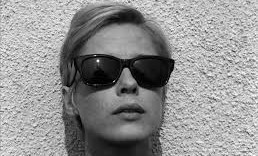

Lisa Spinelli: Talent is so fragile and so rare. And our culture does everything to crush it. I mean even at four or five, they’re coming into school attached to their phones, talking only about TV shows and video games. It’s a materialistic culture, and it doesn’t support art, or language, or observation. Even my own children, who are great, they don’t read. You know, you think maybe it’s just a phase. But I worry that it’s something larger. A lack of curiosity. A lack of reflection. No one has space for poetry.
The Kindergarten Teacher is the fourth movie to be presented here which features a member of the Gyllenhaal family. The first movie was Waterland directed by Stephen Gyllenhaal (father of actors Jake and Maggie Gyllenhaal), the second Brokeback Mountain starring Jake, the third Crazy Heart with Maggie in a supporting role and now today’s movie which showcases the achingly alluring performance by Maggie who plays Kindergarten teacher Lisa Spinelli. I had wanted to see this movie years ago but felt some trepidation given the sensitive subject matter involving such a young co-protagonist.
IMDB Storyline:
Lisa Spinelli is a Staten Island teacher who is unusually devoted to her students. When she discovers one of her five-year-olds is a prodigy, she becomes fascinated with the boy, ultimately risking her family and freedom to nurture his talent.
Yesterday I took the plunge on this movie and I’m sure glad I did. It’s an intellectual and emotional tour de force. I appreciate movies which don’t insult its audiences with simplistic concepts, stereotypical plots, caricature portrayals and contrived endings. It is a painful telling of the society we live in. It is directed with velvet gloves by treating its topics and protagonists with deft poise and sensibility. There is nothing crazy in this film and it has just one significant plot twist, but that didn’t stop it from building and building until I just couldn’t wait to see what happened next. The characterisation was what really made The Kindergarten Teacher shine. Only two characters really needed development, and they got all of it. I was enthralled in their relationship.
The Kindergarten Teacher is a modern-day psychological drama which doesn’t tell you what to think, but demands one does their own thinking to unpack its purpose. It holds a mirror up to ourselves to make us question our innate desires, actions, and natural aggression. Fundamentally, ‘the Teacher’ finds these same underlying biological instincts at loggerheads or severely limited and repressed by the Super-Ego (Civilization and Society), but she doesn’t seem to care about that conflict since what she perceives she is doing is nurturing and upholding ‘art’ (in the form of her 5 year-old student prodigy) in the face of hell-bent materialism.
The Kindergarten Teacher is based on the 2014 Israeli film of the same name. The film had its world premiere at the Sundance Film Festival on January 19, 2018. Director Sara Colangelo won ‘Directing’ at the same event. On Rotten Tomatoes, 90% of 103 critics’ reviews are positive, with an average rating of 7.5/10. The website’s critical consensus reads, “Elevated by a bravura performance from Maggie Gyllenhaal, The Kindergarten Teacher is one American remake that retains its impact the second time around.”
References:
1. The Kindergarten Teacher (2018) – IMDB
2. The Kindergarten Teacher (2018 film) – Wikipedia







 Observation Blogger