On the Turning Away (1987) – Pink Floyd

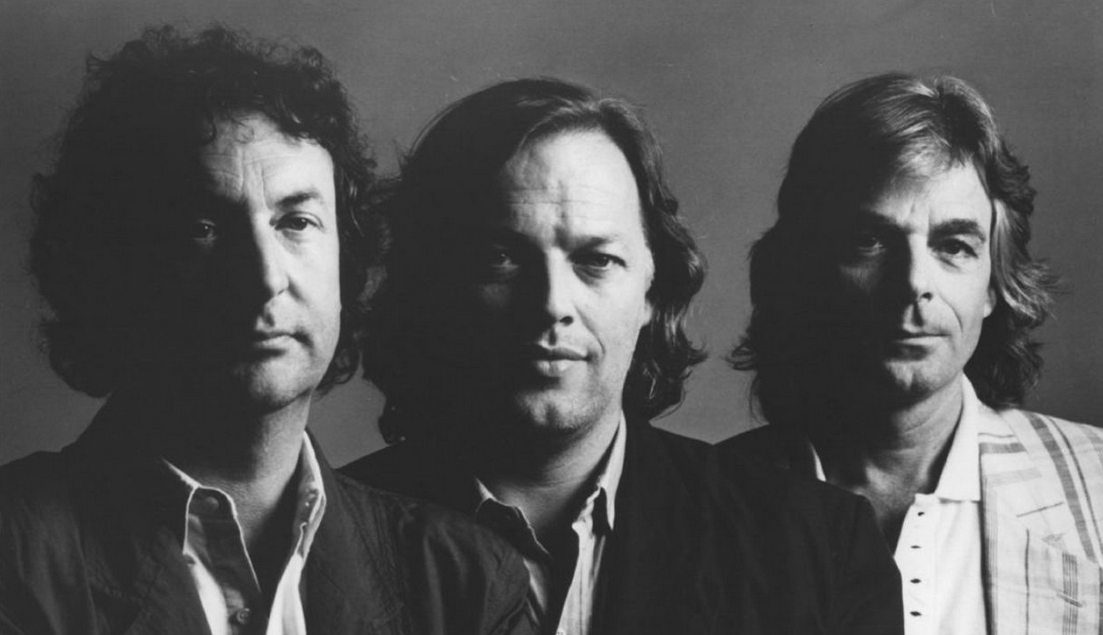
On the Turning Away is the second song to feature here from Pink Floyd’s 1987 record A Momentary Lapse of Reason. Their previous entry was Learning to Fly – atmospheric rock at its best. Although described as a protest song released after the departure of Roger Waters, On the Turning Away was symbolic and prognostic of significant world events which would take place at the end of the 80’s and turn of the 90’s. It was also the predecesor of this European ‘change’ music reflecting the iron curtain and Soviet Union collapse (see Winds of Change by the Scorpions).

[Verse 1]
On the turning away
From the pale and downtrodden
And the words they say
Which we won’t understand
“Don’t accept that what’s happening
Is just a case of all the suffering
Or you’ll find that you’re joining in
The turning away”

[Verse 2]
It’s a sin that somehow
Light is changing to shadow
And casting its shroud
Over all, we have known
Unaware how the ranks have grown
Driven on by a heart of stone
We could find that we’re all alone
In the dream of the proud

The song was a staple of live shows from the 1987–89 world tours in support of A Momentary Lapse of Reason and was one of the songs in rotation during the 1994 tour in support of The Division Bell. Released as the second single from the album, it reached number one on the Billboard Album Rock Tracks chart in early 1988.

A Momentary Lapse of Reason is the thirteenth studio album by Pink Floyd. It was recorded primarily on guitarist David Gilmour’s converted houseboat, Astoria. In the recording process, Gilmour experimented with songwriters but settled on Anthony Moore, who was credited as co-writer of Learning to Fly and On the Turning Away. Gilmour later said that the project had been difficult without Waters.

References:
1. On the Turning Away – Wikipedia
2. A Momentary Lapse of Reason – Wikipedia
Tagged with: , ,
Posted in Music

On the Level (2016) – Leonard Cohen

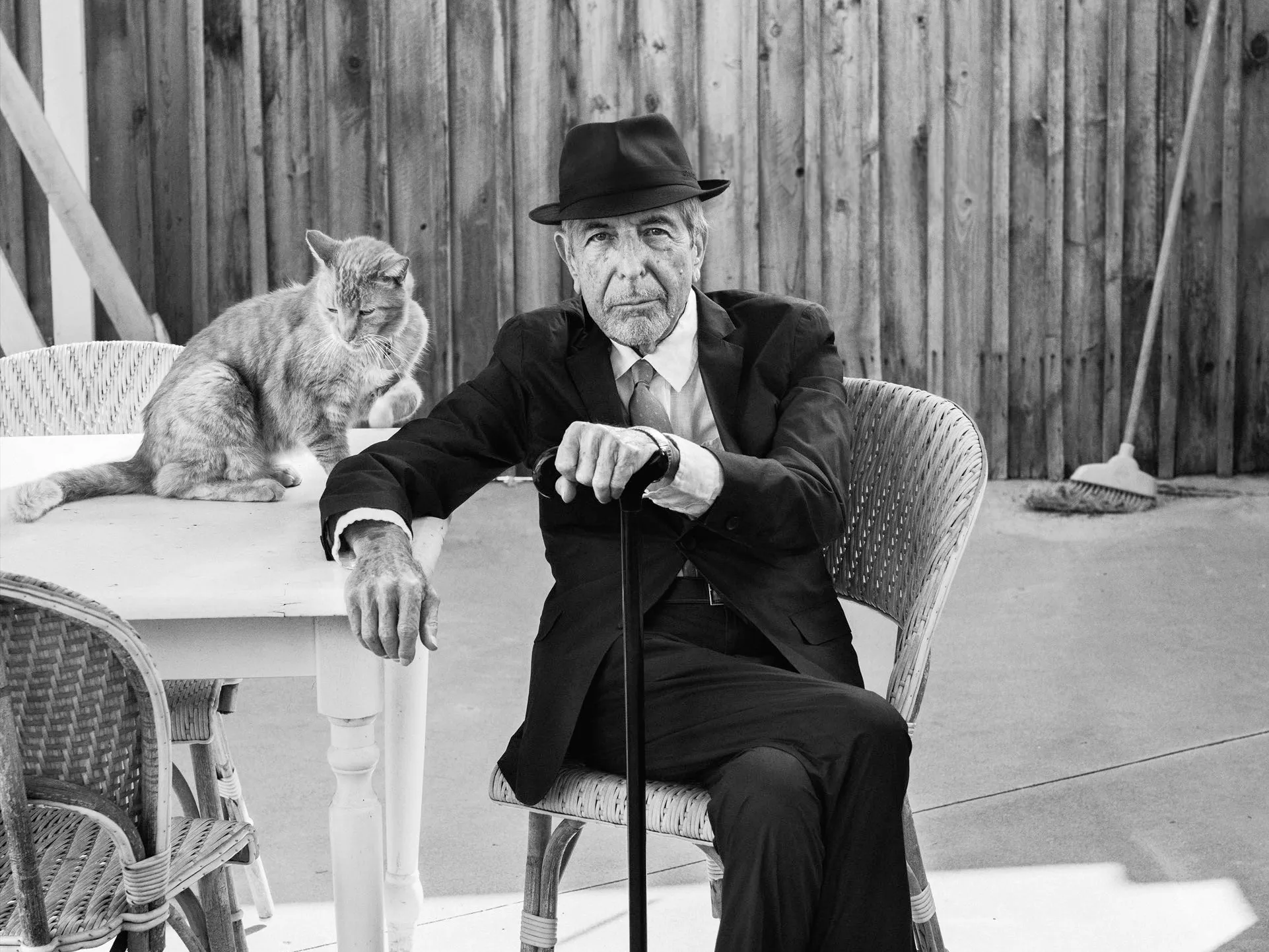
Cohen’s voice is front and centre on his 14th and final album You Want It Darker released on October 21, 2016, 17 days before his passing. Musically, the album is “a little bit more sparse and acoustic” compared to his other albums. On the Level is a collected and sedate track about forgiving oneself despite the feeling of regret. Like anyone of his age, Cohen counts the losses as a matter of routine. Moving on has it’s costs and opportunity costs. Leaving you to lose and win. Settling sometimes let’s us move on and simply survive – however it’s never the same going forward.

The New Yorker article states below: Cohen’s songs are death-haunted, but then they have been since his earliest verses. But, despite his diminished health, Cohen remains as clear-minded and hardworking as ever, soldierly in his habits. He gets up well before dawn and writes. In the small, spare living room where we sat, there were a couple of acoustic guitars leaning against the wall, a keyboard synthesizer, two laptops, a sophisticated microphone for voice recording. 

Due to fractures of the spine, You Want It Darker was recorded in the living room of Leonard Cohen’s home in Mid-Wilshire, Los Angeles and then sent by e-mail to his musical collaborators. His son, Adam Cohen recalled that “occasionally, in bouts of joy, he would even, through his pain, stand up in front of the speakers, and we’d repeat a song over and over like teenagers“.

[Verse 1]
I knew that it was wrong
I didn’t have a doubt
I was dying to get back home
And you were starting out
I said I best be moving on
You said we have all day
You smiled at me like I was young
It took my breath away

[Pre-Chorus]
Your crazy fragrance all around
Your secrets all in view
My lost, my lost was saying found
My don’t was saying do

[Chorus]
Let’s keep it on the level
When I walked away from you
I turned my back on the devil
Turned my back on the angel, too

In Canada, You Want It Darker debuted atop the album charts, with 19,400 in traditional sales. The album occupied the top position for three consecutive weeks and sold 106,000 units by the end of the year in Canada. In the United States, You Want It Darker debuted at number 10 on the Billboard 200 with 25,000 units, 24,000 of which were pure album sales. It is Cohen’s second American top 10 album.

“In a certain sense, this particular predicament is filled with many fewer distractions than other times in my life and actually enables me to work with a little more concentration and continuity than when I had duties of making a living, being a husband, being a father,” he said. “Those distractions are radically diminished at this point. The only thing that mitigates against full production is just the condition of my body.

For some odd reason,” he went on, “I have all my marbles, so far. I have many resources, some cultivated on a personal level, but circumstantial, too: my daughter and her children live downstairs, and my son lives two blocks down the street. So I am extremely blessed. I have an assistant who is devoted and skillful. I have a friend like Bob and another friend or two who make my life very rich. So in a certain sense I’ve never had it better. . . . At a certain point, if you still have your marbles and are not faced with serious financial challenges, you have a chance to put your house in order. It’s a cliché, but it’s underestimated as an analgesic on all levels. Putting your house in order, if you can do it, is one of the most comforting activities, and the benefits of it are incalculable.”

References:
1. You Want It Darker – Wikipedia
2. Leonard Cohen Makes It Darker – The New Yorker

Tagged with: , ,
Posted in Music

On Earth as it is in Heaven, The Falls & Gabriel’s Oboe (The Mission,1986) – Ennio Morricone

Our life, our life, our life, our life, so they cry.
Our life, our life, our life, our life, they cry like this.
Punishment, punishment, our strength, our punishment, cry out like this
Punishment Punishment Our Strength Our Punishment So So So So Cry

The film The Mission featured here back in September. It is a British period drama film about the experiences of a Jesuit missionary in 18th-century South America. In the comments section of that post a fellow blogger Bernie from Reely Bernie who is an instructor of music at University mentioned the following:

Ennio Morricone’s best. The motif is so soul-reaching that it became my favourite part of the movie. I play it often as a piano transcription at weddings. A great tribute movie to Jesuits as well. They never get a fair shake.

I realised from our conversation I was missing some of the soundtrack’s better tracks including On Earth as it is in Heaven, Falls and Gabriel Oboe which I have since listened to and added as well. The Italian song Nella Fantasia (“In My Fantasy”) is based on the theme “Gabriel’s Oboe” and has been recorded by multiple artists.

The Mission soundtrack combines liturgical chorales, native drumming, and Spanish-influenced guitars, often in the same track, in an attempt to capture the varying cultures depicted in the film.

Interesting Trivia:

Morricone’s score for The Mission did not win the Oscar for Best Original Score, losing to Herbie Hancock’s Round Midnight. The award is considered one of the most controversial in that category, because it beat out James Horner’s score for Aliens, Jerry Goldsmith’s score for Hoosiers and that of Ennio Morricone for The Mission. In his review of the score to Hoosiers, Christian Clemmensen of Filmtracks.com stated: ‘The awarding of the Original Score Oscar for 1986 to Herbie Hancock for Round Midnight is considered one of the greatest of the many injustices that have befallen nominees for that category. Ennio Morricone and, to a lesser extent, James Horner were worthy of recognition that year, though Goldsmith’s Hoosiers stands in a class of its own because of its immense impact on the picture.’ Morricone, who did not win a competitive Oscar until 2015 (for Quentin Tarantino’s The Hateful Eight), said in an interview: ‘I definitely felt that I should have won for The Mission, especially when you consider that the Oscar-winner that year was Round Midnight, which was not an original score. It had a very good arrangement by Herbie Hancock, but it used existing pieces. So there could be no comparison with The Mission. There was a theft!’. As a result, the music branch of the Academy decided to “tighten up the rules” so that “Scores diluted by the use of tracked (inserted music not written by the composer) or pre-existing music” would no longer be eligible for award nomination.

References:
1. The Mission (soundtrack) – Wikipedia

Tagged with: , ,
Posted in Movies and TV

Blood Wolf Moon (2022) – Vulture Party

Blood Wolf Moon is a contemporary take on European werewolf folklore where, through isolation and lack of human connection, people were labelled as outcasts, leading to their basic need for love not being met. Our theme for the song and music video is a werewolf searching for human contact and finding love through music and dance. Despite the subject matter, the tune is upbeat and buoyant, influenced in part by European dance and pop.

Like yesterday’s post Baby Blue brought to my attention by Max at PowerPop today’s featured track Blood Wolf Moon is another song brought to you from another music blogger Jeff at Eclectic Music Lover. He wrote:

Vulture Party is a Scottish three-piece who, in their own words, play “disquieting Alt Pop for the socially conscious“. Based in Falkirk, a smallish city located roughly halfway between Glasgow and Edinburgh, the band consists of Louise Ward, David King and Dickson Telfer. Having both a male and female vocalist deliver their thought-provoking lyrics also gives their already fascinating sound even greater nuance and depth.

I’ll hand it over to Jeff at Eclectic Music Lover:

They released their debut single “New Humans” in 2019, followed a few months later with “Sun Dance”, then dropped their eponymous debut album Vulture Party in April 2020, just as the pandemic turned the world upside down and brought everything to a crashing halt. Undeterred, they began writing and recording songs for their second album Archipelago, and in July 2021, they released “Afterlife”, the first of a series of singles to be included on Archipelago. They followed up with “Iso Disco” this past January, and now return with “Blood Wolf Moon“, the third single off the forthcoming album, to be released later this summer on the not-for-profit independent record label Last Night From Glasgow.

Tagged with: ,
Posted in Music

Baby Blue (1971) – Badfinger

If Bob Dylan’s ‘It’s All Over Now Baby Blue‘ had been transfigured into a rock song, then today’s featured Baby Blue is perhaps what it would have sounded like. Just listen to how Pete Ham sings the line ‘The special love I have for you‘ – that melody seems straight out of Dylan’s song, even when he sings ‘My baby blue‘. Bob Dylan referred to transfiguration in his recollection of his infamous 1966 Motorcycle crash in this Rolling Stone article:

Edited 20/7/2025: Dylan’s song was in fact turned into a rock song in an early previously unreleased version by the Byrds from their Turn, Turn, Turn album

Yeah, absolutely. I’m not like you, am I? I’m not like him, either. I’m not like too many others. I’m only like another person who’s been transfigured. How many people like that or like me do you know?

Baby Blue is another Badfinger song presented at Max’s PowerPop site which I knew I had to add to the collection. The previous entry was Lay Me Down. Max wrote the following about Baby Blue:

My love for this song is so over the top. Baby Blue, to these ears, is the perfect power pop song. It has the right combination of the hard British crunch and pop with an irresistible guitar riff. Lets talk about that guitar riff. I know there are other good rock riffs but the perfection in this one is sensational. He plays a variant of it through the song always changing plus a walk down or two. Nothing is purely defined and that is just pure brilliance. The solo is simple but fits perfectly. No nuance in this song is wasted…it was in there for the good of the song…not meant to be flashy.

It’s a hook here, a hook there, and a hook everywhere…and…I’ve been hooked since I first heard it. Everything blends. Even the ending is perfect

Guess I got what I deserved
Kept you waitin’ there too long, my love
All that time, without a word
Didn’t know you’d think that I’d forget
Or I’d regret
The special love I have for you
My baby blue

[Verse 2]
All the days became so long
Did you really think I’d do you wrong?
Dixie, when I let you go
Thought you’d realise that I would know
I would show
The special love I have for you
My baby blue

[Bridge]
What can I do? What can I say?
Except I want you by my side
How can I show you? Show me a way
Don’t you know the times I’ve tried?

References:
1. Baby Blue (Badfinger song) – Wikipedia

Tagged with: , ,
Posted in Music

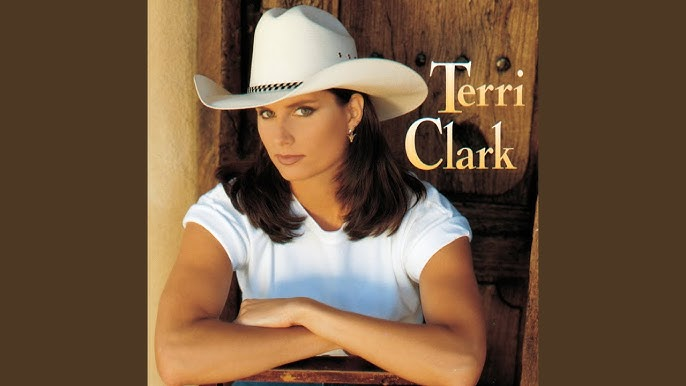
Everytime I Cry (1998) – Terri Clark

Back in September this year Canadian country music artist Terri Clark featured here with her fabulous song Now That I Found You. nostalgicitalian wrote in response to that post, ‘I have loved her stuff for a long time. I had the chance to interview and meet her and she is so down to earth. She’s a fantastic songwriter and singer. Great song.’

Today we have another stellar track Everytime I Cry from the same album How I Feel. I wore out this album after I procured it and I still love hearing these songs. It was released in January 1999 as the third single from the album and reached number 2 on the RPM Country Tracks chart in May 1999. The song chronicles a woman’s continuing disappointment in her ex-lover who keeps putting her heart into misery over and over again.

How I Feel, the third studio album by Terri Clark achieved two top 10 places on the US Billboard Country Charts including today’s song. The album was certified platinum in both Canada and the US.

[Verse 1]
You call and wake me up the way you always do
Say you miss me and you’re sorry, déjà vu
You push the button in the heart you know so well
The wall starts coming down, then I remind myself

[Chorus]
Every time I think you might have changed
Put aside the anger and the blame
Make myself believe that there’s a way to work it out
Every time you say let’s try again
Begging me to let you back in
Every time, I do, every time, you lie, every time, I cry

Below are excerpts from Wikipedia beow:

Terri Lynn Sauson, known professionally as Terri Clark was born in Montreal, Quebec, Canada on August 5, 1968. Clark’s albums have accounted for more than twenty singles, including six Number Ones. In 2004, Clark gained one of country music’s crowning achievements when she became a member of the Grand Ole Opry. She was inducted into the Canadian Country Music Hall of Fame in 2018 and will become a member of the Canadian Music Hall of Fame in 2023.

The video below shows Clark on an escalator and in a room with the walls around her moving closer, while the video storyline interprets various forms of domestic abuse. The video sees both families meeting in a support group for abuse victims and concludes with the number for the National Domestic Violence Hotline showing on the screen.

References:
1. Everytime I Cry – Wikipedia
2. How I Feel (album) – Wikipedia
3. Terri Clark – Wikipedia

Tagged with: , ,
Posted in Music

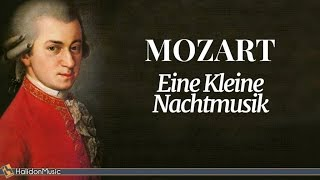
Eine kleine Nachtmusik, K.525 (1787) – Wolfgang Amadeus Mozart

No other classical music composer has featured here more than Wolfgang Amadeus Mozart (1756 – 1791). Today’s serenade Eine Kleine Nachtmusik translated as A Little Night Music is one of the composers most recognisable and delectable pieces. In a catalog of his works, Mozart lists it as having five movements, but only four movements remain, the first minuet having been lost. It was written for an ensemble small enough to be practical for outdoor performance (more often than not an ensemble of winds) – two violins, viola, cello and double bass, but is often performed by string orchestras.

The following is mostly sourced from the Wikpedia article below:
The serenade was completed in Vienna on 10 August 1787, around the time Mozart was working on the second act of his opera Don Giovanni which has featured here already.  It is not known exactly why it was composed, but there was probably some Viennese occasion (as aforementioned) for which Mozart supplied the work – a celebrative occasion, no doubt. Originally, a serenade was evening music with which to divert and/or woo a lover or to please persons of rank. 

The work was not published until about 1827, long after Mozart’s death, by Johann André in Offenbach am Main. It had been sold to this publisher in 1799 by Mozart’s widow Constanze, part of a large bundle of her husband’s compositions. Today, the serenade is widely performed and recorded; indeed, both Jacobson and Hildesheimer opine that the serenade is the most popular of all Mozart’s works. Of the music, Hildesheimer writes, “even if we hear it on every street corner, its high quality is undisputed, an occasional piece from a light but happy pen.”

References:
1. Eine kleine Nachtmusik, K. 525 – Wikipedia – LA Phil
2. Eine kleine Nachtmusik – Wikipedia

Tagged with: ,
Posted in Music

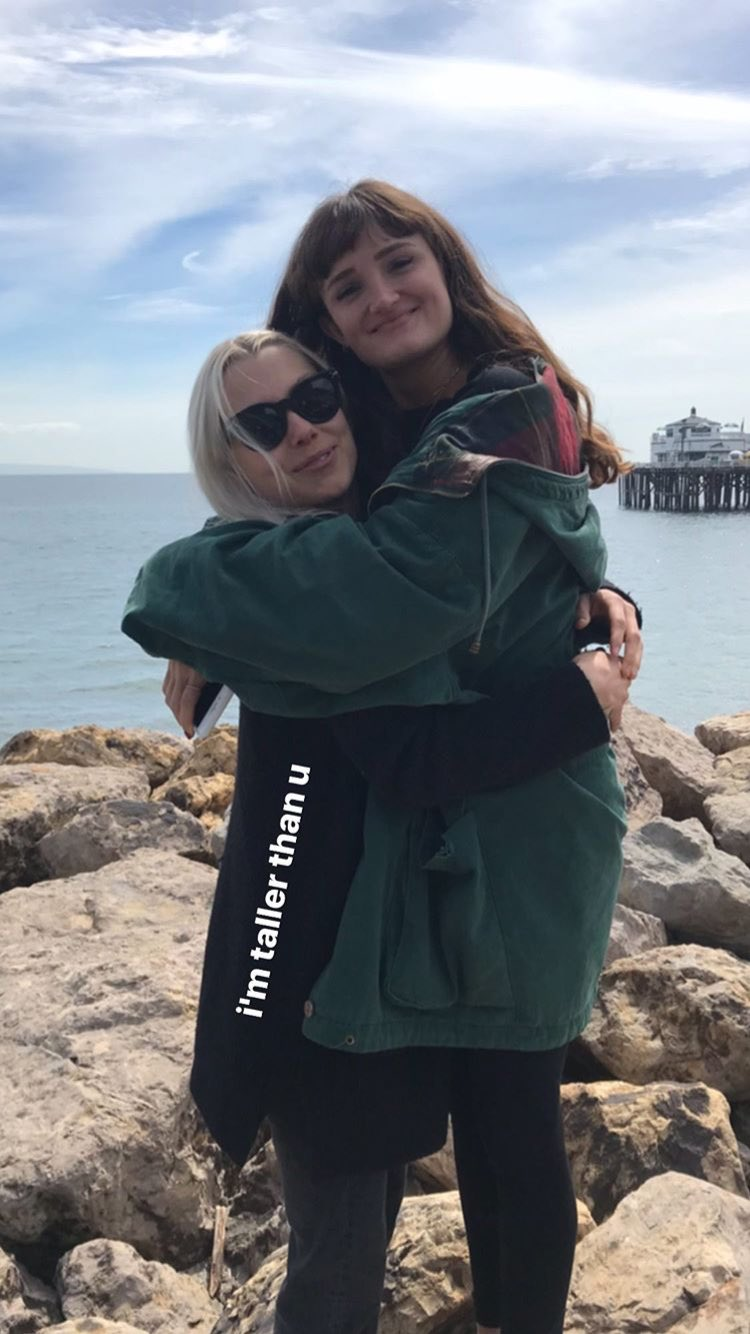
Emily I’m Sorry (2023) – boygenius

Phoebe Bridgers

It was only back in September that boygenius (stylized in all lowercase) made their debut here with their fourth single Not Strong Enough from their debut album single the record. boygenius is an American indie supergroup formed in 2018 by Julien Baker, Phoebe Bridgers, and Lucy Dacus. Today’s track Emily I’m Sorry I also like from the album, but I think my favourite up to this point is True Blue which will feature here when we get to the ‘T”s. The video below of Phoebe Bridgers singing Emily I’m Sorry is unusual but impressible at least to indie-pop listening. A simple contrast and structured acoustics are bombarded with indistinct, noncommittal moods. 

She’s asleep in the backseat
Looking peaceful enough to me
But she’s wakin’ up inside a dream
Full of screeching tires and fire
We’re comin’ back from where no one lives
Pretty much just veterans
When I pointed out where the North Star is
She called me a fuckin’ liar

Emily, I’m sorry, I just (Emily, I)
Make it up as I go along
Yet, I can feel myself becoming (I can feel)
Someone only you could want

Considering the idea of picking up a “real job”, moving “back to Montreal” may be a rejection of success but it is also a likely embrace of simpler times. “I’m twenty-seven and I don’t know who I am”. The clock is ticking, get moving. There is a desire to push forward. The three tracks – $20True Blue, and Emily I’m Sorry – closely resemble their respective writers, who wrote the tracks independently. Emily I’m Sorry is immediately recognisable as a mellow outpouring to (probably) Emily Bannon (see inset), who Bridgers was in a relationship with back in 2018-19. 

Bridgers expresses uncertainty about their relationship and repeatedly proclaims the track title in the chorus: “Emily, I’m sorry”, and “I can feel myself becoming / Someone only you could want”. To me its relatable and explores the hurt that comes with messing up.

Reference:
1. Boygenius – Emily I’m Sorry Review – Cult Following
2. boygenius – ‘$20’, ‘Emily I’m Sorry’ & ‘True Blue’ singles review – The Edge

Tagged with: , ,
Posted in Music

Los Caminos de la Vida (1993) – Los Diablitos (written by Omar Geles)

A perfect song to dedicate to the most special person in our lives like our mother.

– Los Diablitos

I first heard Los Caminos de la Vida (The Paths of Life) in the sleeper movie hit Sound of Freedom (2023). This partly crowd-funded film is set in my adopted home country – Colombia. According to the El Colombiano reference below; today’s song Los Caminos de la Vida is so part of Colombians’ DNA that it tugs at their heartstrings and stays with them forever; it’s as Colombian as el arroz con coco (rice with coconut) and the mountains with all shades of green; a song as Colombian as vallenato itself.

Vallenato music is a form of folk music that originated in the Caribbean region of Colombia. It is a depiction of Caribbean folklore and has been around for 200 years. The original version of Los Caminos de la Vida written by Omar Geles (singer and accordion player pictured above) is set to Vallenato music as seen in the official video version below. I have also presented a very popular cover version below that by Argentine artist Vicentico.

Vallenato is translated as ‘from the Valley’ and comes from a city called Valledupar, although some say the origins are in the departments of La Guajira, Córdoba, and Magdalena. It was only at the end of the 19th century that it became an official music genre. Vallenatos are typically played with three instruments: the guacharaca, a wooden percussion instrument invented by the indigenous Tairona people, the caja, a drum that originated from African slave communities and the accordion, a European instrument.

Since he was a child, Omar Geles in his musical ‘Valledupar’, was nicknamed ‘el Diablito‘ (the Little Devil). That same nickname would define the path of his group with the singers Miguel Morales and Alex Manga: “Los Diablitos” (The Little Devils). Los Caminos de la Vida was composed by remembering the difficulties of his childhood, the scarcity and lack of a father who left without returning. But above all things, it is dedicated to his mother; the brave, hard-working and capable woman who fought to raise a family, with the strength of her tired heart. Omar Geles wrote these lyrics in a yellow notebook in 1992, without knowing that it would become one of the two most listened to and hummed Colombian vallenato songs.

A crude English translation of the first part of Los Caminos de la Vida (The Paths of Life) follows:

The paths of life are not like
I thought, as I imagined them, they are not
as I believed

The paths of life are very difficult
Walking them is difficult
and I can’t find
The exit

I thought life was different
When I was little I believed
That things were easy like yesterday

That my good old lady was trying hard
To give me everything I needed
And today I realize how easy
it isn’t

Because my old lady is already tired
To work for my brother and me
And now I’m happy to help you.
And for my old lady, I will fight to the end

For her I will fight until I die
But I really don’t want to go down fighting

and my old lady dies, but what can I do?
If destiny is like this
?

References:
1. Los caminos de la vida, una historia real que se hizo canción – El Colombiano
2. Colombia’s Vallenato: What to Know About the Iconic Music That Inspired Gabriel Marquez – The Culture Trip

Tagged with: , , , , , ,
Posted in Music

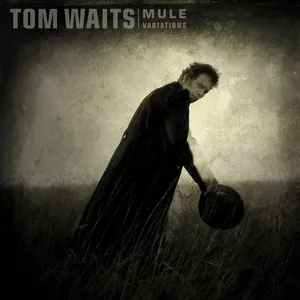
Hold On (1999) – Tom Waits

Two people who are in love writing a song like that about being in love. That was good.

– TW

It’s been over 4 months since I posted a Tom Waits song here, but the wait has been worth it. I should preface by saying I would still consider myself a novice regarding the musical appreciation of Tom, but today’s featured track Hold On is so far my Tom Waits ‘Desert Island’ song. This music project has and will continue to provide an ideal opportunity to dig a little deeper and engage with people who may be more attuned with his background and discography. I always liked Rolling Stone’s description of him as an ‘urban romantic poet‘ and ‘minstrel of the downtrodden‘.

With lyrics written by Tom Waits and his wife Kathleen Brennan, Hold On got Waits nominated to the Grammys for “Best Male Rock Vocal Performance”.

Waits described the song inspiration as follows:

“Hold on” I thought that was a good thing to say in a song. Hold on. We’re all holding onto something. None of us want to come out of the ground. Weeds are holding on. Everything’s holding on. I thought that was a real positive thing to say. It was an optimistic song. Take my hand, stand right here, hold on. We wrote that together, Kathleen and I, and that felt good. Two people who are in love writing a song like that about being in love. That was good. (Source: “Holding On: A Conversation with Tom Waits”. Newsweek: Karin Schoemer. March 23, 1999)

[Verse 1]
They hung a sign up in our town
“If you live it up, you won’t live it down”
So she left Monte Rio, son
Just like a bullet leaves a gun
With her charcoal eyes and Monroe hips
She went and took that California trip
Oh, the moon was gold, her hair like wind
Said, “Don’t look back, just come on, Jim”

[Chorus]
Oh, you got to hold on, hold on
You gotta hold on
Take my hand, I’m standing right here
You gotta hold on

[Verse 2]
Well, he gave her a dimestore watch
And a ring made from a spoon
Everyone’s looking for someone to blame
When you share my bed, you share my name
Well, go ahead and call the cops
You don’t meet nice girls in coffee shops
She said, “Baby, I still love you”
Sometimes there’s nothin’ left to do

(Read the remaining 2 verses here)

Tom Waits released Hold On on his 1999 record Mule Variations; his first studio album in six years. It won a Grammy Award for Best Contemporary Folk Album and received widespread critical acclaim. Hold On is the third song presented here from the album after Big in Japan and Filipino Box Spring Hog respectively. The album was backed by an extensive tour in Europe and North America during the summer and autumn of 1999, which was Waits’ first proper tour since 1987.

References:
1. Mule Variations – Wikipedia

Tagged with: , ,
Posted in Music

Follow Blog via Email

Enter your email address to follow this blog and receive notifications of new posts by email.

Join 780 other subscribers

← Back

Thank you for your response. ✨