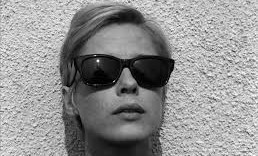
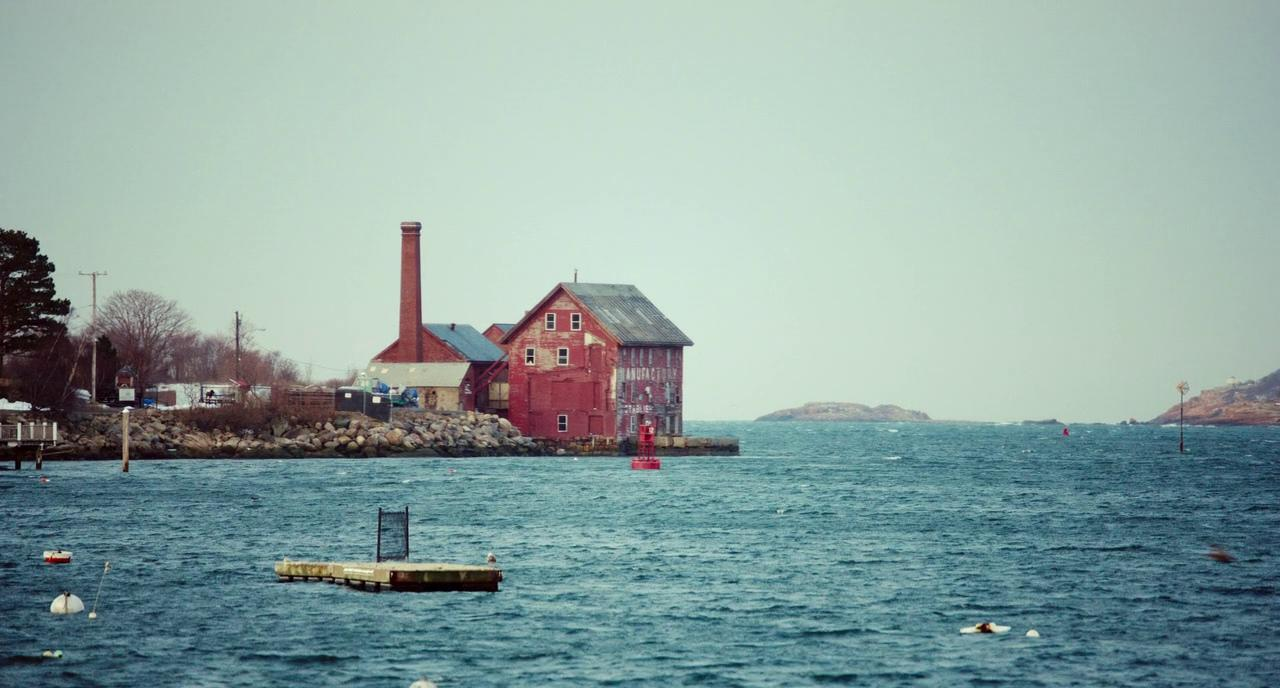
Manchester by the Sea Chorale (2016) – Lesley Barber

“For Lee [Affleck], except for the things that are happening in real time, everything exists in his mind all the time,” Barber said. “So, for flashbacks, I didn’t have to define how far back or how recent. It was just all with him, all the time. There is something in the phrasing of the vocal music that it could go on infinitely, but you wouldn’t be aware of the repetition. So I wanted the music to thematically carry itself along the way he’s carrying so much inside him.”

Indie Wire – ‘Manchester By the Sea’: How Kenneth Lonergan & Crew Made a Non-Linear Masterpiece

Manchester By the Sea Chorale was written and performed by Lesley Barber for Kenneth Lonergan’s Oscar winning film Manchester by the Sea which featured here at ‘Friday’s Finest‘ on Sept 1, 2023. The segments below were taken from Reference 2:

Lesley Barber worked with the orchestra to create a sound that emoted the sound of the ocean with “underlying tension” with lightness, for exterior scenes. Early in the scoring process, Barber took inspiration from New England church music from the 1700s, including Calvinist hymns and other music of the Pilgrims and Colonial era, with its emphasis on a cappella vocals. Barber developed the music to complement her understanding of the essence of the film’s scenes based on emails and conversations with Lonergan.

To score scenes that reflect Lee’s “interior landscape”, she (Lesley Barber) sent the music to her daughter Jacoba Barber-Rozema, an opera major, then recorded her singing in her dorm room via Skype. Barber said the confined space made for a “perfect sound“…. Caitlin Warren of Spindle Magazine said the score adds perfectly “to the raw emotion of the film without ever overwhelming it to the point of feeling contrived or cheesy.”

Reference:
1. Manchester By the Sea – IndieWire
2. Manchester by the Sea – Wikipedia
3. Manchester by the Sea – Observation Blogger

Tagged with: , ,
Posted in Music

The AnkiDroid Collection (Part 44) – The Rule of Law, Uric Acid & Molecules

Ankidroid additions related to Science, History and Philosophy. More information about Anki can be found in this article.

Rule of Law

When the authority and influence of law is viewed as a constraint on individual and institutional power. The Rule of Law principle whereby all members of a society are considered equally subject under the law. It’s fundamentally the restriction of the arbitrary exercise of power by subordinating it to well defined and established laws. That no one is above the law. It is the idea that the Government should be based on a system of laws rather than the whims of those in power. All persons are presumed innocent until proven otherwise by a Court. All persons have the right to a fair and prompt trial.

Uric Acid

Uric Acid is a waste product in the body. A chemical produced when the body breaks down purines which are natural substances found in all cells and some food and drinks. Most Uric Acid dissolves in the blood and travels to the kidney. High blood concentrations of Uric acid can lead to medical conditions such as gout (a form of arthritis) and diabetes.

Molecules

Molecules are the smallest thing a substance can be divided into, while remaining the same substance. A Molecule is an electrically neutral group of two or more atoms that are bound together by chemical bonding. Molecules are distinguished from ions by their lack of electrical charge.

Tagged with: , ,
Posted in Reading, Science

Miles (2011) – Christina Perri

Kiss me on my shoulder
Tell me it’s not over
I promised to always come home to you
Remind me that I’m older
To be brave smart, sweet and bolder
And don’t give up on what we’re trying to do

It’s been way too long since I’ve presented a Christina Perri track here and that makes me blue. I have got a stack of newbies from her earmarked to download. Miles is one such song.
It will come as no surprise to anyone who has followed my blog that Perri is my favourite female music artist, balladeer and troubadour. There is no other music which turns my eyes glassy and induces tears as quickly and assuredly as hers. Take for example today’s song – Miles. Perri will always deliver a brilliant catch phrase and / or intonation of a word which just makes my heart melt and Miles is choc-full of these.
She wrote in Miles:

And don’t give up on what we’re trying to do.

There is so much to unpack in just that one-line that you could write a book on it. Also, you don’t hear words and expressions like that from other young artists of the modern era. Perri is promoting and aiming for a ‘love’ based on unity, fortitude and resilience, not on infatuations and caprices. Also, her ability to shape a ‘new’ sound with her instinctive inflections or raising the octave (at 3:30) despite the overall ‘tranquil’ and resolute tone is something to behold.

At 00:37 seconds a ‘seemingly’ skimpy piano prances onto the scene and like the rest of the song reflects so much method and tact in the modest and humble manner of her delivery and music production. I find it impossible not to get lost in Perri land at that point. This sound leads into the following prechorus:

I won’t make it alone
I need something to hold

I’m not usually a fan of ‘bridges’ in songs but we’re talking Perri here and she nails it at 2:18 and the follow-up instrumental is superb:

And these are words I wish you said
But that’s not how it went
Cause you gave up on us in the end

Miles was released on Christina Perri’s 2011 debut album Lovestrong. She revealed the following about the album’s track listing:

I believe I picked the best ones—the ones I need to get out into the world. The ones I need to get through. The ones I want to sing to you every night. And the ones I can only hope make you feel something too.

Her influences of the album include Frank Sinatra, Dean Martin, James Taylor, Elton John, and The Beatles. Amongst other promotional performances for Lovestrong Perri announced fourteen tour dates with James Blunt in spring 2011. The album debuted on the US chart for Digital Albums at number three. In Canada, it debuted at number nine on the Canadian Albums Chart and Australia peaked at number five.

The following biography was sourced from the second referenced article below:

Christina was born Christina Judith Perri at Bensalem, Pennsylvania, USA, on August 19, 1986, into a religious household. While her father, Dante Perri, is of Italian origin, her mother, Mary, is of Polish origin. Christina grew up with her older brother Nick Perri, who was a music enthusiast. Nick, who later went on to become a famous guitarist, was Christina’s only inspiration during her childhood.

Her parents worked as hairdressers and the family struggled with finances. They used to visit the church regularly and Perri had the opportunity to sing during a communion when she was 6 years old. That changed her life forever as she realized that she had the ability to sing well.

Pleased by her interest in music, her parents enrolled her for piano lessons when she was 8. However, she was expelled from the piano class as she had her own way of ending the songs, which wasn’t liked by her teacher. You can read more here.

Reference:
1. Lovestrong – Wikipedia
2. Christina Perri – The Famous People

Tagged with: , ,
Posted in Music

El Estuche (The Case) 1998 – Aterciopelados

El estuche - Aterciopelados | HABLAMOS DE MÚSICA
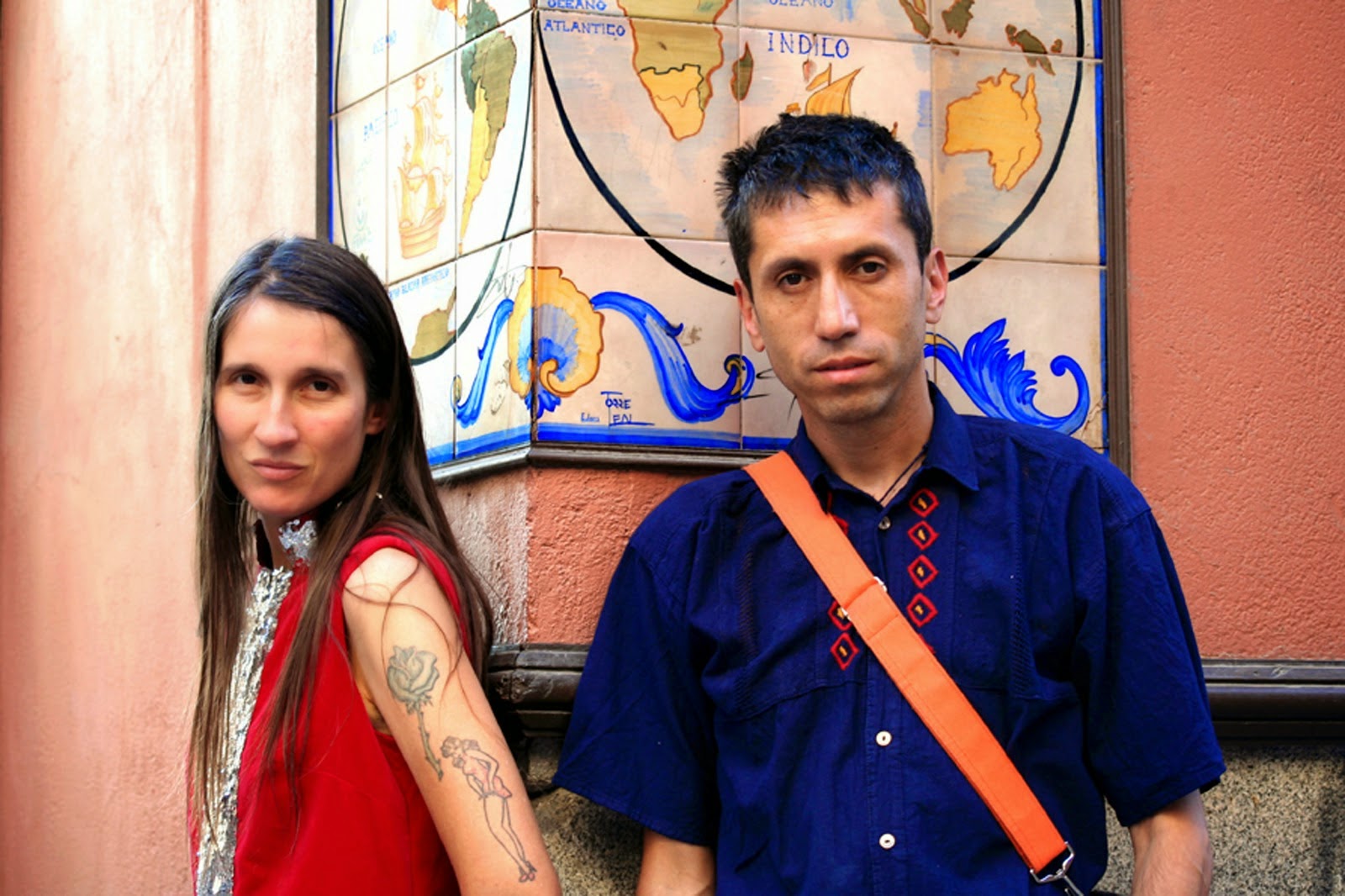
Founding members of Aterciopelados (The Velvet Ones) – Andrea Echeverre & Héctor Buitrago

It is not a commandment to be the diva of the moment (wow)
Why work for a sculptural body?

Do you want to feel all eyes on you?
And trigger whistles when passing?

Look at the essence, not the appearances…
The body is just a case and the eyes are the window
Of our soul imprisoned

(Oh! but) look at the essence, not the appearances…
Look at the essence, not the appearances…
90-60-90, adds up to two hundred and forty
Figures that should not be taken into account
—-
(A crude English translation of the first 2 verses and 5th of El Estuche – ‘The Case’)

El Estuche (The Case) is the second song to feature here from Aterciopelados (The Velvet Ones) after their first entry Bolero Falaz which topped the 1000 most important songs of Colombian rock. Their music fuses rock with a variety of Colombian and Latin American musical traditions. Since the 1990’s they have soaked the radio waves in not just their home country Colombia, but México, España, Venezuela, Argentina and Chile. Aterciopelados have always held a special place in my heart because they are from my adopted home city – Bogotá.

A blogger friend Manuel from Venezuela wrote the following about Aterciopelados:

Without a doubt, Los Aterciopelados marked the beginning of rock in Latin America with their own style and worldwide recognition. They were regular visitors to Venezuela because of the proximity and since their songs were popular. Andrea, the singer also had success as a solo artist, winning Grammys on several occasions.

El Estuche (The Case) comes from Colombian rock duo’s fourth studio album Caribe Atómico released in 1998. It was nominated for a Grammy for Best Latin Rock/Alternative Performance in 1999.

In 2001, Aterciopelados was recognized by the writers of Time magazine as one of the top 10 contemporary global bands (outside of the United States), which included U2 and the Rolling Stones. In 2006, the magazine wrote that “Aterciopelados’s true skill lies in its ability to take north-of-the-border musical styles … and breathe new life into them, all while giving them a distinctly Colombian sheen.”

Jessica Duque commented about El Estuche (The Case):

I love this song, I am a person with a disability, and I always represent myself in this song, look at the essence not the appearances, I am a woman with a lot of courage.

Tagged with: , , , ,
Posted in Music

Growing Pains (2022) – Tough on Fridays

Yesterday, I travelled early to my children’s school for their festival of dances. On the Transmilenio (a bus rapid transit system that serves Bogotá, the capital of Colombia), I plugged the earphones in and put the Music collection on autopilot. Out came today’s featured track Growing Pains by Tough on Fridays. I loved it and heard it a few more times on the trip. I was perplexed how it hadn’t already featured here. The guitar strum which gathers momentum in Growing Pains and maintains its grip is akin to Sam Fender’s Seventeen Going Under, but the vibe is a more equable and sensitised here. Also consider this: Seventeen Going Under has 30 million views on YT whilst Growing Pains 30 views. Yes, you did read that correctly.

After doing some digging, I realised I first heard Growing Pains on Jeff’s web site, so I’ll turn this article over to him as a gesture of my appreciation.

I enjoy discovering and supporting indie artists and bands, so I write reviews of their music or articles about them to help promote them to a wider audience – Eclectic Music Lover

Hailing from Georgetown, Texas, not far from Austin, grunge pop-rock trio Tough on Fridays have been on an upward trajectory since forming in 2017. Now consisting of Caleigh Oceguera on vocals & guitar, Carly Fairchild on bass & vocals, and Chris Schreck on drums, they’ve garnered an enormous base of loyal fans through their memorable music, relatable lyrics and high-energy live shows. Blending elements of indie, alt-rock, pop and grunge, they create their own unique style of edgy rock ‘n roll. Since 2017, they’ve released numerous singles and EPs, which culminated in the release of their outstanding debut album A Fantastic Way to Kill Some Time, in September 2020 (my review has been viewed more than 1,100 times, making it the fourth most-viewed album review I’ve written.)

In the two years since, they’ve released several singles, the latest of which is “Growing Pains“, which dropped August 15th. The song has a pleasing folk-rock vibe, highlighted by Caleigh’s lovely strummed guitar work, while Carly and Chris keep the lively rhythm on their bass and drums. The subtle piano keys are a nice touch, adding to the song’s melodic sound. Caleigh’s slightly echoed vocals have a vulnerable quality, providing a rather melancholy undercurrent to the track as she plaintively sings the lyrics directed to a former loved one that she’s moving on from the relationship: “Growing pains. Sick of hearing how I’ve changed. Cause I’ve outgrown you, I don’t need you. Cause I’m pulling all your weight. Done cleaning up the mess you’ve made. You always made./ Am I bitter? Just feeling better.” It’s a wonderful, beautifully-crafted and masterfully-arranged track that nicely showcases Tough on Fridays’ continued growth and musical maturity.

References:
1. Fresh New Tracks, Vol. 18 – Black Bear Kiss, The Metal Byrds, Tough on Fridays – Eclectic Music Lover

Tagged with: , ,
Posted in Music

Double Dare (1980) – Bauhaus

‘This song is a challenge to be true to yourself and your ideas’ – Don’t cower in night fright

‘Daring fake politicians to actually act like real people instead of the conservative little muppets they can be’ – In the void they stare, they never, they never dared to dare

Double Dare – Song Meanings

I like the eerie, distorted sound, and strange vocals of Double Dare. It’s wonderfully atmospheric and dramatic. I love how unhinged it is. In a gothic sense it could transpose as a warning of the darkness which will envelope if cowardice and mass hypnosis of a mainstream narrative is left to unfurl causing senseless harm to the most vulnerable and hysteria in the broader population – When gutless leaders in the Mainstream (Government, Press and Multinationals) are left to exert unprecedented power and control through their unrelenting campaign of fear without opposition.

I dare you to be real
To touch
To touch a flickering flame
The pangs
The pangs of dark delight
Don’t cower
Don’t cower in night fright

Don’t back away just yet
From destinations set
I dare you to be proud
To dare to shout aloud
For convictions that you feel
Like sound from bells to peal

I dare you to despise
Bureaucracy and all its lies
In the void
In the void they stare
They never
They never dared to dare

I dare
I dare
I dare you

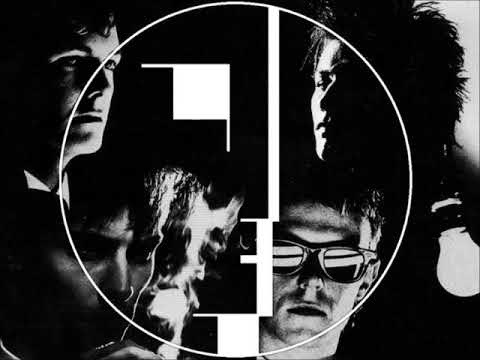
Double Dare was released as the first song from the British Gothic rock band Bauhaus‘s debut album In the Flat Field. Known for their dark image and gloomy sound, Bauhaus are one of the pioneers of gothic rock, although they mixed many genres, including dub, glam rock, psychedelia, and funk.

Following a 30-date tour, Bauhaus went to Southern Studios in London to record their first album. The band had a clear conception of how they wanted the record to sound; hence, they opted to produce it themselves. While most of the album was completed with the planned release date of September 1980, the group found it difficult to record a version of Double Dare as good as the one they performed on disc jockey John Peel’s BBC Radio 1 programme. Bauhaus applied to the BBC to use the Peel session version, but due to obstruction from the Musicians Union, the process took over a month.

The album was met with a negative response from critics, but topped the UK Independent Albums Chart and made the UK Albums Chart for one week, peaking at No. 72.

References:
1. In the Flat Field – Wikipedia
2. Double Dare – SongMeanings

Tagged with: , ,
Posted in Music

All The President’s Men (1976) – Alan J. Pakula (Friday’s Finest)

Ben Bradlee: You know the results of the latest Gallup Poll? Half the country never even heard of the word Watergate. Nobody gives a shit. You guys are probably pretty tired, right? Well, you should be. Go on home, get a nice hot bath. Rest up… 15 minutes. Then get your asses back in gear. We’re under a lot of pressure, you know, and you put us there. Nothing’s riding on this except the, uh, first amendment to the Constitution, freedom of the press, and maybe the future of the country. Not that any of that matters, but if you guys fuck up again, I’m going to get mad. Goodnight.

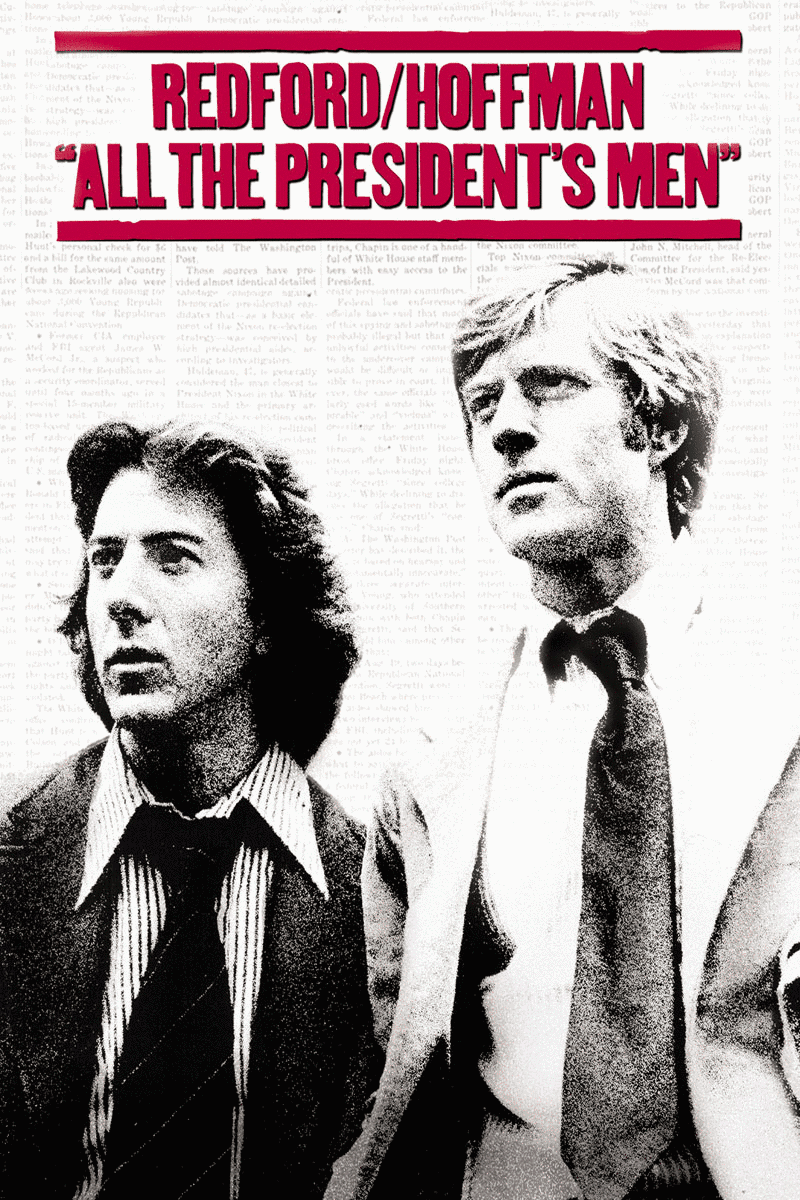
All the President’s Men is is one of the slowest burn political dramas I have ever seen and it doesn’t even have a significant pay off since it only covers the first seven months of the Watergate scandal; from the time of the break-in to Nixon’s second inauguration on January 20, 1973. I don’t know how many times I revisited it in my early adulthood trying to put all the jigsaw pieces together as if it were a whodunit detective story. I agree with Roger Ebert who wrote: ‘It provides the most observant study of working journalists we’re ever likely to see in a feature film‘.

All the President’s Men is based on the 1974 non-fiction book of the same name by Carl Bernstein and Bob Woodward, the two journalists investigating the scandal for The Washington Post.  In 2010, it was selected for preservation in the United States National Film Registry by the Library of Congress as being “culturally, historically, or aesthetically significant.”

Frank Wills, the security guard who, in 1972, discovered the break-in at the Watergate complex, played himself. He had been fired from his Watergate job a few days after the break-in, although no reason was given for this. The one day he spent (in 1975) playing himself in this movie was his first day’s work since that had happened. As for the aftermath, Wills found himself unemployable as security guard due to his act and he lived in extreme poverty until his death on September 2000 from a brain tumor.

IMDB Storyline:

In the run-up to the 1972 elections, Washington Post reporter Bob Woodward covers what seems to be a minor break-in at the Democratic Party National headquarters. He is surprised to find top lawyers already on the defense case, and the discovery of names and addresses of White House fund organizers on the accused further arouses his suspicions. The editor of the Post is prepared to run with the story and assigns Woodward and Carl Bernstein to it. They find the trail leading higher and higher in the White House.

Interesting Trivia from IMDB:

  • Nothing was allowed into the script unless it had been meticulously verified and confirmed by independent sources.
  • The two lead actors memorized each other’s lines so that they could interrupt each other in character. This unsettled a lot of the actors they were playing opposite, leading to a greater sense of authenticity.
  • Hoffman and Redford visited The Washington Post‘s offices for months, attending news conferences and conducting research for their roles. As the Post denied the production permission to shoot in its newsroom, set designers took measurements of the newspaper’s offices and took many photographs. Boxes of trash were gathered and transported to sets recreating the newsroom on two soundstages in Hollywood’s Burbank Studios at a cost of $200,000. The filmmakers went to great lengths for accuracy and authenticity, including making replicas of outdated phone books. Nearly 200 desks at $500 each were purchased from the same firm that had sold desks to the Post in 1971. 
  • While meeting with Carl Bernstein, Dustin Hoffman noticed that Bernstein smoked so much that there were traces of cigarette ash on all of his shirts and ties, so he made sure that was included in the movie, as well as the line directed at Bernstein, “Is there any place you don’t smoke?”

References:
1. All the President’s Men (film) – Wikipedia
2. All the President’s Men – IMDB

Tagged with: ,
Posted in Movies and TV

Donna (1958) – Ritchie Valens

Donna first learned about Donna when Ritchie called her and told her that he wrote a song for her. He sang her the first part of Donna. She said: “of course I cried. It was just very, very touching. He didn’t tell me he was going to record it“.

Ritchie Valens had several hits, most notably La Bamba, which he had adapted from a Mexican folk song. Valens at just 17 years old transformed the song with a rock rhythm and beat, and it became a hit in 1958, making Valens a pioneer of the Spanish-speaking rock and roll movement. He also had an American number-two hit with today’s featured track Donna. He had a high-school sweetheart at school named Donna Ludwig to whom he dedicated the song.
I became familiar with this song where their romance was portrayed in the 1987 biopic – La Bamba.

Ritchie Valens was born Ritchie Valenzuela but after Bob Keane, a Del-Fi record label exec, discovered him he had Ritchie change his last name to make it more whitewash “radio friendly”.

I was attracted to him because he was such a nice man, er…I mean, because he was a nice boy. He didn’t swear. He didn’t get drunk.” When he left high school to pursue his music career, they decided to keep an open relationship, essentially. Whenever he’d be back in town, they’d get together. Donna told The Post that he would even allude to them getting married someday. Ludwig’s parents disapproved of her dating a Hispanic man.

Unfortunately, Ritchie never had the chance to propose. On Feb 2, 1959, 17-year-old Ritchie died in a plane crash (just eight months into his music career), along with Buddy Holly (who featured in our last music post) and J.P. The Big Bopper. Donna was only 16 when Ritchie died. Valens’ version was positioned at No. 3 on the Billboard Hot 100 pop singles chart when Valens died. Three weeks after Valens’ death, the song peaked at No. 2. 

[Verse 1]
I had a girl
Donna was her name
Since she left me
I’ve never been the same

[Chorus]
‘Cause I love my girl
Donna, where can you be?
Where can you be?

[Verse 2]
Now, that you’re gone
I’m left all alone
All by myself
To wander and roam

[Chorus]
‘Cause I love my girl
Donna, where can you be?
Where can you be?

References:
1. Donna (Ritchie Valens song) – Wikipedia
2. Ritchie Valens and His High School Sweetheart Donna Have the Most Tragic Love Story – Distractify

Tagged with: , ,
Posted in Music

The AnkiDroid Collection (Part 43) – The Crusades, Zionism & Golda

Ankidroid additions related to Science, History and Philosophy. More information about Anki can be found in this article.

The Crusades

The Crusades were a series of religious wars initiated, supported, and sometimes directed by the Christian Latin Church between 1000 and 1200 AD (medieval period) to retake land in the Middle East from Muslims. It was intended to conquer Jerusalem. Many drummed up support by using ‘in the name of Jesus Christ‘ as a rallying cry.

Zionism

Zionism is a nationalist movement that emerged in the 1880’s to espouse support for the establishment of a homeland for the Jewish people in Palestine, a region roughly corresponding to the Land of Israel in Jewish tradition.

Golda Meir

Yesterday, I had the good fortune to see the above movie Golda starring Helen Mirren as Golda Meir.

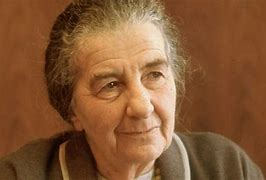
Golda Meir was an Israeli politician who helped found the state of Israel in 1948 and later served as its 4th prime minister and first and only female head of Government. She was born in Kiev, Ukraine in 1898 and died in Jerusalem,1978.

Tagged with: , , ,
Posted in Reading

Oh Boy! (1957) – Buddy Holly and the Crickets

If I was to go back to the dawning of it all, I guess I’d have to start with Buddy Holly. Buddy died when I was about eighteen and he was twenty-two. From the moment I first heard him, I felt akin. I felt related, like he was an older brother. I even thought I resembled him. Buddy played the music that I loved – the music I grew up on: country western, rock ‘n’ roll, and rhythm and blues. Three separate strands of music that he intertwined and infused into one genre. One brand. And Buddy wrote songs – songs that had beautiful melodies and imaginative verses. And he sang great – sang in more than a few voices. He was the archetype. Everything I wasn’t and wanted to be. I saw him only but once, and that was a few days before he was gone. I had to travel a hundred miles to get to see him play, and I wasn’t disappointed.

He was powerful and electrifying and had a commanding presence. I was only six feet away. He was mesmerizing. I watched his face, his hands, the way he tapped his foot, his big black glasses, the eyes behind the glasses, the way he held his guitar, the way he stood, his neat suit. Everything about him. He looked older than twenty-two. Something about him seemed permanent, and he filled me with conviction. Then, out of the blue, the most uncanny thing happened. He looked me right straight dead in the eye, and he transmitted something. Something I didn’t know what. And it gave me the chills.

The 2nd and 3rd paragraphs of Bob Dylan’s 2016 Nobel Prize in Literature speech

Last weekend the family and I were repeatedly bludgeoned with the first verse of Buddy Holly’s ‘Oh Boy!’. When my 8-year-old daughter Katherine first heard it, it was love at first listen. She tried to mimic Buddy, but it was an indecipherable, rambling mess. ‘Oh Boy!’ 😟

I told her, if you’re going to sing Buddy then get it right. So, we pulled apart each line until she understood its meaning in Spanish. The line Kathy-Path (my nickname for her) had the hardest time with was ‘You don’t know what you’ve been a-missing‘. But we broke it down on Sunday morning over a hearty Colombian breakfast and walk to the park until she nailed it. Even my son Jesus Mateo got in the act (see image inset).
Oh Boy! is the third song to appear here from Buddy Holly after his previous entry – Heartbeat.

[Chorus]
All of my love
All of my kissing
You don’t know what you’ve been a-missing
Oh boy (Oh boy), when you’re with me
Oh boy (Oh boy), the world can see
That you, were meant, for me

[Verse 1]
All of my life
I’ve been a-waiting
Tonight there’ll be no, hesitating
Oh boy (oh boy), when you’re with me
Oh boy (oh boy), the world can see
That you, were meant, for me
Stars appear and shadows are falling
You can hear my heart a-calling
A little bit a-loving makes everything right
I’m gonna see my baby tonight

[Chorus]
All of my love
All of my kissing
You don’t know what you’ve been a-missing
Oh boy (Oh boy), when you’re with me
Oh boy (Oh boy), the world can see
That you, were meant, for me

Most of the following are excerpts of the Wikipedia article below:

It was written by Sonny West, Bill Tilghman and Norman Petty. The song was included on the album The “Chirping” Crickets and was also released as the A-side of a single, with Not Fade Away as the B-side. The song peaked at number 10 on the US charts, number 3 on the UK charts in early 1958, and number 26 in Canada. The song was originally recorded as a demo by Sonny West and Petty presented West’s demo to Buddy Holly with the intention of Holly recording the song.

On the BBC’s Classic Albums series in 2019, West said, “I had a decision to make whether to say I want to do it myself and I said ‘No, I want Buddy to do it‘, it can’t hurt anything and if it didn’t work I could go back and do it myself someday.” It was subsequently recorded by Buddy Holly and the Crickets between June 29 and July 1, 1957, at Norman Petty Studios with Holly singing lead vocals.
I have presented below the original studio recording and Buddy’s live appearance on the Ed Sullivan show.

References:
1. Oh, Boy! (The Crickets song) – Buddy Holly

Tagged with: , ,
Posted in Music

Follow Blog via Email

Enter your email address to follow this blog and receive notifications of new posts by email.

Join 780 other subscribers

← Back

Thank you for your response. ✨