Dream Lover (1959) – Bobby Darin

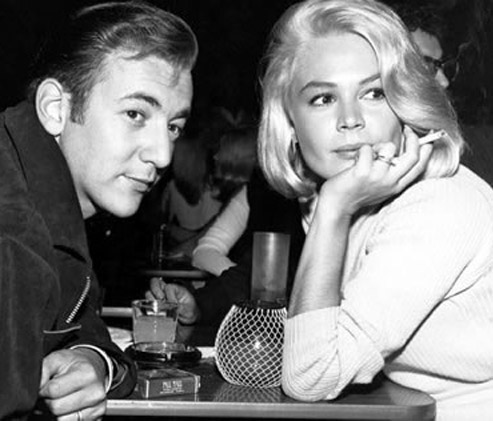
Bobby Darin & Sandra Dee

Strangely Darin wasn’t certain of his legendary track when he demoed it for his bosses at Atlantic Records, but it became a huge hit and earned him more creative control as a songwriter and artist. The version of Dream Lover I prefer more than any other is the Demo version (take 5) below. Darin wrote this song about a guy who wishes and prays for the girl of his dreams to come to him so that he doesn’t have to dream alone. I think it’s one of the sweetest tunes I’ve heard.

Every night I hope and pray
A dream lover will come my way
A girl to hold in my arms
And know the magic of her charms
‘Cause I want (yeah-yeah, yeah)
A girl (yeah-yeah, yeah)
To call (yeah-yeah, yeah)
My own (yeah-yeah)
I want a dream lover
So I don’t have to dream alone

Darin found his dream lover just a year after this song was released when he married the actress Sandra Dee (pictured above with Darin). In 1962 he won a Golden Globe Award for his first film, Come September, co-starring his wife Sandra Dee. Their union would last until 1967. That’s pretty, pretty, pretty good for two major celebrities. Dee became a teenage star for her performances in Gidget.

Wikipedia states: During the 1960s, he (Bobby Darin) became more politically active and worked on Robert F. Kennedy’s Democratic presidential campaign. He was present on the night of June 4/5, 1968, at the Ambassador Hotel in Los Angeles at the time of Robert Kennedy’s assassination. During the same year, he discovered the woman who had raised him was his grandmother, not his mother as he thought, and learned that the woman he thought was his sister was actually his mother. Those events deeply affected Darin and sent him into a long period of seclusion.

Darin died just 37 years young after a heart operation. His health was beginning to fail after he made a brief successful comeback in the 1970’s, but he always felt he was vulnerable following bouts of rheumatic fever in childhood which spurred him to use his musical talent while still young. Life for Sandra Dee didn’t go so well also after their divorce when Universal Studios dropped her the same year. In the 1980’s she was marred by alcoholism, mental illness, plus near total reclusiveness, particularly after her mother died in 1988.

This whole backstory including the innocence of the song and what eventuated for both Darin and Dee propels my mind into the outstanding Springsteen song ‘With Every Wish‘ and I’m not even superstitious:

‘…She sighed “Bobby oh Bobby you’re such a fool
Don’t you know before you choose your wish
You’d better think first
‘Cause with every wish there comes a curse

Tagged with: , ,
Posted in Music

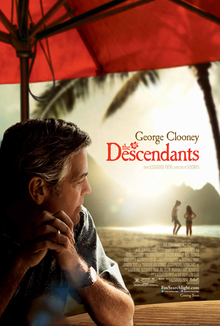
The Descendants (2011) – Alexander Payne (Friday’s Finest)

I caught for the second time on cable this 5 time nominated Academy Award movie including for Best Picture, which won for Best Adapted Screenplay. This American comedy-drama film is based on the 2007 novel of the same name by Kaui Hart Hemmings. This is the fifth film which features George Clooney at Obervationblogger, and despite him playing a man at his most distraught and despondent, his nuanced and refined performance in The Descendants is my favourite from him. The film was a critical and financial success, grossing $177 million against a $20 million budget. It features here at Friday’s Finest because of it’s indie feel and overall sensibility responding to complex emotional and interpersonal circumstances.

IMDB Storyline:
Attorney Matt King is having a difficult time coping with his life at the moment. His wife Elizabeth is in a coma in the hospital following a boating accident. His youngest daughter Scottie is acting out and in many ways Matt is forced to be a parent for the first time in a long time. Matt is also in control of a family trust, one that is set to expire in a few years time. The trust owns a huge tract of land – vigorously sought by developers – the sale of which would be of great help financially to many of his cousins. He fetches his eldest daughter Alexandra from school and in a heated argument learns that Elizabeth was having an affair and was going to divorce him. Matt sets out to see the man, but isn’t quite sure what he will say or do when he locates him.

As described in the above storyline Clooney’s character (Matt King) is given lots of crosses to bear and I’ll expand on that aspect a bit. He’s not a loser exactly, rather an odd sort of guy, totally lost and a bit inept which is a bit of a departure for Clooney. He even said he was attracted to the part because he so often has played characters that have their act together and the character ‘Matt’ clearly does not.

Matt King is a man who was always bogged down with his work and apparently a dull and too familiar husband. He didn’t get inside his wife’s world and think of her spirit, so she eventually looked elsewhere, before a terrible accident put her into a coma. He learns about his wife’s infidelity, but doesn’t have the option of confronting her with it. He is thrust into a new role – one he should have been in all along. We understand Matt not so much based on what he says but by his subtle expressions and visual cues. This is where Clooney really shined in his portrayal and well deserved contender for best-actor. It’s also worth mentioning the supporting cast especially the two girls who played his children with plenty of wit and warmth.

One of the underrated aspects of the film is the sensational cinematography of Honolulu where the movie is set. It makes the most of the picturesque Hawaiian locations and landscapes that makes me want to book a holiday there one day after I win the lottery! The use of traditional Hawaiian music on the soundtrack gave the film authenticity and added a lot to the mood of the story, especially in the more melancholic moments.

References:

1. Wikipedia – The Descendants 2011
2. IMDB – The Descendants

Tagged with: , ,
Posted in Movies and TV

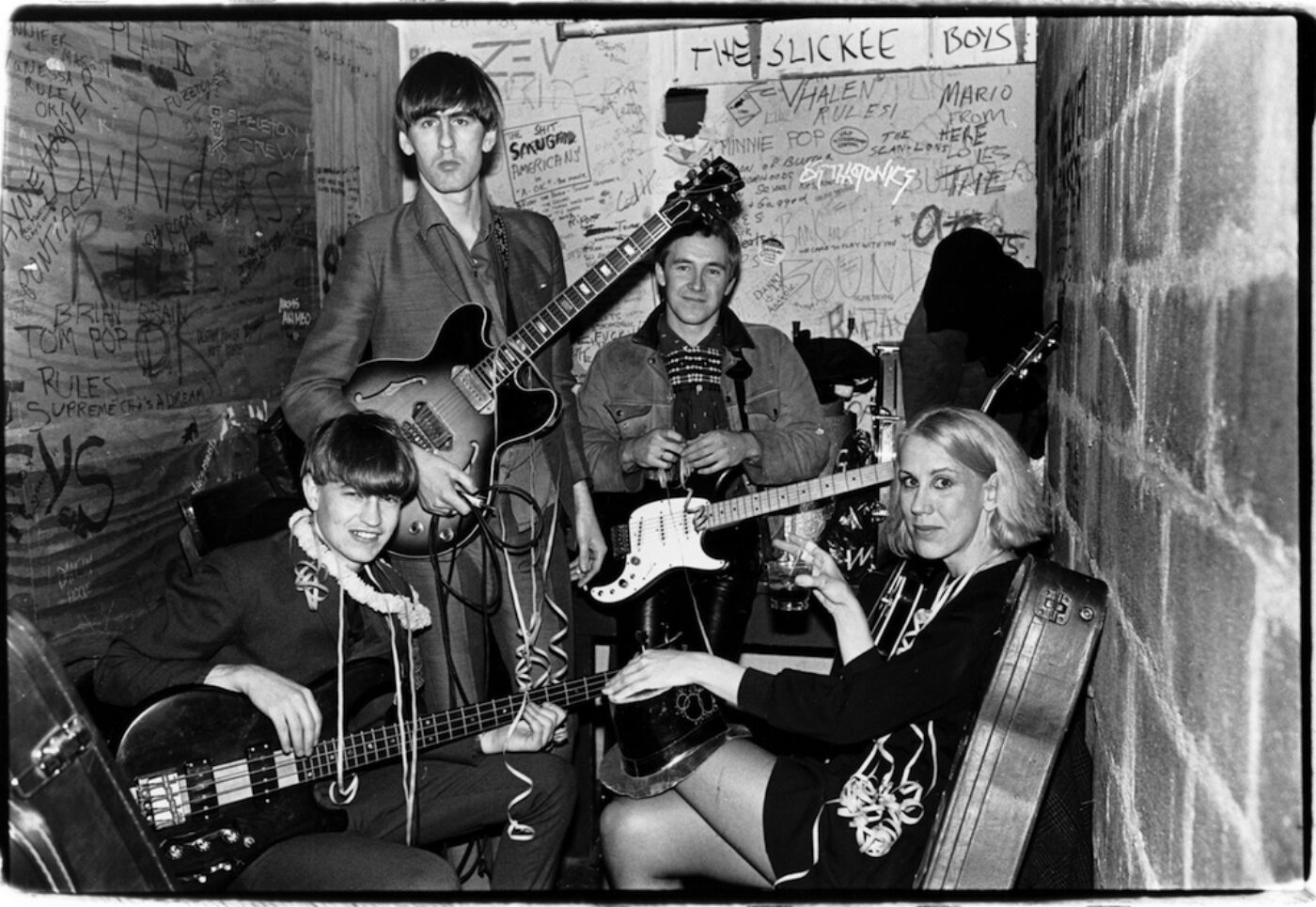
Draining the Pool For You (1984) – The Go-Betweens

The Go-Betweens is the quintessential Australian indie-rock band who produced the quintessential Australian indie-rock sound. This is not your pro-typical rock band hence ‘indie’, but they went out on a limb to change the landscape of music and while they never became a big commercial success, they changed how other Australian singer-songwriters approached music. Today’s song comes from their 1984 album Spring Hill Fair.

The album was named after an annual fair in Spring Hill, Queensland, suburb of Brisbane Grammar School. Robert Forster and Grant McLennan (the lead singers) met at the University of Queensland where both were taking a theatre arts course. In November 1979, the duo left Australia, with a plan to shop their songs from record company to record company simply by visiting their offices and playing them.

McLennan stated years later “We all lived there (Brisbane) and the main reason was that in September, October of every year in Brisbane, there is, in Spring Hill, a fair, and as the album came out around then we thought it would be nice to have a parochial mention in a title because we hadn’t done that for a long time.

Remembered your name
Evidently, you’ve forgotten mine
You know a lot of people
I know, a mind dulled by work and wine

I got hired but I got tired of draining the pool for you
I got tired but not so blue
To see the cracks in you
I got hired against my wish
With better prospects, after this

This song reminds me of when I was in my early 20’s meandering through Melbourne’s inner urban suburbs having just arrived there and taking in the sights. I was looking for some kind of action /adventure, but I really admired the feel of Melbourne. Even it’s general architecture and home facades were more European than I was accustomed to in Sydney and elsewhere. Melbourne was a cosmopolis with respect to art, culture, sports and music. I was enthralled to say the least.

Tagged with: , , ,
Posted in Music

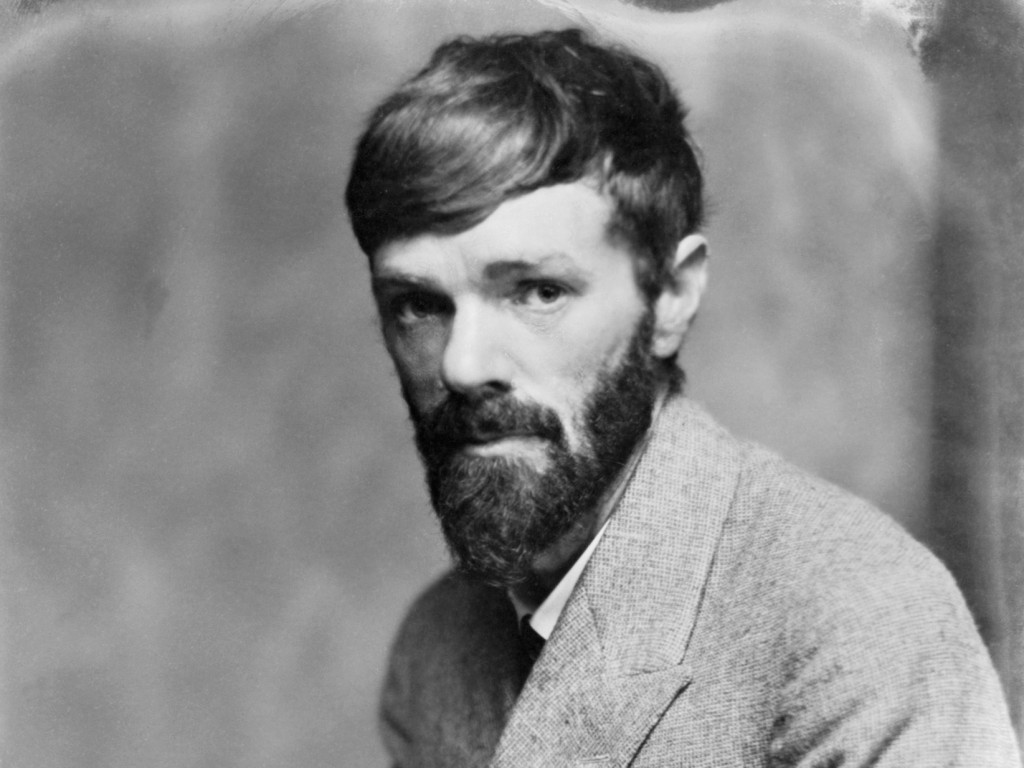
Shame (The Rainbow) – D.H. Lawrence

For today’s Wednesday literature excerpt I present to you another extract from D.H. Lawrence’s book The Rainbow. This book was banned in England for a number of years. I wrote in an earlier article that I didn’t know what the fuss was about and why they banned his book, until I read this latter chapter ‘Shame‘. It introduces not just a lesbian relationship into classic literature, but one where the protagonist Ursula the third generation daughter of the Brangwen family (a student) and her class – mistress Miss Inger become sexually involved. Lawrence’s frank treatment of sexual desire, and the part it plays within relationships as a natural and even spiritual force of life got him banned for obscenity and this might well have been the chapter which did it.

I was labouring over whether to present this excerpt, mainly because I wasn’t sure what approach I would take or if it needed to be told. But I think it does since it illuminates that aforementioned about D.H Lawrence’s willingness to allude to openly presenting how relationships can play out. The philosopher Roger Scruton said – the prevailing theme of Lawrence’s novels is that ” We are desiring to mingle with something that is deeply – perhaps essentially – not ourselves and which brings us to experience a character and inwardness that challenge us with their strangeness.” Scruton believes that The Rainbow vindicates Lawrence’s vision.

So here I present to you a short excerpt of the chapter called ‘Shame’ from D.H.Lawrence’s The Rainbow. It could offend some readers or it might leave one hanging on. I’m afraid the chapter is too long to present here, but plenty of free online versions exist. I ask you not to take this excerpt out of context since Ursula like nearly all of us in our younger adult years struggles to find fulfilment for our passionate, spiritual and sensual nature against the confines. It values self-realization and independence:

Suddenly Ursula found a queer awareness existed between herself and her class-mistress, Miss Inger. The latter was a rather beautiful woman of twenty-eight, a fearless-seeming, clean type of modern girl whose very independence betrays her sorrow. She was clever, and expert in what she did, accurate, quick, commanding.

To Ursula she had always given pleasure, because of her clear, decided, yet graceful appearance. She carried her head high, a little thrown back, and Ursula thought there was a look of nobility in the way she twisted her smooth brown hair upon her head. She always wore clean, attractive, well-fitting blouses, and a well-made skirt. Everything about her was so well-ordered, betraying a fine, clear spirit, that it was a pleasure to sit in her class.

Her voice was just as ringing and clear, and with unwavering, finely-touched modulation. Her eyes were blue, clear, proud, she gave one altogether the sense of a fine-mettled, scrupulously groomed person, and of an unyielding mind. Yet there was an infinite poignancy about her, a great pathos in her lonely, proudly closed mouth.

It was after Skrebensky had gone that there sprang up between the mistress and the girl that strange awareness, then the unspoken intimacy that sometimes connects two people who may never even make each other’s acquaintance. Before, they had always been good friends, in the undistinguished way of the class-room, with the professional relationship of mistress and scholar always present. Now, however, another thing came to pass. When they were in the room together, they were aware of each other, almost to the exclusion of everything else. Winifred Inger felt a hot delight in the lessons when Ursula was present, Ursula felt her whole life begin when Miss Inger came into the room. Then, with the beloved, subtly-intimate teacher present, the girl sat as within the rays of some enrichening sun, whose intoxicating heat poured straight into her veins.

The state of bliss, when Miss Inger was present, was supreme in the girl, but always eager, eager. As she went home, Ursula dreamed of the schoolmistress, made infinite dreams of things she could give her, of how she might make the elder woman adore her.

Miss Inger was a Bachelor of Arts, who had studied at Newnham. She was a clergyman’s daughter, of good family. But what Ursula adored so much was her fine, upright, athletic bearing, and her indomitably proud nature. She was proud and free as a man, yet exquisite as a woman.

The girl’s heart burned in her breast as she set off for school in the morning. So eager was her breast, so glad her feet, to travel towards the beloved. Ah, Miss Inger, how straight and fine was her back, how strong her loins, how calm and free her limbs!

Ursula craved ceaselessly to know if Miss Inger cared for her. As yet no definite sign had been passed between the two. Yet surely, surely Miss Inger loved her too, was fond of her, liked her at least more than the rest of the scholars in the class. Yet she was never certain. It might be that Miss Inger cared nothing for her. And yet, and yet, with blazing heart, Ursula felt that if only she could speak to her, touch her, she would know.

Tagged with: , , ,
Posted in Reading

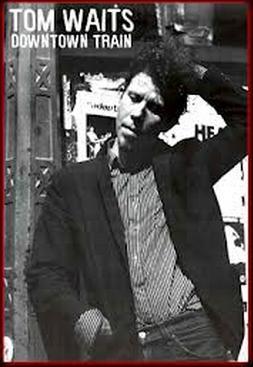
Downtown Train (1984) – Tom Waits

Downtown Train is a song by Tom Waits released on his album Rain Dogs in 1985. I remember hearing Rob Stewart’s version in my youth which was a huge hit. Bob Seger and Patty Smyth also recorded a version of it. Rain Dogs is often cited by many of Tom’s fans as their favourite record. You gotta love how Rod Stewart is singing in his video from his terrace in his Uptown doorman building while drinking a glass of wine, and Tom is outside of his Downtown walk-up and drinking out of a paper bag. What really stands out for me is Tom’s writing here:

Outside another yellow moon
Punched a hole in the nighttime, yes
I climb through the window and down the street
Shining like a new dime
The downtown trains are full
With all those Brooklyn girls
They try so hard to break out of their little worlds

You wave your hand and they scatter like crows
They have nothing that will ever capture your heart
They’re just thorns without the rose
Be careful of them in the dark

The guitar work here by the late Robert Quine is sublime! This and Tom’s voice has so much soul and passion which draws me in. He intentionally avoids the trappings of what we expect from mainstream pop stars, but sometimes like here he lands on something that seems destined to live a life in a mainstream way.

The promo video for this song below is a piece of art. It was directed by Jean-Baptiste Mondino and features the boxer Jake LaMotta thought to have one of the greatest chins in boxing history and whose life was depicted by Martin Scorsese in Raging Bull.

Tagged with: , ,
Posted in Music

1/11 – 7/11/21 Movies, Albert Camus & Baseball Fix

news on the march

Welcome to Monday’s News on the March – The week that was in my digital world.

Why Modern Movies Suck – They’re Written By Children
Video presentation by The Critical Drinker

What better way to describe the Critical Drinker’s channel, ‘He drinks and he says things.‘ I often agree with his assessment of movies and what have become of them in the coddling age. In many ways I like to watch his videos because they reek of not just alcohol, but contain some important things worth mentioning. In this video he explores why smart, mature characters in cinema seem to be a thing of the past.

The Critical Drinker distinguishes between the old Star Trek movies and the new ones to make his point. He did the same with the Disney franchise movies of Star Wars which I have written about before, but I don’t want to relive that, nor those movies. His videos aren’t for the faint-hearted because he tells it as he sees it as a Gen X – all gun’s blazing with snarly humour. (See entire video)

Camus Explained: The only serious philosophical question – Sean Kelly and Lex Fridman
Video excerpt at Lex Clips

Lex has produced some really great podcasts in the absence of the Joe Rogan experience from YT. This clip delves into the French philosopher Albert Camus who is arguably one of the most accessible authors on ‘existentialism’. In my ‘about‘ page here, I referenced Camus as an inspiration for writing here:

‘I just want ‘to be. The most important consideration for the individual is the fact that he or she is an individual—an independently acting and responsible, conscious being (“existence”)—rather than what labels, roles, stereotypes, definitions, or other preconceived categories the individual fits (“essence”). (Watch video excerpt)

The Sports Data Pioneer Who Spotted Baseball’s Big Fix of 1919
Read entire article at BBC

If You Build It – He Will Come
This came to my attention because of Shoeless Joe Jackson who featured as a ghost in the all-time classic nostalgic baseball film Field of Dreams. He was recognised for his association with the Black Sox Scandal, in which members of the 1919 Chicago White Sox participated in a conspiracy to fix the World Series. He was banned from playing in the 2020 season despite his exceptional play in the 1919 World Series setting a record with 12 base hits.

So it goes without saying this article tickled my fancy from BBC about the scandal. And believe you me, few do from the super-woke BBC press these days.

‘On the night before the opening game of baseball’s 1919 World Series, 46-year-old sportswriter Hugh Fullerton was worried. He suspected the series was going to be rigged.

The Cincinnati Reds were hosting the Chicago White Sox, and Fullerton was staying in the same hotel as legendary former pitcher Christy Mathewson. They talked about how they might be able to tell if a game was being fixed.’ (Read full article here)

news on the march the end
Tagged with: , ,
Posted in Movies and TV, News, Sport and Adventure

Down City Streets (1991) – Archie Roach

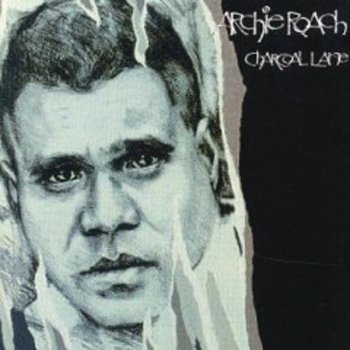
Australian Aboriginal singer Archie Roach was one of my biggest musical influencers in my young adulthood. I ended up seeing him in concert in Melbourne with David Bridie who produced his second album. The above record Charcoal Lane, his debut record produced by the iconic Australian folk-artist Paul Kelly I played incessantly. Archie Roach is a proud member of the Stolen Generation. He was forcibly separated from his family, who were living at the Framlingham Mission in Victoria, when he was two years old. I have written about Archie here before in my article Leonard Cohen’s ‘Come Healing’ and 5 other contemporary spiritual masterpieces. In that article I alluded to his spiritual masterpiece There is a Garden.

Crawled out of the bushes early morn,
Used newspapers to keep me warm,
Then I’d have to score a drink
Calm my nerves help me to think,

Down city streets I would roam,
I had no bed I had no home,
There was nothing that I owned,
I used my fingers as a comb.

This song is story-telling at its finest. If you want to get a sense of how it feels living on the streets, then this is the song. Archie’s wife Ruby Hunter wrote these lyrics and Archie sung it. It is an autobiographical song she wrote recalling her time as a homeless alcoholic. She gave the song to her husband Roach to record for his debut studio album.

According to wikipedia: In 2015 Roach recalls the scenario coming home one night “… she was there and she screwed up this paper and tried to hide it under the pillow or something like that and I said, ‘What is that?’ She said, ‘Ah, nothing’. I said, ‘Can I have a look at it?’ She reluctantly gave me this piece of paper with a song written on it … and she just sat down and sang it to me.”

Where this song really floors me is when Archie sings the following in the final stanza:

Now I’m a man I’m not alone,
I am married, I have children of my own,
Now I have something I call my own
These are my children, this is my home
.

That right there is the stuff of inspiration. It’s just brilliant and one of my favourite moments in all of music. It’s bizarre his songs aren’t more widely known especially in my home country. If you haven’t seen it already I highly recommend this video when Australian Prime Minister Kevin Rudd on the 13th of February 2008 in the Australian House of Representatives, apologized for the government programs which took children from Aboriginal families, the “stolen generations”.

Tagged with: , ,
Posted in Music

The Disaster Artist (2017) – James Franco (Friday’s Finest)

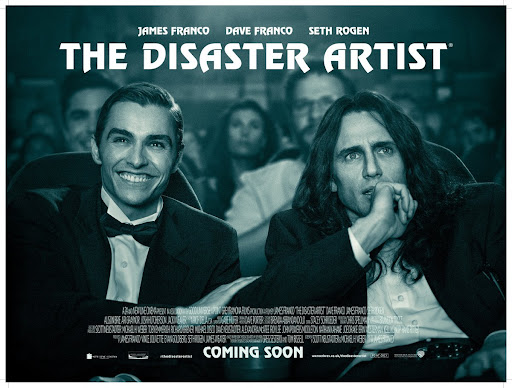
This is a guilty pleasure movie I like rewatching on cable. I don’t think I have seen anything I like with James Franco in it except The Disaster Artist. But hats off to him here for his courage in portraying Tommy Wiseau. He does an outstanding job making your skin crawl, which is the point of it, but the film is accurate and extremely amusing to watch. The film chronicles an unlikely friendship which results in the production of Wiseau’s 2003 film The Room, widely considered one of the worst films ever made.

I found the friendship between Wiseau and Sestero in the movie captivating since they saw something in the other which could draw them away from their meagre existences. In some parts you wonder if Wiseau is physically attracted to Sestero, since he shines with wonder and good looks which Wiseau craves. The bombshell is Sestero is James Franco’s actual brother Dave Franco which might explain their immediate chemistry or bromance as it were.

The Disaster Artist holds an approval rating of 91% based on 350 professional reviews, with an average rating of 7.8/10. Similar to the reception of the original film – The Room which is parodied here, this film was unlikely to get a widely positive welcome from the public, (since worldwide it grossed just $29.8 million) but critically it has been praised.

The Room is such a terrible film that it’s become a bit of a cult hit and theatres have shown it on and off for years. ‘The Disaster Artist’ has garnered comparisons with Tim Burton’s ‘Ed Wood‘. Not surprisingly, both detailing of incompetent directors making infamously terrible films with big dreams and with their hearts in the right place. One would think that this film would poke fun and trash at the incredulous protagonists, but actually they’re treated in a respectful and candid fashion handled with warmth and sincerity and was truly heartfelt to watch.

Tagged with: , ,
Posted in Movies and TV

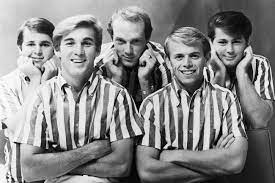
Don’t Worry Baby (1964) – the Beach Boys

This is the second song to feature here from the Beach Boys. I came to Don’t Worry Baby late in my musical journey, but it’s about one of my favourite songs from them. It accentuates everything that was so effervescent in their sound as they rose to become one of the most commercially popular and influential sixties groups. Recently, I watched again the Elton John biopic Rocketman reviewed here on cable where he learned that he would be launching his American tour playing at the Troubadour at Hollywood, but he was hugely intimidated to be playing in front of The Beach Boys in audience. Who can blame him?

But she looks in my eyes
And makes me realize
And she says “Don’t worry baby”
Don’t worry baby
Don’t worry baby
Everything will turn out alright

Apart from the majestic harmony and marvellous melody, the rollicking train rhythm of Don’t Worry Baby is brilliant, not dissimilar in feel to Jonny Cash’s early hit ‘I Walk the Line‘ at least for me. Brian Wilson even declared Don’t Worry Baby as one of The Beach Boys finest records. He opined in 1970, ‘It has about the best proportion of our voices and ranges‘. His lead vocal here is recognised as one of his most defining. It was issued in May 1964 as the B-side of “I Get Around” which is my personal favourite song from them. Interestingly their musical producer Phil Spector rejected the song and Brian was left to produce it on his own.

Don’t Worry Baby was composed by Brian Wilson at his home in California. It was conceived as a response to “Be My Baby“, a recent hit by the Ronettes that had amazed and inspired Wilson. Wilson even considered having the song be recorded by the Ronettes instead of the Beach Boys. He said in a recent interview that he composed it over 2 days. It was ranked 174 by the Rolling Stone in their list of the greatest songs in history.

Terry Melcher drew heavily on “Don’t Worry Baby” for his production and arrangement of the Byrds’ 1965 rendition of “Mr. Tambourine Man”. The two tracks share a similar tempo, as well as the same drum beat and rhythm guitar patterns. Byrds member Roger McGuinn greatly admired “Don’t Worry Baby” and stated that, at one point, he listened to the record (alongside “God Only Knows”) nearly every morning. “I’d wake up and play those songs. It was really inspirational. It was almost like going to church.

Tagged with: ,
Posted in Music

Don’t Fall Apart on Me Tonight (1983) – Bob Dylan

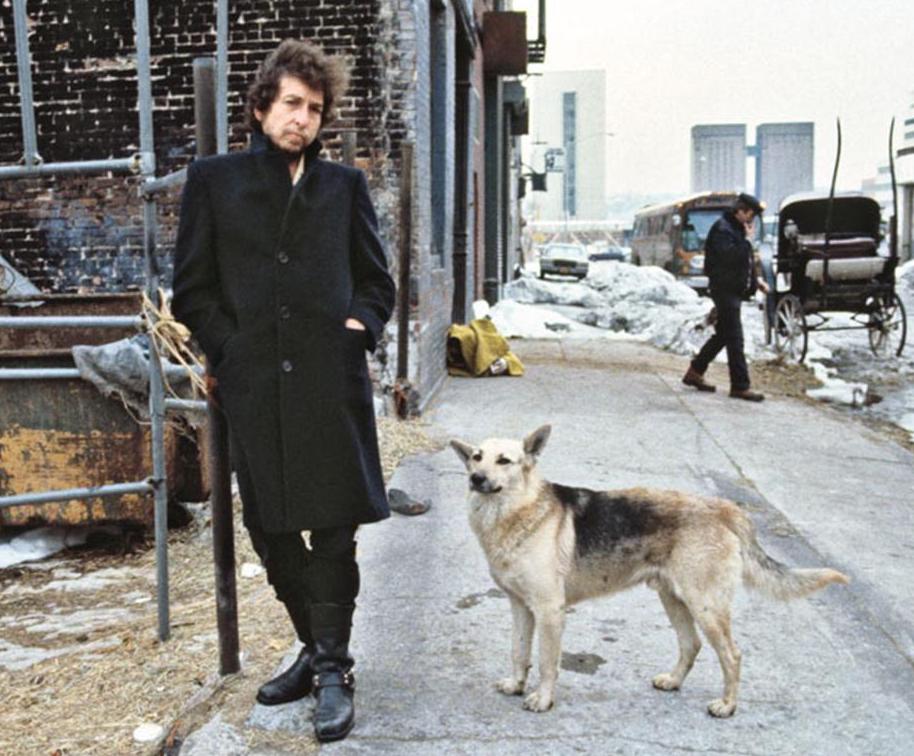
Bob Dylan 1983 in NY with a photogenic dog

This is the first song to come from Dylan’s 1983 studio album Infidels. Blind Willie McTell an extraordinary out-take from the same album did make my cut and was reviewed here. The version 2 live video of Don’t Fall Apart on Me Tonight below is my preferred version of the song although I like more what he does with the Chorus in the studio version. The line up is magical and the roundness of the rhythm section coupled with the subtlety of the guitars. This video features guitarists Mark Knopfler and Mick Taylor, drummer Sly Dunbar, bassist Robbie Shakespeare and keyboardist Alan Clark. Dylan is very animated here; in great groove and the band are fully in sync. It’s a pleasure to see these amazing artists doing what they do best at the same time.

Come over here from over there, girl
Sit down here, you can have my chair
I can’t see us goin’ anywhere, girl
The only place open is a thousand miles away, and I can’t take you there

I wish that I’d been a doctor
Maybe I’d have saved some life that had been lost
Maybe I’d have done some good in the world
‘Stead of burning every bridge I crossed

The out-take version version 2 was released on ‘Springtime In New York: The Bootleg Series Vol. 16 (1980 – 1985)‘ September 17 this year. Springtime contains a number of previously unheard out-takes, alternate takes and rehearsal recordings from Dylan’s early 1980s albums Shot Of Love, Infidels and Empire Burlesque.

I recommend anyone who would like to learn more about this song to visit the web site – Untold Dylan. As that site explains this song Don’t Fall Apart never real garnered much attention fans since it seemed like a run of the mill break-up song. But as alluded to in that article, the narrator of the song seems more hellbent on satisfying his own needs. It seems more like he will collapse if the relationship dissolves.

I’ll leave the final words to Untold Dylan as they seem to illuminate in ways the impact of the song on the listener (if they really are circumspect) and rarely discussed in fan circles. Thank God the Nobel prize committee understood it better like Untold:

While ‘Don’t Fall Apart On Me Tonight’ is far from being a great song, neither is it just filler. Its worth lies in encouraging us to reflect on the self-serving and manipulative behaviours that we all can resort to when somebody we supposedly care about doesn’t want to do as we wish.

Tagged with: , ,
Posted in Music

Follow Blog via Email

Enter your email address to follow this blog and receive notifications of new posts by email.

Join 753 other subscribers

← Back

Thank you for your response. ✨