
25/10 – 31/10/21 Andromeda, Dylan 80 – 85, & Yadier Molina

news on the march

After a long hiatus, welcome back to Monday’s News on the March – The week that was in my digital world.

How Far Away Is It? Andromeda and the Local Group 4K
Video presentation by David Butler

The David Butler video series on the Cosmos is visually stunning and the information within utterly engrossing. I revisit more videos from him on you tube than anything else. It features stunning images from the Hubble telescope which boggle the mind to get a sense of how how small we are in the observable universe. This video focuses on the largest galaxy in our local galaxy group – Andromeda. Andromeda was discovered by Edwin Hubble in 1923. It is twice the width of our Milk Way and is located 2.5 million light years away. It is moving towards the Milky Way at 14 million kilometres a day and will collide in 4 billion years which is approximately 1 billion years prior to the predicted expiration of our Sun.

There exists 30 galaxies in our local group. Andromeda is the largest, The Milky Way second and Triangulum third.The others are dwarf galaxies and orbiting one of the three big ones. Up until now 59 dwarf galaxies have been discovered which orbit the Milky Way.   (See entire video)

Dylan 1980 – 85
Blog article by Richard Williams

Articles by Professional music author Richard Williams are regularly featured here at News on the March. Here he writes about Bob Dylan’s latest Bootleg Series Springtime in New York. It is quite the coincidence because I just completed an article on Dylan’s version 2 of Don’t Fall Apart on Me Tonight from that very bootleg record. My article is scheduled for release here on Thursday morning.

While reading an interview with the filmmaker Jesse Dylan in the (London) Times last week, one quote caught my eye. The interviewer asked him about the continued productivity of his father, who is now in his ninth decade. Jesse replied that his dad wasn’t trying to outdo himself. “He’s just thinking, ‘Should I paint a picture today? Should I write a song?’” (Read entire article)

How Good Is Yadier Molina? – Baseball Bits
See full video analysis at Foolish Baseball

Anyone who has followed my Monday – News on the March pieces will know what a huge admirer I am of the Foolish Baseball channel. Even if you are unfamiliar with the game or a newbie follower of Baseball like me, there is a lot the viewer should find entertaining in these videos. They contain a lot of tongue in cheek humour as well as purely being intriguing and educational about Baseball Analytics. 

Yadier Molina has long been the St. Louis Cardinals catcher. And in our enlightened sabermetric age, he has gained a bit of a reputation. The players, oldheads, and legacy media have never questioned Molina’s greatness. They see him as one of the best catchers of all time. But some critical stat nerds are perplexed. They simply don’t see it. His numbers beg the question: is Yadier Molina overrated? (Watch entire video)
news on the march the end

Tagged with: , ,
Posted in Music, News, Science, Sport and Adventure

Daughter (1993) – Pearl Jam

Pearl Jam 1993 at SunFest

This is the fifth song from Pearl Jam to appear here at the Music Library Project. What entails the ‘Music Library Project’?
Oh man did I wear the socks off of this single in my alternative-Seattle grunge music days. If you would like to read more about the backstory of Pearl Jam and how vocalist Eddie Vedder exploded onto the scene, then I invite you to read my first article on them – Alive (1991). Daughter was released as the second single from the second studio album Vs..The song topped the US Album Rock and Modern Rock Billboard charts, spending a total of eight weeks at number one.

Don’t call me daughter, not fit to
The picture kept will remind me
Don’t call me daughter, not fit to
The picture kept will remind me
Don’t call me

She holds the hand that holds her down
She will rise above, uh uh

Eddie Vedder said about the song “Daughter“:

The child in that song obviously has a learning difficulty, and it’s only in the last few years that they’ve actually been able to diagnose these learning disabilities, that before were looked at as misbehavior; as just outright rebelliousness, but no one knew what it was. These kids, because they seemed unable or reluctant to learn, they’d end up getting the shit beaten outta them. The song ends, you know, with this idea of the shades going down—so that the neighbors can’t see what happens next. What hurts about shit like that is that it ends up defining people’s lives. They have to live with that abuse for the rest of their lives. Good, creative people are just fucking destroyed.

To be honest, I had no idea until researching Daughter, what the song was about except to do with child abuse. A lot of Jam’s early work seemed to be focused on domestic violence and reminds me of what courses through a lot of The Smiths songs. Interestingly Daughter was first performed live at Neil Young’s 1992 Bridge School Benefit but contained different lyrics than the version that would ultimately wind up on Vs..Daughter is played at nearly every Pearl Jam show, almost always with an extension of the ending that could be an improvisation or a segment of another song.

A different form of extension to the song was first introduced in the band’s performance on Saturday Night Live in April 1994, just eight days after the death of Nirvana frontman and grunge pioneer Kurt Cobain. A tribute to Cobain, it is called “Daughter/Hey Hey, My My” by fans, since the extension is from the Neil Young song “Hey Hey, My My (Into the Black)”, which Cobain’s suicide note had quoted.

Reference:
1. Wikipedia – Daughter (song)

Tagged with: , ,
Posted in Music

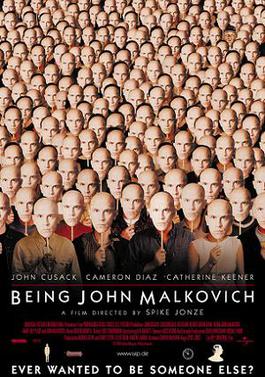
Being John Malkovich (1999) – Spike Jonze (Friday’s Finest)

This movie came on cable the other day and I knew had to watch it in its entirety since it had been a long time since I saw it. Being John Malkovich is one of the most cunning, highly original and unpredictable movies I have seen. The mastermind behind it is the lauded screenwriter Charlie Kaufman whose other notable works are Adaptation and Eternal Sunshine of the Spotless Mind, which like Malkovich explore ‘consciousness’ and ‘existentialism’ unlike what few other movies have ever done. Three of Kaufman’s scripts appear in the Writers Guild of America list of the 101 greatest movie screenplays ever written. He wrote the Malkovich script in 1994, sending it to many companies and studios, all of which turned it down. The script eventually reached Francis Ford Coppola, who passed it on to his then-son-in-law Jonze, who agreed to direct the film

I watched an interview recently with actor John Malkovich discussing his reaction to reading the script. Malkovich originally wanted to direct the movie, but change the protagonist from himself to someone else, but Kauffman refused to change it. So the script laid dormant for at least 5 years until Spike Jonze picked it up and Malkovich was eventually convinced to play himself. I am reluctant to give away much of the plot since for those who haven’t seen it, Being John Malkovich is definitely one movie the viewer should try to go into naively – bright eyed and bushy-tailed! So look away now if you intend on seeing it for the first time.

IMDB Storyline:

Puppeteer Craig Schwartz and animal lover and pet store clerk Lotte Schwartz are just going through the motions of their marriage. Despite not being able to earn a living solely through puppeteering, Craig loves his profession as it allows him to inhabit the skin of others. He begins to take the ability to inhabit the skin of others to the next level when he is forced to take a job as a file clerk for the off-kilter LesterCorp, located on the five-foot tall 7½ floor of a Manhattan office building. Behind one of the filing cabinets in his work area, Craig finds a hidden door which he learns is a portal into the mind of John Malkovich, the visit through the portal which lasts fifteen minutes after which the person is spit into a ditch next to the New Jersey Turnpike. Craig is fascinated by the meaning of life associated with this finding. Lotte’s trips through the portal make her evaluate her own self. And the confident Maxine Lund, one of Craig’s co-workers who he tells about the portal if only because he is attracted to her, thinks that it is a money making opportunity in selling trips into Malkovich’s mind after office hours for $200 a visit. Craig, Lotte and Maxine begin to understand that anyone entering the portal has the ability to control Malkovich’s mind, which also alters his entire being. This experience makes Maxine fall in love with a composite. This ability to control Malkovich’s mind begs the question of the ultimate psychedelic trip for Malkovich himself, who begins to feel that something is not right in the world as he knows it.

Being John Malkovich is so captivating because everything and everyone is a little off in this movie. The humor is witty and dark. Cameron Diaz is ugly. John Cusack is dishevelled. Catherine Keener is a sex goddess. The office complex on the floor between floors (where the term ‘low overhead’ is literal) brings every sight gag imaginable. The film has a moving desperation about it as each character longs to be someone else. Who could’ve ever thought of a normal person going into the brain of an famous (Oscar nominated) actor- and coming out on the side of the New Jersey Turnpike?! The story line is so obtuse, it is near hypnotic. The viewer is compelled to watch again a little bit closer. The whole movie is off its axis and so much the better for it.

Tagged with: ,
Posted in Movies and TV

Don Giovanni, K. 527; Act 2, Commendatore Scene (1787) – Wolfgang Amadeus Mozart

Don Giovanni is an Opera in 2 acts with music by Wolfgang Amadeus Mozart. In 1787 when it was written Mozart was deeply worried for his fatally ill father. At about the same time a 16 year old Ludwig van Beethoven came to Vienna and wanted to take lessons from Haydn and Mozart. This would not eventuate as Beethoven’s mother fatally fell ill and he had to return to Bonn.

Mozart was in dire need of money once again. Mozart and his family had always struggled to make ends meet. Musicians were not held in very high social esteem under Emperor Joseph II and hardly made ‘royal’ earnings. Times of overabundance and poverty both featured throughout Mozart’s entire life. ‘When money was there, he spent it liberally’ – the Mozart.com web site states.

Don Giovanni is based on the legends of Don Juan, a fictional libertine and seducer, written by Tirso de Molina. It was premiered by the Prague Italian opera at the National Theater (of Bohemia) in 1787, now called the Estates Theatre.
Wikipedia describes the opera, ‘as one of Mozart’s supreme achievements and one of the greatest operas of all time‘.

The final scene of the Opera below delivers the moral of the opera – “Such is the end of the evildoer: the death of a sinner always reflects his life“. In this scene excerpt from Amadeus, Salieri describes how he had seen all 5 of Mozart’s “Don Giovanni” performances in Vienna and then begins to realise his own work will never equal Mozart’s. He recognises the dead commander as symbolic of Mozart’s late father. Salieri hatches a plan to triumph over God. To me it is one of the most powerful operatic scenes I’ve ever seen, but it took me years to appreciate it for what it is.

Tagged with: , ,
Posted in Music

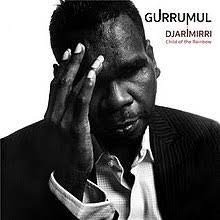
Djarimirri (2008) – Geoffrey Gurrumul Yunupingu

Djarimirri (Child of the Rainbow) is the second song here to appear from the Australian Aboriginal Singer-songwriter Gurrumul. Additional information about Gurrumul can be found at my first post – Bapa.
Below is a video of Gurrumul singing Djarimirri live at the Darwin Festival 2006 with his friend Michael Hohnen who produced the album and was his translator. Gurrumul’s debut album Gurrumul peaked at No. 3 on the ARIA Charts and was certified triple platinum. It remains one of my favourite albums from my Island home. I even brought it with me; amongst my few other prized possessions; when I came to Colombia in 2009.


Child of mine from the womb
Born into a colourful world
Colourful child From my womb
Sleeping fully formed
At the sacred place where women give birth
I dry my child in the sun
On the ground where I gave birth
The head is placed first Rainbow child

It is said the money he made from his debut album was largely shared with his family, following the Aboriginal tradition of sharing wealth. He did not generally give interviews, instead relying on Hohnen to speak for him, following a Yolŋu custom that dictated that Yunupingu’s role was only to sing, while his elders spoke publicly. In one of his few interviews Yunupingu said that he was generally shy but more comfortable playing music, and went on to say: “I don’t have much to say to people when I talk. That is for other Yolŋu. But I can play and sing and tell people things through my songs. We have an encyclopedia of stories ready to tell people, if they want to listen.

In 2012, Yunupingu was conferred with an Honorary Doctorate of Music by the University of Sydney. He died at the Royal Darwin Hospital, Northern Territory, at about 5:00 pm on 25 July 2017, aged 46. He came from from Elcho Island, off the coast of Arnhem Land. He will always remain one of Australia’s greatest voices who took Australian music by storm.

His niece, Miriam Yirrininba Dhurrkay, said “He was writing these songs and the words just came into his mind and heart. Even though he couldn’t see the nature, he was born to feel the nature.” To see without seeing? “Yeah. He had a special place to see, which was his heart.”

Tagged with: ,
Posted in Music

Special Blog Report – The Phenomenon of ‘Mass – Formation’ as precursor to Totalitarianism

Late yesterday afternoon, I found myself well and truly engaged in the above interview with Clinical Psychiatrist Mattias Desmet from Ghent University in Belgium. It has now since been taken down from You Tube.
I have never recorded so many notes for my Ankidroid application which I will relay below. The interviewer described the presentation; ‘It offers a rare – helicopter vantage point of how the Pandemic and Lockdowns have affected populations on mass around the world‘. Whether you are in support of the mainstream narrative or not, I regard this video as essential viewing.

I never imagined I would remain compelled to write for the entire duration, but such was the rigour and complexity of the discussion I was constantly pausing it and jotting down notes. They don’t do the interview justice, so I encourage you to watch the interview in its entirety. If so willing, please share it as widely as possible. I hope you find the interview as engrossing as I did:

The Phenomenon of ‘ Mass Formation’ as precursor to Totalitarianism. The affect of the Pandemic and Lockdowns and why so many buy into the ‘Narrative’ :

According to Clinical Psychologist Mattias Desmet the effects and conditions on individuals created by the Pandemic and Lockdowns might be described as follows:

1. Social isolation and disconnectedness (lack of social bonding),
2. Lack of meaning and significance in lives.
3. Free-Floating anxiety (anxiety which can’t be attributed to anything specifically), and
4. Free-Floating aggression which also one can’t attribute directly to anything.

Reaction – Why Individuals buy into the ‘Narrative’:

Suffering with the aforementioned circumstances and conditions, many individuals will have a propensity to align forcefully with the mass-media message and fall under its spell because it conveys being connected to a larger cause. All the free-floating anxiety can be connected to a mental representation and by participating in their strategy you can control the anxiety. It represents a new kind of meaning-making and solidarity with others suffering from the above conditions. It becomes kind of a ritual to follow as one feels more aligned and connected to a larger group.

Mass-Formation‘ is a psychological response not unlike the hypnosis to the unrelenting campaign of fear. It leads to a very narrow field of attention where people are only aware of a very small part of reality such as only being sensitive to victims of the Corona virus, however remain ambivalent (or ignorant) of the collateral damage. Those, because of Lockdowns; such as children starving especially in ‘developing or sub-developed countries’, or parents made unemployed and destitute, not to mention the millions worldwide suffering from delayed medical treatment.
The starkest impact these followers of the narrative share is that they become oblivious to their own psychological and physical well-being or perhaps of their children. It’s ok to separate Children in classes and the playground, mandate they wear masks – the most vulnerable and least likely to pass-on and be affected by the virus, yet allow adults exceptionally more vulnerable to COVID to carry-on without such restrictions in their workplace and at ballgames or what-have-you.

Mass-Formations‘ of this sort were common in Totalitarian states in the early 20th Century, namely the Nazi Regime and Communism under Stalin. People became willing to sacrifice that most dear and precious to them without giving it much thought.

Case in Point:

When 50% of the leadership under Stalin was liquidated, those individuals didn’t protest, rather they were compliant to accept their death penalty and admit their wrong-doing. In summary, individuals under ‘Mass-Formation’ are willing to forego their individual freedom in favour of the collective well-being. This could be described as ‘radical-collectivism’.

Most of the people in the ‘Narrative camp’ don’t pursue going back or enlightening the old/normal and they disdain dissident voices and opposition. Soon the 30% opposed to the state become silenced, then the state is compelled to commit the most grievous of atrocities like in 1930 under Stalin in the Soviet Union and 1935 under Hitler in Germany to destroy people even if they are loyal or not.

So people have to continue to speak out. In a Totalitarian state 30% are hypnotized, 40% don’t speak out, neutral or simply subject themselves to the mandates of the hypnotized while the remaining 30% try to speak out or object publicly. Unless the last group becomes unified in their opposition then the Totalitarian State will run amok until it eventually devours it’s own and implodes on itself. The complication with the current Mass-Formation as its seen is that it’s Worldwide.

Tagged with: , , ,
Posted in News, politics, Reflections

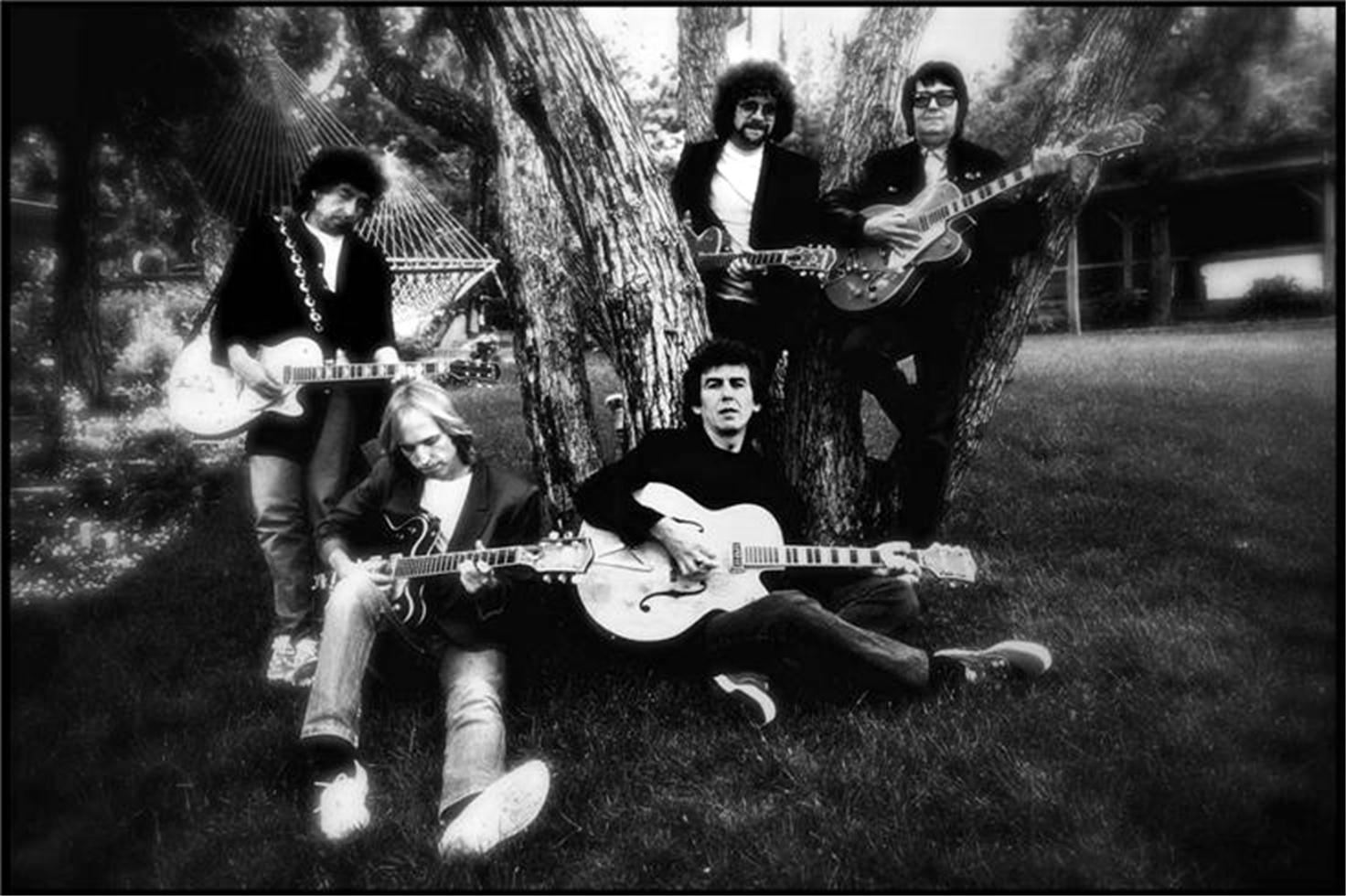
Dirty World (1988) – Traveling Wilburys

Traveling Wilburys, Encino, CA 1988 by Neal Preston

Dirty World is the second song here from The Traveling Wilburys and their Volume 1 album. As mentioned in the first release – Congratulations, all songs from this stellar debut album will feature here. Such is the quality of this album, today’s track – Dirty World is probably my least favourite track from the record yet I still get a kick out of Dylan’s attempt to write one like Prince (more information below). The whimsical and capricious lyrics and tune are delicious.

You don’t need no wax job, you’re smooth enough for me
If you need your oil changed, I’ll do it for you free
Oh baby, the pleasure would be all mine
If you let me drive your pickup truck and park it where the sun don’t shine

Every time he touches you, his hair stands up on end
His legs begin to quiver, and his mind begins to bend
Oh baby, you’re such a tasty treat
But I’m under doctor’s orders, I’m afraid to overeat

George Harrison seems to be the mastermind behind the project as presented in the TW documentary. He was also receiving great commercial success at the time and seemed to take everyone else on board. Also Orbison was popular with his ‘You Got It’ hit which I adore. Even now writing about this epoch my memories of adolescence come flooding back.

I think for the young layman listener – Volume 1 Travelling Wilburys is about the best introduction of contemporary rock. From personal experience I know this album led me onto an extraordinary musical odyssey which I remain indebted to.

It is said about “Dirty World,” here at ultimate classic rock that Bob Dylan, announced one afternoon: “Let’s do one like Prince!” George Harrison said about Bob in the process according to his interview in 1990:

“I mean, a lot of people take him seriously … and if you know Dylan and his songs, he’s such a joker, really. And he just sat down and we said, ‘Okay, what we gonna do?’ And Bob said, ‘Let’s do one like Prince!’ And he just started banging away, ‘Love your sexy body. Ooh, baby.’ And it just turned, you know, like into that tune. It sounds nothing like him. But that track, I mean, I love that track. It’s just so funny, really.”

Tagged with: , ,
Posted in Music

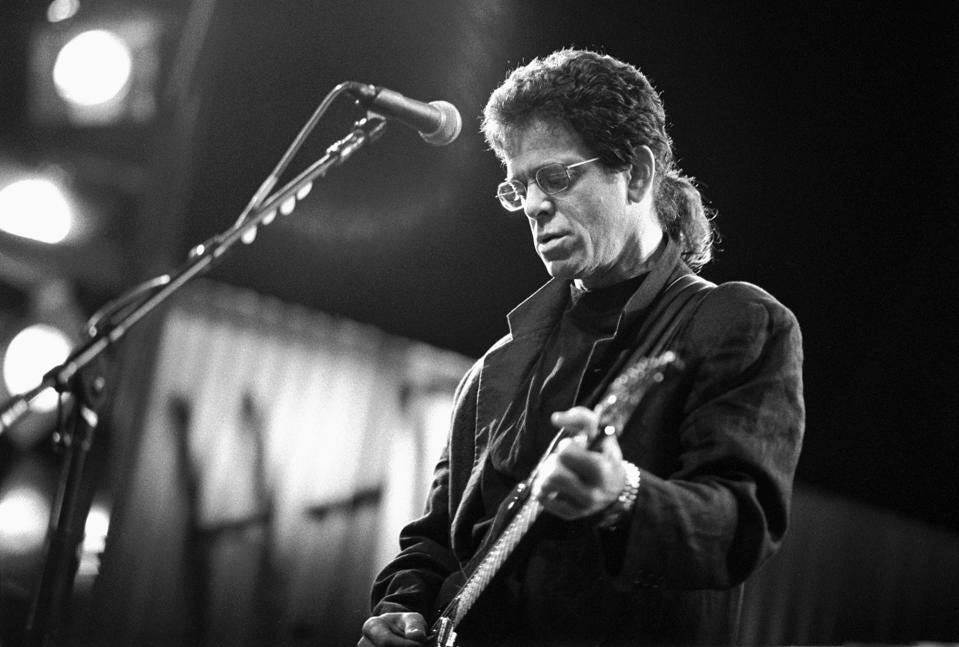
Dirty Blvd (1989) – Lou Reed

Lou Reed’s ‘New York‘ – The Comeback Album

This was the first song I loved from Lou Reed. I can’t remember how I came across it; it may have been from hearing his fantastic rendition of Dylan’s Foot of Pride at the 1992 Dylan tribute 30th Anniversary Concert. There are few renditions of Dylan’s songs which my ears appreciate more than the original, but Foot of Pride is one of them.

Today’s featured track – Dirty Blvd is from Lou’s 1989 album New York. It contrasts the rich and poor from New York City and topped the Billboard chart for four weeks. What really blew my mind was the grit and backbone of the music and lyrics. I knew when I first heard Dirty Blvd, that this was taking me somewhere I needed to go and it wasn’t going to be pretty. Despite having a simple three-chord progression; a repeated sequence of G D A D the song goes way deep.

Pedro lives out of the Wilshire Hotel
He looks out a window without glass
The walls are made of cardboard, newspapers on his feet
And his father beats him ’cause he’s too tired to beg.

He’s got nine brothers and sisters
They’re brought up on their knees
It’s hard to run when a coat hanger beats you on the thighs
Pedro dreams of being older and killing the old man
But that’s a slim chance, he’s going to the boulevard

NYC is in Lou’s Blood. Like Woody Allen as a movie director from New York who showcased the city in many movies most notably Manhattan, Lou did the same musically, but from an obtusely different angle. This was his city. Hal Wilner said that “Tourists would see him and Laurie [Anderson] on the street and know they’d been to New York.”. The city had a profound impact on nearly all his artistic endeavours spanning from Andy Warhol’s Factory to Lincoln Center.

Using simple, observational lyrics as a tool to highlight underlying issues of society, he had the ability to establish an emotional bond between the listener and almost any subject using only a few words. Remember when Dirty Blvd was written, it was at the height of the AIDS epidemic and the city was on the brink of Depression. Lou hoped that by highlighting the issues in his songs, it may become a launching pad to solving some of the problems or at least exposing them.

References:
1. New York Series: Lou Reed ‘Dirty Boulevard’
2. Dirty Blvd – Wikipedia

Tagged with: , ,
Posted in Music

Different Sides (2012) – Leonard Cohen

Leonard Cohen live at the Barclay’s Centre, NY – 2012

By golly the latter era Cohen songs are running amok in this blog and for good reason, he wrote a crazy amount of excellent songs in his older age. I think unlike his contemporaries Leonard found a new lease on life as a Poet and singer-songwriter. I would predict that at least half of Cohen’s songs presented here from my music library are post 2000, which is remarkable considering the depth of his musical cannon.

Today’s featured song Different Sides is the second song here from his 2012 album Old ideas and it sure as hell won’t be the last from this fantastic record. The first song Come Healing which I published an article on in May this year is just a remarkable spiritual anthem and easily one of my top 5 Cohen songs. Different Sides, on the other hand is a Cohen going back to a breezier tune containing a mixture of seriousness and humour.

Leonard Cohen closes his twelfth studio album Old Ideas with an argument. The Hammond organ-fuelled soft-shoe shuffle is a witty examination of a lovers’ tiff. “C’mon baby give me a kiss, stop writing everything down,” he croons.Songfacts

It ends the album and for good reason since it is a polar contrast to the opening track – Going Home. In Going Home we have one side of Leonard declaring he is near the finishing line, but all was worth it – they’re going home without their sorrow. In Different Sides the last song- Leonard wants to get out of town, but the other Leonard wants to stay where suffering is… The last words we hear, “stop writing everything down”. So basically we have two songs, the first and the last, about two sides of Leonard, two Leonard Cohens…and ends somewhat as a fighting album with military arrangements as opposed to the ‘Au revoir’ feel of Show Me the Place and Come Healing.

According to wikipedia: Old Ideas – the twelfth studio album..’ is Cohen’s highest-charting release in the United States, reaching number 3. 44 years after the release of his first album. The album topped the charts in 11 countries, including Finland, where Cohen became, at the age of 77, the oldest chart-topper, during the album’s debut week.’

References:
1. Symbolism of ‘Different Sides’ – Leonard Cohen Official Forum
2. Different Sides by Leonard Cohen – Songfacts
3. Wikipedia – Old Ideas

Tagged with: , ,
Posted in Music

Die Entführung aus dem Serail (The Abduction from the Seraglio) 1782 – Wolfgang Amadeus Mozart

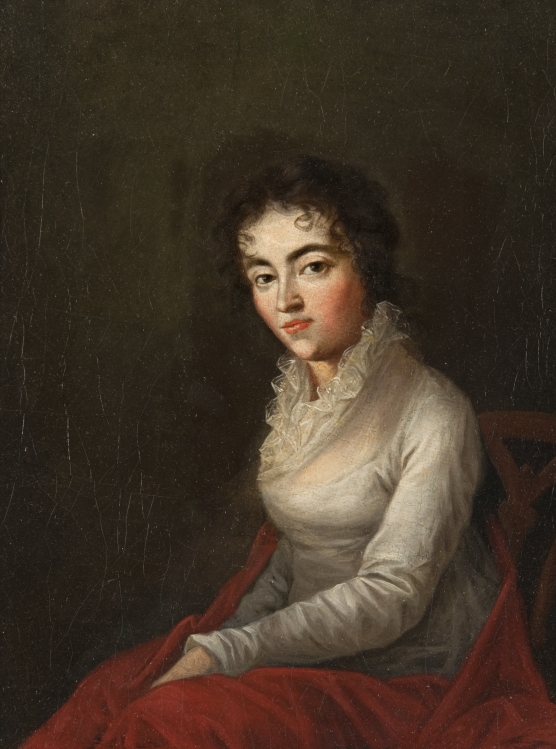
Constanze Mozart (née Weber) 1782

When Die Entführung aus dem Serail ‘The Abduction from the Seraglio‘ was composed in 1781, Amadeus Mozart fell in love with Constanze Weber despite his father’s objection to their courting as recorded in the official Mozart Timeline and depicted in the Amadeus film. Coincidentally the German libretto for this 3 act singspiel concerns the attempt of the hero Belmonte, assisted by his servant Pedrillo, to rescue his beloved Konstanze from the seraglio of Pasha Selim. The work premiered on 16 July 1782 at the Vienna Burgtheater, with the composer conducting.

As stated in wikipedia: ‘The company that first sponsored the opera was the Nationalsingspiel (“national Singspiel“), a pet project (1778–1783) of the Austrian emperor Joseph II. The Emperor had set up the company to perform works in the German language (as opposed to the Italian opera style widely popular in Vienna).
This is also depicted in the Amadeus film.

Upon receiving the libretto on 29 July 1781. Mozart set to work on the libretto at a very rapid pace, finishing three major numbers in just two days! A letter to his father Leopold indicates he was excited about the prospect of having his opera performed in Vienna and worked enthusiastically on his project. Mozart even decided to play a major role in the shaping of the libretto, insisting that Stephanie make changes for dramatic and musical effect.

The opera was a huge success. The first two performances brought in the large sum of 1200 florins. The work was repeatedly performed in Vienna during Mozart’s lifetime, and throughout German-speaking Europe.

The video I have attached below from Die Entführung aus dem Serail is from the Amadeus film soundtrack (from 2:10 in the video). This is my favourite scene of Tom Hulce’s performing as Amadeus – the composer. The amalgamation of this gargantuan piece of music set to the fiery imagery of Mozart letting loose like an unbridled Pirate is one for the ages, at least for me.

Tagged with: , ,
Posted in Music

Follow Blog via Email

Enter your email address to follow this blog and receive notifications of new posts by email.

Join 753 other subscribers

← Back

Thank you for your response. ✨